
BLS vs CPR: What's the Difference and Which Do You Need? 2026 October
🟢 BLS vs CPR explained: what is a bls certification, who needs it, exam format, costs, and how it differs from standard CPR training.
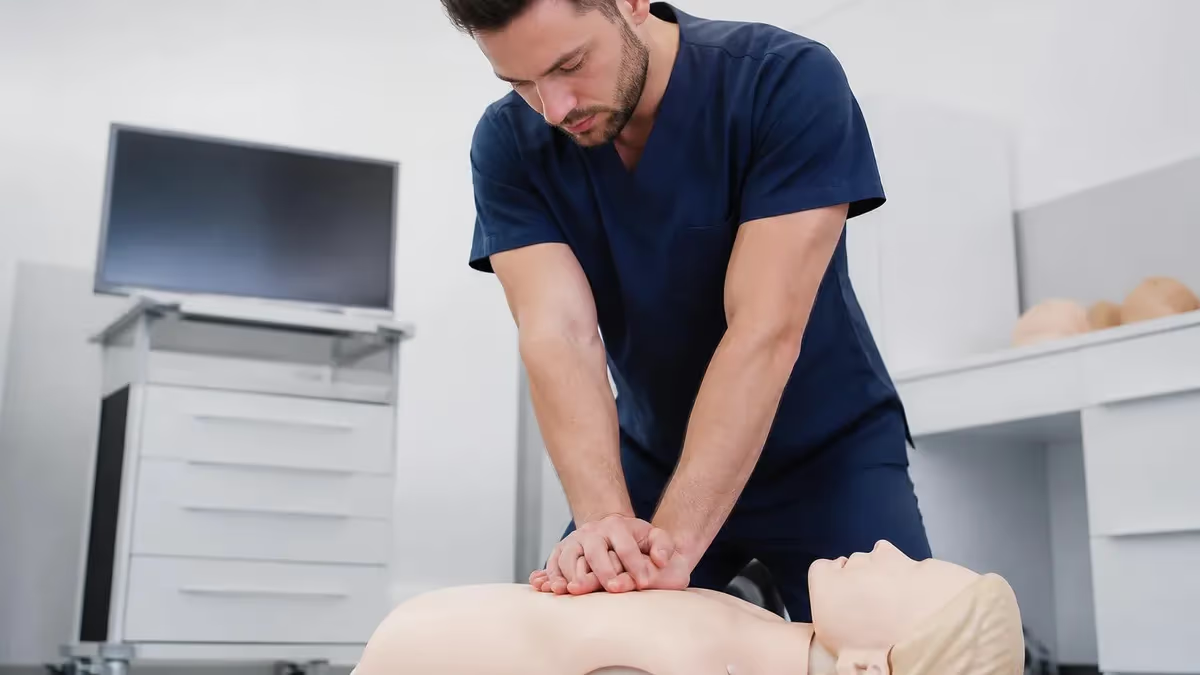
If you have ever wondered about bls/cpr training, you are not alone — every nurse, paramedic, dental hygienist, and even fitness trainer eventually has to sort out which course they actually need. So what is a bls certification, and how does it differ from the CPR class your neighbor took at the community center?
Both teach lifesaving chest compressions and rescue breathing, but Basic Life Support goes deeper, faster, and is built for professionals who respond to cardiac emergencies as part of their job. The distinction matters for your license, your paycheck, and the patient on the floor in front of you.
The short answer is that CPR is the umbrella skill — pushing on a chest, giving breaths, using an AED — while BLS is a professional-tier credential that wraps those skills inside team dynamics, advanced airway management, infant and child resuscitation, and high-quality compression standards measured to the millimeter. The American Heart Association (AHA), American Red Cross, and other recognized providers issue cards that look similar but carry very different weight at your hospital orientation desk. Knowing the difference saves you time, money, and a possible failed credentialing check on day one.
The phrase is bls the same as cpr ranks among the most-searched questions in healthcare education for good reason. Hiring managers use BLS as a baseline filter for clinical roles, while CPR-only cards are often acceptable for childcare workers, personal trainers, and lifeguards. The two credentials overlap significantly in the first hour of class, then diverge sharply when the simulation manikin needs a bag-valve-mask, a two-rescuer cycle, or a pulse check timed to the second. We will untangle every overlap and difference below.
BLS stands for Basic Life Support, a term coined to separate the foundational resuscitation skills clinicians use before advanced cardiac life support (ACLS) arrives with intravenous epinephrine and defibrillation protocols. When somebody asks what does BLS stand for, they usually want to know whether it is the same as the Heartsaver CPR class their employer mentioned. It is not — BLS assumes you already know the chain of survival and tests you on team-based execution under pressure. CPR-only courses stop at the basics; BLS expects mastery.
Throughout this guide you will see comparisons between AHA, Red Cross, and the older versions of each curriculum so you can make a confident choice. We will cover what is on the exam, how renewal works, the differences in cost, and which course your specific role actually requires. Whether you are a brand-new nursing student staring down a syllabus or a respiratory therapist re-upping your card before a deadline, this article will clarify the path. By the end you should know exactly which certification to register for and why.
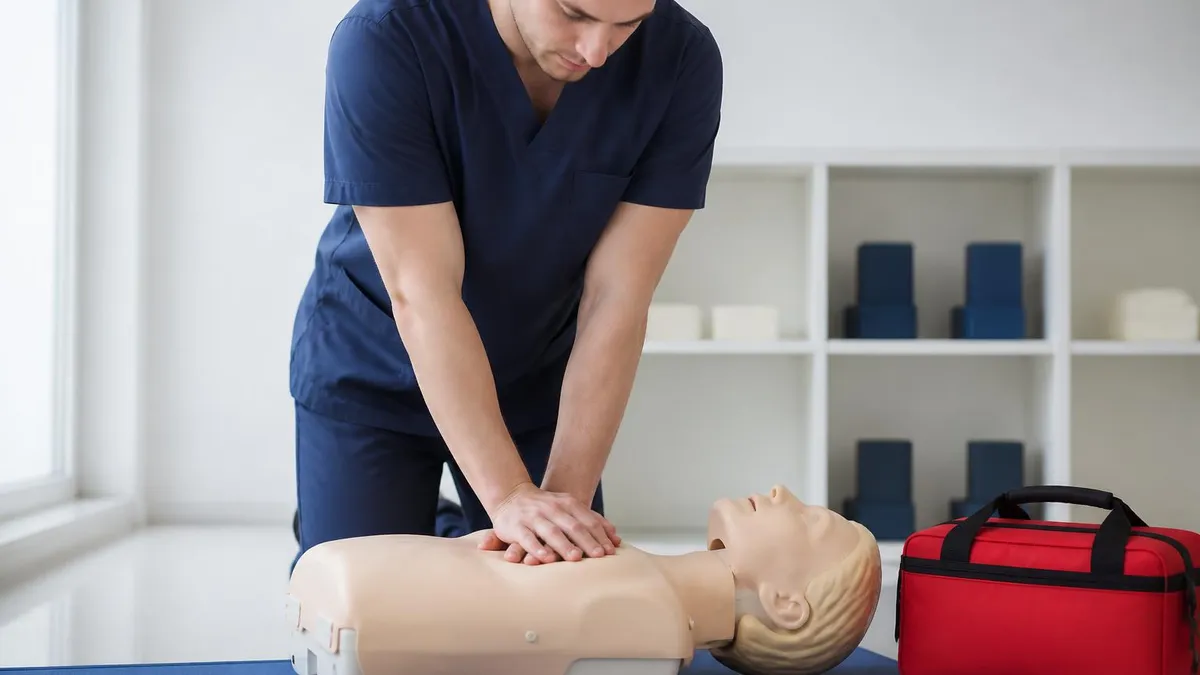
One more framing point before we get into mechanics: BLS is a clinical credential, not a feel-good safety class. The AHA and Red Cross both treat it as a competency exam with strict pass criteria. That means you cannot simply show up, sit through a slide deck, and walk out with a card. You will demonstrate compressions at 100–120 per minute, give rescue breaths with measurable chest rise, switch roles on a two-person team, and pass a written exam. CPR-only classes are usually less demanding and more flexible — important context as you compare your options.
The rest of this guide breaks down requirements, exam format, costs, who needs what, and the most common questions readers ask. Skim the table of contents, jump to the section that fits your situation, and use the practice quizzes to test yourself along the way. Resuscitation skills are perishable; even strong test-takers benefit from a few rounds of timed practice before the in-person skills check. Let's dig in.
BLS vs CPR by the Numbers
BLS vs CPR at a Glance
BLS is built for healthcare providers, EMS, dental, and allied health professionals. Heartsaver-style CPR targets the general public, teachers, fitness trainers, parents, and workplace responders without a clinical role.
BLS covers adult, child, and infant resuscitation, two-rescuer teamwork, bag-valve-mask ventilation, and opioid emergencies. CPR-only courses focus on single-rescuer compressions, breaths, and AED operation without team dynamics.
BLS requires a hands-on skills check with strict timing, compression depth, and ventilation criteria. CPR classes often use briefer demonstrations and less rigorous performance benchmarks, especially in community-level courses.
BLS cards are accepted for hospital credentialing, nursing school, and EMS licensure. CPR-only cards are typically not accepted for clinical roles, even when issued by the same organization on similar-looking paper.
Both expire after two years, but BLS renewal courses include a faster-paced skills review and a written exam, whereas CPR renewal is often a brief refresher with a simple skills demo.
Who actually needs Basic Life Support rather than standard CPR? Almost every patient-facing healthcare worker in the United States is required to hold a current BLS card, including registered nurses, licensed practical nurses, certified nursing assistants, respiratory therapists, physical and occupational therapists, dental hygienists, dental assistants, paramedics, EMTs, medical assistants in clinical roles, pharmacists working in patient-care settings, and most physicians. If a payroll badge gets you near a patient bed or a procedural chair, expect basic life support for healthcare providers to be a non-negotiable hiring requirement.
Nursing students typically need BLS before clinical rotations even begin. Programs in California, Texas, Florida, and most other states require AHA BLS for Healthcare Providers or the equivalent Red Cross course on the first day of skills lab. Many programs will not even let you on the floor without the physical card or a digital eCard accessible from your phone. The same is true for medical, dental, PA, and pharmacy schools. Allied health programs — sonography, radiology tech, surgical tech — almost always require BLS before externships.
EMS and pre-hospital providers carry BLS as a foundational credential even when they hold higher certifications like ACLS or PALS. Paramedics, firefighters, lifeguards on professional medical-response teams, and search-and-rescue volunteers usually need BLS plus role-specific credentials. Police academies vary by state, but most modern programs include BLS as part of the academy curriculum since officers are frequently first on the scene of cardiac arrest, overdose, and trauma calls where rapid chest compressions determine survival.
If you work outside healthcare, the answer is usually different. Personal trainers, group fitness instructors, yoga teachers, dance studio owners, childcare workers, summer camp staff, school teachers, coaches, and corporate first-aid responders generally need CPR/AED certification — not full BLS. The Heartsaver CPR AED program from the AHA and the equivalent Adult/Pediatric First Aid CPR AED program from the Red Cross are designed for these audiences. They cost less, take less time, and teach the same lifesaving compressions without the clinical layer.
There are gray-area roles worth flagging. Medical assistants in administrative-only positions, billing staff in outpatient clinics, and front-desk receptionists at urgent cares are sometimes required to carry BLS even though they rarely touch patients. Employers do this for liability protection and to maintain a fully credentialed team. If your hospital posts a job description that says "BLS preferred" or "current BLS card required," assume they mean the full healthcare-provider course, not a generic CPR class. Always ask before registering.
International medical graduates and travel nurses face their own wrinkle: some hospitals accept Red Cross BLS, some only accept AHA, and a few hospital systems have been known to require both at certain points in onboarding. The basic life support exam american heart association is the most widely recognized version, and the AHA card is the safest universal choice if you are not sure which your future employer will accept. Red Cross is widely accepted but verify with HR before paying for either.
The bottom line is simple. If you are entering a profession where you may have to recognize cardiac arrest, run a code, or assist a team during resuscitation, you need BLS. If you are a parent, coach, or workplace responder who wants to feel prepared in a public emergency, CPR/AED is the right level. Choosing the wrong tier wastes time and money — and in the case of healthcare hires, can delay your start date by weeks while you scramble to take the correct course.

BLS Practice Test Questions
Prepare for the BLS - Basic Life Support exam with our free practice test modules. Each quiz covers key topics to help you pass on your first try.
BLS High-Quality CPR & Provider Skills
BLS Exam Questions covering BLS High-Quality CPR & Provider Skills. Master BLS Test concepts for certification prep.
BLS Special Situations & Scenarios
Free BLS Practice Test featuring BLS Special Situations & Scenarios. Improve your BLS Exam score with mock test prep.
BLS Adult, Child & Infant Resuscitation
BLS Mock Exam on Adult, Child & Infant Resuscitation. BLS Study Guide questions to pass on your first try.
BLS Airway Management & Ventilation
BLS Test Prep for Airway Management & Ventilation. Practice BLS Quiz questions and boost your score.
BLS Automated External Defibrillator (AED)...
BLS Questions and Answers on Automated External Defibrillator (AED) Use. Free BLS practice for exam readiness.
BLS Certification: Cardiac Arrest
BLS Mock Test covering Certification: Cardiac Arrest. Online BLS Test practice with instant feedback.
BLS Certification: Choking
Free BLS Quiz on Certification: Choking. BLS Exam prep questions with detailed explanations.
BLS Certification: Respiratory Arrest
BLS Practice Questions for Certification: Respiratory Arrest. Build confidence for your BLS certification exam.
BLS Chain of Survival
BLS Test Online for Chain of Survival. Free practice with instant results and feedback.
BLS CPR Techniques & Procedures
BLS Study Material on CPR Techniques & Procedures. Prepare effectively with real exam-style questions.
BLS Legal & Ethical Considerations
Free BLS Test covering Legal & Ethical Considerations. Practice and track your BLS exam readiness.
BLS Post-Resuscitation Care
BLS Exam Questions covering Post-Resuscitation Care. Master BLS Test concepts for certification prep.
AHA Basic Life Support Exam vs Red Cross BLS
The AHA BLS Provider course is the most widely recognized resuscitation credential in U.S. healthcare. The class runs four to six hours in a classroom or blended online-plus-skills format and ends with a 25-question multiple-choice exam plus hands-on skills testing. You must demonstrate adult, child, and infant high-quality CPR, AED operation, bag-valve-mask ventilation, and team-based resuscitation. The passing score is 84%, and most candidates can retake the written portion once without re-enrolling.
AHA cards are accepted by virtually every hospital system, nursing school, and EMS agency in the country. The course is taught by AHA-credentialed instructors at training centers, hospitals, community colleges, and private CPR companies. The blended HeartCode BLS option lets you complete the cognitive portion at home, then attend a shorter in-person skills check — popular with working nurses who need to renew quickly between shifts without burning an entire workday in a classroom.
BLS vs CPR: Pros and Cons of Each Credential
- +BLS is universally recognized for clinical roles and hospital credentialing
- +BLS includes team-based resuscitation and two-rescuer skills
- +BLS covers infant, child, and adult patients with age-specific techniques
- +BLS teaches bag-valve-mask ventilation, opioid response, and choking algorithms
- +BLS cards open doors to higher-paying healthcare positions
- +BLS prepares you for ACLS, PALS, and other advanced certifications
- −BLS costs more and takes longer than basic CPR
- −BLS requires hands-on skills testing — no fully online option
- −BLS renewal happens every two years and requires re-testing
- −CPR-only cards are usually not accepted for clinical hospital jobs
- −CPR courses skip team dynamics and advanced airway techniques
- −Choosing the wrong credential can delay employment by weeks

BLS Skills You Must Demonstrate (Checklist)
- ✓Recognize cardiac arrest in adults, children, and infants within 10 seconds
- ✓Deliver adult compressions at 100–120 per minute and 2–2.4 inches deep
- ✓Allow full chest recoil between every compression to maximize venous return
- ✓Deliver one breath every six seconds during continuous compressions with an advanced airway
- ✓Operate a manual AED, attach pads correctly, and clear the patient before shock delivery
- ✓Switch compressor roles every two minutes to prevent rescuer fatigue and quality decay
- ✓Perform two-rescuer infant CPR using the two-thumb encircling hands technique
- ✓Use a bag-valve-mask with proper seal, head tilt, and visible chest rise
- ✓Recognize and respond to opioid-associated emergencies with naloxone administration
- ✓Manage adult, child, and infant choking with age-appropriate Heimlich and back-blow techniques
High-quality CPR doubles or triples survival
Research consistently shows that compression depth, rate, and full recoil are the single largest predictors of survival from out-of-hospital cardiac arrest. Hospitals that audit BLS quality see survival rates two to three times higher than the national average. Your card is not just paperwork — it is the difference between a survivor and a statistic.
The aha basic life support exam itself is two parts: a 25-question written test and a hands-on skills evaluation. The written exam covers compression rate and depth, ventilation timing, the chain of survival, AED operation, team dynamics, and special situations like opioid overdose, pregnancy, and drowning. You need 84% or higher, which means missing no more than four questions. The skills test is pass/fail and graded against a strict checklist — compression depth measured to the millimeter, rate to the beat, and ventilation visible as chest rise.
The blended HeartCode BLS format splits the experience. You complete the cognitive content at home — typically two to three hours of interactive online modules with embedded knowledge checks. Then you attend a shorter in-person skills session, usually ninety minutes, where an instructor verifies your hands-on competence on a manikin. This format saves time and is the most popular choice for working healthcare professionals. The full classroom format is still offered and remains the standard for first-time learners who benefit from group instruction.
Renewal happens every two years on the exact day your card expires. A basic life support renewal class is shorter than the initial course because it assumes you already know the fundamentals. You will still complete a written exam and a skills check, but the lecture portion is condensed and focused on protocol updates and common errors. Most renewal classes run two to three hours instead of four to six. Pricing is similar to initial certification, sometimes slightly less.
The biggest mistake healthcare workers make is letting the card expire. Once your BLS card lapses, most employers and licensing boards treat you as uncertified — even one day past the expiration date. You may be pulled off the schedule, removed from clinical duties, or denied entry to a hospital orientation. Some employers offer a brief grace period; many do not. Calendar your expiration date the moment you receive your new card and schedule renewal at least one month before the deadline.
Skills decay faster than most people realize. Studies show that compression quality drops measurably within three to six months of training, even among experienced clinicians. The two-year renewal cycle exists to reset that decay, but the smartest providers practice between renewals using free online refreshers, hospital code drills, or skills stations in nurse residency programs. If your facility offers monthly mock codes, attend every one — they are the closest thing to free continuing education that actually keeps your skills sharp.
The eCard system has largely replaced physical cards. After passing the AHA exam, you receive an email with a link to an eCard you can print, save as a PDF, or display in the AHA mobile app. Hospitals can verify your card directly on the AHA website using a unique ID and your last name. Red Cross uses a similar digital system. Take a screenshot of your card and store it in your phone — HR will ask for it during onboarding, audits, and license renewals throughout your career.
For first-time test-takers, the written portion is usually the easier of the two. Most candidates pass on the first try after watching the course videos and completing the practice quizzes. The skills check trips up more people. The most common failure points are insufficient compression depth, incomplete chest recoil, and slow transition between team roles. Practice on a manikin if you can borrow one — even ten minutes of focused practice the night before significantly improves performance.
Your BLS card expires on the last day of the month two years after issue — period. Most hospitals will pull you from clinical duty if your card has lapsed even by 24 hours. Schedule your renewal at least 30 days before the expiration date to avoid losing shifts, falling out of compliance, or paying rush fees to a same-day course.
How much does BLS cost in 2026? Expect to pay $60 to $110 for an AHA or Red Cross BLS Provider course in most U.S. cities, with higher prices in major metros and lower prices at community colleges and union-sponsored training centers. The blended HeartCode BLS format costs about the same total, split between an online portion (around $35) and an in-person skills check ($35-$70 depending on location). Standard CPR/AED courses cost $45-$75 — about a third less than BLS.
Time investment matters more than money for most working professionals. A full BLS Provider class is a four-to-six-hour commitment. The blended option saves you about two hours of classroom time but adds two to three hours of self-paced online work. CPR-only classes run two to three hours total, and many can be completed in a single evening session. Factor in travel time, parking, and the rigidity of class schedules when comparing options against your shift calendar.
Where you take the course matters too. Hospital-based training centers often offer free or heavily discounted BLS to their employees but charge full price to outside attendees. Fire departments, EMS agencies, and community colleges run regular classes at competitive rates. Independent CPR companies are everywhere, often more flexible on scheduling, and frequently offer evening and weekend slots that fit around a clinical workweek. Read reviews and verify that the instructor is credentialed by the AHA or Red Cross before paying.
If you are still unsure which credential you need, check your employer's HR policy first. Most hospital systems publish a list of accepted BLS providers, often limited to AHA, Red Cross, and one or two HSI-affiliated programs. Nursing schools list their requirements in the program handbook. EMS agencies follow state rules that almost always require AHA or an equivalent. When in doubt, the aha basic life support exam is the safest universal choice because every U.S. healthcare employer recognizes it.
For non-clinical roles — coaches, teachers, parents, fitness professionals — Heartsaver CPR AED or the Red Cross Adult/Pediatric First Aid CPR AED is the right tier. Do not overpay for full BLS unless your employer specifically requires it. The clinical depth of BLS is wasted on someone who will never run a code with a hospital team. The CPR/AED tier still teaches the skills that save lives in public emergencies and meets OSHA and state-level workplace requirements.
If you are switching careers into healthcare, start with BLS the same week you enroll in your program. The card is portable across employers and lasts the full two years regardless of where you work or what role you take. Most healthcare hires need to show a valid BLS card on day one, so treating it as a prerequisite rather than a hiring task saves stress. Pair the course with a few practice quizzes online to lock in the protocols before class.
Finally, do not underestimate the importance of refreshing your skills between renewals. Cardiac arrest does not happen on a predictable schedule, and the patient in front of you cannot wait for you to remember whether compressions are 30:2 or continuous. Practice with a colleague, attend mock codes, or watch a five-minute refresher video every few months. The two-year cycle is a minimum standard — the best providers treat resuscitation as a lifelong practice, not a checkbox.
Practical tips for passing your BLS exam on the first try start with consistent practice. Begin two weeks before the class with short daily sessions — fifteen to twenty minutes of reading the provider manual, watching official AHA or Red Cross video demonstrations, and answering practice questions. Spaced repetition beats cramming for psychomotor and protocol-based knowledge. The night before, get a full night of sleep; fatigued candidates miss easy questions on rate, depth, and ratios that they otherwise know cold.
Treat the skills check as the harder portion. Most students who fail BLS fail the hands-on test, not the written exam. The most common failure points are compression depth below two inches, rate that drifts under 100 or over 120, incomplete chest recoil, and slow team transitions. Practice on any manikin you can find — clinical skills labs at your school, fire station open houses, or even a folded pillow on the floor with a metronome app set to 110 beats per minute to keep your rhythm steady.
Memorize the algorithm in chunks, not as a single long list. The chain of survival has five links: recognition, CPR, defibrillation, advanced life support, and post-arrest care. Each link is a memory anchor. Compressions are 30:2 for single-rescuer adult, 15:2 for two-rescuer child and infant, and continuous at 100-120 per minute once an advanced airway is placed. Ventilations during continuous CPR are one breath every six seconds. Write these on a card and review during breaks.
For the written exam, focus on the predictable question types. Expect three to five questions on compression rate and depth, two to three on AED operation including special situations like wet chests and medication patches, two to three on opioid emergencies, two to three on choking algorithms, and the remainder on team dynamics, ventilation, and chain of survival. Read every question fully — distractors are designed to look correct at a glance. Eliminate two wrong answers first, then choose between the remaining two.
Test-day logistics matter more than candidates expect. Arrive fifteen minutes early to settle in and review your notes one last time. Bring water, a snack, and your photo ID. Wear comfortable clothes and closed-toe shoes you can kneel in for compressions on a floor manikin. If you wear glasses, bring them and a backup pair. Some testing centers run cold; a light jacket helps you focus rather than shiver through the skills demonstration on a hard tile floor.
If you do fail any portion, do not panic. Most providers allow one retake at no additional charge, sometimes the same day. Ask your instructor for specific feedback on which skill failed and why — depth, rate, recoil, ventilation, or team handoff. Practice the specific deficit for a few minutes, then retest. Failing the first attempt is more common than candidates admit, and a calm second attempt with targeted practice almost always succeeds. Treat the feedback as a gift, not a verdict.
Finally, use free online practice questions liberally. Quality practice quizzes simulate the test format, timing, and difficulty better than any textbook chapter. Take at least three full-length practice exams before the real test, review every miss, and identify your weakest topic. If you consistently miss two-rescuer infant CPR or AED special situations, drill those specifically. Treat the practice exam score as a diagnostic, not a final grade — your goal is to walk into class already at 90% and use the official course to lock in the last 10%.
BLS Questions and Answers
About the Author

Registered Nurse & Healthcare Educator
Johns Hopkins University School of NursingDr. Sarah Mitchell is a board-certified registered nurse with over 15 years of clinical and academic experience. She completed her PhD in Nursing Science at Johns Hopkins University and has taught NCLEX preparation and clinical skills courses for nursing students across the United States. Her research focuses on evidence-based exam preparation strategies for healthcare certification candidates.
Join the Discussion
Connect with other students preparing for this exam. Share tips, ask questions, and get advice from people who have been there.
View discussion (8 replies)