
BLS Certificate Lookup: What Is a BLS Certification and How to Get Yours
What is a BLS certification? Learn requirements, AHA vs Red Cross, renewal steps & how to verify your card. ✅ Full guide for healthcare providers.

If you've ever asked what is a BLS certification and where to find yours, you're not alone. Basic Life Support (BLS) certification is one of the most commonly required credentials in healthcare, yet many providers are confused about what it covers, which organization's card is accepted where, and how to perform a bls certificate lookup when an employer or licensing board demands proof of a valid, unexpired card. This guide walks through everything you need to know.
BLS stands for Basic Life Support, a standardized set of emergency interventions used to keep a person alive when their heart or breathing has stopped. The core skills include high-quality chest compressions, rescue breathing, automated external defibrillator (AED) use, and team-based resuscitation protocols. Unlike a general first aid course, BLS is specifically designed for healthcare professionals who may need to respond to cardiac or respiratory arrests in clinical settings such as hospitals, clinics, nursing homes, and ambulances.
The two most widely recognized BLS certifying bodies in the United States are the American Heart Association (AHA) and the American Red Cross. Both organizations offer curricula that align with the current resuscitation science guidelines published every five years. Most hospitals and health systems specify which card they accept — often the AHA BLS for Healthcare Providers card — so it's important to verify your employer's requirements before enrolling in a course.
A common source of confusion is whether BLS and CPR are the same thing. The short answer is: not exactly. CPR (Cardiopulmonary Resuscitation) is one component of BLS, but BLS certification goes further to include AED operation, relief of foreign-body airway obstruction, two-rescuer CPR, bag-mask ventilation, and structured team dynamics. Think of CPR as one chapter in the broader BLS textbook. A consumer-level CPR class may not fulfill a hospital's BLS requirement, even if it covers chest compressions.
BLS certification typically lasts two years from the date of issue. After that, providers must complete a renewal — often called a BLS renewal class or HeartCode BLS renewal — before the card expires. Many employers check certification dates during onboarding and annual credentialing reviews, which is why keeping your card current and being able to produce it quickly matters enormously. Expired BLS cards can delay start dates, affect clinical rotations, and in some states, result in licensing complications.
Because paper cards can be lost or damaged and digital records aren't always centralized, healthcare providers frequently need to look up their certification status. The lookup process differs depending on whether you trained through the AHA, Red Cross, or another provider. Understanding those differences — and knowing exactly where to go — can save you hours of frustration when a renewal deadline is approaching or a new employer's HR department asks for documentation on short notice.
This comprehensive guide covers the definition of BLS, the differences between major certifying organizations, how the BLS exam works, what to expect in a renewal class, and practical steps to verify your certification status. Whether you're a nursing student preparing for your first clinical placement, a seasoned physician updating credentials, or an administrator building a policy for your department, the information here will help you navigate the entire BLS certification landscape with confidence.
BLS Certification by the Numbers

BLS Certification Requirements at a Glance
BLS for Healthcare Providers is designed for nurses, physicians, paramedics, respiratory therapists, medical students, and other clinical staff who may respond to cardiac arrest. Some programs accept advanced first responders and certain allied health students.
Students must attend a skills session with a certified instructor, demonstrate hands-on competency in CPR, AED use, and bag-mask ventilation, and pass a written or digital knowledge assessment with a score of 70% or higher.
An AHA-certified instructor observes and scores each student's chest compression rate, depth, recoil, and hand placement, plus rescue breath delivery and AED operation. Failure to meet standards requires a remediation session before certification is issued.
Upon successfully completing the written exam and skills evaluation, providers receive a course completion card valid for two years. The AHA now issues eCards (digital) through its Training Network, while the Red Cross issues cards through its Learning Center portal.
AHA recommends starting the renewal process at least 30 days before expiration. Most training centers offer blended learning (online cognitive portion + in-person skills check) that takes 1–2 hours, significantly shorter than the initial course.
When choosing between the American Heart Association and the American Red Cross for your BLS certification, the first step is always to check with your employer, clinical site, or licensing board. Most acute-care hospitals in the United States specifically require the AHA BLS for Healthcare Providers card because it is the most widely recognized standard and aligns with the AHA's resuscitation science guidelines. Some ambulatory care settings and community health organizations accept either card, but never assume — always confirm before you enroll.
The AHA BLS for Healthcare Providers course is built around the AHA's evidence-based guidelines, updated most recently in 2020. The course covers adult, child, and infant CPR; two-rescuer CPR with bag-mask ventilation; AED use; relief of choking in conscious and unconscious patients; and team-based resuscitation communication using closed-loop techniques. The blended HeartCode BLS format lets providers complete the cognitive portion online and then attend a brief in-person skills session, which many busy clinicians prefer for its flexibility.
The American Red Cross Basic Life Support course offers comparable content and is accredited by the Occupational Safety and Health Administration (OSHA) for workplace settings. It covers the same core competencies — adult/child/infant CPR, AED, airway management — using the Red Cross's own instructional materials and learning management platform. The Red Cross also offers a blended digital + in-person format. Employers who accept Red Cross certification generally include certain clinics, dental offices, fitness centers, and school-based health programs.
One practical difference between the two organizations is how they manage digital certificate access. The AHA issues eCards through its AHA Training Network portal. Your instructor inputs your information, and you receive an email with a link to claim your eCard, which is stored in the AHA's system. The Red Cross delivers completion records through its Red Cross Learning Center, where you can log in, view your transcript, and download a printable certificate. If you completed training through a hospital-run AHA Training Center, your HR or education department may also maintain an internal record.
Cost is another factor to consider. AHA BLS courses typically run $50–$80 for the initial certification when taken through a community training center, though hospital employees often receive it at no cost or subsidized cost through their employer's education department. Red Cross BLS courses are priced similarly. Blended HeartCode BLS courses may cost more upfront because they include online access fees, but they save time for working clinicians who cannot attend a full-day class. Renewal courses are generally priced lower than initial courses — expect to pay $30–$60 depending on the training center.
For healthcare students — nursing, medical, physician assistant, dental — the choice is often made for you by your program. Most clinical rotations at hospital sites require the AHA BLS card specifically, and many programs build a BLS course directly into their orientation curriculum. If your program does not arrange this, you'll need to find an AHA-authorized Training Center near you. The AHA's website has a course locator tool that lets you search by zip code and filter by course type, making it straightforward to find an upcoming class.
Regardless of which organization issued your card, the practical takeaway is this: your certification is only as good as your employer's willingness to accept it. If you are job hunting across multiple healthcare settings, the AHA BLS for Healthcare Providers card is the safest investment because it is accepted virtually everywhere. Red Cross BLS is an excellent alternative for non-acute-care environments, but double-check before assuming interchangeability. When in doubt, obtain the AHA card — it closes the door on credential disputes before they arise.
Basic Life Support Exam: American Heart Association Format Explained
The AHA BLS written exam consists of 25 multiple-choice questions drawn from the BLS Provider Manual. Topics include recognition of cardiac arrest, high-quality CPR metrics (rate 100–120/min, depth 2–2.4 inches for adults), AED operation, relief of choking, and team communication. You must score 70% or higher — answering at least 18 of 25 questions correctly — to pass. Most providers who have attended the full course and reviewed the manual find the written exam straightforward.
Questions on the AHA BLS exam are scenario-based, meaning they describe a situation and ask what action to take next. Common scenarios include finding an unresponsive adult, responding to an infant who is choking, managing a two-rescuer adult CPR scenario, or identifying when to use an AED. Trick questions are rare; the exam is designed to confirm that you understand the fundamental algorithms, not to trip you up with obscure minutiae. Reviewing the BLS Provider Handbook and completing a few practice tests before your skills session is the most efficient preparation strategy.

AHA BLS vs. Red Cross Basic Life Support: Key Differences
- +AHA BLS card is accepted at virtually every US hospital and health system
- +HeartCode BLS blended format saves time for busy healthcare professionals
- +AHA eCard system makes digital certificate lookup fast and reliable
- +AHA guidelines are updated every 5 years with the latest resuscitation science
- +Widely accepted for international travel nursing and locum tenens assignments
- +AHA Training Network provides instructor verification for employer credentialing
- −AHA courses can cost more than Red Cross alternatives at community centers
- −HeartCode BLS online module requires reliable internet and a modern browser
- −Some rural areas have limited AHA Training Center availability
- −AHA eCard system requires creating an online account to claim your certificate
- −Red Cross BLS card not accepted at many acute-care hospital systems
- −Neither AHA nor Red Cross maintains a single public database for third-party lookup
BLS Renewal Class: Complete Preparation Checklist
- ✓Check your current BLS card expiration date at least 60 days before it expires.
- ✓Confirm with your employer or clinical site which organization's card they accept (AHA or Red Cross).
- ✓Locate an authorized Training Center using the AHA course finder or Red Cross class locator.
- ✓Register for either a traditional classroom course or a blended HeartCode BLS renewal session.
- ✓Download and review the current BLS Provider Handbook before your skills session.
- ✓Practice compression rate (100–120/min) and depth (2–2.4 inches adults) on a feedback manikin if available.
- ✓Review the pediatric and infant CPR algorithms, since these are commonly tested during renewal.
- ✓Bring a valid photo ID and your previous BLS card (or eCard confirmation) to the class.
- ✓Complete the written exam with a score of at least 70% (18/25 questions correct).
- ✓Claim your AHA eCard via the email link sent after your instructor submits your completion record.
Start Your Renewal at Least 30 Days Early
The AHA allows your renewal card to reflect the same expiration date as your previous card (plus two years) if you renew within 30 days of expiration — meaning you don't lose any certification time. Waiting until the last minute risks scheduling conflicts, sold-out classes, and potential gaps in your credentials that could delay a clinical assignment or job start date.
Performing a BLS certificate lookup depends on which organization issued your certification and when you completed your training. The process has become significantly easier in recent years as both the AHA and Red Cross have moved to digital platforms, but there are still important differences, and not every record is publicly searchable. Understanding the correct channel for your specific situation will save you time and frustration when verification is needed urgently.
If you trained through the American Heart Association on or after January 2020, your certification is most likely an eCard stored in the AHA Training Network. To look up your eCard, visit the AHA's eCard verification portal and enter the unique eCard number found in the email you received after training. Alternatively, you can search by your name and date of birth. If your instructor submitted your completion record, it will appear in the system within 24–48 hours of your class. The eCard portal generates a real-time PDF that you can share with employers, HR departments, or licensing boards.
If your AHA Training Center issued a paper card (common before 2020 or at some hospital-run training programs), there is no centralized AHA lookup for those older records. In that case, contact the Training Center that ran your class directly. Most AHA-authorized Training Centers maintain their own rosters and can provide a letter of verification or a replacement card if yours was lost or damaged. If your training was arranged by your employer through their internal education department, that department likely has a record on file and can re-issue documentation upon request.
For Red Cross BLS verification, log into the Red Cross Learning Center at redcross.org with the email address you used when you registered for the course. Your completed courses and certificates appear in your transcript. From there, you can download a PDF certificate or share a verification link. If you cannot remember which email address you used, the Red Cross Learning Center has an account recovery process, or you can contact Red Cross customer service with your full name and approximate date of training to look up your record manually.
Some healthcare employers use a third-party credential management platform — such as HealthStream, Symplr, or Verity — to track and verify BLS certifications across their workforce. If you completed BLS training through your hospital's education department, your record may be logged in one of these systems rather than directly in the AHA or Red Cross portals. In that case, your hospital's HR, education, or credentialing office is the authoritative source, and they can generate a verification letter or update the external system on your behalf.
Nursing boards, medical licensing authorities, and professional organizations generally do not maintain their own BLS lookup databases. They rely on the card or eCard issued by the training organization. This means that when a licensing board asks you to submit proof of BLS certification, you should provide a copy of your physical card, a printout of your AHA eCard, or a Red Cross certificate PDF — not a self-prepared document. Some boards also accept a signed verification letter from an AHA Training Center on official letterhead.
If you are hiring manager, clinical educator, or credentialing specialist who needs to verify a candidate's BLS status, the fastest method is to ask the provider to log into the AHA eCard portal or Red Cross Learning Center and share their screen or export a PDF in real time. This eliminates the risk of altered documents and confirms that the card is active and unexpired.
For large organizations processing dozens of new hires simultaneously, building a standardized onboarding requirement — such as uploading the eCard PDF to an internal HR portal — creates an auditable record that satisfies Joint Commission and CMS survey requirements.

Healthcare employers, clinical sites, and licensing boards treat BLS expiration dates as hard deadlines. An expired card — even if it expired yesterday — is typically not accepted for credentialing, clinical rotation placement, or employment. Do not assume grace periods exist. Begin your renewal process at least 30 days before your expiration date to account for class availability, scheduling conflicts, and eCard processing delays.
BLS certification has a direct and measurable impact on healthcare careers. For many clinical roles — registered nurses, respiratory therapists, surgical technologists, medical assistants, and others — BLS certification is not optional; it is a mandatory condition of employment. Hospitals verified by The Joint Commission and facilities enrolled in Medicare and Medicaid are required to demonstrate that clinical staff can respond to cardiac emergencies, and a current BLS card is the primary documentation of that competency. Without it, you cannot work the floor.
Beyond the employment mandate, BLS proficiency genuinely saves lives. Studies consistently show that when bystanders or healthcare providers initiate high-quality CPR within two minutes of cardiac arrest, survival rates improve dramatically. The American Heart Association estimates that effective bystander CPR can double or triple a cardiac arrest victim's chance of survival. As a healthcare provider, your BLS skills bridge the gap between collapse and the arrival of advanced interventions like defibrillation and ACLS drugs. That gap — often measured in minutes — is when the outcome is decided.
For healthcare students, obtaining BLS certification before starting clinical rotations is one of the most concrete steps you can take toward professional readiness. Many nursing programs require students to submit proof of current BLS certification before they are allowed to attend their first clinical day. Medical schools typically have a similar requirement before students begin patient contact. Obtaining your BLS card early — rather than scrambling the week before your rotation starts — positions you as organized and professionally serious, and it gives you time to review the skills before you need to apply them in a real setting.
Advanced practice providers (nurse practitioners, CRNAs, physician assistants) and physicians also benefit from maintaining current BLS certification as a foundation for higher-level certifications. ACLS (Advanced Cardiovascular Life Support) and PALS (Pediatric Advanced Life Support) both require BLS as a prerequisite. Maintaining a current BLS card keeps you eligible for ACLS and PALS renewal as well, since those courses build directly on BLS algorithms and assume solid foundational CPR skills. Losing your BLS card means you cannot renew ACLS or PALS without first re-establishing your BLS baseline.
Travel nurses and locum physicians face particularly acute BLS verification challenges because they move between facilities and states frequently. Each new assignment typically requires submitting credential documentation, and BLS cards are among the first things staffing agencies and facility credentialing offices check. Maintaining a digital copy of your current AHA eCard in a secure cloud storage location — and setting a calendar reminder 60 days before expiration — is a simple system that prevents the credential gap that could delay or cancel a lucrative travel assignment.
Employers who invest in BLS training for their staff see measurable return on investment. Workplace cardiac arrest survival rates at organizations with robust BLS programs are consistently higher than at facilities where training is infrequent or poorly documented. For healthcare administrators and nurse educators, building a systematic BLS renewal tracking process — using platforms like HealthStream or Symplr to send automated expiration reminders — reduces the compliance burden on individual providers and ensures the organization maintains a fully credentialed workforce at all times.
Whether you are preparing for your first BLS class, renewing a card that's about to expire, or helping your team stay current, keeping detailed records matters. The time to verify your BLS status is not when an HR department is waiting on your paperwork — it's right now, proactively, so you can resolve any issues before they become urgent problems. Use the BLS certificate lookup resources described in this guide, keep digital copies of every card, and treat your BLS renewal as a non-negotiable professional maintenance task, just like your license renewal or annual performance review.
Preparing effectively for the BLS written exam and skills evaluation is straightforward when you approach it systematically. Start by obtaining the current AHA BLS Provider Handbook, which is available for purchase through the AHA or often provided by your training center when you register. Read through it once before your class to familiarize yourself with the algorithms, and then use it as a reference during your post-class review. The handbook contains the same algorithms your instructor will teach, so pre-reading removes the cognitive load of encountering new information for the first time during a timed classroom session.
Focus your exam preparation on the core algorithms: the Adult BLS Healthcare Provider Algorithm, the Pediatric BLS Healthcare Provider Algorithm, and the Infant BLS Healthcare Provider Algorithm. Memorize the critical performance metrics: adult compression rate of 100–120 per minute, depth of 2–2.4 inches, allowing full chest recoil, minimizing interruptions to less than 10 seconds, and delivering breaths over 1 second with visible chest rise. These numbers appear repeatedly on the written exam and are evaluated directly during the skills session. A flashcard review of these figures the night before your class is time well spent.
For the skills evaluation, hands-on practice is irreplaceable. If your training center offers an open practice session or if your workplace has a simulation lab with CPR feedback manikins, use that resource before your evaluation day. Feedback manikins display compression rate and depth in real time, which is the fastest way to calibrate your technique. Many providers discover they are compressing too shallowly — 1.5 inches when 2 inches is required — without a feedback device to reveal the discrepancy. Knowing this before your evaluation gives you time to correct it.
Two-rescuer CPR is a component that catches providers off guard if they haven't practiced it. In two-rescuer CPR, one provider does compressions while the other manages the airway and delivers ventilations via bag-mask. The compression-to-ventilation ratio is 30:2 for adults with an advanced airway not yet placed, transitioning to asynchronous compressions once an advanced airway is in place. The bag-mask technique requires a proper mask seal using the E-C clamp technique, and ventilations should cause visible chest rise without over-inflating. If you haven't practiced two-rescuer CPR recently, find a partner and run through it at least twice before your evaluation.
The written exam portion is multiple choice and untimed in most course formats. Read each question carefully before selecting an answer — scenario-based questions sometimes include distractors designed to test whether you understand the sequence of actions versus individual skills in isolation. For example, a question might describe an unresponsive adult and ask what your first action should be; the correct answer is always to ensure scene safety before approaching, not to immediately begin CPR. These sequence questions are the most common source of incorrect answers among providers who are technically proficient but skip the foundational steps in their thinking.
After completing your BLS course, take two concrete steps immediately: claim your AHA eCard from the email link (do this within 48 hours while the link is fresh), and save a PDF copy to a cloud storage location you can access from any device. Also photograph the eCard or the printout and store it in a secure folder on your phone.
This redundancy means that even if you change email addresses, lose your phone, or the AHA's portal has a temporary outage, you always have proof of your certification available. Add a calendar reminder for 60 days before your expiration date so you have plenty of lead time to schedule a renewal class without pressure.
Finally, take advantage of practice resources available online. Working through BLS-specific practice questions before your exam reinforces the algorithms in a low-stakes environment and reveals any knowledge gaps while there is still time to address them. Our free practice tests on PracticeTestGeeks cover high-quality CPR metrics, team dynamics, AED protocols, and special situations — the same categories tested on the real AHA BLS exam. Using those resources alongside the official handbook creates the most efficient and complete preparation strategy available to you today.
You can continue preparing with the aha bls practice questions, which includes answer explanations for every question.
BLS Questions and Answers
Free Basic Life Support MCQ Questions and Answers Guide
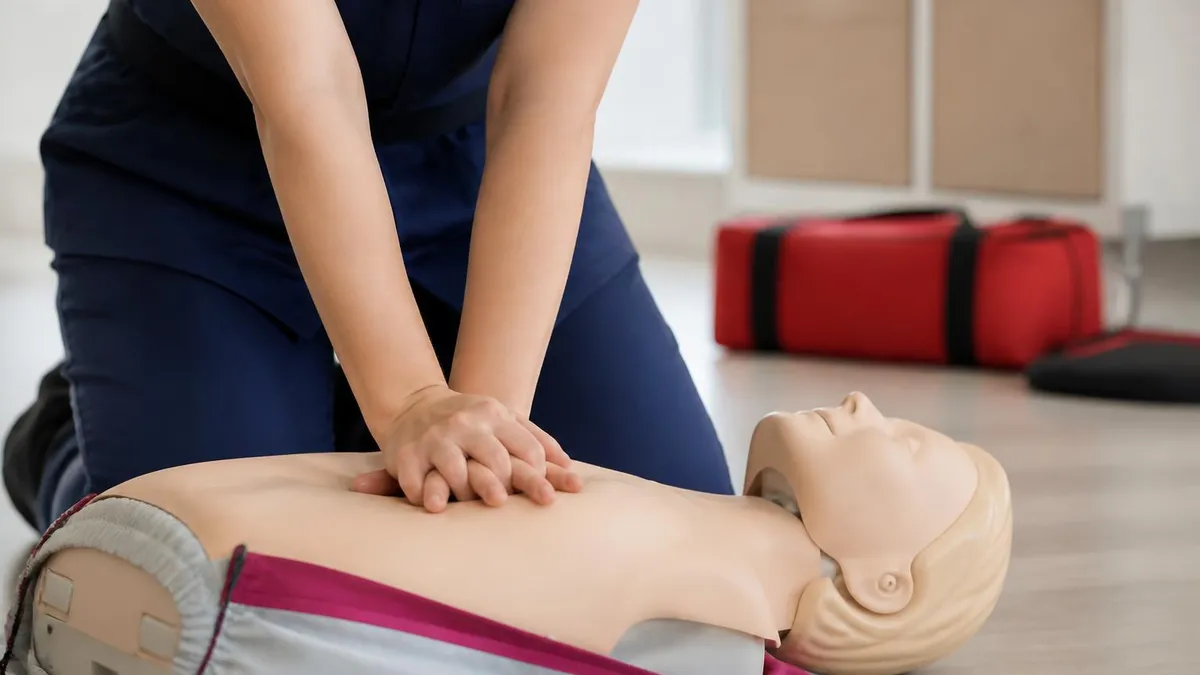
AHA BLS Certification: Course, Renewal, and Exam Guide
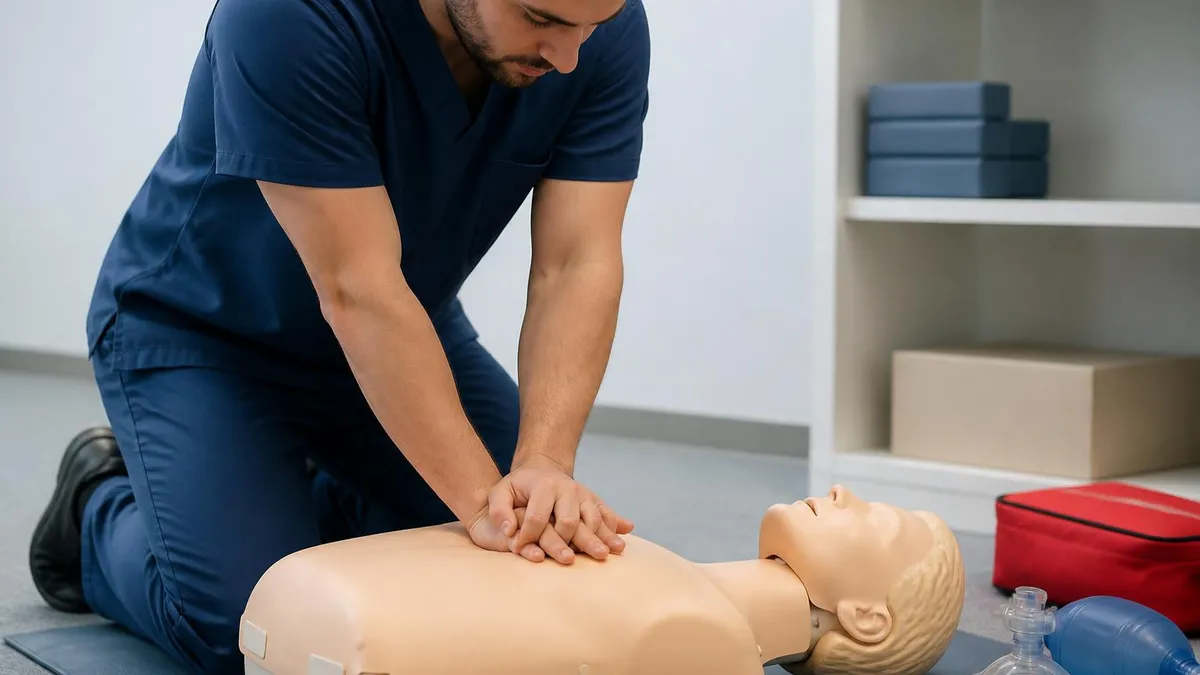
BLS Training: Course Content, Format & How to Get Certified

Online BLS: Complete Guide to Getting Your Basic Life Support Certification

BLS and ACLS Certification: Complete Training Guide for Healthcare Providers
About the Author

Registered Nurse & Healthcare Educator
Johns Hopkins University School of NursingDr. Sarah Mitchell is a board-certified registered nurse with over 15 years of clinical and academic experience. She completed her PhD in Nursing Science at Johns Hopkins University and has taught NCLEX preparation and clinical skills courses for nursing students across the United States. Her research focuses on evidence-based exam preparation strategies for healthcare certification candidates.
Join the Discussion
Connect with other students preparing for this exam. Share tips, ask questions, and get advice from people who have been there.
View discussion (8 replies)