
BLS vs ALS: Complete Comparison of Basic and Advanced Life Support 2026 October
BLS versus ALS explained: 🏆 scope, certification, salary, and career paths. Compare basic and advanced life support skills, training, and provider roles.
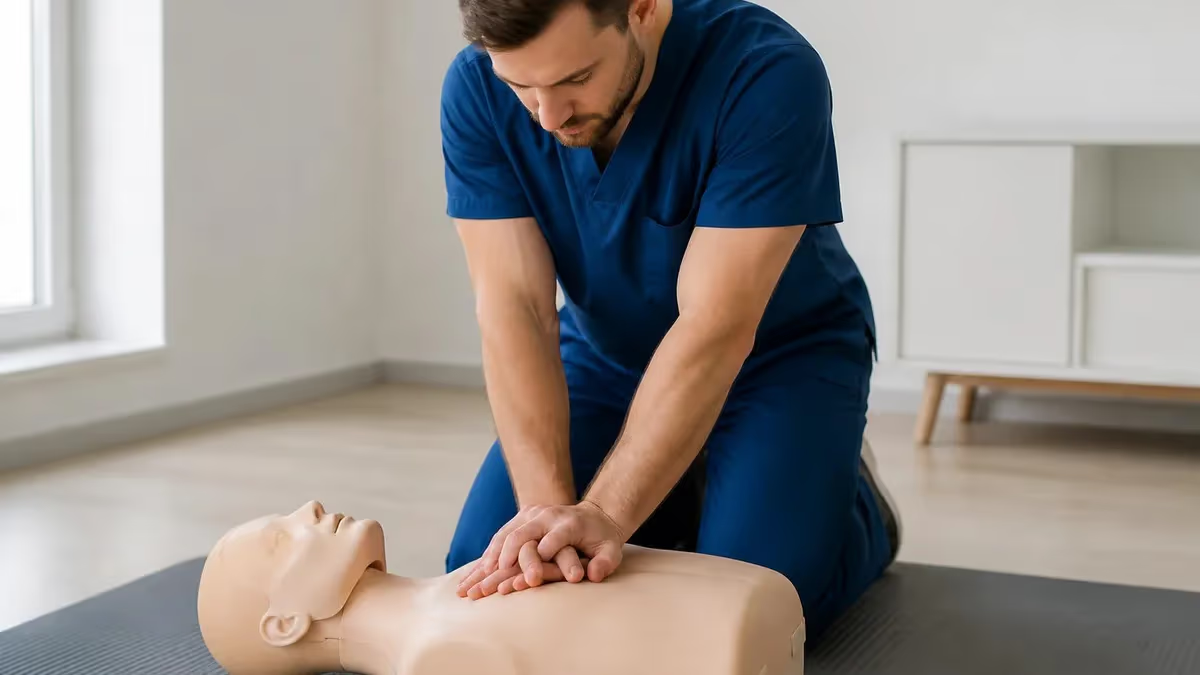
Understanding bls versus als is one of the most important distinctions any healthcare professional, EMS provider, or aspiring clinician needs to grasp early in their career. Both certifications focus on saving lives during cardiac, respiratory, and circulatory emergencies, but they operate at very different scopes of practice, with different equipment, medications, and decision-making authority. Knowing which level fits your role helps you choose the right training, avoid duplicate coursework, and stay compliant with employer and state requirements when seconds matter most.
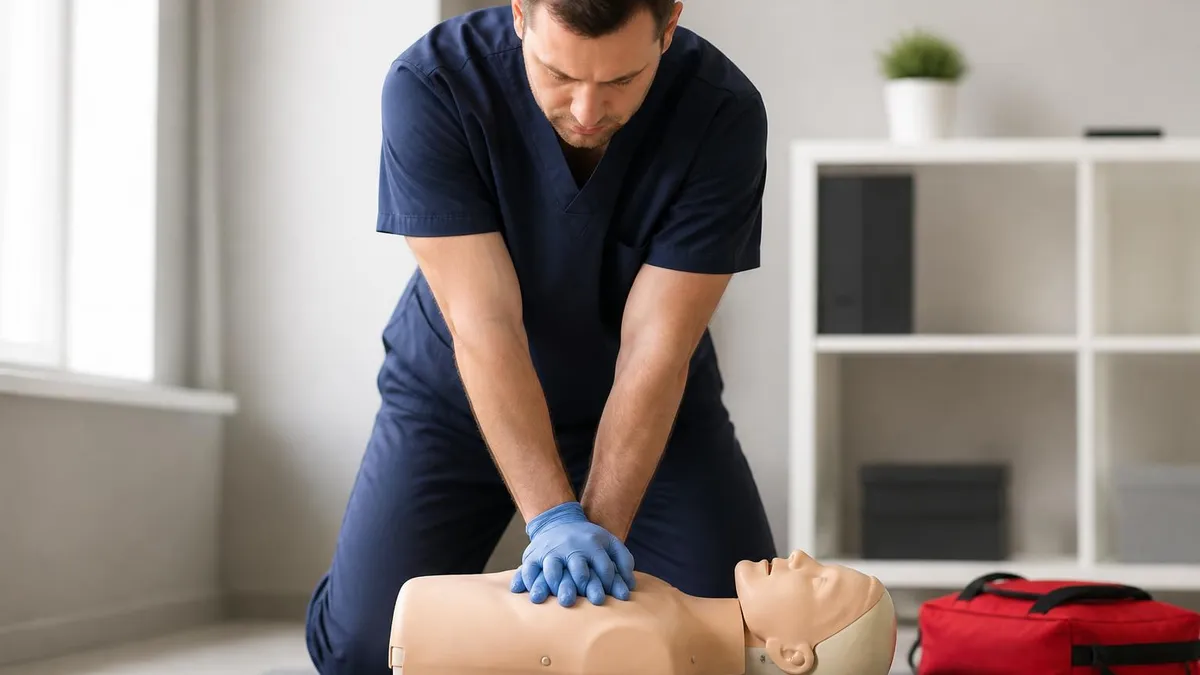
So what is a bls certification, exactly? Basic Life Support certification trains providers to recognize cardiac arrest, deliver high-quality CPR, use an automated external defibrillator (AED), relieve airway obstruction, and coordinate as a resuscitation team. It is the foundation that every Advanced Life Support provider must master before progressing. Without strong BLS skills, ALS interventions like intubation, IV access, and cardiac drug administration simply will not work because the patient lacks the perfusion that compressions and ventilation provide.
Advanced Life Support, by contrast, layers invasive interventions, advanced airway management, 12-lead ECG interpretation, and pharmacology on top of the BLS foundation. ALS providers — paramedics, ACLS-trained nurses, physicians, and respiratory therapists — can administer epinephrine, amiodarone, atropine, and other emergency medications, perform endotracheal intubation, decompress tension pneumothorax, and initiate transcutaneous pacing. The scope is broader, the legal authority is higher, and the training is significantly longer and more expensive.
The most common confusion students have is whether BLS is just CPR with a different name. It is not. BLS includes CPR, but also covers AED operation, two-rescuer techniques, infant and child resuscitation, choking relief across age groups, and team dynamics like closed-loop communication and role assignment. The American Heart Association and American Red Cross both offer BLS certification courses that meet hospital, EMS, and dental office requirements nationwide, and most healthcare employers will not accept a standalone CPR card in place of a BLS provider card.
For aspiring clinicians, the BLS-to-ALS pathway is sequential. You start with BLS, work as a CNA, EMT, or nursing student, and accumulate clinical hours before moving into paramedic school, nursing programs, or advanced provider tracks that require ACLS or PALS. Each step builds on the last, and skipping the BLS foundation creates dangerous gaps in muscle memory during real codes. This article breaks down every meaningful difference between the two levels so you can plan your training, budget, and timeline with confidence.
We will cover scope of practice, certification requirements, course length, costs, recertification cycles, salary impact, and the specific scenarios where each level is appropriate. You will also find practice questions, comparison tables, and answers to the most common questions students ask. By the end, you will know exactly which certification matches your role today and what to pursue next as your career grows.
This guide is written for nurses, EMTs, paramedics, medical students, dental staff, lifeguards, athletic trainers, and anyone else weighing whether to stop at BLS or push further into ALS territory. Whether you are renewing, certifying for the first time, or simply curious about the differences, the information below reflects current 2026 American Heart Association and Red Cross guidelines.
BLS vs ALS by the Numbers

Scope of Practice: What Each Level Can Do
Hands-only and ventilated CPR, AED use, bag-valve-mask ventilation, choking relief, recovery position, and team-based resuscitation. No medications, no advanced airways, no IV access.
Everything BLS providers do, plus endotracheal intubation, supraglottic airways, IV and IO access, 12-lead ECG interpretation, manual defibrillation, cardioversion, transcutaneous pacing, and emergency pharmacology.
BLS relies on AEDs, pocket masks, and BVMs. ALS adds cardiac monitors, laryngoscopes, infusion pumps, capnography, and full medication kits including epinephrine, amiodarone, and atropine.
BLS providers follow algorithms and call for advanced help. ALS providers operate under standing orders or medical control, make differential diagnoses, and initiate definitive treatment in the field or hospital.
BLS is required for nurses, dental staff, medical assistants, lifeguards, and EMTs. ALS is held by paramedics, ICU and ER nurses, anesthesia providers, physicians, and critical care transport teams.
Certification requirements differ dramatically between basic and advanced life support, and understanding them upfront prevents wasted tuition and missed job deadlines. To earn what is a bls certification today, you complete a 4-to-5-hour blended-learning or instructor-led course, pass a written exam with at least 84 percent, and demonstrate hands-on skills including 30:2 compressions, AED placement, infant CPR, and team communication. There are no prerequisites — anyone 14 years or older can enroll, and most students walk out the same day with a provider card valid for two years.
Advanced Cardiovascular Life Support (ACLS) and Pediatric Advanced Life Support (PALS) sit at the next tier. To enroll in ACLS, you must already hold a current BLS card because the course assumes mastery of compressions, ventilation, and AED use. ACLS adds 10-to-12 hours of classroom time covering megacode scenarios, rhythm recognition, and the cardiac arrest, bradycardia, and tachycardia algorithms. Paramedic-level ALS goes much further, requiring 1,200 to 1,800 hours of didactic, lab, clinical rotations, and field internship before national registry testing.
The basic life support for healthcare providers course is the most widely recognized entry point because the American Heart Association sets the curriculum used by almost every US hospital system. The Red Cross offers an equivalent course that meets the same Joint Commission and OSHA standards, and both providers issue digital cards that employers can verify online within seconds. Choosing between them usually comes down to local instructor availability, employer preference, and whether your workplace already has a contract with one organization.
For ALS, the AHA dominates the ACLS, PALS, and PEARS markets, while the National Registry of Emergency Medical Technicians (NREMT) governs paramedic licensing. State EMS offices add their own requirements on top, so a paramedic moving from Texas to California, for example, must verify reciprocity and may need to complete a state-specific refresher. Hospital-based ALS roles like ICU nursing typically require ACLS plus additional unit-specific competencies such as critical care or trauma certification.
Cost scales with complexity. A BLS course runs $65 to $110 depending on region and provider, and renewals are often cheaper through online blended formats. ACLS initial certification costs $200 to $300, PALS is similar, and paramedic programs at community colleges range from $5,000 to $15,000 plus uniforms, equipment, and exam fees. Many employers reimburse certification costs, so always check your benefits package before paying out of pocket — especially for ACLS and PALS, which are considered job-required training in most acute care settings.
Time investment is equally tiered. BLS can be completed in a single afternoon. ACLS requires two days for first-time students and one day for renewals. Paramedic school is a full academic year minimum, often two years when combined with associate degree coursework. Nursing programs that integrate ACLS during the senior year provide a smoother pathway, while EMT-to-paramedic bridges allow working EMTs to advance without leaving the workforce entirely.
The bottom line is that BLS is universal, ALS is specialized, and the two complement each other. Every ALS provider must maintain current BLS, and every BLS provider should understand when to call for ALS resources. Building both into your training plan early in your career gives you maximum flexibility and the strongest foundation for any clinical role you eventually pursue.

BLS Practice Test Questions
Prepare for the BLS - Basic Life Support exam with our free practice test modules. Each quiz covers key topics to help you pass on your first try.
BLS High-Quality CPR & Provider Skills
BLS Exam Questions covering BLS High-Quality CPR & Provider Skills. Master BLS Test concepts for certification prep.
BLS Special Situations & Scenarios
Free BLS Practice Test featuring BLS Special Situations & Scenarios. Improve your BLS Exam score with mock test prep.
BLS Adult, Child & Infant Resuscitation
BLS Mock Exam on Adult, Child & Infant Resuscitation. BLS Study Guide questions to pass on your first try.
BLS Airway Management & Ventilation
BLS Test Prep for Airway Management & Ventilation. Practice BLS Quiz questions and boost your score.
BLS Automated External Defibrillator (AED)...
BLS Questions and Answers on Automated External Defibrillator (AED) Use. Free BLS practice for exam readiness.
BLS Certification: Cardiac Arrest
BLS Mock Test covering Certification: Cardiac Arrest. Online BLS Test practice with instant feedback.
BLS Certification: Choking
Free BLS Quiz on Certification: Choking. BLS Exam prep questions with detailed explanations.
BLS Certification: Respiratory Arrest
BLS Practice Questions for Certification: Respiratory Arrest. Build confidence for your BLS certification exam.
BLS Chain of Survival
BLS Test Online for Chain of Survival. Free practice with instant results and feedback.
BLS CPR Techniques & Procedures
BLS Study Material on CPR Techniques & Procedures. Prepare effectively with real exam-style questions.
BLS Legal & Ethical Considerations
Free BLS Test covering Legal & Ethical Considerations. Practice and track your BLS exam readiness.
BLS Post-Resuscitation Care
BLS Exam Questions covering Post-Resuscitation Care. Master BLS Test concepts for certification prep.
Is BLS the Same as CPR? Clearing Up the Confusion
CPR is one component of BLS, not a separate certification. CPR by itself refers only to chest compressions and rescue breaths used to maintain circulation and oxygenation during cardiac arrest. A standalone CPR class teaches the technique but stops short of certifying you as a healthcare-level responder.
BLS expands on CPR by adding AED operation, two-rescuer coordination, infant and child variations, choking relief across age groups, and team dynamics. Healthcare employers, dental offices, and most clinical settings require the full BLS provider card and will not accept a community CPR certificate as a substitute for hiring or credentialing purposes.
Should You Stop at BLS or Pursue ALS?
- +BLS opens nearly every entry-level healthcare job in the US
- +Course can be completed in one afternoon for under $110
- +Renewal is straightforward with online blended options every two years
- +Provides the foundation needed for all advanced certifications later
- +Recognized nationwide by AHA, Red Cross, and Joint Commission
- +Skills translate to community lifesaving outside of work
- +No prerequisites — anyone 14 and older can enroll today
- −BLS alone limits you to assistant-level or basic EMT roles
- −Does not authorize medication administration or advanced airways
- −Required by 90% of clinical jobs, so it's a baseline, not a differentiator
- −Salary impact is minimal without additional certifications stacked on top
- −Some employers require both BLS and ACLS within 6 months of hire
- −Skills can degrade quickly without regular hands-on practice
- −Two-year renewal cycle means ongoing time and cost commitment

Basic Life Support Renewal Class Preparation Checklist
- ✓Confirm your current BLS card expiration date and renew 30 days before it lapses
- ✓Choose between AHA or Red Cross based on employer requirements
- ✓Decide on in-person, blended, or instructor-led skills check format
- ✓Review the 2020 AHA guidelines update for compression depth and rate
- ✓Practice 30:2 ratio for adults and 15:2 for two-rescuer infant CPR
- ✓Memorize AED pad placement for adults, children, and infants
- ✓Review choking relief sequence for conscious and unconscious victims
- ✓Study the chain of survival for in-hospital and out-of-hospital arrests
- ✓Bring photo ID and your current card to the skills session
- ✓Complete the online portion at least 24 hours before in-person check
BLS is the foundation — ALS is the expansion
Every ALS provider must maintain current BLS certification because advanced interventions only work when high-quality compressions and ventilation are already in place. Master BLS first, then layer ACLS, PALS, or paramedic training on top as your role demands.
The financial and career impact of choosing BLS versus ALS is significant, and understanding the numbers helps you plan a realistic training timeline. BLS certification alone qualifies you for roles like medical assistant ($38,000 average), CNA ($35,000), EMT-Basic ($40,000), dental assistant ($44,000), and patient care technician ($37,000). These positions are accessible quickly, often within 12 weeks of starting training, and they provide the clinical exposure you need to decide whether to advance further into nursing, paramedicine, or allied health.
ALS-credentialed providers command substantially higher salaries because their scope of practice generates more billable services and reduces the need for additional staff on a call or in a code. Paramedics average $51,000 nationally with strong overtime potential, ACLS-certified registered nurses earn $82,000 to $110,000 depending on specialty, and critical care transport paramedics in metropolitan areas can clear $90,000 with shift differentials. The investment in ALS training pays back within two to four years for most clinicians, especially when employers cover certification costs.
Career trajectory also widens dramatically with ALS. A paramedic can move into flight medicine, tactical EMS, community paramedicine, or transition to physician assistant or nursing school with credit for prior learning. An ACLS-trained nurse can specialize in ICU, ED, cath lab, or rapid response teams. These specialty roles often require additional certifications like CCRN, CEN, or TCRN, but the ALS foundation is non-negotiable. Without it, the doors to higher-acuity practice simply stay closed.
Geographic factors play a role too. Rural EMS systems often rely heavily on BLS-level ambulances with paramedic intercepts, meaning EMTs handle more of the call independently. Urban systems typically dispatch ALS units to every priority-one call, requiring paramedic-level staffing. Hospital systems in major metros frequently require ACLS within 90 days of hire for any nurse working in adult inpatient units, while smaller community hospitals may give a longer runway. Always check the specific job posting for certification timelines.
Continuing education requirements stack on top of the base certification. BLS renewal requires a skills check every two years, but no continuing education hours are mandated by the AHA itself. ACLS renewal also runs on a two-year cycle but assumes ongoing clinical exposure. Paramedics must complete 60 hours of continuing education every two years for national registry recertification, with specific minimum hours in airway, cardiology, trauma, medical, and operations topics. Many employers cover this training during paid work hours.
The opportunity cost matters as well. BLS takes one afternoon. ACLS takes two days plus prep. Paramedic school takes a full year of nights, weekends, and clinical rotations, often unpaid. If you have family obligations or financial constraints, mapping out a realistic timeline before you commit prevents burnout and program drop-out. Many successful paramedics worked as EMTs for one to three years before bridging up, gaining real call volume and pattern recognition that classroom training cannot replicate.
For long-term earning potential and clinical autonomy, ALS is almost always worth the investment if you plan to stay in emergency or critical care. For careers in outpatient settings, dental, school nursing, or administrative healthcare, BLS alone is usually sufficient. Understanding is bls and cpr the same question and how renewal cycles work helps you maintain compliance without overspending on training you do not actually need.
Once your BLS or ACLS card expires, most employers require you to complete the full initial course again rather than the shorter renewal version. This doubles your cost and time investment. Set a calendar reminder 60 and 30 days before expiration to schedule your renewal class.
Renewal and continuing education are where many providers stumble, so building a sustainable maintenance plan from day one matters. BLS recertification happens every two years and can be completed through three formats: full in-person courses (4-5 hours), blended learning with online didactic plus in-person skills check (2-3 hours total), or skills-only sessions if you take the AHA HeartCode online portion separately. Each format ends with the same skills demonstration and provider card, so choose based on your schedule and learning preference.
The american red cross basic life support renewal option has become increasingly popular because it lets busy clinicians complete most of the course on their phone or laptop during downtime. The Red Cross digital platform tracks progress automatically, allows pausing and resuming, and issues the new card within minutes of passing the in-person skills verification. AHA HeartCode works similarly and is accepted by every major hospital system as equivalent to the classroom version.
For ACLS renewal, the two-day initial course compresses to a one-day update for current cardholders. Expect megacode practice, written exam (84 percent passing), and skills stations covering airway management, rhythm recognition, and pharmacology. Many providers find the megacode the most stressful part because it requires real-time decision-making under instructor observation. Practicing with peers using a printed algorithm cheat sheet in the weeks before class dramatically improves performance and reduces test anxiety.
The aha basic life support exam and ACLS written exams both use multiple-choice questions drawn from the provider manual. Reading the manual once is rarely enough — most successful candidates review it twice, complete the practice questions at the end of each chapter, and take at least one full-length practice exam before testing day. The AHA student website includes free pretest questions, and several third-party platforms offer additional practice banks for $20 to $50.
Skill decay is real and well documented. Studies show that compression quality drops measurably within three months of certification, and rescue breathing technique deteriorates even faster. Hospitals increasingly require quarterly mock codes or quarterly CPR refresher sessions to combat this decay, especially in low-volume units like outpatient clinics where actual cardiac arrests are rare. Participating in these refreshers, even when optional, keeps your skills sharp and demonstrates initiative to supervisors.
For ALS providers, continuing education extends beyond the core certifications. Many states require paramedics to complete annual refreshers in airway management, cardiology, pediatrics, and operations. National Registry recertification requires 60 hours every two years, distributed across specific content areas. Hospital-based providers often complete annual competencies like central line care, ventilator management, and rapid sequence intubation in addition to their ACLS card. Building a personal continuing education tracker prevents last-minute scrambling when renewal deadlines arrive.
Finally, document everything. Keep digital copies of every certification card, continuing education certificate, and skills competency form in a cloud folder organized by year. When you change jobs, apply for a license endorsement in a new state, or pursue a higher credential, you will need to produce this documentation quickly. Providers who maintain organized records advance faster because they can respond to opportunities without delay caused by missing paperwork.
Now for the practical preparation tips that separate confident test-takers from anxious ones on exam day. Whether you are sitting for BLS or ACLS, the night before should focus on rest, not cramming. Review the algorithm pages one final time, lay out your photo ID and current card, confirm the testing location and parking, and get at least seven hours of sleep. Skills exams rely on muscle memory, and fatigue measurably degrades compression depth, rate, and ventilation timing during the practical portion.
Eat a real meal before class. Most BLS sessions run three to five hours with limited breaks, and ACLS spans most of a day. Low blood sugar makes it harder to think through algorithm branches and remember medication doses. Bring water and a snack for breaks, and avoid heavy caffeine that can make your hands shake during compression demonstrations. Wear comfortable clothing you can kneel and move in — scrubs or athletic wear work well, and closed-toe shoes are required at every testing center.
During the written exam, read every question twice before selecting an answer. AHA exam questions often include distractors that are technically correct but not the best answer for the scenario described. The right answer is usually the one most directly tied to the algorithm step being tested. If you are stuck between two choices, ask yourself which one a textbook instructor would select — the answer aligned with published guidelines almost always wins over the answer based on field experience or local protocol.
For the megacode and skills portions, narrate your actions out loud. Saying "I am checking for a pulse and breathing for no more than ten seconds" tells the instructor you understand the standard, even if your hands are doing it slightly differently than they expected. Closed-loop communication — repeating back orders like "epinephrine one milligram IV, given" — is graded explicitly in ACLS megacodes and demonstrates the team leadership skills the exam is designed to assess.
If you fail a portion, do not panic. Both AHA and Red Cross allow remediation on the same day or within a short window. Instructors are trained to coach you through the missed skill and retest immediately. Most failures happen on minor technicalities like incorrect compression depth or forgetting to wipe the chest before AED pad placement. These are easy to correct with one focused practice round, and remediation does not appear on your certification card.
Build a study group if your class allows it. Two or three peers practicing together for two hours the week before class outperforms five hours of solo study because you can quiz each other, simulate scenarios, and catch errors in real time. Free practice questions, video walkthroughs, and algorithm flashcards are abundant online — use the official AHA or Red Cross materials first, then supplement with reputable third-party resources for additional reps.
Finally, remember that certification is the floor, not the ceiling. Passing the exam means you meet the minimum standard for safe practice on the day you tested. True competence comes from repetition in real clinical settings, debriefing after actual codes, and continuous learning between renewals. Approach every certification cycle as a chance to refresh and improve, not just a box to check, and your skills will serve patients well throughout your career.
BLS Questions and Answers
Pediatric BLS Algorithm: Complete 2026 Guide for Healthcare Providers
How Long Does BLS Certification Last? Complete 2026 Renewal Guide
American Heart Association BLS: Certification, Renewal, Cost & What to Expect
Online BLS Renewal: Complete 2026 Guide to Recertifying Your Basic Life Support Card
BLS Practice Test Video Answers
About the Author

Registered Nurse & Healthcare Educator
Johns Hopkins University School of NursingDr. Sarah Mitchell is a board-certified registered nurse with over 15 years of clinical and academic experience. She completed her PhD in Nursing Science at Johns Hopkins University and has taught NCLEX preparation and clinical skills courses for nursing students across the United States. Her research focuses on evidence-based exam preparation strategies for healthcare certification candidates.
Join the Discussion
Connect with other students preparing for this exam. Share tips, ask questions, and get advice from people who have been there.
View discussion (8 replies)