
Chain of Survival CPR: The 6 Critical Links That Save Lives in 2026 October
Master the chain of survival CPR with our 2026 October guide covering all 6 links, 🗨️ ACLS algorithm steps, AED use, and post-cardiac arrest care.
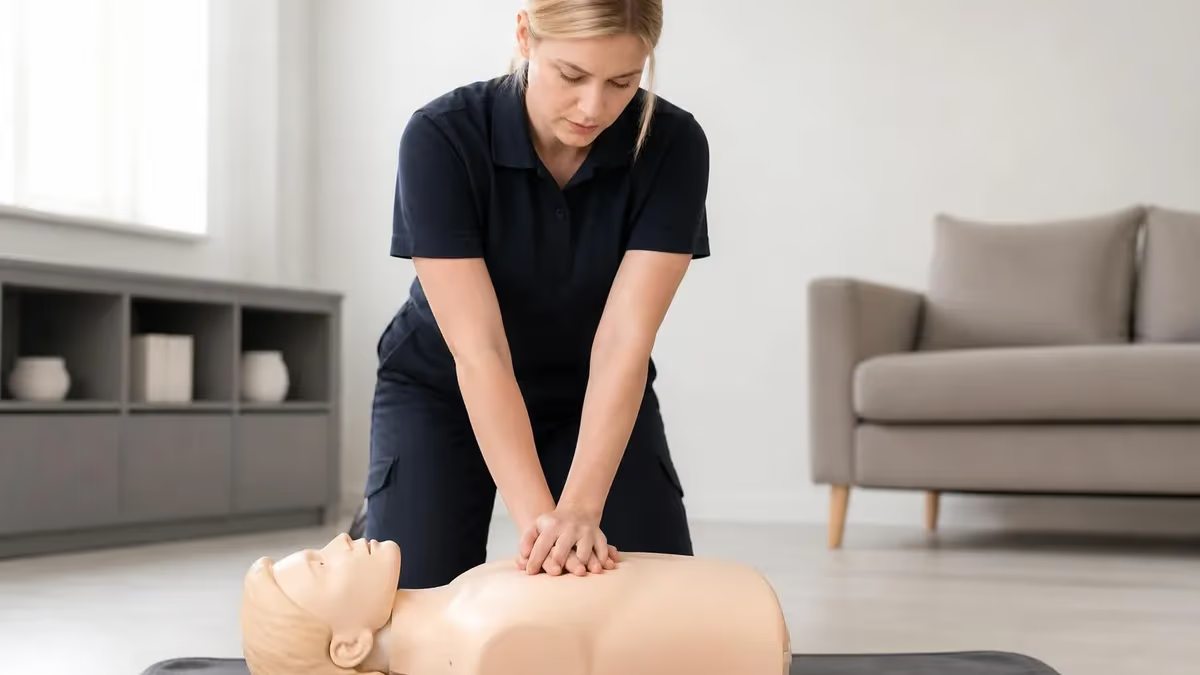
The chain of survival cpr framework is the single most important concept in modern resuscitation medicine, representing a sequence of time-critical actions that dramatically improve survival from sudden cardiac arrest. First introduced by the American Heart Association in 1991, this model has been refined repeatedly, and the 2020-2025 guidelines now recognize six distinct links rather than the original five. Each link strengthens the next, and a single broken link can reduce survival probability to nearly zero, which is why every bystander, healthcare professional, and first responder must understand the full sequence.
When a person collapses from sudden cardiac arrest, their brain begins to die within four to six minutes without oxygenated blood flow. The chain of survival exists precisely to bridge that gap until advanced medical care arrives. The six links include immediate recognition and activation of emergency response, early high-quality CPR, rapid defibrillation, advanced resuscitation by emergency medical services, post-cardiac arrest hospital care, and recovery support that extends weeks or months beyond hospital discharge. Each link has measurable performance standards backed by decades of clinical research.
The acls algorithm provides healthcare professionals with the structured decision-making framework that operationalizes the third through fifth links of the chain. It guides clinicians through rhythm interpretation, drug administration timing, airway management decisions, and reversible cause identification. Meanwhile, organizations like the national cpr foundation and the American Heart Association continue updating evidence-based protocols that translate laboratory science into bedside practice, ensuring that the chain itself evolves as new research emerges from clinical trials and registry data worldwide.
What makes the chain of survival uniquely powerful is its scalability across settings and patient populations. The same conceptual framework applies whether the victim is a 65-year-old man collapsing in a shopping mall, a 4-month-old infant requiring infant cpr after a respiratory event, or a hospitalized patient experiencing in-hospital cardiac arrest. Different versions of the chain exist for pediatric and adult patients, and for in-hospital versus out-of-hospital arrest, but the underlying principle remains identical: rapid, sequential, coordinated action saves lives.
Survival statistics tell a sobering story about why this matters. Approximately 350,000 out-of-hospital cardiac arrests occur annually in the United States, with an average survival rate of just 10 percent. However, when bystanders perform CPR and use an AED within the first three minutes of collapse, survival rates climb to over 40 percent. That difference, four-fold improvement, represents tens of thousands of additional Americans who could return home each year if more communities understood and acted on the chain of survival framework.
This comprehensive guide walks through each link in detail, explains the ACLS algorithm decisions that connect them, discusses pediatric and infant variations, and provides the practical knowledge you need to act decisively during a cardiac emergency. Whether you are a layperson taking your first CPR class, a nursing student preparing for pals certification, or an experienced provider seeking a refresher on current guidelines, you will find evidence-based information you can use immediately. The chain only works when every link is strong, and that begins with you.
By the end of this article, you will understand not only what each link does but why the sequence matters, how the science behind it has evolved, and what specific actions you should take in the first 60 seconds after witnessing a collapse. We will also cover common misconceptions about CPR, the meaning behind technical terms like AED and ROSC, and how recovery extends far beyond the immediate emergency. Cardiac arrest is survivable, but only when communities, responders, and hospitals work together as a coordinated team.
Chain of Survival by the Numbers

The 6 Links of the Chain of Survival
Immediate recognition of cardiac arrest and activation of the emergency response system by calling 911. This first link is performed almost exclusively by bystanders and is the gateway to all subsequent care.
Immediate initiation of high-quality chest compressions with an emphasis on adequate rate, depth, and full chest recoil. Hands-only CPR is acceptable for untrained bystanders responding to adult collapse.
Use of an automated external defibrillator as soon as one becomes available. Defibrillation within 3-5 minutes can produce survival rates as high as 50-70 percent in witnessed arrests.
Arrival of EMS personnel who provide advanced airway management, intravenous access, cardiac medications such as epinephrine, and continuous rhythm monitoring during transport to a receiving hospital.
Hospital-based interventions including targeted temperature management, coronary catheterization when indicated, mechanical ventilation, and intensive care monitoring designed to optimize neurological outcome.
Newest addition to the chain, addressing long-term physical, cognitive, and emotional rehabilitation. Recovery support extends to family members and recognizes survival as an ongoing process, not a single moment.
Recognition and activation, the first link of the chain of survival, begins the moment a bystander witnesses someone collapse or finds an unresponsive person. The American Heart Association teaches a simple three-part assessment: check responsiveness by tapping the shoulder and shouting, look for absent or abnormal breathing such as agonal gasps, and confirm there is no normal pulse if you are trained to assess one. Laypeople are now taught to skip the pulse check entirely because untrained rescuers frequently misidentify pulses, wasting precious seconds during which compressions could have been started.
Agonal breathing is one of the most commonly missed signs of cardiac arrest. These gasping, irregular breaths can persist for several minutes after the heart stops effectively pumping, and witnesses often interpret them as evidence that the person is still alive. Dispatchers trained in telecommunicator-assisted CPR are taught to specifically ask whether the patient is breathing normally and to coach callers to recognize agonal respirations as a sign of arrest, not life. Recognizing this pattern accelerates the chain by triggering CPR initiation seconds or minutes sooner.
Once arrest is recognized, activating the emergency response system means calling 911 in the United States, or sending someone else to call while you begin CPR. Modern smartphones allow speakerphone communication, so a single rescuer can talk with the dispatcher and perform compressions simultaneously. If an AED is available nearby, send another bystander to retrieve it. In public locations like airports, casinos, and large office buildings, AED placement is mandatory under most state laws, and the devices are typically marked with the universal green and white AED signage.
The respiratory rate of a normal adult at rest is 12 to 20 breaths per minute, with regular, smooth chest movement. In cardiac arrest, breathing either stops entirely or becomes the abnormal agonal pattern described above. For pediatric and infant patients, normal respiratory rate varies by age, ranging from 30-60 breaths per minute in newborns down to 12-20 in adolescents. Understanding age-appropriate norms helps responders recognize when something is wrong, particularly in cases where respiratory failure may precede full cardiac arrest in children.
Dispatcher-assisted CPR, often called telephone CPR or T-CPR, has emerged as one of the most impactful innovations in the chain of survival over the past decade. Trained dispatchers identify probable cardiac arrest within the first 60 seconds of a 911 call and provide clear, scripted compression instructions to the caller. Studies show T-CPR programs nearly double the rate of bystander CPR in communities that implement them rigorously, and the AHA now recognizes high-quality dispatcher assistance as a critical bridge between recognition and effective chest compressions.
Time is the universal currency of cardiac arrest care. Each minute that passes without CPR or defibrillation reduces survival by approximately 7 to 10 percent. After 10 minutes without intervention, survival approaches zero. This unforgiving timeline is why the first link must happen in seconds, not minutes. Communities that have invested in widespread CPR training, public AED placement, and dispatcher T-CPR programs consistently demonstrate survival rates two to three times higher than the national average, proving that the chain works when its first link is forged strong.
Common barriers to bystander action include fear of legal liability, worry about hurting the victim, and uncertainty about technique. All 50 US states have Good Samaritan laws protecting bystanders who provide CPR in good faith, and the AHA has consistently messaged that imperfect CPR is vastly better than no CPR. The risk of harming someone in cardiac arrest by performing compressions is essentially zero because, without intervention, that person will die. Acting decisively, even imperfectly, is always the right choice.

CPR Practice Test Questions
Prepare for the CPR Cardiopulmonary Resuscitation Practice exam with our free practice test modules. Each quiz covers key topics to help you pass on your first try.
CPR Basic CPR
CPR Exam Questions covering Basic CPR. Master CPR Test concepts for certification prep.
CPR and First Aid
Free CPR Practice Test featuring and First Aid. Improve your CPR Exam score with mock test prep.
CPR (Cardiopulmonary Resuscitation) Adult ...
CPR Mock Exam on (Cardiopulmonary Resuscitation) Adult CPR and AED Usage. CPR Study Guide questions to pass on your first try.
CPR (Cardiopulmonary Resuscitation) Airway...
CPR Test Prep for (Cardiopulmonary Resuscitation) Airway Obstruction and Choking. Practice CPR Quiz questions and boost your score.
CPR (Cardiopulmonary Resuscitation) Cardio...
CPR Questions and Answers on (Cardiopulmonary Resuscitation) Cardiopulmonary Emergency Recognition. Free CPR practice for exam readiness.
CPR (Cardiopulmonary Resuscitation) Child ...
CPR Mock Test covering (Cardiopulmonary Resuscitation) Child and Infant CPR. Online CPR Test practice with instant feedback.
CPR (Cardiopulmonary Resuscitation) High-P...
Free CPR Quiz on (Cardiopulmonary Resuscitation) High-Performance Team Dynamics. CPR Exam prep questions with detailed explanations.
CPR (Cardiopulmonary Resuscitation) Legal ...
CPR Practice Questions for (Cardiopulmonary Resuscitation) Legal and Ethical Considerations. Build confidence for your CPR certification exam.
CPR for Specific Populations
CPR Test Online for for Specific Populations. Free practice with instant results and feedback.
CPR Airway & Breathing Management
CPR Exam Questions covering Airway & Breathing Management. Master CPR Test concepts for certification prep.
CPR Assessment & Recognition of Cardiac Ar...
Free CPR Practice Test featuring Assessment & Recognition of Cardiac Arrest. Improve your CPR Exam score with mock test prep.
CPR Chest Compressions & Defibrillation
CPR Mock Exam on Chest Compressions & Defibrillation. CPR Study Guide questions to pass on your first try.
CPR Post-Resuscitation Care & Recovery
CPR Test Prep for Post-Resuscitation Care & Recovery. Practice CPR Quiz questions and boost your score.
Life Support Techniques and Quality Compressions
High-quality chest compressions must be delivered at a rate of 100 to 120 per minute for victims of any age. This rate corresponds to roughly two compressions per second and is famously matched to the beat of songs like Stayin' Alive by the Bee Gees. Rates faster than 120 reduce the time available for the heart to refill between compressions, while rates slower than 100 produce inadequate forward blood flow to vital organs.
Modern AEDs and CPR feedback devices provide real-time audio and visual cues to help rescuers maintain optimal rate. In hospital settings, code teams often use metronomes or smart monitors that display compression rate, depth, and recoil. Studies show that rescuers without feedback drift toward faster compressions over time, which actually worsens outcomes by reducing depth and complete recoil between each compression.
Hands-Only CPR vs Standard CPR with Breaths
- +Easier for untrained bystanders to remember and execute
- +Eliminates hesitation about mouth-to-mouth contact with strangers
- +Maintains continuous chest compressions without interruption
- +Studies show equivalent survival for adult witnessed arrest
- +Simpler dispatcher coaching during 911 calls
- +Reduces rescuer fatigue from coordinated breath delivery
- −Not appropriate for pediatric or infant arrest cases
- −Inadequate for arrests of respiratory origin like drowning
- −Cannot address hypoxic causes of cardiac arrest effectively
- −Less effective for prolonged resuscitation efforts
- −Does not replace standard CPR for trained providers
- −Limited use in opioid overdose with respiratory arrest
Pros and Cons at a Glance
| Pros | Cons |
|---|---|
| Easier for untrained bystanders to remember and execute | Not appropriate for pediatric or infant arrest cases |
| Eliminates hesitation about mouth-to-mouth contact with strangers | Inadequate for arrests of respiratory origin like drowning |
| Maintains continuous chest compressions without interruption | Cannot address hypoxic causes of cardiac arrest effectively |
| Studies show equivalent survival for adult witnessed arrest | Less effective for prolonged resuscitation efforts |
| Reduces rescuer fatigue from coordinated breath delivery | Does not replace standard CPR for trained providers |

AED and Defibrillation Critical Action Checklist
- ✓Retrieve the nearest AED while continuing chest compressions
- ✓Power on the device and follow the voice prompts immediately
- ✓Expose the victim's bare chest and dry any moisture present
- ✓Apply pads as illustrated on the device packaging
- ✓Use pediatric pads or pediatric mode for children under 8 years
- ✓Ensure no one is touching the victim during rhythm analysis
- ✓Clearly announce stand clear before delivering any shock
- ✓Resume CPR immediately after shock without checking pulse
- ✓Continue cycles of two minutes of CPR followed by rhythm analysis
- ✓Leave AED pads attached when EMS arrives for continuity of care
AED Means Automated External Defibrillator
What does aed stand for? An AED is an Automated External Defibrillator, a portable device that analyzes heart rhythm and delivers an electrical shock if needed to restore normal cardiac activity. Modern AEDs are designed for use by untrained bystanders, with voice prompts that guide every step. Defibrillation within the first 3-5 minutes of collapse can produce survival rates as high as 70 percent, making the AED the single most powerful tool in the chain of survival.
Advanced resuscitation begins when emergency medical services arrive on scene and continues through hospital arrival. The acls algorithm provides the structured framework that paramedics and physicians follow during this phase. The algorithm branches based on the patient's cardiac rhythm: ventricular fibrillation and pulseless ventricular tachycardia are shockable rhythms treated with defibrillation, while pulseless electrical activity and asystole are non-shockable rhythms managed with CPR, epinephrine, and aggressive search for reversible causes commonly remembered through the H's and T's mnemonic.
Epinephrine remains the cornerstone medication during cardiac arrest, administered as 1 mg intravenously every 3 to 5 minutes throughout the resuscitation. The drug works by stimulating alpha-adrenergic receptors, which increases peripheral vascular resistance and improves coronary and cerebral perfusion pressure during chest compressions. For shockable rhythms refractory to initial defibrillation, amiodarone or lidocaine may be added per the algorithm. The timing of medication administration is coordinated with the two-minute compression cycles to minimize interruptions in chest compressions.
Advanced airway management during cardiac arrest has evolved significantly in recent years. While endotracheal intubation was once considered the gold standard, supraglottic airways like the King LT or i-gel are now equally acceptable and faster to insert. The shift recognizes that interruption of chest compressions during airway placement worsens outcomes, and that simpler devices placed quickly often provide equivalent ventilation. Capnography monitoring after airway placement confirms proper positioning and provides real-time feedback on CPR quality and return of spontaneous circulation.
The H's and T's framework identifies reversible causes that must be considered and treated during every cardiac arrest. The H's include hypoxia, hypovolemia, hydrogen ion excess (acidosis), hypo- and hyperkalemia, and hypothermia. The T's include tension pneumothorax, tamponade (cardiac), toxins, and thrombosis (pulmonary or coronary). Each reversible cause has specific treatment, and identifying the underlying etiology often determines whether resuscitation succeeds. Point-of-care ultrasound, arterial blood gas analysis, and rapid history-taking from family or bystanders all contribute to this diagnostic process.
Post-cardiac arrest care, the fifth link, begins immediately after return of spontaneous circulation. Targeted temperature management cools the patient to 32-36°C for at least 24 hours to reduce neurological injury caused by ischemia-reperfusion. Coronary angiography is performed urgently when myocardial infarction is suspected, since acute coronary occlusion causes a substantial fraction of out-of-hospital arrests. Mechanical ventilation is titrated to maintain normal oxygen and carbon dioxide levels, and hemodynamic support with vasopressors is provided as needed to maintain perfusion pressure.
Pediatric advanced life support follows similar principles with critical differences in dosing, equipment sizing, and rhythm interpretation. Pals certification covers these distinctions in depth, emphasizing weight-based medication dosing using length-based resuscitation tapes, age-appropriate airway equipment, and the predominance of respiratory etiologies in pediatric arrest. The Pediatric Assessment Triangle helps clinicians rapidly identify children at risk before full arrest occurs, allowing earlier intervention that often prevents the need for full resuscitation.
Hospital systems certified as comprehensive cardiac arrest centers have demonstrated significantly better outcomes than non-specialized facilities. These centers maintain 24/7 cardiac catheterization capability, dedicated post-arrest care teams, neurological prognostication protocols, and rehabilitation pathways. Many regions now have EMS protocols that route arrest patients with return of spontaneous circulation directly to these specialized centers, similar to trauma triage systems, recognizing that hospital capability matters as much as prehospital care quality in determining final outcomes.
For every minute that passes without CPR and defibrillation, the chance of survival from sudden cardiac arrest decreases by 7 to 10 percent. After 10 minutes without intervention, survival approaches zero regardless of subsequent care quality. Do not wait for EMS to arrive before beginning compressions, and do not delay AED use to start an IV or check vital signs. The chain of survival only works when each link is forged in seconds, not minutes.
The sixth and newest link in the chain of survival, recovery, was formally added to the AHA framework in 2020 to recognize that surviving cardiac arrest is the beginning of a journey, not its end. Up to 50 percent of cardiac arrest survivors experience long-term cognitive impairments, including memory problems, executive function deficits, and slowed processing speed. Physical limitations from prolonged ICU stays, including ICU-acquired weakness and deconditioning, often require months of rehabilitation. Emotional sequelae like post-traumatic stress disorder, depression, and anxiety affect both survivors and their family members.
Cardiac rehabilitation programs designed for arrest survivors differ from traditional post-myocardial infarction rehab by incorporating cognitive screening, neuropsychological support, and family counseling alongside the standard cardiovascular conditioning. Survivors benefit from supervised exercise programs that gradually rebuild capacity, education about implantable cardioverter-defibrillators when indicated, and peer support groups connecting them with others who have shared the experience. The structured recovery period typically extends 6 to 12 months following discharge.
Position recovery refers to the recovery position, used for unresponsive patients who are breathing normally but cannot protect their own airway. The position involves rolling the person onto their side with the lower arm extended forward, the upper leg bent for stability, and the head tilted slightly to allow secretions to drain. This is used after return of spontaneous circulation when the patient is breathing but not yet fully alert, or for unconscious patients from causes other than cardiac arrest such as seizure, intoxication, or stroke pending EMS arrival.
Family support is now recognized as an essential component of recovery. Witnessing a loved one's cardiac arrest is profoundly traumatic, and the AHA recommends that family members be offered the option to remain present during resuscitation efforts when safety and team workflow permit. Studies show that family presence reduces long-term PTSD symptoms in surviving relatives and does not negatively impact resuscitation quality. Bereavement support for families whose loved ones do not survive is equally important and often inadequately provided.
Return to work, driving, and daily activities follows a structured timeline based on the survivor's underlying cardiac diagnosis, neurological status, and any device implantation. Most cardiac arrest survivors with implantable cardioverter-defibrillators face driving restrictions for 3 to 6 months, varying by state and jurisdiction. Occupational rehabilitation considers physical demands of the previous job, cognitive requirements, and the survivor's specific functional limitations. Many survivors successfully return to full employment, while others transition to modified roles or retirement.
Public reporting of cardiac arrest outcomes through registries like the Cardiac Arrest Registry to Enhance Survival (CARES) drives continuous quality improvement at the community and hospital level. These registries track every step of the chain, from bystander CPR rates to hospital survival to neurological outcome at discharge. Communities that monitor and benchmark their performance consistently improve over time, while those that do not measure their outcomes typically stagnate or decline. Transparency and accountability are essential for chain-wide improvement.
The future of cardiac arrest care is moving toward personalization based on rhythm-specific protocols, mechanical CPR devices for prolonged efforts, extracorporeal CPR for selected patients, and even closer integration with telemedicine guidance for rural EMS systems. Emerging research on neuroprotective medications, optimal blood pressure targets after resuscitation, and individualized temperature management protocols promises to further improve outcomes in coming years. The chain of survival framework will continue evolving, but the core principle of rapid, sequential, coordinated action will remain central to saving lives.
Practical preparation for cardiac emergencies starts with formal CPR training, ideally from an AHA, Red Cross, or American Safety and Health Institute certified instructor. Hands-on practice with manikins and AED trainers builds the muscle memory that allows you to act decisively under stress. Online-only courses can provide cognitive knowledge but do not substitute for in-person skills practice. Many community organizations, fire departments, and hospitals offer free or low-cost training, and workplace wellness programs increasingly include CPR certification as a benefit.
Knowing the location of AEDs in your daily environment is a simple but powerful preparation step. Apps like PulsePoint AED and the AED Registry allow you to map nearby devices and even register AEDs you discover. Some smartphone apps notify CPR-trained users when a nearby cardiac arrest is reported, dramatically reducing the time from collapse to bystander intervention in participating communities. These crowdsourced response systems have demonstrated meaningful improvements in survival rates where deployed at scale.
For families with members at elevated cardiac risk, household preparation includes ensuring all adults know CPR, considering home AED purchase for highest-risk individuals, maintaining a current list of medications and medical history in an accessible location, and rehearsing the emergency response plan periodically. Home AEDs cost approximately 1,200 to 2,500 dollars, with no prescription required, and may be appropriate for households with known cardiac disease, recent arrest history, or significant time delays to EMS arrival in rural areas.
Workplace and community preparedness involves more than equipment purchase. Effective programs include written response plans, regular drills, clear designation of trained responders, AED maintenance schedules including battery and pad expiration tracking, and integration with local EMS for protocol alignment. Schools, gyms, places of worship, and entertainment venues have all demonstrated meaningful chain-of-survival improvements when comprehensive programs are implemented and maintained over time rather than treated as one-time investments.
Despite popular belief, you do not need certification to legally use an AED or perform CPR in any US state. Good Samaritan laws specifically protect bystanders who provide reasonable assistance in good faith, and AED devices are designed for untrained use with voice prompts that guide every step. The legal risk of attempting to help is essentially zero, while the moral and emotional weight of having stood by during a preventable death affects rescuers and witnesses for decades. Action is always better than inaction.
For healthcare professionals, maintaining current certification in BLS, ACLS, and PALS as appropriate to your scope of practice requires planning ahead. Most certifications expire every two years, and lapsed credentials can affect employment status, hospital privileges, and professional licensure in many states. Online renewal options through the AHA Heart Code program combine self-paced cognitive learning with mandatory hands-on skills testing, allowing busy clinicians to maintain credentials efficiently while preserving the hands-on practice essential to skill maintenance.
Finally, remember that the chain of survival is community infrastructure, not just individual skill. Advocate for AED placement in your workplace, school, and public venues. Support local CPR training initiatives and dispatcher T-CPR programs. Encourage local government to invest in EMS capability and post-arrest hospital certification. The systems that save lives during cardiac arrest are built one decision at a time by ordinary citizens, employers, and elected officials who understand that any person, at any moment, could become the critical first link in someone's chain of survival.
CPR Questions and Answers
CPR Card Lookup: How to Verify, Replace, and Access Your CPR Certification in 2026
Adult CPR: Complete Step-by-Step Guide to Hands-Only and Standard CPR in 2026
CPR - Cardiopulmonary Resuscitation: Complete Study Guide 2026
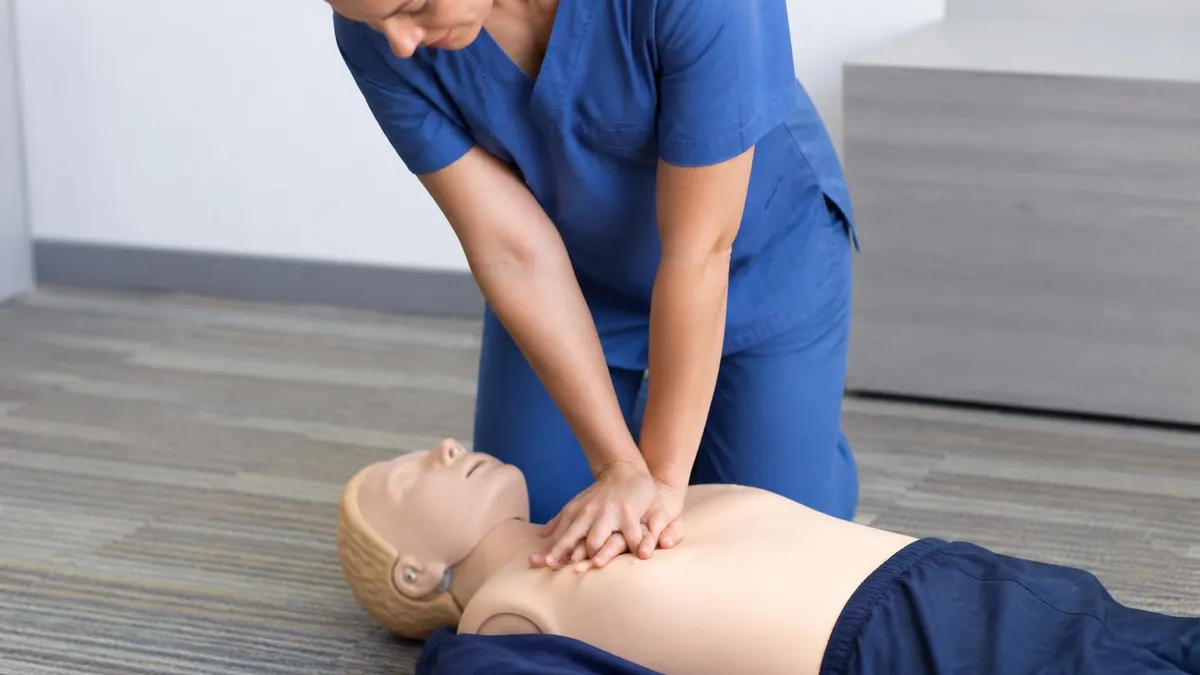
Inappropriate CPR Songs: What Not to Play, Why It Matters, and Better Beat-Per-Minute Alternatives
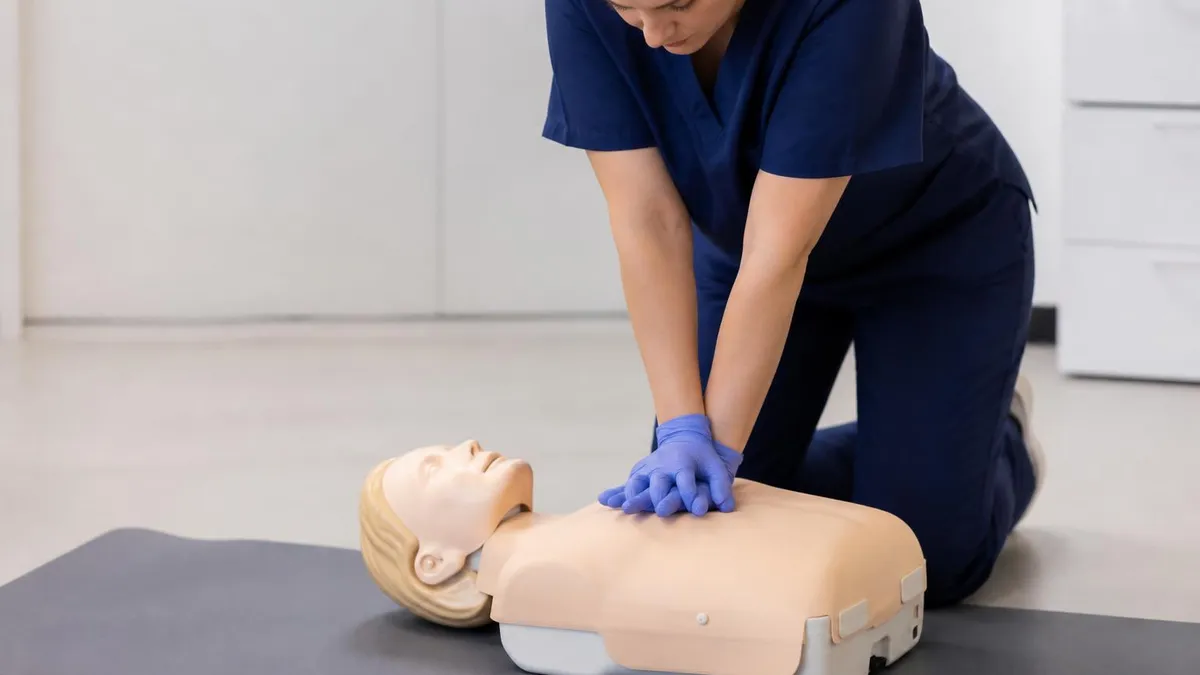
AHA CPR Recertification: How to Recertify CPR Online with the American Heart Association in 2026
About the Author

Registered Nurse & Healthcare Educator
Johns Hopkins University School of NursingDr. Sarah Mitchell is a board-certified registered nurse with over 15 years of clinical and academic experience. She completed her PhD in Nursing Science at Johns Hopkins University and has taught NCLEX preparation and clinical skills courses for nursing students across the United States. Her research focuses on evidence-based exam preparation strategies for healthcare certification candidates.
Join the Discussion
Connect with other students preparing for this exam. Share tips, ask questions, and get advice from people who have been there.
View discussion (5 replies)