
CPR Exam: Complete Guide to Passing Your Certification Test in 2026 October
Master the CPR exam with our complete 2026 October guide. Study tips, 🎯 practice questions, pass rates, and step-by-step prep for BLS, ACLS, and PALS certification.
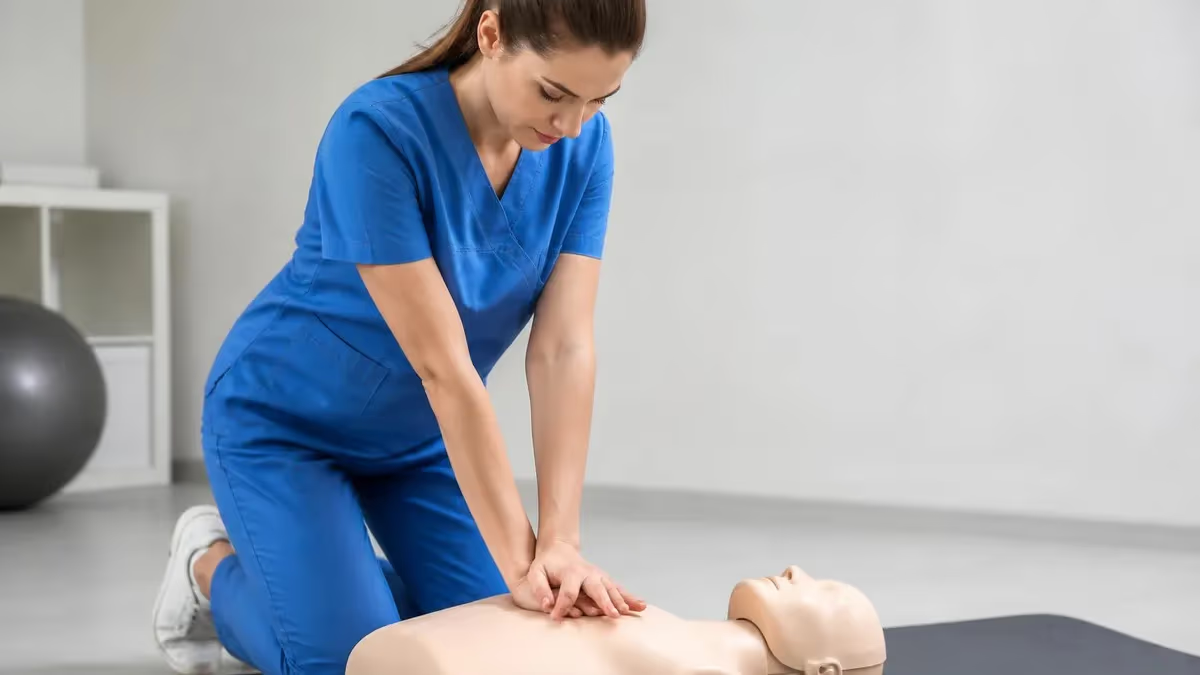
The CPR exam is the final checkpoint between you and a valid certification card, and it tests far more than memorized steps. Whether you are sitting for a Basic Life Support (BLS) test through the American Heart Association, an online assessment through the National CPR Foundation, or an in-person skills check at a community course, you will be asked to demonstrate timing, depth, ratios, and decision-making under pressure. This guide walks you through every section of the modern CPR exam, what graders actually score, and how to study so you pass on the first attempt.
Most candidates underestimate how much the written portion overlaps with the hands-on portion. A typical CPR exam blends roughly 25 multiple-choice questions with a skills demonstration on adult, child, and infant manikins. The questions are not designed to trick you, but they do test edge cases: what to do when a victim vomits, when to switch compressors, how to handle a pregnant patient, and exactly when to attach an AED. Knowing the textbook answer is only half the battle — you also have to apply it in real time.
This article is written for first-time test takers, healthcare workers renewing every two years, and lay rescuers who want to verify their skills. We cover the exam format, pass rates, study schedules, and the most-missed questions across every major certifying body. You will also find embedded practice quizzes drawn from our question bank, so you can self-test as you read rather than waiting until exam day.
Before we dive in, it helps to understand what the exam is really measuring. Certifying bodies want proof that you can recognize cardiac arrest within ten seconds, deliver high-quality compressions at the correct rate and depth, integrate an AED safely, and adapt your technique for infants and children. Every question on the written portion maps back to one of those competencies, which is why rote memorization without context tends to fail.
The good news is that the CPR exam has one of the highest pass rates in clinical certification, hovering around 90 percent for first-time takers who complete a structured prep course. The bad news is that the 10 percent who fail almost always do so for predictable reasons: shallow compressions, wrong ratios for children, or forgetting to verify scene safety. By the end of this guide you will know how to avoid each of those pitfalls.
If you are starting from zero, plan on roughly 6 to 8 hours of focused study spread across one to two weeks. If you are renewing, 2 to 3 hours of review is usually enough, plus a single practice exam to confirm retention. We recommend mixing reading, video demonstrations, and timed practice questions so all three learning modalities reinforce each other before you walk into the testing room.
Finally, remember that the goal is not just to pass — it is to be ready when a real emergency happens. Every minute without CPR drops a cardiac arrest victim's survival odds by roughly 10 percent. The skills you lock in this week could save a coworker, a stranger, or a family member next year. Approach the exam with that mindset and the questions will start to feel like preparation for something that matters, not a hurdle to clear.
CPR Exam by the Numbers
Key Facts at a Glance
| Item | Value | Details |
|---|---|---|
| Written Questions | 25 | Multiple choice format |
| Minimum Passing Score | 84% | Most certifying bodies |
| Certification Validity | 2 yrs | Renewal required |
CPR Exam Format & Structure
| Section | Questions | Time | Weight | Notes |
|---|---|---|---|---|
| Written Knowledge Test | 25 | 20 min | 50% | Multiple choice, 84% passing |
| Adult CPR Skills | 1 | 10 min | 20% | 2-minute compression cycle |
| Child & Infant CPR | 1 | 10 min | 20% | Including infant cpr technique |
| AED Integration | 1 | 5 min | 10% | Pad placement & shock delivery |
| Total | 25 | 45-60 minutes | 100% |
Understanding pass rates and difficulty helps you calibrate your study time. According to data aggregated from the American Heart Association, Red Cross, and National CPR Foundation, the overall first-time pass rate for entry-level CPR exams sits between 88 and 93 percent. That figure drops slightly for combined CPR/AED/First Aid exams (around 85 percent) and falls more sharply for advanced cardiac life support, where the ACLS algorithm portion can push fail rates above 20 percent on the initial attempt.
The single most common reason candidates fail the basic CPR exam is poor compression quality during the skills demonstration. Manikins now include feedback sensors that measure depth, rate, recoil, and hand placement in real time. If your compressions average below 2 inches deep or above 120 per minute, the proctor sees the same red indicator you do, and you will be asked to redo the cycle. Practicing on a feedback-enabled manikin before exam day eliminates this risk almost entirely.
The written section is graded on a fixed cut score, typically 84 percent, which means you can miss four questions out of twenty-five. Question writers focus on areas where confusion is documented: ratios for two-rescuer infant CPR, when to switch from CPR to AED analysis, how to handle a foreign body airway obstruction, and what does AED stand for in clinical terminology. Roughly one in five questions involves a scenario where you must choose the next correct action in a sequence.
If English is a second language for you, request extra time and a dictionary if your testing center allows it — most certifying bodies do. Reading speed, not knowledge, has been shown to drag down scores for non-native speakers by as much as 8 percentage points. Removing that variable evens the playing field considerably and is a reasonable accommodation under most regional testing rules.
Renewal exams are statistically easier than initial certifications, with pass rates north of 95 percent. That is partly because renewing candidates already have hands-on experience and partly because the renewal written test typically contains fewer scenario questions. Still, complacency is the enemy: roughly half of failed renewals come from candidates who skipped the practice quizzes and walked in cold, assuming muscle memory would carry them through.
Online-only CPR exams have grown rapidly since 2020, especially through the National CPR Foundation and similar providers. Their pass rates are higher (often above 95 percent) because the test is open-book and untimed. However, employers in healthcare settings increasingly require an in-person skills check to accept the certificate, so verify with your employer before choosing a fully online route. If you need a hospital-recognized card, plan on a blended course with a live skills evaluation.
One final note on difficulty: the exam gets measurably harder if you sit for it in a noisy or distracting environment. Several studies of testing fatigue show a 5 to 7 point drop in scores when candidates test in busy classrooms versus quiet, dedicated rooms. If you have a choice of testing site, pick the quieter one. If you are taking the test online, lock your door, silence notifications, and treat the session like a real proctored exam.
CPR Practice Test Questions
Prepare for the CPR Cardiopulmonary Resuscitation Practice exam with our free practice test modules. Each quiz covers key topics to help you pass on your first try.
CPR Basic CPR
CPR Exam Questions covering Basic CPR. Master CPR Test concepts for certification prep.
CPR and First Aid
Free CPR Practice Test featuring and First Aid. Improve your CPR Exam score with mock test prep.
CPR (Cardiopulmonary Resuscitation) Adult ...
CPR Mock Exam on (Cardiopulmonary Resuscitation) Adult CPR and AED Usage. CPR Study Guide questions to pass on your first try.
CPR (Cardiopulmonary Resuscitation) Airway...
CPR Test Prep for (Cardiopulmonary Resuscitation) Airway Obstruction and Choking. Practice CPR Quiz questions and boost your score.
CPR (Cardiopulmonary Resuscitation) Cardio...
CPR Questions and Answers on (Cardiopulmonary Resuscitation) Cardiopulmonary Emergency Recognition. Free CPR practice for exam readiness.
CPR (Cardiopulmonary Resuscitation) Child ...
CPR Mock Test covering (Cardiopulmonary Resuscitation) Child and Infant CPR. Online CPR Test practice with instant feedback.
CPR (Cardiopulmonary Resuscitation) High-P...
Free CPR Quiz on (Cardiopulmonary Resuscitation) High-Performance Team Dynamics. CPR Exam prep questions with detailed explanations.
CPR (Cardiopulmonary Resuscitation) Legal ...
CPR Practice Questions for (Cardiopulmonary Resuscitation) Legal and Ethical Considerations. Build confidence for your CPR certification exam.
CPR for Specific Populations
CPR Test Online for for Specific Populations. Free practice with instant results and feedback.
CPR Airway & Breathing Management
CPR Exam Questions covering Airway & Breathing Management. Master CPR Test concepts for certification prep.
CPR Assessment & Recognition of Cardiac Ar...
Free CPR Practice Test featuring Assessment & Recognition of Cardiac Arrest. Improve your CPR Exam score with mock test prep.
CPR Chest Compressions & Defibrillation
CPR Mock Exam on Chest Compressions & Defibrillation. CPR Study Guide questions to pass on your first try.
CPR Post-Resuscitation Care & Recovery
CPR Test Prep for Post-Resuscitation Care & Recovery. Practice CPR Quiz questions and boost your score.
Topics Covered: ACLS Algorithm, Infant CPR, and AED Use
Adult CPR questions dominate the exam, accounting for roughly 40 percent of written items. Expect questions on compression depth (at least 2 inches but no more than 2.4), rate (100-120 per minute), and the 30:2 compression-to-breath ratio for single rescuers. You will also need to know the position recovery technique used when a victim regains a pulse but remains unconscious — lay them on their side with the lower arm extended and the upper leg bent for stability.
The respiratory rate for rescue breathing in adults with a pulse but no breathing is one breath every 6 seconds, or 10 breaths per minute. Memorize this exact figure because it appears on nearly every CPR exam in some form. You should also be ready to identify agonal gasping, which is not normal breathing and still requires immediate CPR despite the appearance of respiratory effort.

Online vs. In-Person CPR Exams: Which Should You Choose?
- +In-person exams include hands-on skills practice with feedback manikins
- +Certifications from accredited in-person courses are universally accepted by employers
- +Live instructors can correct technique errors in real time before the test
- +Group practice scenarios build confidence for real-world emergencies
- +Most healthcare jobs explicitly require an in-person skills verification
- +Same-day certification cards are common after passing the practical exam
- −Online courses are cheaper, often $20-40 versus $80-150 in person
- −Self-paced format lets you study around work and family schedules
- −No travel time or scheduling conflicts with classroom sessions
- −Open-book online tests have pass rates above 95 percent
- −Renewals are faster online when employers accept hybrid formats
- −Immediate digital certificate download after passing the online exam
Pre-Exam Checklist: CPR Certification Prep
- ✓Complete the official course materials at least 3 days before the exam
- ✓Watch the certifying body's skills demonstration videos twice
- ✓Practice 30:2 compressions on a manikin or firm pillow for 2-minute cycles
- ✓Memorize compression rate of 100-120 per minute using a metronome app
- ✓Review infant CPR two-thumb and two-finger techniques side by side
- ✓Confirm what AED stand for and walk through pad placement diagrams
- ✓Take at least two timed practice exams scoring 90% or higher
- ✓Bring photo ID and any pre-registration confirmation emails to the test
- ✓Wear loose, comfortable clothing for the floor-based skills demonstration
- ✓Eat a light meal and hydrate 1-2 hours before your scheduled exam time

Compression Rate vs. Compression-to-Breath Ratio
More candidates lose points on this distinction than any other topic. The compression rate is 100-120 per minute regardless of victim age. The compression-to-breath ratio changes: 30:2 for single rescuers of any age, but 15:2 for two-rescuer infant and child CPR. Write these numbers on a flashcard and review them the morning of your exam — it is worth 2-3 guaranteed points.
The skills demonstration is where most exam anxiety lives, but it is also the section where preparation pays the biggest dividends. Proctors are looking for a structured sequence: scene safety check, responsiveness assessment, call for help and AED, breathing and pulse check (no more than 10 seconds), then begin compressions. Skipping or rushing the assessment steps is the single most common reason for a redo, even when the compressions themselves are excellent. Practice the sequence out loud so it becomes verbal muscle memory.
Compression quality is scored across four metrics on modern feedback manikins: depth (2-2.4 inches for adults), rate (100-120 per minute), full chest recoil between compressions, and correct hand placement on the lower half of the sternum. You will perform a 2-minute cycle, which typically equals five rounds of 30:2. Pace yourself — most candidates start too fast and fade in the final 30 seconds. Counting aloud or to the beat of a familiar 110-BPM song helps maintain consistent timing throughout.
Switch compressors every 2 minutes when a second rescuer is available, and announce the switch clearly so the proctor sees you minimized the pause. Pauses longer than 10 seconds during a compression-to-AED transition will cost you points even if everything else is perfect. The AED should be powered on as soon as it arrives, pads attached while compressions continue, and analysis begun only when the device prompts you to clear the patient.
For infant CPR, the two-thumb encircling-hands technique is preferred when two rescuers are present because it produces better depth and consistent recoil than the two-finger method. Position your thumbs just below the nipple line on the lower sternum, encircle the chest with your fingers supporting the back, and compress to about one-third the depth of the chest. The respiratory rate for rescue breathing in infants with a pulse is one breath every 2-3 seconds, faster than the adult rate.
Choking and airway obstruction scenarios show up in nearly every skills exam. For a conscious adult, perform abdominal thrusts (Heimlich) until the object is expelled or the victim becomes unconscious. For an unconscious choking victim, begin CPR but check the mouth for the object before each set of rescue breaths — remove only if visible, never blind-finger sweep. Infants get five back blows followed by five chest thrusts in alternating cycles.
If you make a mistake during the skills test, do not stop and apologize. Continue the sequence, correct the error on the next cycle, and let the proctor decide whether a redo is needed. Many candidates fail by talking themselves out of a passing performance after one missed step. Proctors are trained to score the overall sequence, not individual lapses, and a strong recovery often earns full credit.
Finally, treat the manikin like a real person. Speak to it, check responsiveness with verbal and tactile cues, and call for help loudly and specifically — point to an imaginary bystander and say "You, call 911 and bring an AED." This professionalism signals to the proctor that you understand the role of communication in real-world resuscitation, and it consistently correlates with higher overall scores on the practical portion of the CPR exam.
Not all CPR certifications are accepted by all employers. The American Heart Association and Red Cross are the gold standard for healthcare and most workplaces. Some employers do not accept fully online certifications, including those from the National CPR Foundation, without an additional in-person skills check. Confirm with HR before paying for any course to avoid retaking the exam later.
Final preparation in the 48 hours before your CPR exam matters more than the prior two weeks of study. Sleep is the single biggest variable in test performance for procedural exams like this one — candidates who get 7 or more hours the night before score on average 6 points higher than those who sleep less than 5 hours. Plan your study calendar so you can taper down to a light review the day before rather than cramming, and stop all new material 24 hours out.
Take one final timed practice exam the morning of the test if scheduling allows. Use questions you have not seen before so you measure recall rather than recognition. Aim for at least 88 percent on this final dry run; if you score lower, identify your weakest topic and review it for 30 minutes before heading to the test site. Common last-minute review topics include the ACLS algorithm sequence, infant compression ratios, and what AED stand for in clinical contexts.
Arrive at the testing site 15 minutes early. Use the buffer to find parking, locate the room, use the restroom, and settle your breathing. Bring two forms of identification, your registration confirmation, and a water bottle. Some testing sites do not allow phones in the room, so plan to leave yours in your car or in a designated locker. Wear layers — testing rooms are often cold, and shivering can throw off your compression rhythm during the skills demonstration.
During the written exam, answer easy questions first and flag harder ones for review. The test interface usually allows you to mark questions and return to them. Read every question twice, especially scenario items where a single word changes the correct answer — "unconscious" versus "unresponsive," or "infant" versus "child." These tiny distinctions are deliberate and they catch hurried test takers every time. Slow down on any question with numbers (ratios, depths, rates) and verify the answer matches the age group described.
If you finish early, use the remaining time to review flagged questions and check your answers against the demographic clues in each scenario. Do not change an answer unless you are confident the original was wrong — first instincts are right roughly 70 percent of the time on this type of multiple choice exam. Resist the urge to overthink edge cases; the certifying bodies are looking for the standard correct action, not the rare exception.
For the skills portion, take a deep breath before the proctor says "begin." Verbalize the sequence: "Scene is safe. Are you okay? You, call 911 and bring an AED." Then move into your assessment and compressions with steady, confident movements. Speed is not rewarded; quality is. If you finish a 2-minute cycle and have time left, continue compressions rather than stopping early — proctors note candidates who treat the timer as a finish line versus those who treat it as a continuous resuscitation.
After the exam, you will typically receive results within minutes for written sections and immediately for skills demonstrations. Digital certification cards are issued within 24 hours by most providers. Save a backup copy in cloud storage, email yourself the certificate number, and add a calendar reminder for your renewal date two years from today. Treat this card as a working credential — review the skills every 6 months even when you are not testing, because the cost of forgetting is measured in lives, not in points.
Beyond the exam itself, there are practical strategies that separate confident certified rescuers from those who pass and immediately forget. Build a habit of mental rehearsal: every time you walk past a public AED in a gym, mall, or airport, run through the four-step activation sequence in your head. This 15-second exercise costs nothing and embeds the response pattern far deeper than any classroom drill. Within a month of certification, you will respond to a real emergency reflexively rather than searching memory for the right steps.
Form a study or refresher group with coworkers who hold the same certification. Quarterly 30-minute skills check-ins on a borrowed or purchased manikin keep your technique sharp and surface forgotten details before they matter. Many workplaces will reimburse equipment costs for safety committees, and a $40 inflatable manikin pays for itself the first time someone catches a degraded compression depth before recertification day. Group review also makes the ACLS algorithm and BLS sequences feel like team protocols rather than solo memorization.
Stay current with guideline updates. The American Heart Association revises CPR guidelines every five years, with interim focused updates in between. The most recent meaningful change for lay rescuers was the emphasis on hands-only CPR for untrained bystanders in adult cardiac arrest. Subscribe to your certifying body's newsletter or follow their social channels so changes do not catch you off guard at your next renewal. A 2025 guideline tweak can become a 2026 exam question very quickly.
Keep a small reference card in your wallet or phone with the key numbers: compression rate 100-120 per minute, depth 2-2.4 inches for adults, 30:2 ratio for single rescuer, 15:2 for two-rescuer infant and child CPR, one breath every 6 seconds for adults with a pulse, one every 2-3 seconds for infants with a pulse. Glancing at this card weekly for the first month after certification cements the numbers permanently. Memory experts call this spaced repetition, and it is the single most efficient way to retain procedural knowledge long-term.
Consider stacking certifications if your career trajectory benefits. PALS certification is essential for pediatric nurses and EMS providers. ACLS adds cardiac rhythm recognition and pharmacology for ICU, ER, and critical care staff. First Aid certification rounds out the toolkit for camp counselors, teachers, and outdoor guides. Many providers offer bundled pricing when you take multiple courses together, and the skills overlap means each subsequent exam is easier than the last.
If you fail any portion of the CPR exam, do not panic. Most certifying bodies allow a free retake within 30-60 days. Use the time to identify exactly which competency tripped you up — proctors will tell you whether it was compression depth, ratio knowledge, or a specific written topic. Targeted remediation works far better than restarting from scratch, and second-attempt pass rates exceed 97 percent across all major certifying bodies. A failed first attempt is a learning opportunity, not a verdict on your ability to perform CPR.
Lastly, remember why this matters. Survival from out-of-hospital cardiac arrest in the United States hovers around 10 percent, but it can triple when a bystander begins CPR within the first two minutes. The 90 minutes you spent earning this certification, and the time you invested studying for the exam, make you part of a chain of survival that begins long before EMS arrives. Pass the test, get the card, and then make sure you stay ready — because the next emergency rarely announces itself in advance.
CPR Questions and Answers
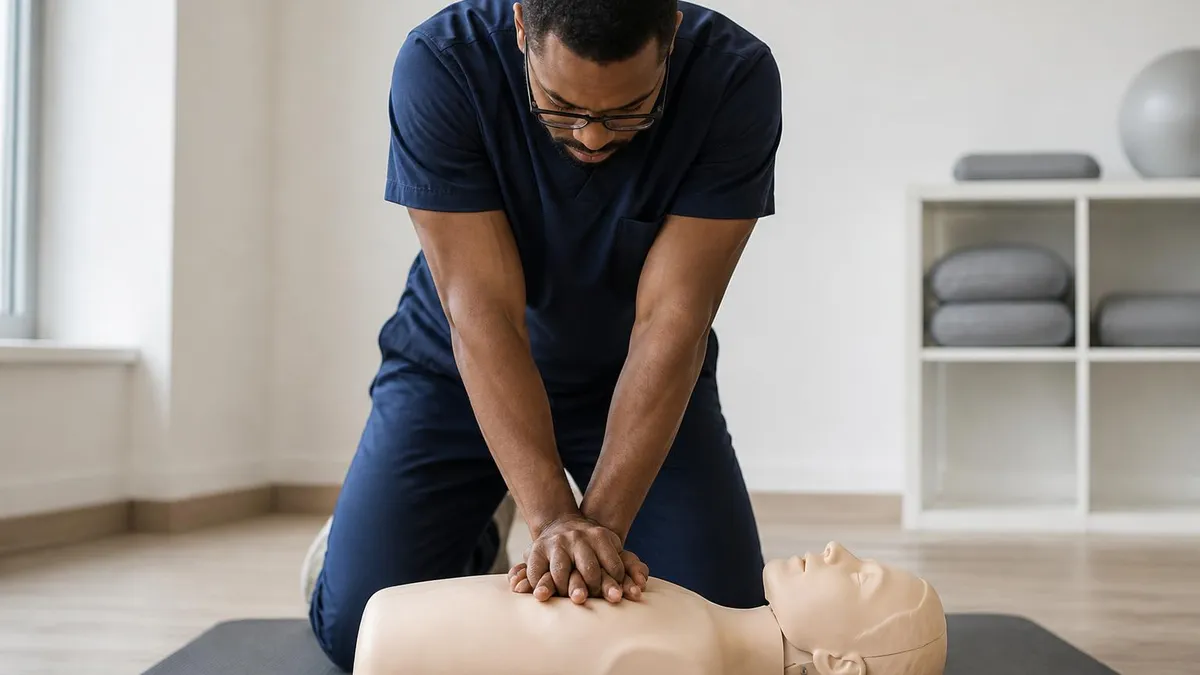
CPR Card Lookup: How to Verify, Replace, and Access Your CPR Certification in 2026
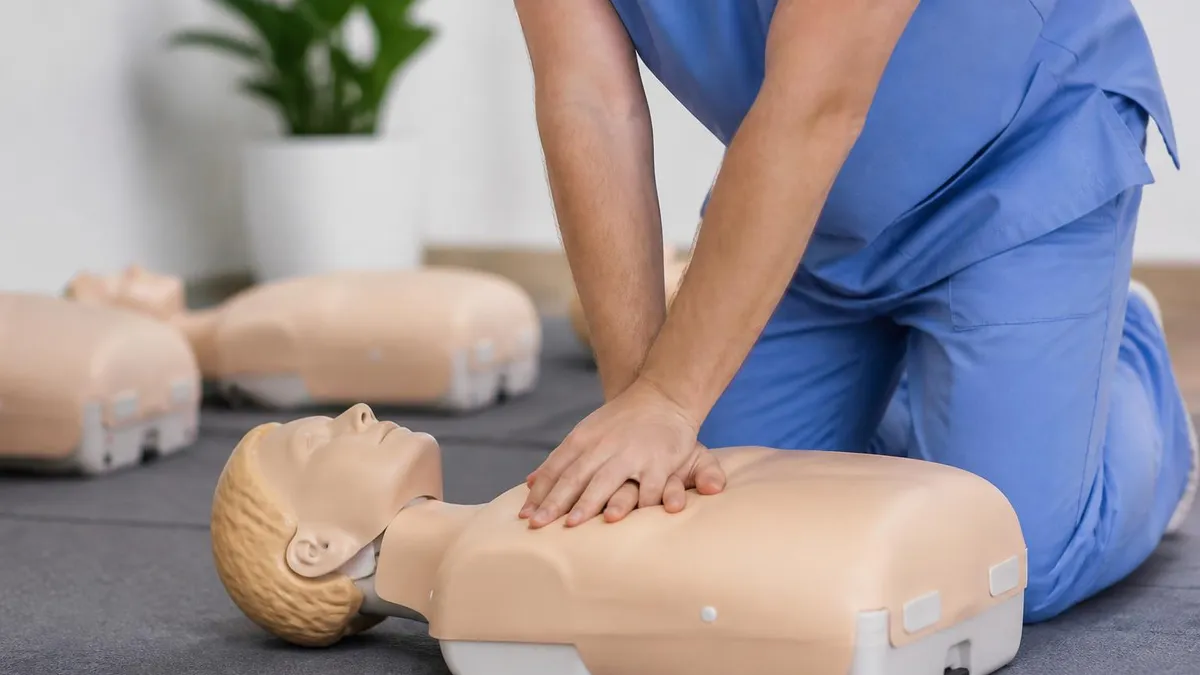
AHA CPR: What It Is, Which Course You Need, and How to Get Certified
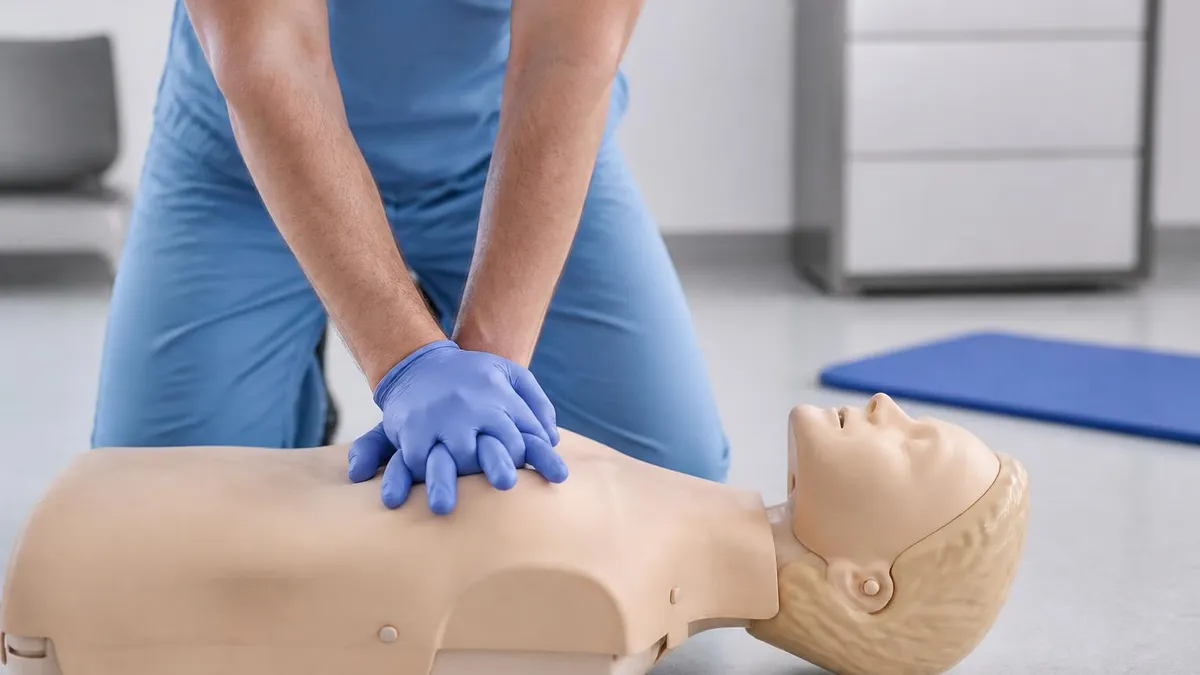
BLS CPR Course: Complete Guide to Basic Life Support Certification in 2026
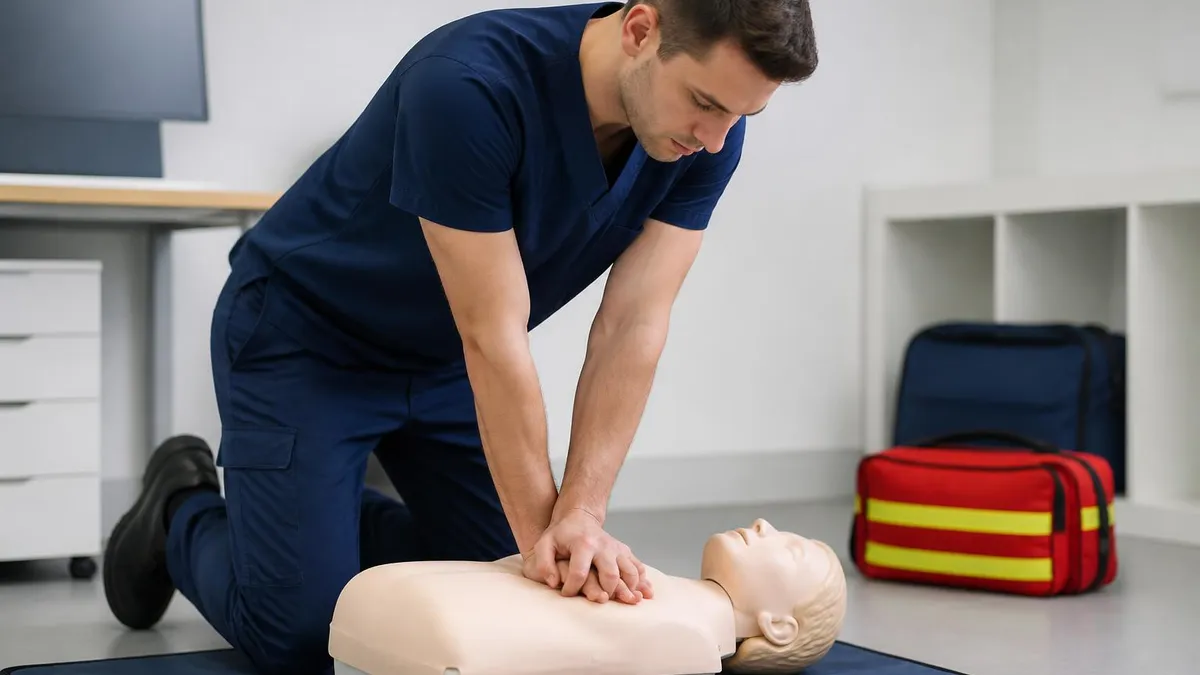
Adult CPR: Complete Step-by-Step Guide to Hands-Only and Standard CPR in 2026
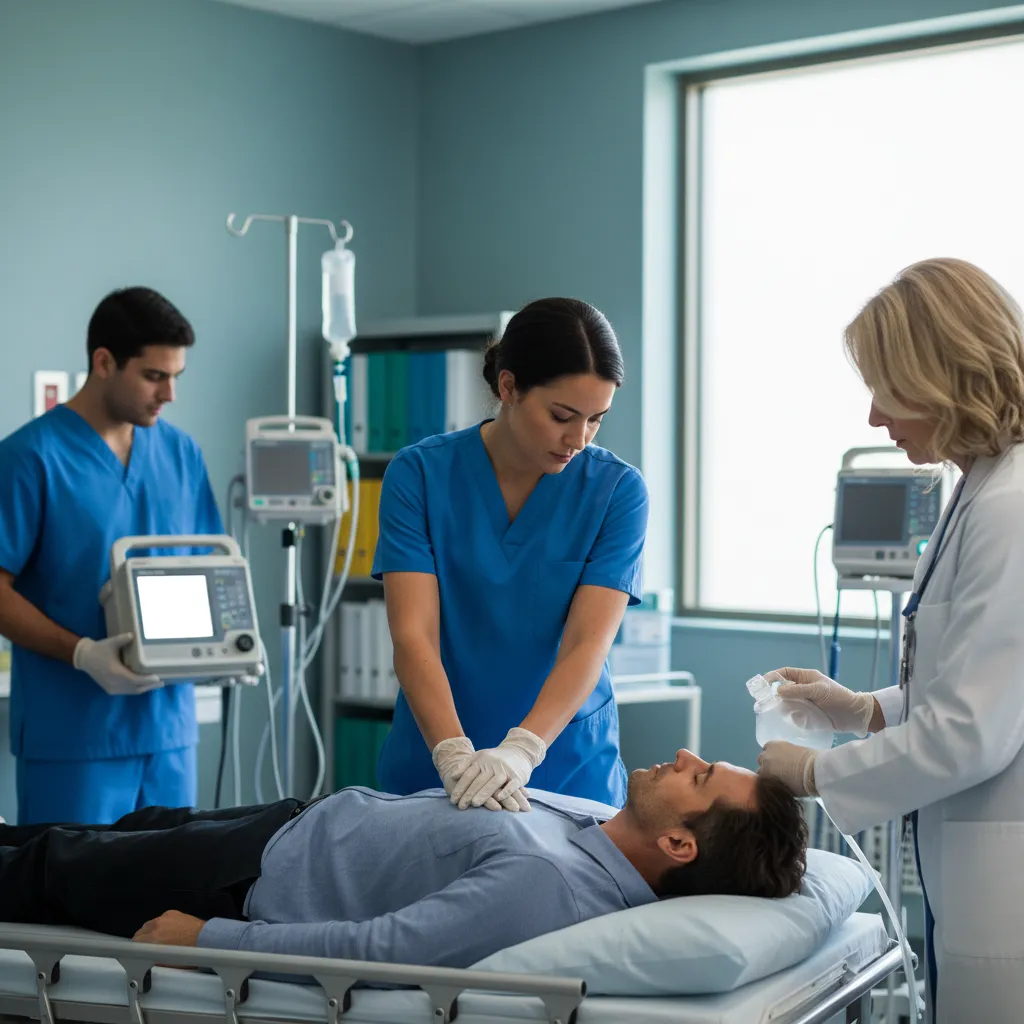
CPR - Cardiopulmonary Resuscitation: Complete Study Guide 2026
About the Author

Registered Nurse & Healthcare Educator
Johns Hopkins University School of NursingDr. Sarah Mitchell is a board-certified registered nurse with over 15 years of clinical and academic experience. She completed her PhD in Nursing Science at Johns Hopkins University and has taught NCLEX preparation and clinical skills courses for nursing students across the United States. Her research focuses on evidence-based exam preparation strategies for healthcare certification candidates.
Join the Discussion
Connect with other students preparing for this exam. Share tips, ask questions, and get advice from people who have been there.
View discussion (5 replies)