
CPR Course Near Me: How to Find, Compare, and Enroll in the Right Local Certification Class in 2026 October
Find the best CPR course near me in 2026 October. Compare AHA, ✍🏼 Red Cross, and National CPR Foundation options, costs, schedules, and certification paths.
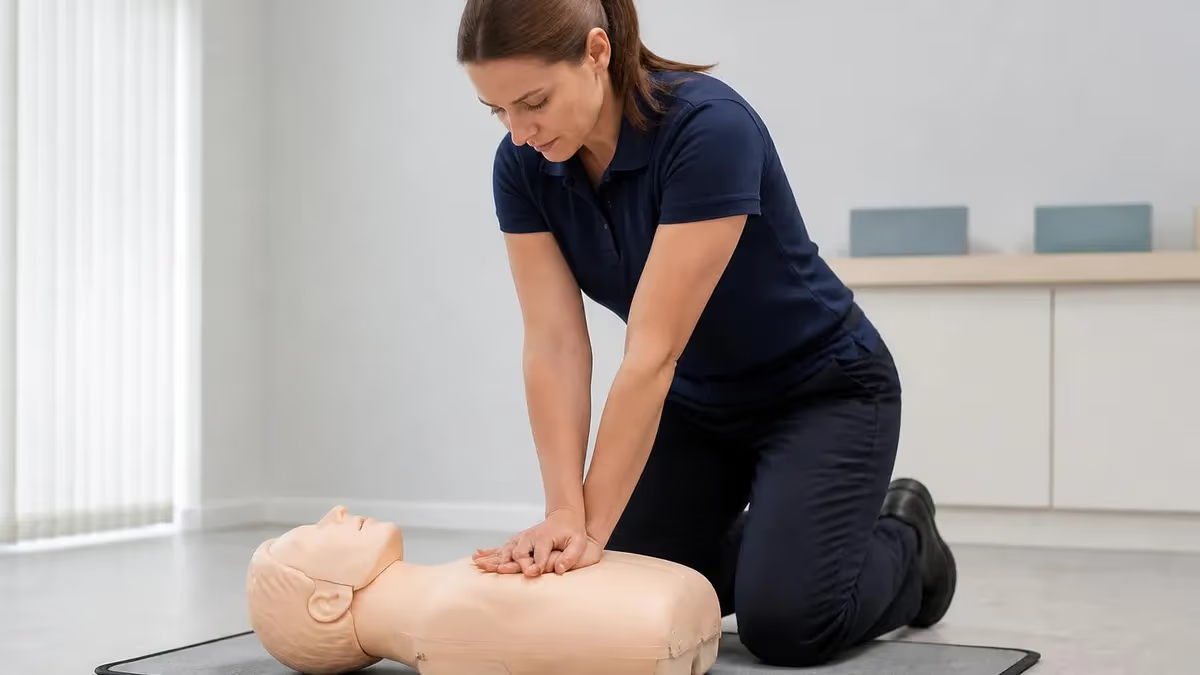
Searching for a cpr course near me is the first practical step toward becoming someone who can actually save a life when seconds matter. In 2026, the options have multiplied dramatically: in-person classes at hospitals, blended courses at community colleges, online-only certifications through the national cpr foundation, and even pop-up training events at fire stations and gyms. Choosing the right one depends on whether you need a card for work, want to protect family members, or plan to teach others. This guide walks through every choice so you enroll once and pass with confidence.
The good news is that a cpr course near me is almost always within ten miles of any U.S. ZIP code. The American Heart Association alone trains more than twenty-two million people each year through a network of over four hundred thousand instructors. The Red Cross adds millions more. That density means you can usually find a weekend class within seven days of searching. The harder question is which provider your employer, school, or licensing board will actually accept on your certification card.
Most learners begin their search with broad terms like leather cpr kits, basic adult CPR, or BLS for healthcare providers — then quickly discover that each course has different prerequisites, durations, and renewal cycles. A standard Heartsaver class runs four hours and covers adult, child, and infant cpr. A BLS Provider course runs four to five hours and adds two-rescuer techniques, bag-mask ventilation, and AED integration. ACLS and PALS sit above both and require an active BLS card before enrollment.
Cost is the second filter most students apply. Local CPR courses in 2026 range from forty-five dollars for online-only Heartsaver certifications to two hundred sixty-five dollars for in-person ACLS. The median in-person Heartsaver class hovers around seventy-five dollars in most metro areas, with rural classes sometimes costing less because volunteer fire departments subsidize them. Group rates for workplaces drop the per-person cost to thirty-five or forty dollars when six or more learners book together at the same location.
Convenience matters more than price for many adults balancing shifts, childcare, and commuting. Blended-learning courses let you complete the cognitive portion online at your own pace — usually one to two hours of video and quizzes — then attend a thirty- to ninety-minute in-person skills check at a nearby training center. This format has become the default for nurses, dental assistants, and personal trainers because it compresses the classroom time and lets schedulers slot skills checks into a lunch hour.
Finally, remember that not every certification card carries equal weight. Hospitals, EMS agencies, and most state nursing boards require AHA cards specifically. Daycare licensing, lifeguard contracts, and corporate first-aid teams often accept Red Cross or ASHI. Some online-only providers issue cards that look identical but are rejected at hospital orientation. Before paying, confirm in writing which provider your employer or licensing board accepts — that single email saves more refund disputes than any other step in the enrollment process.
CPR Training Near You by the Numbers

Types of CPR Courses You'll Find Locally
The most common community course. Covers adult, child, and infant cpr, AED use, and choking relief. Best for parents, teachers, coaches, and corporate first-aid responders. Runs four hours in person or two-plus-one blended.
Required for nurses, EMTs, dental staff, and medical students. Adds two-rescuer CPR, bag-mask ventilation, and team dynamics. Four to five hours in person. Prerequisite for the acls algorithm and PALS courses.
Advanced Cardiovascular Life Support for licensed clinicians. Teaches rhythm recognition, the acls algorithm for cardiac arrest, drugs, and post-arrest care. Sixteen-hour initial course; eight-hour renewal. Requires active BLS.
Pediatric Advanced Life Support for clinicians treating children. Covers pediatric assessment, respiratory rate norms, shock, arrhythmias, and resuscitation teams. Fourteen hours initial; six to eight hours renewal.
Adds bleeding control, burns, sprains, seizures, and environmental emergencies to standard CPR. Popular with construction, manufacturing, and childcare workers. Six-and-a-half hours in-person or blended format available.
Once you've identified the right course tier, the next decision is format. In-person classes deliver the strongest skills retention because you spend the entire session on a manikin under instructor coaching. Blended courses cut classroom time roughly in half by moving lectures online. Fully online certifications skip hands-on practice entirely — they're convenient and inexpensive but only accepted by employers who don't require a psychomotor skills check. Always verify which formats your workplace credits before paying for a card.
Scheduling varies dramatically by metro area. In cities like Chicago, Dallas, or Atlanta you can usually book a Heartsaver class within forty-eight hours. Smaller markets — think Boise, Burlington, or Mobile — often have only one or two classes per week, so plan two to three weeks ahead. Hospital-based training centers tend to offer the most frequent BLS sessions because they certify their own staff weekly. Community colleges typically run open-enrollment cohorts monthly during the school year.
Costs in 2026 reflect three line items: the course fee, the eCard fee, and any optional textbook. AHA eCards now cost between three and seven dollars depending on the provider, and they're delivered within twenty days of skills completion. Some training centers bundle the eCard into the course price; others charge separately. Red Cross digital certificates are included by default. The national cpr foundation issues immediate downloadable cards with course tuition, which appeals to learners on tight deadlines.
Group bookings unlock the deepest discounts. If six or more colleagues need certification, most training centers will send an instructor to your workplace for the same total cost as their public class. Schools, daycares, and gyms commonly host on-site sessions to certify entire staffs at once. Expect a per-person rate of thirty-five to fifty dollars for groups of ten or more, plus a small travel fee outside the trainer's home metro area. Lock in dates four to six weeks ahead.
Workplace reimbursement is more common than learners realize. Many hospitals, school districts, and corporate employers will reimburse the cost of an approved CPR course because OSHA, Joint Commission, or state licensing rules require certified staff on every shift. Ask HR for the approved provider list before enrolling — using an unapproved vendor is the single most frequent reason reimbursement claims get denied. If your card will be rejected at orientation, no discount makes the course worthwhile.
Travel time and parking quietly add cost. A class advertised at sixty-five dollars eight miles away can easily become a three-hour, ninety-dollar commitment after gas, parking, and a meal. Blended-format courses with a thirty-minute skills check are often cheaper in total time than longer in-person sessions, even at a higher base price. If you live near a fire station or community center that hosts free quarterly courses — yes, those exist — you can sometimes certify at zero cost, especially through Heart Safe Community grants.

CPR Practice Test Questions
Prepare for the CPR Cardiopulmonary Resuscitation Practice exam with our free practice test modules. Each quiz covers key topics to help you pass on your first try.
CPR Basic CPR
CPR Exam Questions covering Basic CPR. Master CPR Test concepts for certification prep.
CPR and First Aid
Free CPR Practice Test featuring and First Aid. Improve your CPR Exam score with mock test prep.
CPR (Cardiopulmonary Resuscitation) Adult ...
CPR Mock Exam on (Cardiopulmonary Resuscitation) Adult CPR and AED Usage. CPR Study Guide questions to pass on your first try.
CPR (Cardiopulmonary Resuscitation) Airway...
CPR Test Prep for (Cardiopulmonary Resuscitation) Airway Obstruction and Choking. Practice CPR Quiz questions and boost your score.
CPR (Cardiopulmonary Resuscitation) Cardio...
CPR Questions and Answers on (Cardiopulmonary Resuscitation) Cardiopulmonary Emergency Recognition. Free CPR practice for exam readiness.
CPR (Cardiopulmonary Resuscitation) Child ...
CPR Mock Test covering (Cardiopulmonary Resuscitation) Child and Infant CPR. Online CPR Test practice with instant feedback.
CPR (Cardiopulmonary Resuscitation) High-P...
Free CPR Quiz on (Cardiopulmonary Resuscitation) High-Performance Team Dynamics. CPR Exam prep questions with detailed explanations.
CPR (Cardiopulmonary Resuscitation) Legal ...
CPR Practice Questions for (Cardiopulmonary Resuscitation) Legal and Ethical Considerations. Build confidence for your CPR certification exam.
CPR for Specific Populations
CPR Test Online for for Specific Populations. Free practice with instant results and feedback.
CPR Airway & Breathing Management
CPR Exam Questions covering Airway & Breathing Management. Master CPR Test concepts for certification prep.
CPR Assessment & Recognition of Cardiac Ar...
Free CPR Practice Test featuring Assessment & Recognition of Cardiac Arrest. Improve your CPR Exam score with mock test prep.
CPR Chest Compressions & Defibrillation
CPR Mock Exam on Chest Compressions & Defibrillation. CPR Study Guide questions to pass on your first try.
CPR Post-Resuscitation Care & Recovery
CPR Test Prep for Post-Resuscitation Care & Recovery. Practice CPR Quiz questions and boost your score.
Provider Comparison: AHA, Red Cross, and National CPR Foundation
The American Heart Association sets the science behind most U.S. CPR training. Its courses are written around the 2025 Guidelines and use Heartsaver, BLS, ACLS, and PALS as primary brands. AHA cards are the gold standard for hospital, EMS, dental, and most state nursing requirements. Cards are issued as eCards within twenty business days through atlas.heart.org. Expect to pay seventy to ninety dollars for in-person Heartsaver and around two hundred fifty for full ACLS.
AHA classes are taught by independent training centers — not by AHA directly — so quality and scheduling vary. To verify, search the AHA Class Connector by ZIP code and confirm the instructor's eCard issuing authority before booking. The acls algorithm taught in AHA ACLS is identical nationwide because every instructor follows the same Provider Manual and scenarios. This consistency is exactly why hospitals demand AHA cards over alternatives.
In-Person vs. Online CPR Courses
- +In-person classes provide hands-on manikin practice that builds muscle memory
- +Instructors correct compression depth and rate in real time
- +AHA and Red Cross in-person cards are universally accepted
- +You can ask questions specific to infant cpr or workplace scenarios
- +Skills checks ensure you can actually perform CPR under stress
- +Networking with healthcare peers often leads to job referrals
- +Group classes at your workplace reduce per-person cost significantly
- −Fixed schedules can conflict with shift work or childcare
- −Travel time and parking add hidden cost
- −Some rural areas have only one provider within thirty miles
- −Make-up sessions for missed classes can take weeks
- −Course materials may be sold separately from tuition
- −Cancellations within 48 hours often forfeit tuition
- −Group seating can mean less one-on-one instructor time
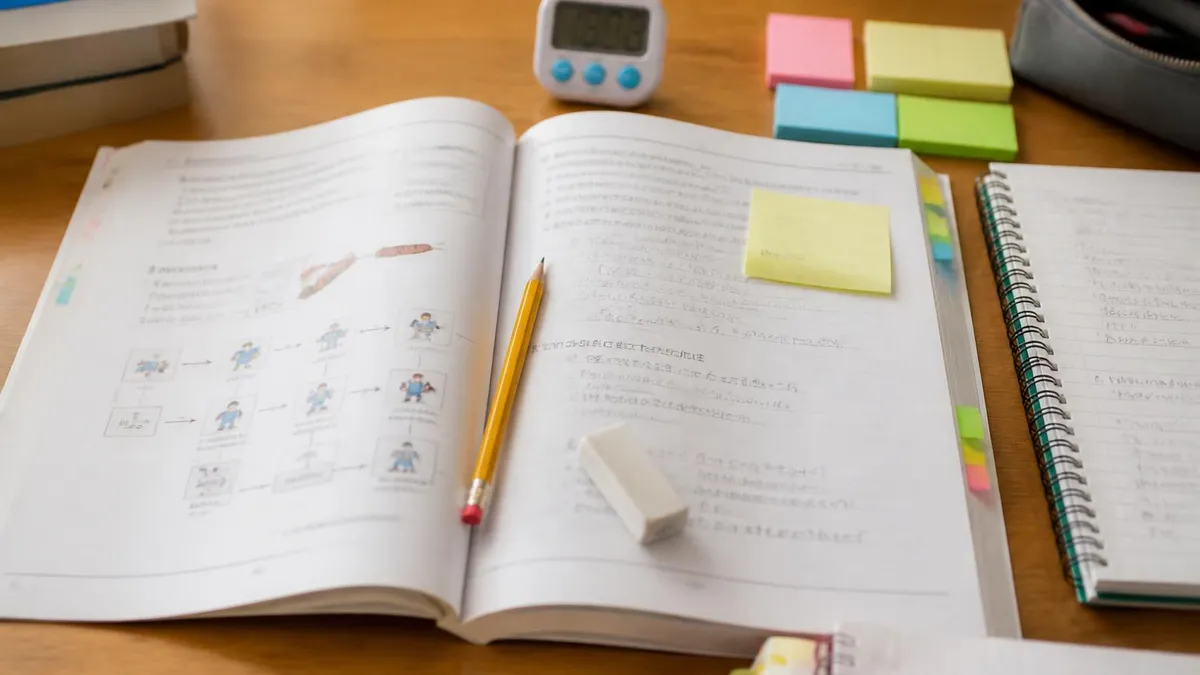
Pre-Enrollment Checklist for Your CPR Course
- ✓Confirm in writing which provider (AHA, Red Cross, NCF) your employer or licensing board accepts
- ✓Choose the correct course level: Heartsaver, BLS, ACLS, or PALS
- ✓Verify the training center is officially recognized by your provider
- ✓Check whether the eCard fee is bundled or charged separately
- ✓Reserve a class date at least one week before your card expiration
- ✓Complete any required online modules before the skills check
- ✓Bring a government-issued photo ID to the in-person session
- ✓Wear comfortable clothes that allow kneeling on a manikin
- ✓Confirm the cancellation and refund policy in writing
- ✓Download the digital card backup as soon as it is issued
Match the card to the rulebook before you pay.
Roughly one in seven CPR students discovers at orientation that their card is the wrong brand. The fix is simple: email HR or your state board with the exact course name, provider, and URL, and request written confirmation that the card will be accepted. That single message prevents the most common refund dispute in CPR training.
Inside the classroom, every credible CPR course follows a similar arc. You begin with a primary survey: scene safety, responsiveness, breathing, and pulse check. Instructors emphasize the difference between effective breathing and agonal gasps — irregular, gasping movements that look like breathing but actually signal cardiac arrest. Recognizing agonal gasps is one of the highest-yield skills in any course because mistaking them for normal breaths delays compressions and dramatically reduces survival odds.
You then move into compressions. Adult CPR uses both hands on the lower half of the sternum at a depth of two to two-and-a-half inches and a rate of one hundred to one hundred twenty per minute. Many instructors use cpr songs like Stayin' Alive or Baby Shark to anchor the rhythm. Child CPR uses one or two hands depending on size; infant CPR uses two fingers (single rescuer) or two thumbs encircling (two rescuers) at one-and-a-half inches deep.
Ventilations come next. Heartsaver teaches a thirty-to-two ratio for single rescuers across all ages. BLS introduces bag-mask ventilation with a thirty-to-two ratio for single rescuers and a fifteen-to-two ratio for two rescuers on children and infants. Healthcare providers also learn pulse checks at the carotid (adult and child) and brachial (infant). Ventilation timing matters: each breath should last one second and produce visible chest rise, no more.
AED integration is universal across every course. You learn the order — power on, attach pads, allow analysis, clear the patient, deliver shock if advised — and the troubleshooting steps for wet skin, medication patches, implanted pacemakers, and hairy chests. Trainers stress that what does aed stand for matters less than knowing how to use one in under sixty seconds. Most modern AEDs talk you through the steps; your job is to follow voice prompts without hesitation.
Healthcare provider courses expand into team dynamics, closed-loop communication, and the acls algorithm for cardiac arrest. You'll practice switching compressors every two minutes, calling out medications, and interpreting four rhythms: ventricular fibrillation, pulseless ventricular tachycardia, asystole, and pulseless electrical activity. PALS adds pediatric-specific assessment, including normal respiratory rate ranges by age — thirty to sixty for infants, twenty to thirty for toddlers, twelve to twenty for adolescents.
Finally, courses end with a written test and a skills test. Heartsaver and BLS written exams are usually multiple-choice, twenty-five questions, with a passing score of eighty-four percent. The skills test is pass/fail — instructors observe compressions, ventilations, AED use, and choking response on a manikin. Most testing centers allow one retake the same day. Bring a snack and water; even short courses run longer than scheduled when classes have remediation needs.
Many hospitals, EMS agencies, and state nursing boards explicitly require a psychomotor skills evaluation. Cards earned through fully online programs that skip a hands-on skills check may be refused at orientation — costing you the job offer and the tuition. Always confirm acceptance in writing before paying for any online-only CPR certification.
Renewals are where most professionals stumble. AHA and Red Cross cards expire exactly two years from the issue date, not the course completion date. You can take a renewal class up to thirty days before expiration and keep the original expiration anniversary; renew after expiration and your new card resets to the renewal date. This subtle difference matters when employer audits or licensing renewals fall on the same anniversary every cycle, and missing it costs you weeks of paid shifts.
Renewal courses are shorter than initial certifications. BLS renewal is typically three to four hours instead of five. ACLS renewal runs eight hours instead of sixteen. PALS renewal lands at six to eight hours. Many providers now allow heart code or RQI continuous-learning models — quarterly micro-skills checks at hospital kiosks that replace the traditional one-day renewal class. If your hospital uses RQI, you may never sit through a full BLS renewal again, and skills retention research shows quarterly practice outperforms annual cramming.
Lost or damaged cards are easily replaced. AHA eCards live permanently in atlas.heart.org under your email, and you can cpr fix phones aside, downloading the PDF takes under a minute. Red Cross digital certificates are available through the Red Cross Learning Center login. NCF cards re-download from your account dashboard. Always save a PDF copy to cloud storage and your phone the day you receive it so a lost wallet or replaced laptop never blocks your employment verification.
Card verification by employers has become real-time. Most providers now offer a QR code or unique ID that an HR rep can verify online in seconds. This eliminates the old wait-for-the-paper-card delay and stops counterfeit cards cold. If a prospective employer cannot verify your card through the provider's official lookup tool, they will assume the card is fraudulent. Bring the digital version to orientation and let them scan it from your phone if needed.
Continuing education extends beyond the card itself. Healthcare providers should refresh on respiratory arrest recognition, sepsis early warning signs, and stroke FAST screening at least annually. Many AHA training centers offer free webinars on these topics for past students. Layered learning — short, frequent practice instead of one annual cram — produces better outcomes when seconds count during real cardiac events, and most professionals quietly forget half the algorithm by month nine without practice.
When you eventually consider teaching, the path runs through an Instructor Course tied to your provider. AHA requires a recent provider card, mentorship under a Training Center Faculty member, and successful monitoring of your first class. Red Cross uses a similar progression. Instructor certification opens part-time income of fifty to one hundred dollars per hour and gives you direct access to the broader resuscitation community — a meaningful side path for nurses, EMTs, and paramedics seeking flexible work between shifts.
Practical preparation begins three to five days before your class. Skim the provider manual or the online modules in advance — even an hour of pre-reading dramatically improves your skills check performance because you arrive already familiar with the vocabulary. Watch one or two free instructional videos on YouTube from AHA or Red Cross channels. Pay particular attention to two-rescuer hand-offs and bag-mask seal technique, which trip up the largest share of BLS students during testing.
On class day, eat a real meal beforehand. CPR compressions are physically demanding and a four-hour class on an empty stomach is brutal. Wear layered clothing because skills rooms run cold to keep manikins from sweating, but kneeling compressions warm you quickly. Avoid heavy jewelry, long necklaces, or loose hair that gets in the way during compressions. Bring a water bottle and your photo ID, and arrive fifteen minutes early to handle paperwork and pick the best manikin station.
During practice, ask for feedback aggressively. Instructors expect questions about hand placement, depth, and rate. If you feel uncertain about infant cpr because you've never practiced on an infant manikin, ask for an extra round. The cost of one repeat practice cycle is zero; the cost of failing a skills check and rescheduling is hours of your time. Good instructors would rather give you ten minutes of extra coaching than watch you fail and remediate later.
For the written exam, focus your last hour of prep on numbers: compression depth (two-plus inches adult, two inches child, one-and-a-half inches infant), rate (one hundred to one hundred twenty per minute), ratios (thirty-to-two single rescuer always; fifteen-to-two for two-rescuer child/infant), and AED voltage timing. These specific numbers account for the majority of multiple-choice questions across Heartsaver, BLS, and ACLS exams in 2026, and they're the easiest points to lock in cold.
After certification, the highest-yield habit is monthly micro-practice. Spend five minutes once a month visualizing the steps: scene survey, check responsiveness, call for help, check breathing, start compressions, attach AED, follow prompts. Mental rehearsal preserves skills retention dramatically. Research from the cpr index of resuscitation programs shows that providers who mentally rehearse monthly retain skills at double the rate of those who only refresh at renewal time. The discipline pays off when real life support is needed.
Finally, share what you learned. Teach a family member the compression rhythm, show kids how to call 911, and post the AED locations at your workplace on a shared note. CPR survival depends on bystanders acting in the first two minutes — long before EMS arrives. Every additional person you train multiplies the odds that someone in your circle survives a cardiac arrest. The course is short; the impact is permanent. Make it the most useful afternoon you spend this year.
CPR Questions and Answers
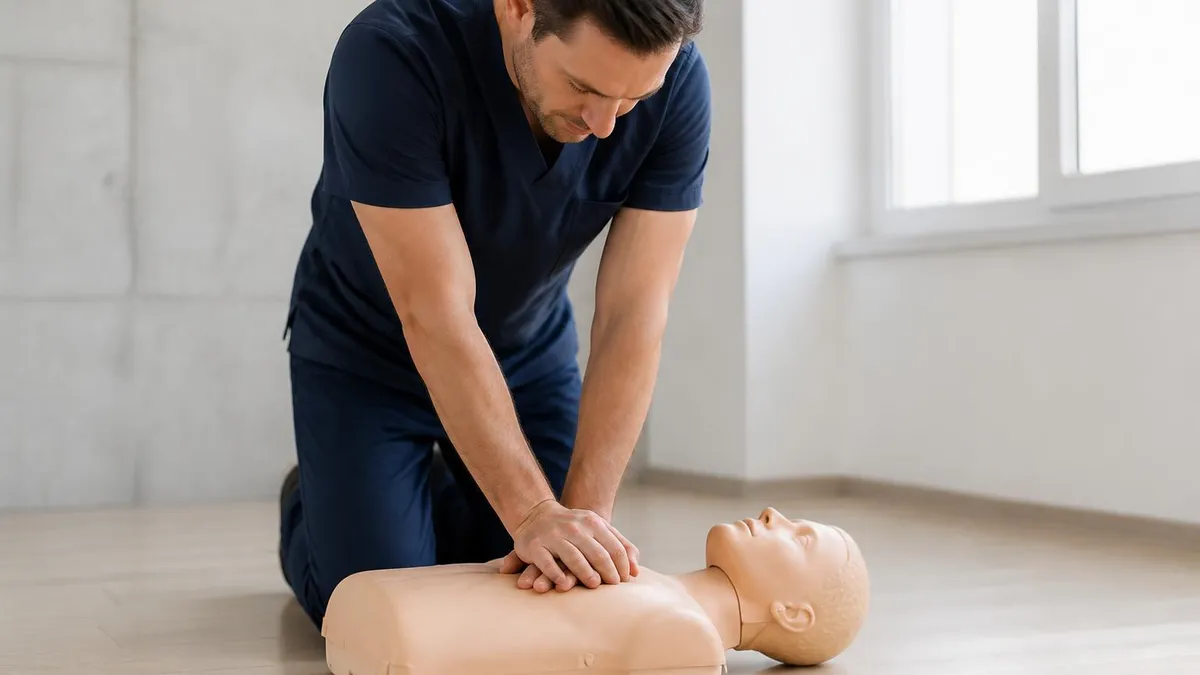
CPR vs BLS: Complete Comparison Guide for 2026 — Which Certification Do You Need?
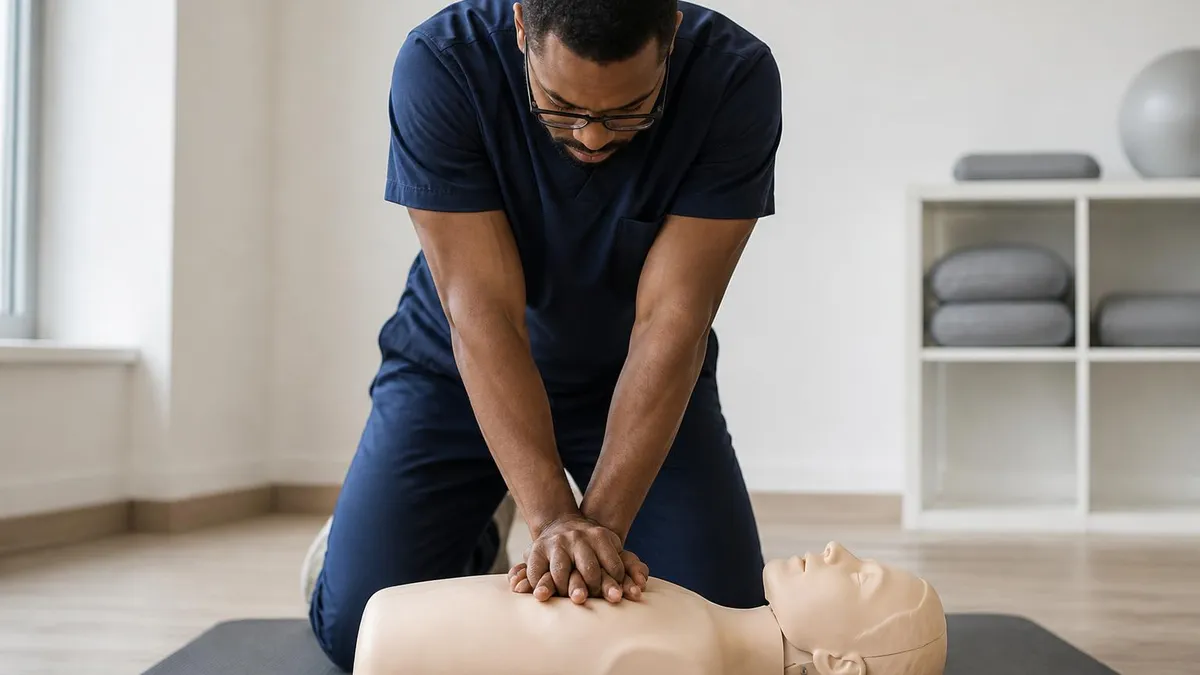
CPR Card Lookup: How to Verify, Replace, and Access Your CPR Certification in 2026
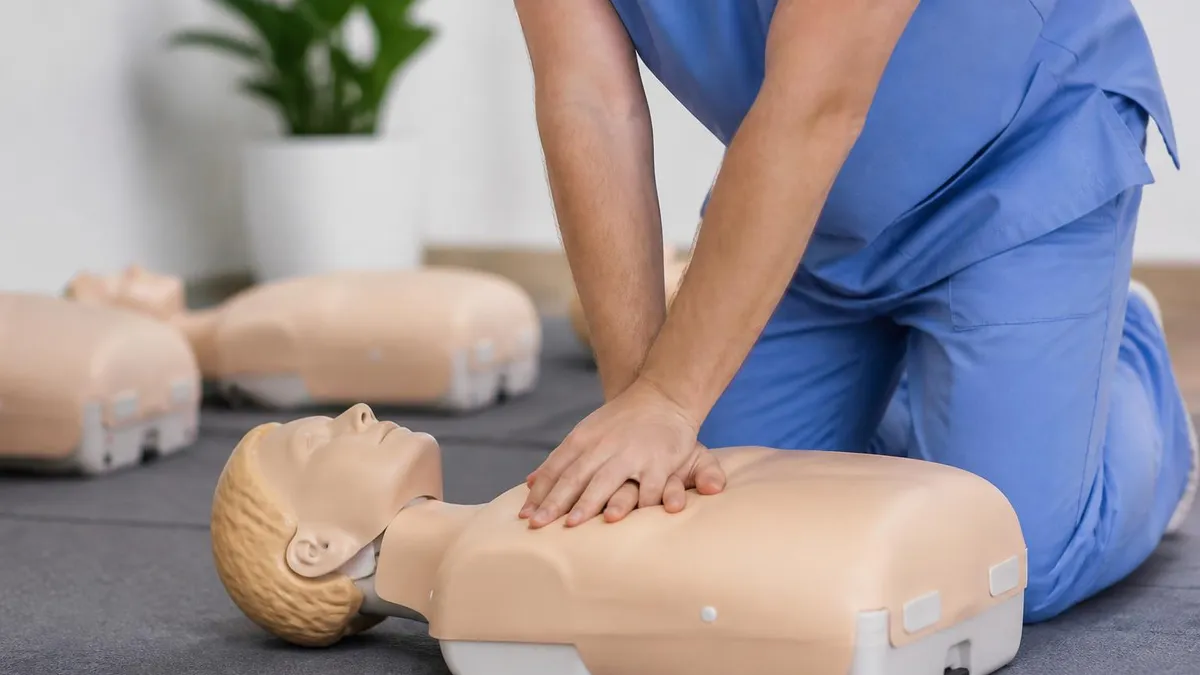
AHA CPR: What It Is, Which Course You Need, and How to Get Certified
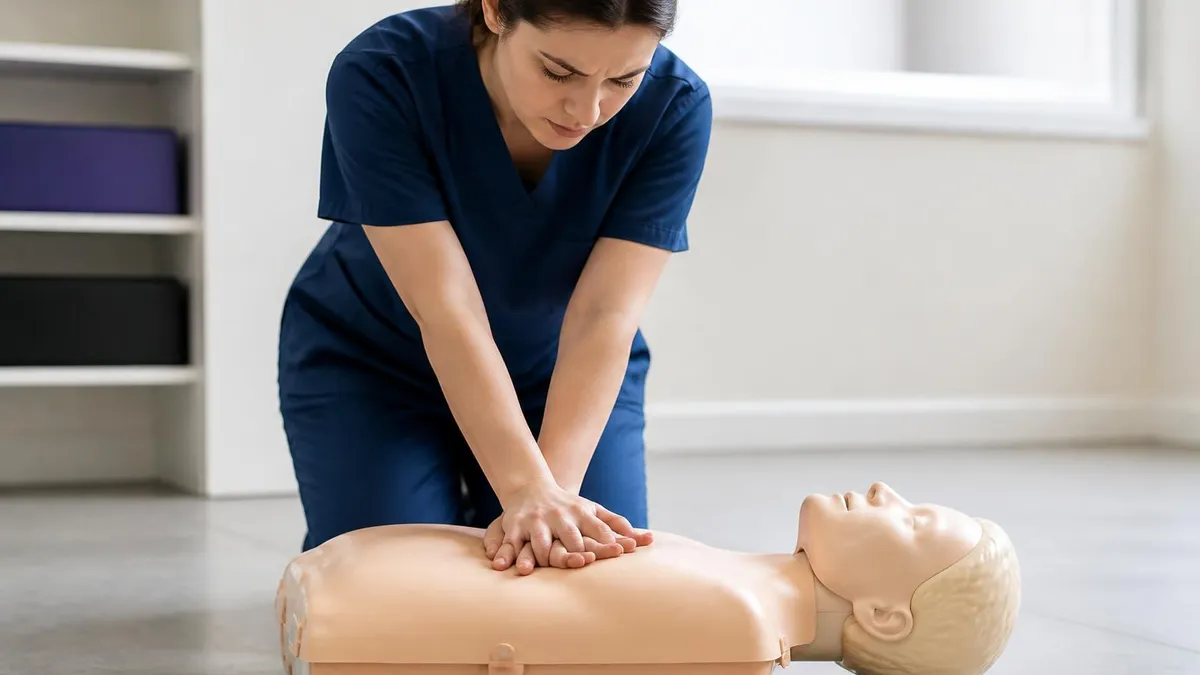
CPR Instructor Jobs 2026: How to Become a Certified Instructor, Salary Expectations, and Career Pathways
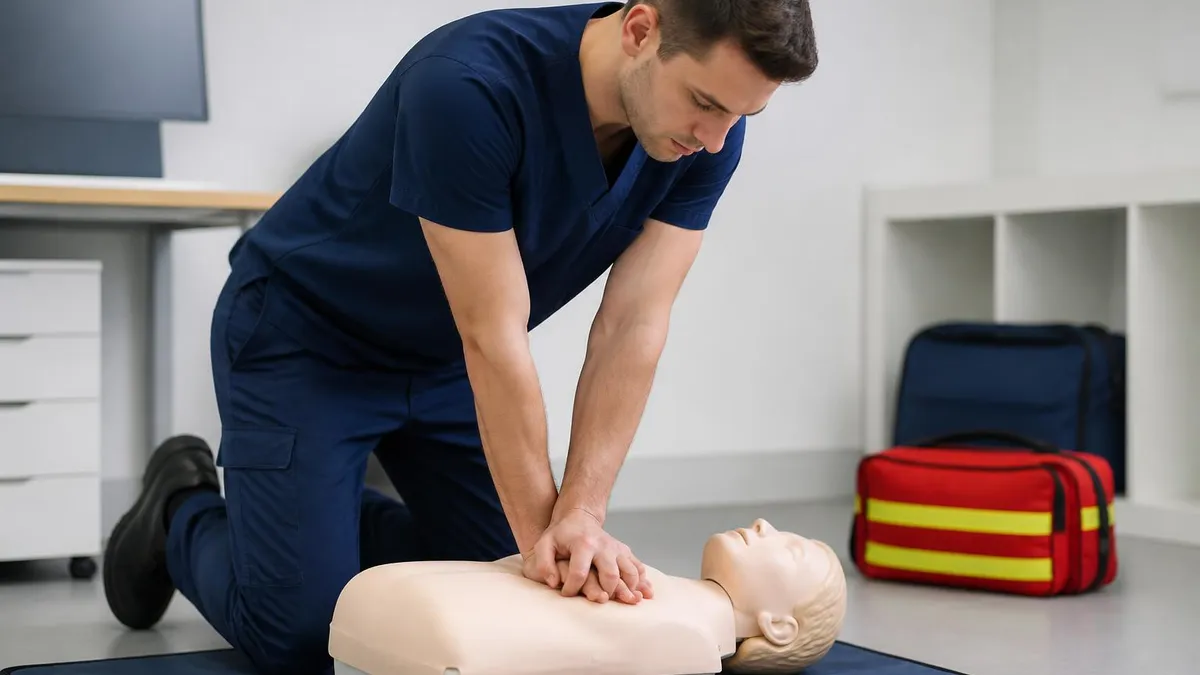
Adult CPR: Complete Step-by-Step Guide to Hands-Only and Standard CPR in 2026
About the Author

Registered Nurse & Healthcare Educator
Johns Hopkins University School of NursingDr. Sarah Mitchell is a board-certified registered nurse with over 15 years of clinical and academic experience. She completed her PhD in Nursing Science at Johns Hopkins University and has taught NCLEX preparation and clinical skills courses for nursing students across the United States. Her research focuses on evidence-based exam preparation strategies for healthcare certification candidates.
Join the Discussion
Connect with other students preparing for this exam. Share tips, ask questions, and get advice from people who have been there.
View discussion (5 replies)