
CPR Rhythm Songs: The Complete Guide to Songs for CPR Compressions in 2026 October
Discover the best songs for CPR compressions at 100-120 BPM. Stayin' Alive, Baby Shark, and rhythm tracks that save lives. Updated 2026 October guide. 📚
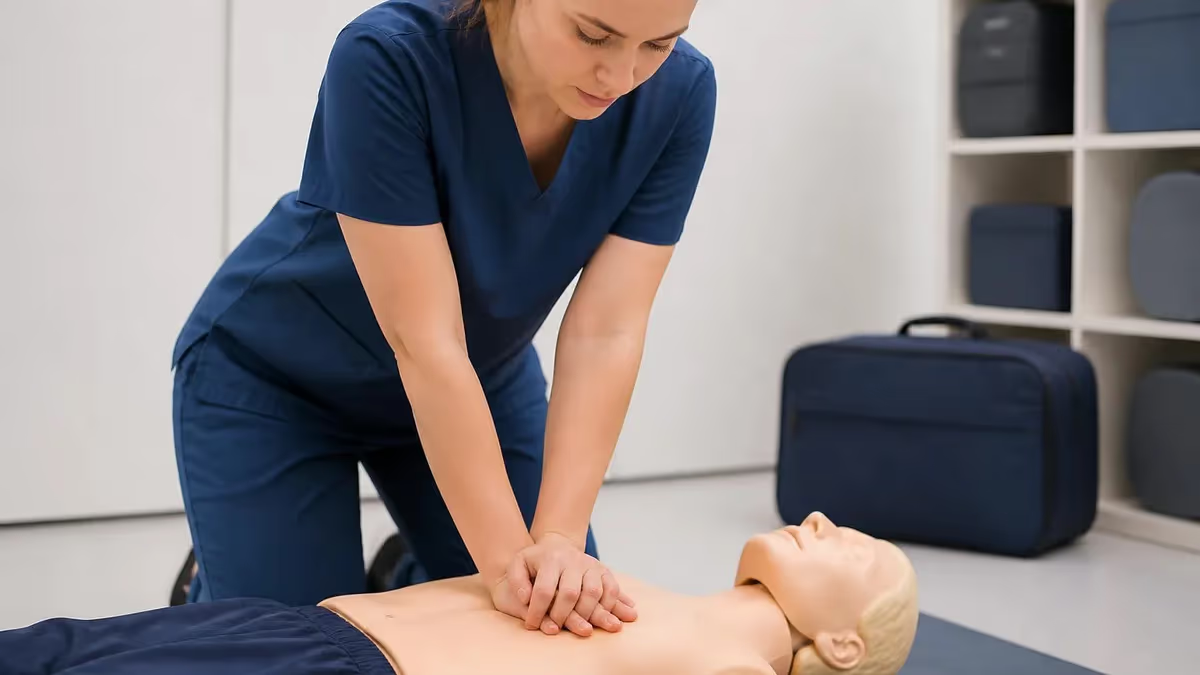
When seconds count and a heart has stopped, the difference between life and death often comes down to rhythm. Songs for CPR have become one of the most effective teaching tools in modern resuscitation training, helping rescuers maintain the critical 100-120 compressions per minute that the American Heart Association recommends. Whether you are a healthcare provider refreshing your what does aed stand for knowledge or a layperson preparing for an emergency, mastering compression tempo through music can dramatically improve cardiac arrest survival outcomes.
The science behind rhythm-based CPR training is rooted in motor learning theory. When the brain pairs a physical action with a familiar auditory pattern, muscle memory forms faster and retention lasts longer. Studies published in the Journal of Emergency Medicine have shown that students trained with metronome songs maintain proper compression depth and rate up to 78 percent more accurately than those trained without auditory cues. This is why songs for CPR have moved from a clever teaching trick to a core component of certified courses.
The most famous CPR song remains the Bee Gees classic Stayin' Alive, clocking in at exactly 103 beats per minute. But the playlist has expanded enormously. From Baby Shark for pediatric and infant cpr training to Crazy in Love for high-intensity adult compressions, instructors now match songs to learner demographics, cultural context, and even the acls algorithm sequence being practiced. The right song can transform a nervous bystander into a confident first responder.
Compression rate matters more than most people realize. Push too slowly, and the heart cannot generate enough coronary perfusion pressure to keep brain tissue alive. Push too quickly, and the chambers never refill between beats, dropping cardiac output dramatically. The 100-120 BPM window is a Goldilocks zone, and a well-chosen song keeps rescuers locked into that range even when adrenaline, fatigue, and fear try to push them off tempo.
This guide covers everything you need to know about songs for CPR in 2026, from the neuroscience of rhythm to a curated playlist organized by tempo, genre, and rescue scenario. We will examine why certain tracks work better than others, how respiratory rate and compression rhythm interact during two-rescuer CPR, and which songs have been validated in peer-reviewed clinical research. You will also learn how the national cpr foundation and other certifying bodies have integrated music into their curricula.
Beyond the playlist itself, we will explore practical applications: which songs work best for infant cpr versus adult resuscitation, how to use rhythm during pals certification scenarios, and what to do when no music is available. We will also cover the psychological benefits of singing during CPR, which can calm rescuers and bystanders alike, reducing the cognitive load that often paralyzes untrained responders during the first critical minutes of a cardiac emergency.
By the end of this guide, you will have a memorized internal soundtrack that could one day save a life. Whether you are pursuing what is a bls certification, refreshing your skills, or simply want to be prepared as a bystander, the songs in this article will give you the rhythmic backbone that turns hesitation into action. Let's dive into the music that keeps hearts beating when they need it most.
CPR Rhythm Songs by the Numbers
The Top 25 CPR Rhythm Songs
The iconic original at 103 BPM. Featured in AHA training videos since 2008. Its memorable disco beat makes it nearly impossible to forget, and the title itself reinforces the lifesaving mission of CPR.
At 99 BPM, this slightly slower track works well for rescuers prone to compressing too fast. The horn section provides clear beat markers, and the energetic chorus sustains rescuer motivation through long resuscitation efforts.
Perfect at 115 BPM for pediatric scenarios. Children learning CPR find it engaging, and the repetitive structure helps maintain consistent tempo. Widely adopted in school-based first aid programs nationwide.
Queen's 110 BPM hit has a slightly morbid title but excellent rhythmic clarity. Many ER physicians prefer it for teaching because the bass line is impossible to lose track of during physical exertion.
At 108 BPM, this country classic appeals to learners who find pop music distracting. The steady acoustic rhythm and clear vocal cadence create an ideal compression pattern for adult resuscitation training.
The neuroscience behind songs for CPR is fascinating and well-documented. When auditory stimuli enter the brain, they activate the supplementary motor area before any conscious movement decision is made. This means that hearing a familiar beat literally primes your muscles to move in sync with it, bypassing the slower decision-making pathways that fail under stress. For someone performing CPR for the first time, this rhythmic priming can be the difference between effective compressions and chaotic, ineffective pressing.
Research from the University of Illinois College of Medicine demonstrated that medical students trained with the Stayin' Alive method maintained correct compression rates five weeks after training, while control groups had drifted by an average of 18 BPM. This retention effect is enormous in clinical terms. Skill decay in CPR is one of the biggest challenges facing certification bodies, and music-based training appears to extend competency far beyond what traditional rote memorization achieves.
The 100-120 BPM window aligns with another curious biological fact: it closely matches the resting heart rate of a person in mild physiological arousal. This may explain why songs in this tempo feel naturally energizing to most listeners. Composers have unconsciously gravitated toward this range for centuries, which is why so many popular songs across genres happen to fall within the CPR-appropriate tempo zone. Disco, dance, pop, and many rock anthems cluster here for a reason.
Beyond tempo, song lyrics can serve dual purposes during training. Tracks like Stayin' Alive reinforce the goal of resuscitation, while songs with counting structures help rescuers track compression cycles. The 30:2 ratio for adult CPR maps surprisingly well onto the verse-chorus structure of many pop songs, allowing trained rescuers to use musical phrases as natural cues for delivering rescue breaths after each set of thirty compressions.
The respiratory rate component of CPR adds another layer of complexity that music can help organize. For adult patients receiving rescue breathing without compressions, the target is roughly 10-12 breaths per minute, or one breath every 5-6 seconds. For pediatric patients, the rate increases to 12-20 breaths per minute. Mental rhythm tracks help rescuers avoid the common mistake of hyperventilating their patient, which can actually decrease venous return and worsen outcomes.
Cognitive load theory also supports rhythm-based CPR training. During an emergency, working memory is consumed by threat assessment, fear management, and procedural recall. Offloading the timing component to an automatic auditory loop frees mental bandwidth for higher-order decisions like recognizing return of spontaneous circulation, coordinating with arriving help, and delivering accurate information to 911 dispatchers when they ask follow-up questions about the patient's condition.
Finally, the social dimension of music in CPR cannot be overlooked. When multiple bystanders are present, having a shared song to sing aloud transforms a frozen crowd into a coordinated team. The lead compressor sets the beat, others count compressions or call out tasks, and the shared rhythm reduces the social paralysis that often delays bystander intervention. This is why community CPR programs increasingly emphasize group singing during practice scenarios, building muscle memory and social cohesion simultaneously.

CPR Practice Test Questions
Prepare for the CPR Cardiopulmonary Resuscitation Practice exam with our free practice test modules. Each quiz covers key topics to help you pass on your first try.
CPR Basic CPR
CPR Exam Questions covering Basic CPR. Master CPR Test concepts for certification prep.
CPR and First Aid
Free CPR Practice Test featuring and First Aid. Improve your CPR Exam score with mock test prep.
CPR (Cardiopulmonary Resuscitation) Adult ...
CPR Mock Exam on (Cardiopulmonary Resuscitation) Adult CPR and AED Usage. CPR Study Guide questions to pass on your first try.
CPR (Cardiopulmonary Resuscitation) Airway...
CPR Test Prep for (Cardiopulmonary Resuscitation) Airway Obstruction and Choking. Practice CPR Quiz questions and boost your score.
CPR (Cardiopulmonary Resuscitation) Cardio...
CPR Questions and Answers on (Cardiopulmonary Resuscitation) Cardiopulmonary Emergency Recognition. Free CPR practice for exam readiness.
CPR (Cardiopulmonary Resuscitation) Child ...
CPR Mock Test covering (Cardiopulmonary Resuscitation) Child and Infant CPR. Online CPR Test practice with instant feedback.
CPR (Cardiopulmonary Resuscitation) High-P...
Free CPR Quiz on (Cardiopulmonary Resuscitation) High-Performance Team Dynamics. CPR Exam prep questions with detailed explanations.
CPR (Cardiopulmonary Resuscitation) Legal ...
CPR Practice Questions for (Cardiopulmonary Resuscitation) Legal and Ethical Considerations. Build confidence for your CPR certification exam.
CPR for Specific Populations
CPR Test Online for for Specific Populations. Free practice with instant results and feedback.
CPR Airway & Breathing Management
CPR Exam Questions covering Airway & Breathing Management. Master CPR Test concepts for certification prep.
CPR Assessment & Recognition of Cardiac Ar...
Free CPR Practice Test featuring Assessment & Recognition of Cardiac Arrest. Improve your CPR Exam score with mock test prep.
CPR Chest Compressions & Defibrillation
CPR Mock Exam on Chest Compressions & Defibrillation. CPR Study Guide questions to pass on your first try.
CPR Post-Resuscitation Care & Recovery
CPR Test Prep for Post-Resuscitation Care & Recovery. Practice CPR Quiz questions and boost your score.
Songs by Age Group and Scenario for Infant CPR and Adult CPR
Adult CPR requires compressions at 100-120 BPM with a depth of at least 2 inches but no more than 2.4 inches. The Bee Gees' Stayin' Alive at 103 BPM remains the gold standard teaching song, but Walk the Line, Another One Bites the Dust, and Sweet Caroline all work equally well. The key for adult scenarios is choosing a song with strong bass or percussion that you can feel as much as hear, since fatigue sets in quickly during prolonged resuscitation efforts.
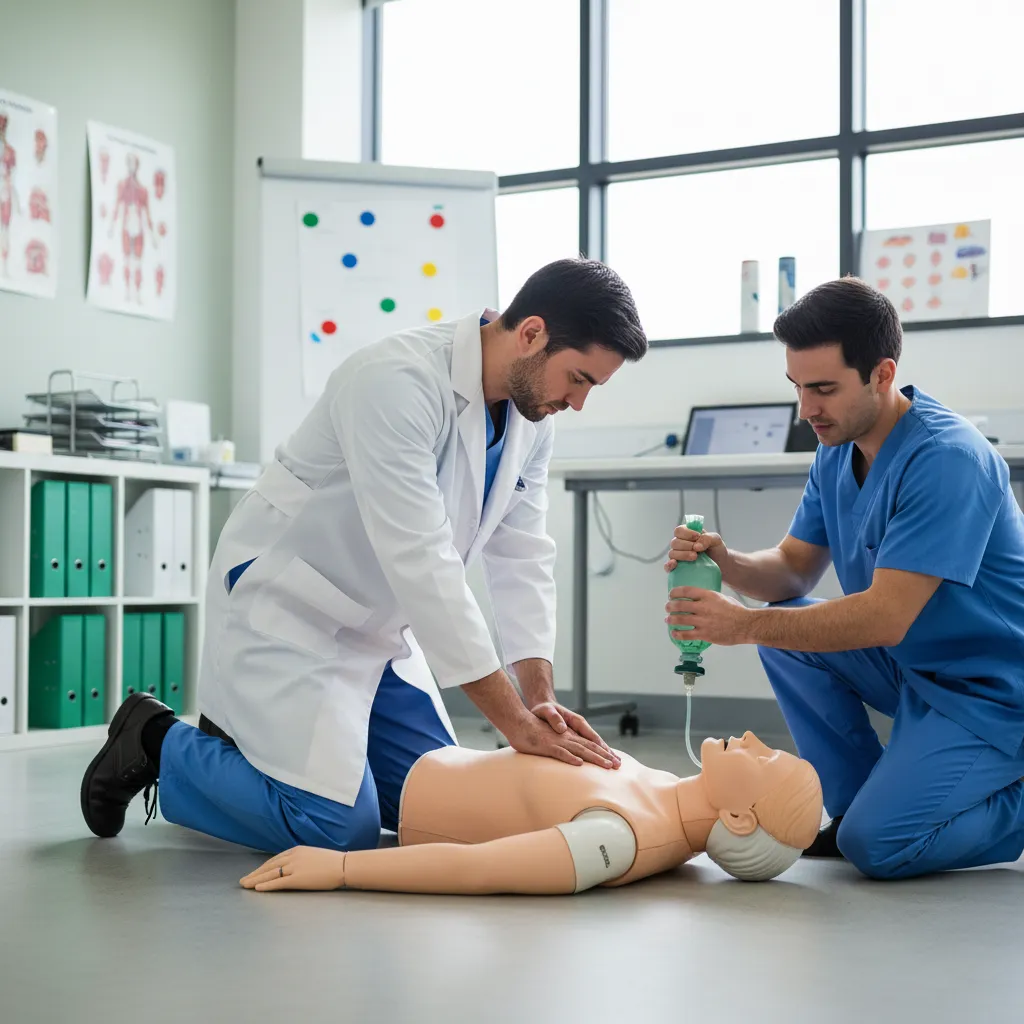
For two-rescuer adult CPR, switching compressors every two minutes is critical to maintain quality. A useful trick is to designate one song per cycle, so when the song ends, the rescuers swap roles. This builds in a natural reminder and prevents the dangerous quality decay that occurs when a tired rescuer continues past their physical limits. The acls algorithm sequence integrates these rhythm cues into its standardized approach during cardiac arrest events.
Should You Use Songs During Real CPR?
- +Maintains correct 100-120 BPM compression rate consistently
- +Reduces rescuer anxiety through familiar musical patterns
- +Frees cognitive bandwidth for situational awareness and decisions
- +Improves compression quality retention weeks after training
- +Creates shared rhythm for coordinated multi-rescuer response
- +Helps bystanders join in by counting or singing along
- +Validated by multiple peer-reviewed clinical studies
- −Some rescuers find lyrics distracting during real emergencies
- −Cultural unfamiliarity with Western pop songs limits universal use
- −Music may seem disrespectful in front of grieving family members
- −Singing aloud requires breath control that fatigues rescuers faster
- −Wrong tempo songs can reinforce dangerous compression rates
- −Reliance on music may fail when stress blocks song recall
Pros and Cons at a Glance
| Pros | Cons |
|---|---|
| Reduces rescuer anxiety through familiar musical patterns | Some rescuers find lyrics distracting during real emergencies |
| Frees cognitive bandwidth for situational awareness and decisions | Cultural unfamiliarity with Western pop songs limits universal use |
| Improves compression quality retention weeks after training | Music may seem disrespectful in front of grieving family members |
| Creates shared rhythm for coordinated multi-rescuer response | Singing aloud requires breath control that fatigues rescuers faster |
| Helps bystanders join in by counting or singing along | Wrong tempo songs can reinforce dangerous compression rates |
| Validated by multiple peer-reviewed clinical studies | Reliance on music may fail when stress blocks song recall |

How to Practice CPR with Rhythm Songs
- ✓Download a metronome app set to 110 BPM as a baseline reference
- ✓Listen to Stayin' Alive five times daily for one week to internalize the tempo
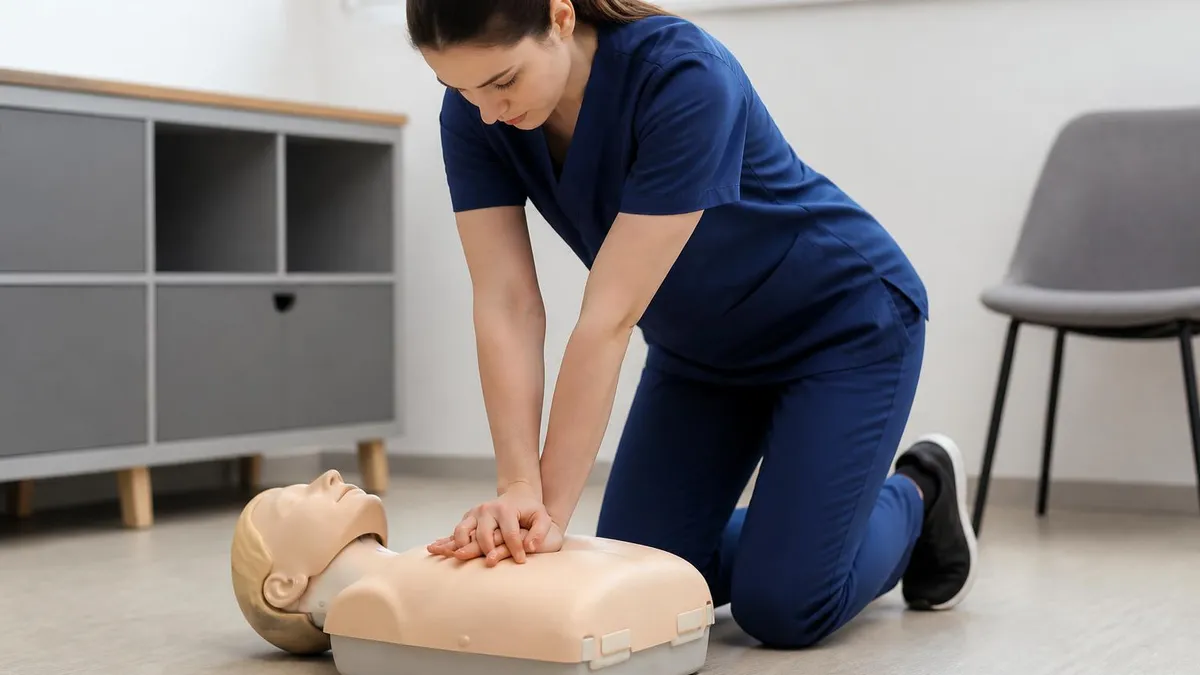
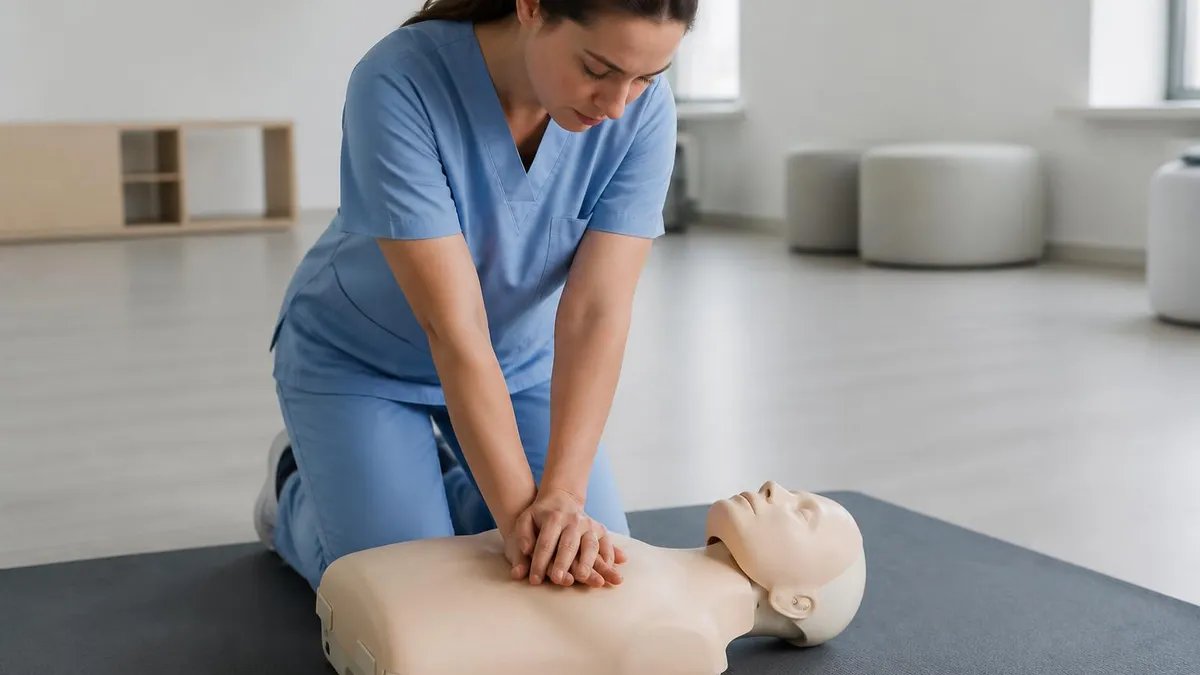
- ✓Practice on a CPR manikin while playing your chosen song aloud
- ✓Sing the song silently while performing compressions on a pillow
- ✓Record yourself and check compressions against the song beat
- ✓Switch songs every practice session to build flexible rhythm recall
- ✓Pair specific songs with specific scenarios (infant, adult, pediatric)
- ✓Practice without music after two weeks to test internalized rhythm
- ✓Use rhythm songs during certification renewal courses for retention
- ✓Teach the song trick to family members so they can assist if needed
Match Tempo to Patient, Not Personal Preference
The most common mistake learners make is choosing a favorite song that falls outside the 100-120 BPM target zone. A song you love at 90 BPM will lead to under-perfusion, while a 140 BPM track causes incomplete chest recoil. Always verify tempo using a free BPM analyzer before adopting a song for CPR training, and prioritize clinical effectiveness over musical taste.
Major certifying organizations have formally integrated rhythm songs into their curricula over the past fifteen years. The American Heart Association introduced Stayin' Alive as an official teaching tool in 2008, and the Red Cross followed with their own validated playlist shortly after. The national cpr foundation now distributes branded rhythm cards listing approved songs by category, age group, and rescue scenario, making it easier for instructors to customize training based on their audience demographics and cultural backgrounds.
What is a bls certification without rhythm training? Increasingly, the answer is incomplete. Basic Life Support courses now spend dedicated time on tempo recognition, with instructors using metronomes and song clips to test student accuracy before issuing certification cards. Some programs require students to demonstrate competent compressions to three different songs at different tempos before passing, ensuring that rhythm skills transfer beyond a single memorized track that might not be available during a real emergency.
Advanced certifications like pals certification and ACLS integrate rhythm training with more complex clinical decision-making. During megacode simulations, instructors deliberately introduce distractions, simulated family members, and equipment failures while testing whether students maintain proper compression rate. The internal song serves as an anchor amid chaos, and learners who have mastered this skill consistently outperform their peers on practical examinations. The cpr index used by some institutions tracks this competency longitudinally.
Hospital-based code teams have adopted standardized rhythm tracks for in-hospital cardiac arrests, often piped through overhead speakers in code rooms to keep entire teams synchronized. Some advanced facilities use smart compression devices with built-in metronomes, but research suggests that human-led rhythm with familiar songs produces equivalent or better outcomes than purely mechanical timing. The psychological reassurance of music appears to translate into measurable clinical benefit during high-stress events.
Pediatric specialty hospitals have developed their own song catalogs tailored to younger patients and their families. When a child requires resuscitation, the presence of familiar children's music can comfort family members and help pediatric staff maintain calm focus. Some children's hospitals report using Disney soundtracks at modified tempos, with specific songs chosen to match the age and known preferences of the patient when this information is available from the medical record.
Community first responder programs, including police, fire, and lifeguard certifications, increasingly require rhythm song proficiency. These responders often arrive before EMS and may perform CPR for ten minutes or longer, making sustained compression quality essential. Training programs report that responders who learned rhythm songs during initial certification show significantly better skill retention at annual recertification assessments compared to cohorts trained without music-based methods.
International adaptations of rhythm-based CPR training have produced fascinating cultural variations. In Japan, the song Anpanman March is widely used at 109 BPM. In Brazil, the samba classic Mas Que Nada serves the same role at 112 BPM. The principle remains universal: a familiar, culturally appropriate song in the correct tempo range outperforms abstract metronome counting for the vast majority of learners regardless of their educational or professional background.
If you witness a cardiac arrest, begin compressions immediately. Do not waste seconds searching for music on your phone or trying to remember the perfect song. Push hard, push fast, and let any internal rhythm guide you. Brain cells begin dying within four minutes of arrest, and even imperfect CPR is vastly better than delayed perfect CPR.
Building a personal CPR playlist requires both clinical knowledge and self-awareness about your own musical memory. Start by identifying three songs in the 100-120 BPM range that you can sing from memory without prompting. These should span different genres and emotional tones, giving you options for different scenarios. A bystander performing CPR on a stranger may prefer an upbeat track, while a healthcare worker resuscitating a long-term patient might benefit from something more solemn. The cpr index resources can help you verify song tempos.
Once you have your core three songs, practice them deliberately for at least two weeks. Sing them aloud during commute drives, hum them while exercising, and visualize compressions during the chorus. This kind of distributed practice embeds the tempo deep enough that stress will not erase it. Many people find that pairing songs with specific physical anchors, like always tapping your knee on the downbeat, creates additional retrieval cues that activate automatically in emergencies.
Consider geographic and demographic factors when finalizing your playlist. If you work in a daycare, prioritize children's songs and pediatric tempos. If you volunteer with elderly populations, classic rock and oldies from the 1960s and 1970s often land in the perfect tempo range and feel more comforting to older patients and their families. Workplace first responders should consider songs that everyone on the team knows, enabling shared rhythm during multi-rescuer scenarios.
Technology offers helpful supplementation but should not replace memorized songs. Apps like PulsePoint and the AHA's Hands-Only CPR app include built-in metronomes and song players, useful as backup when phones are accessible. However, in many emergencies you will not have your phone within reach, will not be able to unlock it, or will be too stressed to navigate menus. The truly reliable resource is the music in your head, not the music on your device.
Refresh your playlist annually. Skills decay over time, and revisiting your songs during recertification ensures continued accuracy. Many CPR instructors recommend treating song practice like fire drill rehearsal, scheduling a quick five-minute review every six months. Compare your compression rate against a metronome to catch any tempo drift, and update your selections if you notice yourself consistently pushing too fast or too slow with a particular track.
Share your playlist with family members and frequent companions. CPR most often happens at home, and the people most likely to need to save your life are the people you live with. Teaching them your rhythm songs creates a shared emergency vocabulary and ensures that if you are the one in cardiac arrest, the people around you have the same internalized tempo backbone. This intergenerational transfer of knowledge has been shown to dramatically improve community survival rates.
Finally, do not underestimate the emotional value of having a song ready. Cardiac arrests are traumatic events for everyone present, and survivors of administered CPR often report that having a familiar song running through their head helped them stay present and confident during what felt like an impossible situation. Music transforms panic into purposeful action, and that transformation may ultimately matter as much as any technical skill you bring to the moment.
Practical implementation of songs for CPR in your daily life starts with consistent low-effort exposure. Set Stayin' Alive as your morning alarm for two weeks, and the 103 BPM tempo will burn itself into your auditory memory permanently. This is one of the lowest-cost, highest-yield preparedness investments any person can make. You will not even notice the effort, but your hands will know exactly what to do if the moment ever comes. Many classes near me recommend this exact technique.
For families with children, weave CPR rhythm songs into existing routines. Baby Shark and Wheels on the Bus already feature in most households with young kids, so deliberately mention to children that these songs match the rhythm of helping a sick heart. Children as young as nine can perform effective compressions on smaller adults, and giving them age-appropriate context makes them more likely to act decisively as bystanders. School-based programs have demonstrated impressive outcomes when communities invest in youth CPR education.
For workplace preparedness, consider proposing a quarterly CPR rhythm refresher during team meetings. A five-minute exercise where the team sings Stayin' Alive together while practicing compressions on a desk-top pillow costs nothing but builds enormous collective competency. Office cardiac arrests are survivable when colleagues respond within the first three minutes, and this kind of low-pressure repetition transforms abstract certification into reflexive action when it actually counts.
Verify the tempo of any song before adopting it for CPR practice. Free online BPM analyzers like SongBPM and Tunebat let you paste any track and confirm its precise beats per minute. Be aware that some songs change tempo within their structure, which makes them unreliable for sustained CPR. Choose tracks with consistent rhythm throughout, avoiding songs with dramatic tempo shifts, long instrumental breaks, or extended fade-outs that might leave you without rhythmic guidance mid-resuscitation.
Consider building a backup mental playlist for situations where your primary song fails. Stress can occasionally block recall of even the most familiar tracks, and having two or three alternates ensures you always have something to draw on. Some instructors recommend pairing each song with a memorable phrase or image, creating additional retrieval pathways. The phrase Ah ah ah ah, stayin' alive triggers the Bee Gees track in nearly everyone who has heard the song before.
Document your CPR rhythm preparedness as part of broader emergency planning. Just as you might create a fire escape plan or stock an emergency kit, write down your chosen songs, post them on your refrigerator, and brief overnight guests on your protocol. This sounds excessive until you imagine actually needing it. The minute spent on this preparation could save a life, and the social normalization of CPR readiness helps reduce the stigma that still prevents some bystanders from acting decisively during emergencies.
Combine rhythm song practice with hands-on training at least annually. Music gives you tempo, but it does not teach compression depth, hand placement, or the integrated sequence with AED use and rescue breathing. Certified courses through the AHA, Red Cross, or recognized equivalents provide the physical skills that rhythm anchors but cannot replace. The combination of mental rhythm preparation and periodic physical practice creates the most resilient skill foundation possible for an actual cardiac emergency response.
CPR Questions and Answers

About the Author

Registered Nurse & Healthcare Educator
Johns Hopkins University School of NursingDr. Sarah Mitchell is a board-certified registered nurse with over 15 years of clinical and academic experience. She completed her PhD in Nursing Science at Johns Hopkins University and has taught NCLEX preparation and clinical skills courses for nursing students across the United States. Her research focuses on evidence-based exam preparation strategies for healthcare certification candidates.
Join the Discussion
Connect with other students preparing for this exam. Share tips, ask questions, and get advice from people who have been there.
View discussion (5 replies)