
CPR First Aid Training Near Me: How to Find, Compare, and Complete a Certified Course in 2026 October
Find CPR first aid training near me: compare AHA, Red Cross, and National CPR Foundation courses, costs, formats, and certification timelines for 2026 October. 📚
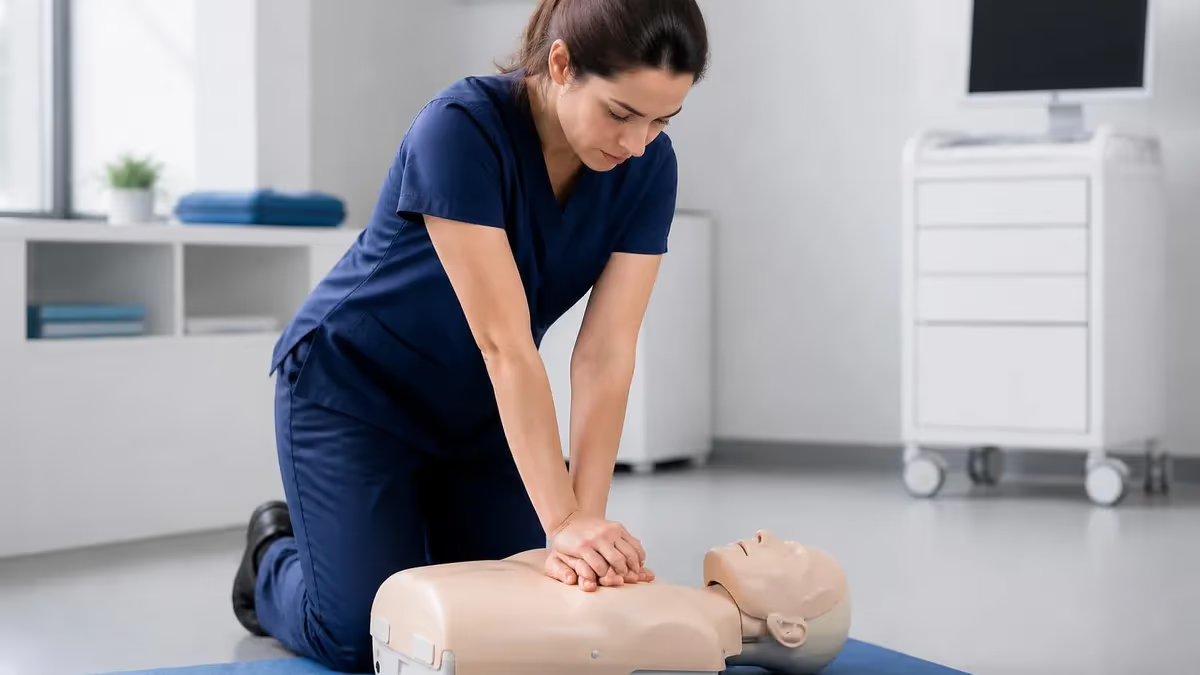
Searching for cpr first aid training near me can feel overwhelming when every page promises a certification card by Friday. The truth is that quality, accreditation, and skill retention vary wildly between providers, and the right course depends on your job role, state regulations, and whether you need a hands-on skills check. This guide walks you through every option available in the United States in 2026, from American Heart Association classroom sessions to National CPR Foundation online certifications, and shows you exactly what to expect when you walk through the door.
CPR and first aid are technically two distinct skill sets, but most accredited courses bundle them together because emergencies rarely come labeled. A combined course typically covers adult, child, and infant CPR, automated external defibrillator (AED) use, choking response, bleeding control, burns, fractures, and the recovery position. Some courses also fold in basic life support concepts that you would otherwise learn in a separate BLS class. Knowing what is bundled in advance helps you avoid paying twice for overlapping content.
The phrase "near me" matters because skills practice is the part of CPR training that online-only courses cannot replicate. Federal OSHA guidance and most state nursing boards require an in-person skills evaluation for workplace certification. That means even if you complete the cognitive portion online, you will still need to locate a local instructor for a hands-on session with a manikin, a real AED trainer, and a feedback device that measures compression depth, rate, and recoil quality.
Cost ranges in 2026 sit between $0 for community-sponsored Heartsaver classes and $185 for blended AHA Heartsaver First Aid CPR AED courses at hospital training centers. Online-only options from providers like the what is aed verification database show that nationally recognized credentials usually cost between $20 and $60 when no in-person skills check is required. Always confirm with your employer or licensing board before paying that an online-only card will be accepted.
Class duration is another deciding factor. A standard Heartsaver CPR AED class runs about four hours, while a combined CPR, AED, and First Aid course extends to roughly six and a half hours. Blended learning shortens the in-person time to two hours by moving lectures online. Healthcare provider BLS courses generally take four to four and a half hours and include two-rescuer scenarios, bag-valve-mask ventilation, and pulse checks that lay-rescuer classes skip entirely.
Geography influences availability more than people expect. Major metro areas like Los Angeles, Houston, Chicago, and Atlanta host dozens of weekly sessions across competing training centers, while rural counties may have only one Red Cross chapter or a single fire-department instructor offering classes monthly. If you live more than 50 miles from a training center, ask whether the provider offers mobile instructors who travel to your workplace for groups of six or more.
By the end of this guide, you will know how to evaluate any local CPR class against national standards, understand how the ACLS algorithm and BLS certifications fit together, and have a clear checklist for booking the right course for your needs. Whether you need a card for a new job, a license renewal, a coaching role, or simple peace of mind, the right class is closer than you think.
CPR First Aid Training by the Numbers
Key Facts at a Glance
| Item | Value | Details |
|---|---|---|
| Course Price Range | $0–$185 | Community to hospital-based |
| Class Length | 4–6.5 hr | Blended cuts in-person to 2 hr |
| Certification Validity | 2 yrs | Both AHA and Red Cross |
| Compressions/Minute | 100–120 | AHA 2025 guidelines |

Course Types and Certifying Bodies
Designed for lay rescuers, teachers, coaches, daycare workers, and parents. Covers adult, child, and infant CPR, AED use, choking, and optional first aid modules. Card valid two years.
Healthcare-focused course covering high-quality CPR, two-rescuer techniques, bag-valve-mask ventilation, and team dynamics. Required for nurses, EMTs, dental staff, and most hospital employees.
Equivalent to Heartsaver in scope but uses Red Cross protocols. Often selected by school districts, summer camps, and nonprofit organizations with longstanding Red Cross partnerships.
Online certification accepted by many non-clinical employers. Includes CPR, AED, BLS, and first aid certificates. Skills demonstration recommended but not always required for issuance.
Advanced courses for clinical providers. ACLS covers cardiac arrest algorithms; PALS certification focuses on pediatric emergencies. Both require current BLS as a prerequisite.
Finding cpr first aid training near me starts with three reliable search tools: the AHA Atlas course locator, the Red Cross zip-code finder, and your local hospital's community education page. Each returns slightly different results because providers register with whichever body matches their accreditation. The AHA Atlas tends to surface the most weekday daytime classes, while Red Cross fills evenings and weekends. Hospital education departments often run discounted classes for community members on Saturday mornings.
Independent training sites listed under business names like "CPR Made Simple," "SureFire CPR," or local fire-department training divisions also appear in Google Maps when you search the keyword phrase directly. These independents are typically AHA Training Centers operating under a master contract, which means the cards they issue carry the same weight as those from a hospital-based program. Always verify the instructor's TC affiliation number is printed on your certification card.
Workplaces sometimes contract instructors to bring CPR classes onsite. If you work at a school district, a daycare, a gym, or a senior-living facility, ask HR whether onsite classes are scheduled quarterly. Onsite training is often free to the employee and offers the additional benefit of practicing emergency response in the exact environment where you would need to use it. Be sure the class includes the chest compression fraction targets your role requires.
Community colleges and adult-education programs also run discounted weekend courses, especially in fall and spring semesters. Tuition often runs $35 to $75 with materials included, and the instructor-to-student ratio tends to be smaller than at high-volume commercial centers. The trade-off is a longer wait list and less flexibility in scheduling makeup sessions if you cannot attend the original date.
For shift workers, parents, and people with irregular schedules, blended learning is the most practical option. You complete the cognitive portion online in 60 to 90 minutes, then book a 90-minute skills check at any AHA Training Center. The online module saves a printable completion certificate you bring with you, and the skills session adds compressions, ventilations, AED placement, and choking scenarios using a partner or instructor as the patient.
When evaluating any local class, confirm three things before paying: the course is taught by a currently credentialed instructor, the card you receive is issued by AHA, Red Cross, ASHI, or NCF (not a generic certificate of attendance), and the skills practice uses a feedback manikin. Feedback manikins measure compression depth between 2.0 and 2.4 inches, rate between 100 and 120 per minute, and proper hand placement, eliminating guesswork on whether you passed.
Finally, check reviews specifically mentioning skills practice time rather than overall convenience. A four-star class with abundant manikin time will produce better real-world rescuers than a five-star class with quick lectures and short hands-on segments. The American Heart Association recommends a minimum manikin-to-student ratio of one to six for adult CPR practice, and you should walk away after performing at least two full uninterrupted minutes of compressions yourself.

CPR Practice Test Questions
Prepare for the CPR Cardiopulmonary Resuscitation Practice exam with our free practice test modules. Each quiz covers key topics to help you pass on your first try.
CPR Basic CPR
CPR Exam Questions covering Basic CPR. Master CPR Test concepts for certification prep.
CPR and First Aid
Free CPR Practice Test featuring and First Aid. Improve your CPR Exam score with mock test prep.
CPR (Cardiopulmonary Resuscitation) Adult ...
CPR Mock Exam on (Cardiopulmonary Resuscitation) Adult CPR and AED Usage. CPR Study Guide questions to pass on your first try.
CPR (Cardiopulmonary Resuscitation) Airway...
CPR Test Prep for (Cardiopulmonary Resuscitation) Airway Obstruction and Choking. Practice CPR Quiz questions and boost your score.
CPR (Cardiopulmonary Resuscitation) Cardio...
CPR Questions and Answers on (Cardiopulmonary Resuscitation) Cardiopulmonary Emergency Recognition. Free CPR practice for exam readiness.
CPR (Cardiopulmonary Resuscitation) Child ...
CPR Mock Test covering (Cardiopulmonary Resuscitation) Child and Infant CPR. Online CPR Test practice with instant feedback.
CPR (Cardiopulmonary Resuscitation) High-P...
Free CPR Quiz on (Cardiopulmonary Resuscitation) High-Performance Team Dynamics. CPR Exam prep questions with detailed explanations.
CPR (Cardiopulmonary Resuscitation) Legal ...
CPR Practice Questions for (Cardiopulmonary Resuscitation) Legal and Ethical Considerations. Build confidence for your CPR certification exam.
CPR for Specific Populations
CPR Test Online for for Specific Populations. Free practice with instant results and feedback.
CPR Airway & Breathing Management
CPR Exam Questions covering Airway & Breathing Management. Master CPR Test concepts for certification prep.
CPR Assessment & Recognition of Cardiac Ar...
Free CPR Practice Test featuring Assessment & Recognition of Cardiac Arrest. Improve your CPR Exam score with mock test prep.
CPR Chest Compressions & Defibrillation
CPR Mock Exam on Chest Compressions & Defibrillation. CPR Study Guide questions to pass on your first try.
CPR Post-Resuscitation Care & Recovery
CPR Test Prep for Post-Resuscitation Care & Recovery. Practice CPR Quiz questions and boost your score.
Comparing AHA, Red Cross, and National CPR Foundation
The AHA is the gold standard for clinical certification and the source of the ACLS algorithm that every hospital uses during code blue events. Heartsaver and BLS Provider courses follow the same 2025 guidelines: 30 compressions to 2 breaths for single-rescuer adult CPR, a chest-compression depth of at least two inches, and minimal interruption between cycles. The card is accepted by virtually every US healthcare employer.
AHA classes cost between $65 and $185 depending on whether the provider is hospital-based or independent. Online-only AHA courses do not exist for clinical roles because skills demonstration is mandatory. The blended HeartCode option lets you complete didactics online and finish with a 90-minute in-person skills check, which is the fastest path to a clinical-grade card while still meeting national life support standards.
Online vs. In-Person CPR First Aid Training
- +Online courses can be completed at any hour and paused between modules
- +Lower cost, often $20–$60 versus $100+ for traditional classroom sessions
- +Immediate digital certificate available for printing after passing the final exam
- +Built-in retake policy means a missed answer never costs extra money
- +Ideal for refreshers when you have already done hands-on training within two years
- +Convenient for rural learners who live far from accredited training centers
- −No hands-on skills practice with a manikin or AED trainer device
- −Not accepted by hospitals, EMS agencies, or most state nursing boards
- −OSHA recommends an in-person skills check for workplace compliance
- −You miss instructor feedback on real-time compression depth and rate
- −Two-rescuer techniques and bag-valve-mask skills cannot be taught remotely
- −Some employers require an AHA or Red Cross card specifically, not NCF

Booking Your CPR First Aid Class: 10-Step Checklist
- ✓Confirm whether your employer requires AHA, Red Cross, ASHI, or accepts NCF certification
- ✓Decide between classroom-only, blended learning, or fully online based on skills check requirements
- ✓Compare three local providers using Google Maps reviews and accreditation badges
- ✓Verify the course includes adult, child, and infant CPR plus AED and first aid modules
- ✓Ask whether the class uses feedback manikins that measure depth and rate
- ✓Check the instructor-to-student ratio; aim for one instructor per six students or better
- ✓Confirm the certification card is digital and valid for two years from completion
- ✓Schedule the class at least two weeks before any job-start or license-renewal deadline
- ✓Review the refund and reschedule policy before paying the registration fee
- ✓Bring a photo ID, loose comfortable clothing, and a water bottle to the in-person session
Your card expires exactly two years from issue, not from your first use
Both AHA and Red Cross certifications expire on the last day of the issue month two years after the class. Calendar your renewal 60 days before expiration. Many employers will not let you work even a single shift on an expired card, and licensing boards may charge a reinstatement fee in addition to the renewal class.
Workplace and licensing requirements drive most CPR first aid training decisions in the United States. Healthcare professionals, including registered nurses, licensed practical nurses, EMTs, paramedics, dental hygienists, and respiratory therapists, must hold a current AHA BLS Provider card. The card includes the high-quality CPR fundamentals, two-rescuer adult, child, and infant scenarios, and AED use within a team setting. Without it, hospitals will not allow you on the floor, even as a student or volunteer.
Non-clinical roles that legally require CPR certification include lifeguards, swim instructors, personal trainers, group fitness instructors, daycare staff, build parents, school bus drivers, and certain security personnel. Each role specifies an acceptable certifying body, with most state daycare licensing boards naming AHA Heartsaver or Red Cross Adult and Pediatric First Aid CPR AED as the only two acceptable courses. Pals certification is required only for pediatric clinical roles such as PICU nurses.
Coaches working with youth athletic teams in many states must hold current CPR, AED, and first aid certification before being allowed to supervise practices. Concussion-protocol laws passed in the past decade tightened these requirements substantially, and most state athletic associations now require recertification every two years with documentation uploaded to a coaching portal. School-based coaches are typically certified through the district at no personal cost.
OSHA does not require every workplace to have a certified rescuer, but it does mandate that if no medical facility is in "near proximity" to the workplace, then an employer must have trained personnel available to render first aid. In practice, most workplaces with more than 25 employees keep at least one CPR-trained staffer per shift. Industries with improved risk like construction, manufacturing, and warehousing often train every supervisor and require quarterly refresher drills.
State licensing boards for cosmetology, massage therapy, acupuncture, and chiropractic medicine increasingly include CPR as a renewal requirement. Check the latest renewal cycle on your board's website before scheduling your class, because some states accept only specific providers. Massage therapy boards in particular often refuse online-only cards even when the card carries a national CPR Foundation logo, requiring instead an AHA or Red Cross hands-on credential.
Federal employees, military contractors, and government healthcare workers usually have access to free or subsidized CPR training through their agency. The Veterans Health Administration, Indian Health Service, and Department of Defense all maintain in-house training centers. Civilian contractors often qualify for the same courses at no charge, but you may need supervisor approval and a course access code submitted at registration. Plan two to three weeks ahead for these classes since seats fill quickly.
Finally, understand that holding a current CPR card creates Good Samaritan protections in all 50 states when you respond to an emergency in good faith outside of your paid scope of work. The exact wording of these laws varies, but the underlying principle is consistent: a trained rescuer acting reasonably and without expectation of payment is shielded from civil liability for ordinary outcomes. This legal protection is one of the strongest incentives to maintain continuous certification even after leaving a role that required it.
If your CPR card lapses, most providers require you to retake the full initial course rather than the shorter renewal class. This means more time, higher cost, and possible delays in starting a new role. Schedule renewal at least six weeks before expiration.
Passing the skills check is the moment that separates classroom knowledge from rescuer confidence. Instructors look for five core competencies during the adult CPR demonstration: compression depth, compression rate, full chest recoil between compressions, proper hand placement on the lower half of the sternum, and minimal interruption while transitioning between compressions and ventilations. Each is scored independently, and missing two or more typically requires a remediation attempt before the card is issued.
Compression depth of at least two inches for adults and one third of chest depth for children and infants is non-negotiable. New rescuers often underestimate how forcefully they need to push, especially on adult manikins. The feedback manikin's light will turn green when you hit the correct depth and red when you fall short. Most students struggle in the first 30 seconds, then settle into a rhythm once their arms find the right body mechanics with locked elbows and shoulders directly above the hands.
Rate is equally important. The 2025 AHA guidelines recommend 100 to 120 compressions per minute, which is roughly the tempo of "Stayin' Alive" by the Bee Gees. Most classes practice with a metronome app or song playing aloud. Going faster than 120 reduces effectiveness because the heart does not have time to refill between compressions. Treat any cpr machine demonstration as a benchmark of what good mechanical compressions feel like, not a substitute for your own training.
The instructor will also observe how you handle the AED. Expect to verbalize each step: turn on the device, attach pads to a bare chest, ensure no one is touching the patient during analysis, and deliver the shock when prompted. Modern AED trainers provide voice guidance identical to real units, so confidence builds quickly once you have practiced two or three sequences. Time from arrival to first shock should be under 90 seconds in most scenarios.
Two-rescuer scenarios apply only to healthcare provider BLS courses. You will switch roles every two minutes to maintain compression quality and practice clear communication. The transition itself is scored: pauses longer than 10 seconds reduce the chest compression fraction below the 60 percent threshold considered effective. Practice the handoff in advance with a study partner if you can, calling out "switch" before you stop compressions rather than after.
Infant CPR uses two fingers for single rescuer and the two-thumb encircling-hands technique for two rescuers. Compression depth is about one and a half inches, again to one third of chest depth. Infant rescue breaths are smaller and softer than adult breaths because infant lungs are tiny; over-inflation can cause gastric distention. Watch the chest rise just enough to be visible, not dramatic. The instructor will demonstrate on an infant manikin before you attempt.
If you fail any portion, do not panic. Remediation is built into every accredited course. The instructor will explain what went wrong, demonstrate the correct technique again, and let you repeat the failed station before the class ends. Failing remediation is rare; in 2024, the AHA reported a 96 percent eventual pass rate when remediation was offered. Approach the skills check as practice with feedback rather than a test, and you will leave with a card and the confidence to use it.
Practical preparation tips can make the difference between a confident pass and a stressful retake. Start by watching the AHA or Red Cross pre-course video the day before class. These short videos cover the exact compression rhythm, AED steps, and choking response that will be evaluated. Watching them at home costs nothing and primes your muscle memory before you walk in. Most providers email the video link with your registration confirmation.
Sleep matters more than students realize. CPR is physically demanding, and instructors notice when a tired student is breathing harder than the manikin after one minute of compressions. A normal respiratory rate sits between 12 and 20 breaths per minute at rest, and you want yours to stay in that range during class so you can speak clearly and listen carefully. If you are interested in the deeper physiology, the normal respiratory rate for adults reference covers it in detail.
Dress for movement. Loose pants, athletic shoes, and a fitted top let you kneel comfortably next to the manikin without restriction. Avoid skirts, dresses, and any clothing with a stiff waistband. Bring a hair tie if your hair could fall into your face during compressions. Some students bring knee pads from a hardware store for around 12 dollars, which is a small investment that makes the four-hour class far more comfortable.
Hydrate before and during class, but eat a light meal rather than skipping food. Compressions burn roughly 100 calories every two minutes, and low blood sugar is the single most common reason students feel lightheaded during practice. Pack a banana, a granola bar, or trail mix in your bag for breaks. Most instructors schedule a 10-minute pause every 90 minutes, especially in combined CPR and first aid classes that run six and a half hours.
Take notes on the parts that surprise you. New rescuers commonly underestimate how much force is needed for adult compressions and how gentle infant breaths must be. Writing down those moments helps you remember weeks later when the class material has faded. Many providers also offer a free post-class app with refresher videos; download it the day you receive your card and review for five minutes monthly to keep skills sharp between two-year renewal cycles.
If you are studying for life support roles, supplement your class with practice scenarios that go beyond what time allows in person. Free question banks covering choking, cardiac arrest recognition, recovery position transitions, what does aed stand for terminology, and post-arrest care help you internalize concepts faster than rereading the textbook. Aim for 15 to 20 practice questions per evening in the week before class for the strongest retention.
Finally, schedule a recertification reminder the same day you receive your new card. Add it to your phone calendar 60 days before the expiration date with a note about which provider you used and how much you paid. Future-you will thank present-you when the reminder pops up and you can book a class without the stress of a looming deadline. Continuous certification keeps your skills sharp and your Good Samaritan protections active in every state.
CPR Questions and Answers
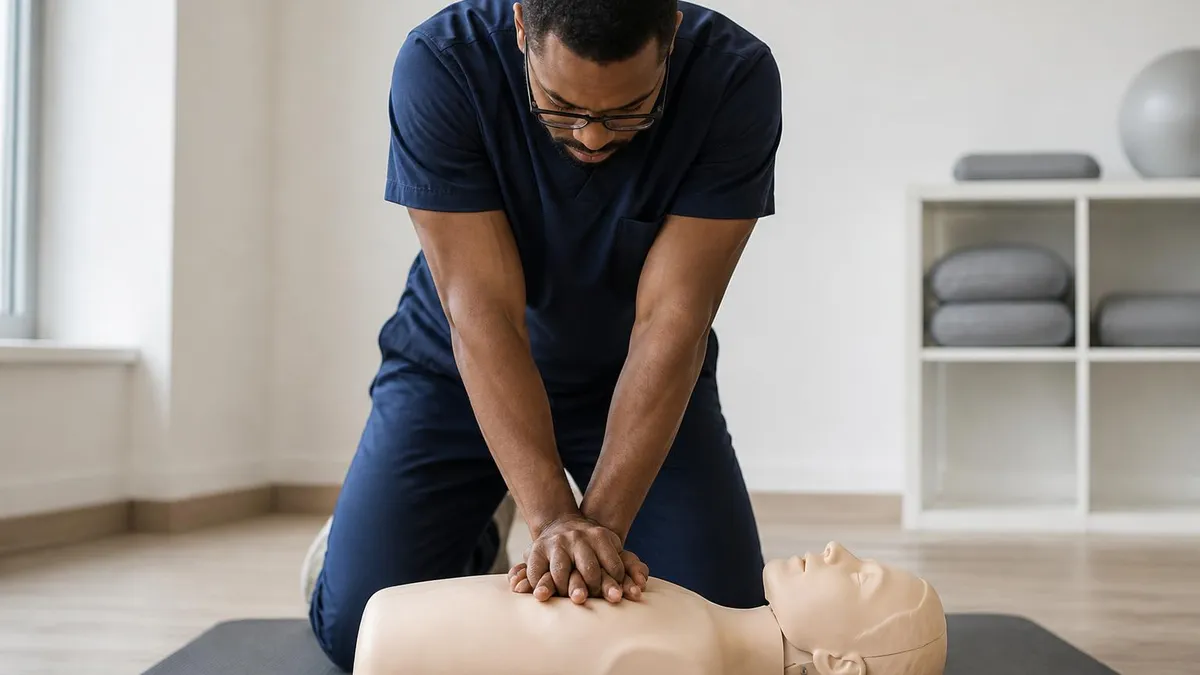
CPR Card Lookup: How to Verify, Replace, and Access Your CPR Certification in 2026
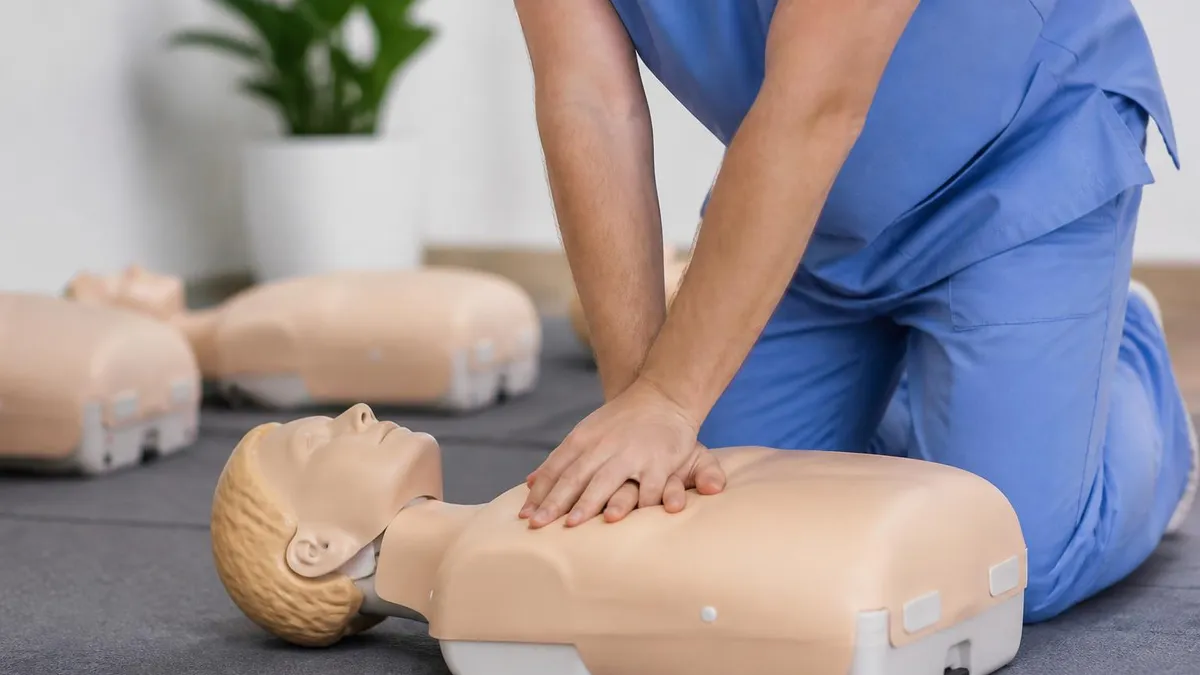
AHA CPR: What It Is, Which Course You Need, and How to Get Certified
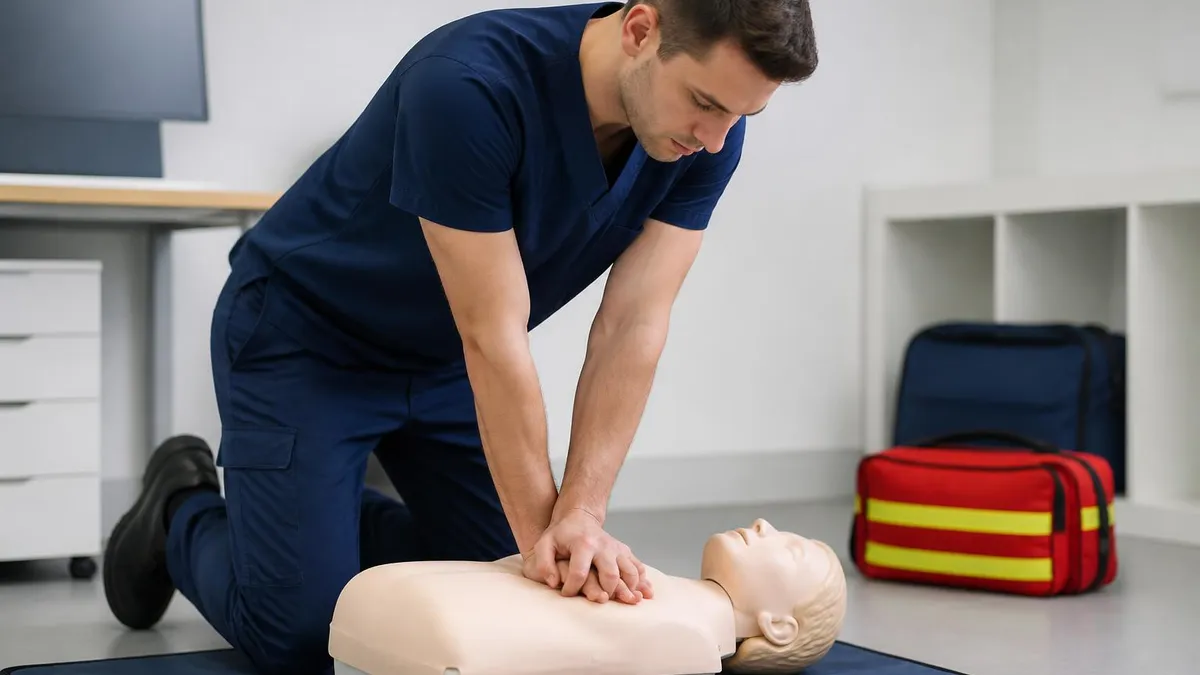
Adult CPR: Complete Step-by-Step Guide to Hands-Only and Standard CPR in 2026
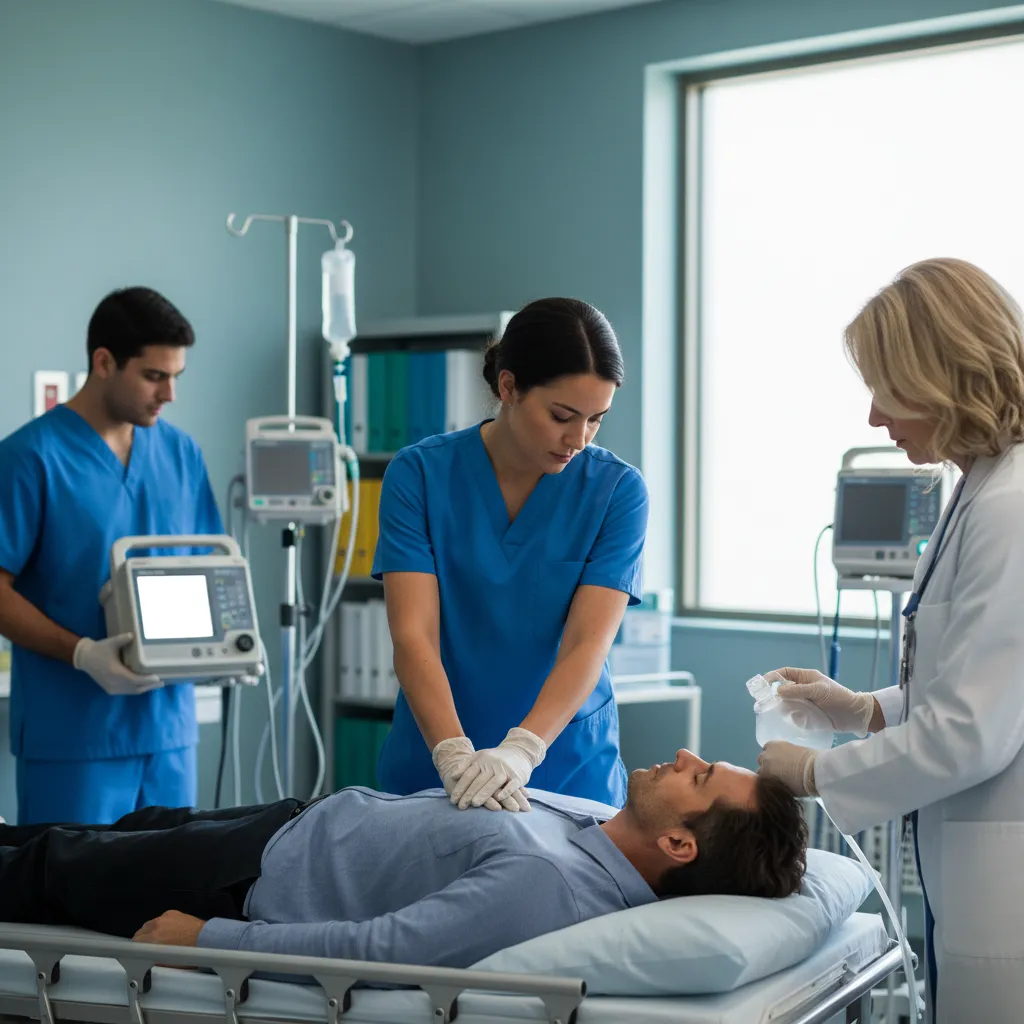
CPR - Cardiopulmonary Resuscitation: Complete Study Guide 2026
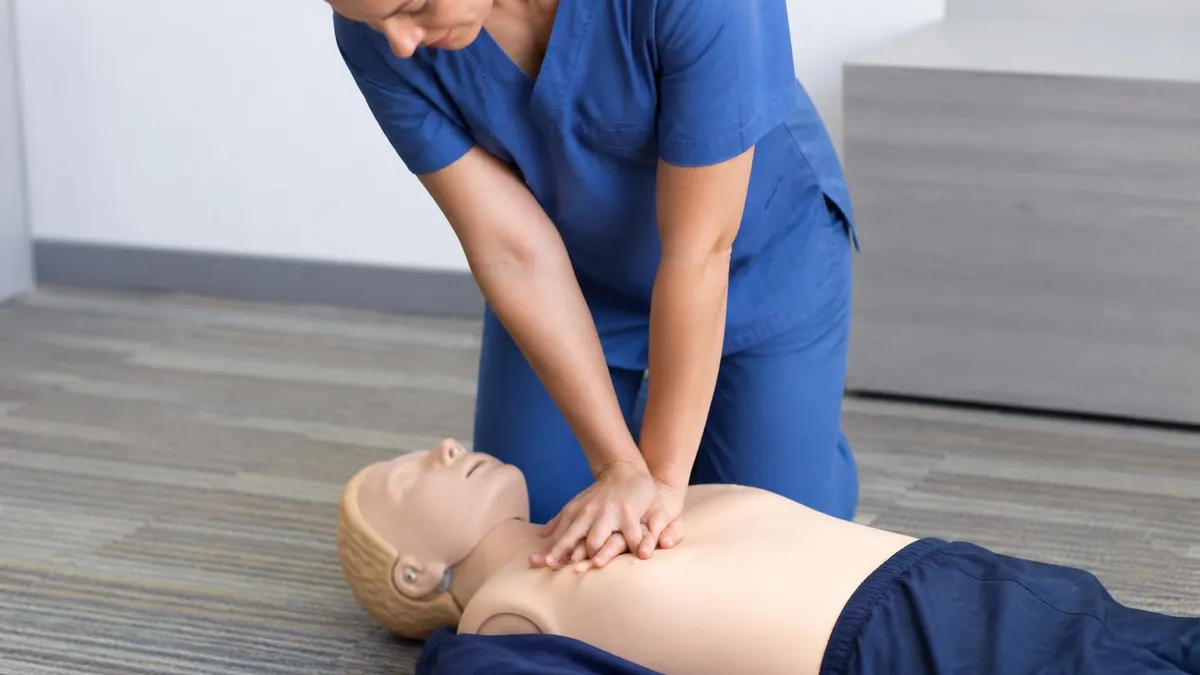
Inappropriate CPR Songs: What Not to Play, Why It Matters, and Better Beat-Per-Minute Alternatives
About the Author

Registered Nurse & Healthcare Educator
Johns Hopkins University School of NursingDr. Sarah Mitchell is a board-certified registered nurse with over 15 years of clinical and academic experience. She completed her PhD in Nursing Science at Johns Hopkins University and has taught NCLEX preparation and clinical skills courses for nursing students across the United States. Her research focuses on evidence-based exam preparation strategies for healthcare certification candidates.
Join the Discussion
Connect with other students preparing for this exam. Share tips, ask questions, and get advice from people who have been there.
View discussion (5 replies)