
Red Cross CPR Certification Online: Complete 2026 October Guide to Courses, Costs, and Card Verification
Red Cross CPR certification online in 2026 October: ❓ courses, costs, blended learning, card lookup, and how it compares to AHA, ASHI, and National CPR Foundation.
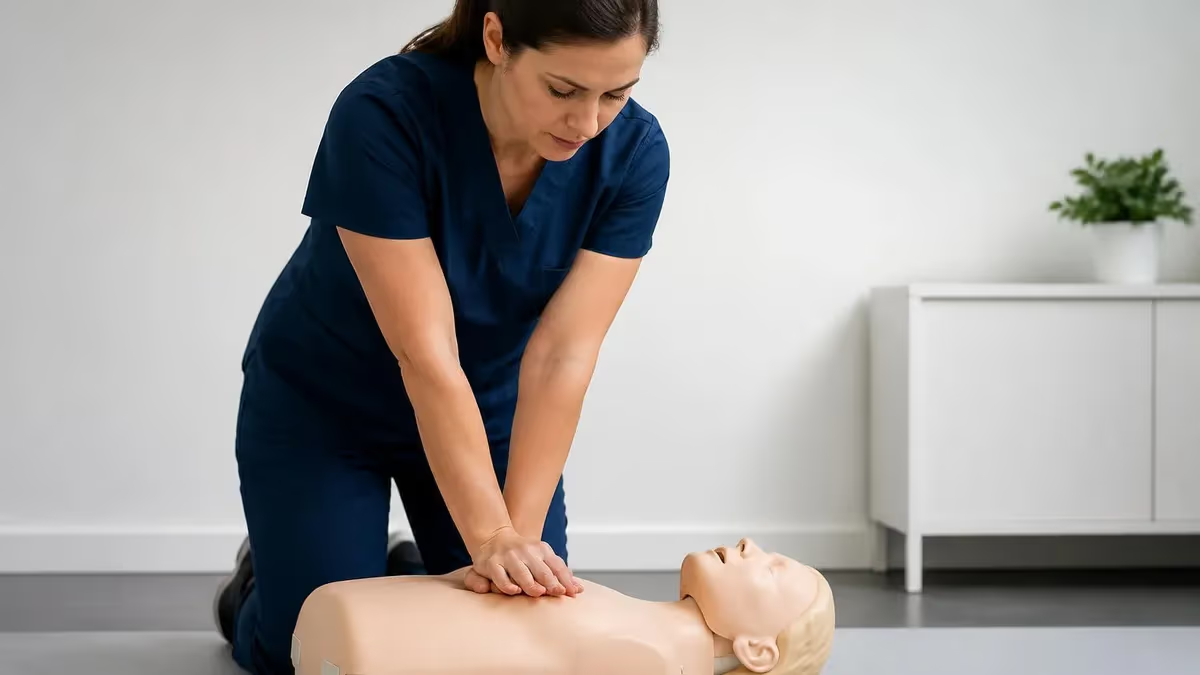
Red Cross CPR certification online is the most searched pathway for U.S. workers who need a recognized credential without committing an entire weekend to an in-person classroom. The American Red Cross offers fully online courses, blended learning that pairs digital coursework with a short in-person skills check, and traditional classroom classes — all leading to the same two-year certification card. Whether you are a teacher, lifeguard, nurse, daycare provider, or simply a parent who wants to be ready, the online pathway delivers consistent, evidence-based training aligned with the 2025 International Liaison Committee on Resuscitation (ILCOR) updates.
Demand for online CPR training has surged. In 2026, roughly 62% of new Red Cross enrollments choose either the fully online or blended option, up from 38% in 2021. The shift reflects employer acceptance, OSHA recognition, and the convenience of completing didactic modules at home. For roles requiring hands-on skill verification — healthcare providers, professional rescuers, lifeguards — blended learning is the standard. For laypersons covering adult, child, and infant cpr basics, the fully online certificate is widely accepted.
This guide walks through every step: choosing the right course level, comparing Red Cross to the American Heart Association (AHA) and the national cpr foundation, understanding what does aed stand for and why automated external defibrillator training is bundled in, navigating the skills session, and verifying your digital card. We also cover what to do when your card is lost, how to retake the exam, and the differences between basic, BLS, ACLS, and PALS-level training so you pick the right credential the first time.
The fully online Red Cross adult CPR/AED course runs about two hours and costs $35. The blended Basic Life Support (BLS) course for healthcare providers costs $80–$110 depending on region and includes a 60-minute in-person skills session. Pediatric add-ons covering infant cpr and child rescue techniques typically add $10–$20. Every certificate is issued as a scannable digital card with a unique ID that employers can verify in seconds through the Red Cross Digital Certificate portal.
Always confirm you are on redcross.org or a verified Authorized Provider site before paying. Look for the official ARC shield logo, an .org domain, and a clearly listed instructor ID if blended learning is involved.
If you are evaluating providers, check our CPR card lookup resource to verify any existing certificate or to understand which issuers are recognized by U.S. employers. The Red Cross, AHA, ASHI, and a small number of other organizations meet the ECC/ILCOR standard that OSHA and most state licensing boards require. Lower-cost online-only "certificates" that skip skills verification are generally not accepted for healthcare, childcare, or occupational roles.
By the end of this guide you will know exactly which Red Cross course matches your job requirement, how much you will pay, how long it takes, what the skills check involves, how to download your card, and how to renew before your two-year window closes. We also include 10 frequently asked questions and a short practice quiz section so you can test your knowledge before exam day.
Red Cross CPR Certification by the Numbers
Red Cross Online CPR Course Levels
Fully online 2-hour course covering adult chest compressions, rescue breaths, and AED operation. Best for office workers, coaches, and parents who need an OSHA-recognized lay-rescuer certificate without a skills check.
Online course adding pediatric and infant cpr techniques, choking response for all ages, and recovery position. Required for daycare staff, teachers, nannies, and youth coaches in most states.
Online didactic plus mandatory in-person skills session for nurses, EMTs, dental staff, and medical students. Covers two-rescuer CPR, bag-mask ventilation, and team dynamics under life support protocols.
Most popular workplace bundle. Online portion covers bleeding control, burns, fractures, and shock; CPR/AED skills completed online or blended. Two-year certificate accepted by 95% of U.S. employers.
For those who want to teach CPR. Includes online prerequisites, instructor candidate course, and co-teaching apprenticeship. Earns Authorized Provider status valid for two years with annual updates.
Understanding how Red Cross online certification actually works removes most of the anxiety first-time enrollees feel. After payment, you receive an immediate login to the Red Cross Learning Center. The platform is mobile-responsive, so you can complete modules on a laptop, tablet, or phone. Each lesson combines short videos (typically 90 seconds to 4 minutes), interactive scenarios, and knowledge checks. The system saves progress automatically, so you can pause mid-module and resume later without losing position.
The fully online adult CPR/AED course contains roughly 14 micro-modules organized around the chain of survival: recognition, activation of emergency services, early CPR, rapid defibrillation, and advanced care transition. You will learn how to assess responsiveness, check breathing and respiratory rate, deliver 30:2 compressions and breaths, and operate an AED. The final assessment is a 25-question multiple-choice exam with an 80% pass threshold. You may retake the exam unlimited times within a 90-day window at no extra cost.
Blended learning adds a structured in-person component. After finishing the online portion, you schedule a skills session with an Authorized Provider within 90 days. The session lasts 45–75 minutes and is led by a certified Red Cross instructor. You will demonstrate compressions on adult, child, and infant manikins, perform bag-mask ventilation if pursuing BLS, and operate a training AED. Instructors use a standardized checklist; you must pass every required skill to receive your card.
Pricing remains transparent. The fully online adult CPR/AED course is $35. Adding child and infant content brings the price to $40. Blended BLS for healthcare providers ranges from $80 to $110 based on local provider pricing. Group rates for employers start at 10 enrollees and can reduce per-seat cost by 15–25%. Red Cross also offers free or subsidized training to teachers, first responders, and community volunteers through grant-funded programs in many states.
Once you pass, your digital certificate appears in your account within minutes. The card displays your name, certification type, issue date, expiration date, and a unique 12-character ID. Employers verify cards by entering the ID at redcross.org/take-a-class/digital-certificate. You can also share a QR code, print a physical copy, or add the card to Apple Wallet or Google Wallet. For renewals and replacement cards, our AHA CPR comparison guide outlines how Red Cross stacks up against the American Heart Association equivalent.
Common technical issues are minor but worth knowing. The platform requires a modern browser (Chrome, Safari, Firefox, or Edge from the past two years). Pop-up blockers can interfere with video playback. If you lose access mid-module, clear your browser cache or switch devices — your progress is server-side. Customer support is available by chat and phone seven days a week and typically resolves access problems within 15 minutes.
Time investment varies by background. Total seat time for the online adult CPR/AED course is about 2 hours, but most learners complete it in 90 minutes if they have prior exposure. Healthcare professionals taking blended BLS spend roughly 3 hours online plus the in-person session. Plan a single uninterrupted block when possible; splitting sessions across days is allowed but adds friction because review screens lengthen as the system re-verifies retention.

CPR Practice Test Questions
Prepare for the CPR Cardiopulmonary Resuscitation Practice exam with our free practice test modules. Each quiz covers key topics to help you pass on your first try.
CPR Basic CPR
CPR Exam Questions covering Basic CPR. Master CPR Test concepts for certification prep.
CPR and First Aid
Free CPR Practice Test featuring and First Aid. Improve your CPR Exam score with mock test prep.
CPR (Cardiopulmonary Resuscitation) Adult ...
CPR Mock Exam on (Cardiopulmonary Resuscitation) Adult CPR and AED Usage. CPR Study Guide questions to pass on your first try.
CPR (Cardiopulmonary Resuscitation) Airway...
CPR Test Prep for (Cardiopulmonary Resuscitation) Airway Obstruction and Choking. Practice CPR Quiz questions and boost your score.
CPR (Cardiopulmonary Resuscitation) Cardio...
CPR Questions and Answers on (Cardiopulmonary Resuscitation) Cardiopulmonary Emergency Recognition. Free CPR practice for exam readiness.
CPR (Cardiopulmonary Resuscitation) Child ...
CPR Mock Test covering (Cardiopulmonary Resuscitation) Child and Infant CPR. Online CPR Test practice with instant feedback.
CPR (Cardiopulmonary Resuscitation) High-P...
Free CPR Quiz on (Cardiopulmonary Resuscitation) High-Performance Team Dynamics. CPR Exam prep questions with detailed explanations.
CPR (Cardiopulmonary Resuscitation) Legal ...
CPR Practice Questions for (Cardiopulmonary Resuscitation) Legal and Ethical Considerations. Build confidence for your CPR certification exam.
CPR for Specific Populations
CPR Test Online for for Specific Populations. Free practice with instant results and feedback.
CPR Airway & Breathing Management
CPR Exam Questions covering Airway & Breathing Management. Master CPR Test concepts for certification prep.
CPR Assessment & Recognition of Cardiac Ar...
Free CPR Practice Test featuring Assessment & Recognition of Cardiac Arrest. Improve your CPR Exam score with mock test prep.
CPR Chest Compressions & Defibrillation
CPR Mock Exam on Chest Compressions & Defibrillation. CPR Study Guide questions to pass on your first try.
CPR Post-Resuscitation Care & Recovery
CPR Test Prep for Post-Resuscitation Care & Recovery. Practice CPR Quiz questions and boost your score.
ACLS, BLS, and PALS Certification Pathways
Basic Life Support is the foundation level required for nurses, EMTs, dental hygienists, medical assistants, and most clinical students. The Red Cross BLS course covers high-quality compressions at 100–120 per minute, two-rescuer CPR, bag-mask ventilation, AED use on adults and children, and team-based resuscitation. The blended format pairs about 2 hours online with a 75-minute in-person skills session.
BLS is the prerequisite for both ACLS and PALS certification. If your role involves direct patient care in a hospital, clinic, or pre-hospital setting, BLS is what you need first. The certificate is valid for two years and is accepted at every major U.S. hospital system. Renewal can be done through a shorter recertification course if completed before expiration.
Red Cross Online CPR Certification: Pros and Cons
- +Nationally recognized and accepted by 95%+ of U.S. employers including OSHA-regulated workplaces
- +Fully online option saves 4–6 hours compared to traditional classroom training
- +Digital card with QR verification eliminates lost paperwork and speeds employer onboarding
- +Mobile-friendly platform lets you complete training on phone, tablet, or laptop at your own pace
- +Blended learning preserves hands-on skills verification required for healthcare and lifeguard roles
- +Two-year validity matches industry standard and aligns with ILCOR scientific update cycle
- +Wide network of Authorized Providers makes in-person skills sessions easy to schedule locally
- −Fully online certificate is not accepted for clinical healthcare roles requiring BLS
- −Blended BLS at $80–$110 costs more than some community college equivalents
- −Skills session must be completed within 90 days of finishing online portion or you restart
- −Some state-specific occupations (e.g., certain childcare licenses) require in-person only
- −Platform requires stable internet for video modules; rural learners sometimes struggle
- −No free trial — payment is required upfront before accessing any course content
Pros and Cons at a Glance
| Pros | Cons |
|---|---|
| Digital card with QR verification eliminates lost paperwork and speeds employer onboarding | Fully online certificate is not accepted for clinical healthcare roles requiring BLS |
| Mobile-friendly platform lets you complete training on phone, tablet, or laptop at your own pace | Some state-specific occupations (e.g., certain childcare licenses) require in-person only |
| Blended learning preserves hands-on skills verification required for healthcare and lifeguard roles | Platform requires stable internet for video modules; rural learners sometimes struggle |
| Two-year validity matches industry standard and aligns with ILCOR scientific update cycle | No free trial — payment is required upfront before accessing any course content |

Red Cross CPR Certification Online: Enrollment Checklist
- ✓Confirm which course level your employer or state agency requires (lay rescuer vs. BLS vs. ACLS)
- ✓Verify the provider is the American Red Cross or an Authorized Provider — not a look-alike site
- ✓Check that your computer or phone runs a current browser (Chrome, Safari, Firefox, or Edge)
- ✓Set aside a quiet 2-hour block for the online portion to avoid interruptions during videos
- ✓Have a notebook ready to jot down compression rates, depths, and AED steps for study
- ✓Schedule any required in-person skills session within 90 days of completing online modules
- ✓Bring a government-issued photo ID to the skills session for instructor verification
- ✓Test your AED knowledge before exam — know what does aed stand for and pad placement
- ✓Download or screenshot your digital card immediately after passing for backup access
- ✓Set a calendar reminder six weeks before the two-year expiration to begin renewal early
Fully online certificates do not satisfy clinical healthcare requirements
If your role involves direct patient care — nursing, EMT, dental, medical assisting — you need the blended BLS course with an in-person skills session. The fully online certificate is excellent for office workers, coaches, and parents but will be rejected by hospital credentialing offices. Confirm with your employer's HR or compliance team before purchasing to avoid paying for a course that does not meet your job requirement.
The in-person skills session is where many learners feel nervous, but understanding what happens removes most of the worry. When you arrive, the instructor checks your photo ID and confirms you finished the online portion. Sessions usually run with 6–12 participants for lay-rescuer classes and 4–8 for BLS, giving everyone enough manikin time. You will rotate through stations: adult compressions, child compressions, infant cpr, AED operation, choking response, and (for BLS) bag-mask ventilation with two-rescuer coordination.
Instructors evaluate using a standardized checklist tied to the latest ILCOR guidelines. For compressions they verify depth (at least 2 inches in adults, about 2 inches in children, 1.5 inches in infants), rate (100–120 per minute), recoil, and minimal interruptions. For AED use they check that you turn the device on, attach pads correctly, clear the patient before shock, and resume compressions immediately. Anyone struggling gets coached and re-tested before the session ends — instructors rarely fail a willing learner outright.
AED training is a major reason employers prefer Red Cross certification. Knowing what does aed stand for — automated external defibrillator — is just the start. The course teaches you to recognize ventricular fibrillation indirectly through device prompts, why early defibrillation more than doubles survival from sudden cardiac arrest, and how to manage special situations like a wet patient, a hairy chest, an implanted pacemaker, or a pediatric victim. Most U.S. AEDs are now bilingual and follow nearly identical prompts regardless of brand.
The recovery position deserves its own emphasis. After successful resuscitation when a patient is breathing but unresponsive, placing them in the recovery position (lateral, top knee bent, head tilted to maintain airway) prevents aspiration if they vomit. Red Cross instructors demonstrate left-lateral position recovery for adults and children, with modifications for trauma or pregnancy. This single skill saves lives during the minutes between return of spontaneous circulation and EMS arrival.
Respiratory assessment is also covered. You will learn normal respiratory rate ranges: 12–20 breaths per minute for adults, 15–30 for children, and 25–50 for infants. Counting respirations for 30 seconds and doubling provides a fast clinical estimate. Recognizing abnormal patterns — agonal gasps that look like breathing but are not — is critical because mistaking gasping for normal breathing delays compressions and kills patients. Instructors play audio clips so you hear the difference.
Skills sessions also reinforce the difference between basic CPR and more advanced life support. While lay rescuers focus on the chain of survival and AED use, BLS providers practice integrated team dynamics: a leader assigning roles, a compressor swapping every 2 minutes, a ventilator using bag-mask at 30:2 (or continuous after advanced airway), and a defibrillator operator. This is why our BLS CPR course guide recommends practicing team scenarios at home with family members standing in.
If you do not pass a station on the first try, the instructor offers immediate remediation. You can re-attempt during the same session in most cases. If significant gaps exist, the instructor schedules a follow-up at no additional cost. Red Cross instructors are trained to coach rather than gatekeep — their goal is to graduate competent rescuers, not to fail learners. Show up, listen, perform to your best ability, and you will almost certainly leave with a valid card.
Readers who want more detail usually continue with red cross cpr certification online.
Search results often show paid ads from non-recognized providers offering "online CPR certification" for $9–$20 with no skills check. These certificates are frequently rejected by employers, state licensing boards, and OSHA inspectors. Always verify the issuer through the Red Cross Authorized Provider lookup before paying. The national cpr foundation, ASHI, and AHA are the other major recognized issuers — anything else warrants extra scrutiny before you spend money.
Renewal and card verification are the post-certification topics most learners overlook until they need them. Red Cross cards are valid for exactly two years from the date of issue. You will receive automated email reminders at 90, 60, and 30 days before expiration. Renewal is cheaper and faster than initial certification because the curriculum is condensed — typically 60–75% of the original seat time. A blended BLS renewal, for example, runs about $70 and includes a 90-minute online refresher plus a 45-minute skills check.
Verifying a Red Cross card takes seconds. Employers visit redcross.org/take-a-class/digital-certificate, enter the certificate ID, and see real-time status: active, expired, or revoked. The verification page shows the holder's name, course type, issue date, and expiration. This eliminates the old problem of forged paper cards, which were a known issue in the 1990s and 2000s. If your employer needs a paper copy, the digital portal lets you print an official PDF with anti-counterfeit watermarks.
Lost cards are easy to replace. Log into your Red Cross Learning Center account and re-download. If you cannot remember which email you used, the support team can find your record by name, date of birth, and approximate course date. Replacement is free and typically completed in under five minutes online. For card lookup across multiple issuers, our adult CPR resource hub links to verification portals for AHA, Red Cross, ASHI, and other recognized organizations.
Failing the renewal is uncommon but does happen, usually because learners wait until the last day and rush through. If you fail the written exam, you can retake immediately at no charge — up to three attempts within the 90-day window. If you fail a skills station, the instructor schedules remediation. If your card expires before you finish renewal, you must take the full original course again, which costs 30–50% more than timely renewal. Set calendar reminders at 90 and 60 days out to avoid this trap.
Some employers require additional documentation alongside the Red Cross card. Hospitals often want proof of annual competency checks; schools may require mandated-reporter training paired with CPR; daycare licensing in many states bundles CPR with first aid and medication administration. Always ask HR or your licensing board for the full credential stack before assuming your Red Cross card alone is sufficient. Stacking related certifications during a single training window saves time and money.
Reciprocity between issuers is generally strong but not automatic. A Red Cross BLS card is accepted nearly everywhere an AHA BLS card is accepted, and vice versa, because both meet the same ILCOR standard. However, a small number of hospital systems require a specific issuer (most often AHA). Check your employer's policy before choosing an issuer. For ACLS and PALS, AHA still dominates hospital settings, though Red Cross acceptance has grown significantly since 2018.
Finally, keep digital backups. Save your certificate PDF to cloud storage (Google Drive, iCloud, Dropbox) and add the wallet pass to your phone. During emergencies — when you need to prove competency to bystanders, when an inspector arrives unexpectedly, or when you switch jobs — instant access matters. A pinned email or a screenshot in your photos app is faster than logging back into the Red Cross portal under pressure.
Practical preparation tips can mean the difference between a relaxed certification day and a stressful one. Start by reading the course outline before paying — it is published on the Red Cross course page and tells you exactly which modules and skills are covered. Knowing the scope reduces anxiety because nothing in the exam will surprise you. Then schedule the online portion for a time when you are alert (morning for most people) and uninterrupted. Late-night cramming consistently produces lower pass rates.
Watch the videos at normal speed the first time. Many learners try to accelerate playback to save time, but the rhythm of compressions and the cadence of "clear, shock" are best absorbed at real-time pace. After your first pass, you can rewatch sections at 1.25x or 1.5x for review. Take handwritten notes — research consistently shows handwriting beats typing for retention of procedural knowledge like CPR sequences and AED steps.
For the in-person skills session, dress comfortably. You will be kneeling on the floor next to manikins for extended periods. Wear pants you can move in, closed-toe shoes, and remove bulky jewelry or watches that interfere with chest compressions. Eat a light meal 1–2 hours before; low blood sugar slows reaction time and can cause dizziness during sustained compressions. Bring a refillable water bottle — most sessions include a short break.
Practice compressions in advance if possible. A firm couch cushion is a reasonable home substitute for a manikin. Count out loud at 100–120 per minute (the song "Stayin' Alive" by the Bee Gees is famously close to the right tempo, as is "Crazy in Love" by Beyoncé). Practicing the rhythm at home transforms your skills session from a learning experience into a confidence demonstration. Family members make great audiences for practice rounds.
Memorize the key numbers because they appear repeatedly in written questions. Compression rate: 100–120 per minute. Adult compression depth: 2 inches. Child depth: about 2 inches or one-third chest depth. Infant depth: 1.5 inches. Compression-to-ventilation ratio for one rescuer: 30:2 across all ages. For two rescuers on a child or infant: 15:2. Breath duration: 1 second per breath. Switch compressors every 2 minutes or every five 30:2 cycles. These numbers are tested directly.
Do not skip the recovery position and choking modules. They feel less dramatic than chest compressions, but they appear in roughly 20% of exam questions and represent the most common real-world scenarios. Most laypeople will use Heimlich or back-blows in their lifetime; fewer will ever perform CPR. Knowing the differences between mild and severe obstruction, and the modifications for pregnant or obese victims, often determines pass-fail margins on the written exam.
Finally, take a free practice quiz the night before your final exam. Online practice questions identify weak areas before they cost you points. Focus extra review on AED sequencing, pediatric ratios, and recognition of cardiac arrest versus other emergencies. Sleep matters more than last-minute cramming — go to bed by your normal time. Arrive at the session 10 minutes early, breathe, and trust your preparation. The pass rate for prepared learners exceeds 95%.
CPR Questions and Answers
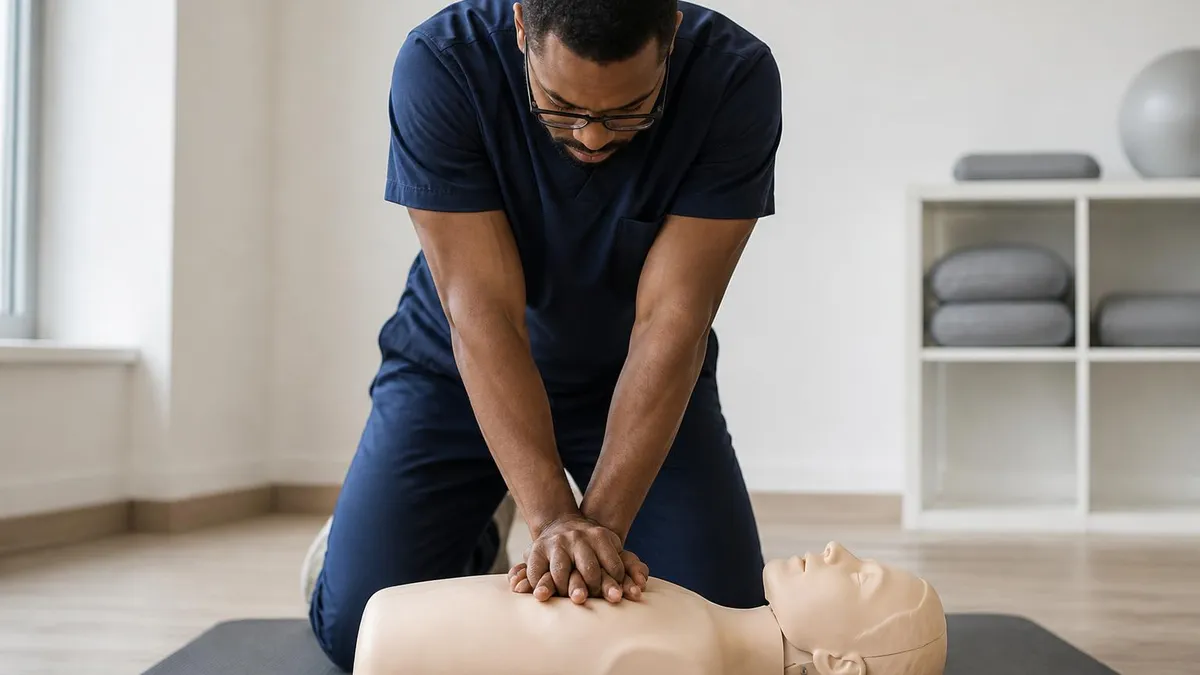
CPR Card Lookup: How to Verify, Replace, and Access Your CPR Certification in 2026
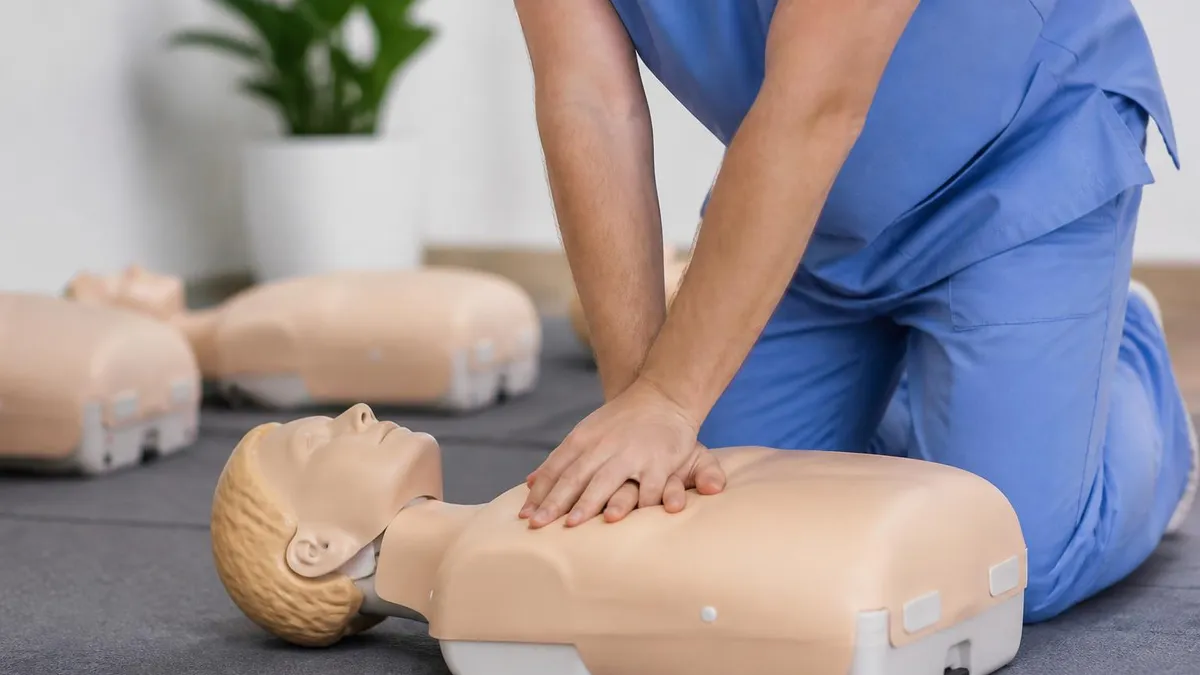
AHA CPR: What It Is, Which Course You Need, and How to Get Certified
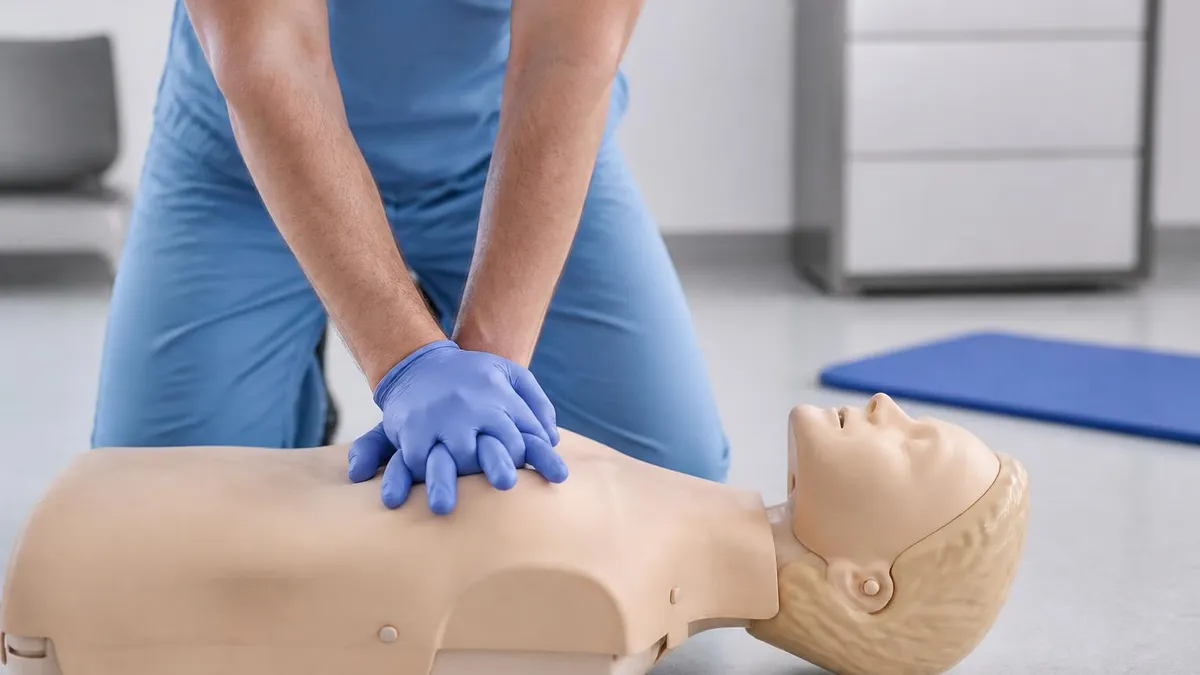
BLS CPR Course: Complete Guide to Basic Life Support Certification in 2026
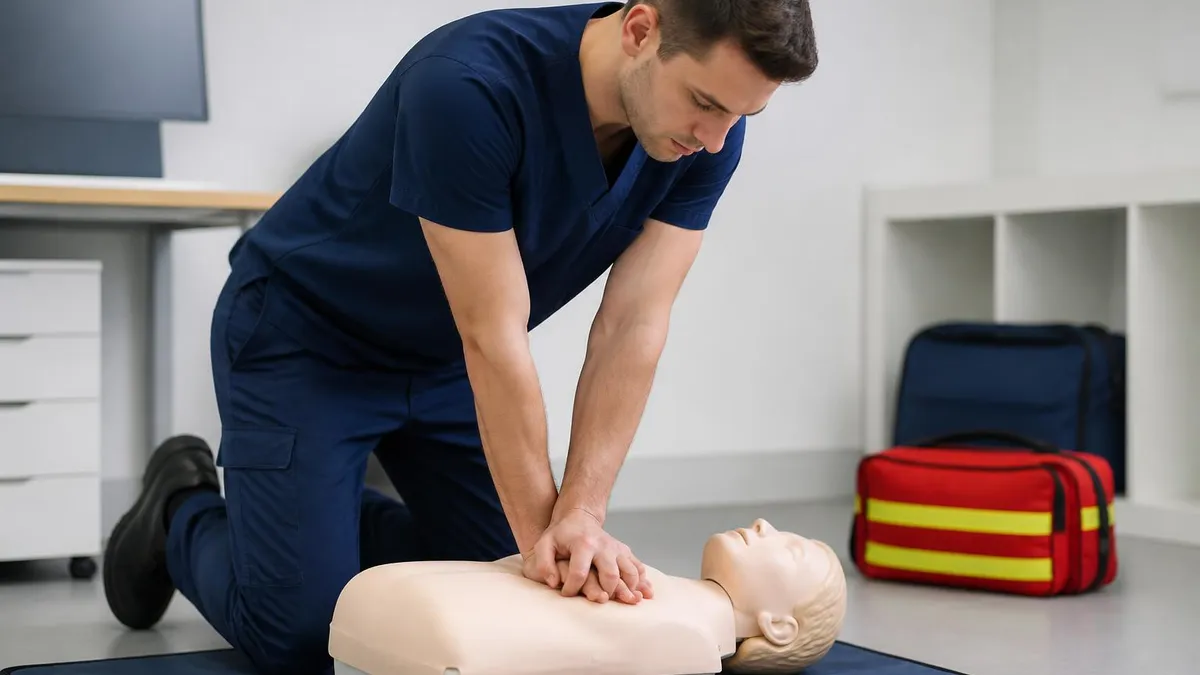
Adult CPR: Complete Step-by-Step Guide to Hands-Only and Standard CPR in 2026
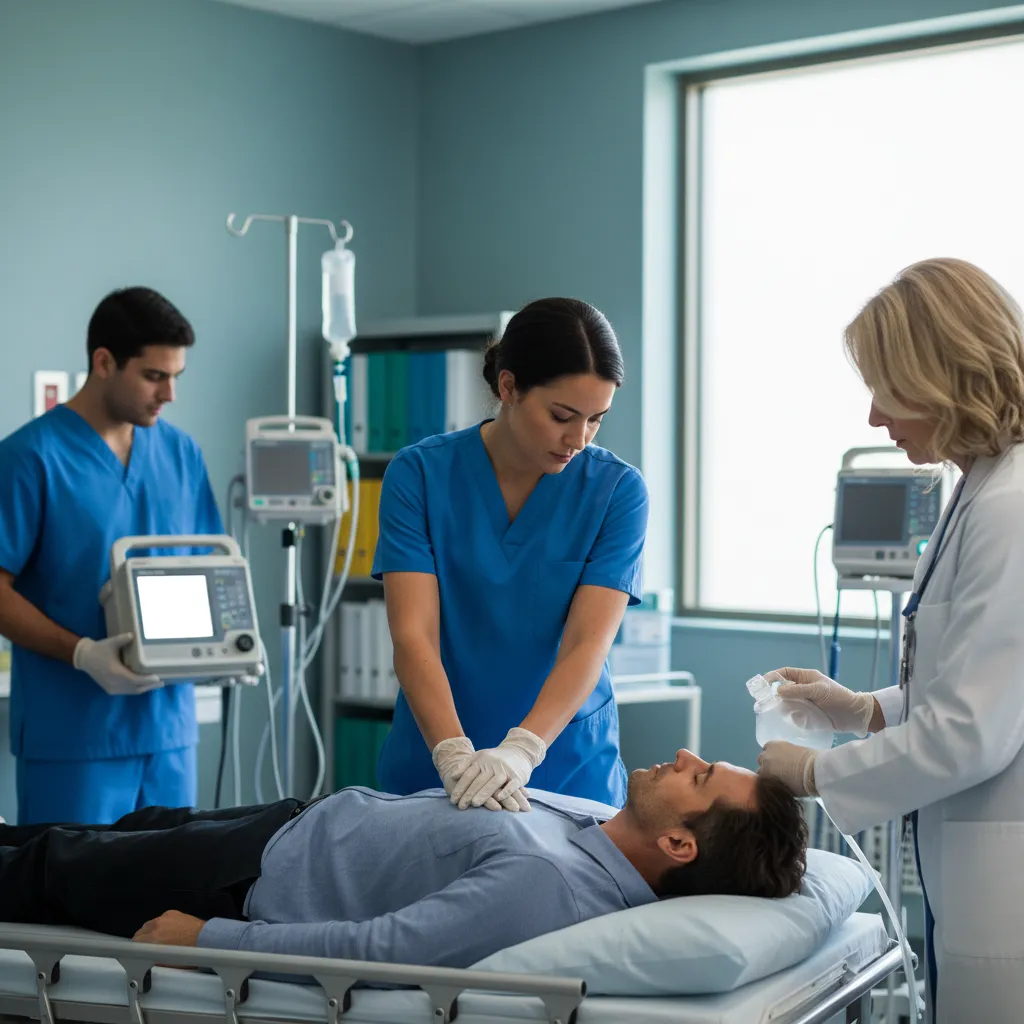
CPR - Cardiopulmonary Resuscitation: Complete Study Guide 2026
About the Author

Registered Nurse & Healthcare Educator
Johns Hopkins University School of NursingDr. Sarah Mitchell is a board-certified registered nurse with over 15 years of clinical and academic experience. She completed her PhD in Nursing Science at Johns Hopkins University and has taught NCLEX preparation and clinical skills courses for nursing students across the United States. Her research focuses on evidence-based exam preparation strategies for healthcare certification candidates.
Join the Discussion
Connect with other students preparing for this exam. Share tips, ask questions, and get advice from people who have been there.
View discussion (5 replies)