
Types of CPR Certification: Complete Guide to Every Level and Course
Every type of CPR certification explained — BLS, ACLS algorithm, PALS, infant CPR & more. Find the right course for your career. ✅

Understanding the different types of cpr certification is the first step toward choosing the training that matches your career goals, workplace requirements, and personal readiness to respond in an emergency. From community-level Basic Life Support to hospital-grade ACLS algorithm training for critical care nurses, the landscape of CPR credentials in the United States covers a wide spectrum of skills, audiences, and renewal timelines. Knowing which card you need before you enroll can save you time and tuition money.
At its foundation, CPR certification teaches you how to recognize cardiac arrest, deliver effective chest compressions, open an airway, and use an automated external defibrillator. Many people first ask "what does AED stand for?" — it stands for Automated External Defibrillator, a portable device that analyzes heart rhythm and delivers a shock when appropriate. Every certification tier incorporates AED training to some degree, but the depth and clinical context vary significantly between a lay-rescuer course and an advanced healthcare provider program.
The national CPR foundation and other accrediting organizations such as the American Heart Association and the American Red Cross have established standardized curricula that define what each certification level covers. These organizations work with hospitals, fire departments, schools, and community centers to ensure that training content reflects the latest evidence-based resuscitation guidelines updated every five years. Choosing a course backed by a nationally recognized body matters enormously when an employer or licensing board verifies your credentials.
Healthcare professionals face the most diverse certification requirements. A pediatric nurse may be required to hold both BLS for Healthcare Providers and PALS certification, while an emergency physician typically needs BLS, ACLS, and PALS on file simultaneously. Respiratory therapists and anesthesiologists work directly with respiratory rate monitoring and airway management, making advanced certifications not just a career checkbox but a daily clinical necessity. Understanding the layered structure of these credentials helps clinicians plan their recertification schedules efficiently.
Non-clinical workers are increasingly required to hold CPR cards as well. Daycare providers, fitness trainers, school teachers, lifeguards, and construction supervisors in many states must maintain a current certification as a condition of employment or licensure. For these audiences, a Heartsaver or community CPR course from the American Heart Association, or an equivalent program from the national CPR foundation, usually satisfies the requirement without the clinical depth demanded of nurses or paramedics.
This guide walks through every major certification category — Basic Life Support, Heartsaver CPR/AED, ACLS, PALS, infant CPR, and specialized credentials — explaining who each is designed for, what skills it covers, how long it takes, and what it costs. Whether you are a nursing student, a concerned parent, a personal trainer, or a seasoned paramedic refreshing your knowledge, the sections below will help you identify exactly which certification belongs on your resume and how to prepare for the skills assessment and written exam that accompany it.
Life support training has never been more accessible. Online blended courses, hands-on skills checks, and employer-sponsored group classes have dramatically lowered barriers to certification. At the same time, the growing complexity of resuscitation science — including extracorporeal approaches and post-cardiac-arrest care protocols — means that staying current requires more than simply renewing the same card every two years. This guide gives you the complete picture so you can make an informed, confident decision about your training path.
CPR Certification by the Numbers

CPR Certification Levels at a Glance
Designed for lay rescuers and non-medical workplace responders. Covers adult, child, and infant CPR, AED use, and relief of choking. Typically completed in 3–4 hours. Accepted for childcare, fitness, and general workplace requirements across most US states.
The foundational credential for nurses, medical assistants, EMTs, and allied health students. Adds 2-rescuer CPR, bag-mask ventilation, and team-based resuscitation skills. Required by virtually every hospital and clinical training program in the United States.
Advanced Cardiovascular Life Support targets physicians, nurses, paramedics, and respiratory therapists. Covers the ACLS algorithm for shockable and non-shockable rhythms, IV medication administration, and post-resuscitation care including targeted temperature management.
Pediatric Advanced Life Support focuses on recognition and management of respiratory failure, shock, and cardiac arrest in infants and children. Required for pediatric nurses, emergency physicians, and transport teams. Distinct drug dosing and algorithm pathways from adult ACLS.
Specialized training for labor and delivery nurses, neonatologists, and NICU staff. Addresses resuscitation at birth, including positive-pressure ventilation, chest compressions, and epinephrine administration. Governed by the American Academy of Pediatrics and updated with each NRP edition.
Basic Life Support, universally known as BLS, is the cornerstone credential for anyone entering a healthcare career. The American Heart Association's BLS for Healthcare Providers course — and equivalent programs from the American Red Cross — teaches single-rescuer and 2-rescuer CPR for adults, children, and infants, proper use of an AED, bag-mask ventilation, and the recovery position. Understanding the position recovery technique, sometimes called the lateral recumbent position, is a key skill taught in BLS because it protects an unconscious but breathing patient's airway from aspiration while awaiting emergency services.
The Heartsaver CPR/AED certification is the lay-rescuer equivalent of BLS. It is targeted at workplace first responders, fitness professionals, teachers, and parents who want the confidence to act in an emergency but do not require the clinical depth of the healthcare provider course. Heartsaver courses typically run three to four hours and can be completed in a classroom, at a community center, or through a blended online-plus-skills-check format. Many employers in childcare, hospitality, and construction mandate this level as a baseline safety standard for all staff.
A common source of confusion is the difference between Heartsaver CPR/AED and BLS. Both courses teach chest compressions and AED use, but BLS goes further by requiring demonstrated proficiency with bag-mask devices, 2-rescuer techniques, and clinical team communication. Hospital credentialing departments universally require BLS, not Heartsaver, for clinical staff. If you are unsure which card your employer or licensing board accepts, contact their credentialing office directly before enrolling — submitting the wrong card can delay your start date by weeks.
The national CPR foundation offers its own suite of certifications that parallel AHA and Red Cross curricula. Their online-dominant model appeals to healthcare workers who need flexible scheduling and have already completed hands-on training. Some state nursing boards and hospital systems accept national CPR foundation cards; others require AHA or Red Cross exclusively. Always verify acceptance before purchasing any non-AHA certification, particularly for hospital employment or nursing school clinical rotations where a specific issuing body may be contractually required.
First Aid certification is frequently bundled with CPR training, creating combined CPR/AED/First Aid credentials popular in workplace compliance programs. These combined courses cover bleeding control, recognition of stroke and heart attack signs, choking management, and basic wound care in addition to core CPR skills. OSHA does not mandate a specific CPR certification provider, but it does require that designated first responders maintain current training. Employers who train their own staff using in-house instructors must still align their curriculum with a nationally recognized program to satisfy OSHA's general duty clause.
For parents, coaches, and caregivers, infant CPR training is often the most emotionally compelling reason to get certified. Infant CPR differs from adult technique in critical ways: compressions use two fingers placed just below the nipple line rather than the heel of the hand, rescue breaths are gentler due to smaller lung volume, and the compression depth targets one-and-a-half inches rather than two-to-two-and-a-half inches for adults.
Standalone infant CPR courses exist, but most BLS and Heartsaver programs integrate infant technique within the broader curriculum, making a combined course the most efficient choice for caregivers who may encounter emergencies across age groups.
Renewal and documentation are practical concerns that often get overlooked until a deadline approaches. Most BLS and Heartsaver cards expire after two years, at which point a renewal course — typically shorter than the initial certification — is required. Employers and licensing boards generally require a card that is valid on the day of hire or licensure renewal, not simply a completion certificate.
Keeping digital and physical copies of your certification and setting a calendar reminder six weeks before expiration gives you ample time to enroll in a renewal course without letting your credential lapse during a job transition or license audit.
ACLS Algorithm, PALS, and Advanced Life Support Certifications
The ACLS algorithm is the structured decision-making framework used during adult cardiac arrest, tachycardia, bradycardia, and post-resuscitation care. Healthcare providers learn to identify shockable rhythms such as ventricular fibrillation and pulseless ventricular tachycardia, and non-shockable rhythms including pulseless electrical activity and asystole. Each pathway dictates specific shock energies, drug sequences — epinephrine every 3–5 minutes, amiodarone for refractory VF — and reassessment intervals timed to 2-minute CPR cycles.
Mastering the ACLS algorithm requires understanding not just the flowcharts but the pharmacology and physiology behind every decision point. Candidates are expected to calculate drug doses based on patient weight, interpret 12-lead ECGs for ST-elevation myocardial infarction, and lead a resuscitation team using closed-loop communication. Most ACLS courses run 8–16 hours over one or two days, combining online pre-study modules with in-person megacode simulations. ACLS certification from the AHA is valid for two years and is required for most emergency department, ICU, and operating room nursing and physician positions.

Online vs. In-Person CPR Certification: Which Is Right for You?
- +Flexible scheduling allows completion around work and family commitments
- +Online blended courses often cost 20–40% less than fully in-person classes
- +Self-paced pre-study modules let learners review content multiple times before the skills check
- +Widely accepted for BLS renewal by major hospital systems when the skills check is completed in person
- +Eliminates travel time and geographic barriers for rural healthcare workers
- +Digital card delivery is faster — many providers issue cards within 24 hours of skills check completion
- −Fully online certifications without a hands-on skills check are NOT accepted by most hospitals or licensing boards
- −Manikin practice is irreplaceable for developing proper compression depth and rate muscle memory
- −AED familiarization requires physical interaction with the device to build genuine confidence
- −Team-based communication skills critical for ACLS and PALS are difficult to simulate online
- −Technical issues, poor video quality, or unreliable internet can disrupt the learning experience
- −Some state nursing boards and clinical programs explicitly require AHA-issued cards from in-person courses only
How to Choose the Right CPR Certification: Step-by-Step Checklist
- ✓Confirm your employer's or licensing board's exact certification requirement in writing before enrolling.
- ✓Verify whether your employer requires AHA, Red Cross, or national CPR foundation specifically — not all cards are interchangeable.
- ✓Determine whether you need a healthcare provider BLS card or a lay-rescuer Heartsaver card based on your clinical role.
- ✓Check if your hospital or facility requires ACLS in addition to BLS for your specific unit or position.
- ✓Identify whether PALS certification is required if you work in pediatrics, transport, or the emergency department.
- ✓For delivery room or NICU staff, confirm whether NRP is required and which edition is currently mandated.
- ✓Choose a course format — in-person, blended, or renewal — that matches your available time and learning preferences.
- ✓Register at least 6–8 weeks before your credentialing deadline to allow time for rescheduling if needed.
- ✓Complete any required online pre-study modules before the in-person skills check date.
- ✓Save a digital copy of your certification card and set a calendar reminder 60 days before expiration.
BLS Is Not the Same as Heartsaver — and Employers Know the Difference
One of the most common and costly mistakes new healthcare workers make is completing a Heartsaver CPR/AED course when their employer specifically requires BLS for Healthcare Providers. Though both cards cover CPR and AED use, only BLS includes 2-rescuer techniques and bag-mask skills that hospital credentialing departments require. Always request the exact card name and issuing organization in writing from HR or your clinical coordinator before you enroll.
Infant CPR training occupies a particularly critical niche within the certification landscape because the technique, physiology, and common emergency scenarios differ substantially from those encountered with adult patients. Sudden Infant Death Syndrome (SIDS), accidental suffocation, choking on food or small objects, and near-drowning events are among the most common triggers for infant cardiac arrest, and bystander CPR before EMS arrival dramatically increases survival odds. Studies published in the journal Pediatrics have shown that bystander CPR can double or triple an infant's chance of survival when initiated within the first four minutes of arrest.
The mechanics of infant CPR require particular attention. Rescuers use two fingers placed on the center of the chest, just below the nipple line, and compress to a depth of approximately one-and-a-half inches at a rate of 100–120 compressions per minute — the same rate as adult CPR.
Rescue breaths for infants should be small puffs of air, just enough to see the chest rise gently. Over-ventilation is a common beginner error that can inflate the stomach, cause regurgitation, and redirect blood flow away from vital organs during resuscitation, so proper breath volume control is a key skill assessed during the infant CPR skills check.
The two-thumb-encircling-hands technique is preferred for infant CPR when two trained rescuers are present. In this method, both thumbs are placed side by side on the sternum while the fingers wrap around the infant's torso, allowing the rescuer to compress the chest with greater consistency and less fatigue than the two-finger method. This technique is taught in BLS for Healthcare Providers courses and is particularly relevant for nurses, paramedics, and NICU staff who perform prolonged resuscitations in clinical settings where a second rescuer is almost always available.
Parents, grandparents, babysitters, and daycare workers are the most likely lay rescuers to encounter an infant emergency, and they benefit greatly from hands-on infant CPR training even if they have no clinical background. Many hospitals offer infant CPR classes through their birth education or pediatric departments at low or no cost for new parents. Community organizations, fire stations, and YMCA locations also frequently host infant CPR workshops, and the American Heart Association's Heartsaver Pediatric First Aid CPR/AED course covers infant technique within a broader curriculum that also addresses choking, allergic reactions, and wound care in children.
Child CPR — defined by the AHA as CPR performed on patients from age one to puberty — bridges the gap between infant and adult techniques. The heel-of-hand method is used for chest compressions, with one or two hands depending on the child's size.
Compression depth targets two inches, and the AED pads used for children differ from adult pads in energy delivery; pediatric-attenuated pads or pediatric mode on a standard AED reduce the shock energy to an age-appropriate level. Knowing when to switch from pediatric to adult AED protocol, and how to recognize the onset of puberty as the clinical threshold, is tested in both BLS and Heartsaver courses.
Choking management for infants and children is closely integrated with CPR training because the two skills are often needed sequentially. For a conscious infant who is choking, the AHA recommends alternating five back blows with five chest thrusts — never abdominal thrusts, as the infant's liver is positioned too high for safe use of the Heimlich maneuver. If the infant becomes unconscious, rescuers transition immediately to CPR, looking into the mouth before each breath for a visible object to remove before attempting ventilation. This sequence is practiced during infant CPR courses and is assessed during the skills check.
Parents who complete infant CPR training frequently report higher confidence in their ability to handle pediatric emergencies and are more likely to act immediately rather than freezing during a crisis. This psychological benefit — sometimes called rescuer readiness — is a documented outcome of structured CPR training regardless of whether the individual ever uses the skills in a real emergency.
For this reason, pediatricians, obstetricians, and public health organizations increasingly recommend that all new parents complete at least a basic infant CPR course before or shortly after their baby's birth, treating it as an essential part of new-parent education alongside car seat installation and safe sleep practices.

Many websites offer CPR certificates that are issued entirely online without any hands-on skills assessment. These cards are generally not accepted by hospitals, nursing schools, or licensed healthcare facilities. The American Heart Association, American Red Cross, and most state nursing boards require a demonstrated skills check with a certified instructor before issuing a valid certification card. Always confirm the format requirements with your employer or licensing board before purchasing an online-only course.
Understanding the cost structure of CPR certifications helps individuals and organizations budget realistically and avoid overpaying for credentials that exceed their actual requirements. Heartsaver CPR/AED courses typically range from $30 to $80 when taken through community organizations, fire departments, or hospital outreach programs. The same course offered through a private training center or employer-contracted vendor may cost $100 to $150, particularly when bundled with First Aid or other workplace safety training modules. Group rates are almost always available for organizations training five or more employees at once.
BLS for Healthcare Providers courses generally cost between $50 and $120 when taken at a hospital-based training center, nursing school, or AHA training site. Private vendors may charge $150 to $200 for the same credential. Many hospitals offer free or heavily subsidized BLS renewal courses to their own employees, making employer-sponsored training the most cost-effective option for clinical staff. Nursing students should check whether their program covers the cost of initial BLS certification as part of tuition, since many accredited programs include it in clinical preparation fees.
ACLS certification is the most significant investment in the advanced credential category. A two-day ACLS initial course from an AHA training center costs $200 to $300, while private training companies and hospital education departments may charge $250 to $400. Renewal courses are shorter — typically 6 to 8 hours — and cost $150 to $250.
Some employers reimburse ACLS costs as a professional development expense, particularly for ICU nurses, emergency nurses, and nurse practitioners whose scope of practice depends on holding a current ACLS card. PALS certification carries similar pricing, typically $200 to $350 for initial and $150 to $250 for renewal.
Online blended course pricing has introduced meaningful cost competition into the CPR certification market. AHA's HeartCode BLS, for example, allows providers to complete the cognitive portion online for approximately $30 to $50, then schedule a hands-on skills check at a local training site for an additional $30 to $60. Total cost for a blended BLS course often runs $60 to $110 — significantly less than many fully in-person options. The tradeoff is that learners must proactively arrange their own skills check appointment, which can be challenging in rural areas with limited AHA training sites.
Exploring types of cpr certification renewal timelines is essential for long-term budget planning. Most CPR and BLS cards expire after two years, and ACLS and PALS cards follow the same cycle. Allowing a card to lapse and re-taking the full initial course is both more time-consuming and more expensive than completing a timely renewal. Some healthcare organizations are now offering continuous education models that integrate CPR skill refreshers into annual competency assessments, reducing the two-year renewal burden while maintaining skill currency more effectively than periodic recertification alone.
Employer-sponsored group training programs represent the most cost-efficient model for organizations with ongoing certification needs. Contracting with an AHA training site to conduct on-site BLS or Heartsaver classes eliminates per-employee travel time, reduces per-head costs through volume pricing, and ensures consistent curriculum delivery. For organizations with certified instructors on staff — a model popularized by large hospital systems — the marginal cost per renewal drops dramatically once initial instructor training and AHA training center affiliation fees are covered. Many mid-size hospitals have found that developing internal instructors pays for itself within twelve to eighteen months compared to outsourcing all training.
Scholarships and subsidized training opportunities exist for individuals who cannot afford standard course fees. The American Heart Association's Mission: Lifeline program and various state health departments fund community CPR training in underserved areas. Federally Qualified Health Centers (FQHCs) and community health workers frequently offer free Heartsaver classes as part of broader cardiovascular health initiatives. Fire departments in many cities offer free public CPR training on a monthly or quarterly basis, making certification accessible to any motivated community member regardless of financial means.
Preparing effectively for your CPR certification skills assessment requires more than reading a textbook — it demands deliberate physical practice that builds the muscle memory and decision-making speed that real emergencies demand. Begin your preparation by reviewing the current AHA or Red Cross guidelines relevant to your course level. The AHA publishes its resuscitation guidelines online and updates them every five years, with interim updates as new evidence emerges. Reading the abbreviated provider handbook supplied by your training organization gives you the flowcharts, drug doses, and key ratios you will be tested on during the skills check and written exam.
Compression quality is the single most important determinant of CPR effectiveness, and it is also the skill most frequently performed incorrectly during certification assessments. Examiners look for a compression rate of 100–120 per minute, a depth of at least two inches for adults, full chest recoil between compressions, and minimal interruptions — no pauses longer than 10 seconds except for rhythm checks and shocks.
Practicing on a certified CPR manikin — either purchased, borrowed from a community organization, or used during a practice session at your training site — is the only way to genuinely calibrate your compression depth and rate before your skills check.
AED proficiency is assessed during most CPR certification skills checks, and knowing the answer to "what does AED stand for" is just the beginning. You must demonstrate the ability to power on the device, attach pads correctly to a bare chest in the proper positions, clear all rescuers from the patient before a shock, deliver the shock without hesitation, and immediately resume CPR after shock delivery.
Different AED brands have slightly different interfaces, but all FDA-cleared devices use voice and visual prompts that guide the rescuer through each step. Hands-on practice with the specific AED model used in your workplace dramatically increases confidence and reduces hesitation during an actual event.
For healthcare provider BLS, the 2-rescuer scenario is tested separately from single-rescuer technique. In a 2-rescuer scenario, responsibilities are divided between the compressor and the ventilator, with mandatory rescuer switches every two minutes to prevent compression fatigue. The rescuer on ventilations manages the bag-mask device, delivers breaths during the 10-second pause at each 2-minute cycle, and monitors chest rise to confirm ventilation effectiveness. Smooth communication during rescuer switches — including a clear handoff cue and immediate resumption of compressions — is observed and graded by your instructor.
ACLS and PALS candidates benefit enormously from studying the algorithms as visual flowcharts before attempting megacode simulations. The cardiac arrest algorithm, the tachycardia algorithm, the bradycardia algorithm, and the post-cardiac-arrest care algorithm each follow a branching logic that becomes intuitive with repetition.
Using flashcard apps, printed algorithm cards, or the AHA's official quick reference guides during your pre-study period builds the cognitive framework needed to make real-time decisions during the high-stress megacode assessment. Many ACLS candidates find it helpful to form a study group and run through verbal simulation scenarios together, taking turns playing the team leader and assigning roles to other group members.
Written exam preparation for ACLS and PALS requires particular attention to pharmacology. Candidates must know the indications, doses, routes, and timing for epinephrine, amiodarone, lidocaine, adenosine, atropine, and magnesium sulfate in the context of specific arrhythmias and arrest rhythms.
Remembering drug doses is easier when linked to mechanism — epinephrine works by increasing systemic vascular resistance and coronary perfusion pressure during arrest, which is why it is given every 3–5 minutes throughout a resuscitation attempt. Building clinical understanding rather than rote memorization prepares you not just for the exam but for the actual resuscitations you will participate in as a credentialed provider.
Post-certification, the most effective way to maintain your skills is to practice regularly between renewal dates. Many hospitals now incorporate monthly CPR feedback training using compression-sensing devices that provide real-time data on rate, depth, and recoil. Participating in mock code drills, cardiac arrest debriefs, and simulation lab sessions keeps your skills sharp and your confidence high.
The goal of CPR certification is not just a card on your wall — it is the genuine ability to act decisively and effectively in the most critical moments of another person's life, and that ability is built and maintained through consistent, deliberate practice long after the initial course ends.
CPR Questions and Answers
How Long Does CPR Certification Last? 2026 Renewal Guide
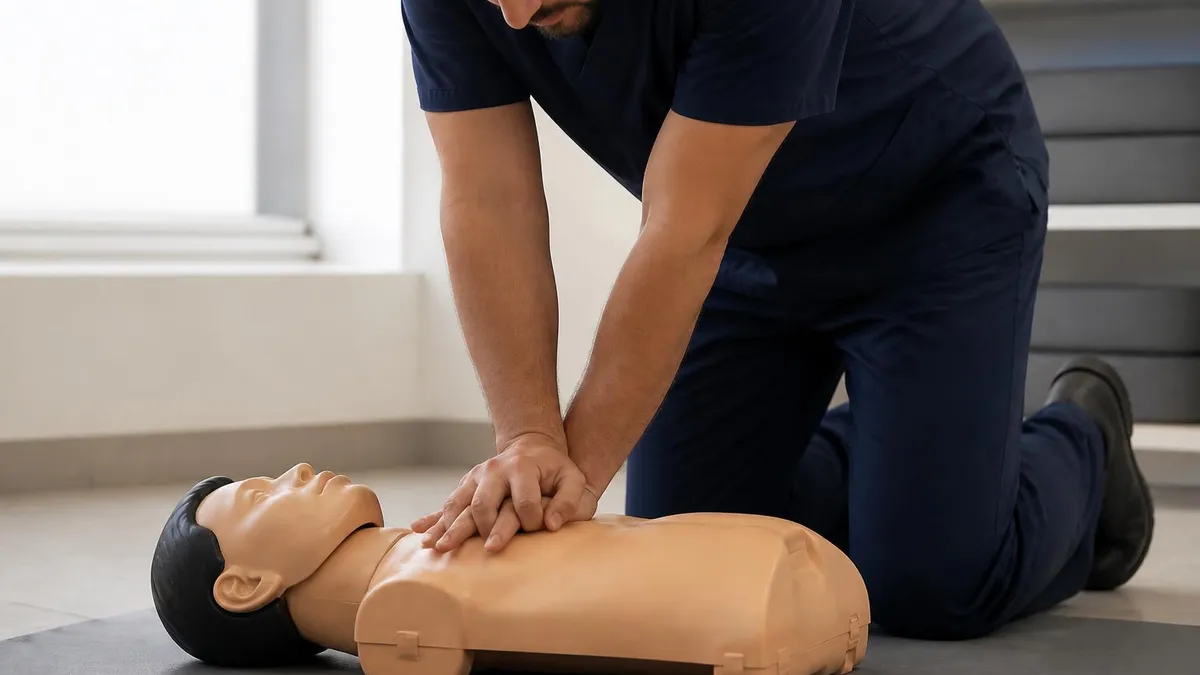
Extracorporeal CPR (ECPR): Complete Guide to Mechanical Circulatory Support During Cardiac Arrest in 2026
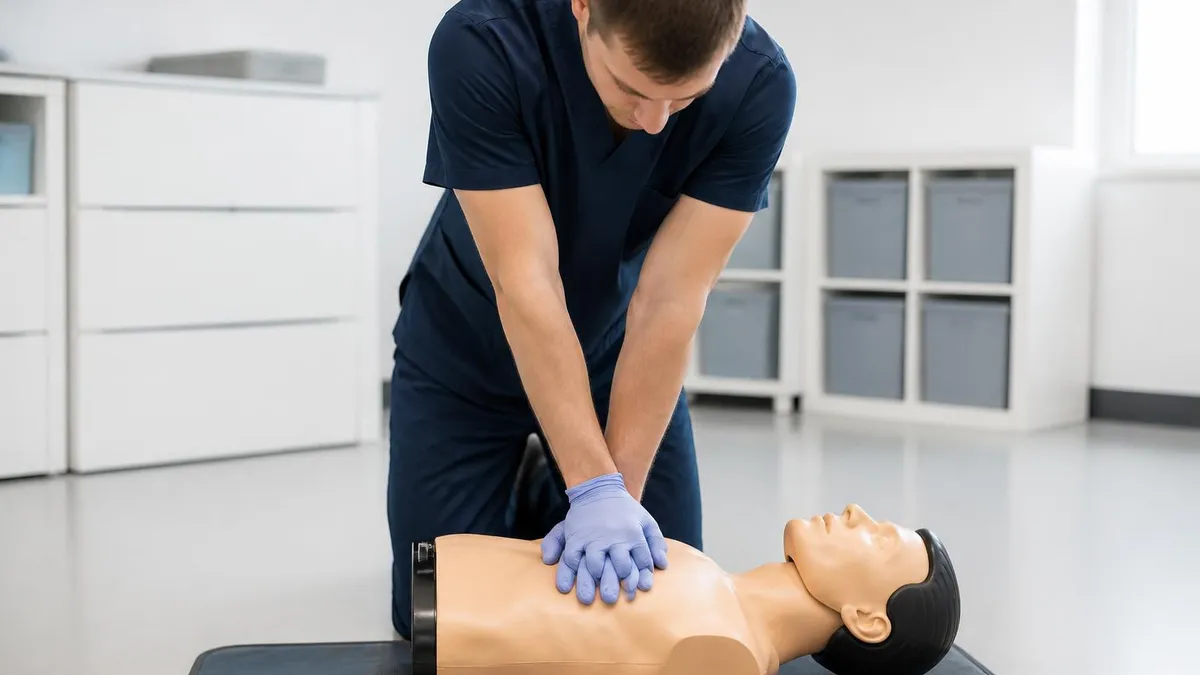
Free Online CPR Certification: Complete Guide to Legitimate Courses, Costs, and Workplace Acceptance in 2026
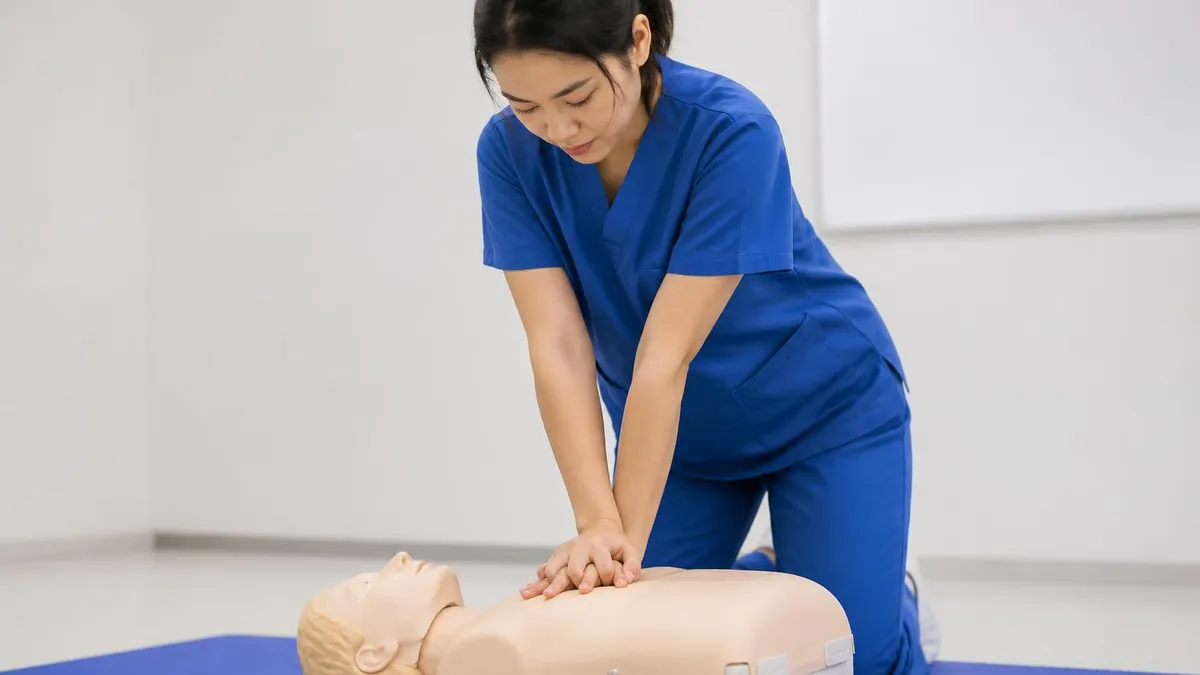
CPR Instructor Certification 2026: Complete Path to Teaching CPR
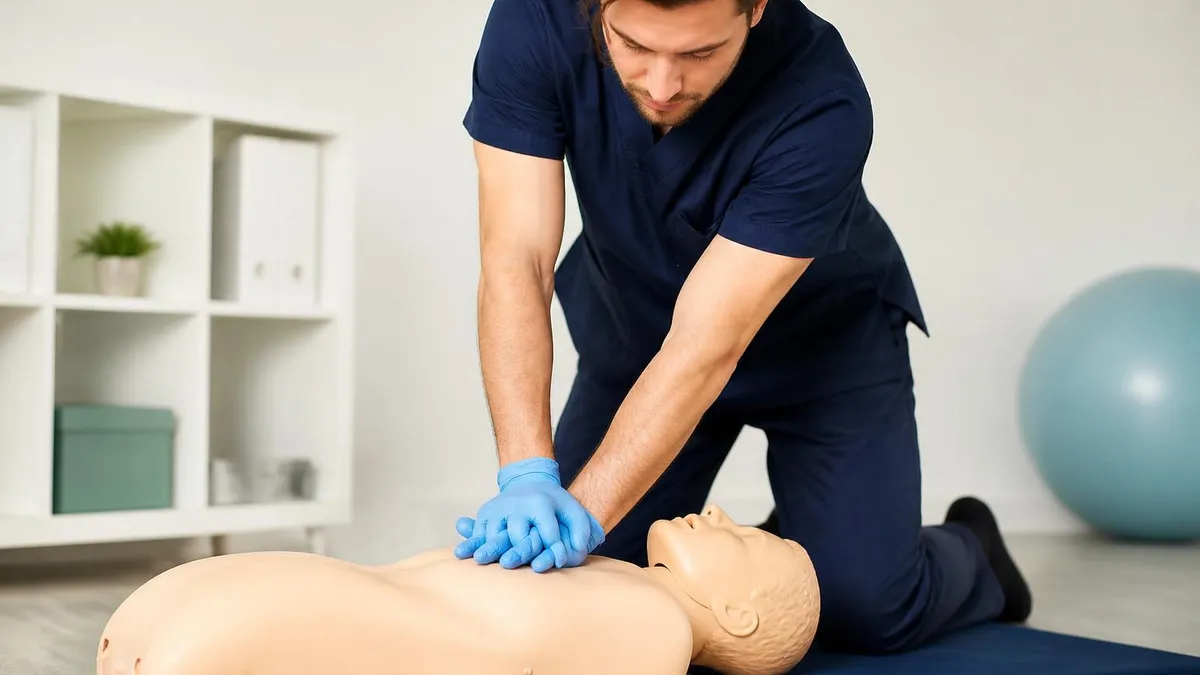
CPR Course: How to Choose the Right Training Program
About the Author

Registered Nurse & Healthcare Educator
Johns Hopkins University School of NursingDr. Sarah Mitchell is a board-certified registered nurse with over 15 years of clinical and academic experience. She completed her PhD in Nursing Science at Johns Hopkins University and has taught NCLEX preparation and clinical skills courses for nursing students across the United States. Her research focuses on evidence-based exam preparation strategies for healthcare certification candidates.
Join the Discussion
Connect with other students preparing for this exam. Share tips, ask questions, and get advice from people who have been there.
View discussion (5 replies)