
What Is the Primary Purpose of Chest Compressions During CPR? Complete Guide
🧠 What is the primary purpose of chest compressions during CPR? Learn how compressions circulate blood, support life support, and save lives.
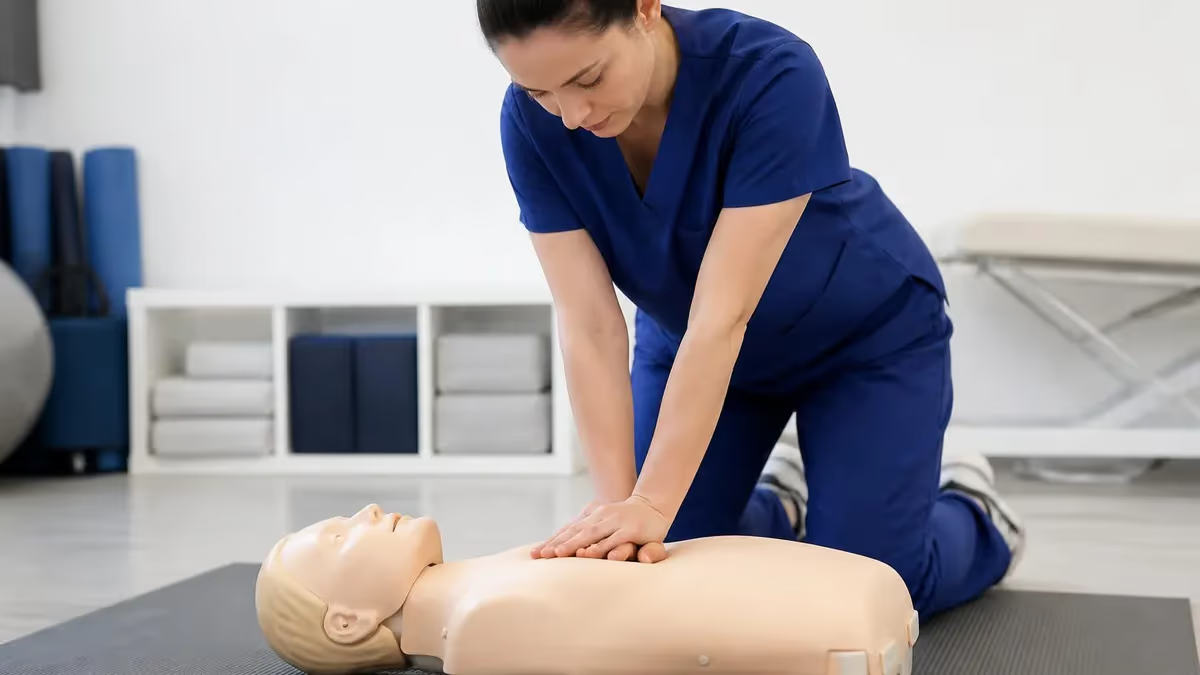
Understanding what is the primary purpose of chest compressions during CPR is the foundation of every life-saving intervention taught in modern emergency medicine. When a person's heart stops beating, oxygenated blood no longer reaches the brain and vital organs. Within four to six minutes of cardiac arrest, brain cells begin dying at a rapid rate. Chest compressions serve as a mechanical substitute for the heart's pumping action, manually pushing blood through the circulatory system and keeping oxygen flowing to critical tissues until advanced care arrives or the heart restarts on its own.
The ACLS algorithm — Advanced Cardiac Life Support — places high-quality chest compressions at the very center of its treatment framework for cardiac arrest. Whether you are a healthcare professional following a hospital protocol or a bystander performing hands-only CPR on the street, the mechanics are the same: compress the chest hard and fast to generate enough pressure to circulate blood. The American Heart Association recommends a compression rate of 100 to 120 compressions per minute with a depth of at least two inches in adults, ensuring adequate perfusion pressure with every push.
Many people associate CPR solely with rescue breathing, but research over the past two decades has repeatedly demonstrated that chest compressions are the single most critical component of the procedure. Bystander compression-only CPR — sometimes called hands-only CPR — has been shown to be as effective as conventional CPR with rescue breaths in the first few minutes after witnessed cardiac arrest in adults. This discovery dramatically lowered the barrier to intervention, empowering millions of untrained bystanders to act confidently rather than hesitating out of fear of performing mouth-to-mouth resuscitation incorrectly.
Beyond adult cardiac events, the purpose of chest compressions extends to infant CPR and pediatric emergencies. Infant CPR uses a two-finger technique on the lower half of the breastbone, with a compression depth of about one and a half inches. For children between one year and puberty, rescuers use one or two hands depending on the child's size. In all age groups, the underlying goal is identical: compress the heart between the sternum and the spine, generating blood flow that sustains organ viability while the body waits for a return of spontaneous circulation.
The interaction between chest compressions and the use of an automated external defibrillator is another critical concept. Many people ask what does AED stand for — it stands for Automated External Defibrillator, a device that delivers an electric shock to reset a chaotic heart rhythm. Compressions keep coronary arteries perfused so that when a shock is delivered, the heart muscle is viable enough to respond. Without compressions in the minutes leading up to defibrillation, the success rate of the shock drops significantly, underscoring why uninterrupted compressions are a non-negotiable element of the chain of survival.
National CPR Foundation guidelines and AHA standards both emphasize that rescuer fatigue is one of the biggest threats to compression quality in prolonged resuscitation attempts. Studies show that compression depth and rate decline noticeably after just two minutes of continuous effort, which is why a team approach with rescuer rotation every two minutes is standard practice in professional settings. Even in bystander situations, if a second willing person is available, rotating compressions helps maintain the consistency and force needed to sustain meaningful blood flow throughout the resuscitation effort.
Preparing yourself to perform high-quality CPR means understanding not only the mechanics but also the physiology behind every compression. PALS certification programs, basic life support courses, and advanced cardiac care training all drill participants on the same core concept: compressions are the engine of CPR. Everything else — airway management, ventilation timing, medication administration under the ACLS algorithm — is designed to support and enhance what effective compressions have already started.
CPR and Chest Compressions by the Numbers
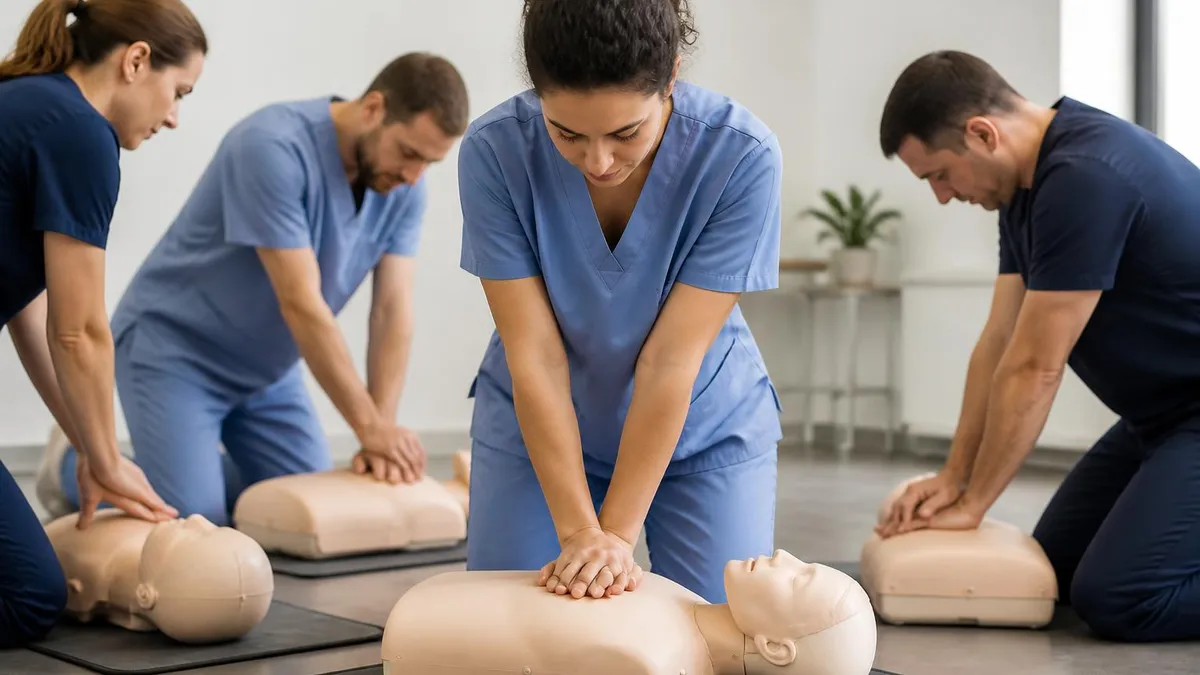
How Chest Compressions Keep the Body Alive
Cardiac Arrest Occurs
Rescuer Begins Chest Compressions
Blood Circulates to Brain and Organs
Chest Recoil Allows Refilling
AED or Advanced Care Arrives
The mechanics of an effective chest compression involve three equally important variables: rate, depth, and full chest recoil. The American Heart Association's guidelines specify a compression rate of 100 to 120 compressions per minute for all adult patients. Rates slower than 100 fail to generate adequate coronary perfusion pressure, while rates faster than 120 reduce the filling time between compressions and paradoxically decrease cardiac output.
Maintaining the correct cadence — roughly two compressions per second — requires practice, and many certified instructors recommend using a metronome or the beat of a song like "Stayin' Alive" by the Bee Gees, which conveniently clocks in at about 103 beats per minute.
Compression depth is equally critical. For adult patients, rescuers must compress the sternum at least two inches but should not exceed two and a half inches. Compressions shallower than two inches fail to adequately squeeze the heart and generate insufficient pressure to propel blood forward.
Compressions deeper than two and a half inches risk rib fractures and internal injuries, particularly in older adults with decreased bone density. Proper hand placement — heel of the dominant hand on the lower half of the sternum, non-dominant hand interlocked on top — helps rescuers naturally achieve the correct depth without direct measurement during the stress of an emergency.
Full chest recoil between compressions is a component that even trained rescuers frequently underperform under pressure. When a rescuer leans on the chest between compressions, the residual pressure prevents the heart from fully refilling with venous blood. Studies using invasive hemodynamic monitoring have demonstrated that incomplete recoil reduces cardiac output by as much as 30 percent compared to allowing complete recoil. During CPR training, instructors often place a particular emphasis on lifting the hands slightly — or at minimum releasing all downward pressure — during the upstroke of each compression cycle to ensure optimal venous return.
Minimizing interruptions to chest compressions is one of the most impactful factors in survival outcomes. Every pause in compressions causes coronary perfusion pressure to drop rapidly toward zero, and it takes several seconds of compressions to rebuild adequate pressure once pauses end. For this reason, the ACLS algorithm calls for CPR pauses of no longer than ten seconds during rhythm analysis or pulse checks. During intubation attempts, ventilation, or medication delivery, a trained team coordinates actions to keep compression interruptions as brief as possible, treating each second without compressions as lost perfusion time.
The respiratory rate and ventilation strategy used alongside compressions also matters. In conventional CPR with two rescuers, the standard ratio is 30 compressions followed by two breaths. Each breath should be delivered over one second and produce a visible chest rise without excessive force, which could inflate the stomach and risk aspiration.
In intubated patients under the ACLS algorithm, compressions become continuous at 100 to 120 per minute while ventilations are delivered asynchronously at a respiratory rate of ten breaths per minute — one breath every six seconds — to avoid the negative hemodynamic effects of positive-pressure ventilation during cardiac arrest.
Research into CPR feedback devices has significantly improved real-world compression quality. Accelerometers built into CPR manikins and patient monitors can now provide real-time visual and audio feedback on rate, depth, and recoil during both training and actual resuscitation attempts. Studies have shown that rescuers using feedback devices maintain significantly better compression quality over extended periods compared to those receiving no feedback. Many hospitals now deploy these devices routinely, and the National CPR Foundation recommends that training programs incorporate feedback technology whenever possible to build accurate muscle memory in students before they encounter real emergencies.
Understanding the physiology of why each element matters empowers rescuers to prioritize correctly when resources are limited. If only one rescuer is present, compressions take absolute priority over ventilation in the first several minutes of adult cardiac arrest, because oxygen already dissolved in the blood can sustain cerebral viability briefly while compressions circulate it. This is the physiological basis for compression-only CPR recommendations for untrained bystanders — removing the ventilation requirement eliminates hesitation and keeps the most critical intervention — blood circulation — happening without interruption from the very first moment.
CPR Practice Test Questions
Prepare for the CPR Cardiopulmonary Resuscitation Practice exam with our free practice test modules. Each quiz covers key topics to help you pass on your first try.
CPR Basic CPR
CPR Exam Questions covering Basic CPR. Master CPR Test concepts for certification prep.
CPR and First Aid
Free CPR Practice Test featuring and First Aid. Improve your CPR Exam score with mock test prep.
CPR (Cardiopulmonary Resuscitation) Adult ...
CPR Mock Exam on (Cardiopulmonary Resuscitation) Adult CPR and AED Usage. CPR Study Guide questions to pass on your first try.
CPR (Cardiopulmonary Resuscitation) Airway...
CPR Test Prep for (Cardiopulmonary Resuscitation) Airway Obstruction and Choking. Practice CPR Quiz questions and boost your score.
CPR (Cardiopulmonary Resuscitation) Cardio...
CPR Questions and Answers on (Cardiopulmonary Resuscitation) Cardiopulmonary Emergency Recognition. Free CPR practice for exam readiness.
CPR (Cardiopulmonary Resuscitation) Child ...
CPR Mock Test covering (Cardiopulmonary Resuscitation) Child and Infant CPR. Online CPR Test practice with instant feedback.
CPR (Cardiopulmonary Resuscitation) High-P...
Free CPR Quiz on (Cardiopulmonary Resuscitation) High-Performance Team Dynamics. CPR Exam prep questions with detailed explanations.
CPR (Cardiopulmonary Resuscitation) Legal ...
CPR Practice Questions for (Cardiopulmonary Resuscitation) Legal and Ethical Considerations. Build confidence for your CPR certification exam.
CPR for Specific Populations
CPR Test Online for for Specific Populations. Free practice with instant results and feedback.
CPR Airway & Breathing Management
CPR Exam Questions covering Airway & Breathing Management. Master CPR Test concepts for certification prep.
CPR Assessment & Recognition of Cardiac Ar...
Free CPR Practice Test featuring Assessment & Recognition of Cardiac Arrest. Improve your CPR Exam score with mock test prep.
CPR Chest Compressions & Defibrillation
CPR Mock Exam on Chest Compressions & Defibrillation. CPR Study Guide questions to pass on your first try.
CPR Post-Resuscitation Care & Recovery
CPR Test Prep for Post-Resuscitation Care & Recovery. Practice CPR Quiz questions and boost your score.
CPR Across Ages: Infant CPR, Child, and Adult Differences
Adult CPR requires two-hand compressions on the lower half of the sternum at a depth of two to two and a half inches, with a rate of 100 to 120 compressions per minute. The heel of one hand is placed directly on the sternum, and the second hand interlocks on top. Arms are kept straight and force comes from the rescuer's body weight, not arm strength alone, reducing fatigue over extended resuscitation attempts.
In adults, cardiac arrest is most commonly caused by ventricular fibrillation or ventricular tachycardia — shockable rhythms where early defibrillation combined with high-quality CPR produces the best outcomes. The chain of survival for adult out-of-hospital cardiac arrest emphasizes early recognition, early bystander CPR, early AED use, and rapid advanced life support. Maintaining compression fractions above 60 percent — meaning compressions are occurring for at least 60 percent of total resuscitation time — is the gold standard for adult resuscitation quality.
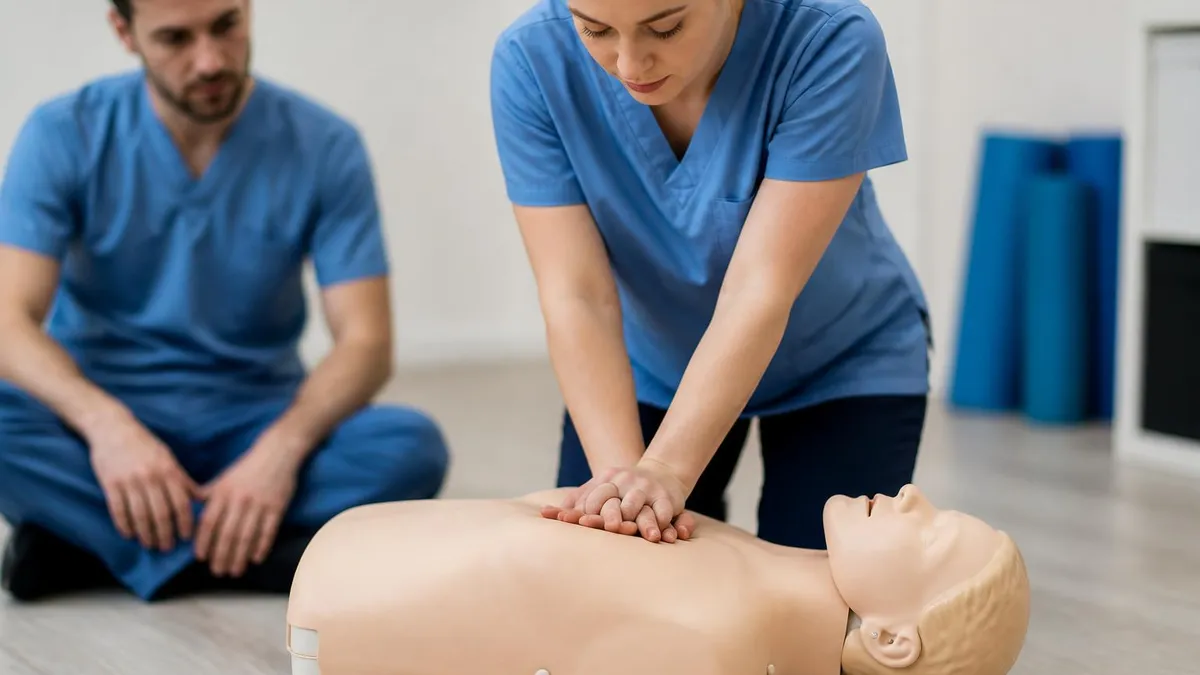
Compression-Only CPR vs. Conventional CPR: Key Tradeoffs
- +Eliminates hesitation from bystanders uncomfortable with mouth-to-mouth contact
- +Maintains continuous blood flow without ventilation interruptions every 30 compressions
- +Equally effective in adult witnessed cardiac arrest during the first several minutes
- +Easier to instruct via telephone by 911 dispatchers guiding untrained bystanders
- +Reduces risk of rescuer fatigue caused by the pause-and-breathe cycle
- +Supported by AHA guidelines for untrained bystanders responding to adult cardiac arrest
- −Inadequate for pediatric cardiac arrest where respiratory failure is the primary cause
- −Oxygen in the blood is depleted within several minutes, limiting effectiveness in prolonged arrest
- −Not recommended for drowning victims, drug overdoses, or asphyxia-related arrests
- −Requires the same 100–120 compressions per minute rate as conventional CPR to be effective
- −Less effective when cardiac arrest was not witnessed and downtime before CPR is unknown
- −Healthcare professionals and trained rescuers should still perform full CPR with ventilations
High-Quality CPR Checklist: What to Do Every Time
- ✓Confirm the scene is safe and the patient is unresponsive before starting compressions.
- ✓Call 911 or direct a bystander to call 911 and retrieve an AED immediately.
- ✓Position the patient on a firm, flat surface with the patient lying face-up.
- ✓Place the heel of your hand on the center of the chest, on the lower half of the sternum.
- ✓Interlock your hands and keep your arms straight to deliver compressions from your upper body.
- ✓Compress at least two inches deep at a rate of 100 to 120 compressions per minute.
- ✓Allow full chest recoil after every compression without leaning on the chest.
- ✓Minimize all pauses in compressions to less than ten seconds for any interruption.
- ✓Switch compressors every two minutes to prevent fatigue-related drops in compression quality.
- ✓Attach and use the AED as soon as it is available without stopping compressions until the device prompts you to clear the patient.
Coronary Perfusion Pressure Drops to Zero Within Seconds of Pausing
When chest compressions stop, coronary perfusion pressure — the pressure driving blood into the heart's own arteries — drops to near zero within just a few seconds. It then takes 15 to 30 seconds of resumed compressions to rebuild that pressure to levels that support myocardial viability. This is why the AHA limits acceptable pause durations to ten seconds and why minimizing hands-off time is the single most impactful quality metric in both bystander and professional CPR.
The ACLS algorithm — Advanced Cardiac Life Support — is the structured protocol used by paramedics, nurses, and physicians to manage adult cardiac arrest and other life-threatening cardiovascular emergencies. At its core, the ACLS algorithm treats high-quality chest compressions as the non-negotiable foundation upon which all other interventions are built. Medications, advanced airway management, and rhythm analysis are all secondary tools that supplement but never replace the primary work of compressions in sustaining life support during cardiac arrest.
The algorithm divides cardiac arrest rhythms into two categories: shockable rhythms, which include ventricular fibrillation and pulseless ventricular tachycardia, and non-shockable rhythms, which include pulseless electrical activity and asystole. For shockable rhythms, early defibrillation using an AED is critical, but compressions must continue until the defibrillator is charged and immediately resume after the shock is delivered. For non-shockable rhythms, compressions and epinephrine administration every three to five minutes form the primary treatment, since there is no electrical intervention that can correct these rhythms directly.
Life support, in the context of cardiac arrest, means maintaining sufficient organ perfusion to preserve biological function until a reversible cause can be identified and treated or until the heart restarts spontaneously. The concept of life support extends beyond cardiac arrest to include the management of respiratory failure, shock, and other critical conditions where the body's own mechanisms are insufficient to sustain life without mechanical or pharmacological assistance. Chest compressions represent the most primitive and essential form of mechanical life support, requiring nothing more than human hands and the knowledge of proper technique.
The recovery position — sometimes called position recovery — is used after successful resuscitation or in patients who are unconscious but breathing normally and do not require CPR. In this position, the patient is placed on their side with the mouth angled downward, protecting the airway from vomit and secretions while maintaining a patent airway without the need for ongoing manual support. Understanding when to transition from active CPR compressions to the recovery position is a key competency tested in basic life support and ACLS courses.
The question of what does AED stand for comes up frequently in CPR training. An Automated External Defibrillator is a portable device that analyzes the heart's electrical rhythm, determines whether a shock is indicated, and delivers a measured electrical charge through adhesive pads placed on the patient's chest.
Modern AEDs are designed to be used by untrained bystanders, providing clear voice and visual instructions that guide users step by step. Research consistently shows that every minute between cardiac arrest and defibrillation reduces survival by seven to ten percent without CPR, but that number drops to three to four percent per minute when high-quality compressions are maintained throughout the waiting period.
PALS certification is the pediatric counterpart to ACLS and trains healthcare providers in the systematic recognition and management of pediatric cardiopulmonary emergencies. PALS-certified providers learn to recognize the pre-arrest states — respiratory distress, respiratory failure, and shock — that precede pediatric cardiac arrest, with the explicit goal of intervening before the heart stops. Because most pediatric cardiac arrests are preventable through early recognition and treatment of respiratory emergencies, PALS places heavy emphasis on airway management and ventilation support alongside compression technique.
Understanding the physiology behind compression-driven life support helps rescuers stay mentally engaged during what can be a prolonged and physically exhausting process. Each compression is not merely a mechanical action but a deliberate act of circulating life. The perfusion pressure generated by every push represents a second of viability purchased for the brain, the heart, and the kidneys. Whether performing solo bystander CPR on a stranger who collapsed at a restaurant or working as part of a coordinated hospital resuscitation team, the person performing compressions is providing the most fundamental form of life support medicine has ever developed.
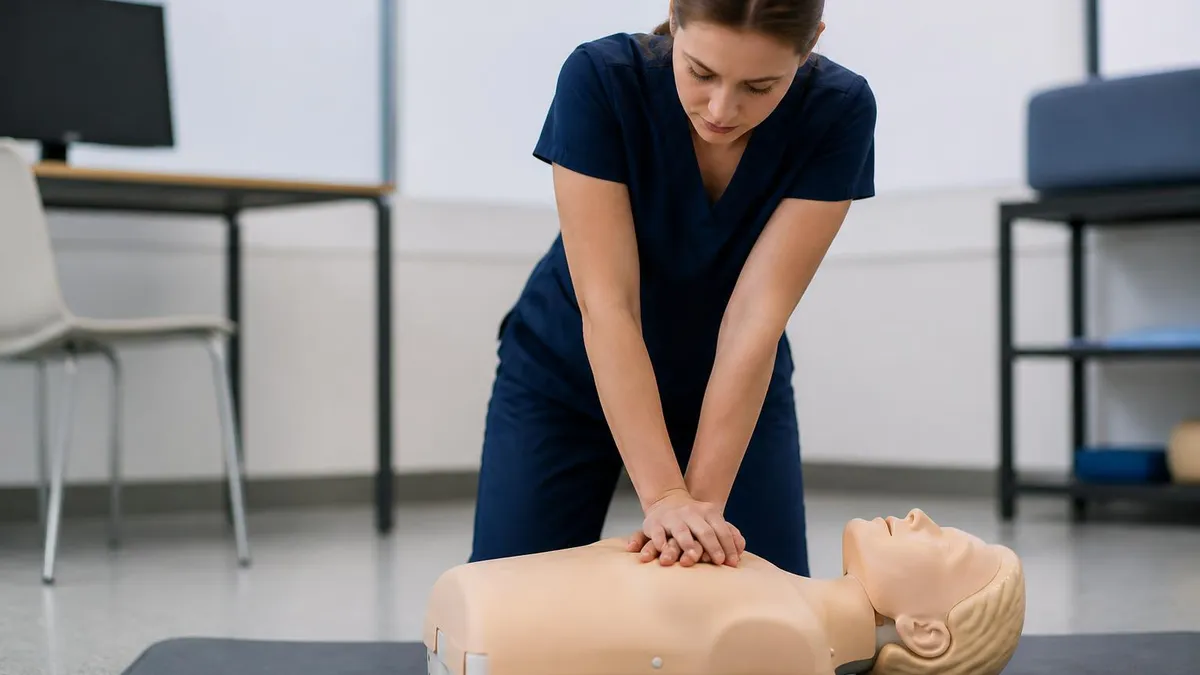
Rescuers should never stop chest compressions to check for a pulse unless specifically directed by AED prompts or medical professionals on scene. Untrained pulse checks take an average of 24 seconds and are inaccurate more than 50 percent of the time even in healthcare providers. Premature termination of compressions based on an unreliable pulse check is a leading cause of avoidable cardiac arrest death. If in doubt, keep compressing until advanced help takes over.
Choosing the right CPR and life support training program is an important decision for healthcare professionals and concerned laypersons alike. The landscape of certification options is broad, ranging from basic hands-only CPR awareness courses to full ACLS algorithm provider courses that qualify nurses and physicians to lead resuscitation teams in hospital settings. Understanding what each level of training covers and what it qualifies you to do professionally helps learners make informed choices about where to invest their time and money.
Basic Life Support, or BLS, is the entry-level professional certification that covers adult, child, and infant CPR, two-rescuer CPR techniques, AED operation, and relief of foreign-body airway obstruction. BLS is required for virtually all clinical healthcare roles in the United States, including nurses, respiratory therapists, medical assistants, and emergency medical technicians. Most BLS certifications are valid for two years, and renewal requires demonstration of competency in hands-on skills in addition to written or online knowledge assessment, ensuring that muscle memory remains current.
ACLS certification builds on BLS and is required for physicians, advanced practice providers, paramedics, and registered nurses working in emergency, intensive care, cardiac care, or operating room settings. The ACLS algorithm course covers the full spectrum of adult cardiovascular emergencies including cardiac arrest, post-cardiac arrest care, acute coronary syndromes, stroke, and symptomatic bradycardia and tachycardia. ACLS providers learn to interpret cardiac rhythms, manage advanced airways, administer resuscitation medications, and lead or participate in coordinated team resuscitation efforts.
PALS certification is required for providers who care for pediatric patients in high-acuity settings. The program mirrors the structure of ACLS but focuses entirely on age-specific assessment, recognition of deteriorating pediatric patients, and systematic treatment of respiratory emergencies and cardiovascular collapse in children and infants. PALS courses typically require participants to already hold current BLS certification, and like ACLS, PALS is valid for two years with a hands-on renewal requirement. Many hospital systems require PALS for all nurses working in pediatric, neonatal, or emergency departments regardless of whether they routinely encounter pediatric cardiac arrest.
The National CPR Foundation offers a range of certifications that are accepted by many employers and healthcare organizations, providing an accessible alternative to American Heart Association courses for some roles. Their online and blended learning formats allow busy healthcare professionals to complete the didactic portion of training on their own schedule before attending an in-person skills session. For laypersons seeking awareness-level training, the National CPR Foundation offers streamlined courses focused on hands-only CPR, AED operation, and basic first aid that can be completed in a few hours and provide practical confidence without the depth of a full professional certification.
The integration of simulation-based training has transformed CPR education over the past decade. High-fidelity manikins equipped with real-time feedback technology allow learners to practice compressions and receive immediate data on their depth, rate, and recoil quality. Simulation centers at major academic medical centers now run full cardiac arrest scenarios where interdisciplinary teams practice the entire ACLS algorithm, including team communication, role assignment, and post-resuscitation care, in a psychologically safe environment before encountering real emergencies. Research consistently shows that simulation-trained providers perform higher-quality compressions in real cardiac arrests and demonstrate better team dynamics during resuscitation.
Regardless of the level of training you pursue, the single most important thing any person can do is actually take a course. Studies show that CPR knowledge and skill degrade significantly within three to six months of training without reinforcement, and that the gap between certified and uncertified bystanders in willingness to act is enormous. Regular practice, even informal refreshers using a basic manikin or instructional video, maintains the confidence and muscle memory necessary to act decisively in the critical first minutes after cardiac arrest when the difference between life and death is measured in compressions delivered.
Practical preparation for performing CPR involves more than attending a certification class. Situational awareness — knowing where AEDs are located in the buildings and public spaces you frequent — is a habit that every trained rescuer should cultivate. The American Heart Association recommends that AEDs be available within a four-minute retrieval time from any point in high-traffic public spaces. Major airports, shopping malls, gyms, schools, and many office buildings now have AEDs mounted in visible, accessible locations. Familiarizing yourself with their placement before an emergency occurs eliminates the time wasted searching when seconds matter most.
Mental rehearsal is a technique borrowed from athletic and military training that significantly improves emergency performance. Before performing any high-stakes skill under pressure, visualizing the steps clearly — seeing yourself checking scene safety, calling for help, beginning compressions, and attaching the AED — activates the same neural pathways as physical practice. CPR instructors increasingly recommend that students spend a few minutes each month mentally rehearsing the sequence of a cardiac arrest response, particularly in the weeks after their initial certification when skills are freshest and most easily reinforced through repetition.
Rescuer safety is a dimension of CPR preparation that receives less emphasis than it deserves. Scene safety assessment is the first step in every CPR protocol for a reason: a rescuer who becomes a second victim helps no one. Before touching a patient, trained rescuers evaluate whether the environment is free from electrical hazards, traffic, water, toxic gases, or structural instability.
In settings like pools, roadsides, or industrial facilities, these hazards are common and potentially lethal. Performing CPR through a vehicle window, on a wet surface, or near live electrical equipment requires specific adaptations and sometimes means waiting for scene control before beginning compressions.
Team dynamics during CPR are a critical but often overlooked element of effective resuscitation. In two-or-more rescuer scenarios, clear role assignment reduces confusion, prevents task duplication, and ensures that every element of the resuscitation — compressions, ventilation, AED operation, time-keeping, and medication delivery — is covered by a designated person.
Communication during CPR should be direct, using names or titles and closed-loop confirmation: "Sarah, take over compressions" followed by "I have compressions" confirms the handoff without ambiguity. This structured communication approach, taught in both ACLS algorithm and PALS courses, is directly responsible for measurable improvements in compression fraction and survival rates at institutions that train teams together.
Post-resuscitation care is the phase that follows successful return of spontaneous circulation — the moment when the patient's heart begins beating on its own. This phase, which begins in the field and continues in the intensive care unit, involves targeted temperature management, hemodynamic optimization, and identification of the underlying cause of arrest. The compressions that kept the patient alive long enough to reach this phase are what made post-resuscitation care possible. Understanding that the chest compressions delivered in the first minutes of a cardiac arrest are the foundation for every subsequent life-saving intervention underscores their irreplaceable importance.
The emotional impact of performing CPR — whether successful or not — is real and should not be dismissed. Bystanders and healthcare providers alike may experience acute stress reactions, grief, and self-doubt after a resuscitation attempt. Peer support programs, critical incident debriefing, and professional counseling resources are available through many hospitals, fire departments, and EMS agencies for those who need them. Normalizing these reactions and encouraging rescuers to seek support after difficult events helps sustain the psychological well-being of the people who are most likely to save lives in future emergencies.
The commitment to learning and practicing CPR is ultimately an act of community investment. Every person who completes a basic CPR course, renews their BLS certification, or takes the time to locate an AED in their workplace becomes a potential link in the chain of survival for someone they may not yet know.
Cardiac arrest does not announce itself, and the person whose life depends on your compressions may be a stranger, a coworker, or someone you love. The purpose of chest compressions during CPR is, in the most fundamental sense, to buy time — time for the heart to restart, time for advanced care to arrive, and time for a life to continue.
CPR Questions and Answers

CPR Courses: Complete Guide to ACLS Algorithm, PALS Certification, and Life Support Training in 2026
CPR Face Shield: Complete Guide to ACLS Algorithm, Infant CPR, and Life Support Barrier Devices in 2026
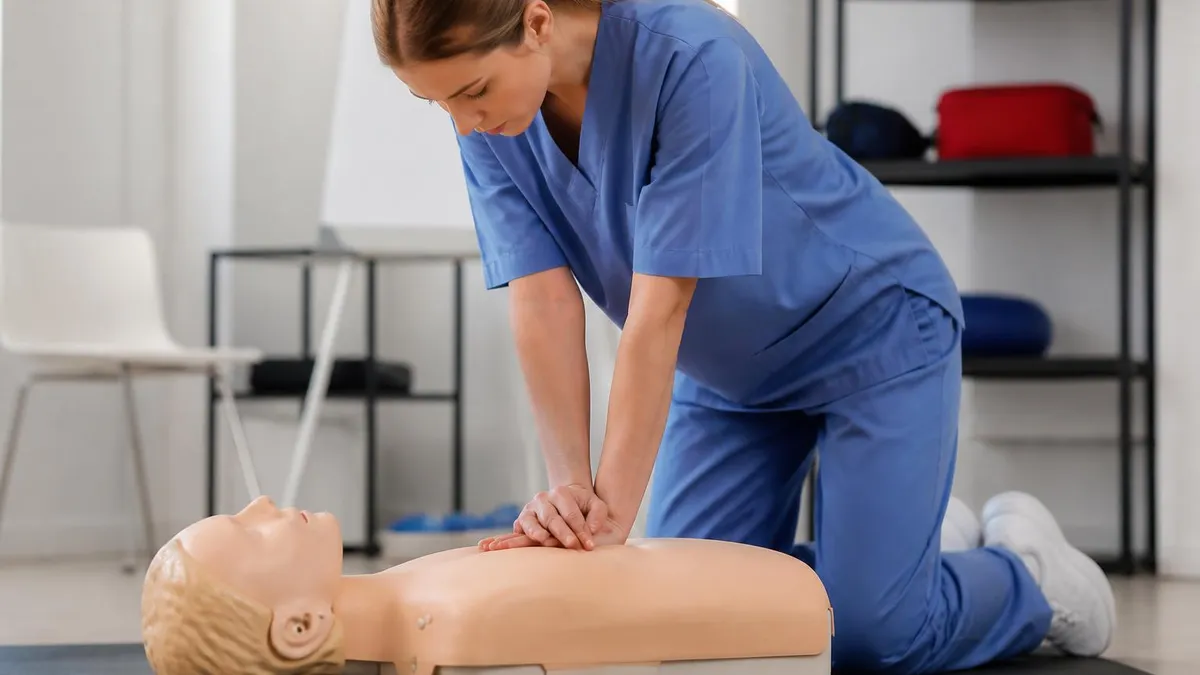
Types of CPR Training: From Basic Life Support to ACLS Algorithm Mastery in 2026
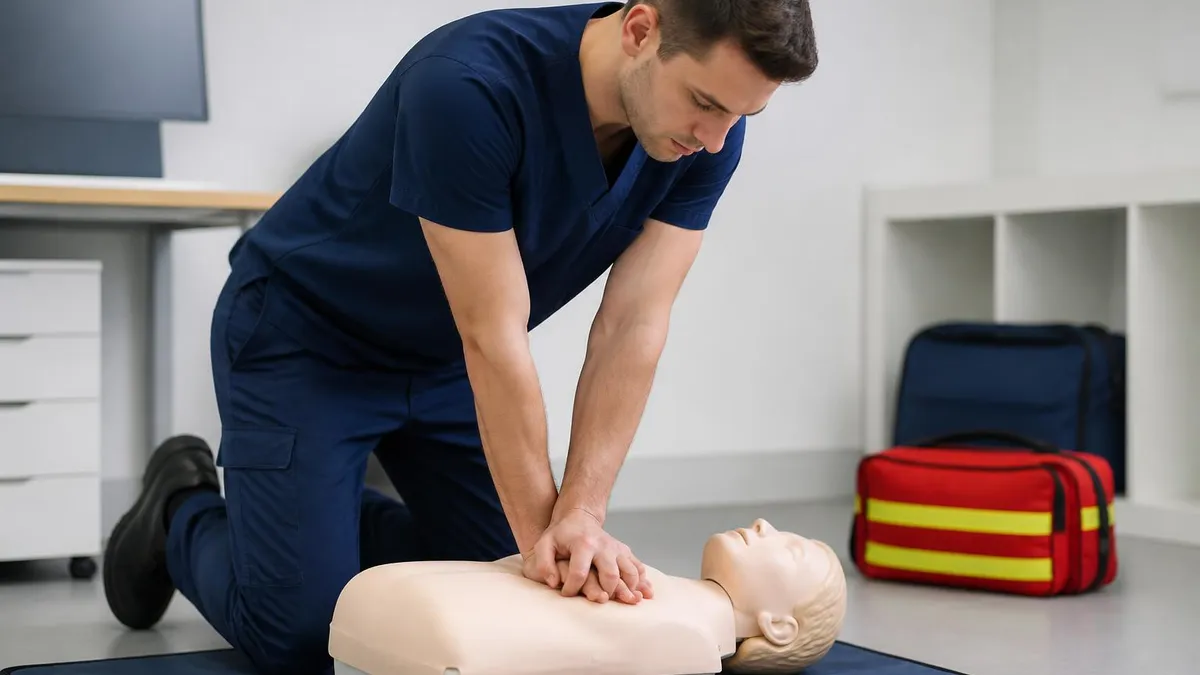
Adult CPR: Complete Step-by-Step Guide to Hands-Only and Standard CPR in 2026
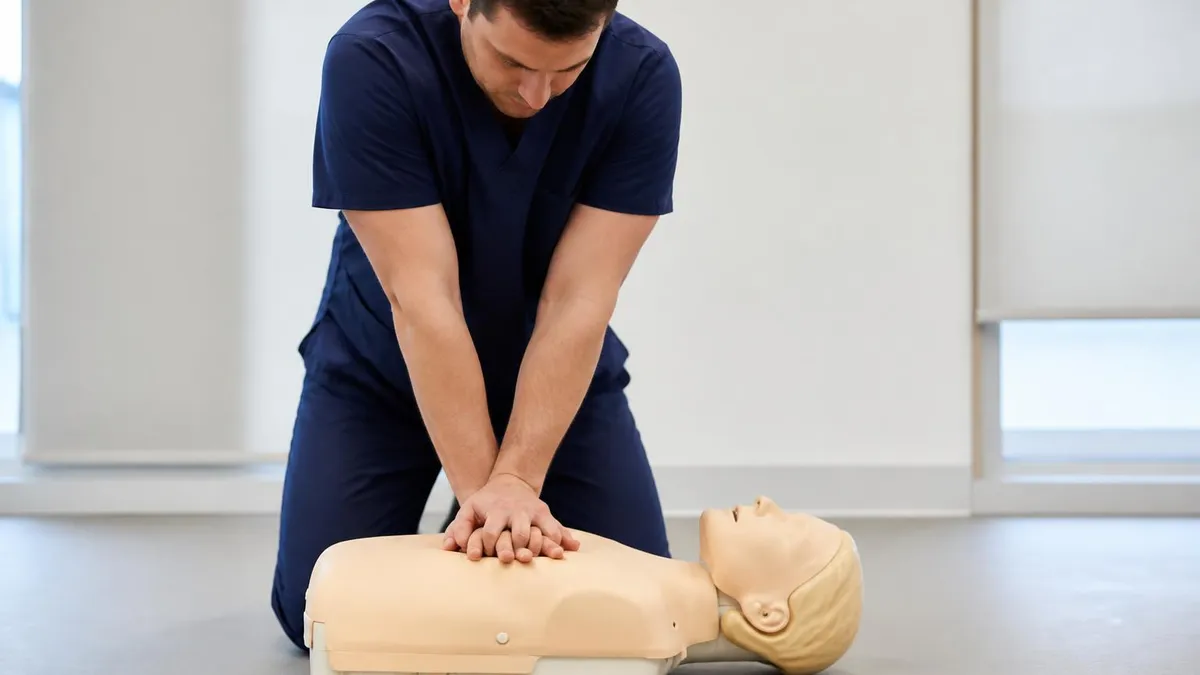
BLS vs CPR: Is BLS the Same as CPR? Complete 2026 Guide
About the Author

Registered Nurse & Healthcare Educator
Johns Hopkins University School of NursingDr. Sarah Mitchell is a board-certified registered nurse with over 15 years of clinical and academic experience. She completed her PhD in Nursing Science at Johns Hopkins University and has taught NCLEX preparation and clinical skills courses for nursing students across the United States. Her research focuses on evidence-based exam preparation strategies for healthcare certification candidates.
Join the Discussion
Connect with other students preparing for this exam. Share tips, ask questions, and get advice from people who have been there.
View discussion (5 replies)