
AHA CPR Instructor Course: Complete Guide to Becoming a Certified CPR Instructor in 2026
Complete guide to the AHA CPR instructor course: 🎓 requirements, ACLS algorithm, PALS certification, costs, and how to become a certified CPR instructor in 2026.
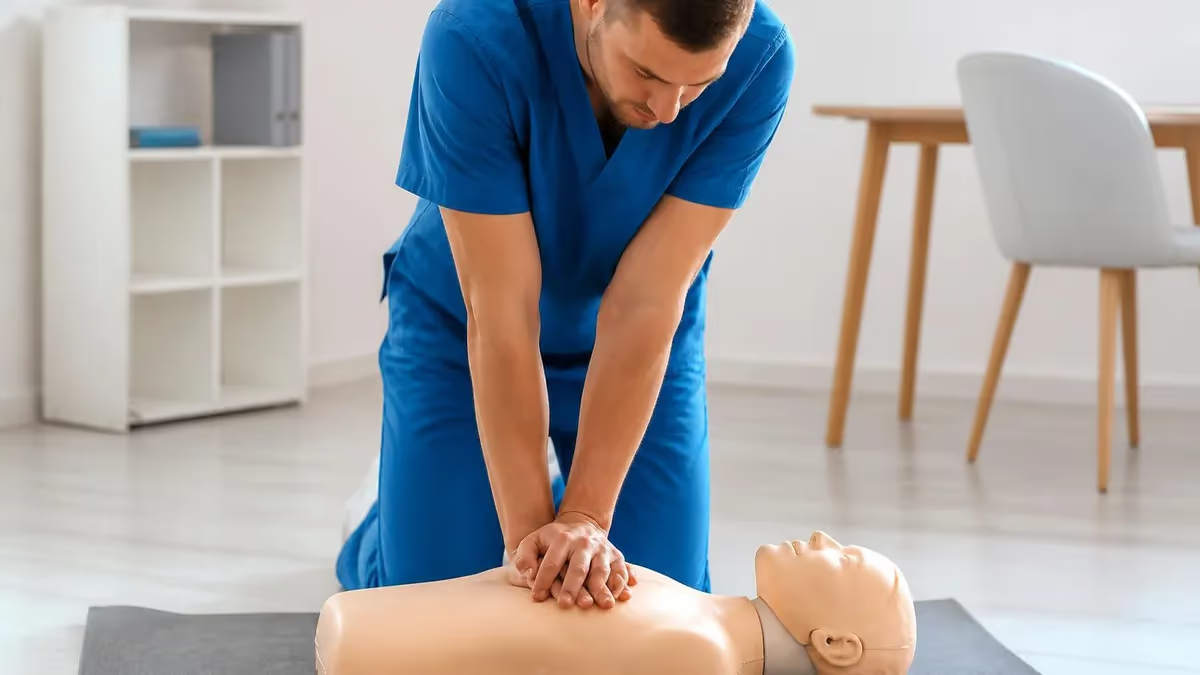
The aha cpr instructor course is one of the most rigorous and rewarding pathways in emergency medicine education, equipping healthcare professionals and community advocates alike with the skills to train others in lifesaving techniques. The American Heart Association's instructor program is internationally recognized, and completing it opens doors to teaching Basic Life Support, the ACLS algorithm, PALS certification, and a full spectrum of life support curricula. Whether you are a nurse, paramedic, firefighter, or dedicated community volunteer, earning your AHA instructor credential puts you at the forefront of cardiac emergency preparedness across the United States.
Understanding the ACLS algorithm — which governs the structured response to cardiac arrest, including rhythm recognition, medication protocols, and team coordination — is a foundational expectation for AHA instructors. Instructors who grasp the full depth of advanced cardiovascular life support can not only teach the algorithm's steps but also explain the clinical reasoning behind each decision point. This depth of knowledge distinguishes a great instructor from one who merely recites a checklist, and it is precisely what the AHA evaluates during the instructor essentials course and candidate teaching evaluations.
PALS certification, which focuses on pediatric advanced life support, is another critical domain that AHA instructors are often expected to teach or co-teach alongside adult resuscitation curricula. The pediatric population presents unique challenges: respiratory rate norms differ dramatically between age groups, and the approach to infant CPR diverges from adult and child protocols in both compression depth and ventilation ratio. Instructors who are fluent in both adult and pediatric resuscitation science can serve a far broader range of training environments, from hospital systems to community health organizations.
Many candidates wonder how the AHA's instructor course compares to offerings from organizations like the National CPR Foundation, which also provides instructor-level credentials and online training pathways. While the National CPR Foundation offers accessible, often lower-cost alternatives, the AHA remains the gold standard for hospital-based and clinical healthcare settings in the United States. Most major health systems require AHA-certified credentials for their staff, which makes AHA instructor status a particularly valuable professional asset for anyone working in or adjacent to clinical medicine.
The question of what does AED stand for — automated external defibrillator — comes up constantly in both student and instructor training contexts, and it illustrates how foundational knowledge must be second nature before you can effectively teach it. An AED is a portable device that analyzes heart rhythms and delivers an electric shock to restore normal cardiac function during sudden cardiac arrest.
Instructors must not only know how to operate an AED but must be able to demonstrate its use clearly, correct student errors in real time, and explain the physiological rationale for defibrillation in terms that a lay audience can understand and retain.
The recovery position — a lateral body position used to maintain an open airway in an unconscious but breathing patient — is another skill area instructors must master and teach with precision. Knowing when to place a patient in the recovery position versus when to initiate CPR is a nuanced clinical decision, and instructors are responsible for ensuring their students can make that distinction under pressure. Scenarios involving the recovery position are commonly featured in AHA course skills stations, making instructor proficiency in this area essential for both teaching quality and student success.
This comprehensive guide walks you through every aspect of the AHA CPR instructor pathway: eligibility requirements, the instructor essentials course, candidate teaching evaluations, costs, renewal obligations, and the practical teaching skills you will need to excel. Whether you are just beginning to explore instructor certification or are preparing to sit for your candidate teaching evaluation, this article gives you the roadmap you need to succeed in 2026 and beyond.
AHA CPR Instructor Program by the Numbers
Key Facts at a Glance
| Item | Value | Details |
|---|---|---|
| Instructor Essentials Duration | 8–12 hrs | Classroom or blended format |
| Instructor Credential Renewal Cycle | 2 Years | Minimum classes required annually |
| Typical Instructor Course Cost | $150–$300 | Varies by Training Center |
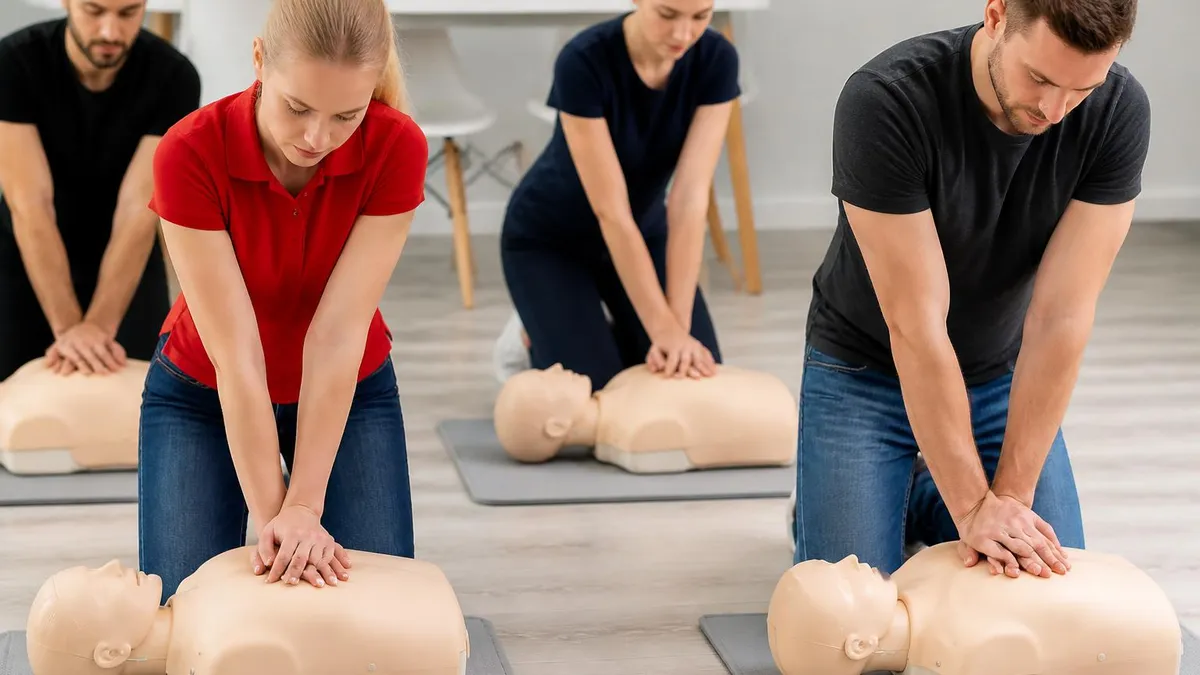
How to Become an AHA CPR Instructor: Step-by-Step Path
Hold a Current AHA Provider Card
Find an Authorized Training Center
Complete Instructor Essentials
Complete Discipline-Specific Instructor Course
Pass the Candidate Teaching Evaluation
Maintain Alignment & Annual Teaching Requirements
The AHA Instructor Essentials course is the foundational curriculum that every American Heart Association instructor must complete before teaching any AHA discipline, and it deserves far more attention than most candidates give it. Unlike the provider courses that focus on clinical skills, Instructor Essentials is fundamentally about educational methodology — how adults learn, how to structure a lesson for maximum retention, how to give corrective feedback without discouraging learners, and how to manage the dynamics of a small-group classroom. Many healthcare professionals find this pedagogical content surprising and deeply valuable, even if they have been informally teaching colleagues for years.
Adult learning theory, also known as andragogy, is central to Instructor Essentials. Unlike children, adult learners bring prior experiences and self-directed motivations to the classroom, and they respond best when new information is connected to real-world applications they already care about. For CPR instructors, this means framing compression rate, respiratory rate norms, and AED operation not as abstract facts to memorize but as clinical realities students will face in actual emergencies. The AHA's course design reflects this philosophy throughout, which is why instructor candidates must understand it deeply rather than just execute the scripts provided in the Instructor Manual.
One area that trips up many instructor candidates is the skill of giving immediate, specific, and non-punitive corrective feedback during skills stations. When a student performs chest compressions at the wrong depth or fails to adequately tilt the head during infant CPR, the instructor must intervene quickly enough to prevent the error from becoming ingrained but gently enough to preserve the student's confidence and willingness to try again. The AHA trains instructors to use a specific feedback model: observe, stop, correct, and confirm — a sequence that keeps skills sessions moving without embarrassing students or allowing errors to persist uncorrected.
Megacode scenarios, which are high-fidelity team resuscitation simulations used in ACLS and PALS instructor courses, represent another critical teaching competency. Running a megacode requires the instructor to simultaneously manage team dynamics, monitor each participant's role performance, introduce clinical curve balls like rhythm changes or medication questions, and evaluate whether the team leader is applying the ACLS algorithm correctly. Instructors who have only experienced megacodes as students often underestimate the cognitive load of facilitating them, which is why the discipline-specific instructor courses spend considerable time on scenario design and facilitation technique.
The blended learning format of Instructor Essentials — which combines self-paced online modules with a hands-on classroom session — allows candidates to absorb the theoretical content at their own pace before arriving at the classroom prepared to practice facilitation skills with peers. The online portion covers adult learning theory, AHA course structure, and the instructor evaluation framework. The classroom session is where candidates practice teaching short skills segments, receive feedback from an instructor-trainer, and demonstrate that they can manage a skills station competently. Most Training Centers complete the classroom session in four to six hours.
It is worth noting that the AHA regularly updates its instructor training materials to reflect new scientific guidelines, which are published by the International Liaison Committee on Resuscitation (ILCOR) and adopted by the AHA following comprehensive evidence review.
The most recent major guideline update occurred in 2020, and the AHA has released focused updates since then covering topics such as dispatcher-assisted CPR, the role of vasopressin in cardiac arrest management, and updated guidance on team dynamics during resuscitation. Instructors are required to complete update training whenever new guidelines are released, ensuring that every student they train receives instruction based on the most current evidence available.
The financial and logistical realities of completing Instructor Essentials vary considerably depending on your Training Center. Some hospitals and health systems offer the course free of charge to employees as part of professional development programs, while community Training Centers typically charge between $100 and $250 for the complete Instructor Essentials experience.
The AHA does not set a fixed national price, so it pays to contact multiple Training Centers in your area before committing. Some Training Centers also offer tuition reimbursement support or can connect candidates with scholarship opportunities through AHA regional offices for those who face financial barriers to instructor certification.
CPR Practice Test Questions
Prepare for the CPR Cardiopulmonary Resuscitation Practice exam with our free practice test modules. Each quiz covers key topics to help you pass on your first try.
CPR Basic CPR
CPR Exam Questions covering Basic CPR. Master CPR Test concepts for certification prep.
CPR and First Aid
Free CPR Practice Test featuring and First Aid. Improve your CPR Exam score with mock test prep.
CPR (Cardiopulmonary Resuscitation) Adult ...
CPR Mock Exam on (Cardiopulmonary Resuscitation) Adult CPR and AED Usage. CPR Study Guide questions to pass on your first try.
CPR (Cardiopulmonary Resuscitation) Airway...
CPR Test Prep for (Cardiopulmonary Resuscitation) Airway Obstruction and Choking. Practice CPR Quiz questions and boost your score.
CPR (Cardiopulmonary Resuscitation) Cardio...
CPR Questions and Answers on (Cardiopulmonary Resuscitation) Cardiopulmonary Emergency Recognition. Free CPR practice for exam readiness.
CPR (Cardiopulmonary Resuscitation) Child ...
CPR Mock Test covering (Cardiopulmonary Resuscitation) Child and Infant CPR. Online CPR Test practice with instant feedback.
CPR (Cardiopulmonary Resuscitation) High-P...
Free CPR Quiz on (Cardiopulmonary Resuscitation) High-Performance Team Dynamics. CPR Exam prep questions with detailed explanations.
CPR (Cardiopulmonary Resuscitation) Legal ...
CPR Practice Questions for (Cardiopulmonary Resuscitation) Legal and Ethical Considerations. Build confidence for your CPR certification exam.
CPR for Specific Populations
CPR Test Online for for Specific Populations. Free practice with instant results and feedback.
CPR Airway & Breathing Management
CPR Exam Questions covering Airway & Breathing Management. Master CPR Test concepts for certification prep.
CPR Assessment & Recognition of Cardiac Ar...
Free CPR Practice Test featuring Assessment & Recognition of Cardiac Arrest. Improve your CPR Exam score with mock test prep.
CPR Chest Compressions & Defibrillation
CPR Mock Exam on Chest Compressions & Defibrillation. CPR Study Guide questions to pass on your first try.
CPR Post-Resuscitation Care & Recovery
CPR Test Prep for Post-Resuscitation Care & Recovery. Practice CPR Quiz questions and boost your score.
ACLS Algorithm, PALS Certification & Life Support Curricula
The ACLS algorithm is the structured decision-making framework that guides advanced cardiovascular life support providers through cardiac arrest, post-arrest care, and other critical cardiovascular emergencies. It encompasses the cardiac arrest algorithm — which sequences CPR, rhythm check, defibrillation, and medication administration — as well as separate algorithms for bradycardia, tachycardia, and acute stroke. AHA instructors must be able to teach each algorithm step, explain the clinical rationale behind timing and sequencing, and run megacode scenarios that test students' ability to apply the algorithm under realistic pressure.
For instructors, mastery of the ACLS algorithm goes beyond memorization. Students in ACLS courses are typically nurses, physicians, respiratory therapists, and paramedics who will push back with clinical questions — why is epinephrine dosed every three to five minutes? Why does the algorithm specify two minutes of CPR between rhythm checks rather than one? Instructors who can answer these questions with evidence-based explanations build enormous credibility and create a richer learning environment. The AHA's ACLS Instructor Manual provides rationale notes for each algorithm step, and reviewing these thoroughly is essential preparation for teaching.
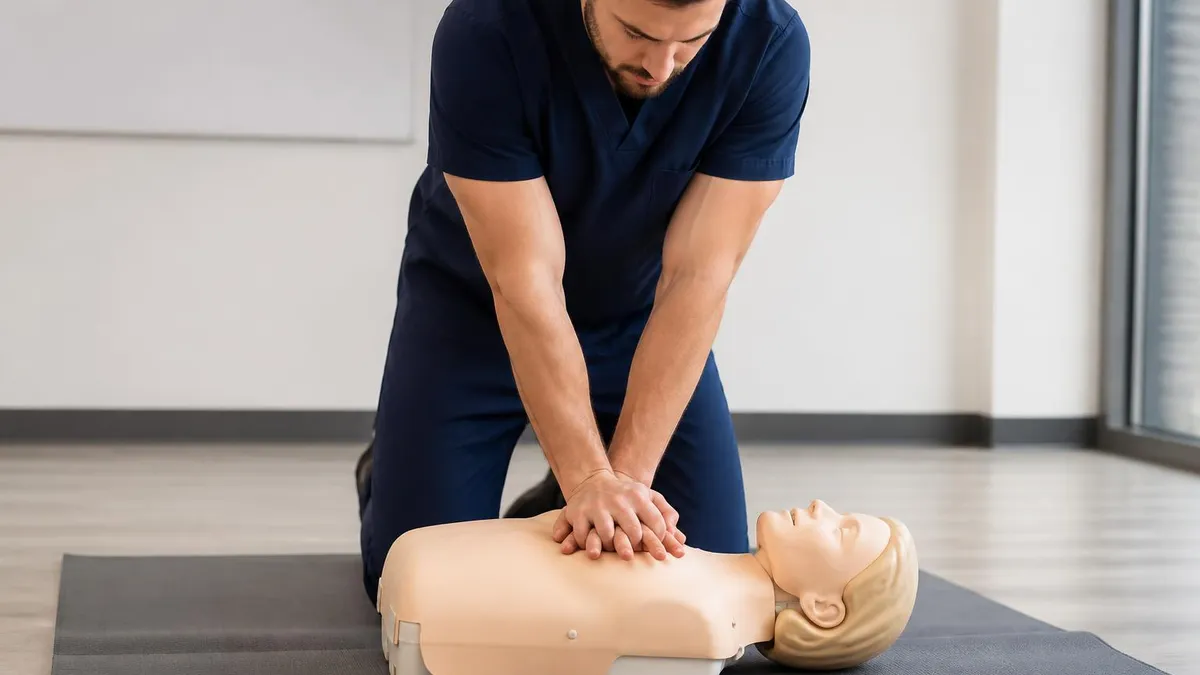
Pros and Cons of Becoming an AHA CPR Instructor
- +Nationally and internationally recognized credential that opens doors in clinical, educational, and community health settings
- +Ability to teach the full AHA curriculum including BLS, ACLS algorithm, and PALS certification courses
- +Significant supplemental income potential — instructors can earn $50 to $150 per student taught
- +Deep personal satisfaction from knowing your training directly contributes to saving lives in your community
- +Access to AHA instructor resources, updated guidelines, and a professional network of fellow educators
- +Credential is valued by hospitals, fire departments, EMS agencies, schools, and corporate wellness programs nationwide
- −Initial time commitment is substantial — Instructor Essentials plus discipline-specific course can take two to three full days
- −Must maintain active provider certification in every discipline you wish to teach, adding renewal overhead
- −Annual teaching minimums must be met or instructor alignment can lapse, requiring re-evaluation
- −Training Center sponsorship is required — independent certification without a TC is not possible under AHA rules
- −Costs of instructor courses, equipment, and manikin maintenance can be significant for solo instructors without institutional support
- −Guideline updates require mandatory retraining, which may conflict with busy clinical or professional schedules
AHA CPR Instructor Candidate Readiness Checklist
- ✓Verify your current AHA provider card is valid and not expiring within the next three months.
- ✓Identify and contact an AHA-authorized Training Center in your area to secure sponsorship.
- ✓Complete all online modules for AHA Instructor Essentials before your classroom session date.
- ✓Review the AHA Instructor Manual for your target discipline (BLS, ACLS, or PALS) cover to cover.
- ✓Memorize the ACLS algorithm sequences including timing, drug dosing intervals, and rhythm recognition cues.
- ✓Practice all hands-on skills — compressions, ventilations, AED operation, infant CPR, and recovery position — until they are fluid.
- ✓Study normal respiratory rate ranges by age group and key PALS assessment tools if pursuing pediatric instructor status.
- ✓Prepare and rehearse at least two short teaching segments you could present during your Candidate Teaching Evaluation.
- ✓Confirm your Training Center's equipment inventory includes adequate manikins, AED trainers, and barrier devices for your candidate evaluation.
- ✓Review the AHA's feedback model (observe, stop, correct, confirm) and practice applying it during a mock teaching session with a colleague.
The Candidate Teaching Evaluation Is Pass/Fail — Prepare Accordingly
Unlike written exams that can be retaken immediately, a failed Candidate Teaching Evaluation typically requires a waiting period and additional supervised practice before a second attempt is permitted. Most Training Centers require candidates to demonstrate mastery of at least two different skills stations during the CTE, and evaluators assess not just technical accuracy but also communication clarity, student engagement, and error correction technique. Treat your preparation as seriously as you would a clinical competency evaluation — because it is one.
Understanding the full cost picture of becoming an AHA CPR instructor is essential for planning your career development budget, and the numbers vary more widely than most candidates expect. The Instructor Essentials course alone typically costs between $100 and $250 at community Training Centers, while hospital-based programs often absorb this cost as part of employee development.
Discipline-specific instructor courses — BLS Instructor, ACLS Instructor, PALS Instructor — add another $100 to $200 on average. When you factor in the cost of maintaining your own provider certifications (which must remain current throughout your instructor tenure), the first-year investment in becoming an AHA instructor can range from $300 to $700 or more depending on your location and Training Center's fee structure.
For those comparing costs across organizations, the National CPR Foundation offers instructor-level certification pathways that are often significantly less expensive than the AHA's program, with some courses available entirely online at costs under $100. The National CPR Foundation's credentials are accepted in many corporate, community, and fitness industry settings, but they are generally not accepted in hospital or clinical healthcare environments that specifically require AHA certification.
Understanding which credential is required in your target teaching context is therefore critical before investing in either pathway — and for anyone targeting healthcare employment, the AHA's program is almost always the right choice despite its higher cost.
The earning potential for AHA-certified CPR instructors is genuinely compelling, particularly for those who build their own independent teaching practice rather than working exclusively through a single employer. Independent CPR instructors who teach group classes typically charge between $40 and $80 per student for BLS certification, with class sizes of 6 to 12 students common in both community and corporate settings.
An instructor who teaches two classes per weekend can realistically generate $500 to $1,500 in monthly supplemental income while also serving an important public health function. ACLS and PALS instructors who teach provider renewal courses to healthcare workers often command even higher per-student fees, particularly in markets with high demand for clinical education services.
Renewal requirements add an ongoing cost and time dimension to instructor status that candidates should plan for carefully. AHA instructors must renew their instructor alignment every two years by demonstrating active teaching activity — most Training Centers require instructors to have taught at least two courses per year during the two-year alignment period.
If you fail to meet the teaching minimum, your Training Center may require you to complete additional supervised observation or a partial retake of the instructor course before renewing your alignment. Some Training Centers also charge an annual alignment fee of $25 to $100, which covers access to AHA training materials, the Learning Management System, and administrative support for issuing student completion cards.
Career trajectories for experienced AHA instructors are diverse and often surprising in their scope. Some instructors advance to the instructor-trainer level, which authorizes them to certify new instructors themselves — a significant professional distinction that requires additional training and demonstrated teaching excellence. Instructor-trainers are particularly valuable to Training Centers, which rely on them to maintain a pipeline of newly qualified instructors.
Other experienced instructors move into Training Center Coordinator roles, overseeing all AHA-affiliated teaching activity at their institution, managing course schedules, equipment inventories, and instructor alignment records. These coordinator positions often exist within hospital education departments, EMS agencies, fire departments, and large community health organizations.
The relationship between CPR instructor certification and other advanced clinical credentials is worth exploring for healthcare professionals considering this pathway. Physicians, advanced practice nurses, and physician assistants who hold AHA instructor status often find that it enhances their credibility as clinical educators in medical school, residency, and nursing school settings. Some academic medical centers actively recruit AHA-certified faculty to lead resuscitation education programs, and instructor status can be a differentiating credential on an academic appointment application. The combination of ACLS algorithm mastery, PALS certification expertise, and demonstrated teaching ability is a powerful professional package that relatively few clinicians possess.
Finally, it is worth addressing the question of whether online-only CPR instructor certification — offered by several organizations including some that market themselves as alternatives to the AHA — provides equivalent professional standing. In almost all regulated healthcare environments, the answer is no: online-only certifications that do not include a hands-on skills evaluation component are not accepted by the Joint Commission, most state health departments, or the major healthcare staffing agencies.
The AHA's insistence on in-person candidate teaching evaluations is not administrative bureaucracy — it reflects the evidence that CPR skills assessed only in online formats do not reliably transfer to real-world performance, a finding that has been replicated in multiple peer-reviewed studies of resuscitation education outcomes.
Readers who want more detail usually continue with aha cpr instructor course.
If you want the full picture, the aha cpr instructor course guide walks through it step by step.
If you want the full picture, the aha cpr instructor course guide walks through it step by step.
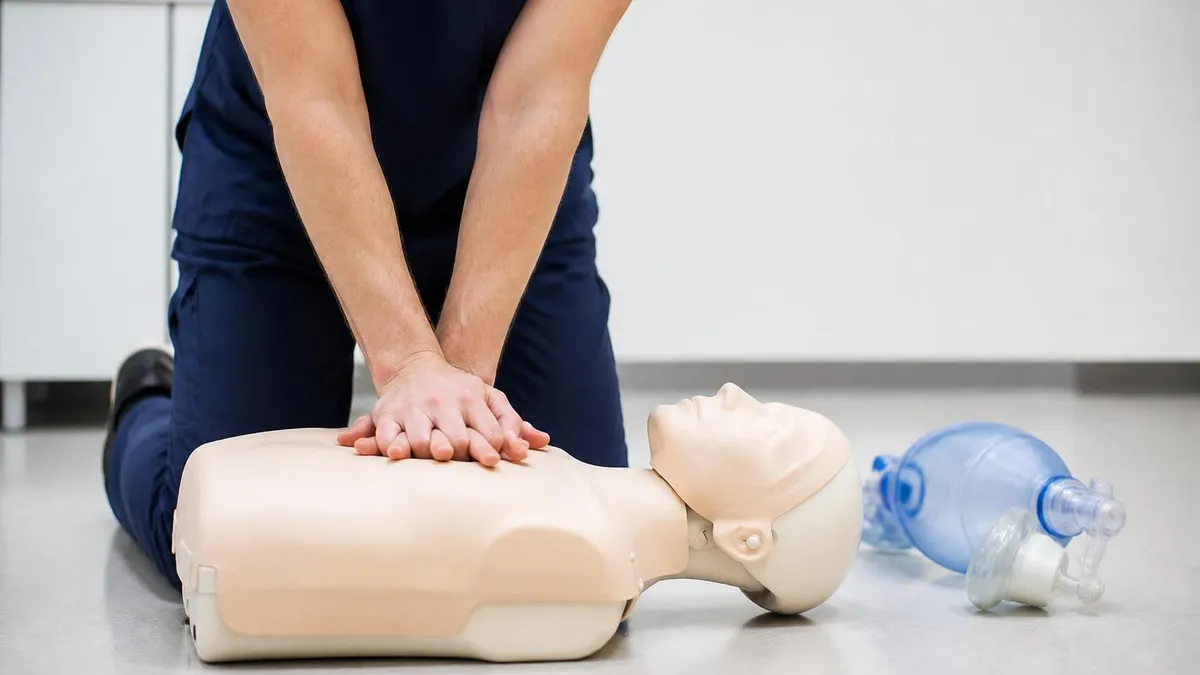
AHA policy is unambiguous: you cannot begin the instructor course process with an expired provider card. If your BLS, ACLS, or PALS provider certification lapses before you complete your instructor alignment, you will need to recertify as a provider before your Training Center can officially process your instructor application. Build in at least a three-month buffer between your provider renewal date and your planned instructor course start to avoid this frustrating and costly delay.
Teaching CPR effectively requires a set of practical classroom management skills that go far beyond clinical knowledge, and developing these skills before your Candidate Teaching Evaluation can make the difference between passing on your first attempt and needing a second.
One of the most important classroom management principles in CPR education is controlling the pace of skills stations so that every student gets adequate practice time without the session running over its allotted window. Instructors who allow one or two students to dominate skills practice time while others watch passively are not delivering an effective course, and AHA evaluators specifically look for equitable participation management during the CTE.
Demonstrating skills with flawless technique is a non-negotiable instructor competency, but the manner of demonstration matters almost as much as the accuracy of the technique itself. The AHA recommends that instructors use a slow, narrated demonstration approach for complex skills like two-rescuer CPR or the recovery position — performing the skill at normal speed first, then breaking it down step by step with verbal explanation, then having students replicate each step before assembling the complete sequence.
This chunked demonstration approach has strong support in educational psychology research and produces significantly better skill retention than single-speed demonstrations followed by open practice time.
Student error correction is an area where many first-time instructors struggle, particularly when the student making errors is a confident healthcare professional who pushes back on feedback.
The AHA's recommended approach is to frame corrections in terms of patient outcomes rather than personal failure — instead of saying "you're doing that wrong," an effective instructor might say "when the compressions are shallower than two inches, the blood flow to the brain is significantly reduced, so let's adjust the depth together and see how it feels." This outcome-focused feedback approach is both more effective at producing behavioral change and less likely to create defensive reactions that disrupt the learning environment.
Equipment management is a logistical reality of CPR instruction that new instructors often underestimate. A standard BLS class for 10 students requires at least five adult manikins, ideally with feedback devices that measure compression rate and depth in real time, plus two infant manikins, five AED trainers, adequate barrier devices, and a functioning audio-visual system if the course includes video components.
ACLS courses additionally require IV arm trainers, medication vials for scenario use, cardiac monitor simulators, and advanced airway management equipment. Instructors who work independently must either own or rent this equipment, while those affiliated with a Training Center or hospital typically have access to a shared equipment pool — a significant logistical and financial advantage of institutional affiliation.
The question of how to handle students who do not pass skills evaluations is one that every CPR instructor will face, and handling it with professionalism and compassion is both an ethical obligation and a reflection of the instructor's overall teaching quality. The AHA provides clear remediation guidance: students who do not demonstrate skill competency on the first attempt should be given additional practice time and a second evaluation opportunity before the end of the course whenever possible.
If a student cannot achieve competency despite remediation, the instructor should document the outcome clearly in the course records and advise the student on additional practice resources. Issuing a completion card to a student who has not demonstrated competency is a serious violation of AHA policy and potentially a patient safety issue — instructors must maintain the integrity of the certification process even when it is uncomfortable to do so.
Staying current with AHA scientific updates is an ongoing professional responsibility that the most effective instructors approach proactively rather than reactively. The AHA publishes focused guideline updates, scientific statements, and educational bulletins throughout the five-year cycle between major guideline revisions, and following these publications helps instructors maintain their teaching at the cutting edge of resuscitation science. Subscribing to the AHA's Resuscitation journal and the Circulation journal's emergency cardiovascular care section provides access to the primary research that drives guideline evolution, giving instructors the depth of scientific background that distinguishes truly expert educators from those who simply teach the current card.
Community outreach is a dimension of CPR instruction that many hospital-based instructors overlook but that can be enormously impactful. The AHA's Hands-Only CPR campaign has documented that bystander CPR dramatically improves survival from out-of-hospital cardiac arrest, yet survey data consistently show that fewer than 40% of cardiac arrest witnesses attempt CPR before emergency services arrive.
Instructors who extend their teaching beyond traditional certification courses — offering free Hands-Only CPR demonstrations at community events, schools, and workplaces — amplify their impact exponentially and contribute directly to the AHA's mission of building a nation of CPR-trained citizens. Many Training Centers actively support community outreach instruction with loaner equipment and promotional resources.
As you finalize your preparation for the AHA instructor pathway, a few practical strategies can substantially increase your odds of a successful first-time Candidate Teaching Evaluation and a strong start to your teaching career. The single most impactful preparation step is to observe multiple AHA courses taught by experienced instructors before your CTE.
Contact your Training Center and ask to sit in on BLS, ACLS, and PALS courses as an observer — watching how skilled instructors manage time, handle student errors, help megacode scenarios, and maintain energy throughout a full teaching day will give you mental models that no amount of reading can fully replicate.
Recording yourself during practice teaching sessions is another high-yield preparation strategy that many instructor candidates overlook. Set up a phone or tablet to record a 10- to 15-minute mock teaching segment where you demonstrate a CPR skill to a friend or colleague who plays the role of a student making deliberate errors.
Watching the playback is often revealing and sometimes humbling — instructors frequently discover that their demonstration pace is too fast, their verbal explanations are unclear, or their error correction language is unintentionally dismissive. Identifying and addressing these issues before your CTE is infinitely better than discovering them during the evaluation itself.
Knowing the AHA Instructor Manual for your discipline well enough to find any piece of information quickly during a course is a practical competency that new instructors develop surprisingly slowly. The Instructor Manual contains lesson plans, equipment checklists, skills performance criteria, case scenarios, and administrative guidance — and during a live course, you may need to reference any of these sections on short notice.
Building familiarity with the manual's structure by working through it section by section, tabbing key pages, and practicing finding specific information under time pressure will pay dividends when you are standing in front of a room full of students and need an answer quickly.
Connecting with other AHA instructors through professional networks, social media groups, and AHA-affiliated organizations is a career investment that pays dividends throughout your teaching life. Experienced instructors freely share scenario scripts, skills station setup tips, student management strategies, and equipment maintenance advice in these communities, and the collective wisdom of instructors who have taught hundreds of classes is an invaluable supplement to the AHA's formal training materials. Many regions have AHA instructor networks that meet quarterly to share updates, practice new scenarios, and provide peer feedback — joining these groups early in your instructor career accelerates your professional development considerably.
Understanding the business side of CPR instruction — pricing your classes, marketing to corporate clients, managing liability insurance, and handling the administrative burden of issuing AHA completion cards — is essential knowledge for instructors who want to build an independent teaching practice. AHA completion cards are issued through your Training Center's account on the AHA's eCard platform, and each card carries a cost that must be factored into your class pricing.
Liability insurance for independent CPR instructors is widely available through organizations like the American Safety and Health Institute and typically costs between $150 and $300 annually for comprehensive coverage — an essential investment for anyone teaching outside of an institutional setting where employer liability coverage may not extend to instructor activities.
Finally, approaching your instructor career with a growth mindset — treating each course as an opportunity to refine your teaching rather than simply execute a protocol — is the philosophical foundation of long-term excellence in CPR education. The AHA's Instructor Update process, which is required when new guidelines are released, is not merely a compliance burden but a genuine opportunity to deepen your understanding of resuscitation science and incorporate new evidence into your teaching.
Instructors who embrace this continuous learning orientation consistently produce students with better skill retention, higher confidence in emergency response, and greater likelihood of intervening effectively when a real cardiac emergency occurs in their presence. That outcome — a student who saves a life because of what you taught them — is the ultimate measure of instructor success.
Building a sustainable instructor career also means taking care of your own physical and emotional wellbeing as an educator. Teaching CPR — especially in healthcare settings where students have recently experienced traumatic resuscitation attempts — can carry significant emotional weight, and instructors who debrief openly about difficult scenarios and prioritize their own mental health are better equipped to show up fully for their students.
The AHA recognizes this dimension of instructor work in its training materials and encourages Training Centers to create supportive professional communities where instructors can process challenging teaching experiences without stigma. The best CPR instructors are not just technically excellent — they are emotionally present, genuinely invested in their students' success, and committed to the broader mission of saving more lives through better resuscitation education.
CPR Questions and Answers
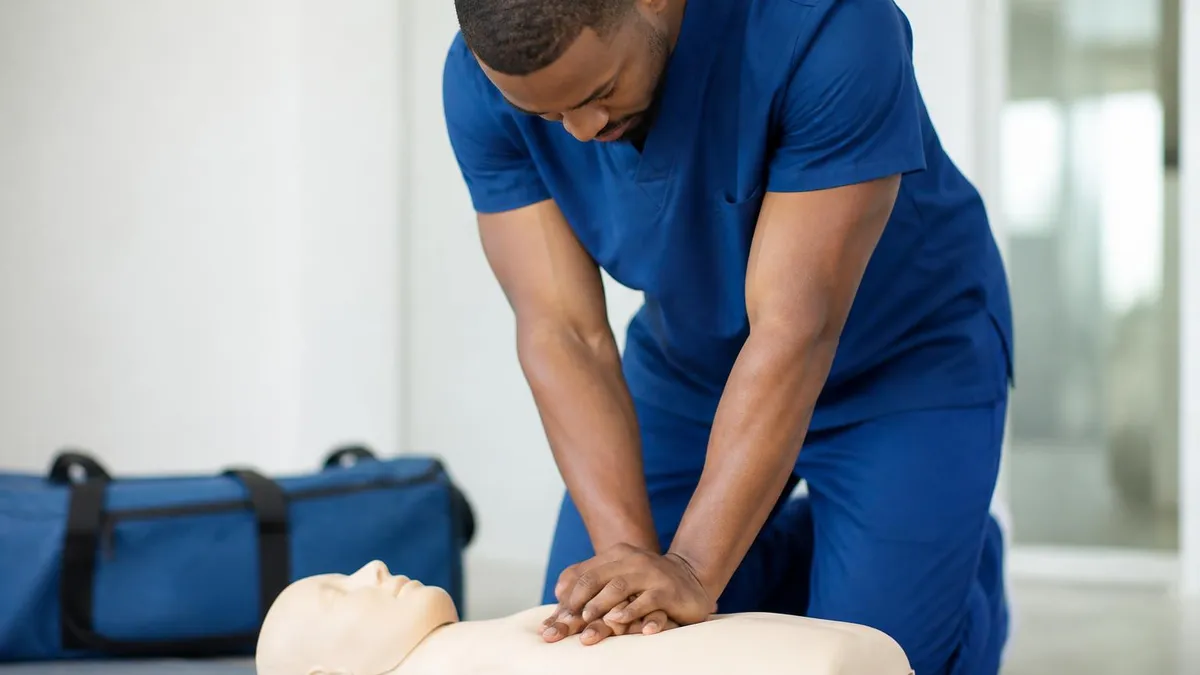
CPR Courses: Complete Guide to ACLS Algorithm, PALS Certification, and Life Support Training in 2026
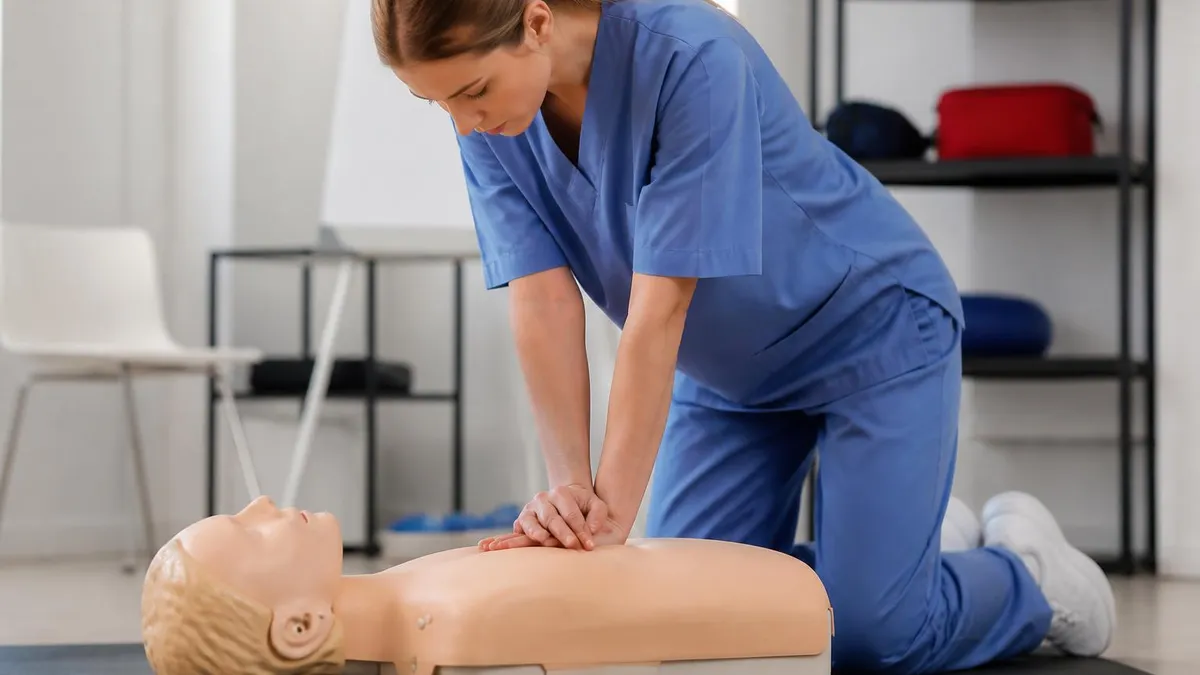
Types of CPR Training: From Basic Life Support to ACLS Algorithm Mastery in 2026
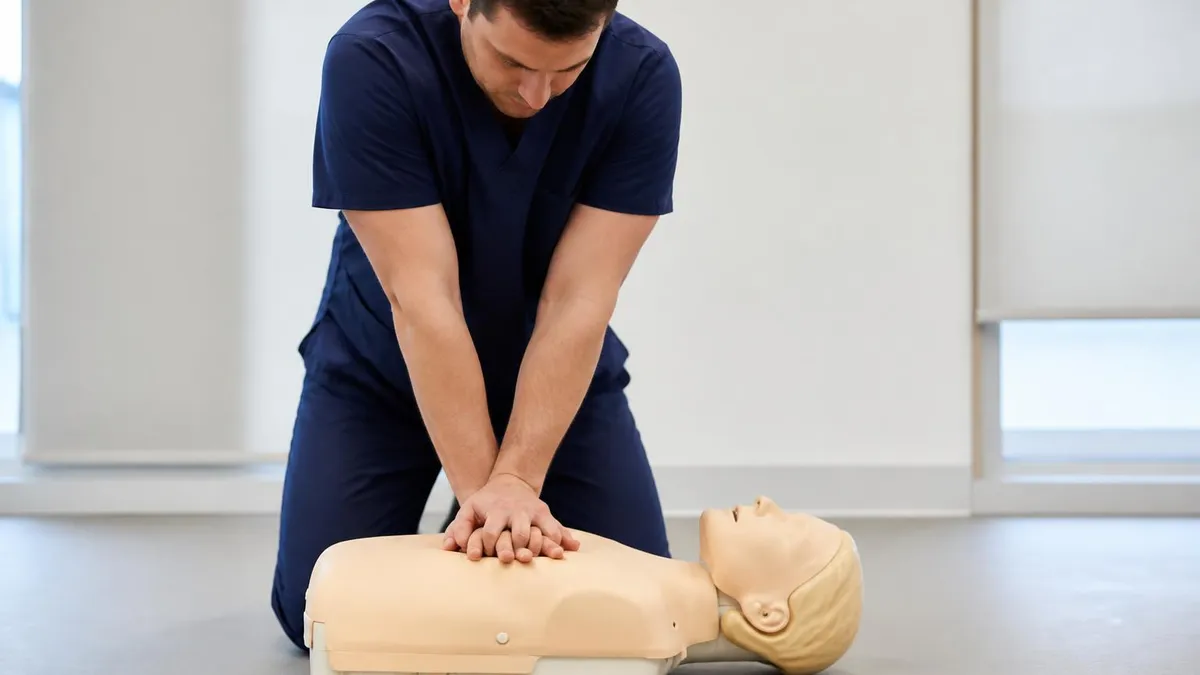
BLS vs CPR: Is BLS the Same as CPR? Complete 2026 Guide
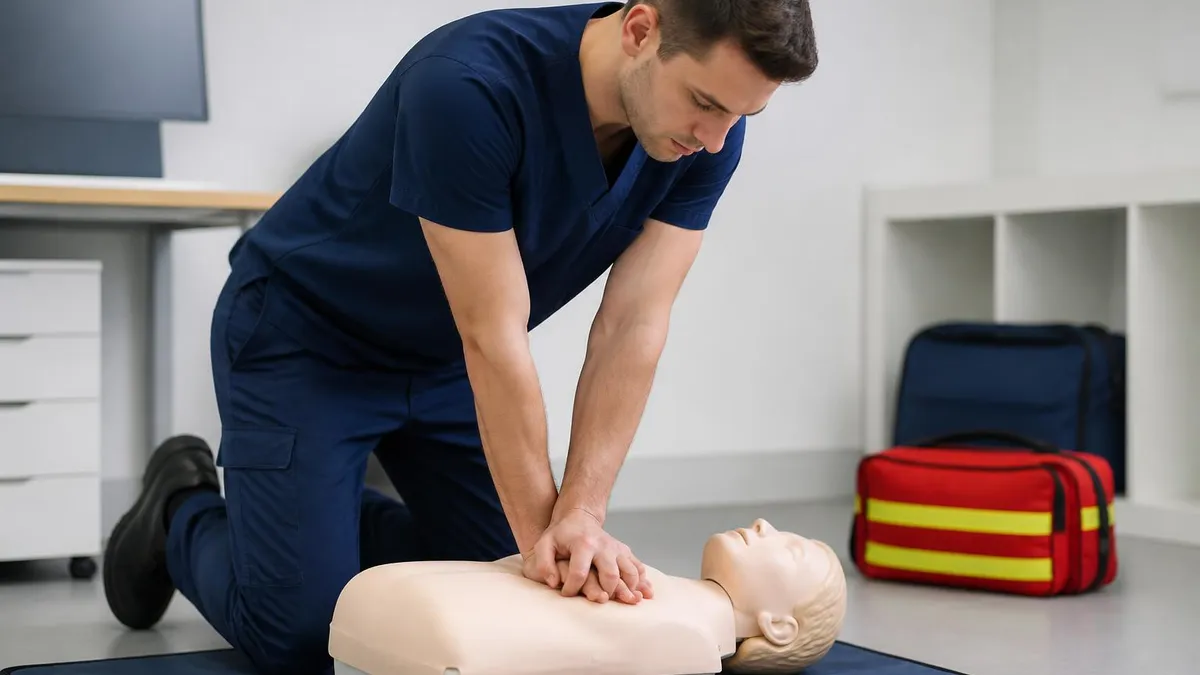
Adult CPR: Complete Step-by-Step Guide to Hands-Only and Standard CPR in 2026
Free CPR Training: Complete Guide to ACLS Algorithm, PALS Certification, and Life Support Skills in 2026
About the Author

Registered Nurse & Healthcare Educator
Johns Hopkins University School of NursingDr. Sarah Mitchell is a board-certified registered nurse with over 15 years of clinical and academic experience. She completed her PhD in Nursing Science at Johns Hopkins University and has taught NCLEX preparation and clinical skills courses for nursing students across the United States. Her research focuses on evidence-based exam preparation strategies for healthcare certification candidates.
Join the Discussion
Connect with other students preparing for this exam. Share tips, ask questions, and get advice from people who have been there.
View discussion (5 replies)