
CPR Certification Classes Near Me: Complete 2026 October Training Guide
Find CPR certification classes near you. Learn the ACLS algorithm, 🧠 infant CPR, PALS certification, and what AED stands for. Full 2026 October training guide.
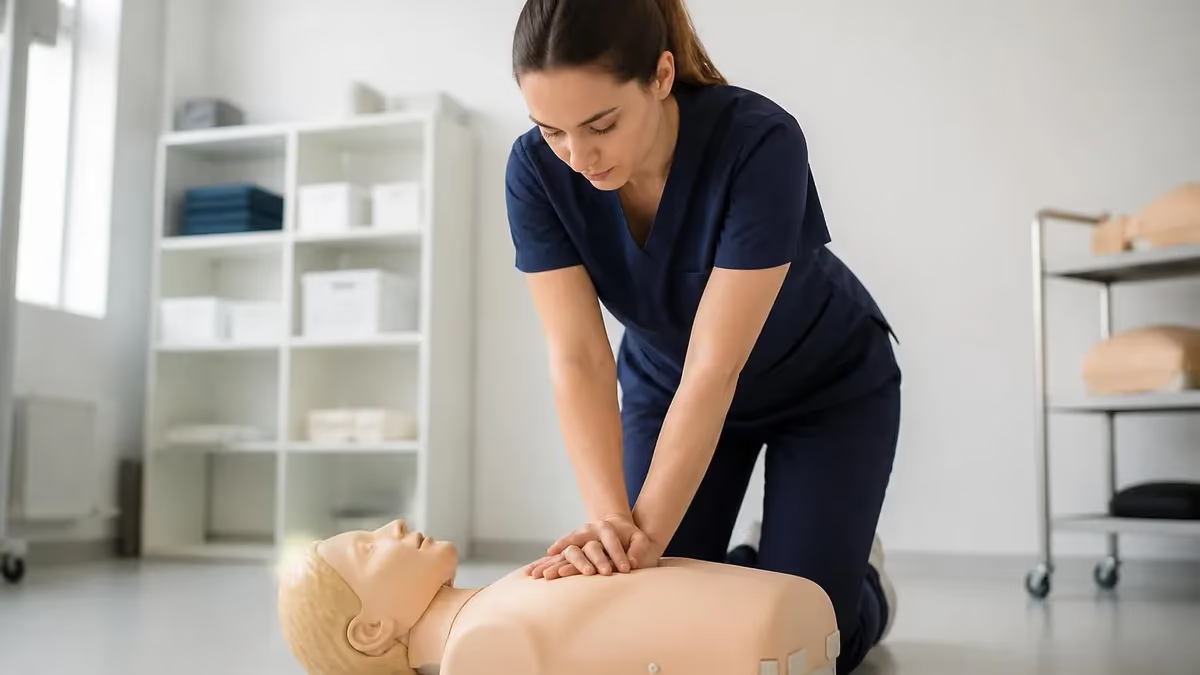
Searching for cpr certification classes near me is one of the smartest health decisions you can make. Every year, roughly 350,000 out-of-hospital cardiac arrests occur in the United States alone, yet fewer than half of victims receive bystander CPR before emergency services arrive. Whether you're a healthcare professional pursuing ACLS algorithm mastery or a parent wanting to learn infant CPR, the right class is available in your city — often within days, sometimes the same week.
CPR training comes in several tiers, each designed for a different level of responder. Basic Heartsaver courses cover hands-only and mouth-to-mouth technique, AED operation, and first aid fundamentals. Healthcare providers typically pursue Basic Life Support certification, which adds two-rescuer CPR and bag-mask ventilation. Above that sits the ACLS algorithm course — a rigorous program teaching advanced airway management, cardiac rhythm interpretation, and team dynamics for resuscitation in clinical environments.
One of the most critical skills taught in any CPR class is monitoring respiratory rate — the number of breaths per minute — as a key indicator of patient stability. A normal adult respiratory rate falls between 12 and 20 breaths per minute at rest. Rates outside this range signal respiratory distress and may precede cardiac arrest. Instructors train students to observe chest rise, count breath frequency, and recognize the patterns that demand immediate intervention before the heart stops entirely.
Infant CPR training is a separate competency that every new parent, grandparent, and daycare worker should prioritize. The techniques differ significantly from adult CPR: two fingers replace the heel of the hand for chest compressions, compression depth targets only 1.5 inches, and back blows are incorporated for airway obstruction relief. Many community hospitals, fire stations, and the National CPR Foundation offer infant-specific classes that can be completed in as little as two hours on a weekend morning.
The National CPR Foundation stands out among certification bodies for its online-first approach, allowing students to complete the cognitive portion at their own pace before attending a brief hands-on skills session. This hybrid model has made CPR certification accessible to millions of Americans who struggle with traditional classroom scheduling. Certifications from AHA, Red Cross, and the National CPR Foundation are broadly accepted by employers, hospitals, and state licensing boards across the country.
Understanding what does AED stand for is essential before walking into any certification class. AED stands for Automated External Defibrillator — a portable device that analyzes heart rhythm and delivers an electric shock to restore normal cardiac activity. Modern AEDs provide real-time voice instructions and are designed for use by laypeople without medical training. They're found in airports, schools, gyms, and office buildings, making AED literacy a valuable community skill regardless of professional background.
This guide walks you through every major aspect of CPR certification in 2026: how to find the right class, what the ACLS algorithm involves, how infant CPR differs from adult technique, the role of PALS certification for pediatric providers, and practical strategies for passing your skills assessment on the first try. Whether you're a first-time student or renewing a lapsed card, the information ahead will prepare you to save a life with confidence.
If you want the full picture, the cpr certification classes near me guide walks through it step by step.
CPR Certification by the Numbers
How to Get CPR Certified Near You
Choose Your Certification Level
Find an Accredited Provider
Register and Confirm Prerequisites
Complete Pre-Course Material
Pass the Skills Assessment
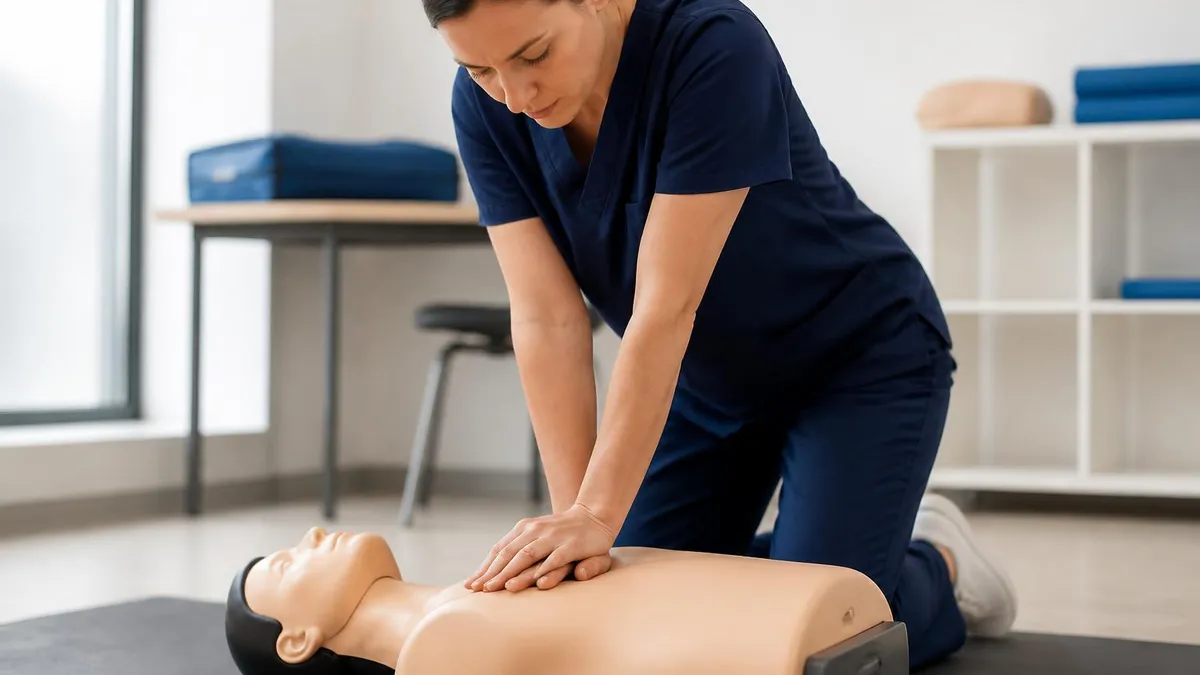
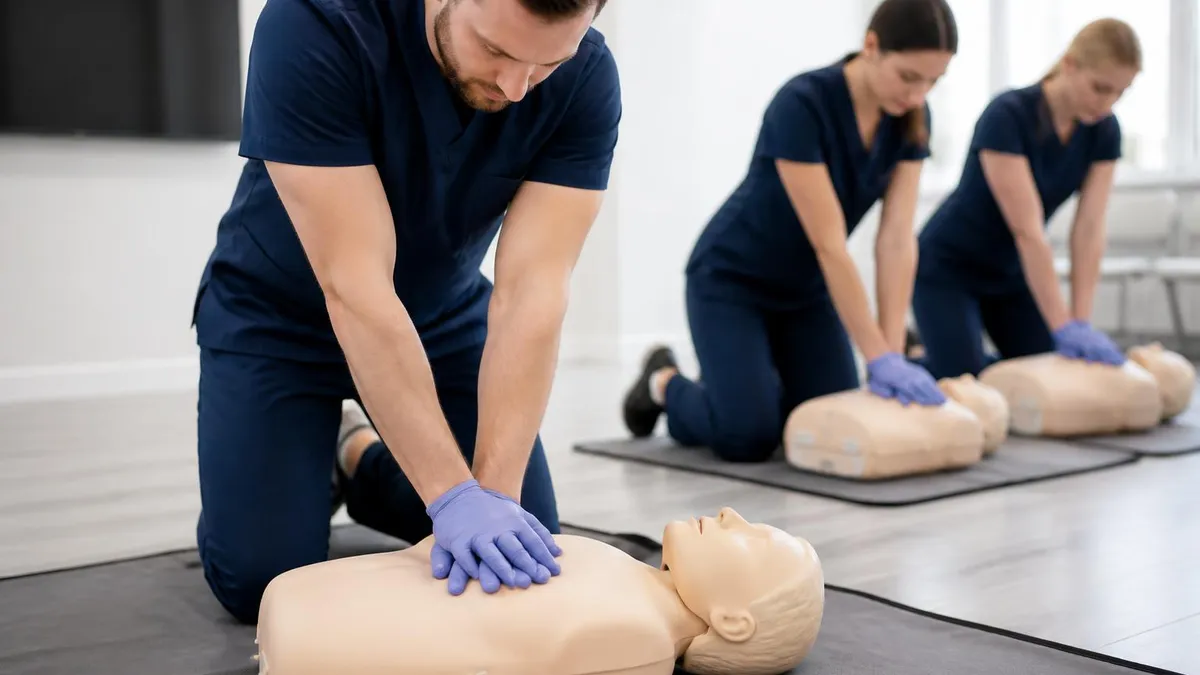
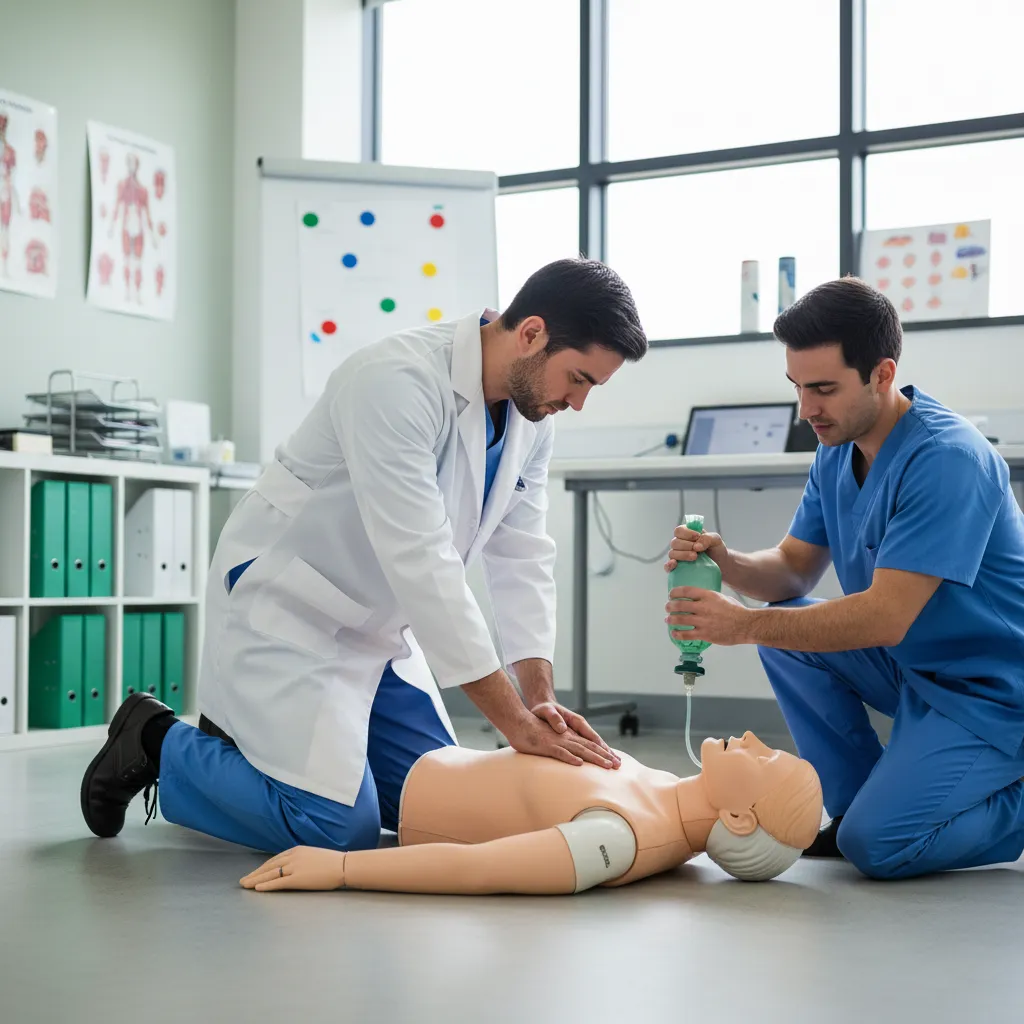
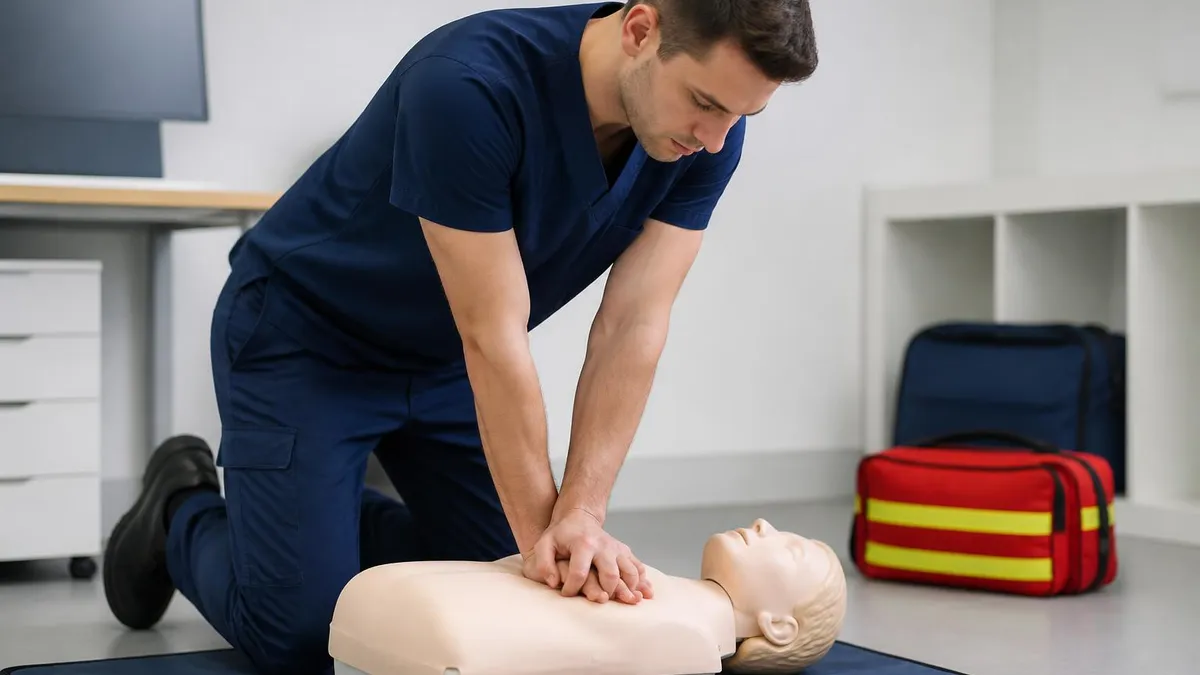
Walking into a CPR class for the first time, most students are surprised by how hands-on and scenario-driven the curriculum has become. Modern certification programs spend the majority of class time on physical practice rather than lecture. You'll cycle through multiple rounds of chest compressions on a mannequin, practice rescue breaths with a bag-valve mask, and work through team scenarios that mimic real cardiac arrest calls. Instructors coach posture, hand placement, arm lock, and compression rhythm until technique becomes second nature.
The recovery position — sometimes called the position recovery technique — is one of the first skills introduced in both Heartsaver and BLS courses. When a patient is unconscious but breathing, rolling them onto their side prevents aspiration of vomit or blood into the lungs. To execute the move correctly, you cross the patient's far arm over their chest, bend the near knee, and gently roll them toward you. This single skill has prevented countless deaths in the minutes before EMS arrives on scene.
Learning to assess respiratory rate accurately is a clinical skill that separates a competent responder from a reactive one. Instructors teach the look-listen-feel method: visually scan the chest for rise and fall, listen for audible breath sounds, and feel for airflow at the nose and mouth. A count of fewer than 10 breaths per minute in an adult — or the complete absence of breathing — triggers an immediate transition to full CPR protocol regardless of whether a pulse is present.
What does AED stand for in practical terms goes beyond the acronym. An AED is calibrated to distinguish shockable rhythms — ventricular fibrillation and pulseless ventricular tachycardia — from non-shockable states such as asystole or pulseless electrical activity. When the device detects a shockable rhythm, it charges automatically and prompts the operator to press the shock button while ensuring no one touches the patient. Classes walk you through pad placement, voice prompt interpretation, and the immediate return to compressions after delivery.
Infant CPR demands a different mental model than adult technique, and most training centers offer dedicated infant and child modules alongside standard Heartsaver classes. The C-A-B sequence — compressions, airway, breathing — applies to infants as well, but the landmarks shift to two fingers on the breastbone just below the nipple line. Compression depth targets 1.5 inches rather than the two-inch standard for adults, and the rate remains 100–120 compressions per minute. Ventilations require only a gentle puff of air — enough to see the chest rise without over-inflating small lungs.
PALS certification — Pediatric Advanced Life Support — is the advanced tier of pediatric emergency training, designed for emergency nurses, paramedics, and pediatric intensivists. PALS builds on infant CPR fundamentals and adds rhythm recognition for children, weight-based drug dosing, and a structured approach to respiratory failure and shock. Courses run approximately 14 hours and include an intensive skills evaluation. Recertification is required every two years, and many pediatric hospitals mandate a current PALS card as a condition of employment alongside a valid ACLS credential.
CPR Practice Test Questions
Prepare for the CPR Cardiopulmonary Resuscitation Practice exam with our free practice test modules. Each quiz covers key topics to help you pass on your first try.
CPR Basic CPR
CPR Exam Questions covering Basic CPR. Master CPR Test concepts for certification prep.
CPR and First Aid
Free CPR Practice Test featuring and First Aid. Improve your CPR Exam score with mock test prep.
CPR (Cardiopulmonary Resuscitation) Adult ...
CPR Mock Exam on (Cardiopulmonary Resuscitation) Adult CPR and AED Usage. CPR Study Guide questions to pass on your first try.
CPR (Cardiopulmonary Resuscitation) Airway...
CPR Test Prep for (Cardiopulmonary Resuscitation) Airway Obstruction and Choking. Practice CPR Quiz questions and boost your score.
CPR (Cardiopulmonary Resuscitation) Cardio...
CPR Questions and Answers on (Cardiopulmonary Resuscitation) Cardiopulmonary Emergency Recognition. Free CPR practice for exam readiness.
CPR (Cardiopulmonary Resuscitation) Child ...
CPR Mock Test covering (Cardiopulmonary Resuscitation) Child and Infant CPR. Online CPR Test practice with instant feedback.
CPR (Cardiopulmonary Resuscitation) High-P...
Free CPR Quiz on (Cardiopulmonary Resuscitation) High-Performance Team Dynamics. CPR Exam prep questions with detailed explanations.
CPR (Cardiopulmonary Resuscitation) Legal ...
CPR Practice Questions for (Cardiopulmonary Resuscitation) Legal and Ethical Considerations. Build confidence for your CPR certification exam.
CPR for Specific Populations
CPR Test Online for for Specific Populations. Free practice with instant results and feedback.
CPR Airway & Breathing Management
CPR Exam Questions covering Airway & Breathing Management. Master CPR Test concepts for certification prep.
CPR Assessment & Recognition of Cardiac Ar...
Free CPR Practice Test featuring Assessment & Recognition of Cardiac Arrest. Improve your CPR Exam score with mock test prep.
CPR Chest Compressions & Defibrillation
CPR Mock Exam on Chest Compressions & Defibrillation. CPR Study Guide questions to pass on your first try.
CPR Post-Resuscitation Care & Recovery
CPR Test Prep for Post-Resuscitation Care & Recovery. Practice CPR Quiz questions and boost your score.
BLS, ACLS Algorithm & PALS Certification Explained
Basic Life Support is the foundation of all advanced resuscitation training. AHA BLS courses are designed for healthcare professionals and cover single-rescuer and two-rescuer adult CPR, child and infant CPR, AED operation, and relief of foreign body airway obstruction. Students complete a written exam and hands-on skills test to earn a two-year certification card. Most hospital systems, nursing programs, and paramedic academies require a current BLS card before clinical rotation begins — it's non-negotiable for patient-facing roles.
Heartsaver courses serve the lay public and workplace responders. They're shorter than BLS — typically four to six hours — and focus on CPR, first aid, and AED use in community settings. Certification is valid for two years. Employers such as schools, gyms, and construction companies often require Heartsaver cards for staff. The National CPR Foundation offers both online Heartsaver and hybrid BLS courses with same-day digital cards upon completion of the skills check.
Online vs. In-Person CPR Classes: Pros & Cons
- +Increases survival rates for cardiac arrest victims in your workplace or home environment
- +Certification satisfies employer, school, and state licensing board requirements immediately
- +Hybrid and online courses fit even the busiest schedules — some complete in under four hours
- +ACLS and PALS certifications directly qualify you for higher-paying clinical positions
- +Skills training refreshes your knowledge of respiratory rate, AED use, and airway management
- +Community CPR training statistically reduces neighborhood cardiac arrest death rates over time
- −In-person skills sessions require traveling to a testing center or classroom facility
- −Two-year expiration means ongoing recertification costs and scheduling every 24 months
- −ACLS and PALS courses are expensive — often $150–$300 per initial certification attempt
- −Online-only CPR cards are not accepted by most hospitals or clinical employers for staff credentialing
- −Skills practice on mannequins does not fully replicate the stress of a real cardiac arrest
- −Class availability varies widely by region — rural areas often have severely limited options
Pros and Cons at a Glance
| Pros | Cons |
|---|---|
| Increases survival rates for cardiac arrest victims in your workplace or home environment | In-person skills sessions require traveling to a testing center or classroom facility |
| Certification satisfies employer, school, and state licensing board requirements immediately | Online-only CPR cards are not accepted by most hospitals or clinical employers for staff credentialing |
| Hybrid and online courses fit even the busiest schedules — some complete in under four hours | Skills practice on mannequins does not fully replicate the stress of a real cardiac arrest |
| ACLS and PALS certifications directly qualify you for higher-paying clinical positions | Class availability varies widely by region — rural areas often have severely limited options |
CPR Certification Preparation Checklist
- ✓Choose the correct certification level — Heartsaver, BLS, ACLS, or PALS — based on your job role and employer requirements.
- ✓Verify your employer's accepted certification providers before registering to avoid paying for a card they won't honor.
- ✓Complete all online pre-course modules at least 24 hours before your in-person skills session.
- ✓Review the ACLS algorithm flowchart if enrolling in an advanced life support course — know both shockable and non-shockable pathways.
- ✓Practice chest compressions on a firm surface to build correct depth and rate muscle memory before class day.
- ✓Memorize the proper hand position: heel of dominant hand on center of chest, two finger-widths above the xiphoid process.
- ✓Study what AED stands for and how to operate the specific model you will encounter during your skills assessment.
- ✓Review infant CPR differences: two-finger compression technique, 1.5-inch depth target, and back blows for obstruction relief.
- ✓Bring a government-issued ID, your current BLS card if enrolling in ACLS or PALS, and comfortable clothes you can kneel in.
- ✓Schedule your two-year recertification reminder before your card expires to avoid a lapse in your professional credentials.
Start CPR Within 2 Minutes to Double Survival Odds
Research consistently shows that bystander CPR initiated within two minutes of cardiac arrest can double or triple a victim's chance of survival. The brain begins sustaining irreversible damage after just four minutes without oxygen, and every minute without chest compressions reduces survival odds by 7–10%. Knowing where CPR certification classes near you are located — and acting on that knowledge today — is one of the most impactful investments in community health you can make.
The ACLS algorithm is more than a memorized flowchart — it's a dynamic decision framework that advanced providers apply under the extreme time pressure of cardiac arrest. The algorithm divides into two primary pathways: the shockable pathway for ventricular fibrillation and pulseless ventricular tachycardia, and the non-shockable pathway for asystole and pulseless electrical activity. Providers cycle through two-minute blocks of CPR, check rhythm, deliver shocks or medications as indicated, and continuously reassess for reversible causes using the classic H's and T's mnemonic.
Advanced life support training emphasizes that high-quality CPR remains the single most important intervention throughout any resuscitation. No medication, airway device, or defibrillation strategy compensates for interrupted or shallow compressions. The 2020 AHA guidelines reinforce a compression rate of 100–120 per minute, a depth of at least two inches in adults, full chest recoil between compressions, and a 30:2 compression-to-ventilation ratio for a single rescuer without an advanced airway. Teams with an advanced airway asynchronize compressions and ventilations to maximize coronary perfusion pressure.
The National CPR Foundation has emerged as one of the most accessible certification bodies in the United States, offering courses that can be completed fully online and recognized by many non-clinical employers. Their platform supports mobile learning and provides a digital certification card within minutes of passing the online skills check. While the National CPR Foundation's online-only card is appropriate for workplace compliance, healthcare employers typically require hands-on skills verification through AHA or Red Cross programs for clinical credentialing.
A common confusion for internet searchers involves CPR Cell Phone Repair — a nationwide chain of mobile device repair shops that shares the CPR acronym with cardiopulmonary resuscitation. If you need resuscitation training, specify "CPR certification near me" or add your city name to filter out device repair listings. Choosing a provider through AHA.org or RedCross.org eliminates any ambiguity entirely.
The recovery position — formally known as position recovery — is a technique that appears early in Heartsaver curricula because it addresses the gap between completing an assessment and waiting for EMS to arrive. When a victim is breathing spontaneously but cannot maintain their own airway, the lateral recovery position prevents fluid obstruction and tongue prolapse. The technique is taught with emphasis on spinal precautions: if trauma is suspected, rescuers should minimize head and neck movement during any repositioning maneuver to avoid secondary injury.
Mastering respiratory rate assessment prepares students for the first step of any systematic patient evaluation. Instructors integrate respiratory rate counting into simulation scenarios to build the habit of checking before acting. An adult with a respiratory rate above 30 breaths per minute is in severe distress and likely needs immediate supplemental oxygen and airway support. Conversely, a rate below eight indicates near-apnea and warrants immediate bag-mask ventilation regardless of oxygen saturation — a detail that surprises many students on their first day of class.
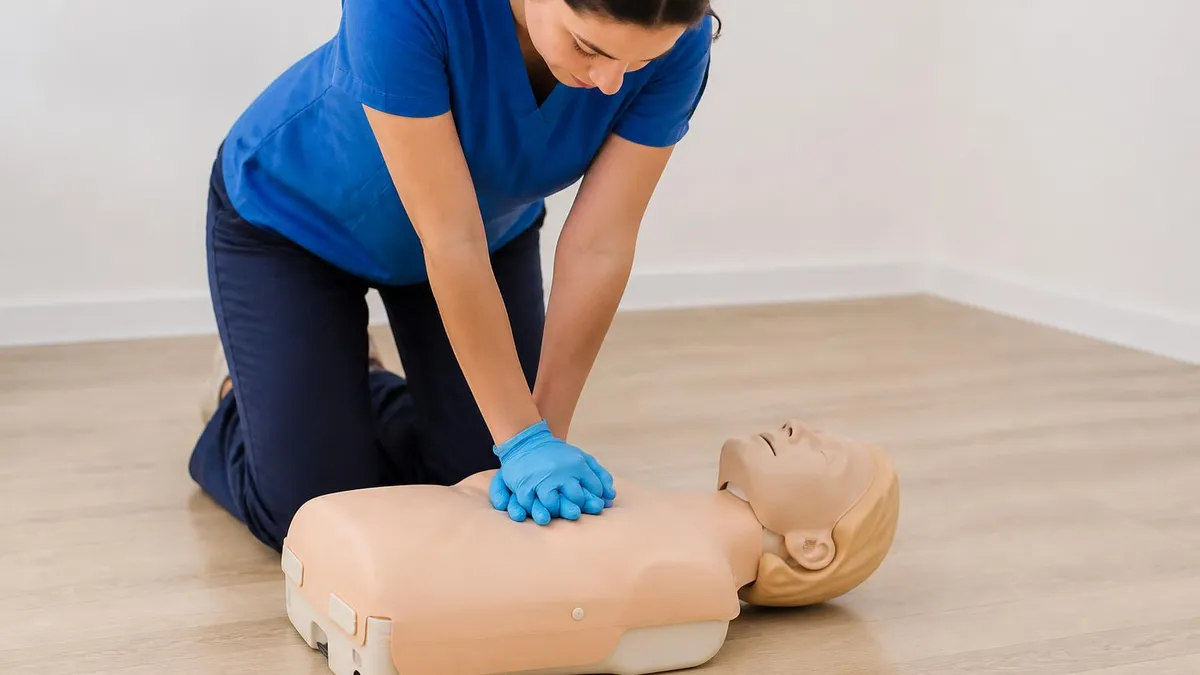
Most CPR, BLS, ACLS, and PALS certifications are valid for exactly two years from the date of issue. Allowing your card to expire can jeopardize employment, clinical privileges, and state licensure renewals. Set a calendar reminder 60 days before your expiration date and register for a renewal class early — popular sessions fill weeks in advance, especially in January and September when nursing and medical school cohorts renew at the same time.
After earning your CPR certification card, the question most students ask is where it's actually accepted. The short answer: almost everywhere. AHA and Red Cross certifications are the gold standard and are recognized by hospitals, nursing boards, state licensing agencies, and school districts in all 50 states. National CPR Foundation certificates are widely accepted for non-clinical workplaces. If your employer has a specific requirement, confirm before enrolling — some hospital systems accept only AHA-issued cards for clinical staff credentialing.
Healthcare providers who hold both ACLS and PALS certifications significantly expand their employability across emergency departments, intensive care units, and transport teams. Many staffing agencies require both cards before placing nurses in high-acuity positions. Emergency medical services systems at both the basic and paramedic levels mandate regular ACLS recertification as a condition of state licensure. Flight nurses and transport paramedics often add Neonatal Resuscitation Program certification to their portfolio, creating a comprehensive life support credential stack recognized nationwide.
The cost of CPR certification varies by course level and provider. A basic Heartsaver course through a community organization or fire station may cost as little as $20. AHA BLS classes typically run $50–$80 at community teaching sites. ACLS courses generally cost $150–$250 for initial certification, with renewal classes sometimes discounted to $100–$200. Many employers reimburse CPR and ACLS certification fees as part of continuing education benefits — check your HR portal or union contract before paying out of pocket.
Skill retention is one of the most studied topics in CPR education research. Studies show that compression quality degrades significantly just three to six months after a class, even among motivated healthcare providers. This finding has driven interest in microlearning — brief booster sessions using CPR apps, skill kiosks in hospital break rooms, and instructor-led 15-minute refreshers. While these don't replace formal certification renewal, they maintain the muscle memory needed to deliver effective compressions when it counts most during an actual cardiac arrest event.
Many cities and counties offer free CPR training events through fire departments, hospital community benefit programs, and national organizations. These sessions are typically 60–90 minutes of hands-only CPR demonstration that don't result in certification but dramatically increase community readiness. If cost is a barrier to full certification, attending a free community event first builds confidence and familiarity before committing to a paid course. Some counties even offer full BLS certification at no cost to high school students as part of public health initiatives.
If you complete your course and feel underprepared for a real scenario, the best remedy is additional scenario practice. Many instructors welcome students to attend a refresher lab, where small groups run through simulated calls without evaluation pressure. Online simulation platforms also allow users to practice the ACLS algorithm, pediatric assessments, and first aid sequences interactively. Combining formal certification with regular skill practice is the only reliable way to perform effectively during the seconds that determine whether a victim lives or dies.
Passing your CPR skills assessment on the first attempt comes down to three factors: preparation, positioning, and pacing. Preparation means completing any pre-course online modules and reviewing hand placement and compression landmarks the night before class. Positioning means kneeling correctly at the patient's side, maintaining a straight arm lock, and keeping your body weight directly above your hands rather than leaning to one side. Pacing means sustaining 100–120 compressions per minute without pausing more than 10 seconds for any interruption whatsoever.
One technique that consistently helps students during the skills check is mentally reciting a song at 100–120 beats per minute while compressing. Instructors commonly recommend Stayin' Alive by the Bee Gees, which beats at exactly 103 BPM. Less rhythmically inclined students use a metronome app during practice sessions, set to 110 BPM. The goal is to internalize the rhythm so that in a real emergency — when adrenaline is spiking and hands are shaking — the correct pace comes automatically without any conscious counting.
For students preparing for ACLS algorithm evaluations specifically, the most common failure points involve drug dosing sequence, airway management timing, and team leadership communication. Epinephrine 1 mg IV/IO every three to five minutes is a foundational step that many students administer too late or forget during high-stress scenarios. Practice stating drug orders aloud using closed-loop communication: say the order, name the recipient, and wait for verbal acknowledgment. This habit not only satisfies ACLS criteria but prevents real medication errors during resuscitation events.
Infant CPR students should practice the two-thumb-encircling-hands technique for two-rescuer scenarios as well as the two-finger method used when alone. During your skills check, the evaluator may switch scenarios mid-way through to test adaptability. Stay calm, verbalize each step as you perform it — opening the airway, checking for breathing, beginning compressions — and maintain eye contact with your partner to cue ventilations. Clear communication earns evaluation points even when technique is slightly imperfect on the first run.
After you receive your certification card, scan and email a copy to yourself immediately so you always have a digital backup accessible anywhere. Upload a photo to your phone's secure storage or your hospital's credentialing portal the same day. Many credentialing systems send automated expiration alerts, but a personal calendar reminder is more reliable. Your card represents a legal attestation of demonstrated skill — treat it with the same care you would give a professional license or a government-issued identification document.
Finally, consider sharing what you've learned. Teaching CPR to a family member, coworker, or neighbor — even informally — reinforces your own skills while expanding community readiness in your area. Research shows that peer instruction after formal training significantly improves long-term retention of correct technique. Many certification providers offer instructor courses for those interested in teaching formally, and workplace safety programs actively recruit newly certified employees to lead in-house training events. Every person who learns CPR represents another potential life saved in your community.
CPR Questions and Answers
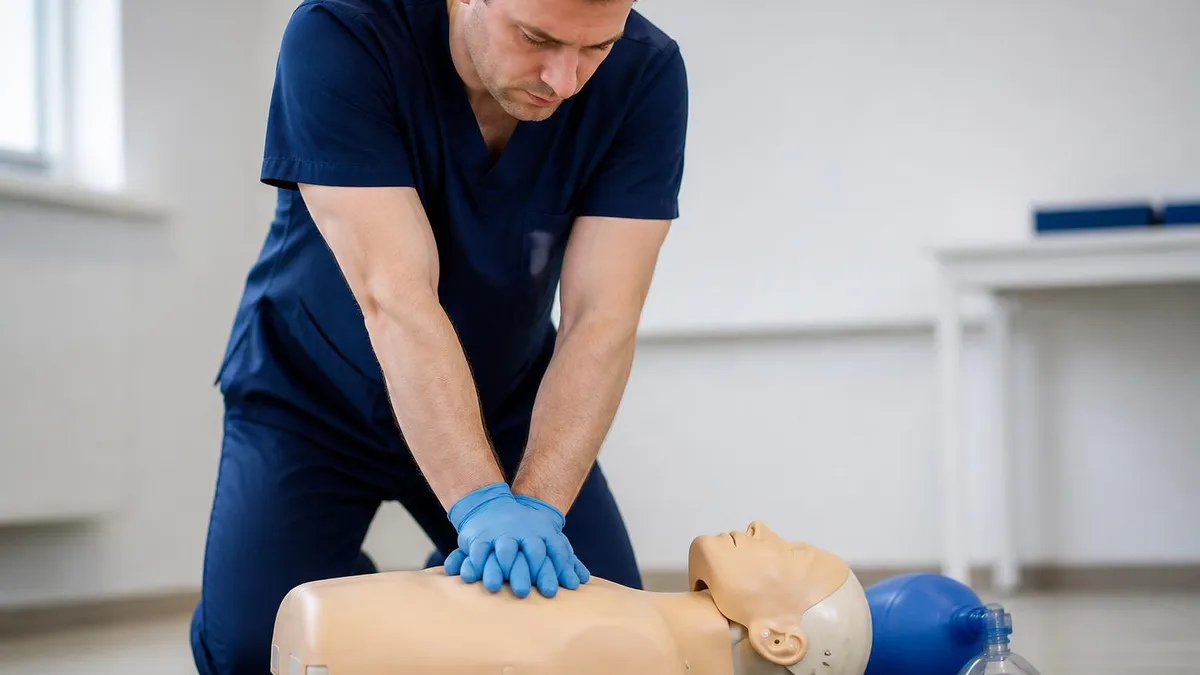
How to Pass the CPR Exam in 2026 — Complete Study Guide
Animal CPR: How to Perform Lifesaving Resuscitation on Dogs, Cats, and Other Pets in 2026
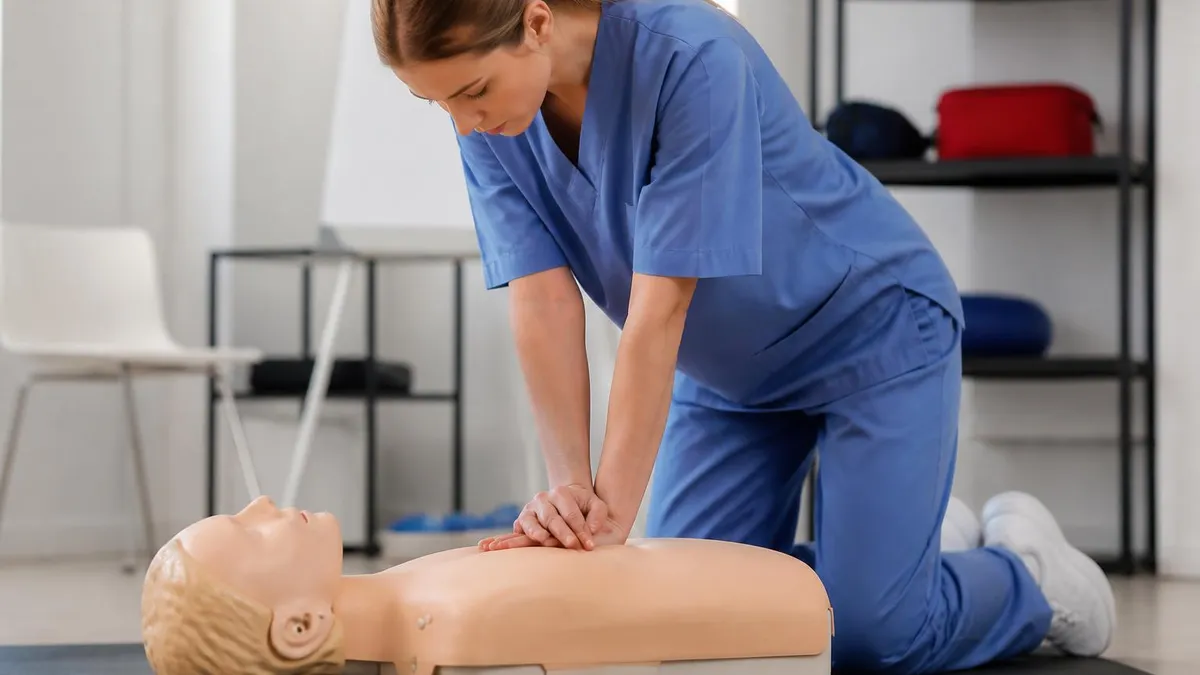
Types of CPR Training: From Basic Life Support to ACLS Algorithm Mastery in 2026
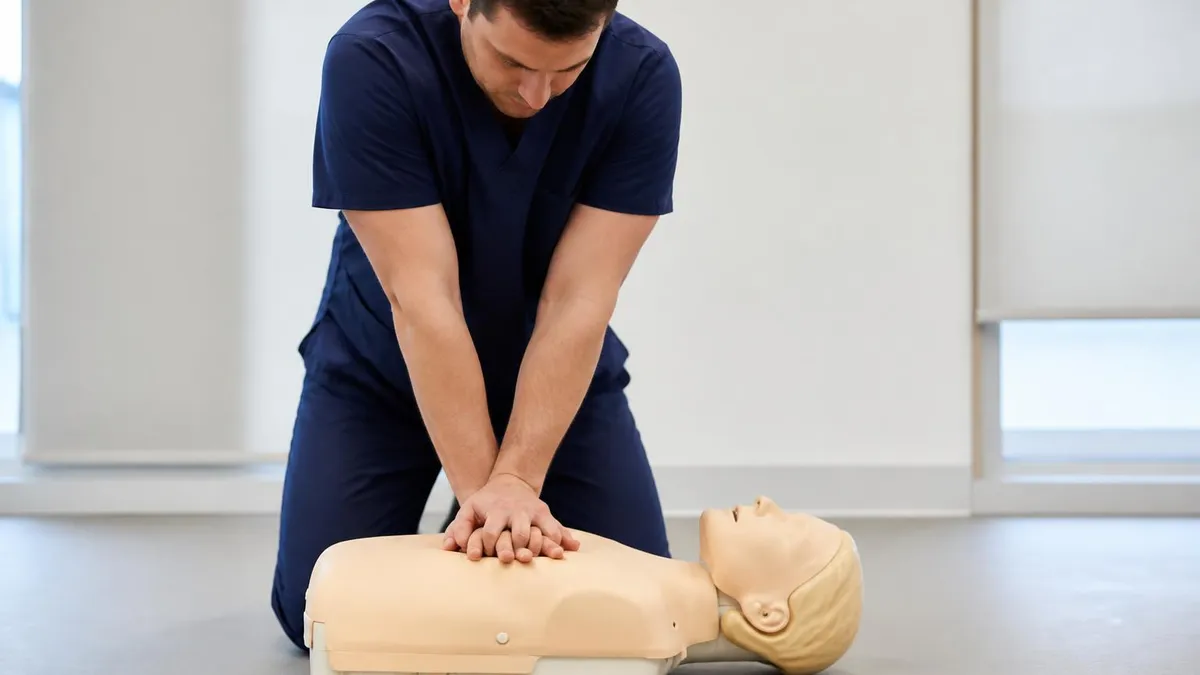
BLS vs CPR: Is BLS the Same as CPR? Complete 2026 Guide
Adult CPR: Complete Step-by-Step Guide to Hands-Only and Standard CPR in 2026
About the Author

Registered Nurse & Healthcare Educator
Johns Hopkins University School of NursingDr. Sarah Mitchell is a board-certified registered nurse with over 15 years of clinical and academic experience. She completed her PhD in Nursing Science at Johns Hopkins University and has taught NCLEX preparation and clinical skills courses for nursing students across the United States. Her research focuses on evidence-based exam preparation strategies for healthcare certification candidates.
Join the Discussion
Connect with other students preparing for this exam. Share tips, ask questions, and get advice from people who have been there.
View discussion (5 replies)