
CPR Acronym Explained: What Every Letter Means and Why It Matters in 2026 October
✅ Decode the CPR acronym, learn related terms like ACLS algorithm, AED, PALS, and BLS, and master life-saving skills with our complete 2026 October guide.
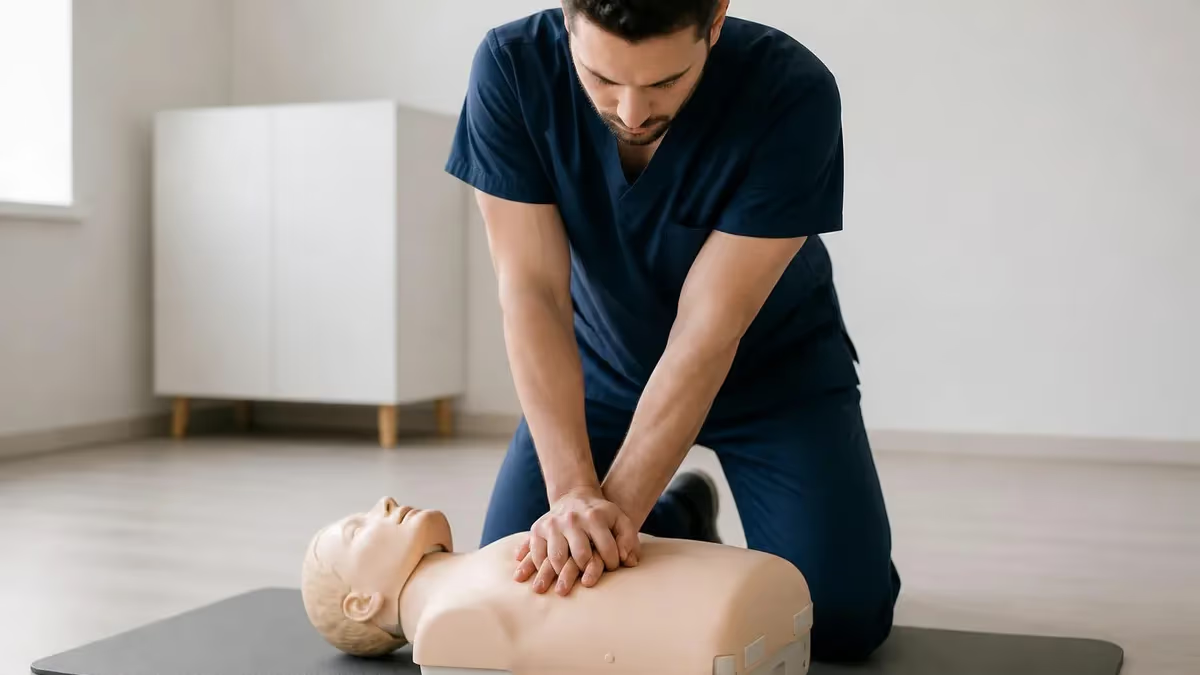
The cpr acronym stands for Cardiopulmonary Resuscitation, a three-word phrase that describes one of the most important emergency interventions in modern medicine. Each letter carries weight: "C" for cardio, referring to the heart; "P" for pulmonary, referring to the lungs; and "R" for resuscitation, the act of restoring life. Together, these letters describe a coordinated set of techniques designed to keep oxygenated blood circulating to the brain and other vital organs when a person's heart has stopped beating effectively.
Understanding the cpr acronym is more than a vocabulary lesson. It is the foundation for grasping how chest compressions and rescue breaths work together to buy time until advanced help arrives. When you press down on the chest, you mechanically pump blood from the heart. When you deliver a rescue breath, you fill the lungs with oxygen. The combination mimics the body's natural cardiopulmonary system long enough to prevent irreversible brain damage, which begins within four to six minutes of cardiac arrest.
The acronym is part of a wider alphabet soup of emergency medicine terms. You will hear references to the acls algorithm for adult cardiac arrest, BLS for basic life support, PALS for pediatric advanced life support, and AED for automated external defibrillator. Each of these acronyms describes a different layer of the resuscitation chain, and knowing which one applies in a given situation can make the difference between confused bystanders and a coordinated rescue effort that saves a life.
Many people first encounter the cpr acronym in a workplace training session, a college health class, or a babysitting course. Others learn it from organizations like the American Heart Association, the American Red Cross, or the national cpr foundation. Regardless of where you learn it, the meaning is universal. The American Heart Association estimates that more than 350,000 out-of-hospital cardiac arrests occur each year in the United States, and bystander CPR can double or triple the chance of survival.
Yet the acronym hides a surprising amount of nuance. CPR for an adult looks different from CPR for a child, and infant cpr requires its own technique with two fingers rather than two hands. Compression depth, hand placement, and the ratio of compressions to breaths all vary by age and by the type of rescuer present. A lay rescuer may perform hands-only CPR, while a healthcare professional follows a more detailed acls algorithm with medications and rhythm checks.
This guide walks through every meaning of the cpr acronym, the related terms you should know, and the practical skills behind the letters. Whether you are studying for a certification, refreshing your memory before recertification, or simply curious about what those three letters really mean, you will leave with a clear picture of how cardiopulmonary resuscitation works and why it remains the single most important emergency skill any person can learn in 2026.
Confusingly, you may also see the letters CPR used in unrelated industries. This article focuses on the medical meaning of the acronym, but we will briefly clarify the other uses so you can navigate search results and conversations without confusion.
The CPR Acronym by the Numbers

What Each Letter of the CPR Acronym Stands For
The "C" refers to the heart. Cardio comes from the Greek kardia, meaning heart. In CPR, the heart is the primary organ being supported through manual chest compressions that pump blood when the natural beat fails.
The "P" refers to the lungs. Pulmonary comes from the Latin pulmo. Rescue breaths or ventilations move oxygen into the lungs so it can be picked up by circulating blood during compressions.
The "R" means to revive or bring back. Resuscitation describes the combined effort of compressions, breaths, and defibrillation aimed at restoring spontaneous circulation and breathing in a person who has collapsed.
For untrained bystanders, hands-only CPR drops the breaths and focuses entirely on continuous chest compressions. Studies show this approach is nearly as effective as conventional CPR during the first several minutes of adult cardiac arrest.
Used by EMS and hospital teams, this version layers in monitoring, rotation of compressors every two minutes, and minimal interruptions. It represents the highest standard of resuscitation quality in professional settings.
The cpr acronym sits at the center of what emergency medicine calls the Chain of Survival, a five-link framework that describes everything that needs to happen for someone to survive a sudden cardiac arrest. The links are recognition and activation of emergency response, immediate high-quality CPR, rapid defibrillation, advanced resuscitation by EMS, and post-cardiac-arrest care in the hospital. CPR is the second link, but it is the one that most often falls to ordinary bystanders rather than professionals.
Why is bystander CPR so critical? Because every minute without compressions or defibrillation reduces survival odds by roughly seven to ten percent. EMS response times in many US cities average between seven and ten minutes, which means a victim relying solely on professionals may already have a survival chance near zero by the time the ambulance arrives. Bystander CPR bridges that gap by manually circulating oxygenated blood until paramedics can take over with drugs, advanced airways, and a defibrillator.
The acronym also reminds us that resuscitation is a system, not a single technique. Compressions alone move blood. Breaths alone deliver oxygen. Defibrillation alone can restart a shockable rhythm. None of these work as well in isolation. CPR couples compressions and breaths into a single coordinated activity, and modern protocols layer in defibrillation as soon as an AED arrives. Understanding what does aed stand for — automated external defibrillator — is essential, because shocking a shockable rhythm is the single most effective intervention for restoring a pulse.
Recognition is the trigger that activates the chain. A collapsed adult who is unresponsive and not breathing normally should be assumed to be in cardiac arrest. Agonal gasps, sometimes mistaken for breathing, are a sign of cardiac arrest, not life. Once a bystander recognizes these signs and calls 911, the rest of the chain can unfold. Without that recognition, even the best CPR technique in the world arrives too late.
Quality matters as much as speed. The AHA defines high-quality CPR as compressions at a rate of 100 to 120 per minute, a depth of at least two inches for adults, full chest recoil between compressions, and minimal interruptions. A respiratory rate of about 10 breaths per minute is typical when an advanced airway is in place, while standard CPR uses a 30:2 compression-to-breath ratio. These numbers come from decades of research showing that small deviations meaningfully change survival outcomes.
The chain ends in the hospital with targeted temperature management, coronary intervention, and neurological monitoring. Survivors who reach this stage often walk out neurologically intact, but only if every prior link held. That is why the cpr acronym is taught not as a standalone skill but as the centerpiece of a coordinated emergency response. When you compress a chest, you are not just performing a technique; you are powering an entire system designed to bring someone back.
For a deeper look at how the acronym connects to coursework and certification, the AHA, Red Cross, and similar organizations build their entire curricula around these chain-of-survival concepts. They translate the letters into muscle memory, so that when adrenaline floods a real emergency, a trained rescuer's hands know what to do before the brain finishes processing the scene.

CPR Practice Test Questions
Prepare for the CPR Cardiopulmonary Resuscitation Practice exam with our free practice test modules. Each quiz covers key topics to help you pass on your first try.
CPR Basic CPR
CPR Exam Questions covering Basic CPR. Master CPR Test concepts for certification prep.
CPR and First Aid
Free CPR Practice Test featuring and First Aid. Improve your CPR Exam score with mock test prep.
CPR (Cardiopulmonary Resuscitation) Adult ...
CPR Mock Exam on (Cardiopulmonary Resuscitation) Adult CPR and AED Usage. CPR Study Guide questions to pass on your first try.
CPR (Cardiopulmonary Resuscitation) Airway...
CPR Test Prep for (Cardiopulmonary Resuscitation) Airway Obstruction and Choking. Practice CPR Quiz questions and boost your score.
CPR (Cardiopulmonary Resuscitation) Cardio...
CPR Questions and Answers on (Cardiopulmonary Resuscitation) Cardiopulmonary Emergency Recognition. Free CPR practice for exam readiness.
CPR (Cardiopulmonary Resuscitation) Child ...
CPR Mock Test covering (Cardiopulmonary Resuscitation) Child and Infant CPR. Online CPR Test practice with instant feedback.
CPR (Cardiopulmonary Resuscitation) High-P...
Free CPR Quiz on (Cardiopulmonary Resuscitation) High-Performance Team Dynamics. CPR Exam prep questions with detailed explanations.
CPR (Cardiopulmonary Resuscitation) Legal ...
CPR Practice Questions for (Cardiopulmonary Resuscitation) Legal and Ethical Considerations. Build confidence for your CPR certification exam.
CPR for Specific Populations
CPR Test Online for for Specific Populations. Free practice with instant results and feedback.
CPR Airway & Breathing Management
CPR Exam Questions covering Airway & Breathing Management. Master CPR Test concepts for certification prep.
CPR Assessment & Recognition of Cardiac Ar...
Free CPR Practice Test featuring Assessment & Recognition of Cardiac Arrest. Improve your CPR Exam score with mock test prep.
CPR Chest Compressions & Defibrillation
CPR Mock Exam on Chest Compressions & Defibrillation. CPR Study Guide questions to pass on your first try.
CPR Post-Resuscitation Care & Recovery
CPR Test Prep for Post-Resuscitation Care & Recovery. Practice CPR Quiz questions and boost your score.
Related Acronyms: ACLS Algorithm, BLS, PALS Certification, and AED
The acls algorithm refers to Advanced Cardiovascular Life Support, a structured decision tree used by trained healthcare providers during adult cardiac arrest. It builds on basic CPR by adding rhythm interpretation, IV access, medications such as epinephrine and amiodarone, and advanced airway management. The algorithm specifies what to do every two minutes during a code, from checking pulse to delivering shocks and administering drugs in sequence.
ACLS is the standard for nurses, paramedics, physicians, and respiratory therapists who work in emergency departments, ICUs, and pre-hospital settings. Certification typically takes two days and must be renewed every two years. Mastery of the acls algorithm relies on first being fluent in basic CPR, which is why the cpr acronym remains the foundation even for the most advanced providers.
Hands-Only CPR vs Conventional CPR: Trade-Offs of Each Approach
- +Easier to remember in a high-stress moment
- +No mouth-to-mouth contact required, reducing hesitation
- +Effective for adult sudden cardiac arrest in the first few minutes
- +Lower training barrier for the general public
- +Can be coached by 911 dispatchers in real time
- +Encourages more bystanders to act rather than freeze
- +Aligns with modern AHA recommendations for lay rescuers
- −Less effective for pediatric and infant arrests
- −Not appropriate for drowning or asphyxial arrests
- −Misses the oxygenation component of true cardiopulmonary support
- −Compression-only fatigue sets in quickly without rotation
- −Cannot replace conventional CPR in prolonged arrests
- −Healthcare providers are still expected to know full CPR
- −Some communities still under-train on conventional skills
Pros and Cons at a Glance
| Pros | Cons |
|---|---|
| Easier to remember in a high-stress moment | Less effective for pediatric and infant arrests |
| No mouth-to-mouth contact required, reducing hesitation | Not appropriate for drowning or asphyxial arrests |
| Effective for adult sudden cardiac arrest in the first few minutes | Misses the oxygenation component of true cardiopulmonary support |
| Lower training barrier for the general public | Compression-only fatigue sets in quickly without rotation |
| Encourages more bystanders to act rather than freeze | Cannot replace conventional CPR in prolonged arrests |
| Aligns with modern AHA recommendations for lay rescuers | Healthcare providers are still expected to know full CPR |

CPR Skills Checklist by Age Group and Scenario
- ✓Confirm scene safety before approaching any unresponsive person
- ✓Tap and shout to check responsiveness, then call 911 or have someone else call
- ✓For adults, place the heel of one hand on the lower half of the sternum and stack the other on top
- ✓Compress at 100-120 per minute, at least 2 inches deep, allowing full chest recoil
- ✓For children, use one or two hands and compress about 2 inches, roughly one-third of chest depth
- ✓For infant cpr, use two fingers in the center of the chest, just below the nipple line
- ✓Deliver rescue breaths at a respiratory rate of 10 to 12 per minute when trained
- ✓Use a 30:2 compression-to-breath ratio for lone rescuers in all age groups
- ✓Attach and turn on the AED as soon as it arrives, following voice prompts
- ✓Rotate compressors every two minutes to maintain quality and avoid fatigue
Compression depth and recoil are non-negotiable
Studies of in-hospital codes consistently show that even small reductions in compression depth or rate cut survival sharply. If you only remember one thing from the cpr acronym, remember this: push hard, push fast, and let the chest come all the way back up between compressions. Shallow, slow, or leaning compressions feel like CPR but do not move blood effectively.
Once you understand what the cpr acronym means, the natural next step is to formalize that knowledge with a certification course. Several major organizations offer recognized credentials in the United States, including the American Heart Association, the American Red Cross, the American Safety and Health Institute, and the national cpr foundation. Each provider has slightly different course structures, costs, and renewal cycles, but they all teach the same core skills aligned with current resuscitation science.
The AHA tends to be the dominant provider for healthcare professionals, with BLS, ACLS, and pals certification cards required by most hospitals. The Red Cross is widely used for lay rescuer and workplace certifications, including community CPR/AED, childcare-focused CPR, and first aid combinations. The national cpr foundation has gained traction as an online-first option, popular with employers who need quick verification for entry-level staff. Choosing the right provider depends largely on who needs to accept your card.
Course formats range from fully in-person to blended online-plus-skills-check to fully online for non-clinical learners. A blended BLS course typically takes two to three hours online plus a 30-minute in-person skills test, while a full in-person course runs three to four hours. Costs vary from about $30 for an online lay rescuer course to $80-150 for an AHA BLS course at a hospital training center. ACLS and pals certification typically cost $200-300 and require eight to sixteen hours.
Renewal cycles matter. Most CPR cards are valid for two years, though some employers require annual refreshers. Renewal usually means a shorter recertification course rather than the full initial program, assuming your card has not expired. Letting a card lapse often forces you to repeat the longer initial course, which is why it pays to mark your renewal date on the calendar months in advance.
Inside the course, you will practice on manikins that give feedback on compression depth, rate, and recoil. Modern training devices light up when your compressions are too shallow or too fast, which trains your hands to feel correct technique. Instructors layer in scenarios with simulated AEDs, choking patients, and pediatric victims so that you encounter the most common situations before you face them in real life.
Online-only certifications have a real role, but they are not universally accepted for clinical employment. If your employer is a hospital, EMS agency, dental office, or daycare, check whether they accept a specific provider before paying for a course. Many will only accept AHA or Red Cross cards. For homeowners, parents, coaches, and community members, an online national cpr foundation course is often perfectly adequate and far more accessible.
Regardless of the path you choose, the cpr acronym anchors the curriculum. Every course revisits cardio, pulmonary, and resuscitation as the foundation before building outward into special populations and advanced scenarios. Once those three letters are second nature, the rest of emergency medicine becomes easier to learn, because every advanced skill builds on the same conceptual framework.
If you are looking for emergency training, make sure you are on a healthcare or first aid site, not a device repair storefront. The same three letters mean very different things in different industries.
Misconceptions about the cpr acronym still circulate widely, and clearing them up is part of becoming a confident rescuer. The most common myth is that performing CPR will restart a stopped heart. In reality, CPR rarely restarts the heart on its own. Its job is to keep oxygenated blood moving until a defibrillator can deliver a shock or until advanced providers arrive with medications. Thinking of CPR as a bridge rather than a cure changes how rescuers approach the situation emotionally.
Another common worry is breaking ribs. Cracked ribs and bruised sternums do happen during effective CPR, especially on older patients. They are not signs of failure; they are signs that you compressed deeply enough to circulate blood. Survivors universally prefer broken ribs to brain death. The recovery from a rib fracture is straightforward; the recovery from prolonged anoxic injury is often impossible. Push hard, accept the trade-off, and keep going.
Many bystanders also worry about legal liability. In every US state, Good Samaritan laws protect lay rescuers who act in good faith without expectation of payment. As long as you stay within the scope of your training, do not abandon the patient unnecessarily, and act reasonably, you are protected. Healthcare providers acting outside their workplace are generally protected as well, though specific rules vary by state.
The recovery position — sometimes searched as position recovery — is another frequently misunderstood concept. It is used for an unresponsive person who is breathing normally, such as someone who has fainted, overdosed, or had a seizure. It is NOT used for someone in cardiac arrest, because rolling them onto their side interrupts the ability to perform compressions. Knowing when to use the recovery position and when to start CPR is a critical decision point.
People also wonder about the role of breaths in modern CPR. For untrained adult rescuers, hands-only CPR is now the recommended default. For trained rescuers and especially for children, infants, and victims of drowning or overdose, full CPR with rescue breaths remains the standard. The reasoning is practical: the more common cause of adult arrest is a cardiac rhythm problem, while pediatric arrests usually stem from respiratory issues, making breaths more important.
Defibrillator myths persist as well. Some bystanders fear they might shock someone who does not need it. An AED will not deliver a shock to a non-shockable rhythm; it simply will not charge. Others worry about touching the patient during analysis or shock delivery. The voice prompts will tell you exactly when to step back and when to resume compressions. Following the device's instructions is safer than overthinking the situation.
Finally, some people hesitate because they are not formally trained. The data is overwhelming: imperfect CPR is dramatically better than no CPR. A 911 dispatcher can coach you through compressions in real time, even if you have never taken a class. The worst outcome is not awkward technique — it is paralysis. Acting, however imperfectly, is the single most important contribution a bystander can make in the gap before professionals arrive.
Putting the cpr acronym into practice means rehearsing the situation before it happens. Mental rehearsal is a free, powerful tool. Picture yourself walking into a room and finding a collapsed adult. Run through the steps in your head: scene safety, tap and shout, call 911, start compressions, attach the AED. The more vividly you imagine this sequence, the more automatic it becomes if you ever face it. Elite performers use this technique in every high-stakes field, and CPR is no different.
Practical equipment matters too. Many families now keep a basic first aid kit, a CPR face shield, and even a home AED within easy reach. Home AEDs cost between $1,200 and $2,000 and last roughly eight years on a single set of pads and batteries. While they are not necessary for everyone, families with members at higher risk of cardiac arrest — including those with known heart disease, prior heart attacks, or inherited arrhythmia syndromes — often find them a worthwhile investment in peace of mind.
Practicing on a manikin every six months keeps technique sharp. Compression depth and rate decay quickly without practice, and many people overestimate their ability to deliver high-quality CPR years after their last class. Some employers and community centers now offer drop-in practice sessions, where you can spend 15 minutes refreshing your skills without taking a full course. If yours does not, ask — these sessions are cheap to host and dramatically improve community readiness.
Teach others what you know. Once you understand the cpr acronym and the basic technique, sharing it doubles the value of your training. Walk a family member through the steps. Show a teenager how to call 911 and start compressions. Encourage friends to take a class. Communities with high rates of CPR training have measurably better cardiac arrest outcomes, and your conversation today might prepare someone to save a life next year.
Stay current with evolving guidelines. The AHA updates its resuscitation science every five years, with smaller focused updates in between. Recent updates have emphasized higher compression rates, the value of feedback devices, and the role of dispatcher-assisted CPR. Subscribing to a newsletter from the AHA or the national cpr foundation, or simply renewing your certification on time, keeps you aligned with current best practice rather than outdated assumptions.
Special populations deserve extra preparation. If you live with or care for an infant, take a course specifically covering infant cpr. If you have an elderly parent with cardiac disease, learn how to use an AED and locate the nearest public one. If you coach youth sports, learn pediatric and adolescent CPR and lobby for an AED at your facility. Tailoring your training to your real-world risks pays off when seconds count.
Above all, remember that the cpr acronym describes an act of advocacy. By pressing on someone's chest, you are speaking on their behalf to time itself, refusing to let them go without a fight. Every bystander who steps forward shifts the odds. Every certified rescuer adds capacity to their community. Every trained child grows into a trained adult who can do the same. Three letters — cardio, pulmonary, resuscitation — have rarely carried so much weight.
CPR Questions and Answers
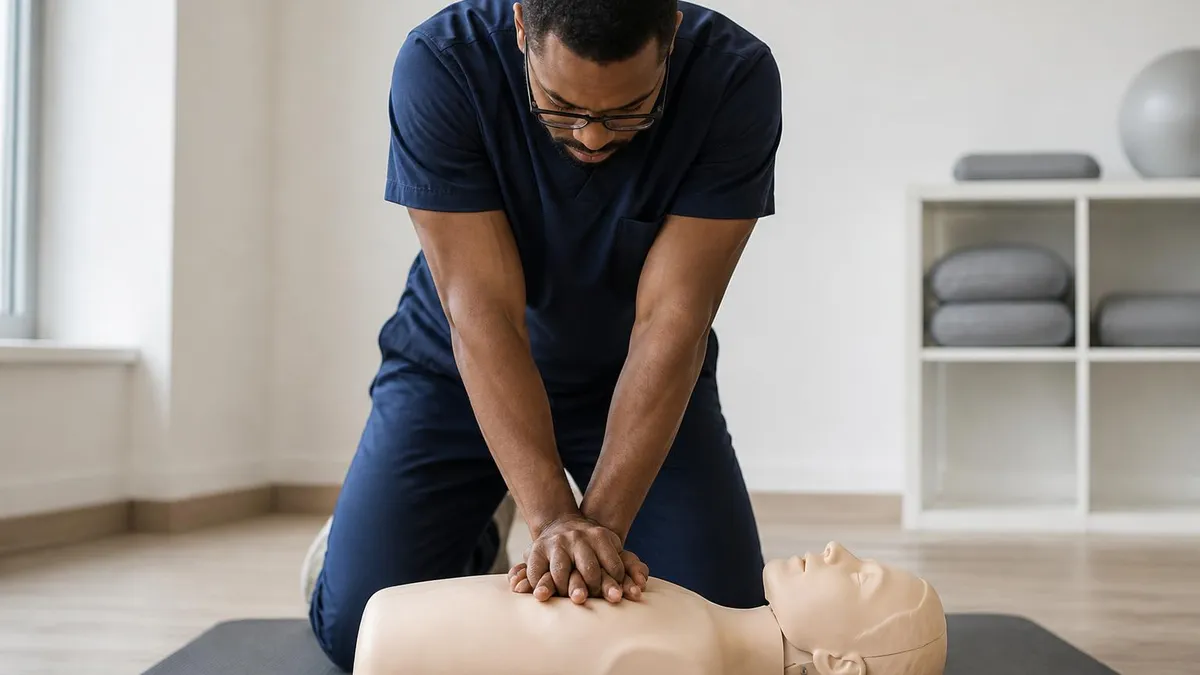
CPR Card Lookup: How to Verify, Replace, and Access Your CPR Certification in 2026
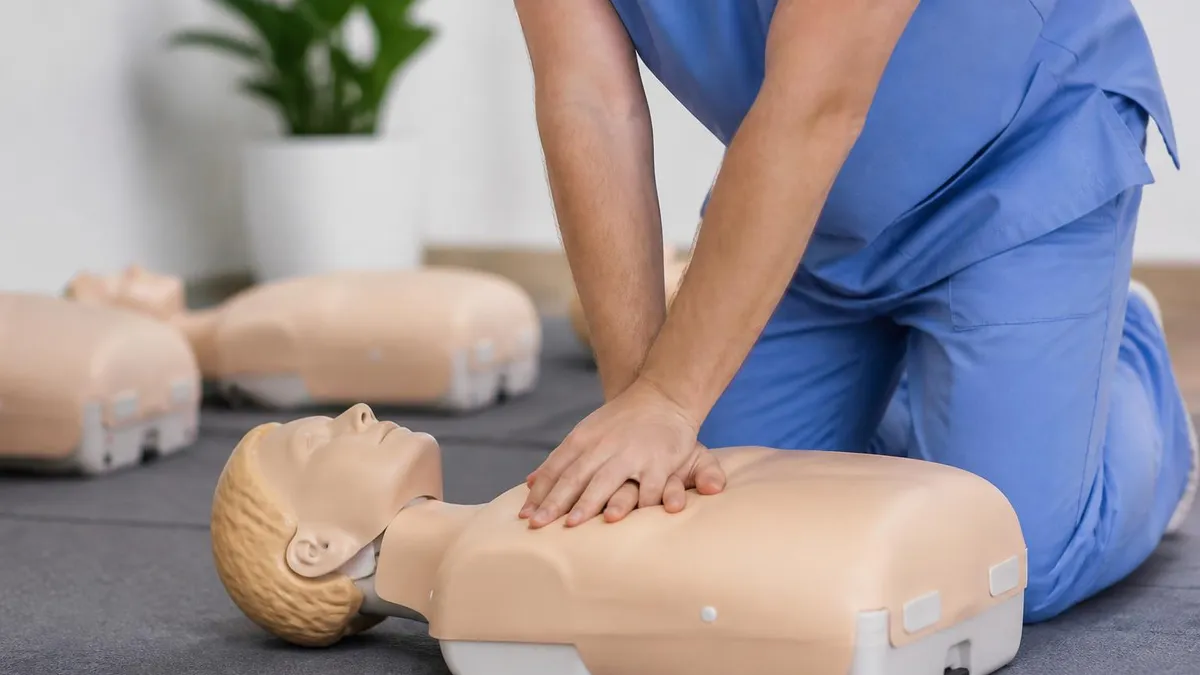
AHA CPR: What It Is, Which Course You Need, and How to Get Certified
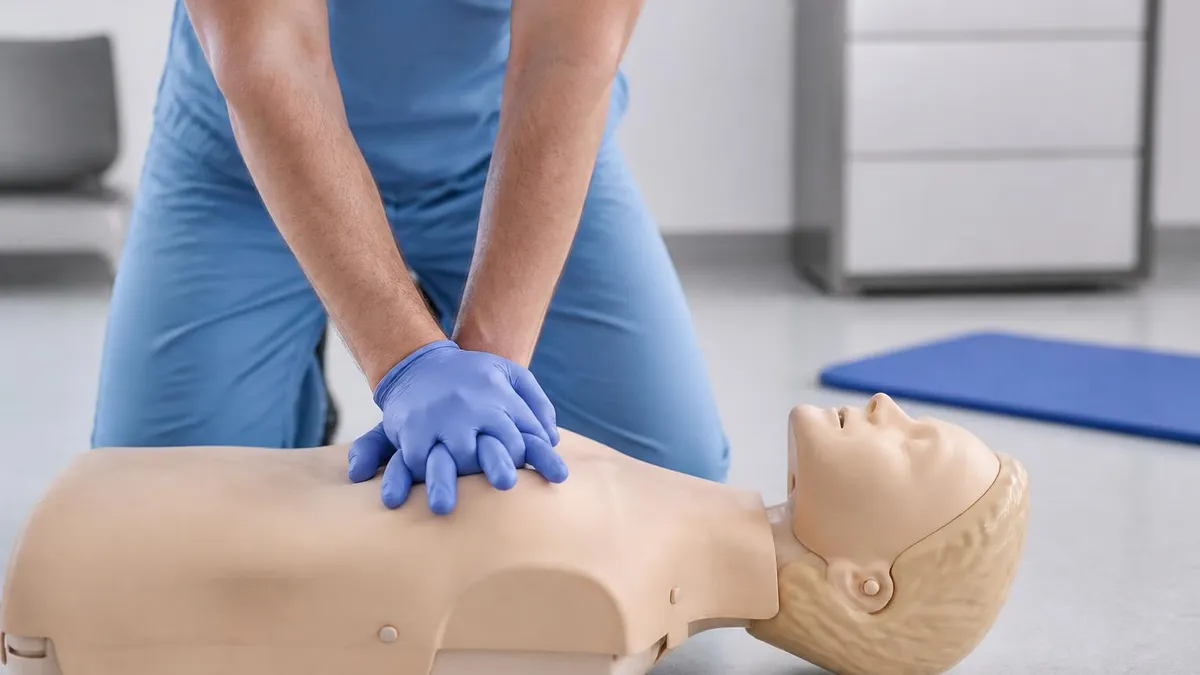
BLS CPR Course: Complete Guide to Basic Life Support Certification in 2026
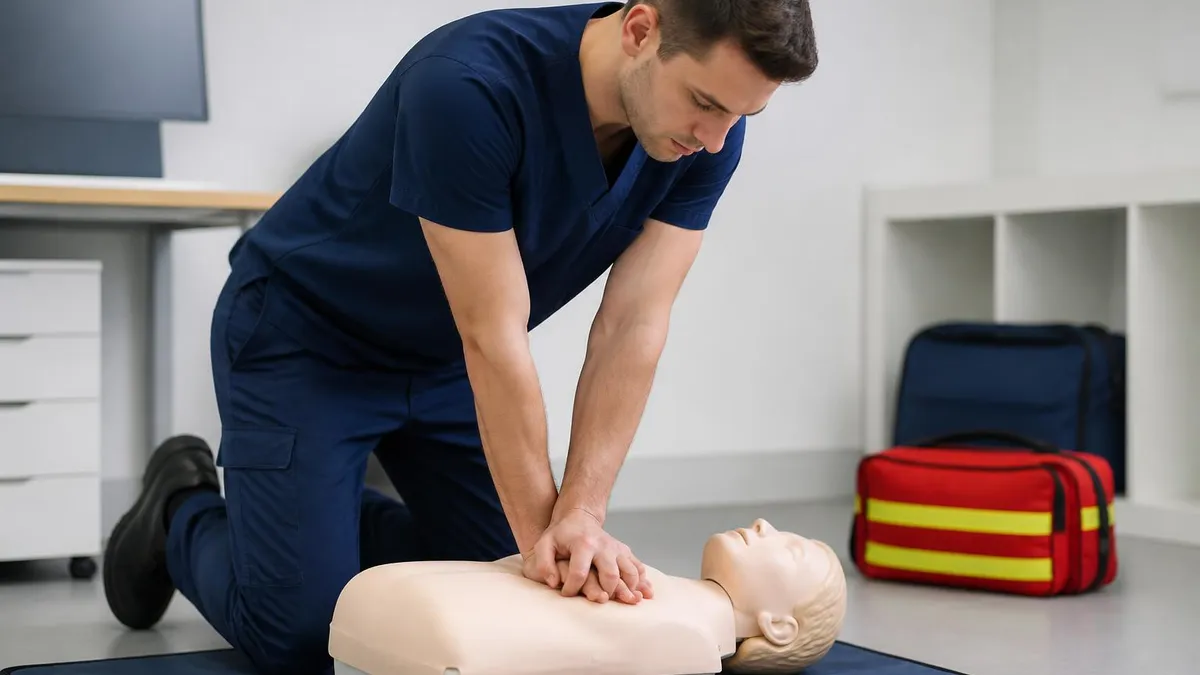
Adult CPR: Complete Step-by-Step Guide to Hands-Only and Standard CPR in 2026
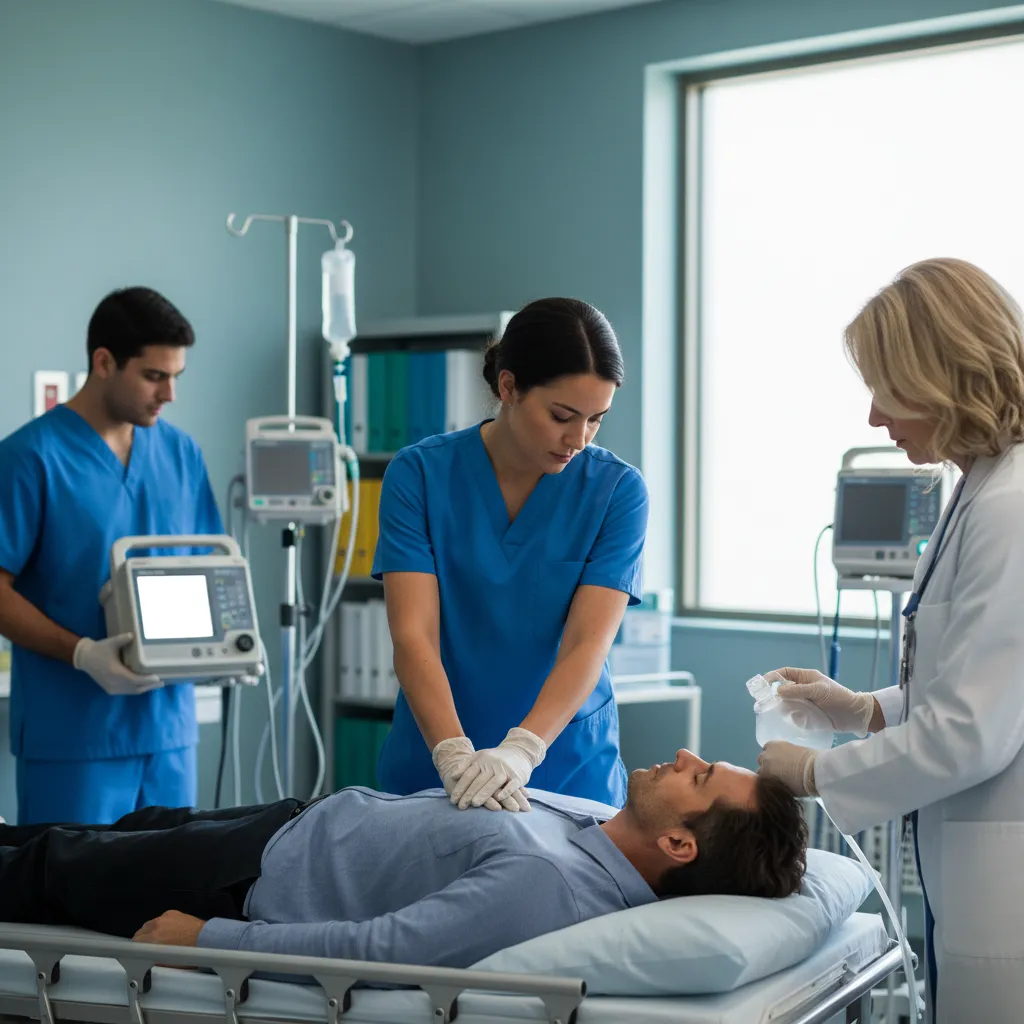
CPR - Cardiopulmonary Resuscitation: Complete Study Guide 2026
About the Author

Registered Nurse & Healthcare Educator
Johns Hopkins University School of NursingDr. Sarah Mitchell is a board-certified registered nurse with over 15 years of clinical and academic experience. She completed her PhD in Nursing Science at Johns Hopkins University and has taught NCLEX preparation and clinical skills courses for nursing students across the United States. Her research focuses on evidence-based exam preparation strategies for healthcare certification candidates.
Join the Discussion
Connect with other students preparing for this exam. Share tips, ask questions, and get advice from people who have been there.
View discussion (5 replies)