
TLSAE Course Online: Complete Study Guide & Certification Prep 2026 September
Complete guide to the TLSAE course online — what to expect, how to study, and free practice tests to pass your Florida first-time driver exam. 🆕
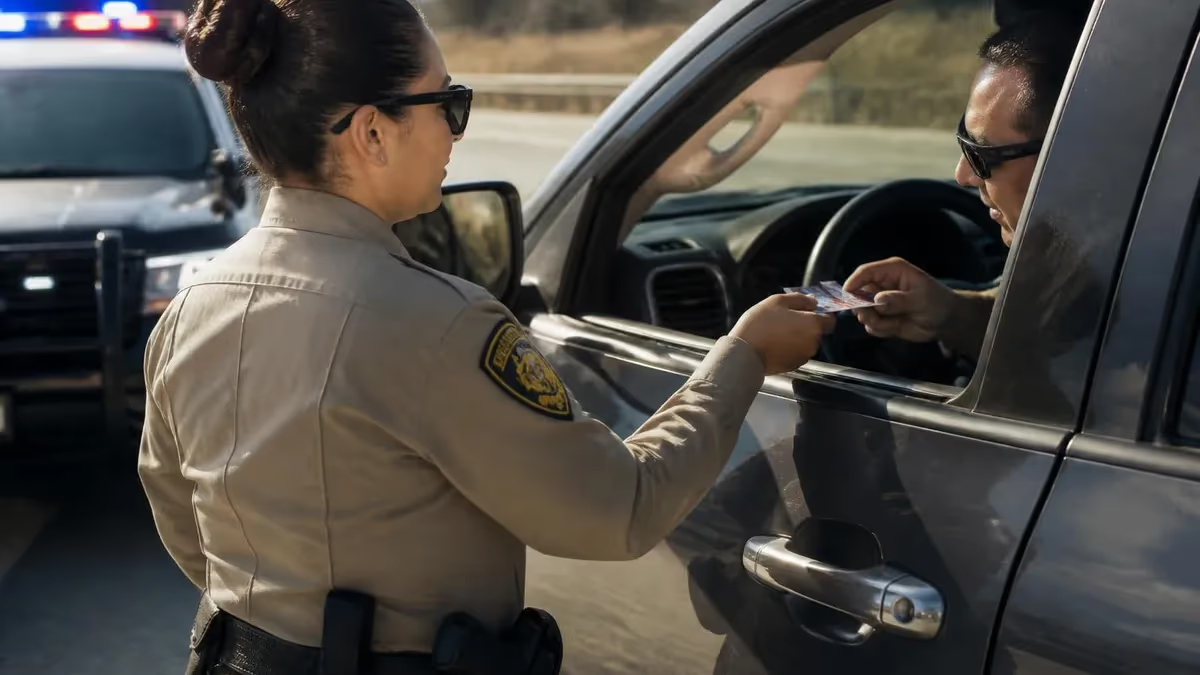
The tlsae course online is a mandatory first step for every new driver in Florida who is applying for their first license. Officially called Traffic Law and Substance Abuse Education, TLSAE is a state-approved program that covers the dangers of impaired driving, the legal consequences of traffic violations, and the fundamentals of safe vehicle operation. Before you can schedule a road test or obtain a learner's permit as a first-time applicant, Florida law requires proof of TLSAE completion — making this course one of the most critical checkboxes on your licensing journey.
Understanding what the TLSAE course covers — and how to prepare for the certification exam that follows it — is essential for first-time drivers who want to pass efficiently and move on to the next stage of licensure. Many students underestimate the exam at the end of the course, assuming that simply sitting through the online material is enough. In reality, the final test requires genuine understanding of alcohol physiology, drug impairment facts, Florida traffic statutes, and defensive driving principles, all of which are tested with scenario-based questions designed to reveal whether you actually absorbed the content.
Florida's TLSAE requirement applies specifically to applicants who have never held a driver's license in any U.S. state or territory. If you are 17 or younger, you must complete an additional Teen Driver Program component alongside the standard TLSAE curriculum. For drivers who are 18 or older applying for their first license, the standard four-hour TLSAE course is the requirement. The course is available through multiple Florida DHSMV-approved providers, and most modern programs are delivered entirely online, allowing you to complete the material at your own pace from any device with an internet connection.
The four-hour TLSAE course is divided into distinct modules, each focused on a specific pillar of safe and lawful driving. You will spend time on the pharmacology of alcohol and how it impairs reaction time, vision, and judgment at different blood alcohol concentration levels. You will also study the effects of marijuana, prescription medications, and illicit drugs on driving performance. Legal consequences — including DUI penalties, license suspension timelines, and Florida's implied consent law — form a major portion of the curriculum and are heavily tested on the final exam.
One of the biggest advantages of completing the TLSAE course online is the flexibility it offers. Approved online programs allow you to log in and out multiple times, picking up exactly where you left off, so you are not locked into a single four-hour block of time. Most providers include interactive quizzes, videos, and reading segments throughout the course to reinforce key concepts. However, passing the provider's embedded checkpoints is only one part of the process — you will also need to demonstrate mastery of the material in the final scored certification exam before you receive your completion certificate.
Preparing for the TLSAE certification exam with dedicated practice questions gives you a significant advantage over students who rely solely on the course material. Practice tests help you identify the specific topic areas where your knowledge is weakest, allowing you to focus your review time strategically. They also familiarize you with the question formats and terminology used on the actual exam, reducing test anxiety and helping you answer with greater speed and confidence on the day of the assessment. Building this exam-ready knowledge base is exactly what this study guide is designed to help you do.
Throughout this guide, you will find a detailed breakdown of every TLSAE topic area, a structured study schedule, free practice quiz resources, expert study tips, and answers to the most common questions students ask before taking the exam. Whether you are just starting the course or are a few days away from your final test, the information here will help you understand the material more deeply and approach the exam with the preparation it deserves.
TLSAE Course Online by the Numbers
TLSAE Study Schedule: 5-Day Exam Prep Plan
- ▸Read the alcohol module and take notes on BAC thresholds (0.02, 0.05, 0.08)
- ▸Study how alcohol affects reaction time, vision, and coordination at each BAC level
- ▸Complete the Free TLSAE Effects of Alcohol practice quiz
- ▸Review any missed questions and re-read related course sections
- ▸Study the drug impairment module covering marijuana, stimulants, depressants, and inhalants
- ▸Memorize the six categories of drugs and their specific effects on driving performance
- ▸Complete the TLSAE Drug Impairment and Effects practice test
- ▸Note any drug-specific facts you missed and create a summary flashcard sheet
- ▸Study DUI penalties: first offense fines, license suspension periods, and ignition interlock rules
- ▸Review Florida's implied consent law and what refusal means legally
- ▸Complete the Free TLSAE Legal Consequences practice quiz
- ▸Study Florida's zero-tolerance law for drivers under 21 (BAC limit: 0.02)
- ▸Study prevention strategies: designated drivers, ride-sharing alternatives, and community programs
- ▸Review safe following distances, the two-second rule, and defensive driving techniques
- ▸Complete the Prevention and Intervention practice quiz and the Safe Driving quiz
- ▸Do a full timed mock exam covering all topic areas before your scheduled test
The TLSAE course curriculum is organized around four interconnected subject areas, each of which appears on the final certification exam. Understanding how these topic areas relate to each other — and knowing which specific facts are most frequently tested — is the single most effective way to prepare.
Students who approach the course as a passive reading exercise often struggle on the exam because they have not internalized the precise numbers, legal thresholds, and causal relationships that the questions are designed to probe. Active study, using both the course material and supplemental practice tests, is the proven path to first-attempt success.
Alcohol physiology is the foundational topic of the TLSAE course and typically accounts for the largest proportion of exam questions. You need to understand not just that alcohol is dangerous, but exactly why and how it impairs driving at specific blood alcohol concentration levels. At a BAC of 0.02 — the legal limit for drivers under 21 in Florida — drivers already experience some loss of judgment and relaxation of inhibitions.
By 0.05 BAC, eye muscle control deteriorates noticeably and steering precision declines. At 0.08 BAC, the legal limit for drivers 21 and over, muscle coordination, reaction time, and the ability to track moving targets are all significantly compromised. The exam tests these thresholds with precision, so memorizing the BAC scale is non-negotiable preparation.
Drug impairment is the second major content pillar, covering six primary drug categories: stimulants, depressants, narcotics, hallucinogens, inhalants, and cannabis. The course goes beyond simple definitions, requiring you to understand how each drug category affects specific driving-relevant functions. Stimulants like methamphetamine create false confidence and impair judgment while increasing aggression behind the wheel. Depressants such as benzodiazepines slow reaction time and cause drowsiness similar to alcohol. Cannabis, now particularly relevant given widespread legalization debates, impairs short-term memory and depth perception in ways that distinctly affect highway driving and gap estimation at intersections.
Florida traffic law and the legal consequences of impaired driving form the third major subject area. This section requires you to memorize specific penalty structures for DUI offenses, including the fine ranges, license suspension periods, and mandatory program requirements at each offense level.
A first-offense DUI in Florida can result in fines between $500 and $1,000, up to six months of imprisonment, and a license revocation of 180 days to one year. A second offense within five years triggers a mandatory minimum of ten days in jail. The exam frequently presents scenario-based questions where you must apply these rules to determine the correct outcome for a fictional driver's situation.
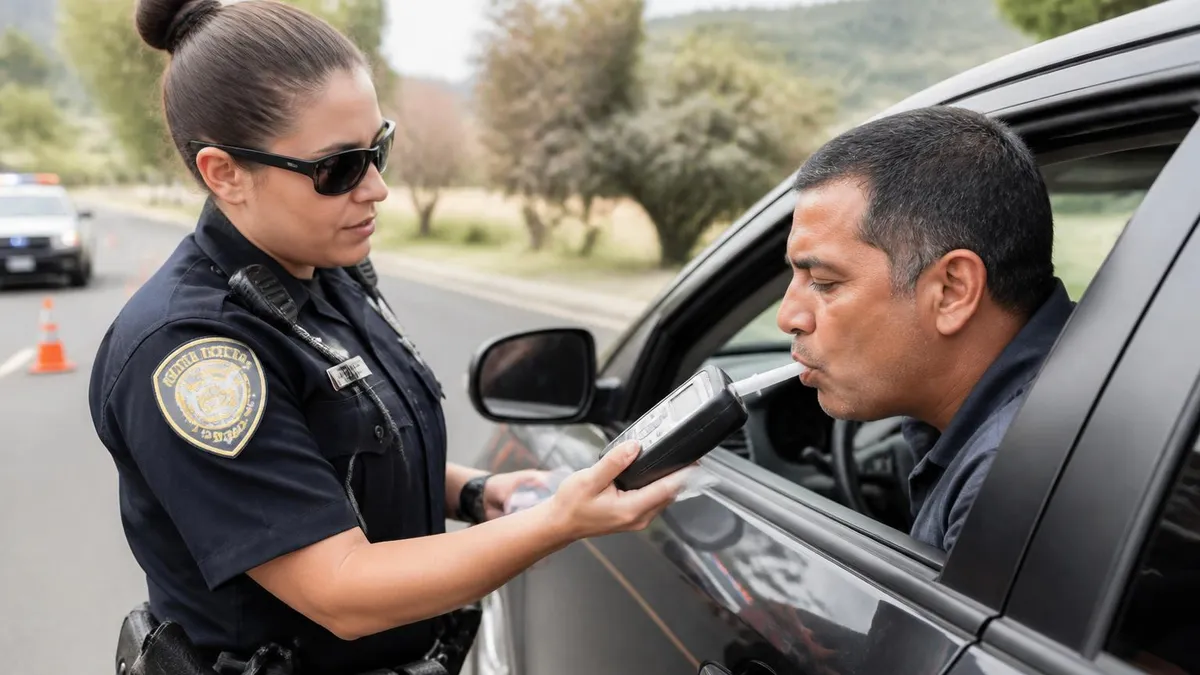
Florida's implied consent law is a particularly important sub-topic within the legal consequences module. Under implied consent, any person who operates a motor vehicle on Florida's public roads has already given consent — by the act of driving — to submit to a breath, blood, or urine test when lawfully requested by a law enforcement officer.
Refusing to submit to the test results in an automatic one-year license suspension for a first refusal and an 18-month suspension for a second refusal. Many students are surprised to learn that refusal itself carries legal consequences independent of any DUI charge, and this distinction is a common source of exam questions.
Prevention and intervention strategies make up the fourth content pillar, and this section takes a broader societal view of impaired driving as a public health issue. You will study the roles that schools, community organizations, law enforcement, and individuals play in reducing alcohol- and drug-related crashes.
Topics include designated driver programs, safe ride services, social norms campaigns, and early intervention techniques for identifying and assisting at-risk individuals. The exam tests your knowledge of these strategies through questions that ask you to identify the best response to a specific scenario, such as what a responsible party host should do if a guest appears intoxicated.
Safe driving principles round out the course content and include topics like following distance, the two-second rule, highway merging, night driving hazards, and the role of fatigue in crash risk. While this section may feel more intuitive than the pharmacology and legal content, it is consistently represented on the exam and should not be skimmed.
Questions in this area often describe a specific driving scenario and ask you to select the safest response — requiring genuine application of the principles rather than simple recall. Combining your coursework with targeted practice on these scenarios is the best way to build the applied knowledge that the exam rewards.
TLSAE Exam Strategies by Topic Area
Mastering the blood alcohol concentration scale is the single highest-return study investment you can make for the TLSAE exam. Memorize the exact impairment effects at 0.02, 0.05, 0.08, and 0.10+ BAC as distinct checkpoints, not a general progression. The exam regularly presents questions that describe specific symptoms — such as reduced eye muscle control or exaggerated behavior — and asks you to match them to the correct BAC range. Creating a simple table with BAC levels in one column and specific impairments in the other, then quizzing yourself until you can recall it from memory, is a proven and efficient preparation technique.
Beyond the BAC scale, study how body weight, food consumption, gender, and drink type influence alcohol absorption rates. The exam tests the concept that alcohol is absorbed faster on an empty stomach and that carbonated mixers accelerate absorption. Know that the liver metabolizes approximately one standard drink per hour regardless of coffee, food, or exercise — a common misconception that the exam directly challenges. Understanding these physiological facts in detail, rather than just knowing they exist, is what separates students who score in the high 80s from those who barely pass at 70 percent.
Online TLSAE Course vs. In-Person Classroom: Is Online Right for You?
- +Complete the course on your own schedule — pause, resume, and review sections anytime
- +Available 24/7 from any device, eliminating the need to travel to a physical classroom
- +Most online providers offer lower course fees than in-person programs
- +Interactive videos, embedded quizzes, and digital flashcards enhance content retention
- +Immediate digital certificate delivery upon passing — no waiting for mailed documents
- +Ability to re-read difficult sections as many times as needed before the final exam
- −No live instructor to answer questions in real time if you get stuck on a concept
- −Requires self-discipline to stay focused without the structure of a classroom environment
- −Timer-based modules on some platforms cannot be fast-forwarded even if you already know the material
- −Technical issues (browser compatibility, lost progress) can occasionally disrupt the experience
- −Some students find it harder to retain information from a screen than from a live lecture
- −Cannot interact with other students to discuss confusing topics or share study strategies
TLSAE Exam Preparation Checklist
- ✓Confirm your chosen online provider is DHSMV-approved before purchasing the course.
- ✓Complete all course modules without skipping, as some providers track time-on-page for compliance.
- ✓Take notes on specific BAC thresholds (0.02, 0.05, 0.08) and their associated impairment effects.
- ✓Memorize the six drug categories and at least two driving-specific impairments per category.
- ✓Study first-, second-, and third-offense DUI penalties including fines, jail time, and suspension periods.
- ✓Review Florida's zero-tolerance law and the exact BAC limit (0.02) for drivers under 21.
- ✓Understand the implied consent law and the consequences of refusing a chemical test.
- ✓Complete at least three full TLSAE practice tests covering all topic areas before the final exam.
- ✓Review all incorrect practice test answers and re-read the corresponding course sections.
- ✓Confirm you have valid identification ready to submit with your TLSAE completion certificate.
The 70% Rule: Know Your Threshold
Florida's TLSAE certification exam requires a minimum score of 70% to pass. With most exams featuring around 40 questions, that means you can miss no more than 12 questions and still earn your certificate. Targeted practice on the topic areas where you score lowest — rather than re-reading the entire course — is the fastest way to push your score safely above the passing threshold.
One of the most common mistakes students make when studying for the TLSAE certification exam is treating the course material as a passive reading exercise. The online format makes it easy to scroll through modules without truly engaging with the content — clicking through slides while simultaneously browsing social media, or letting videos play in the background without listening carefully.
This approach might satisfy the provider's time-on-page requirements, but it leaves you underprepared for an exam that actively tests comprehension rather than exposure. The students who fail on their first attempt are disproportionately those who did not take notes or engage with supplemental practice questions.
Another frequent error is neglecting to study the specific numbers and thresholds that the exam tests. General knowledge — knowing that alcohol impairs driving or that DUIs have legal consequences — is not sufficient. The TLSAE exam is designed to test precise recall. What are the exact fine amounts for a first-offense DUI in Florida?
What is the BAC level at which a driver under 21 can face administrative license suspension? How long is a license suspended for a first refusal under implied consent? Students who cannot answer these questions with confidence are likely to lose points on the legally oriented sections of the exam, where precision is everything.
Misunderstanding the relationship between practice quiz performance and actual exam readiness is another trap. Some students take one practice quiz, score 80%, and conclude they are ready. A single quiz covers only a fraction of the total content domain, and a lucky score on one practice test does not predict success across all topic areas.
The better approach is to track your performance across multiple practice tests, broken down by topic area, and to keep studying any category where you are not consistently scoring above 80%. This diagnostic approach to practice testing is far more effective than simple repetition of the same quiz.
Time management during the actual exam is a concern that many students overlook entirely. The TLSAE certification exam is timed, and students who have not practiced working through questions at a measured pace may find themselves rushing at the end and making avoidable errors. When taking practice tests, simulate exam conditions by timing yourself and committing to your first answer rather than changing responses repeatedly. Research on standardized testing consistently shows that first instincts are correct more often than revised answers, particularly for factual recall questions like those on the TLSAE exam.
Students also frequently underestimate the prevention and intervention section of the course because it covers broader social and public health topics rather than hard science or law. However, this section contains a significant number of exam questions, particularly around the roles of different community stakeholders in reducing impaired driving. Understanding the difference between primary prevention (stopping the behavior before it starts), secondary prevention (identifying at-risk individuals early), and tertiary prevention (treating those already impaired) is a specific distinction the exam tests. Treating this module as less important than alcohol physiology or traffic law is a mistake that reliably costs points.
Finally, students sometimes fail to read exam questions carefully enough, particularly the scenario-based ones. TLSAE exam questions frequently include details — a driver's age, the number of prior offenses, whether a refusal has occurred before — that completely change the correct answer.
Developing the habit of underlining or mentally flagging these key details as you read each question is an exam technique that experienced test-takers use across all standardized assessments. A question about a 19-year-old with a 0.04 BAC is testing a completely different statute than one about a 25-year-old with the same BAC, even though the numbers look similar at a glance.
One often-overlooked preparation strategy is reviewing the glossary of terms provided in the TLSAE course material. Official definitions of terms like "impairment," "implied consent," "administrative per se," and "substance abuse" are used precisely in exam questions, and a student who understands these terms as they are officially defined will answer more accurately than one who relies on informal usage. Building vocabulary fluency in the language of traffic law and substance abuse education is a quiet but significant advantage on the certification exam.
Your TLSAE completion certificate is required before you can apply for a learner's permit or first driver's license in Florida — it cannot be submitted after the fact. Additionally, some approved providers issue certificates that are only valid for a limited period. Check your provider's terms carefully and plan to apply for your permit promptly after completing the course to avoid any certificate expiration issues.
After passing the TLSAE certification exam and receiving your completion certificate, the next phase of your Florida licensing journey begins. The certificate itself is a required document that must be submitted to the Florida Department of Highway Safety and Motor Vehicles, either directly at a driver's license office or through the online application process, depending on your specific situation. Many first-time applicants choose to bring their TLSAE certificate in person along with other required documents — including proof of identity, Social Security number, and Florida residency — to complete the entire application in a single visit.
For applicants who are 15 or 16 years old, completing the TLSAE course is only one of several requirements before receiving a learner's permit. Florida's Graduated Driver Licensing program imposes additional steps, including a minimum supervised driving period of 12 months with at least 50 hours of behind-the-wheel practice (10 of which must be at night) before qualifying for a Class E license. The TLSAE certificate opens the door to the learner's permit, but it does not bypass the supervised driving requirement — a distinction that parents and teen applicants should understand clearly before scheduling any appointments.
For applicants who are 18 or older applying for their first Florida license, the pathway after TLSAE completion is more direct. Once the certificate is submitted and other documentation is verified, the applicant can take the Class E knowledge exam — a separate 50-question test on Florida traffic laws and road signs — and then schedule the road skills test. The TLSAE certificate remains a prerequisite throughout this process, so keeping a copy (both digital and printed) after submission is a practical safeguard in case documentation needs to be reverified.
Some students who are required to take the TLSAE course as part of a court-ordered program — such as a diversion program for a traffic offense or substance-related charge — have slightly different submission requirements. In these cases, the completion certificate typically must be sent directly to the court or to a supervising probation officer rather than (or in addition to) the DHSMV.
If you are completing the course under court order, confirm with your attorney or case manager exactly who needs to receive the certificate and by what deadline to avoid any compliance issues that could affect your case outcome.
The digital certificates issued by most approved online TLSAE providers are accepted by the Florida DHSMV and are legally equivalent to paper certificates. However, the provider must be on the DHSMV's current approved list — a list that is updated periodically — for the certificate to be recognized. Before purchasing any online TLSAE course, verify the provider's approval status on the official DHSMV website. Certificates from unapproved providers are not accepted and cannot be exchanged, meaning you would need to complete an approved course from scratch at your own expense.
Many students find it helpful to use the period between completing the TLSAE course and taking the Class E knowledge exam to continue building their understanding of Florida traffic law through additional study resources. The knowledge and habits of mind developed during TLSAE preparation — careful reading of scenario-based questions, precise recall of legal thresholds, and application of safe driving principles — transfer directly to the Class E exam. Students who use this window for continued active study rather than passive waiting consistently report feeling more confident and better prepared for every subsequent stage of the licensing process.
Beyond the immediate licensing pathway, the TLSAE course is designed to create lasting behavioral change in new drivers — not just to fulfill a bureaucratic requirement. The statistics on impaired driving in Florida are sobering: alcohol-related crashes account for a significant proportion of traffic fatalities in the state every year, and young drivers are disproportionately represented in those numbers.
The knowledge you gain about how alcohol and drugs affect the brain, the legal system's response to impaired driving, and the community resources available for intervention and prevention is knowledge that can guide safer decisions throughout your entire driving life, not just for the exam.
Building a personalized study plan for the TLSAE exam does not have to be complicated, but it does need to be intentional. The most effective approach begins with a diagnostic: take a full-length TLSAE practice test before you start studying to identify your baseline knowledge level across all topic areas.
This initial test will tell you which sections you already understand well and which ones require the most attention. Students who skip this diagnostic step often spend equal time on topics they already know and topics where they are genuinely weak — an inefficient distribution of study effort that results in uneven performance on the actual exam.
Once you have identified your weakest topic areas, prioritize them in your study schedule rather than working through the course material linearly from start to finish. If your diagnostic shows you are strong on safe driving principles but struggling with the legal consequences section, spend the majority of your first study session on DUI penalties, implied consent, and zero-tolerance law before circling back to other topics.
This targeted approach is sometimes called mastery-based learning, and it is backed by decades of educational research showing that focusing on gaps rather than reviewing what you already know is the fastest path to overall proficiency improvement.
Spaced repetition is another evidence-based study technique that works particularly well for the fact-heavy content on the TLSAE exam. Rather than reviewing all your notes in one long session the night before the exam, spread your review across multiple shorter sessions over several days. Each session should revisit material from previous sessions (to reinforce retention) as well as introduce new material. The cognitive science behind spaced repetition is that information reviewed at increasing intervals — one day, then three days, then six days — is encoded more durably in long-term memory than information reviewed repeatedly in a single session.
Practice testing is not just for checking what you know — it is itself one of the most powerful learning techniques available. Every time you answer a TLSAE practice question, even incorrectly, you are engaging the retrieval process that strengthens memory formation. Studies show that students who spend equal time studying and practice testing retain significantly more information than students who spend all their time re-reading notes.
For TLSAE preparation specifically, this means completing multiple rounds of practice quizzes across all topic areas, reviewing the explanations for both correct and incorrect answers, and using incorrect answers as direct signals about where to focus your next study session.
The night before your TLSAE certification exam, keep your study session short and focused. A brief review of your most important reference card — BAC thresholds, DUI penalty numbers, implied consent rules, and drug category impairments — is more productive than attempting to re-read entire course modules.
Sleep is a critical component of memory consolidation; research consistently shows that students who get adequate sleep before an exam perform better than those who stay up late cramming. Arriving at the exam (or sitting down at your computer) well-rested and calm gives you the cognitive resources needed to read questions carefully and apply your knowledge accurately under timed conditions.
During the exam itself, use a systematic answering strategy. Read each question fully before looking at the answer choices — this prevents the answer options from priming your thinking before you have had a chance to reason through the question independently. Eliminate obviously incorrect answers first to narrow your choices, then select the best remaining option based on your knowledge.
If a question involves specific numbers (BAC levels, fine amounts, suspension periods), recall your reference card mentally before reading the choices. This approach reduces the risk of being misled by close distractors — answer options that are almost correct but differ in one key detail.
After completing the TLSAE course and passing the certification exam, consider briefly revisiting the material once every few months during your first year of driving. New drivers are statistically at highest risk of crashes during the first 12 to 24 months after licensure, a period when the habits and knowledge established during the TLSAE course are most directly applicable. The information about alcohol physiology, drug impairment, and legal consequences is not merely test content — it is a practical framework for evaluating risks and making decisions in real-world situations that you will encounter throughout your driving life.
TLSAE Questions and Answers


About the Author

Educational Psychologist & Academic Test Preparation Expert
Columbia University Teachers CollegeDr. Lisa Patel holds a Doctorate in Education from Columbia University Teachers College and has spent 17 years researching standardized test design and academic assessment. She has developed preparation programs for SAT, ACT, GRE, LSAT, UCAT, and numerous professional licensing exams, helping students of all backgrounds achieve their target scores.
Join the Discussion
Connect with other students preparing for this exam. Share tips, ask questions, and get advice from people who have been there.
View discussion (8 replies)