
TLSAE Practice Test: Free Questions, Study Guide & Exam Prep 2026
Ace your TLSAE exam with free practice tests covering alcohol effects, drug impairment, legal consequences & safe driving. Start studying today! 📝

A comprehensive tlsae practice test is the single most effective tool you can use to prepare for Florida's Traffic Law and Substance Abuse Education exam. The TLSAE course, sometimes called the Drug and Alcohol course or the DATA course, is a state-mandated program that every first-time Florida driver license applicant must complete before they can obtain a learner's permit or full license. Practicing with realistic questions before your exam date dramatically increases your chances of passing on the very first attempt and helps you build genuine knowledge that keeps you and others safer on the road.
The TLSAE exam covers a broad range of material that goes far beyond simple traffic rules. You will be tested on the physiological effects of alcohol and drugs on the human body, the legal consequences of driving under the influence in Florida, strategies for preventing substance abuse, techniques for safe and defensive driving, and methods for intervening when a friend or family member is about to drive impaired. Each of these subject areas demands focused study, and a quality practice test pinpoints exactly which topics you have mastered and which ones still need work before exam day.
Many students underestimate the depth of knowledge required to pass the TLSAE exam. The Florida Department of Highway Safety and Motor Vehicles requires that the approved course provider certify you have completed all required modules and achieved a passing score on the final assessment. The questions are written at a level that expects you to understand concepts — not merely memorize definitions. For example, you need to know not just that alcohol impairs driving, but precisely how blood alcohol concentration levels correlate with specific cognitive and motor skill deficits, and what legal BAC thresholds trigger criminal penalties in Florida.
Using practice tests from PracticeTestGeeks.com gives you exposure to questions that mirror the style, difficulty, and subject distribution of the real TLSAE exam. Our free quizzes are organized by topic so you can target your weakest areas first, then take comprehensive mixed-subject tests to simulate the actual exam experience. Each question comes with a detailed explanation so you understand the reasoning behind every correct answer, turning each mistake into a genuine learning opportunity rather than just a wrong answer to regret.
Timing your study sessions strategically also matters. Most students who pass on their first attempt report dedicating at least five to eight hours of active study spread across multiple days, rather than cramming everything into a single long session. Spaced repetition — reviewing material across several shorter sessions — strengthens long-term retention far more effectively than a single marathon study night. Our practice tests fit naturally into this approach: take a 20-question quiz today, review the explanations, then take a different topic-focused quiz tomorrow to reinforce what you learned.
Florida's TLSAE program was established to address the state's serious traffic safety challenges. Florida consistently ranks among the top states for alcohol-related traffic fatalities, and the TLSAE course is a critical public health intervention designed to ensure that new drivers enter the road with a clear understanding of the dangers of impaired driving. When you engage seriously with your TLSAE prep — using practice tests, reviewing explanations, and reflecting on the material — you are not just fulfilling a legal requirement but developing life-saving knowledge and judgment.
This complete guide walks you through everything you need to know: what the TLSAE exam covers, how it is structured, the best strategies for preparing efficiently, and how to use our free practice questions to maximize your score. Whether you are just beginning your TLSAE prep or looking for a final review before your exam, you will find the tools and information here to approach exam day with genuine confidence and complete readiness.
Free TLSAE - Traffic Law and Substance Abuse Education Study Tools
Interactive TLSAE - Traffic Law and Substance Abuse Education resources on PracticeTestGeeks, free to start:
- TLSAE - Traffic Law and Substance Abuse Education flashcards — review key terms and concepts card by card
- TLSAE - Traffic Law and Substance Abuse Education study guide — topic-by-topic overview of what the exam covers
- TLSAE - Traffic Law and Substance Abuse Education cheat sheet — one-page printable summary for last-minute review
TLSAE Exam by the Numbers
Key Facts at a Glance
| Item | Value | Details |
|---|---|---|
| Required for FL License | 100% | All first-time applicants must complete |
| Minimum Course Length | 4 hrs | State-mandated minimum instruction time |
| Minimum Passing Score | 70% | Required to earn your completion certificate |
| Retake Attempts | Unlimited | Failed sections can be retaken until passed |

TLSAE Exam Format & What to Expect
Before taking the final TLSAE exam, you must complete all course modules in an approved provider's program. Florida law requires a minimum of four hours of instruction covering all mandated subject areas. You cannot skip ahead to the test without finishing every required section.
The TLSAE exam consists of multiple-choice questions drawn from all major course topics. Questions test conceptual understanding, not simple recall. You may be asked to apply knowledge to a scenario — for example, calculating impairment levels or identifying appropriate intervention strategies.
You must answer at least 70% of questions correctly to receive a passing score and earn your completion certificate. If you fall below this threshold on any section, most approved providers allow you to retake that portion until you achieve the required score.
Once you pass the TLSAE exam and receive your completion certificate, it is valid permanently — you do not need to retake the course. The certificate is submitted to the Florida DHSMV as a prerequisite for obtaining your learner's permit or driver's license.
Florida approves both online and classroom-based TLSAE providers. Online courses allow you to complete the material at your own pace from any device. Both formats culminate in the same final exam and produce an equivalent state-recognized completion certificate.
The TLSAE curriculum is divided into five major content areas, and understanding the scope of each one is essential for building an effective study plan. The first and most heavily tested area is the effects of alcohol on the body and mind. This goes well beyond simply knowing that alcohol impairs driving — you must understand the precise mechanisms by which alcohol affects the central nervous system, how blood alcohol concentration is calculated and what factors influence it, and how impairment progresses across different BAC levels from the first drink through severe intoxication.
The second major content area covers illegal drugs and prescription medications that impair driving ability. Many students focus heavily on alcohol and underestimate how thoroughly the TLSAE exam tests drug-related content. You will be expected to know the categories of drugs — stimulants, depressants, hallucinogens, and cannabis — and how each category affects driving-relevant skills such as reaction time, depth perception, tracking ability, and decision-making. The exam also tests knowledge of drug combinations and how mixing substances multiplies impairment beyond what either substance would cause alone.
Legal consequences form the third major content area and represent some of the most detail-oriented material on the exam. Florida has strict DUI laws with mandatory minimum penalties that vary based on BAC level, the number of prior offenses, whether a minor was in the vehicle, and whether property damage or injury occurred. You need to know the specific BAC thresholds that define DUI (0.08% for adults, 0.02% for drivers under 21, and 0.04% for commercial vehicle operators), the administrative penalties such as license suspension, and the criminal penalties including fines, jail time, and vehicle impoundment.
Prevention and intervention make up the fourth content area. This section tests your understanding of how to recognize the warning signs of substance abuse in yourself and others, how to intervene effectively when someone is about to drive impaired, and what community and professional resources are available for people struggling with alcohol or drug dependency. The TLSAE exam expects you to know not just that you should stop an impaired person from driving, but specific strategies for how to do so safely and effectively.
Safe driving practices constitute the fifth content area, covering defensive driving techniques, proper following distances, understanding of speed and stopping distances, and how to respond to hazardous road conditions. This section connects directly to the substance abuse content by illustrating exactly which driving tasks are compromised by impairment. For example, questions may ask you to compare the stopping distance of an alert driver versus an impaired driver at a given speed, reinforcing why impaired driving is so dangerous.
Studying all five content areas requires a structured approach. Most students find it most efficient to start with the alcohol effects section since it provides foundational knowledge that carries over into the drugs, legal, and safe driving sections. From there, moving into drug impairment ensures your understanding of CNS effects is comprehensive before you tackle the legal consequences that flow from impaired driving. Finishing with prevention and safe driving allows you to synthesize everything you have learned into a coherent framework for responsible behavior on Florida's roads.
Practice tests are most valuable when they push you beyond your comfort zone. After you answer a question correctly, read the explanation anyway — often the explanation reveals nuances or related facts that will appear on other questions. When you miss a question, treat it as a signal to review the entire surrounding topic, not just to memorize the correct answer to that specific question. This deeper engagement with the material is what separates students who genuinely understand TLSAE content from those who merely recognize familiar answer choices on test day.
TLSAE Study Strategies by Topic Area
Understanding blood alcohol concentration is the cornerstone of TLSAE exam success. Focus on the factors that raise and lower BAC: body weight, gender, number of drinks consumed, time elapsed, food intake, and metabolism rate. Know that a standard drink — 12 oz beer, 5 oz wine, or 1.5 oz spirits — contains the same amount of alcohol, and that the liver processes approximately one standard drink per hour regardless of coffee, food, or exercise. The exam frequently tests whether students understand that only time sobers a person up.
Practice calculating estimated BAC using the Widmark formula concepts and understand the behavioral symptoms associated with each BAC range: 0.02–0.05% brings relaxation and reduced inhibition; 0.05–0.08% causes measurable reaction time slowing and coordination loss; 0.08% is the legal DUI threshold for adult drivers in Florida; 0.10–0.15% brings significant impairment of motor control and judgment; above 0.15% represents severe impairment with high accident risk. The TLSAE exam expects you to match specific BAC ranges to their corresponding symptoms and driving risks.
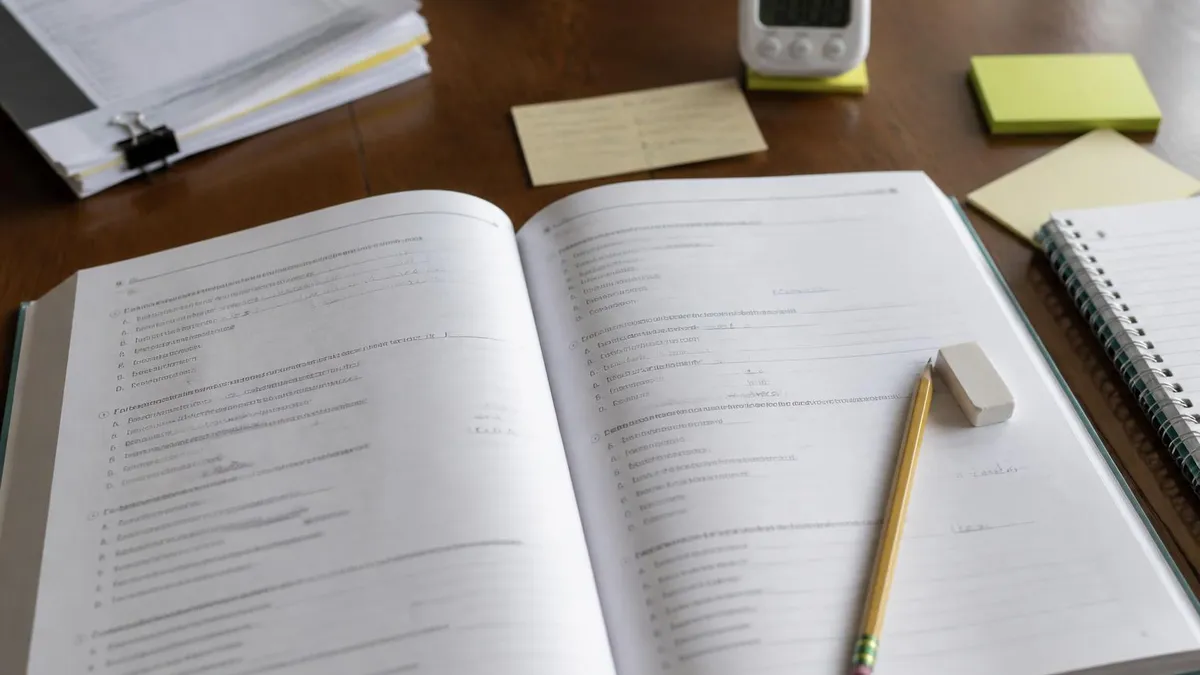
Online TLSAE Prep: Benefits and Limitations
- +Study at your own pace without time pressure or classroom scheduling constraints
- +Immediate feedback on each practice question helps you learn from mistakes in real time
- +Topic-organized quizzes let you focus on your weakest subject areas first
- +Unlimited practice attempts allow you to repeat questions until mastery is achieved
- +Detailed answer explanations build conceptual understanding, not just answer recognition
- +Available 24/7 from any device, making it easy to fit study sessions into a busy schedule
- −Self-paced study requires personal discipline — procrastination is easy without deadlines
- −Online practice cannot replicate the social learning of classroom discussion and peer questions
- −Some students mistake high practice test scores for exam readiness without reviewing wrong answers
- −Screen fatigue can reduce focus during long study sessions compared to printed materials
- −Practice tests cannot fully predict every question type the approved course provider may use
- −Students without reliable internet access may struggle to use online study resources consistently
TLSAE Exam Day Preparation Checklist
- ✓Complete all required course modules with your approved Florida TLSAE provider before attempting the final exam.
- ✓Take at least three full practice tests covering all five topic areas to confirm your readiness.
- ✓Review every wrong answer from your practice tests and re-read the relevant course section for each topic you missed.
- ✓Memorize Florida's specific DUI BAC thresholds: 0.08% adults, 0.04% CDL drivers, 0.02% drivers under 21.
- ✓Know the mandatory minimum penalties for first, second, and third DUI offenses including fines, jail time, and license suspension periods.
- ✓Understand the implied consent law and the consequences of refusing a chemical test after a lawful DUI arrest.
- ✓Review the physiological effects of alcohol at each BAC level from 0.02% through 0.20% and above.
- ✓Study the four major drug categories — stimulants, depressants, hallucinogens, cannabis — and their specific driving impairment effects.
- ✓Get a full night of sleep the night before your exam to ensure optimal concentration and memory recall.
- ✓Have your photo ID and any required course completion materials ready before beginning the final assessment session.
Practice Tests Raise Pass Rates Significantly
Students who complete five or more topic-specific practice tests before their TLSAE exam report substantially higher first-attempt pass rates than those who rely on reading course material alone. The active retrieval process of answering practice questions strengthens memory consolidation in ways that passive reading simply cannot match — making practice testing the highest-return study activity available to you.
Passing the TLSAE exam on your first attempt is a realistic goal for any student who prepares strategically, and the most important strategy is to treat every practice question as a learning event rather than just a performance measurement. When you sit down with a set of TLSAE practice questions, approach each one as if it were the real exam — read it carefully, eliminate obviously wrong answers, reason through the remaining choices, and commit to an answer before reading the explanation. This deliberate process trains the same cognitive habits you will need on exam day.
One of the most common reasons students fail the TLSAE exam on their first attempt is overconfidence in material they feel they already know. Alcohol effects and basic traffic rules feel familiar because we encounter them in everyday life, but the TLSAE exam tests these topics at a level of precision that catches unprepared students off guard.
For example, you might know that alcohol impairs driving, but do you know that even a BAC of 0.02% — below any legal threshold — produces measurable tracking difficulties and a reduced ability to perform two tasks simultaneously? Questions at this level of specificity appear regularly on the actual exam.
The drug impairment section presents a different challenge: much of the content may be less familiar from everyday experience, which means students often underestimate how much dedicated study it requires. Dedicate at least a full study session specifically to drug categories, their mechanisms of action, and their specific driving-relevant effects. Pay particular attention to cannabis impairment since it is increasingly common and frequently misunderstood — many students incorrectly believe that cannabis impairment is less dangerous than alcohol impairment, when in fact research shows it significantly elevates crash risk through distinct mechanisms.
For the legal consequences section, create a reference sheet that organizes Florida's DUI penalties by offense number and BAC level. Writing out this information by hand reinforces it more strongly than simply reading it, and having a structured reference to review in the days before your exam makes it easier to keep all the specific numbers and thresholds straight. The exam will test precise penalty ranges — knowing that a first-offense fine is "somewhere between $500 and $1,000" is not enough; you need to know the exact statutory minimum and maximum for each scenario.
The prevention and intervention content area rewards students who engage empathetically with the material rather than treating it as abstract policy information. Think about real scenarios: if a friend at a party had been drinking and wanted to drive home, what specific steps would you take? The TLSAE exam tests your knowledge of concrete intervention strategies, not vague platitudes about being responsible. Know that effective intervention involves offering alternatives (calling a rideshare, offering your couch, calling a sober driver), not confrontation or argument, and that you should never physically restrain someone or take their keys by force.
Safe driving content often feels like review for students who have been passengers in cars for years, but the exam tests this material with scientific precision. Know the three-second following distance rule and how it extends to four seconds or more in adverse conditions. Understand the relationship between speed and stopping distance: stopping distance increases with the square of speed, so doubling your speed quadruples your stopping distance. Questions may present specific speeds and road conditions and ask you to calculate or compare stopping distances, requiring genuine mathematical reasoning rather than general intuition.
In the final days before your exam, shift from learning new material to consolidating what you already know. Take full mixed-topic practice tests rather than isolated topic quizzes, simulating the varied question sequence of the real exam. Time yourself to ensure you can complete the exam within any time limits your provider sets. Review your compiled notes on penalty amounts, BAC thresholds, and drug categories one more time. Then approach exam day with the confidence that comes from thorough, methodical preparation — because that preparation is genuinely the best predictor of first-attempt success.

Many TLSAE students spend the majority of their study time on alcohol content and legal penalties while giving insufficient attention to drug impairment material. However, questions about prescription medications, cannabis, stimulants, and polydrug interactions consistently appear on the actual exam and are among the most frequently missed. Allocate dedicated study time to all four drug categories before exam day to avoid this common pitfall.
Effective use of practice tests requires more than simply answering questions and checking your score. The highest-value study habit is what learning scientists call elaborative interrogation — after reading an explanation for a correct or incorrect answer, ask yourself why that answer is correct and how it connects to related concepts you have already studied.
For example, after learning that a first DUI offense with a BAC above 0.15% results in higher mandatory fines, ask yourself why Florida sets that specific threshold and what it tells you about how the state approaches graduated DUI enforcement. This deeper processing creates stronger, more flexible memory that holds up under exam pressure.
Another powerful technique is to create your own questions as you study. After finishing a content section on alcohol effects, close the material and write down five questions you think the exam might ask based on what you just read. Then compare your questions to the actual practice test questions on that topic. This exercise forces active engagement with the material and quickly reveals which concepts you understand deeply versus which ones you only think you understand. Students who generate their own questions consistently outperform those who only answer pre-written practice questions.
Interleaved practice — mixing questions from different topic areas rather than completing all alcohol questions, then all drug questions, and so on — produces stronger long-term retention even though it feels harder in the moment. When you mix topic areas, you force your brain to retrieve and re-retrieve information from different contexts, which strengthens the memory traces more than blocked practice does. After completing topic-specific quizzes to build initial competence, switch to mixed-format practice tests for your final preparation sessions to take advantage of this interleaving effect.
Pay special attention to question stems that include words like "always," "never," "must," "all," and "only." These absolute terms often signal answer choices that are either definitively correct or definitively incorrect, and recognizing them helps you eliminate wrong answers quickly. Conversely, be careful with answer choices that include qualifiers like "usually" or "sometimes" — these hedged answers are often correct on exam questions that deal with complex real-world phenomena where absolute rules rarely apply.
If you find yourself consistently missing questions in one specific area despite repeated study, try a different approach rather than simply reviewing the same material again. Watch a short video explanation of the concept, talk it through with someone else, or try to teach the concept as if explaining it to a friend who has never heard of the TLSAE course. Teaching a concept is one of the most powerful ways to identify and fill gaps in your own understanding, because you cannot teach what you do not genuinely know.
Many students find it helpful to review their practice test performance analytically. Keep a simple log of which topic areas you miss most frequently, and use that data to guide how you allocate your remaining study time. If you are consistently scoring above 90% on alcohol effects questions but only 65% on drug impairment questions, the math is clear — your remaining study hours belong in the drug section, not in further review of content you already have mastered.
Our free practice quizzes at PracticeTestGeeks.com are designed to support exactly this kind of data-driven, efficient preparation. Each quiz provides immediate scoring feedback along with detailed explanations, and the topic-organized structure makes it easy to target specific content areas for focused review. Whether you use our free questions as a diagnostic tool, a daily study habit, or a final review before exam day, they give you the realistic practice experience that builds both competence and confidence for your actual TLSAE exam.
The final phase of your TLSAE preparation should focus on practical test-taking skills as much as subject matter knowledge. Time management during the exam matters more than many students realize. Even if your TLSAE provider does not impose a strict time limit, fatigue and rushing in the final questions can cost you points on material you actually know well.
Pace yourself deliberately: read each question twice before looking at the answer choices, form a mental answer before reading the options to avoid being misled by attractive-but-wrong choices, and flag questions you are unsure about for review if your exam platform allows it.
Process of elimination is your most reliable tool for questions where you are uncertain. The TLSAE exam, like most multiple-choice tests, includes answer choices that are clearly wrong alongside the correct answer and one or two plausible distractors. If you can definitively eliminate two obviously wrong choices, you have turned a one-in-four guess into a coin flip — dramatically better odds. On questions about specific penalty amounts, eliminate any choice that seems wildly disproportionate in either direction, then reason carefully between the remaining options.
Scenario-based questions are among the most challenging question types on the TLSAE exam and deserve special attention during your practice sessions. These questions present a brief narrative — a driver with a specific BAC who exhibits certain symptoms, or a passenger who needs to intervene in a specific situation — and ask you to apply course content to reach the correct conclusion. Treat these questions as mini-case studies: identify the key facts presented, recall the relevant rules and principles from your course material, and select the answer that follows logically from both.
Questions about the physiological timeline of alcohol processing are a reliable source of difficulty for students who have not studied carefully. Many people believe that coffee, cold showers, food, or exercise can speed up alcohol metabolism and reduce impairment — the TLSAE exam directly tests this misconception. Only time allows the liver to process alcohol, and no behavioral intervention changes this biological reality. If your exam includes a question asking what will most quickly reduce a driver's BAC, the correct answer is always waiting — never coffee, food, water, or activity.
Prevention content on the TLSAE exam often includes questions about Florida's specific resources for substance abuse treatment and intervention. While you do not need to memorize phone numbers or specific agency names, you should know the categories of help available — crisis hotlines, outpatient counseling, residential treatment, and support groups such as Alcoholics Anonymous and Narcotics Anonymous. Questions may also test your knowledge of Florida's Marchman Act, which allows involuntary assessment and treatment for individuals with severe substance abuse disorders who present an imminent danger to themselves or others.
Safe driving content connects directly to substance abuse content in ways the exam exploits through comparative questions. For example, a question might describe a driver traveling at 60 mph on a wet highway and ask how impairment at a specific BAC level would affect their ability to stop within a given distance.
To answer these questions correctly, you need to understand both the normal stopping distance physics and the specific reaction time delays associated with that BAC level. This cross-topic integration is exactly why studying all five content areas together — rather than in complete isolation — produces better exam performance.
As you approach the end of your preparation, remember that the TLSAE exam is designed to be passable by any student who has genuinely engaged with the course material. It is not designed to trick you or to test obscure trivia that serves no safety purpose.
Every question is there because the knowledge it tests could, in a real situation, help you make a decision that prevents an injury or saves a life. Keeping that purpose in mind as you study can transform what might feel like a bureaucratic hurdle into genuinely meaningful preparation for a lifetime of safe, responsible driving on Florida's roads.
Sample TLSAE - Traffic Law and Substance Abuse Education Practice Questions
Try these questions from our free TLSAE - Traffic Law and Substance Abuse Education practice tests. The correct answer and an explanation follow each question.
When can a Florida law enforcement officer legally require a blood test (rather than a breath test) for DUI?
- A. Whenever the officer prefers a blood test
- B. When the driver is unconscious, injured, or when breath testing is impractical
- C. Only for commercial vehicle drivers
- D. When the driver requests a blood test instead of breath test
Answer: B. When the driver is unconscious, injured, or when breath testing is impractical
Florida officers can require a blood test when the driver is unconscious, hospitalized, or when breath testing is not possible.
In many states, what happens if a driver refuses to take a chemical test (such as a breathalyzer) when suspected of driving under the influence?
- A. Nothing, it is their right to refuse
- B. Immediate license suspension
- C. A fine but no license suspension
- D. They are automatically found guilty of DUI
Answer: B. Immediate license suspension
Most states have 'implied consent' laws, meaning that by obtaining a driver's license, you implicitly agree to take a chemical test if suspected of driving under the influence. Refusing such a test typically results in immediate and automatic license suspension, regardless of whether you are ultimately found guilty of DUI. This consequence is a separate administrative penalty designed to encourage cooperation with law enforcement in DUI investigations.
What does the Horizontal Gaze Nystagmus (HGN) test measure?
- A. Whether a driver can walk a straight line
- B. Involuntary jerking of the eye that increases with alcohol intoxication
- C. A driver's ability to balance on one foot
- D. The driver's pupil reaction time
Answer: B. Involuntary jerking of the eye that increases with alcohol intoxication
HGN measures the involuntary jerking of the eye (nystagmus) that becomes more pronounced as BAC increases.
In Florida, what is the consequence of refusing a chemical test (breath, blood, or urine) after a lawful DUI arrest?
- A. No consequence — refusal is always legal
- B. Automatic license suspension and the refusal can be used as evidence of guilt
- C. A warning only for first offense
- D. The DUI charge is automatically dropped
Answer: B. Automatic license suspension and the refusal can be used as evidence of guilt
Refusing a chemical test after a lawful DUI arrest in Florida results in a license suspension and the refusal itself can be used as evidence of guilt in court.
Take the full TLSAE - Traffic Law and Substance Abuse Education practice test
TLSAE Questions and Answers


About the Author

Educational Psychologist & Academic Test Preparation Expert
Columbia University Teachers CollegeDr. Lisa Patel holds a Doctorate in Education from Columbia University Teachers College and has spent 17 years researching standardized test design and academic assessment. She has developed preparation programs for SAT, ACT, GRE, LSAT, UCAT, and numerous professional licensing exams, helping students of all backgrounds achieve their target scores.