
How to Get CPR Certification: Complete 2026 September Guide to Courses, Costs, and Renewal
Learn how to get CPR certification in 2026 September. Compare AHA, 💯 Red Cross, and National CPR Foundation courses, costs, exam steps, and renewal requirements.
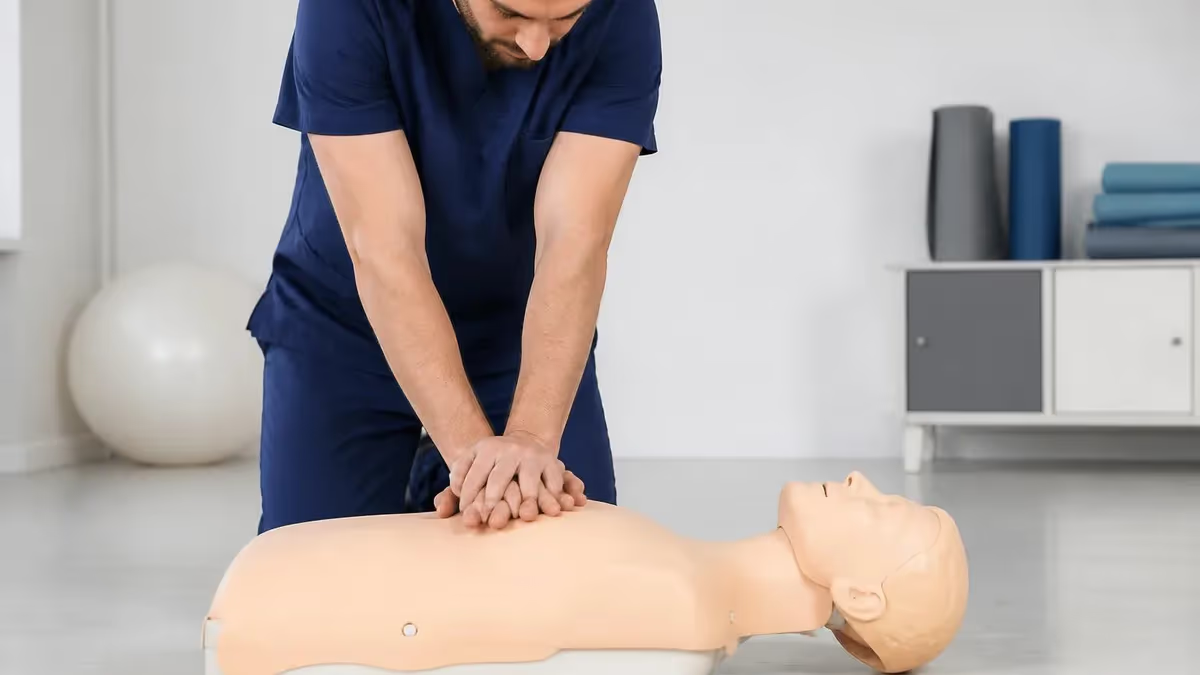
Learning how to get CPR certification is one of the most practical investments you can make in 2026, whether you are a nurse renewing your credentials, a teacher meeting district requirements, a new parent worried about infant cpr, or a job applicant who needs a card before your start date. The process is straightforward once you understand the landscape, but it can feel confusing because dozens of providers, from the American Heart Association to the national cpr foundation, offer overlapping courses with different prices, formats, and acceptance rates among employers.
At its core, CPR certification is a credential that proves you can recognize a cardiac or respiratory emergency, deliver high-quality chest compressions, use an automated external defibrillator, and provide rescue breathing for adults, children, and infants. Most cards are valid for two years, and the training itself typically takes between two and five hours depending on the level you choose. Understanding which level matches your goals is the first decision you need to make before you spend any money or book a session.
The three most common tiers are Heartsaver or community CPR for the general public, Basic Life Support (BLS) for healthcare providers, and advanced courses such as ACLS and pals certification for nurses, paramedics, and physicians who manage critical patients. Each tier builds on the last, so a Heartsaver student learns the same compression depth and respiratory rate fundamentals as a BLS student, but a BLS course adds two-rescuer techniques, bag-mask ventilation, and team dynamics that hospital staff need every shift.
Cost is often the second question people ask, and the answer ranges from completely free at fire departments running community outreach events to about $130 for a hands-on AHA BLS class in a major city. Online-only options sit between $20 and $40, while blended courses that mix self-paced eLearning with an in-person skills check usually fall between $60 and $95. Always confirm with your employer or licensing board which provider they accept before paying, because some hospitals refuse online-only cards.
Timeline matters too. If you need a card this week, most metropolitan areas have same-day or next-day BLS classes through hospitals, community colleges, and private training centers. If you have more flexibility, you can register for a blended course, complete the cognitive portion at home tonight, and book a 30-minute skills session at your convenience within 60 days. Either path produces an identical, employer-accepted card when you finish through an approved training center.
This guide walks you through every step of the journey, from choosing the right course level and provider to passing the skills test, downloading your eCard, and renewing before it expires. You will also learn how to spot non-accepted certifications, what the acls algorithm actually tests, and how to use free practice questions to prepare. By the time you finish reading, you will know exactly which class to book, how much to pay, and what to expect on test day.
CPR Certification by the Numbers

Certification Levels & Course Options
Heartsaver / Community CPR
Basic Life Support (BLS)
Advanced Cardiac Life Support (ACLS)
Pediatric Advanced Life Support (PALS)
First Aid + CPR Combo
Choosing the right provider is the second major decision in figuring out how to get CPR certification, and the choice usually comes down to who your employer, school, or licensing board recognizes. The American Heart Association (AHA) is the gold standard for clinical roles because its science is published in Circulation and updated every five years based on ILCOR consensus. If you work in a hospital, an AHA BLS Provider card is almost always required, and your facility likely runs in-house classes through its education department for free or at a discount.
The American Red Cross (ARC) is the second-largest provider and is widely accepted for childcare, education, fitness, lifeguarding, and corporate safety roles. Their curriculum is functionally identical to the AHA's for hands-only CPR and AED use, and ARC also offers digital certificates that scan QR codes for instant verification. For many non-clinical careers, ARC and AHA are interchangeable, so price and class availability often decide which one you pick on any given week.
The national cpr foundation is a popular online-only provider that markets fast, low-cost certification, often advertised at under $20. Their cards are accepted by many employers in non-clinical fields such as personal training, real estate, foster care, and general workplace safety. However, hospitals, nursing schools, and EMS agencies typically do not accept online-only cards because they lack a hands-on skills check, so verify acceptance in writing before purchasing if you work in healthcare.
Other reputable providers include the American Safety and Health Institute (ASHI), the National Safety Council (NSC), and EMS Safety Services. These organizations follow the same ILCOR science as AHA and ARC and are commonly used by fire departments, EMS academies, and OSHA-compliant workplaces. ASHI in particular powers many independent training sites that you might find on Google Maps under "CPR class near me," so do not be alarmed if your local instructor uses one of these brands.
One quirky search-result confusion worth mentioning: if you Google certain CPR terms, you may see results for cpr cell phone repair or cpr phone repair stores. These are unrelated to cardiopulmonary resuscitation training — the franchise simply shares the acronym. When researching certification, add the words "AHA," "BLS," "first aid," or "life support" to your search to filter out the unrelated phone-repair listings and find a genuine training center quickly.
Before booking, verify three things about any provider: that the instructor is currently credentialed, that the card you receive is issued by a recognized parent organization, and that the card includes a verifiable identifier. Real cards have a unique ID number you can look up in the issuing organization's database. If a provider cannot tell you how an employer will verify the card, that is a major red flag and you should move on to one that can.
CPR Practice Test Questions
Prepare for the CPR Cardiopulmonary Resuscitation Practice exam with our free practice test modules. Each quiz covers key topics to help you pass on your first try.
CPR Basic CPR
CPR Exam Questions covering Basic CPR. Master CPR Test concepts for certification prep.
CPR and First Aid
Free CPR Practice Test featuring and First Aid. Improve your CPR Exam score with mock test prep.
CPR (Cardiopulmonary Resuscitation) Adult ...
CPR Mock Exam on (Cardiopulmonary Resuscitation) Adult CPR and AED Usage. CPR Study Guide questions to pass on your first try.
CPR (Cardiopulmonary Resuscitation) Airway...
CPR Test Prep for (Cardiopulmonary Resuscitation) Airway Obstruction and Choking. Practice CPR Quiz questions and boost your score.
CPR (Cardiopulmonary Resuscitation) Cardio...
CPR Questions and Answers on (Cardiopulmonary Resuscitation) Cardiopulmonary Emergency Recognition. Free CPR practice for exam readiness.
CPR (Cardiopulmonary Resuscitation) Child ...
CPR Mock Test covering (Cardiopulmonary Resuscitation) Child and Infant CPR. Online CPR Test practice with instant feedback.
CPR (Cardiopulmonary Resuscitation) High-P...
Free CPR Quiz on (Cardiopulmonary Resuscitation) High-Performance Team Dynamics. CPR Exam prep questions with detailed explanations.
CPR (Cardiopulmonary Resuscitation) Legal ...
CPR Practice Questions for (Cardiopulmonary Resuscitation) Legal and Ethical Considerations. Build confidence for your CPR certification exam.
CPR for Specific Populations
CPR Test Online for for Specific Populations. Free practice with instant results and feedback.
CPR Airway & Breathing Management
CPR Exam Questions covering Airway & Breathing Management. Master CPR Test concepts for certification prep.
CPR Assessment & Recognition of Cardiac Ar...
Free CPR Practice Test featuring Assessment & Recognition of Cardiac Arrest. Improve your CPR Exam score with mock test prep.
CPR Chest Compressions & Defibrillation
CPR Mock Exam on Chest Compressions & Defibrillation. CPR Study Guide questions to pass on your first try.
CPR Post-Resuscitation Care & Recovery
CPR Test Prep for Post-Resuscitation Care & Recovery. Practice CPR Quiz questions and boost your score.
Online vs Blended vs In-Person: What Does AED Stand For Training Format Compared
Fully online courses are the fastest and cheapest path to a CPR card. You complete video modules, interactive scenarios, and a multiple-choice test from your laptop or phone, typically in 90 minutes to three hours. Providers like the national cpr foundation, ProCPR, and ProTrainings issue an instant PDF certificate when you pass. Costs usually range from $15 to $40 per course, with bundles for CPR plus first aid available.
The trade-off is that online-only cards skip the hands-on skills test, which means most hospitals, nursing programs, and EMS agencies will not accept them. They are best suited for fitness instructors, coaches, real estate agents, foster parents, office safety officers, and similar roles where general knowledge — including knowing what does aed stand for (automated external defibrillator) — is enough and a physical skills demonstration is not legally required by the employer or licensing board.
Online-Only Certification: Is It Worth It?
- +Lowest cost, often under $30 for a full course and certificate
- +Complete training anytime, from any device, at your own pace
- +Instant downloadable PDF certificate when you pass the test
- +Accepted for many non-clinical roles like coaching, real estate, and childcare
- +Easy to retake the final exam if you do not pass on the first attempt
- +No travel, no scheduling, and no time off work required to certify
- −Not accepted by most U.S. hospitals, nursing schools, or EMS agencies
- −No hands-on skills check means weaker real-world compression confidence
- −Some employers and state agencies explicitly prohibit online-only cards
- −Quality varies widely between providers and some are not nationally recognized
- −Difficult to assess technique like compression depth and chest recoil through video
- −Verification can be harder if the provider lacks a public lookup tool for cards
Step-by-Step Checklist: How to Get CPR Certification
- ✓Confirm which certification level your employer, school, or board requires in writing.
- ✓Choose a recognized provider such as AHA, ARC, NCPRF, ASHI, or NSC.
- ✓Compare online, blended, and in-person formats based on cost and acceptance.
- ✓Verify the instructor's current credential number through the provider's lookup tool.
- ✓Register and pay for the course at least one week before any work deadline.
- ✓Complete required pre-course reading and any online eLearning modules in advance.
- ✓Bring a photo ID, payment confirmation, and any prerequisite cards to class.
- ✓Practice compression rate, depth, and respiratory rate timing using a metronome app.
- ✓Pass the written exam, typically requiring 80% or higher on multiple-choice questions.
- ✓Demonstrate every skill in the hands-on test including AED use and recovery position.
- ✓Download or print your eCard within 24 hours and save it to cloud storage.
- ✓Set a calendar reminder 90 days before expiration to schedule renewal early.
Hands-on practice is non-negotiable for healthcare roles
If you work in any clinical setting, choose a course with an in-person skills demonstration. Hospitals routinely reject online-only cards during onboarding, and you will be forced to repay and retake the class before your start date. The blended HeartCode format is the cheapest accepted compromise, costing about $90 and combining flexible online learning with a 30-minute in-person check that satisfies every major hospital system and nursing program in the country.
The CPR exam itself has two parts: a written or computer-based cognitive test and a hands-on skills test on a manikin. Knowing what each part covers will help you study efficiently and walk in confident. For BLS, the cognitive exam contains 25 multiple-choice questions covering high-quality CPR, AED operation, team dynamics, special resuscitation situations, and opioid-associated emergencies. You need 84% or higher to pass, and most testing platforms let you retake immediately if you miss the cutoff once.
Topics tested include adult compression depth (at least 2 inches), compression rate (100 to 120 per minute), ventilation timing (one breath every six seconds during continuous compressions), and the correct adult-to-pediatric switch in compression-to-ventilation ratio. You will also be tested on AED pad placement for adults, children, and infants, when to attach pads on a wet or hairy chest, and the priority sequence when a patient has both a pulse and inadequate breathing — a respiratory rate scenario rather than full cardiac arrest.
For ACLS, the written exam expands into the acls algorithm for cardiac arrest, bradycardia, tachycardia with and without a pulse, and post-cardiac-arrest care. Expect questions on drug doses such as epinephrine 1 mg every three to five minutes during arrest, amiodarone 300 mg as a first dose for refractory ventricular fibrillation, and atropine 1 mg for symptomatic bradycardia. Rhythm strip recognition is also tested, so practice identifying VF, pulseless VT, asystole, PEA, and the common bradyarrhythmias before exam day.
The hands-on skills test is where most students feel nervous, but it is highly scripted. For adult BLS, you will demonstrate scene safety, response check, activation of emergency services, pulse check, 30 compressions to 2 ventilations for single-rescuer, AED operation, and transition to two-rescuer CPR with proper team communication. For infant cpr, you will switch to two-thumb encircling-hands compressions with one finger-width below the nipple line and a depth of about 1.5 inches at the same 100 to 120 rate.
You will also be tested on the recovery position for an unresponsive patient who is breathing normally. Roll the patient onto their side, position the lower arm to support the head, bend the top leg to stabilize the body, and keep the airway open. Many candidates lose easy points by forgetting to recheck breathing every two minutes once the patient is in the recovery position, so practice this transition until it feels automatic, even when the manikin scenario is moving quickly.
Choking, often referred to as airway obstruction, is another common station. For a conscious adult or child, you will deliver abdominal thrusts above the navel and below the xiphoid until the obstruction clears or the patient becomes unresponsive. For an infant, alternate five back blows and five chest thrusts. If the patient becomes unresponsive, lower them gently, begin CPR, and look in the mouth for visible objects before each breath — do not perform blind finger sweeps.

If a website promises CPR certification for $9.99 with no skills test and instant download, check whether your employer or state board accepts that provider before paying. Hospitals, nursing schools, EMS agencies, and many state childcare licensing offices maintain published lists of approved providers. A non-accepted card forces you to retake the course at full price, costing time you may not have before a job start date or clinical rotation.
Renewal is the part of CPR certification most people forget about until their card is already expired. Standard cards are valid for two years from the month of issue, and the expiration date appears printed on the front of every AHA, ARC, and national cpr foundation card. Set a recurring calendar reminder 90 days before expiration so you have time to schedule a renewal class without paying for an expedited slot or scrambling the week your card lapses.
The good news is that renewal courses are shorter and cheaper than initial certification. A BLS renewal typically runs two to three hours instead of five, costs $60 to $90 instead of $130, and reuses the same blended-learning format you may have used the first time. You still complete a full skills check, but the written exam tests the same content with fewer review modules, since you are assumed to know the basics already from your previous card cycle.
If your card has already expired, most providers still allow you to take a renewal class within 30 days of expiration. After that window, you may need to repeat the full initial course at the higher price point. ACLS and pals certification have similar grace policies, but check your specific employer's policy because some hospitals enforce stricter rules and require a full initial recertification if the card has lapsed by even a single day.
Storing your card matters more than people realize. Photograph the front and back, upload it to your employer's onboarding portal, and save copies to two cloud services — for example one personal and one work account. Most providers now issue digital eCards that you can email or share by QR code, eliminating the lost-paper-card problem entirely. If you lose a printed card from before 2018, contact the issuing training center for a duplicate; many keep records for at least five years.
Cost-conscious learners should also know that life support training is sometimes available free through community programs. Local fire departments, public libraries, AHA Heartsaver Days, and corporate wellness programs often run free Heartsaver CPR sessions, especially in February (American Heart Month) and around National CPR/AED Awareness Week in June. These sessions do not always produce a formal card, but they keep skills sharp between paid renewals and are excellent for parents, grandparents, and youth coaches.
Finally, if you want to teach CPR yourself someday, instructor certification is the next step. AHA, ARC, and ASHI all offer instructor pathways that require a current provider card, a mentored teaching session, and a discipline-specific instructor course. Becoming an instructor not only deepens your own knowledge of compression depth, respiratory rate, AED operation, and the acls algorithm — it can also generate $40 to $80 per student in part-time income, making it a popular side gig for nurses, EMTs, and firefighters.
Final preparation in the week before your CPR test should focus on three habits: rhythm, sequence, and communication. Rhythm means hitting 100 to 120 compressions per minute every single time, which is easier with a metronome app or one of the many beat-per-minute songs that match the AHA-recommended cadence. Sequence means rehearsing the algorithm aloud: check scene safety, check response, call 911, get the AED, start compressions, attach pads, deliver shock if advised, resume compressions immediately, and switch rescuers every two minutes.
Communication is the third habit and the most overlooked. Examiners listen for closed-loop communication — when a team leader gives an order, the responding rescuer repeats it back and confirms when it is complete. "You attach the AED. I will continue compressions." "AED attached, analyzing rhythm." Practicing this language out loud with a study partner the night before the test will dramatically improve your score on the team dynamics portion of BLS and the leadership portion of ACLS.
Take care of the small physical details too. Wear comfortable, flexible clothing because you will spend significant time kneeling and leaning over a manikin on the floor. Eat a real meal beforehand because chest compressions are surprisingly tiring, and a hungry student tends to rush the compression cycle and shorten the depth. Bring water, a pen, your photo ID, and a printed copy of your registration confirmation in case the testing center's system is down on arrival.
For the cognitive portion, do at least two full-length practice tests in the 48 hours before your exam. Focus on memorizing concrete numbers: adult compression depth 2 to 2.4 inches, infant depth 1.5 inches, rate 100 to 120 per minute, ventilation rate every six seconds in advanced airway scenarios, and shock energy for biphasic AEDs typically following the device's prompts. These specific numbers reliably appear on every CPR exam and are the easiest points to lock down with flashcards.
Manage test anxiety by rehearsing your opening sequence until it is automatic. The first 30 seconds of any CPR scenario are the same regardless of patient age: check the scene, tap and shout, send someone for help and an AED, check breathing and pulse for no more than 10 seconds, and begin compressions if you find no pulse. Once you have these 30 seconds memorized to muscle memory, the rest of the exam unfolds smoothly because you are no longer thinking about what comes next.
After you pass, do not let your new skills atrophy. Practice on a manikin every six months if you have access to one through your workplace, or use a couch cushion at home to rehearse compression rhythm and depth. Watch a refresher video every quarter, especially before high-risk activities like coaching a youth sports season or supervising a swimming pool. CPR is a perishable skill, and the difference between someone who certified two years ago and someone who certified two years ago and practiced quarterly is enormous when a real emergency happens.
Finally, remember why you are doing this. Cardiac arrest survival roughly doubles when a bystander starts high-quality CPR within the first minute, and AED use within three minutes can push survival above 60% in witnessed shockable rhythms. The few hours and dollars you invest in certification today translate directly into someone's life on a future day you cannot predict. That is what the card in your wallet really represents.
CPR Questions and Answers
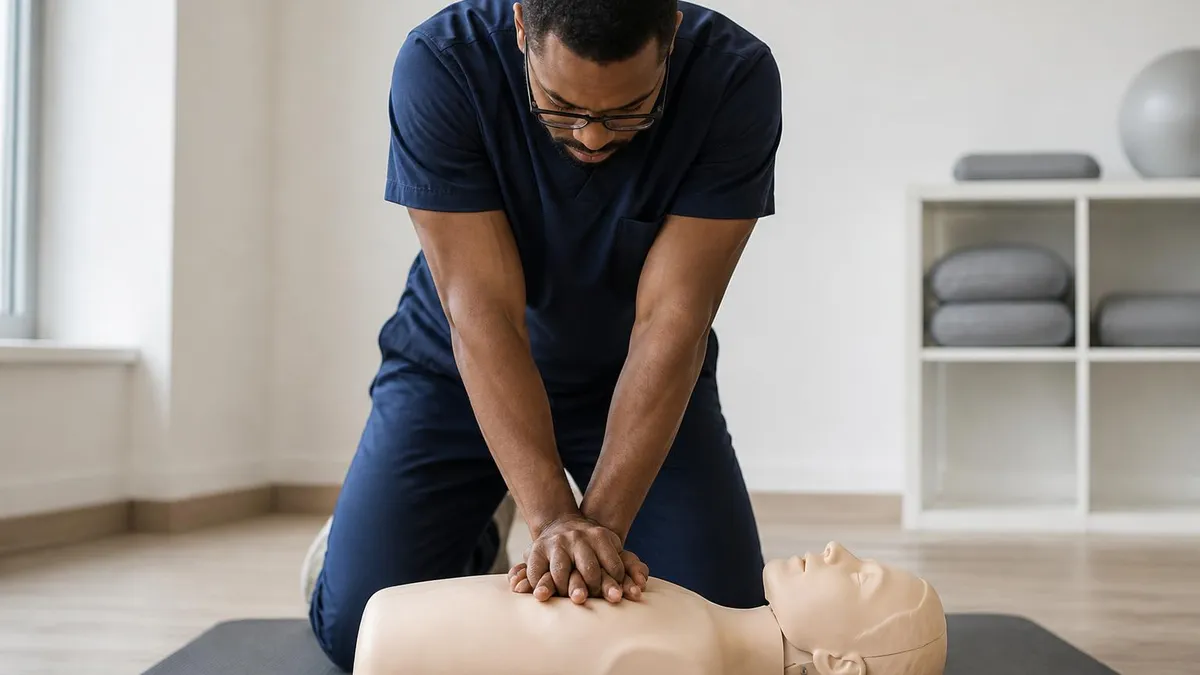
CPR Card Lookup: How to Verify, Replace, and Access Your CPR Certification in 2026
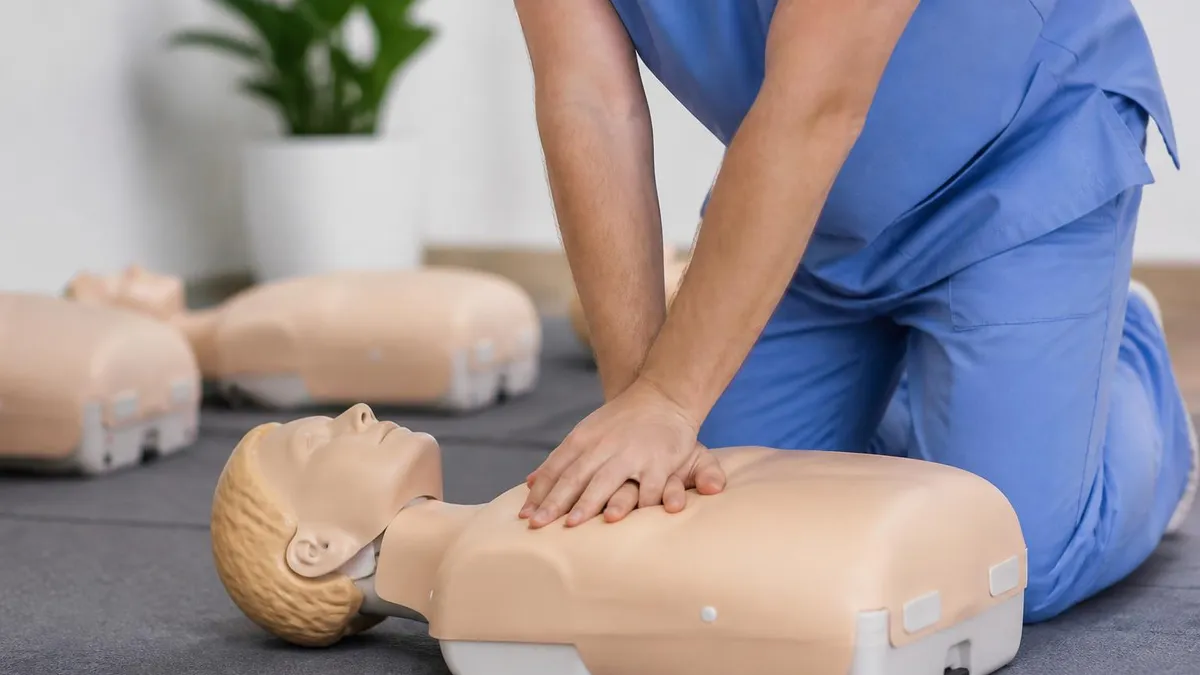
AHA CPR: What It Is, Which Course You Need, and How to Get Certified
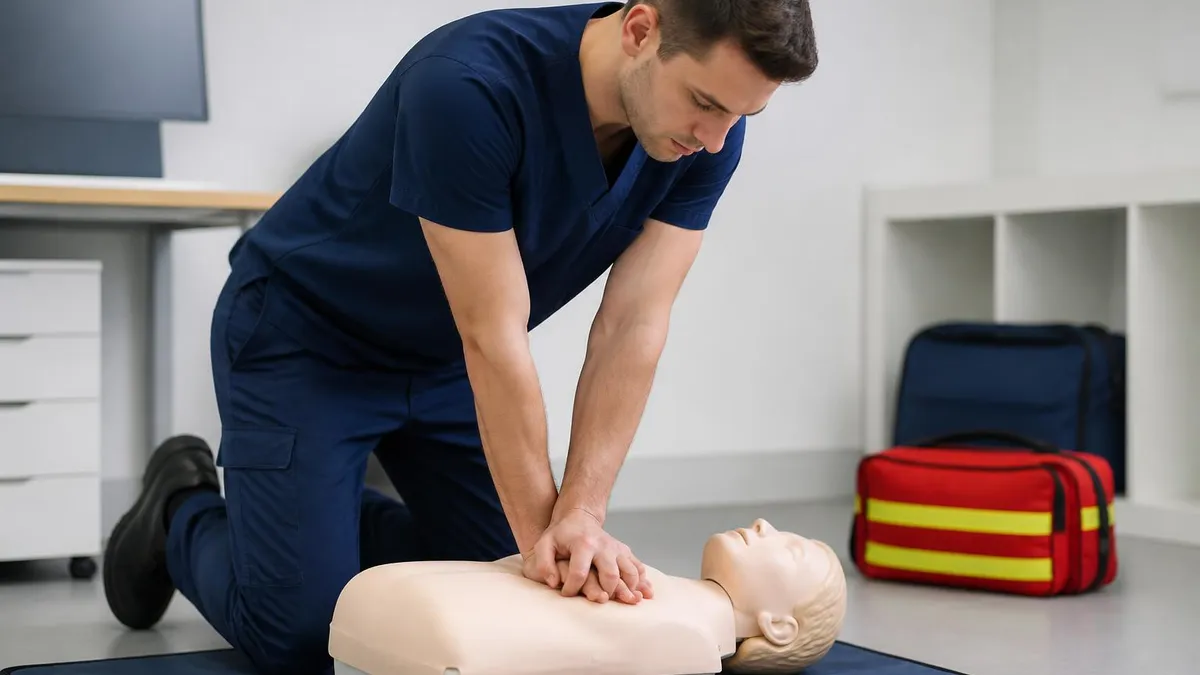
Adult CPR: Complete Step-by-Step Guide to Hands-Only and Standard CPR in 2026
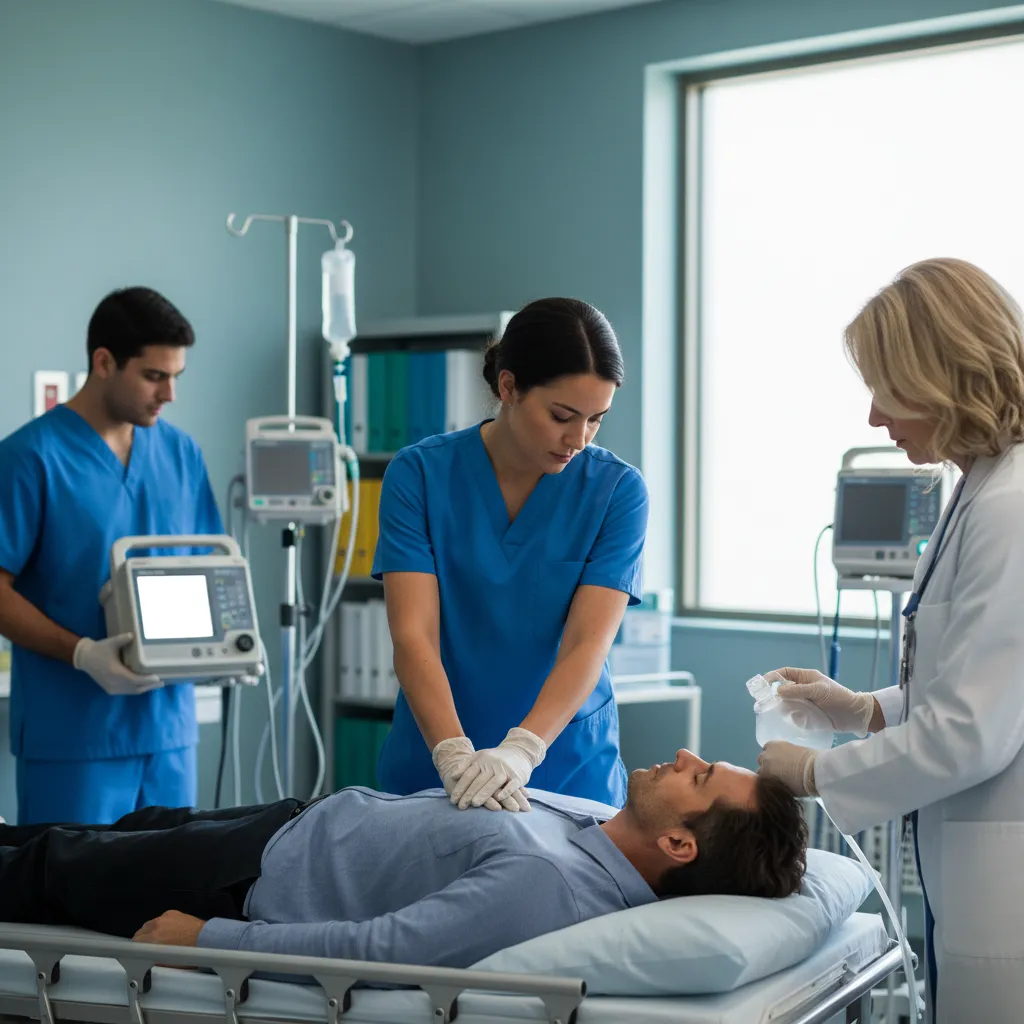
CPR - Cardiopulmonary Resuscitation: Complete Study Guide 2026
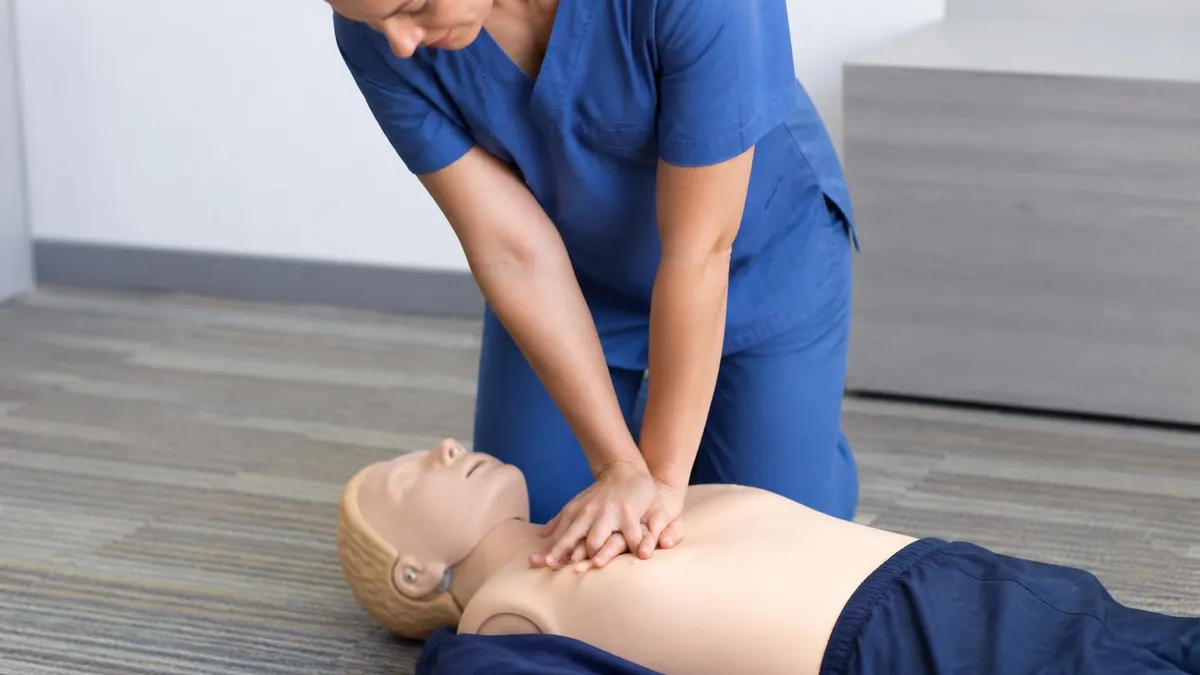
Inappropriate CPR Songs: What Not to Play, Why It Matters, and Better Beat-Per-Minute Alternatives
About the Author

Registered Nurse & Healthcare Educator
Johns Hopkins University School of NursingDr. Sarah Mitchell is a board-certified registered nurse with over 15 years of clinical and academic experience. She completed her PhD in Nursing Science at Johns Hopkins University and has taught NCLEX preparation and clinical skills courses for nursing students across the United States. Her research focuses on evidence-based exam preparation strategies for healthcare certification candidates.
Join the Discussion
Connect with other students preparing for this exam. Share tips, ask questions, and get advice from people who have been there.
View discussion (5 replies)