
AHA CPR Online Course: Complete Guide to American Heart Association Online CPR Training and Certification in 2026 October
AHA CPR online course guide: 📗 enrollment, cost, skills check, certification timeline, and how it compares to in-person training in 2026 October.
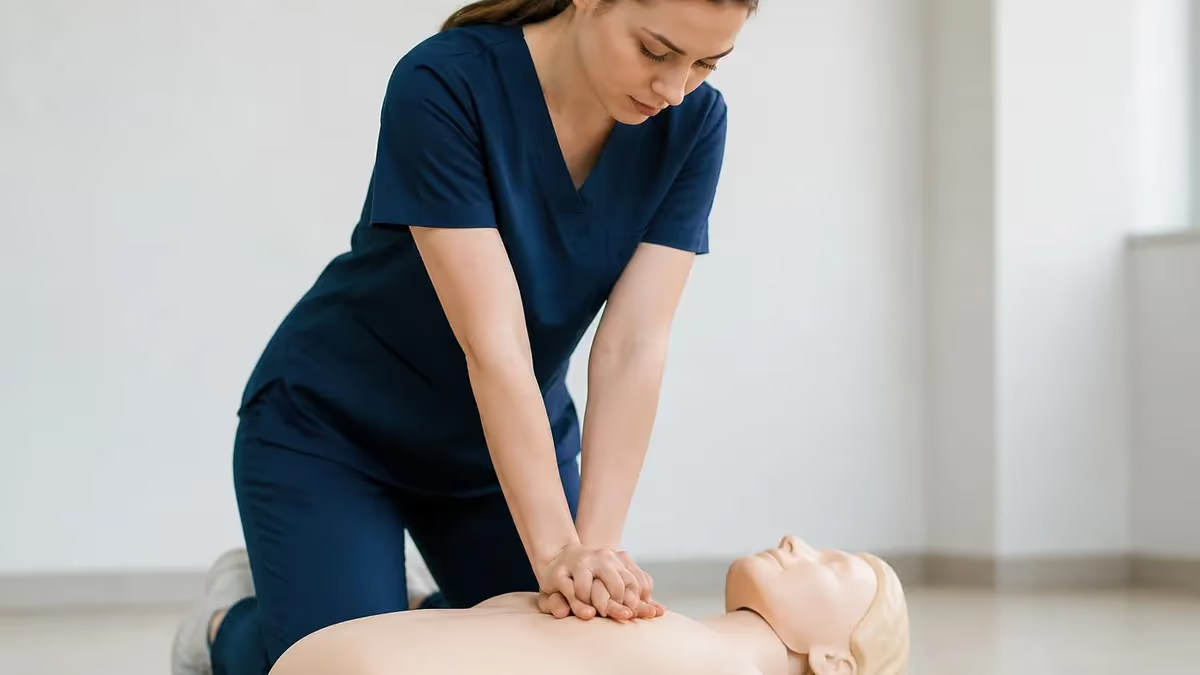
The aha cpr online course has become the most widely accepted digital pathway to earn or renew a CPR card recognized by hospitals, employers, schools, and licensing boards across the United States. Whether you are a first-time learner studying the basics, a nurse refreshing your acls algorithm knowledge, or a daycare worker required to demonstrate infant cpr competency, the American Heart Association's online curriculum offers structured video modules, interactive case scenarios, and a final knowledge test that can typically be completed in two to four hours from any internet-connected device.
Unlike unaccredited programs that promise instant certification, the AHA model uses a blended-learning structure for hands-on courses. You finish the cognitive portion online, then attend a brief in-person skills check with an authorized instructor to verify chest compressions, ventilations, AED use, and choking management. This hybrid design preserves the rigor of traditional training while letting you eliminate hours of classroom lecture, which is why hospital systems and EMS agencies increasingly direct staff to the online option first.
The catalog spans Heartsaver CPR AED, BLS Provider, ACLS, PALS, and renewal versions of each. Heartsaver suits laypeople, teachers, and corporate trainees. BLS Provider is required for nurses, medical assistants, and EMTs. ACLS adds advanced rhythm interpretation and pharmacology for code-blue teams, while pals certification adds pediatric assessment, respiratory rate troubleshooting, and shock management for clinicians who care for children. Choosing the right level depends entirely on what your job, school, or state regulator demands.
Cost is one of the biggest reasons learners pick the online route. A Heartsaver online course typically runs $25 to $40 for the e-learning portion, plus a separate $30 to $60 skills-session fee. BLS runs $30 to $50 online with a similar in-person fee, while ACLS and PALS online modules range from $150 to $325 before skills verification. These rates undercut many community-college classroom prices, and you avoid the lost wages associated with a full eight-hour Saturday session.
Another advantage is portability. Your eCard, issued after both the online and skills portions are complete, lives in the AHA Atlas database and can be verified by any employer in seconds using a unique code. Lost wallet cards no longer mean retaking a class. For travel nurses, contract clinicians, and float-pool staff, this instant verification has become almost essential, especially when credentialing departments require proof within twenty-four hours of hire.
The course is not a shortcut around competency. AHA still requires learners to demonstrate adequate compression depth (at least two inches on adults), correct rate (100 to 120 per minute), and proper AED pad placement on a manikin sensor. Skills sessions usually take twenty to forty-five minutes and end with either a passing sign-off or a request to repeat specific skills. Most students pass on the first attempt because the online portion drills the sequences thoroughly before they ever touch a manikin.
This guide walks through enrollment, content, the skills check, exam structure, costs, renewal timing, and how the AHA online course compares with rival programs like the national cpr foundation and Red Cross digital classes. By the end, you will know exactly which course to register for, what to expect on test day, and how to keep your card active without scrambling at the deadline.
AHA CPR Online Course by the Numbers
Key Facts at a Glance
| Item | Value | Details |
|---|---|---|
| Online Module Length | 2-4 hrs | Heartsaver and BLS average |
| Course Price Range | $30-$325 | Heartsaver to ACLS |
| Certification Validity | 2 yrs | All AHA CPR levels |

AHA CPR Online Course Catalog and Levels
Designed for laypeople, teachers, coaches, childcare workers, and corporate staff. Covers adult, child, and infant cpr, AED use, and choking relief. No medical background required, and it satisfies most workplace OSHA mandates.
The healthcare entry standard. Required for RNs, CNAs, medical assistants, dental hygienists, EMTs, and respiratory therapists. Adds team dynamics, two-rescuer CPR, and bag-mask ventilation tied to monitored respiratory rate cues.
Built for ICU, ER, code, and rapid-response teams. Heavy focus on the acls algorithm, rhythm recognition, IV/IO pharmacology, and post-arrest care. Requires current BLS competency before enrollment.
Pediatric advanced life support for nurses, paramedics, and physicians caring for infants and children. Covers shock, respiratory distress, and arrest. A pals certification is mandatory in most pediatric ICUs and EDs.
Shortened modules for learners with an unexpired card. Skip foundational lectures and focus on updated 2025 guidelines, including refined compression feedback technology and revised post-arrest temperature targets.
The aha cpr online course platform runs entirely through the AHA's elearning portal, accessible from any modern laptop, tablet, or smartphone. After paying, learners receive an immediate access code and can begin within minutes. The interface organizes content into chapters such as scene safety, recognition of cardiac arrest, high-quality compressions, ventilation strategy, AED operation, and special situations like opioid overdose or drowning. Every chapter ends with a short knowledge check that must be passed before the next unit unlocks, preventing learners from skipping ahead.
Video segments use real clinical footage and animated demonstrations rather than slide narration. You watch a rescuer position recovery technique for an unresponsive but breathing patient, then immediately face a branching scenario asking what you would do next. Wrong choices route you to a remediation clip explaining why the answer was incorrect. This adaptive design is why the AHA reports significantly higher knowledge retention compared with passive video courses sold by lesser-known providers.
The cognitive exam typically contains twenty-five multiple-choice questions for Heartsaver and BLS, scaling up to fifty for ACLS and PALS. A passing score is 84 percent or higher, and learners receive instant feedback on missed questions with rationale. If you fail, the platform allows one free retake, and most providers permit additional attempts for a small fee. Once you pass the cognitive section, the system generates a completion certificate you bring to your skills session.
Skills sessions are scheduled separately through an AHA Training Center. The portal lets you search by ZIP code, view instructor reviews, and book a slot, often within forty-eight hours. Some employers operate in-house training centers, allowing staff to complete the skills check during a regular shift. Others partner with fire departments, urgent-care chains, or simulation labs that offer evening and weekend availability for working learners.
For learners worried about technology requirements, the platform works on any device with a current browser. There is no software to install, no proctoring camera, and no biometric verification for the cognitive portion. The honor system applies online; the in-person skills check is where competency is genuinely confirmed. This split is intentional and matches how the AHA has shown that hands-on testing is the only reliable predictor of real-world CPR performance.
Accessibility features include closed captioning, adjustable playback speed, downloadable transcripts, and support for screen readers. Non-native English speakers can switch to Spanish, French, Mandarin, and several other languages depending on the course. Learners with disabilities can request reasonable accommodations for the skills session, such as alternative manikin positioning or extended time for choking demonstrations, by contacting the training center in advance.
The AHA recommends completing the online portion within sixty days of paying, and the skills check must be finished within sixty days of the online completion certificate, for a total window of about one hundred twenty days. Miss the deadline and you must redo the cognitive portion. Setting a reminder on day one prevents an avoidable re-purchase, especially for busy clinicians juggling shift work, school, or family responsibilities during the certification window.
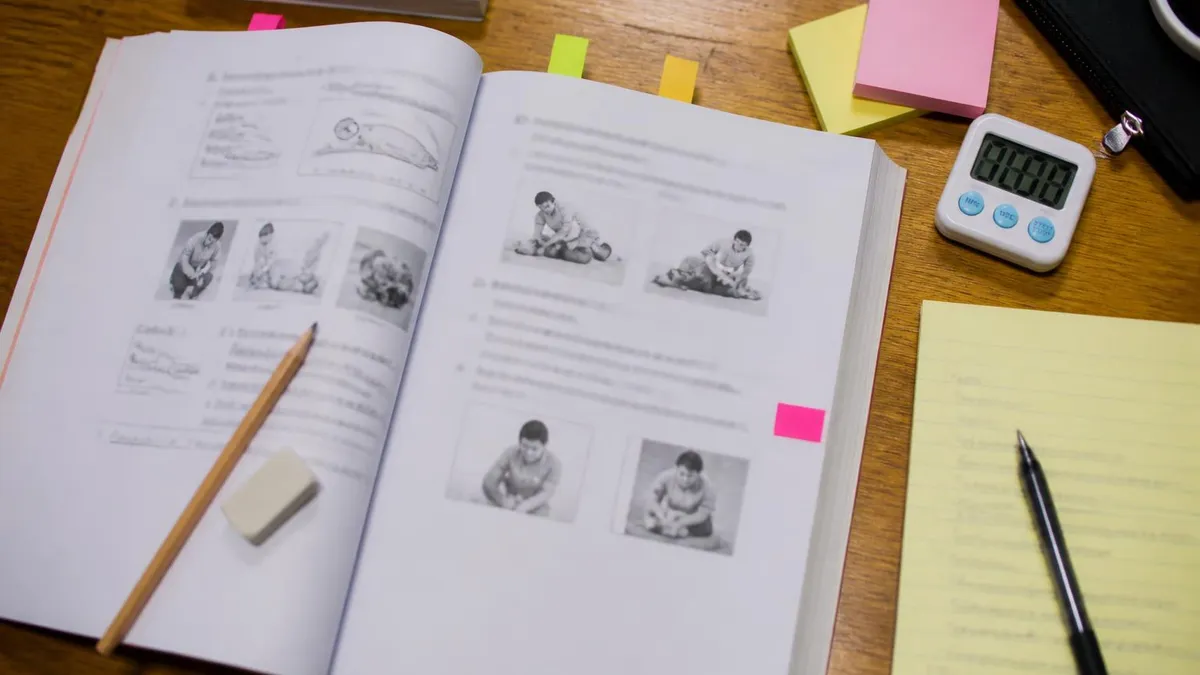
CPR Practice Test Questions
Prepare for the CPR Cardiopulmonary Resuscitation Practice exam with our free practice test modules. Each quiz covers key topics to help you pass on your first try.
CPR Basic CPR
CPR Exam Questions covering Basic CPR. Master CPR Test concepts for certification prep.
CPR and First Aid
Free CPR Practice Test featuring and First Aid. Improve your CPR Exam score with mock test prep.
CPR (Cardiopulmonary Resuscitation) Adult ...
CPR Mock Exam on (Cardiopulmonary Resuscitation) Adult CPR and AED Usage. CPR Study Guide questions to pass on your first try.
CPR (Cardiopulmonary Resuscitation) Airway...
CPR Test Prep for (Cardiopulmonary Resuscitation) Airway Obstruction and Choking. Practice CPR Quiz questions and boost your score.
CPR (Cardiopulmonary Resuscitation) Cardio...
CPR Questions and Answers on (Cardiopulmonary Resuscitation) Cardiopulmonary Emergency Recognition. Free CPR practice for exam readiness.
CPR (Cardiopulmonary Resuscitation) Child ...
CPR Mock Test covering (Cardiopulmonary Resuscitation) Child and Infant CPR. Online CPR Test practice with instant feedback.
CPR (Cardiopulmonary Resuscitation) High-P...
Free CPR Quiz on (Cardiopulmonary Resuscitation) High-Performance Team Dynamics. CPR Exam prep questions with detailed explanations.
CPR (Cardiopulmonary Resuscitation) Legal ...
CPR Practice Questions for (Cardiopulmonary Resuscitation) Legal and Ethical Considerations. Build confidence for your CPR certification exam.
CPR for Specific Populations
CPR Test Online for for Specific Populations. Free practice with instant results and feedback.
CPR Airway & Breathing Management
CPR Exam Questions covering Airway & Breathing Management. Master CPR Test concepts for certification prep.
CPR Assessment & Recognition of Cardiac Ar...
Free CPR Practice Test featuring Assessment & Recognition of Cardiac Arrest. Improve your CPR Exam score with mock test prep.
CPR Chest Compressions & Defibrillation
CPR Mock Exam on Chest Compressions & Defibrillation. CPR Study Guide questions to pass on your first try.
CPR Post-Resuscitation Care & Recovery
CPR Test Prep for Post-Resuscitation Care & Recovery. Practice CPR Quiz questions and boost your score.
Heartsaver vs BLS vs ACLS Online: Which Course Do You Need?
Heartsaver is for non-clinical learners. Babysitters, daycare directors, lifeguards, teachers, security officers, gym staff, and corporate volunteers all qualify. The course covers adult, child, and infant cpr, AED operation, choking relief, and an optional first-aid module covering wounds, burns, and seizures. It does not require any medical background, and learners are never asked to recall acls algorithm details or pediatric pharmacology dosing.
The online segment lasts roughly two hours, and the skills check runs about thirty minutes. Employers in non-healthcare industries almost always accept Heartsaver as proof of competency. Some states, however, specifically require BLS-level certification for school nurses, athletic trainers, and dental assistants. Always verify the exact wording of your state regulation or employer policy before enrolling, since switching from Heartsaver to BLS later costs extra time and money.
Is the AHA CPR Online Course Right for You?
- +Self-paced format lets you study during nights, lunch breaks, or weekends without missing work
- +AHA branding is universally accepted by US hospitals, schools, and licensing boards nationwide
- +Lower total cost than classroom-only options once travel and lost wages are included
- +Instant eCard delivery into the AHA Atlas database after skills sign-off
- +Adaptive learning with branching scenarios improves retention versus passive video providers
- +Closed captioning, transcripts, and multiple language options improve accessibility
- +Renewal versions save current providers two to four hours of repeated content
- −Requires a separate in-person skills check, which still demands scheduling and travel
- −Hands-on practice time is shorter than full classroom courses, which may concern nervous learners
- −Higher-tier ACLS and PALS online courses cost significantly more than Heartsaver
- −Sixty-day completion windows create stress for shift workers and parents juggling other duties
- −Some employers specifically forbid online completion and demand full classroom format
- −Requires reliable internet, a working webcam optional, and a device capable of streaming video

Skills Check Preparation Checklist for the AHA CPR Online Course
- ✓Print or save the online completion certificate to a phone for easy check-in
- ✓Confirm the skills session address, suite number, and parking instructions the day before
- ✓Wear flat shoes and comfortable clothing that allows full kneeling and bending range
- ✓Bring a government photo ID matching the name on your AHA enrollment record
- ✓Review the high-quality CPR pillars: rate, depth, recoil, and minimal interruptions
- ✓Practice the position recovery roll on a willing friend or pillow at home
- ✓Memorize the adult, child, and infant compression-to-ventilation ratios for one and two rescuers
- ✓Re-watch the AED pad placement video, including pediatric pad and key adjustments
- ✓Review what does aed stand for and how to troubleshoot 'check pads' or 'check patient' prompts
- ✓Arrive ten to fifteen minutes early to handle paperwork and breathe before testing begins
Push hard, push fast, allow full recoil
Studies cited by the AHA show survival rates double when compressions are at least two inches deep, delivered at 100 to 120 per minute, and paired with complete chest recoil. The skills check rewards rhythm and depth far more than perfect ventilation technique, so practice with a metronome or a song at 110 beats per minute before test day.
Cost is one of the most frequent questions about the aha cpr online course, and the answer depends on which level you need and where your skills session is located. Heartsaver online ranges from $25 to $40 for the cognitive portion, with skills fees running $30 to $60 depending on the training center. BLS Provider online costs $30 to $50, with skills checks usually $35 to $65. Total spend for a healthcare entry-level card typically lands between $65 and $115, well below most community-college classroom prices.
ACLS Provider Online runs $150 to $225 for the cognitive module, with skills sessions adding $100 to $200 depending on whether a megacode simulator is used. PALS Provider Online prices are nearly identical, $150 to $225, with skills fees in the same range. Renewal versions of ACLS and PALS save about $40 to $75, reflecting the shorter online module and slightly faster skills sign-off for providers with active cards.
Refund policies vary by training center, but the AHA's elearning store typically permits a full refund within thirty days if the course has not been started. Once any module is opened, refunds are usually denied. Save your access code in a password manager rather than launching the course on a whim, because a single click into the first video locks you into the purchase and starts the sixty-day completion clock running immediately.
Employer reimbursement is widely available in healthcare, EMS, fire, dental, and education sectors. Some hospitals pay for the course up front through a learning management system, while others reimburse after you submit a receipt and a copy of the eCard. Always check your benefits handbook or talk to HR before paying out of pocket. Even if reimbursement is denied, the course fee is often deductible as an unreimbursed work expense for self-employed clinicians, contract staff, and independent travel nurses.
Group discounts can substantially reduce per-person cost. Training centers commonly offer 10 to 25 percent off for cohorts of five or more, and some corporate accounts negotiate flat-rate site licenses for hundreds of employees. School districts, daycare chains, and fitness companies frequently arrange these bulk packages. If you manage staff scheduling, ask your AHA training center whether your team qualifies for cohort pricing before letting each employee enroll individually at retail rates.
Hidden costs to watch for include parking at urban skills centers, mileage to rural locations, and time off work for shift-based employees. While the online portion is genuinely flexible, the skills check still demands a real-time appointment. Plan around child-care needs, public-transit schedules, and weather, especially in winter months when icy conditions sometimes force last-minute cancellations and rebooking fees of $25 to $50.
For comparison, classroom-only Heartsaver courses typically cost $75 to $120 all-inclusive, while classroom-only BLS runs $80 to $125. The online route saves $20 to $35 on average and gives you back four to six hours of seat time. Over a two-year certification cycle, that adds up to nearly a full workday of recovered time, which is why most working adults now strongly prefer the blended online format.
Hundreds of websites sell instant CPR cards claiming hospital acceptance without any skills check. These are not AHA courses and are routinely rejected by hospital credentialing offices, nursing schools, and state licensing boards. If a provider promises a printable card in under an hour with no in-person component, assume it will be refused and verify acceptance with your employer in writing before paying.
Renewal of the aha cpr online course follows the same blended structure as initial certification, but with a shortened cognitive module. Heartsaver renewal runs about ninety minutes online, BLS renewal about an hour, and ACLS and PALS renewals about four to five hours. Each ends with the same skills session requirement at an authorized training center. The AHA does not extend cards beyond their printed expiration date, so completing renewal at least thirty days before expiration is strongly recommended.
Once both portions are complete, your AHA eCard is issued through the AHA Atlas system, usually within twenty-four hours. The eCard contains your name, course completed, issue date, expiration date, and a unique verification code. Employers can confirm validity in seconds by entering the code on the AHA eCard verification site. This instant lookup has largely replaced fax-and-photocopy verification used by hospital credentialing offices a decade ago, dramatically speeding up the hiring and floating process.
If you lose access to your eCard, the AHA permits unlimited free reprints from the Atlas portal. You can email the PDF directly to HR, save it to a digital wallet, or print a wallet card on cardstock at home. Some employers require the laminated plastic card historically distributed in classrooms, but the eCard PDF carries identical legal weight under AHA policy, and most institutions have updated their credentialing requirements to accept digital proof.
Two-year expiration is firm. There is no grace period in most states or hospital systems. Expired cards typically cannot be used to clock into clinical shifts, and travel nurses with lapsed BLS may be removed from assignment until renewal is complete. Many hospital learning management systems send sixty, thirty, and seven-day expiration reminders, but ultimately it remains the clinician's responsibility to maintain active life support credentials.
Renewal versus full course: if your card has expired, most training centers require the full initial course rather than the renewal module. The cutoff varies but is usually one to thirty days past expiration. Plan carefully if you are close to the deadline, because retaking the full course costs more, takes longer, and may delay your ability to work clinical shifts. Set a renewal calendar reminder during the same week you finish the original course to prevent this avoidable lapse entirely.
For specialty certifications like ACLS and PALS, the AHA also offers instructor pathways for experienced providers. After holding a current provider card for at least one year and demonstrating teaching aptitude, you can complete an instructor essentials course online and shadow a senior instructor at live classes. Instructor status itself requires renewal every two years, plus a minimum number of taught classes, ensuring active engagement with current resuscitation science and AHA curriculum updates.
Tracking your eCards is easier with the AHA Atlas mobile app. Once installed, all current and historical certifications appear in a single dashboard with expiration countdown timers. Travel clinicians and per-diem staff who hold BLS, ACLS, PALS, and Heartsaver simultaneously find the consolidated view valuable, especially when uploading proof to multiple agency portals during a busy contract season or before a hospital orientation deadline.
Practical preparation for the aha cpr online course skills session begins long before the appointment. Spend at least twenty minutes practicing compression rhythm on a pillow or rolled towel set on a firm surface. Use a metronome app at 110 beats per minute or a recognizable song with the same tempo. The skills evaluator will visually and electronically measure your rate, depth, and recoil, and consistent rhythm built through home practice prevents the most common reason for repeat testing on the spot.
Master the unresponsive assessment sequence in order: scene safety, shoulder tap and shout, call for help and request an AED, check breathing and pulse simultaneously for up to ten seconds, then begin compressions. Many learners stumble not because they cannot perform CPR but because they reverse the assessment steps under pressure. Saying the sequence out loud while practicing locks the order into memory and helps you stay calm when a stranger watches and scores your performance.
For infant cpr practice, use a small stuffed animal or rolled blanket to rehearse two-finger compressions just below the nipple line, at the same 100 to 120 per minute rate but only about 1.5 inches deep. Infant ventilations require a smaller breath volume, just enough to see the chest rise. Skills evaluators frequently fail learners who blow too forcefully, so practicing gentle puffs against your own palm helps calibrate appropriate ventilation pressure ahead of test day.
Choking management is another testable skill. For conscious adults and children, practice abdominal thrusts on a willing friend without actually compressing the abdomen. For infants, alternate five back blows with five chest thrusts, supporting the head and neck throughout. Some evaluators integrate choking into the broader scenario flow, transitioning from a choking adult who becomes unresponsive into full CPR with AED. Rehearsing the transition smooths the moment when the evaluator says, 'now your patient collapses.'
AED practice should include recognizing the device, turning it on, attaching pads correctly, and pausing compressions only when the device analyzes. Pediatric pads or a child key are required for patients under eight years old when available. Adult pads can be used on a child if pediatric pads are unavailable, placing one on the front of the chest and the other on the back. Reviewing this exception prevents hesitation on test day when the manikin scenario specifies a child patient.
Communication is also evaluated, especially in BLS and higher-level courses. Speak loudly when calling for help, identify yourself, request specific actions ('You in the red shirt, call 911 and bring back an AED'), and confirm receipt of commands. AHA team dynamics scoring rewards clear directed communication, closed-loop confirmation, and constructive intervention if a teammate makes an error. Practicing these phrases out loud during your home rehearsal feels awkward but pays off when nerves spike during testing.
Finally, sleep, food, and hydration matter. Skills sessions are short but cognitively demanding, and tired learners make small sequence errors that count against them. Avoid heavy meals an hour before the session, drink water, and arrive a few minutes early to acclimate to the room. If you feel rushed or shaky, ask the instructor for a one-minute pause before starting. Evaluators want you to succeed and will almost always accommodate a brief reset request before the scenario begins.
CPR Questions and Answers
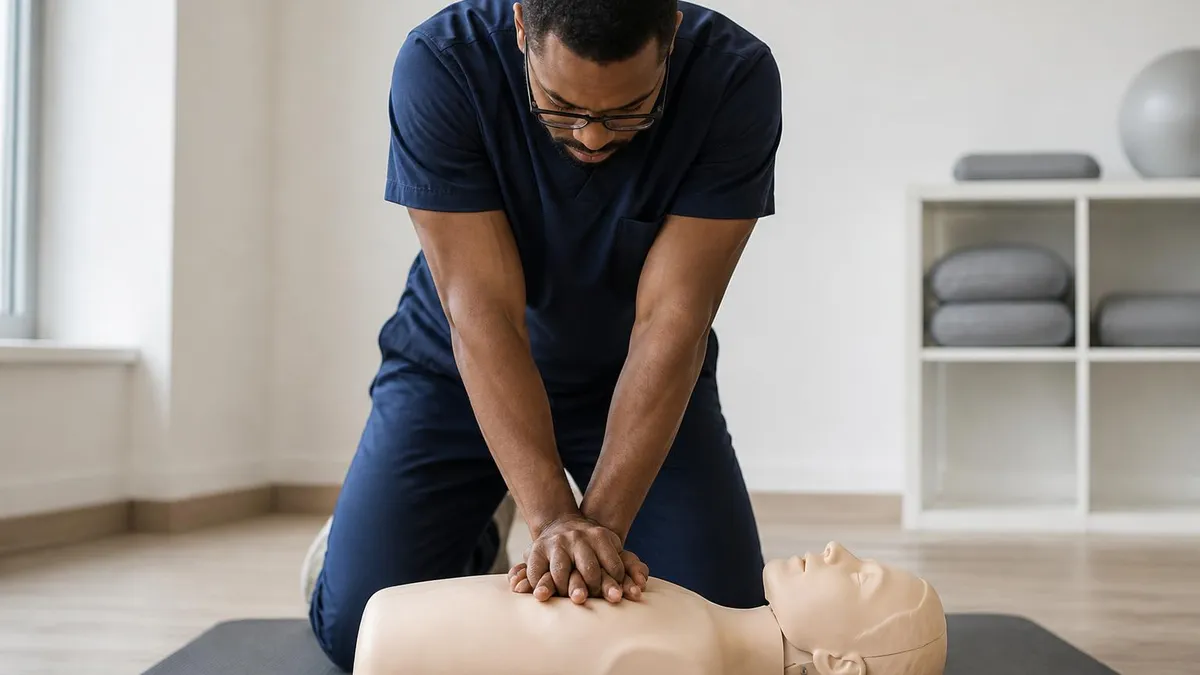
CPR Card Lookup: How to Verify, Replace, and Access Your CPR Certification in 2026
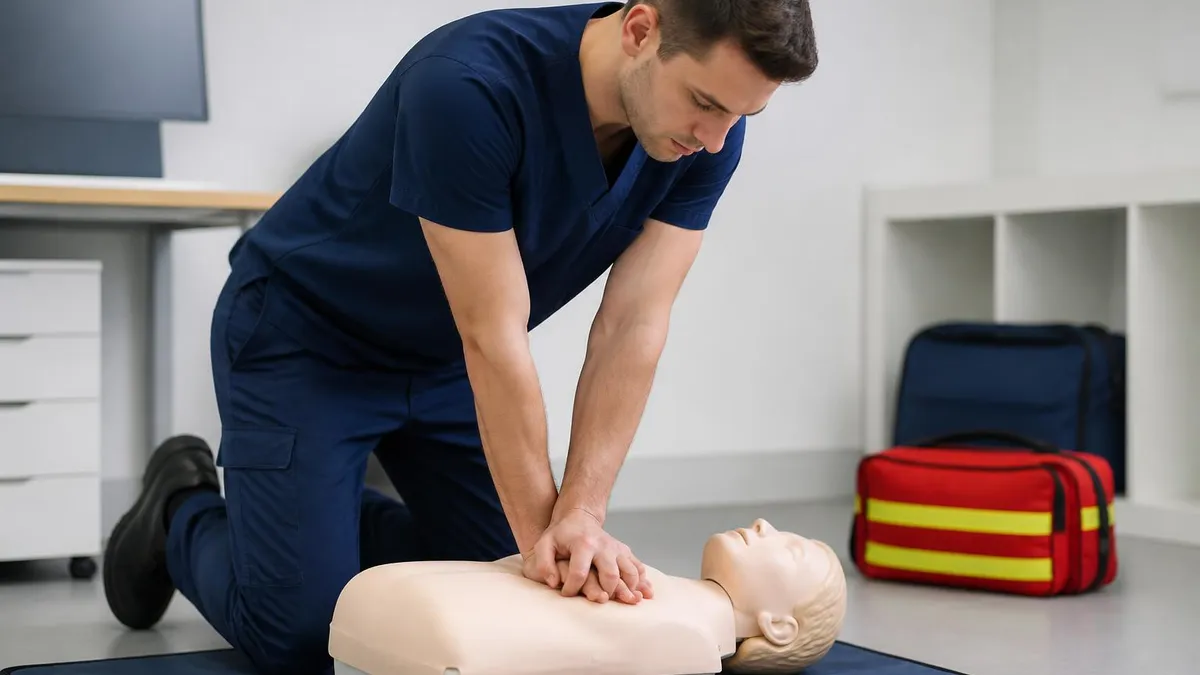
Adult CPR: Complete Step-by-Step Guide to Hands-Only and Standard CPR in 2026
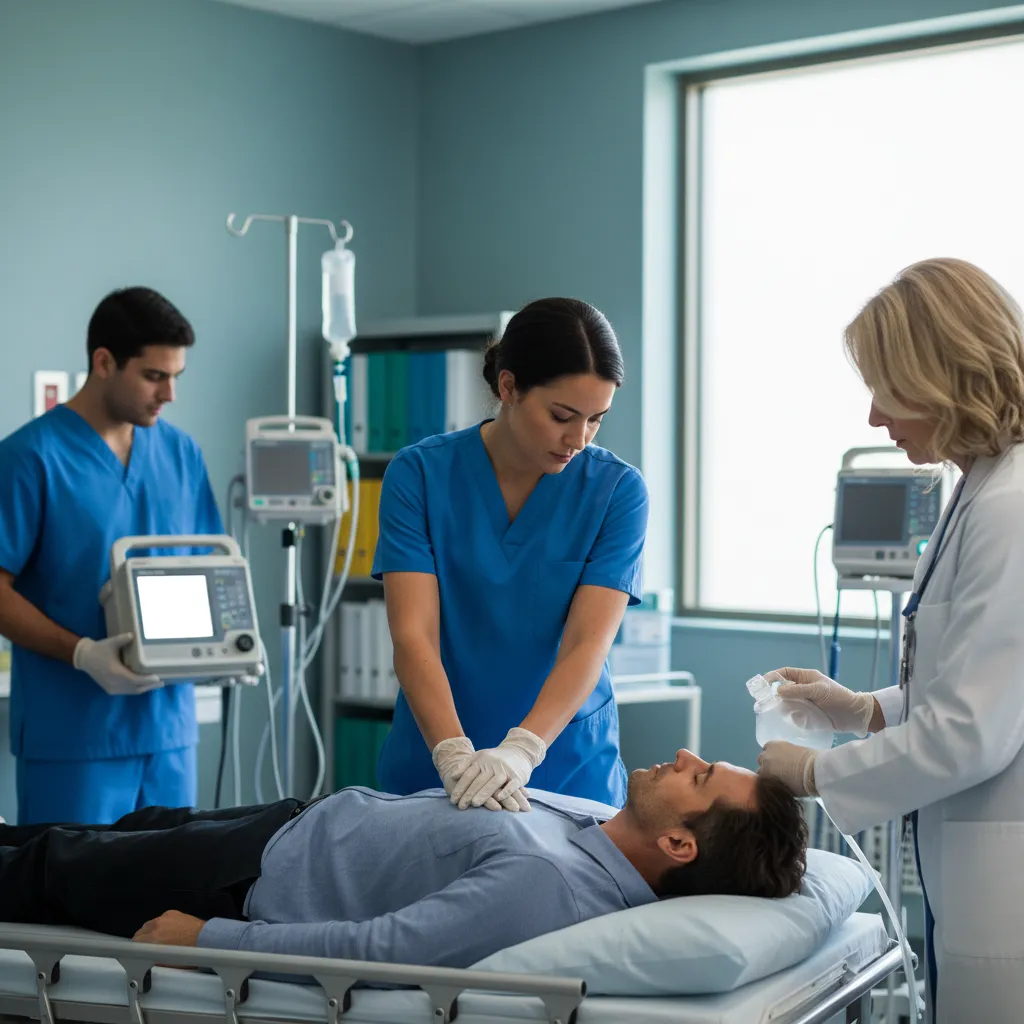
CPR - Cardiopulmonary Resuscitation: Complete Study Guide 2026
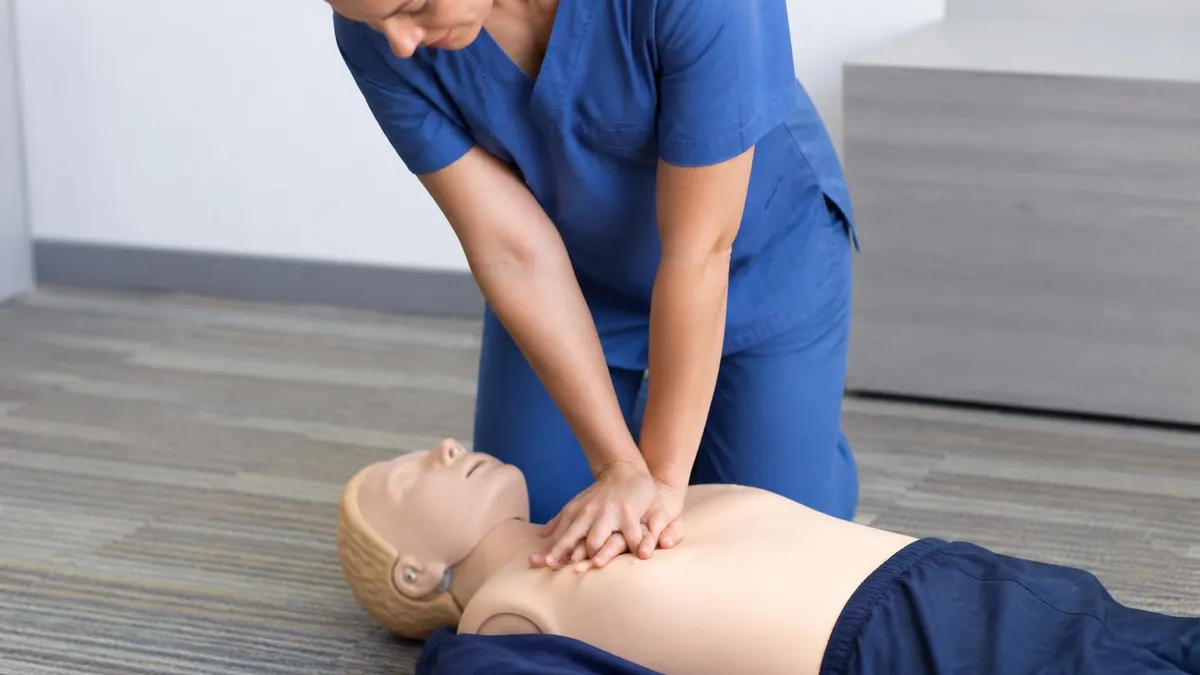
Inappropriate CPR Songs: What Not to Play, Why It Matters, and Better Beat-Per-Minute Alternatives
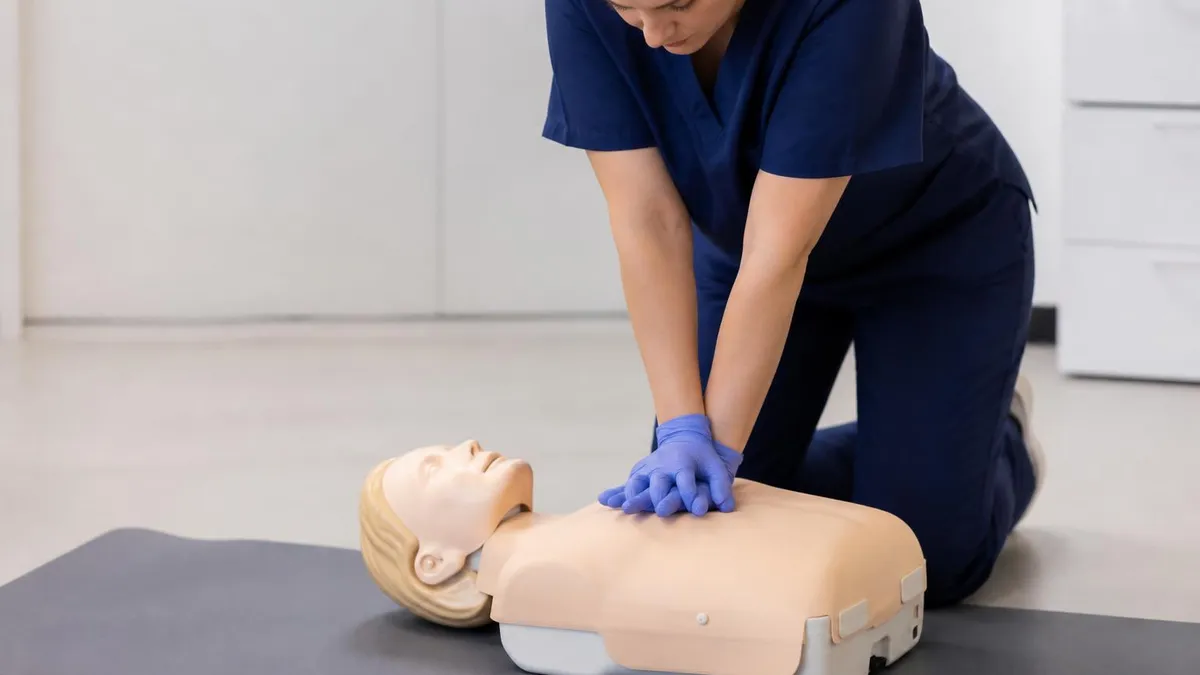
AHA CPR Recertification: How to Recertify CPR Online with the American Heart Association in 2026
About the Author

Registered Nurse & Healthcare Educator
Johns Hopkins University School of NursingDr. Sarah Mitchell is a board-certified registered nurse with over 15 years of clinical and academic experience. She completed her PhD in Nursing Science at Johns Hopkins University and has taught NCLEX preparation and clinical skills courses for nursing students across the United States. Her research focuses on evidence-based exam preparation strategies for healthcare certification candidates.
Join the Discussion
Connect with other students preparing for this exam. Share tips, ask questions, and get advice from people who have been there.
View discussion (5 replies)