
Become a CPR Instructor: Complete Career Guide to Teaching CPR, BLS, ACLS, and PALS in 2026 October
✅ Become a CPR instructor in 2026 October: certification paths, costs, salary, ACLS algorithm mastery, and how to teach BLS, PALS, and infant CPR classes.
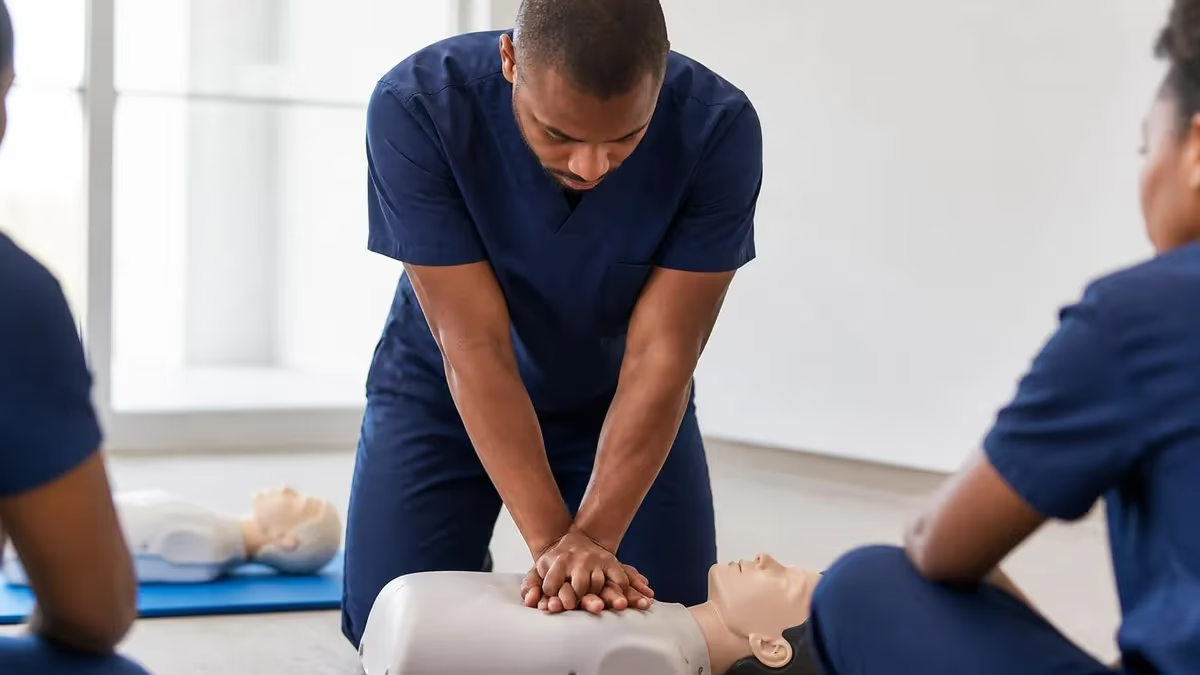
If you want to become a CPR instructor, you are stepping into one of the most rewarding teaching roles in healthcare education. CPR instructors teach laypeople, nurses, paramedics, and physicians the skills that genuinely save lives during cardiac arrest, choking emergencies, and drowning events. You will guide students through chest compressions, ventilations, AED operation, and the acls algorithm sequences that govern advanced resuscitation. The role blends clinical knowledge, classroom facilitation, and a deep responsibility for student competency that extends far beyond a typical teaching job.
The path is more accessible than most people assume. You do not need a medical degree to teach basic CPR. What you need is a current provider-level certification, an instructor course from a recognized training organization, and a monitored teach-out where a senior instructor evaluates your first class. Organizations like the American Heart Association, American Red Cross, Health & Safety Institute, and the national cpr foundation each have their own instructor pathways, fee structures, and renewal cycles you should understand before committing.
The demand has never been stronger. OSHA workplace requirements, state childcare licensing rules, school athletic policies, and hospital onboarding programs all mandate CPR training that must be delivered by a credentialed instructor. Hospitals also need BLS, ACLS, and pals certification instructors on staff to keep clinical teams compliant. That demand translates into steady part-time income for independent instructors and full-time training-center coordinator roles for those who scale up to manage multiple teaching sites.
Beyond the income, instructors describe a unique satisfaction. You watch a hesitant student push 2 inches deep at 100 to 120 compressions per minute by the end of class. You see a parent finally feel confident performing infant cpr on a manikin after weeks of anxiety. You hear from former students months later who used what you taught them on a coworker, neighbor, or family member. Few teaching credentials carry that kind of direct, measurable, life-saving weight.
This guide walks through every step you need to take. We cover prerequisites, instructor course content, equipment investment, pricing your classes, the difference between teaching as an employee versus owning a training site, and how to add advanced disciplines like ACLS and PALS once you have established a base of BLS students. We also cover the realistic time and money it takes to break even and the common reasons new instructors quit within the first year.
Whether you are a registered nurse looking for a meaningful side income, a paramedic moving into education, a firefighter wanting to teach the community, or a layperson with strong teaching skills, you can build a sustainable instructor practice. The information ahead is based on the actual fee structures, renewal cycles, and equipment requirements used by the major US training organizations in 2026.
Before you spend a dollar on an instructor course, read the entire guide so you know which credential path fits your goals, how long it really takes, and what your first year of teaching will look like financially and operationally.
CPR Instructor Career by the Numbers
Key Facts at a Glance
| Item | Value | Details |
|---|---|---|
| Instructor Course Length | 16–20 hrs | Including teach-out |
| Instructor Renewal Cycle | 2 years | For most organizations |
| Minimum Teaching Quota | 4 classes | Per 2-year cycle (AHA) |

Step-by-Step Path to Become a CPR Instructor
Hold Current Provider Card
Align With a Training Center
Complete Instructor Essentials
Pass Monitored Teach-Out
Receive Instructor Card
Meet Renewal Requirements
Choosing the right training organization is the single most important decision you will make. Each organization has a different audience, fee structure, and curriculum philosophy. The American Heart Association (AHA) is the dominant brand inside hospitals, EMS systems, and nursing programs. If you plan to teach healthcare professionals who need BLS, ACLS, or pals certification accepted by employers, the AHA pathway is usually the right answer despite higher fees and stricter quality assurance audits.
The American Red Cross (ARC) holds strong recognition in community, workplace, school, and lifeguard markets. ARC instructors often teach OSHA-compliant first aid combined with CPR/AED, and the curriculum is well suited to laypeople who want a friendly, scenario-driven learning experience. ARC fees are competitive and the digital platform is straightforward, which makes ARC an attractive entry point for new instructors targeting community and corporate clients rather than hospitals.
The Health & Safety Institute (HSI), which includes ASHI and MEDIC First Aid brands, is widely used for workplace and industrial training. HSI is OSHA, DOT, and state-accepted in nearly every jurisdiction and offers more flexible blended-learning options than AHA. Many independent instructors prefer HSI because Training Center fees are lower, paperwork is simpler, and class formats can be customized to specific industries like construction, manufacturing, and oil and gas.
The national cpr foundation and similar online-only providers occupy a separate niche. They are inexpensive and convenient for individuals whose employers explicitly accept any nationally recognized credential. However, hospitals, EMS agencies, and most state licensing boards will not accept these cards. As an instructor, you generally cannot teach for these organizations the way you can for AHA, ARC, or HSI, so they are providers, not instructor pathways for healthcare educators.
Before you choose, call three local employers in your target market and ask which cards they accept. Hospitals will say AHA almost universally. Daycares may accept ARC or AHA. Industrial sites will often accept HSI/ASHI. Schools vary by state. The answer determines which instructor card actually generates revenue for you. Picking the wrong organization can mean spending $300 to $700 on training that local clients will not recognize.
You should also evaluate the Training Center landscape in your area. Some regions have a dominant TC that requires instructors to charge through them and split revenue. Other regions have several smaller TCs competing for instructors and offering favorable terms. Independent instructors with their own Training Site authorization keep more revenue but take on equipment, insurance, and quality assurance responsibilities themselves. Review the CPR - Cardiopulmonary Resuscitation: Complete Study Guide 2026 for a refresher on provider-level content before choosing.
Finally, think about expansion. If you start with BLS and want to add ACLS and PALS later, AHA gives you a clean upgrade path because the science, algorithms, and documentation systems are consistent across all disciplines. HSI offers Advanced Bleeding Control and EMR-level instruction. ARC offers Wilderness and First Responder programs. Your long-term plan should drive your starting organization, not the other way around.

CPR Practice Test Questions
Prepare for the CPR Cardiopulmonary Resuscitation Practice exam with our free practice test modules. Each quiz covers key topics to help you pass on your first try.
CPR Basic CPR
CPR Exam Questions covering Basic CPR. Master CPR Test concepts for certification prep.
CPR and First Aid
Free CPR Practice Test featuring and First Aid. Improve your CPR Exam score with mock test prep.
CPR (Cardiopulmonary Resuscitation) Adult ...
CPR Mock Exam on (Cardiopulmonary Resuscitation) Adult CPR and AED Usage. CPR Study Guide questions to pass on your first try.
CPR (Cardiopulmonary Resuscitation) Airway...
CPR Test Prep for (Cardiopulmonary Resuscitation) Airway Obstruction and Choking. Practice CPR Quiz questions and boost your score.
CPR (Cardiopulmonary Resuscitation) Cardio...
CPR Questions and Answers on (Cardiopulmonary Resuscitation) Cardiopulmonary Emergency Recognition. Free CPR practice for exam readiness.
CPR (Cardiopulmonary Resuscitation) Child ...
CPR Mock Test covering (Cardiopulmonary Resuscitation) Child and Infant CPR. Online CPR Test practice with instant feedback.
CPR (Cardiopulmonary Resuscitation) High-P...
Free CPR Quiz on (Cardiopulmonary Resuscitation) High-Performance Team Dynamics. CPR Exam prep questions with detailed explanations.
CPR (Cardiopulmonary Resuscitation) Legal ...
CPR Practice Questions for (Cardiopulmonary Resuscitation) Legal and Ethical Considerations. Build confidence for your CPR certification exam.
CPR for Specific Populations
CPR Test Online for for Specific Populations. Free practice with instant results and feedback.
CPR Airway & Breathing Management
CPR Exam Questions covering Airway & Breathing Management. Master CPR Test concepts for certification prep.
CPR Assessment & Recognition of Cardiac Ar...
Free CPR Practice Test featuring Assessment & Recognition of Cardiac Arrest. Improve your CPR Exam score with mock test prep.
CPR Chest Compressions & Defibrillation
CPR Mock Exam on Chest Compressions & Defibrillation. CPR Study Guide questions to pass on your first try.
CPR Post-Resuscitation Care & Recovery
CPR Test Prep for Post-Resuscitation Care & Recovery. Practice CPR Quiz questions and boost your score.
Disciplines You Can Teach: BLS, ACLS Algorithm Mastery, and Beyond
Basic Life Support (BLS) and Heartsaver (CPR/AED/First Aid for laypeople) are where most instructors start. BLS targets healthcare professionals and includes adult, child, and infant cpr, bag-mask ventilation, AED use, and high-performance team dynamics. Heartsaver targets workplaces, schools, and parents with simpler, more conversational instruction focused on confidence and willingness to act in a real emergency.
These two disciplines drive the highest class volume and the most stable income stream. You can run a Heartsaver class for 6 to 12 students in 3 to 4 hours, or a BLS class in 2.5 to 3.5 hours. Many instructors fill their schedules entirely with these two products, charging $45 to $90 per student depending on the local market and whether the class is on-site at a corporate client or open enrollment at your training space.
Is Becoming a CPR Instructor Right for You?
- +Flexible schedule lets you teach evenings, weekends, or full-time
- +Strong demand from hospitals, daycares, schools, and workplaces
- +Per-class earnings of $300 to $1,200 once equipment is paid off
- +Genuinely meaningful work that enables students to save lives
- +Multiple credential paths let you scale into ACLS and PALS
- +Low overhead compared to most home-based businesses
- +Networking with healthcare professionals expands future opportunities
- −Upfront cost of $1,500 to $5,000 for instructor course and manikins
- −Renewal fees, science updates, and quality assurance audits never stop
- −Training Centers may take 30 to 50 percent of your revenue
- −Marketing your classes is a separate skill many instructors underestimate
- −Liability insurance and proper documentation are non-negotiable
- −Equipment cleaning and infection control add hours after every class
- −Inconsistent income early on until you build a steady client base

Equipment and Setup Checklist for New CPR Instructors
- ✓Six adult CPR manikins with feedback devices for compression depth and rate
- ✓Two child manikins and two infant manikins to teach infant cpr correctly
- ✓One AED trainer per two students with adult and pediatric pad sets
- ✓Bag-mask ventilation devices in adult, child, and infant sizes for BLS
- ✓Pocket masks with one-way valves for every student to keep
- ✓Manikin lung bags, face shields, and disinfectant wipes in bulk
- ✓Instructor laptop, HDMI cable, and portable speaker for video segments
- ✓Printed skills testing checklists and student rosters for every class
- ✓Professional liability insurance covering instruction and equipment use
- ✓Locking storage tote for manikins to control infection risk and damage
Feedback devices double student retention
Manikins with real-time compression depth and rate feedback dramatically improve student performance and confidence. Studies repeatedly show that learners using feedback devices push to the correct 2-inch depth at 100 to 120 per minute far more reliably than those trained on basic manikins. Investing $200 to $400 extra per manikin pays off in better skills retention, fewer remediations, and stronger word-of-mouth referrals.
The business side of being a CPR instructor decides whether this becomes a sustainable career or an expensive hobby. Start by understanding your true cost per class. Manikin depreciation, AED trainer batteries, disposables like face shields and lung bags, room rental or mileage to client sites, payment processing fees, and your time setting up and tearing down all need to be priced in. A class that grosses $600 may net only $300 to $400 once these costs are honestly accounted for.
Pricing strategy varies by audience. Open enrollment Heartsaver classes typically run $55 to $90 per student. On-site corporate Heartsaver classes are often quoted as a flat fee of $400 to $900 for up to 10 students plus a per-student fee above that threshold. BLS for healthcare providers commands $65 to $110 per student. ACLS and pals certification classes range from $200 to $325. Specialty add-ons like Bloodborne Pathogens add $15 to $25 per student.
Your business model affects margins more than your hourly rate. Independent instructors aligned with a Training Center often pay $25 to $40 per eCard issued, which compresses margins on lower-priced classes. Owning your own Training Site eliminates that fee but requires direct accountability for quality assurance, audits, and equipment maintenance. Many instructors operate as a hybrid—using a TC for credentialing while running their own scheduling, billing, and marketing independently.
Marketing matters far more than most new instructors expect. Google Business Profile, a simple WordPress site with clear pricing, and consistent reach-outs to local daycares, gyms, dental offices, and home health agencies generate the bulk of repeat business. Many successful instructors find that 70 percent of their revenue comes from 20 percent of their clients—usually corporate accounts that book quarterly recurring classes. Building three or four of these anchor clients in your first year transforms cash flow.
Track your numbers from day one. A simple spreadsheet showing date, client, students, gross, eCard cost, supplies cost, travel cost, and net per class will tell you within 60 to 90 days whether your pricing is sustainable. New instructors frequently underprice the first dozen classes to build experience, then struggle to raise rates without losing clients. Set your real price from the start and offer a small launch discount only when strictly necessary to secure an anchor account.
Long-term, the most profitable instructors evolve into multi-discipline trainers running ACLS, PALS, and specialty courses alongside BLS. They also begin hiring contract instructors to cover overflow classes, which lets them scale revenue without scaling their personal teaching hours. This is the inflection point where CPR instruction stops being side income and becomes a real small business with employees, brand recognition, and recurring institutional contracts.
Many instructors also pair instruction with mobile services. Some teach onsite at gyms, schools, and corporate offices. Others rent a small classroom or partner with a coworking space for monthly open enrollment classes. The right mix depends on your market density, vehicle space for hauling manikins, and how much time you can dedicate to teaching versus operations.
Your instructor card has a hard expiration date, and most organizations require a minimum number of taught classes plus a current provider card before they will renew you. Miss the deadline and you must start over with a full instructor course—not a quick renewal. Set calendar alerts 90 and 30 days before expiration, and never let your underlying provider card lapse, because expired providers cannot teach even one day past the date.
Once you are credentialed and equipped, your long-term success as an instructor depends on the quality of your teaching, not your credentials. The best instructors share a few habits worth copying. They arrive 45 minutes early to set up so the room is calm when students walk in. They start with a brief story about a real cardiac arrest, then transition into objectives. They never lecture for more than 8 minutes before putting students on a manikin. They debrief after every skills practice, even brief ones, using calm questions rather than corrections.
Strong instructors also master the art of debriefing without shaming. The best phrase in resuscitation education is, "Walk me through what you were thinking." That single question surfaces knowledge gaps, builds psychological safety, and creates the conditions for real learning. Students who feel safe to make mistakes in your classroom are far more likely to act decisively in a real emergency, which is ultimately the entire purpose of every class you teach.
Stay technically current. The science behind CPR evolves continually as new studies update compression depth, ventilation rates, drug protocols, and post-arrest care guidelines. Subscribe to your training organization's instructor updates, read the AHA Focused Updates as they publish, and review the acls algorithm whenever you teach an advanced class. Students will ask you sharp questions, and your credibility depends on knowing the latest evidence rather than reciting outdated 2015 guidelines.
Build relationships with your Training Center Faculty and other local instructors. Regional instructor meetings, online forums, and informal coffee meet-ups are where you learn what hospitals are looking for, which corporate clients are about to put training out for bid, and which curriculum updates are coming. Isolated instructors fall behind; connected instructors get referrals, mentorship, and early information that translates directly into more classes and better outcomes. Refresh your own skills periodically with the AHA CPR Recertification: How to Recertify CPR Online with the American Heart Association in 2026 guide.
Document everything obsessively. Every class roster, signed attendance sheet, skills testing checklist, and equipment inspection log should be archived for at least 5 years. If a quality assurance audit hits or a student challenges a card, your documentation is your protection. Cloud-based systems with daily backup are non-negotiable. Lost paperwork is one of the most common reasons instructors lose their credentials during routine audits.
Finally, manage your own energy. Teaching 4 to 6 classes a week is physically demanding. You are kneeling, demonstrating compressions, hauling equipment, and talking for hours. Plan recovery days, alternate heavy and light weeks, and rotate which class types you teach to avoid burnout. Instructors who pace themselves teach for 10 to 20 years; those who overbook themselves in year one frequently quit by month 18.
The long-game perspective matters. Treat the first 12 months as a learning investment rather than a profit center. Focus on student feedback, refining your scenarios, and building anchor accounts. Profitability and brand recognition usually arrive in year 2, and true scale—with subcontractors or your own Training Site—is realistic by year 3 for instructors who treat the work as a real business.
For your first six months of teaching, build a repeatable class flow that you can deliver almost on autopilot. Open with a 5-minute welcome and overview. Move into chain of survival, then jump straight to manikin practice for adult compressions. Add ventilations once compressions are clean. Layer the AED in next, then transition to child and infant skills. Wrap with scenario practice and written testing. This sequence respects how adults actually learn and keeps students moving rather than sitting.
Plan for common student questions. Expect to be asked what does aed stand for almost every class—the answer is automated external defibrillator, and a good 60-second explanation of the device's analyze, shock-advised, and shock-delivered cycle helps demystify it. Be ready to explain why you check pulse for no more than 10 seconds, why compressions are 2 to 2.4 inches deep in adults, and why infant cpr uses two fingers or the two-thumb encircling hands technique depending on the number of rescuers.
Pay extra attention to ventilation teaching. Many students struggle with proper bag-mask seal, and inadequate ventilation is a common cause of poor compression performance because students compensate with too-slow compressions. Teach the E-C clamp technique, demonstrate visible chest rise, and tie ventilation rate back to physiological respiratory rate principles. Students retain ventilation skills far better when they understand the why behind each step rather than memorizing numbers from a slide.
Practice your recovery position teaching. Many lay-rescuer programs include placing an unconscious but breathing patient into the recovery position to maintain airway patency until EMS arrives. Demonstrate position recovery slowly, narrate each hand placement, and have students practice on each other so they feel the body mechanics. This is one of the highest-confidence skills students take home from class, and clean teaching here often drives word-of-mouth referrals.
Build in scenario-based learning. Once skills are competent, run short scenarios—witnessed collapse at a desk, choking at a restaurant, infant unresponsive in a crib—where students apply judgment under mild pressure. Two or three scenarios per class dramatically improve retention compared to skills-only practice. Always debrief with open questions: "What went well? What surprised you? What would you do differently next time?" This is what separates a memorable class from a forgettable one.
Handle non-CPR questions gracefully. Have prepared, brief, professional answers, and know when to defer beyond your scope. "That's a great question for your physician" is a perfectly acceptable response that builds trust rather than eroding it.
Finally, ask for feedback after every single class. A 3-question survey—what was most helpful, what was confusing, what would you change—gives you continuous improvement data. Top instructors review feedback weekly, refine one thing at a time, and watch their average class ratings climb steadily over the first year. That feedback loop is the closest thing to a guaranteed path to becoming a great CPR instructor.
CPR Questions and Answers
CPR Card Lookup: How to Verify, Replace, and Access Your CPR Certification in 2026
Adult CPR: Complete Step-by-Step Guide to Hands-Only and Standard CPR in 2026
CPR - Cardiopulmonary Resuscitation: Complete Study Guide 2026
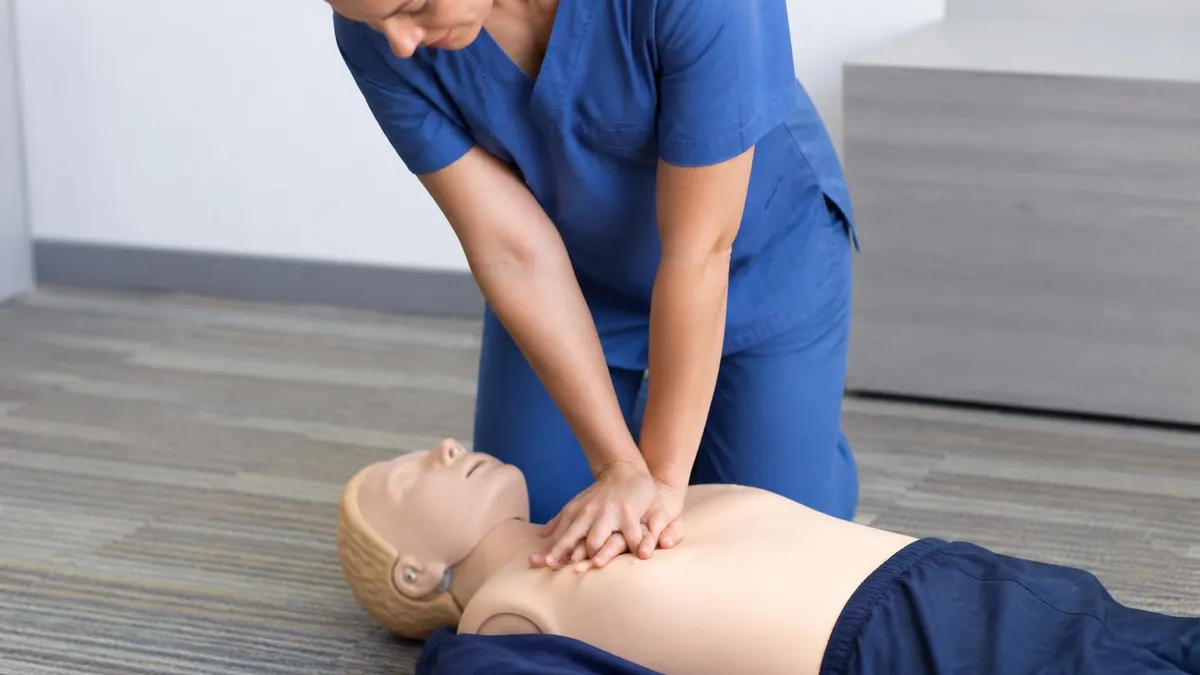
Inappropriate CPR Songs: What Not to Play, Why It Matters, and Better Beat-Per-Minute Alternatives
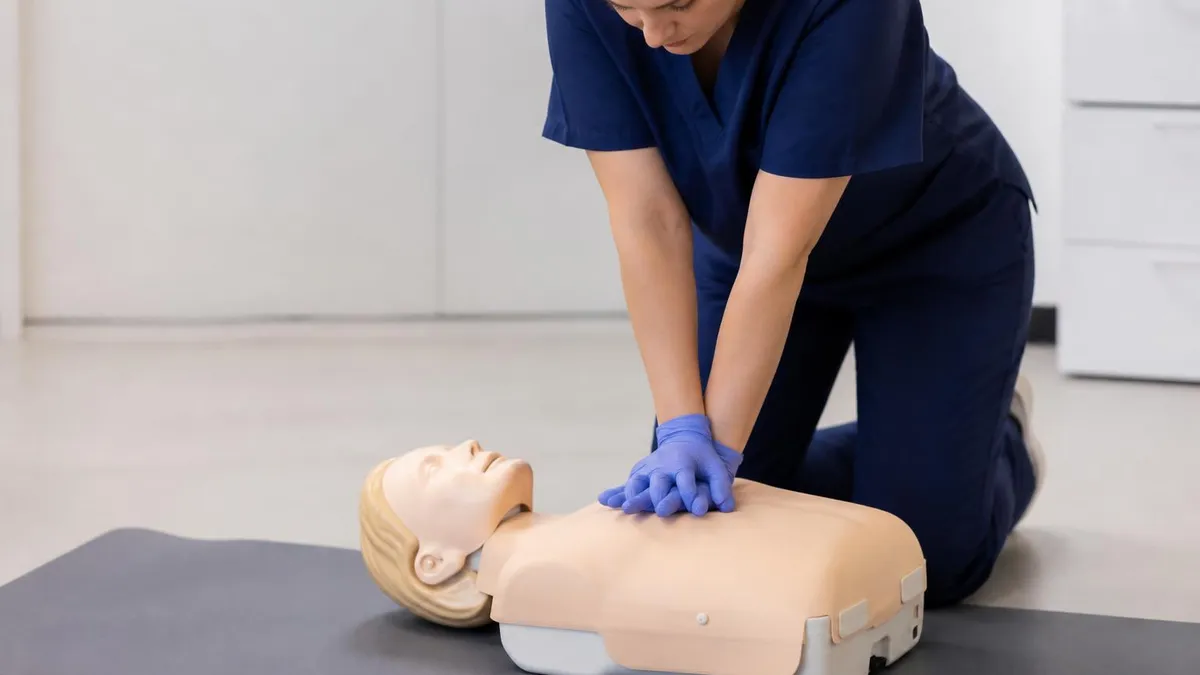
AHA CPR Recertification: How to Recertify CPR Online with the American Heart Association in 2026
About the Author

Registered Nurse & Healthcare Educator
Johns Hopkins University School of NursingDr. Sarah Mitchell is a board-certified registered nurse with over 15 years of clinical and academic experience. She completed her PhD in Nursing Science at Johns Hopkins University and has taught NCLEX preparation and clinical skills courses for nursing students across the United States. Her research focuses on evidence-based exam preparation strategies for healthcare certification candidates.
Join the Discussion
Connect with other students preparing for this exam. Share tips, ask questions, and get advice from people who have been there.
View discussion (5 replies)