
CPR Online Course: Complete 2026 October Guide to Virtual Certification, Costs, and Accreditation
❓ Compare the best CPR online course options for 2026 October. Learn pricing, accreditation, ACLS algorithm prep, and how to get certified fast from home.
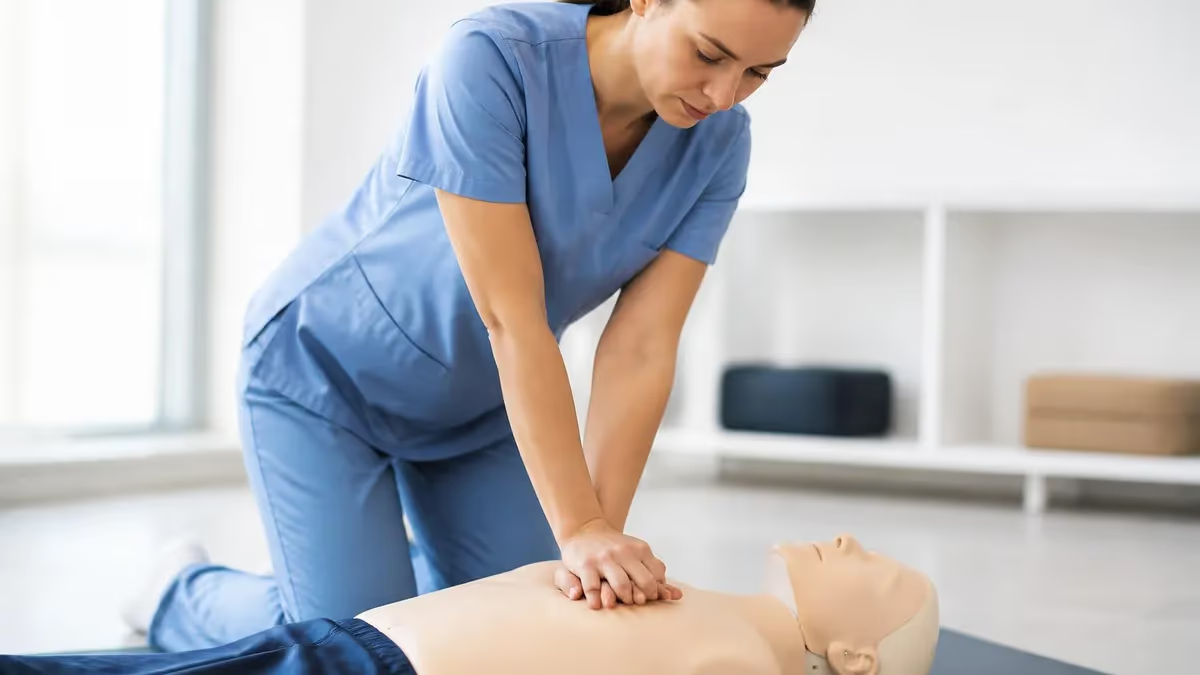
A cpr online course is the fastest, most flexible way to earn or renew a lifesaving credential in 2026, and demand has never been higher. Whether you are a nurse renewing a Basic Life Support card, a daycare worker meeting state licensing rules, or a parent who wants confidence during a medical emergency, virtual training now offers the same skill-based content as in-person classes. Modern platforms blend video instruction, scenario simulations, written assessments, and optional skills check-offs to mirror classroom outcomes from your couch.
The shift toward digital training accelerated dramatically after 2020, and today more than 60 percent of healthcare employers accept blended or fully online certifications from approved providers. The American Heart Association, American Red Cross, and the what is aed framework all recognize remote learning when paired with verified competency checks. That means you can study at midnight, pause for your kids, and resume the next day without sacrificing the technical depth a paper card represents.
This guide breaks down every component of a high-quality cpr online course: who needs one, what regulators actually require, how providers structure curriculum, and how to spot diploma mills that issue worthless cards. We also unpack the difference between certification and renewal courses, the role of hands-on skills sessions, and how online learning supports adult, child, and infant CPR mastery for laypeople and licensed professionals alike.
Online CPR training is not a shortcut around the science. The 2025 International Liaison Committee on Resuscitation guidelines still demand 100-to-120-per-minute compressions, two inches of chest depth on adults, and full recoil between compressions. A reputable virtual program teaches these mechanics with interactive video, then verifies skill retention through scenario-based testing, manikin feedback devices, or proctored skills sessions at a local affiliate.
You will also learn how online CPR intersects with related credentials: pals certification for pediatric advanced life support, what is a bls certification for entry-level healthcare roles, and the acls algorithm sequence for cardiac arrest response in hospital settings. Each builds on identical foundations — recognize the emergency, activate help, deliver high-quality compressions, and integrate an AED as soon as it arrives at the scene.
By the end of this guide you will know exactly which provider matches your role, how to vet accreditation claims, what a fair price looks like, and which red flags should send you running. We will also point you toward free practice question banks so you can self-assess before you ever click "start exam" and confidently earn the card your employer actually accepts on file.
If you have ever Googled "cpr cell phone repair" by mistake while searching for CPR training, you are not alone — the acronym is shared with a major franchise. This guide focuses exclusively on the cardiopulmonary resuscitation course you need to save a life, not the place that fixes cracked screens. Bookmark this page; we update pricing, provider policies, and acceptance rules every quarter so the information stays current with industry changes.
CPR Online Course by the Numbers

What a Quality CPR Online Course Includes
Short 5-10 minute videos demonstrate compressions, rescue breaths, AED pad placement, and choking response on adult, child, and infant manikins for visual reinforcement.
Branching scenarios test decision-making under pressure: a collapsed coworker, a choking toddler, an unresponsive swimmer. Choices change outcomes so you internalize the priority order.
Embedded quizzes after each module confirm comprehension of compression depth, rate, ventilation ratios, and recovery position. Most platforms require 80 percent or higher to advance.
A proctored or open-book exam of 25-50 multiple-choice questions covers the full curriculum. Two retake attempts are typically included with no extra fee.
Upon passing you download a PDF certificate, receive an emailed wallet card, and gain a verification URL employers can use to confirm authenticity instantly.
Accreditation is where most learners get burned. A cpr online course is only as valuable as the body that backs it, and not every flashy website carries weight with hospitals, schools, or licensing boards. The three pillars of legitimacy in 2026 are the American Heart Association, the American Red Cross, and the national cpr foundation, each of which maintains rigorous curriculum review processes aligned with International Liaison Committee on Resuscitation science updates.
The American Heart Association traditionally requires a blended-learning format for healthcare provider cards: an online cognitive portion paired with an in-person skills session conducted by an AHA-aligned instructor. This is the gold standard for BLS, ACLS, and PALS credentials and is accepted by virtually every hospital, EMS agency, and nursing program in the United States. Expect the cognitive portion to last 2-3 hours and the skills session 30-60 minutes.
The American Red Cross offers similar blended pathways but also issues 100 percent online certifications for general public CPR/AED courses, ideal for teachers, coaches, parents, and corporate compliance training. Red Cross cards include a digital QR code employers can scan for instant verification, eliminating the forgery problem that plagues lower-quality providers and gives HR departments confidence in remote-issued credentials.
The National CPR Foundation operates entirely online and is widely accepted for non-clinical roles: daycare workers, personal trainers, build parents, summer camp staff, and construction site supervisors. Its courses cost less, take less time, and include free retakes. Healthcare licensure boards may not accept NCPRF, so always confirm with your specific employer or state agency before enrolling to avoid an unpleasant surprise.
State law adds another layer. California, Texas, Florida, and New York each maintain lists of approved CPR providers for specific occupations — childcare licensing, real estate, dental hygiene, and lifeguarding all carry different rules. The fastest way to verify acceptance is to ask your employer for their preferred provider list in writing, then cross-reference it against the course you are considering before you pay the registration fee.
Beware providers that advertise "OSHA-approved CPR." OSHA does not approve, accredit, or endorse any single CPR training program. The agency requires that workplace responders receive training, but leaves provider selection to the employer. Any course claiming OSHA approval is using misleading marketing and should be evaluated more carefully against the criteria covered in our cpr compression rate guide before you commit your money.
Verification matters as much as accreditation. Quality providers issue a unique certification number tied to a public lookup database where employers, schools, and licensing boards can confirm the card is real, valid, and unexpired. If a course charges you but offers no online verification mechanism, treat it as a red flag — that card may not survive a routine HR audit when you start your next job.

CPR Practice Test Questions
Prepare for the CPR Cardiopulmonary Resuscitation Practice exam with our free practice test modules. Each quiz covers key topics to help you pass on your first try.
CPR Basic CPR
CPR Exam Questions covering Basic CPR. Master CPR Test concepts for certification prep.
CPR and First Aid
Free CPR Practice Test featuring and First Aid. Improve your CPR Exam score with mock test prep.
CPR (Cardiopulmonary Resuscitation) Adult ...
CPR Mock Exam on (Cardiopulmonary Resuscitation) Adult CPR and AED Usage. CPR Study Guide questions to pass on your first try.
CPR (Cardiopulmonary Resuscitation) Airway...
CPR Test Prep for (Cardiopulmonary Resuscitation) Airway Obstruction and Choking. Practice CPR Quiz questions and boost your score.
CPR (Cardiopulmonary Resuscitation) Cardio...
CPR Questions and Answers on (Cardiopulmonary Resuscitation) Cardiopulmonary Emergency Recognition. Free CPR practice for exam readiness.
CPR (Cardiopulmonary Resuscitation) Child ...
CPR Mock Test covering (Cardiopulmonary Resuscitation) Child and Infant CPR. Online CPR Test practice with instant feedback.
CPR (Cardiopulmonary Resuscitation) High-P...
Free CPR Quiz on (Cardiopulmonary Resuscitation) High-Performance Team Dynamics. CPR Exam prep questions with detailed explanations.
CPR (Cardiopulmonary Resuscitation) Legal ...
CPR Practice Questions for (Cardiopulmonary Resuscitation) Legal and Ethical Considerations. Build confidence for your CPR certification exam.
CPR for Specific Populations
CPR Test Online for for Specific Populations. Free practice with instant results and feedback.
CPR Airway & Breathing Management
CPR Exam Questions covering Airway & Breathing Management. Master CPR Test concepts for certification prep.
CPR Assessment & Recognition of Cardiac Ar...
Free CPR Practice Test featuring Assessment & Recognition of Cardiac Arrest. Improve your CPR Exam score with mock test prep.
CPR Chest Compressions & Defibrillation
CPR Mock Exam on Chest Compressions & Defibrillation. CPR Study Guide questions to pass on your first try.
CPR Post-Resuscitation Care & Recovery
CPR Test Prep for Post-Resuscitation Care & Recovery. Practice CPR Quiz questions and boost your score.
Infant CPR, Child CPR, and Adult Modules Online
Adult CPR modules in any reputable cpr online course teach compression depth of at least two inches, a compression rate of 100-120 per minute, and full chest recoil between compressions. You learn to identify cardiac arrest from agonal breathing, activate emergency services, and integrate an AED the moment it arrives. Hands-only CPR is emphasized for bystanders without rescue-breath training to reduce hesitation.
Online instruction uses split-screen video to show correct hand placement on the lower half of the sternum and rhythm cues set to popular songs like Stayin' Alive. You also practice maintaining a high chest compression fraction — the percentage of arrest time you are actively compressing — which guideline updates from the American Heart Association repeatedly identify as the single strongest predictor of survival outcomes after sudden cardiac collapse.
Should You Take a CPR Online Course or Attend In-Person?
- +Complete training on your schedule, including evenings, weekends, or during shift breaks
- +Pause, rewind, and rewatch difficult sections until concepts genuinely click for you
- +Lower cost — typically half the price of an equivalent in-person classroom session
- +Digital card issued instantly, often within minutes of passing the final exam
- +No travel time, parking, or scheduling conflicts with work, family, or commuting
- +Accessible for rural learners hours from the nearest accredited training center
- +Free retakes on most platforms if you do not pass the assessment on first try
- −Hands-on muscle memory requires real manikin practice not all platforms include
- −Some hospital employers reject fully online cards for clinical patient-care roles
- −Lower-quality providers issue cards that fail employer verification audits
- −Self-paced learners may procrastinate or skim critical modules without instructor accountability
- −Skills check-offs for blended courses still require an in-person session somewhere
- −Internet outages can interrupt timed exams and trigger frustrating retake situations
Pros and Cons at a Glance
| Pros | Cons |
|---|---|
| Complete training on your schedule, including evenings, weekends, or during shift breaks | Hands-on muscle memory requires real manikin practice not all platforms include |
| Pause, rewind, and rewatch difficult sections until concepts genuinely click for you | Some hospital employers reject fully online cards for clinical patient-care roles |
| Lower cost — typically half the price of an equivalent in-person classroom session | Lower-quality providers issue cards that fail employer verification audits |
| Digital card issued instantly, often within minutes of passing the final exam | Self-paced learners may procrastinate or skim critical modules without instructor accountability |
| No travel time, parking, or scheduling conflicts with work, family, or commuting | Skills check-offs for blended courses still require an in-person session somewhere |
| Accessible for rural learners hours from the nearest accredited training center | Internet outages can interrupt timed exams and trigger frustrating retake situations |

Pre-Enrollment Checklist for Your CPR Online Course
- ✓Confirm your employer or licensing board accepts your chosen provider in writing first
- ✓Verify the course aligns with the most recent 2025 ILCOR guideline updates
- ✓Check the certification card includes a public verification URL or QR code
- ✓Confirm card validity period is 24 months — shorter validity signals lower quality
- ✓Ensure free retakes are included so a bad-internet-day does not cost extra money
- ✓Test the platform on your device before paying, especially video playback quality
- ✓Calendar your skills session date if the course requires blended in-person verification
- ✓Save your registration receipt and email confirmation in a permanent folder
- ✓Block 2-4 uninterrupted hours so you finish the course in a single focused sitting
- ✓Print or screenshot your digital card immediately after passing the final exam
Always call your HR department first.
Five minutes on the phone with your employer's compliance officer can save you the cost of a worthless certification. Ask for the approved provider list in writing, confirm whether fully-online or blended-only is acceptable, and verify the renewal cycle they expect.
Skills verification is the biggest concern critics raise about any cpr online course, and rightly so — compressions are a physical skill, not a trivia game. The good news is that modern programs have closed the gap dramatically with smartphone-integrated manikins, video skills demonstrations, and partner-affiliate sessions that satisfy even strict hospital credentialing requirements without forcing you back into a classroom for half a day.
The simplest approach is a self-purchase manikin. Companies like Prestan, Laerdal, and Worldpoint sell training manikins for $40-$120 that include compression depth indicators and click-feedback technology. Pair one with your online course and you replicate the tactile feedback of a classroom session, especially for laypeople pursuing community CPR certification for family safety, coaching, babysitting, or workplace responder duties under voluntary employer programs.
Healthcare providers pursuing AHA-aligned BLS, ACLS, or PALS need a verified instructor signoff. After completing the online cognitive portion you book a 30-60 minute skills session at a local training site listed in the AHA Instructor Network. The instructor watches you perform compressions, rescue breaths, AED operation, and team dynamics, then signs your eCard within 24-48 hours of session completion.
Some platforms now offer video-proctored skills sessions over Zoom or proprietary apps. You aim a phone camera at your manikin, demonstrate the full sequence on camera, and an instructor reviews the recording either live or asynchronously. This option is gaining acceptance among non-hospital employers and is particularly valuable for rural learners who would otherwise drive hours to the nearest accredited testing site.
Smartphone-feedback technology has been a quiet revolution. Apps measure compression rate using device accelerometers and audio cues, providing real-time feedback as you train. Some manikins connect via Bluetooth to apps that log depth, rate, and recoil for each compression, then generate a skills report you submit to your instructor for asynchronous verification — the same metrics they would record in person, captured automatically by your phone.
The recovery position is another skill best practiced physically. Online videos demonstrate the technique, but rolling a real adult or child onto their side requires practice with a willing family member or training partner. Practice the maneuver three or four times during your study session so the movements feel natural when you encounter an unresponsive but breathing patient who must be protected from aspiration while you wait for EMS arrival.
Document everything. Save your completion certificate, skills session receipt, instructor name, and signoff date in a single folder. If your card is ever audited by HR or a state licensing board, you can produce evidence within minutes rather than scrambling to track down a provider that may have changed platforms, gone out of business, or merged with another training company over the past two years.
Any provider promising a CPR card in under 20 minutes with no learning content, no assessment, and a $9.99 price tag is selling you a worthless PDF. Employers verify cards. Failed audits mean termination, license revocation, or both. Spend the extra $20 on a legitimate course.
Choosing the right cpr online course depends almost entirely on who is going to accept the card at the end of it. A daycare worker in Ohio has very different needs than an ICU nurse in San Diego or a beach lifeguard in malibu cpr training. Map your destination first — the employer, agency, or licensing board — and then reverse-engineer the credential, provider, and format that will satisfy that specific gatekeeper.
Healthcare providers should default to American Heart Association BLS courses through an AHA Training Center. The blended-learning format combines a 2-hour online module with a 30-minute in-person skills check, costs roughly $60-$90 total, and is universally accepted by hospitals, EMS agencies, dental offices, and nursing schools. Add ACLS and PALS as your scope of practice expands into critical-care, emergency, or pediatric settings throughout your career.
Public-facing employees — teachers, coaches, daycare workers, personal trainers, build parents — generally accept American Red Cross or National CPR Foundation cards. These cost less, can be completed fully online, and meet state licensing rules for non-clinical occupations in the vast majority of jurisdictions. Always confirm acceptance with your specific employer or state agency before enrolling so you do not end up repurchasing a course.
Renewal versus initial certification matters. Renewal courses run shorter (often 90 minutes) and assume you already know the fundamentals. They focus on guideline updates, new evidence, and refresher scenarios. If your card lapsed more than 30 days ago, most providers require you to retake the full initial course rather than the abbreviated renewal track. Schedule renewals 30-60 days before expiration to avoid the upgrade penalty.
Group discounts are widely available. Schools, daycares, gyms, and corporate safety teams can often negotiate per-seat pricing 30-50 percent below retail by purchasing 10 or more enrollments. Ask the provider directly about group rates, billing options, completion reporting dashboards, and bulk wallet-card shipping. These features simplify compliance for HR departments managing dozens or hundreds of employees across multiple sites and shifts.
Read the refund policy before you click "buy." Reputable providers offer money-back guarantees if you fail the final exam after using all free retakes, or if your employer rejects the card. Sketchy platforms hide refund terms in the footer or refuse refunds outright. A 30-day satisfaction guarantee signals confidence in curriculum quality and protects you from buying the wrong course for your role.
Finally, consider the long game. The CPR card is just the entry point. Layered credentials — what is a bls certification at minimum, then acls algorithm mastery for cardiac response, then pals certification for pediatric scenarios — open higher-paying clinical roles. Each builds on the last, and a provider you trust for initial CPR often offers the upper-tier certifications too, keeping your training portfolio in one verified, easy-to-renew place.
Now that you understand the landscape, here are the practical preparation tactics that separate confident first-attempt passes from frustrating retakes. Treat your cpr online course like an actual academic experience rather than a checkbox exercise. Block uninterrupted time, silence your phone, and approach the material with the seriousness you would want a stranger to bring if they were ever the only person standing between you or your child and a cardiac arrest.
Take notes by hand. Research from the Journal of Educational Psychology consistently shows handwritten note-taking outperforms typing for retention of conceptual material. Jot down the compression rate (100-120/min), depth (2 inches adult, 1.5 inches infant), and ratios (30:2 single rescuer, 15:2 two-rescuer pediatric). These numbers appear repeatedly on the final exam and in real emergencies you may face six months from today.
Use spaced repetition for the algorithms. The acls algorithm sequence — recognize, activate, CPR, AED, advanced airway, medications — is best memorized by reviewing it at expanding intervals: immediately after learning, one day later, three days, one week, two weeks. Free flashcard apps like Anki automate this perfectly and produce dramatically better retention than the more common cram-the-night-before approach most students still rely on.
Simulate the exam environment. When you reach the final assessment in your cpr online course, close other browser tabs, put your phone in another room, and treat the test as if you were sitting in a proctored testing center. This habit prevents careless mistakes from distractions and builds the focus discipline you will need if you eventually pursue blended skills sessions with a real instructor watching every compression you deliver.
Practice with free question banks before your exam. Working through 100-200 practice questions exposes you to the wording style examiners use, common distractors, and the depth of detail expected. Topics like the correct respiratory rate for ventilations (one breath every 6 seconds for an advanced airway), the recovery position procedure, and AED pad placement on pediatric patients appear in nearly every certification exam regardless of provider.
The exam will test whether you know how to use an AED, which steps come before defibrillation, and what to do if the device advises no shock for the patient lying in front of you.
Finally, schedule a real-life refresh every six months even though your card is good for two years. Skills decay measurably within three to six months of training, and a 15-minute home review with a manikin can keep your compression rate, depth, and rhythm sharp. Treat CPR like any perishable skill — language, instrument, athletic technique — and the muscle memory will be there the day you actually need it for someone you love.
CPR Questions and Answers
CPR vs BLS: Complete Comparison Guide for 2026 — Which Certification Do You Need?
CPR Card Lookup: How to Verify, Replace, and Access Your CPR Certification in 2026
AHA CPR: What It Is, Which Course You Need, and How to Get Certified
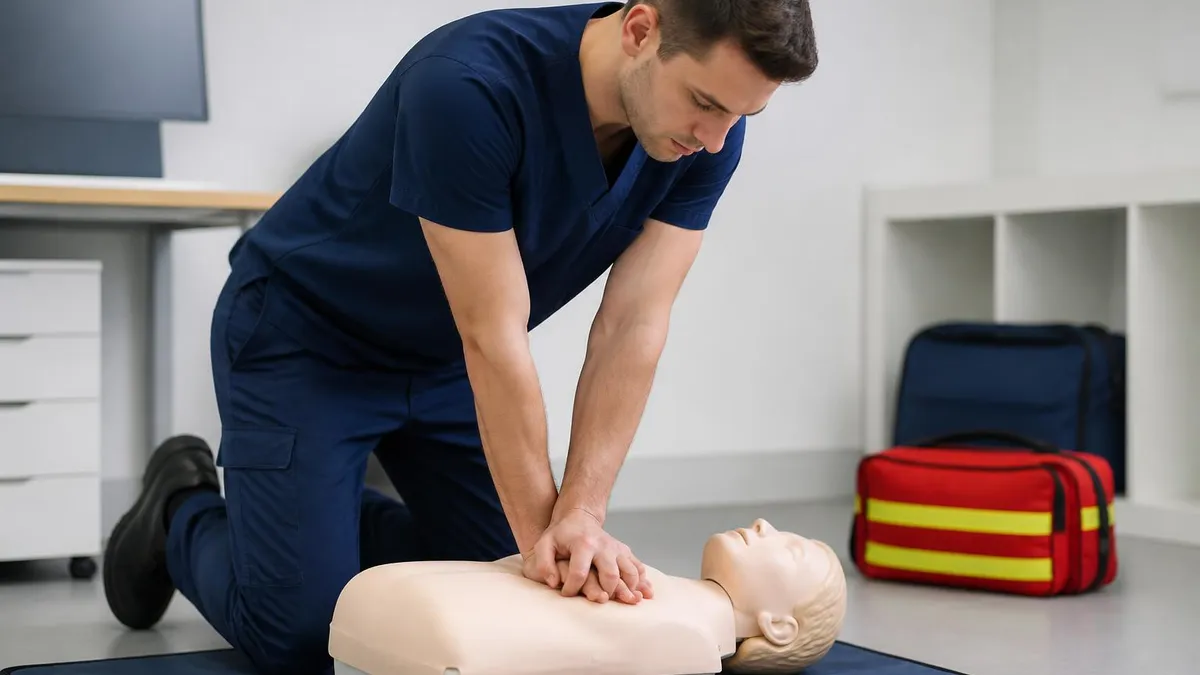
Adult CPR: Complete Step-by-Step Guide to Hands-Only and Standard CPR in 2026
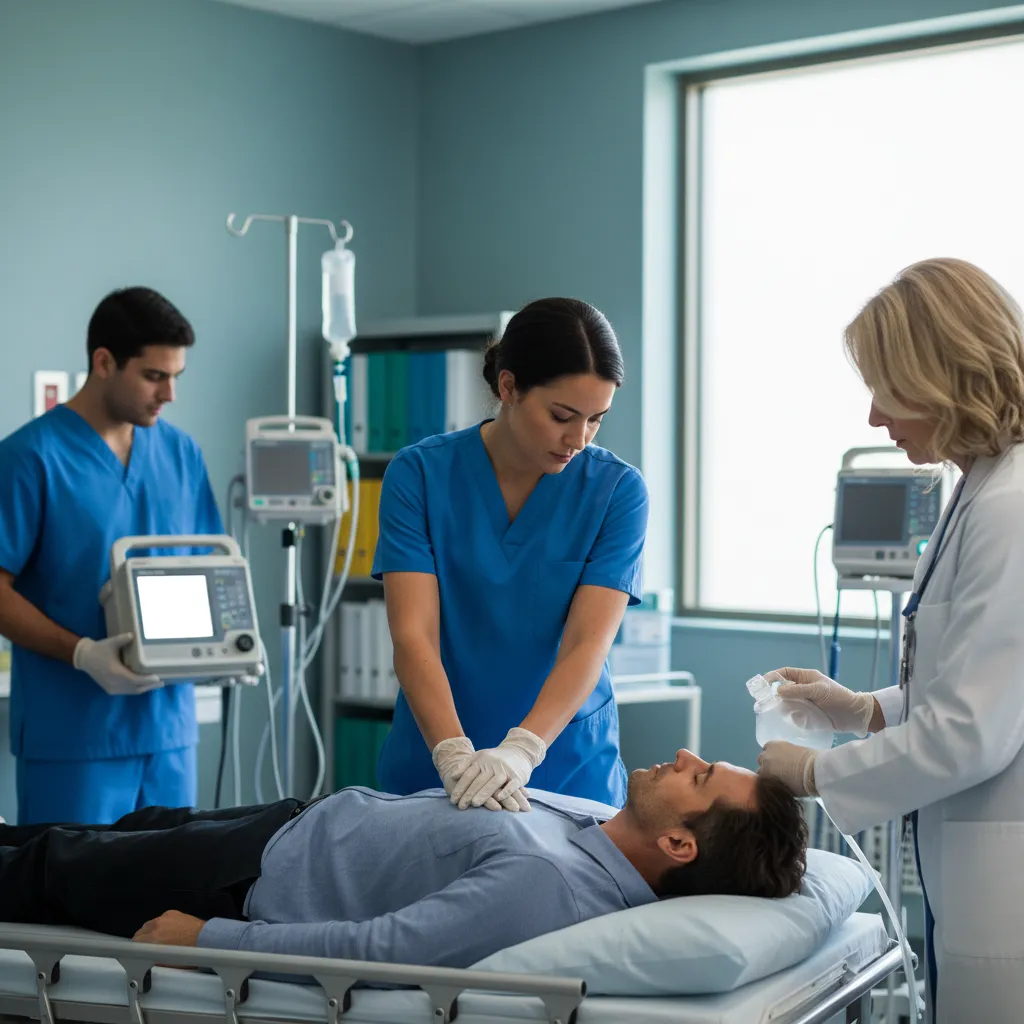
CPR - Cardiopulmonary Resuscitation: Complete Study Guide 2026
About the Author

Registered Nurse & Healthcare Educator
Johns Hopkins University School of NursingDr. Sarah Mitchell is a board-certified registered nurse with over 15 years of clinical and academic experience. She completed her PhD in Nursing Science at Johns Hopkins University and has taught NCLEX preparation and clinical skills courses for nursing students across the United States. Her research focuses on evidence-based exam preparation strategies for healthcare certification candidates.
Join the Discussion
Connect with other students preparing for this exam. Share tips, ask questions, and get advice from people who have been there.
View discussion (5 replies)