
How to Get CPR Certified: Complete Training Guide for 2026 September
🆕 Learn how to get CPR certified in 2026 September. Covers ACLS algorithm, PALS certification, infant CPR, AED use, and life support training requirements.
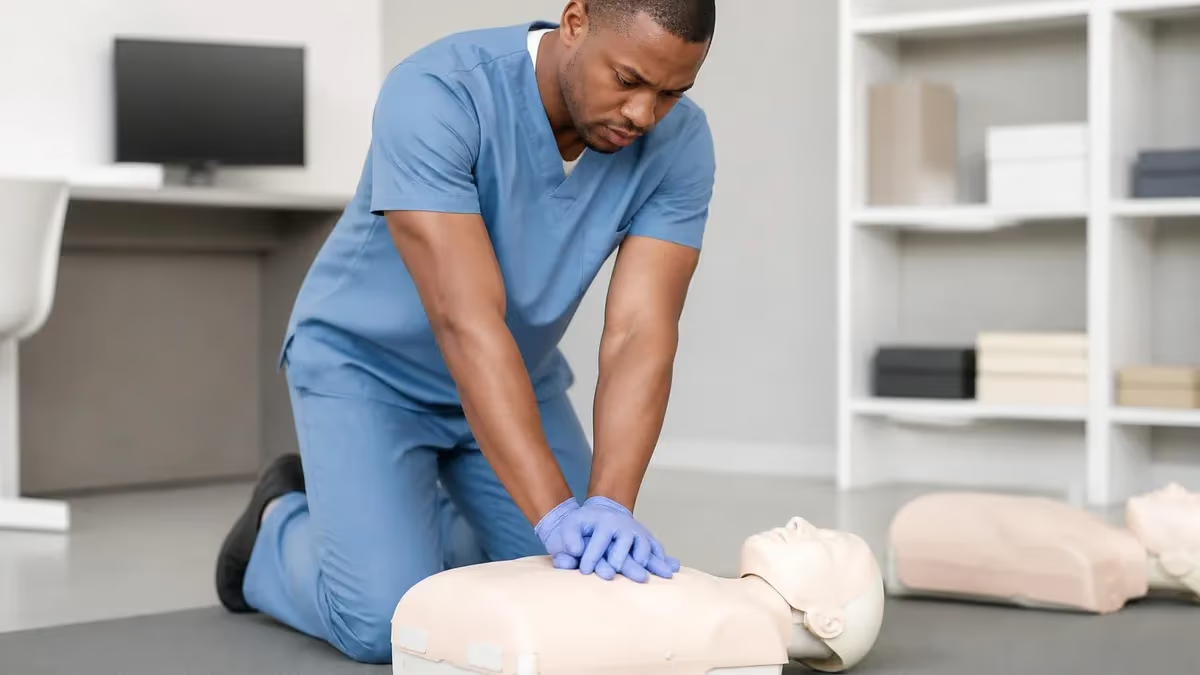
Learning how to get cpr certified is one of the most valuable investments you can make in your personal safety toolkit and professional career. Every year, more than 350,000 out-of-hospital cardiac arrests occur in the United States, and immediate CPR can double or even triple a victim's chance of survival. Whether you are a concerned parent, a healthcare professional pursuing an ACLS algorithm credential, or simply someone who wants to be prepared, earning a CPR certification puts life-saving skills directly in your hands.
The landscape of CPR training has expanded dramatically over the past decade. Programs now range from basic hands-only instruction designed for bystanders to advanced life support certifications that cover pharmacology, the ACLS algorithm, mechanical ventilation, and team dynamics. Organizations such as the American Heart Association, the Red Cross, the National CPR Foundation, and the American Safety and Health Institute each offer tiered curricula designed for different audiences, skill levels, and professional requirements. Understanding which certification fits your needs is the first step toward getting started.
Beyond cardiac arrest response, modern CPR courses teach skills that span the entire emergency spectrum. Participants learn to recognize the signs of respiratory distress, assess respiratory rate, open and maintain an airway, and use an automated external defibrillator correctly. Knowing what does AED stand for — Automated External Defibrillator — and how to operate one effectively can be the difference between life and death in the critical minutes before EMS arrives on scene.
CPR training is not one-size-fits-all. Adult techniques differ meaningfully from pediatric and infant CPR, which require shallower chest compressions, gentler rescue breaths, and modified hand positions. Healthcare workers caring for neonates, pediatric patients, or critically ill adults need specialized pathways like PALS certification (Pediatric Advanced Life Support) or ACLS to meet both employer mandates and state licensing board requirements. Understanding these distinctions early helps you avoid signing up for a course that does not meet your professional obligations.
Cost is rarely a barrier to certification. A standard two-year American Heart Association BLS card typically costs between $35 and $75 at a community class, and many employers cover the expense entirely. Free and low-cost options, including online blended courses and community health fairs, make it possible to get trained regardless of budget. The time commitment is similarly modest — most entry-level classes run two to four hours, while advanced life support courses may span six to eight hours over one or two days.
This guide walks you through every layer of the certification ecosystem: the different course types and what each teaches, the step-by-step process of registering, preparing, and passing your skills evaluation, the role of the ACLS algorithm and other structured protocols, and how to maintain your credential with timely renewal. By the end, you will have a clear roadmap whether you are a first-time student or a seasoned clinician updating an expiring card.
Use the table of contents below to jump directly to the section most relevant to you, or read from top to bottom for a comprehensive understanding of what it means to become a certified life support provider in 2026.
CPR Certification by the Numbers
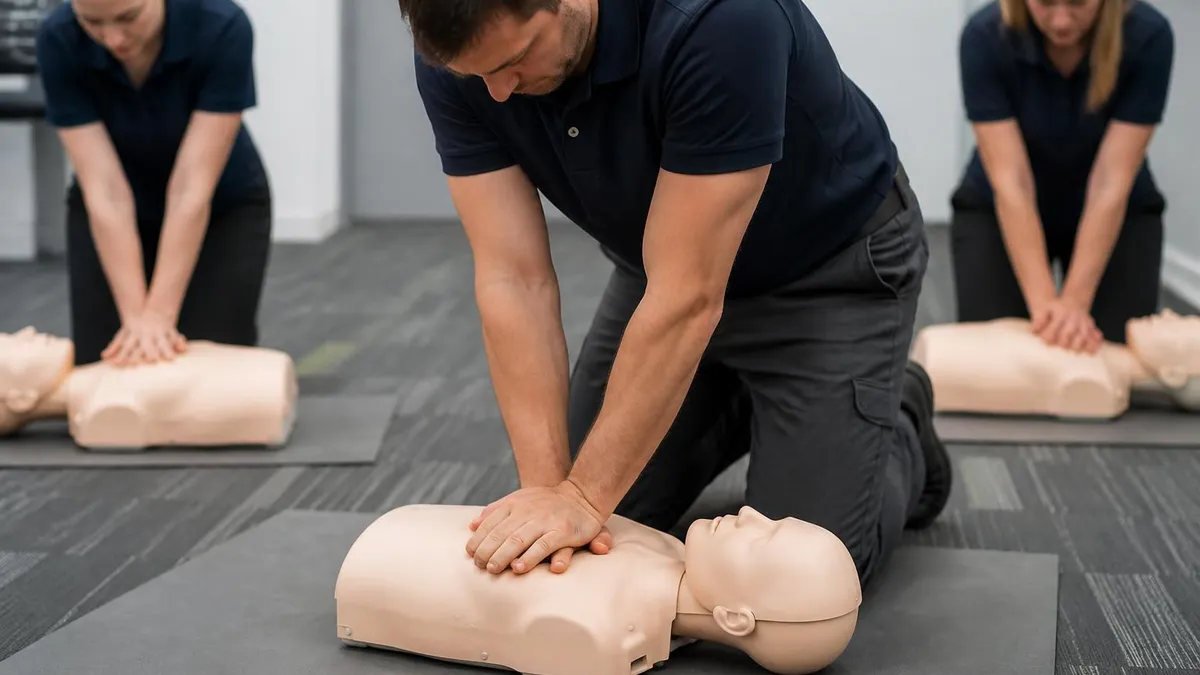
CPR Certification Levels & Course Types
Hands-Only CPR (Bystander Training)
BLS (Basic Life Support)
Heartsaver CPR/AED
PALS Certification (Pediatric Advanced Life Support)
ACLS (Advanced Cardiovascular Life Support)
NRP (Neonatal Resuscitation Program)
Getting CPR certified is a structured but straightforward process that most adults can complete in a single day. The first step is identifying which certification level matches your goals and obligations. If you work in a hospital, clinic, or EMS setting, your employer or licensing board will almost certainly specify the exact course — BLS, ACLS, or PALS certification — and may require a particular training organization such as the American Heart Association or the National CPR Foundation. Laypersons seeking personal preparedness have far more flexibility and can choose from dozens of accredited providers.
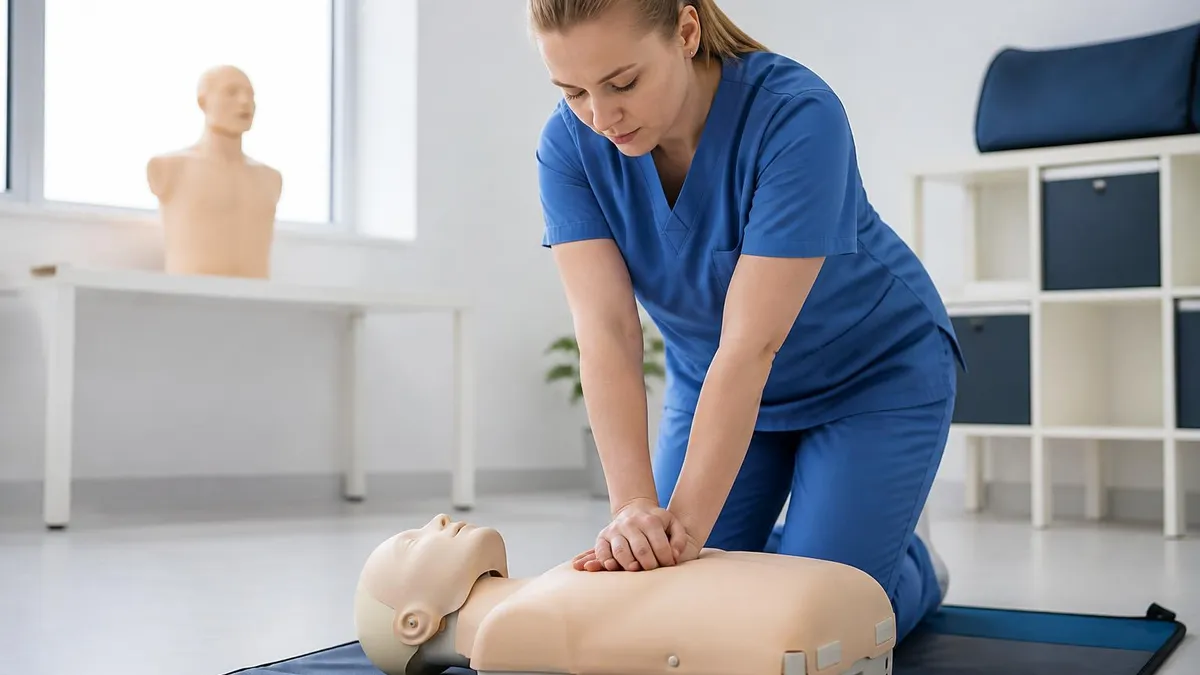
Once you have identified the right course level, the next decision is format: in-person, online blended (also called HeartCode), or fully virtual. In-person classes remain the most comprehensive option because a certified instructor evaluates your hands-on technique — compression depth, rate, hand placement, and rescue breath delivery — in real time.
Blended courses let you complete the cognitive portion at your own pace online, then attend a shorter skills session (typically one to two hours) for the hands-on sign-off. Fully online video courses are widely available but do not earn an official AHA or Red Cross card; they are best suited for refresher review rather than primary certification.
Registration is simple. Major providers list upcoming classes on their websites, and many hospitals, fire stations, community colleges, and gyms host open-enrollment sessions. Prices range from free (community health events) to $150 or more for private group training. Bring a valid photo ID, and confirm whether the venue supplies manikins and AED trainers or whether you need to provide your own. Most classes have no prerequisites beyond being physically able to kneel and perform compressions.
On class day, the typical BLS session begins with a brief video or lecture segment covering the chain of survival, recognition of cardiac arrest, assessment of respiratory rate, and proper scene safety. Participants then rotate through skill stations: one-rescuer adult CPR, two-rescuer adult CPR, infant CPR, pediatric CPR, bag-mask ventilation, and AED operation. Instructors assess each student individually before signing off on the skills card. Most classes last two to four hours, and the vast majority of students pass on their first attempt.
After the skills evaluation, your instructor submits your completion to the certifying organization and issues a temporary card on the spot. A laminated wallet card arrives by mail within two to three weeks, or you may receive a digital card via email. Both formats are widely accepted by employers, clinical sites, and licensing boards. Keep a copy of your digital card in a secure cloud folder — replacing a lost card typically costs $10 to $20 and requires contacting the organization that issued it.
Recertification is required every two years for most AHA credentials. The renewal class is shorter than the initial course (typically one to two hours), focuses on any updated guidelines, and includes a condensed skills evaluation. Setting a calendar reminder 90 days before your card expires gives you ample time to find a convenient class without letting your credential lapse. Some employers allow a brief grace period, but clinical placements and licensing renewals often require a valid card on the exact date of service.
If you are unsure where to begin, reviewing practice materials before your first class dramatically improves retention and confidence. The AHA updates its guidelines every five years based on the latest resuscitation science, so even experienced providers benefit from reviewing what has changed. Understanding core concepts like compression-to-ventilation ratios, appropriate compression depth for different age groups, and when to use the recovery position before your class day means you can focus on physical technique rather than memorizing facts under time pressure.
CPR Practice Test Questions
Prepare for the CPR Cardiopulmonary Resuscitation Practice exam with our free practice test modules. Each quiz covers key topics to help you pass on your first try.
CPR Basic CPR
CPR Exam Questions covering Basic CPR. Master CPR Test concepts for certification prep.
CPR and First Aid
Free CPR Practice Test featuring and First Aid. Improve your CPR Exam score with mock test prep.
CPR (Cardiopulmonary Resuscitation) Adult ...
CPR Mock Exam on (Cardiopulmonary Resuscitation) Adult CPR and AED Usage. CPR Study Guide questions to pass on your first try.
CPR (Cardiopulmonary Resuscitation) Airway...
CPR Test Prep for (Cardiopulmonary Resuscitation) Airway Obstruction and Choking. Practice CPR Quiz questions and boost your score.
CPR (Cardiopulmonary Resuscitation) Cardio...
CPR Questions and Answers on (Cardiopulmonary Resuscitation) Cardiopulmonary Emergency Recognition. Free CPR practice for exam readiness.
CPR (Cardiopulmonary Resuscitation) Child ...
CPR Mock Test covering (Cardiopulmonary Resuscitation) Child and Infant CPR. Online CPR Test practice with instant feedback.
CPR (Cardiopulmonary Resuscitation) High-P...
Free CPR Quiz on (Cardiopulmonary Resuscitation) High-Performance Team Dynamics. CPR Exam prep questions with detailed explanations.
CPR (Cardiopulmonary Resuscitation) Legal ...
CPR Practice Questions for (Cardiopulmonary Resuscitation) Legal and Ethical Considerations. Build confidence for your CPR certification exam.
CPR for Specific Populations
CPR Test Online for for Specific Populations. Free practice with instant results and feedback.
CPR Airway & Breathing Management
CPR Exam Questions covering Airway & Breathing Management. Master CPR Test concepts for certification prep.
CPR Assessment & Recognition of Cardiac Ar...
Free CPR Practice Test featuring Assessment & Recognition of Cardiac Arrest. Improve your CPR Exam score with mock test prep.
CPR Chest Compressions & Defibrillation
CPR Mock Exam on Chest Compressions & Defibrillation. CPR Study Guide questions to pass on your first try.
CPR Post-Resuscitation Care & Recovery
CPR Test Prep for Post-Resuscitation Care & Recovery. Practice CPR Quiz questions and boost your score.
ACLS Algorithm, PALS Certification, and Advanced Life Support
The ACLS algorithm is a systematic, evidence-based framework that guides healthcare providers through the management of cardiac arrest, stroke, and other life-threatening cardiovascular emergencies. The core cardiac arrest algorithm follows a circular structure: initiate high-quality CPR, analyze the rhythm every two minutes, deliver a defibrillation shock for shockable rhythms (ventricular fibrillation or pulseless ventricular tachycardia), administer epinephrine every three to five minutes, consider advanced airway placement, and identify and treat reversible causes using the H's and T's mnemonic.
Mastering the ACLS algorithm requires both cognitive knowledge and hands-on practice. Candidates must demonstrate proficiency in recognizing cardiac rhythms on a monitor, leading a resuscitation team with clear closed-loop communication, managing a supraglottic airway or endotracheal tube, and correctly dosing vasopressors and antiarrhythmics such as amiodarone and lidocaine. The AHA ACLS certification course uses high-fidelity simulation scenarios to test these skills under realistic conditions, ensuring providers can perform under the stress of an actual emergency.
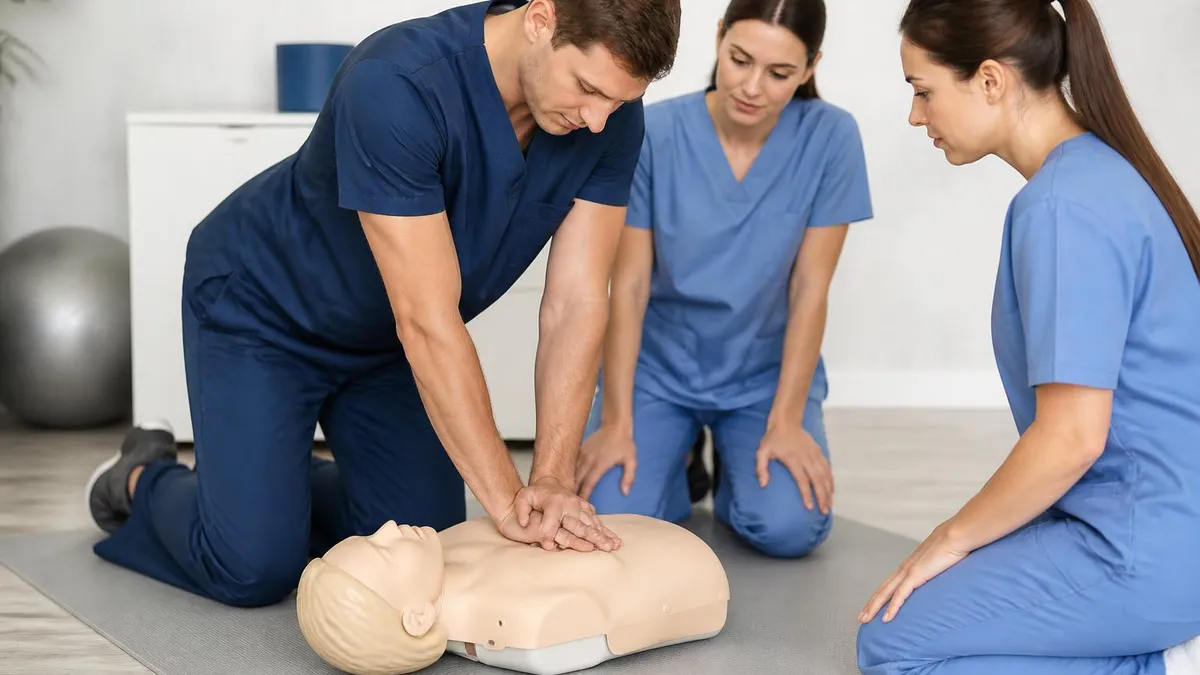
In-Person vs. Online CPR Certification: Which Is Right for You?
- +Hands-on skills evaluation ensures technique is correct before certification is issued
- +Real-time instructor feedback corrects compression depth, rate, and hand placement errors immediately
- +Manikin practice builds the muscle memory needed to perform confidently in a real emergency
- +Two-rescuer scenarios and team communication drills prepare you for actual clinical environments
- +Most employers and clinical sites universally accept in-person AHA and Red Cross cards without question
- +Networking with instructors and classmates can provide referrals and continuing education opportunities
- −Requires travel to a class site and scheduling around fixed session times
- −Per-session cost can be higher than blended online options if employer does not reimburse
- −Class size variability means some students get less individual practice time than others
- −Rescheduling is required if you miss or must cancel your registered session
- −Geographic availability can be limited in rural areas, requiring long drives to find an open class
- −Physical demands of compression practice may be challenging for individuals with certain injuries
CPR Certification Preparation Checklist
- ✓Identify the exact certification level required by your employer, school, or licensing board.
- ✓Choose an accredited training organization such as AHA, Red Cross, or the National CPR Foundation.
- ✓Decide between in-person, blended HeartCode, or hands-on-only renewal format.
- ✓Register and pay for your class at least two weeks in advance to secure your preferred date.
- ✓Review the current AHA Guidelines for CPR compression rate (100–120/min) and depth (≥2 inches for adults).
- ✓Study the ACLS algorithm H's and T's if enrolling in an advanced life support course.
- ✓Practice counting compressions aloud to internalize the 30:2 compression-to-ventilation ratio.
- ✓Learn the difference between adult, child, and infant CPR compression depths and hand positions.
- ✓Understand how to correctly place AED pads on an adult and on a child under eight years old.
- ✓Bring your photo ID, confirmation email, and any employer reimbursement forms to class day.
Brain Damage Begins After 4–6 Minutes Without CPR
Cardiac arrest causes irreversible brain injury within four to six minutes of oxygen deprivation. Bystander CPR initiated within the first two minutes can maintain roughly 25–30% of normal cardiac output, buying critical time until a defibrillator or EMS arrives. Every minute of delay without compressions reduces survival probability by approximately 7–10%. Your certification is not just a credential — it is the bridge between collapse and a functioning defibrillator.
Infant CPR and pediatric resuscitation represent one of the most emotionally charged — and technically demanding — areas of emergency response training. The physiology of infants and young children differs fundamentally from adults, and these differences directly shape every aspect of technique. An infant's chest wall is far more compliant than an adult's, so compressions should depress the sternum only about 1.5 inches (approximately 4 centimeters), compared to at least 2 inches for adults. Applying adult-level force to an infant can cause rib fractures, pneumothorax, and liver laceration without improving cardiac output.
Hand placement is equally critical. For a lone rescuer performing infant CPR, the AHA recommends the two-finger technique: place two fingers on the center of the infant's chest, just below the nipple line. For two-rescuer infant CPR — the preferred method when a second provider is available — the two-thumb encircling technique is superior. Both rescuers face the infant; one circles the chest with both hands and uses both thumbs to compress the sternum while the other manages the airway. This method generates higher peak systolic pressure and coronary perfusion pressure than the two-finger approach.
Rescue breathing for infants uses a mouth-to-mouth-and-nose technique rather than mouth-to-mouth alone, because an infant's face is small enough that a rescuer can seal both the mouth and nose simultaneously. Breaths should be gentle puffs — just enough to see the chest rise — typically around 0.5 to 1 mL per kilogram of body weight. Over-ventilation in infants causes gastric inflation, regurgitation, and aspiration risk, and it can also impair venous return by raising intrathoracic pressure. The compression-to-ventilation ratio for infant CPR is 30:2 for a single rescuer and 15:2 for two healthcare providers.
Child CPR (ages one year through puberty) uses a graduated approach. For smaller children, a single hand or the heel of one hand may be used for compressions; for larger children, the standard two-hand technique applies. Target compression depth is about two inches or one-third of the anterior-posterior chest diameter, whichever is greater. Rescue breaths are delivered mouth-to-mouth with a proper seal. The AED can be used on children over one year of age; pediatric attenuator pads or a pediatric key should be used when available to reduce the delivered energy dose to 50–75 joules.
PALS certification courses cover these pediatric-specific modifications in detail through scenario-based simulation. Participants practice identifying a child in respiratory distress versus respiratory failure versus respiratory arrest, apply oxygen therapy and positioning interventions early, and escalate to bag-mask ventilation when the patient's work of breathing is not adequately supported. The pediatric systematic approach algorithm — a structured ABCDE assessment framework — is the backbone of PALS training and helps providers avoid tunnel vision during high-stress situations.
Parents, grandparents, coaches, childcare workers, and teachers represent the community layer of pediatric emergency response. Even without a PALS certification, these individuals can take a Heartsaver Pediatric First Aid CPR/AED course that covers infant CPR, child CPR, choking relief for infants and children, and basic first aid for pediatric injuries. The National CPR Foundation offers courses specifically tailored to this audience. Community-level training dramatically increases the probability that a child who collapses will receive immediate bystander CPR before EMS arrives.
One often-overlooked pediatric emergency skill is recognizing and managing an infant or child in the recovery position when they are unresponsive but breathing. The recovery position keeps the airway open by allowing secretions or vomit to drain from the mouth rather than be aspirated into the lungs. For infants, this means holding them on their side, supported along the rescuer's forearm. For children, the standard lateral recovery position — rolling them gently onto their side with the upper knee bent forward for stability — is used. This simple technique can prevent asphyxiation while waiting for advanced help.
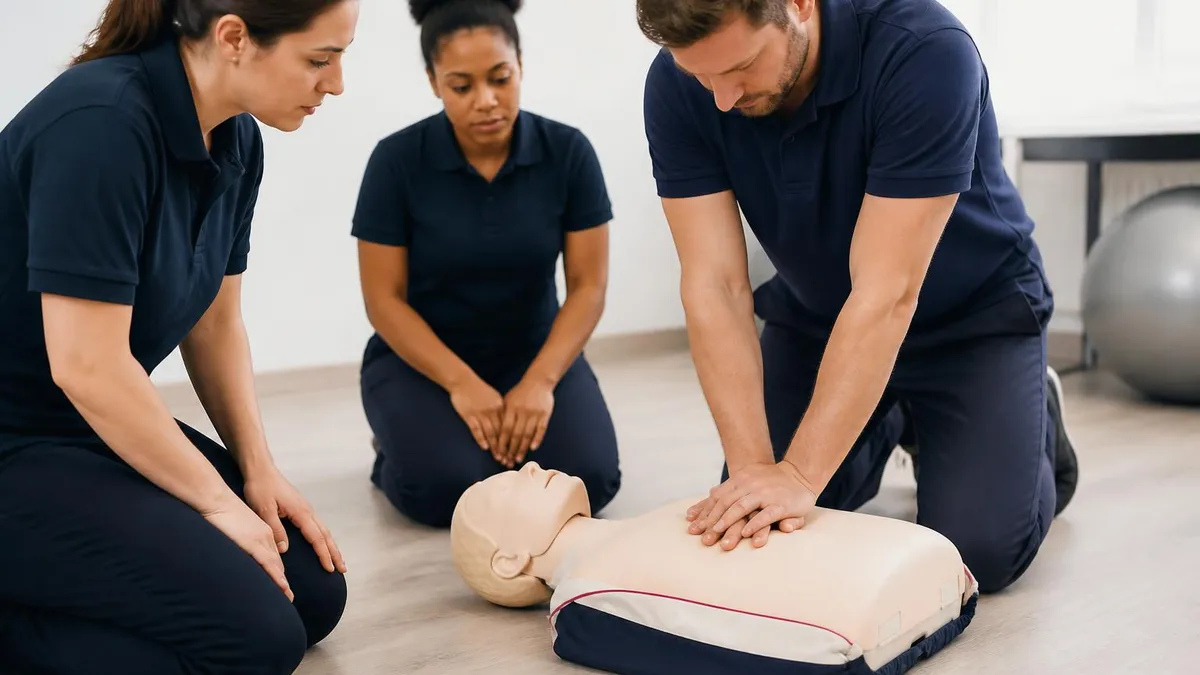
Most healthcare employers and clinical placement sites require a valid CPR or BLS card on every day of service. An expired card — even by a single day — can result in removal from a clinical rotation, a shift cancellation, or a delay in licensure renewal. Some state nursing boards will not process a license application with an expired BLS credential. Schedule your renewal class at least 30 days before your current card's expiration date to avoid disruptions to your employment or training program.
Maintaining your CPR certification over time requires a bit of planning, but the process is far simpler than earning your initial credential. The standard validity period for AHA BLS, ACLS, and PALS certifications is two years from the date of your skills evaluation. The Red Cross follows the same two-year cycle for most credentials. Your wallet card and digital certificate both display the exact expiration date, which is also stored in the issuing organization's online verification database — useful when employers need to confirm credentials independently.
Renewal courses are substantially shorter than initial courses because they assume you already have foundational knowledge. A BLS renewal, for example, typically runs 60 to 90 minutes and focuses on any guideline updates, a brief video review, and an abbreviated skills check. ACLS renewal is longer — usually four to six hours — because the content is more complex and simulation scenarios must be completed to a minimum performance standard. The National CPR Foundation offers renewal courses online for some credential types, with a skills component available at affiliated testing centers across the country.
Cost for renewal is generally lower than initial certification. BLS renewals average $30 to $60 through community classes, while ACLS renewals through hospital education departments may be offered free to staff. If you are paying out of pocket, check whether your employer offers reimbursement as a professional development benefit. Some professional nursing organizations, medical societies, and union contracts include CPR renewal reimbursement as a member benefit, so it is worth investigating before paying full retail price.
The five-year AHA guideline update cycle means that even experienced providers encounter new recommendations at renewal time. The 2020 AHA Guidelines introduced updated guidance on the use of vasopressin, clarified the role of extracorporeal CPR (ECPR) for refractory cardiac arrest, and reinforced the importance of minimizing pre-shock pauses when defibrillating. Staying current with these updates is not just a credentialing requirement — it reflects a genuine commitment to providing the best possible care. Providers who treat renewal as a routine checkbox rather than a genuine learning opportunity miss the chance to incorporate evidence-based refinements into their practice.
Some employers and training coordinators choose to track staff credentials centrally using platforms like the AHA's Training Network portal or the Red Cross Learning Center. If your organization uses one of these systems, your renewal completion may be automatically reported to your employee record, eliminating the administrative burden of submitting paperwork. Verify with your education or HR department whether this integration is in place so you do not double-submit documentation unnecessarily.
Healthcare professionals who hold multiple credentials — BLS plus ACLS, or BLS plus PALS certification — benefit from aligning their expiration dates. Taking BLS and ACLS renewal courses in the same session or on the same day eliminates the need for multiple trips and ensures that both cards expire simultaneously, simplifying future renewal planning. Many hospital education departments offer combined BLS/ACLS or BLS/PALS renewal days for exactly this reason. Ask your education coordinator whether bundled renewal options are available at your institution.
If you are starting from scratch or transitioning into a new clinical specialty, consider whether your certification pathway should include additional credentials beyond BLS. Providers moving into critical care nursing, for example, typically need ACLS within the first six months of their new role. Those entering pediatric emergency medicine need PALS certification. Emergency medical technicians progressing to paramedic may need both ACLS and a CPR instructor credential. Mapping out your full certification roadmap early saves time and ensures you are never caught short when a new opportunity requires a credential you do not yet hold.
Practical preparation in the days before your CPR class can meaningfully improve both your performance and your confidence.
Begin by reviewing the core numbers you will need to recall automatically under skills-check pressure: compression rate of 100 to 120 per minute, compression depth of at least two inches for adults and approximately 1.5 inches for infants, a 30:2 compression-to-ventilation ratio for single-rescuer CPR, and a normal adult respiratory rate of 12 to 20 breaths per minute (deviations from this range signal that something is wrong). Writing these on a flashcard and reviewing them the night before class takes five minutes and pays dividends during the evaluation.
Physical conditioning matters more than most students expect. Performing continuous, high-quality chest compressions for two minutes — the standard cycle length between rhythm checks in the ACLS algorithm — is genuinely fatiguing. Studies show that compression depth and rate begin to degrade after 90 seconds when a single rescuer works alone, which is precisely why two-rescuer CPR with rotation every two minutes is the recommended standard.
If you plan to take a longer advanced course, consider doing some light aerobic exercise in the week before class to improve your endurance. The ability to maintain technique under physical fatigue is a real and testable competency.
Understanding the sequence of the ACLS algorithm or PALS algorithm before your advanced course reduces cognitive load during simulation scenarios. The ACLS cardiac arrest algorithm has a clear structure: start CPR, attach the monitor and defibrillator, analyze the rhythm, shock if shockable (VF or pulseless VT), immediately resume CPR, establish IV or IO access, administer epinephrine 1 mg every three to five minutes, consider advanced airway, and identify reversible causes. Candidates who have internalized this loop can focus mental energy on team leadership and communication rather than trying to recall the sequence in the moment.
Knowing what does AED stand for is foundational, but knowing how to use one confidently is what matters in practice. Modern AEDs are designed to be operated by untrained bystanders — they provide clear spoken and visual instructions — but familiarity with pad placement, the one-clear command before shock delivery, and the need to resume compressions immediately after the shock reduces time-to-shock and improves survival outcomes. Practice with a trainer AED if your class venue provides one in advance, and note that pediatric attenuator pads reduce the shock energy for children under eight or under 55 pounds.
The concept of recovery position is taught in most BLS and first aid courses and applies to the subset of emergencies where the victim is unresponsive but has a normal respiratory rate and is breathing adequately. Placing an unresponsive, breathing victim in the recovery position — on their side with the upper leg bent forward and the head tilted back slightly to maintain airway patency — prevents aspiration of vomit and maintains a clear airway.
This technique is especially important in overdose and post-ictal scenarios, where the patient may be unresponsive but not in cardiac arrest. Misidentifying a breathing patient as being in cardiac arrest and beginning compressions is a preventable error that familiarity with recovery position assessment helps avoid.
One common question among students entering CPR training for the first time relates to the name overlap between CPR certification and a completely unrelated service: cpr cell phone repair shops and cpr phone repair franchise locations. The abbreviation CPR is shared, and online searches sometimes surface phone repair results when students are looking for life-saving training resources.
To avoid confusion, always search specifically for CPR certification, CPR class, or use the full term cardiopulmonary resuscitation when looking for training programs, and look for recognized organizations like the AHA, Red Cross, or the National CPR Foundation to ensure you are registering for a life-saving course rather than a device service.
Finally, approach the skills evaluation on class day as a learning opportunity rather than a high-stakes test. Instructors want you to succeed and will provide coaching, not just pass-fail judgments. If your compression depth is insufficient or your hand placement drifts, the instructor will guide you in real time.
The overwhelming majority of students who come to class prepared and engaged pass their skills evaluation on the first attempt. Arrive rested, review your core numbers the morning of class, wear comfortable clothing that allows you to kneel and lean over a manikin, and bring your confirmation email and photo ID. You will leave with a credential that is valid for two years and skills that last a lifetime.
CPR Questions and Answers
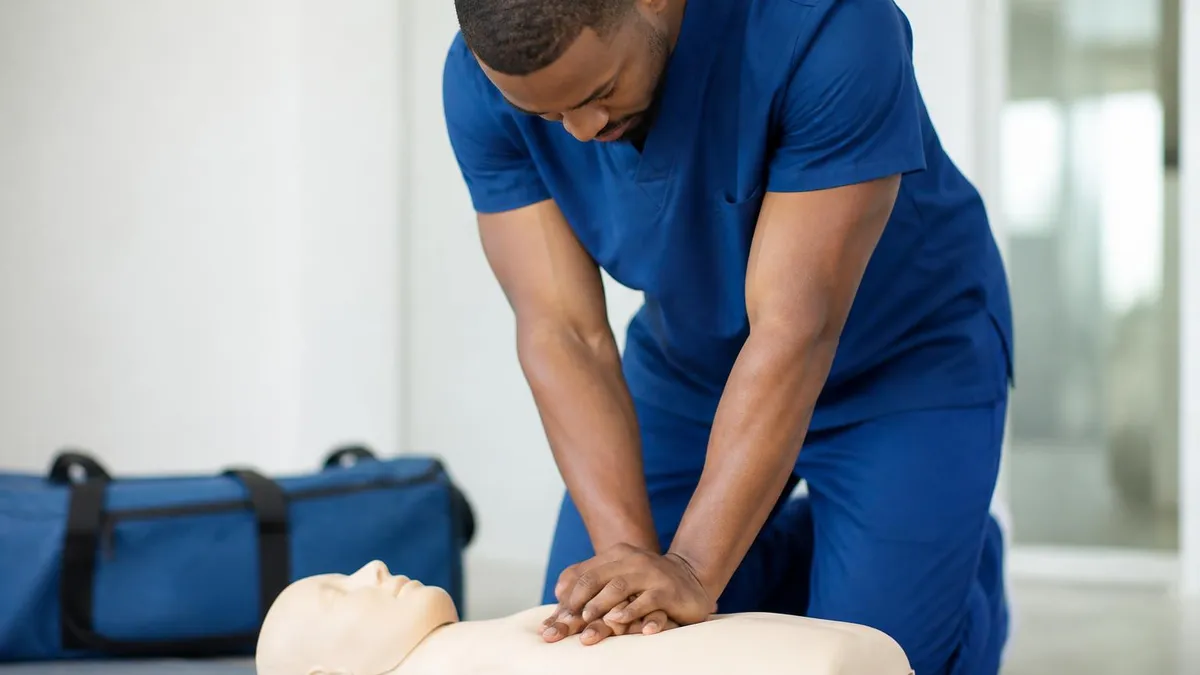
CPR Courses: Complete Guide to ACLS Algorithm, PALS Certification, and Life Support Training in 2026
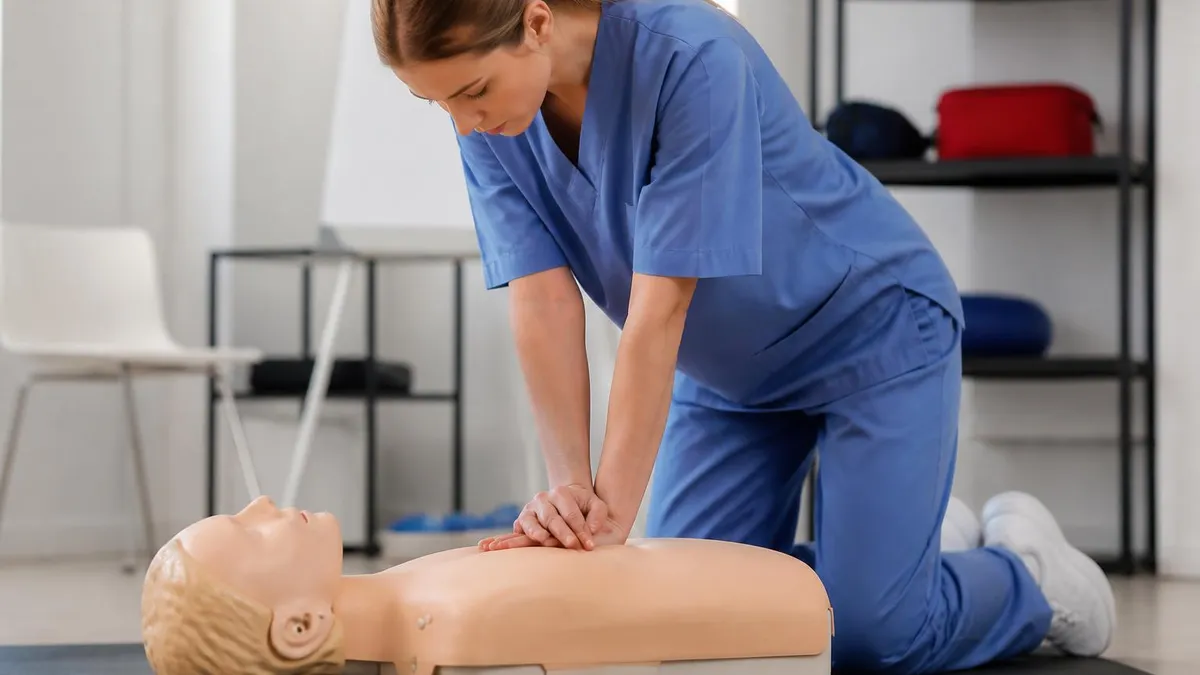
Types of CPR Training: From Basic Life Support to ACLS Algorithm Mastery in 2026
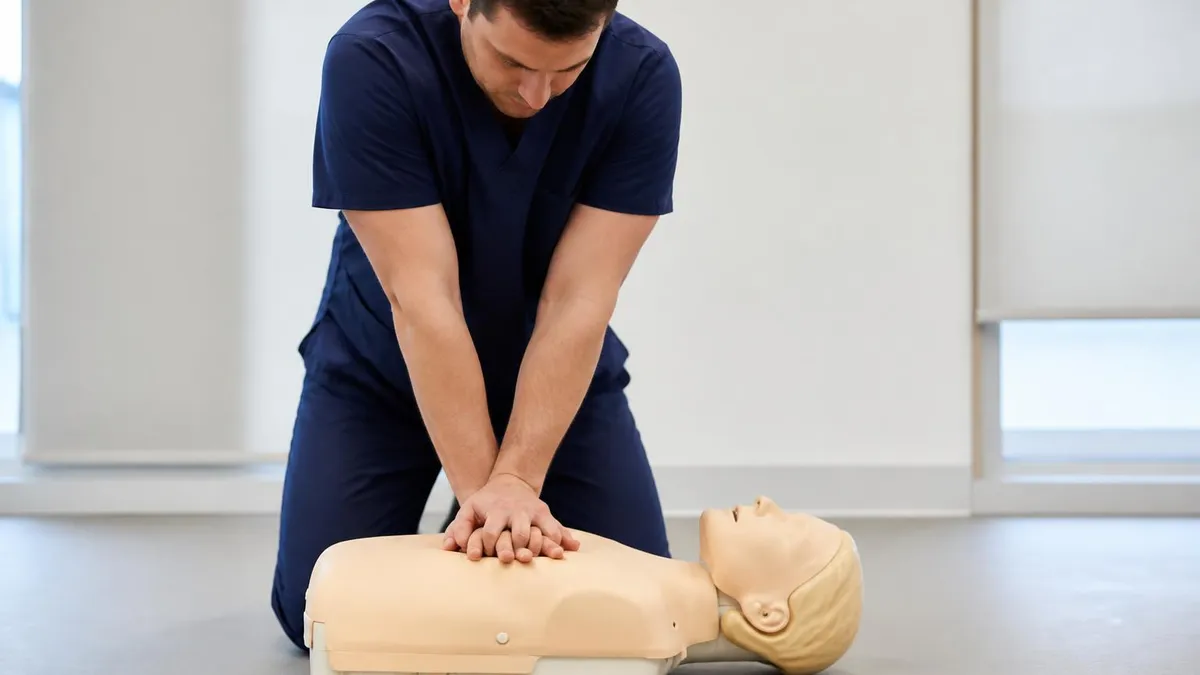
BLS vs CPR: Is BLS the Same as CPR? Complete 2026 Guide
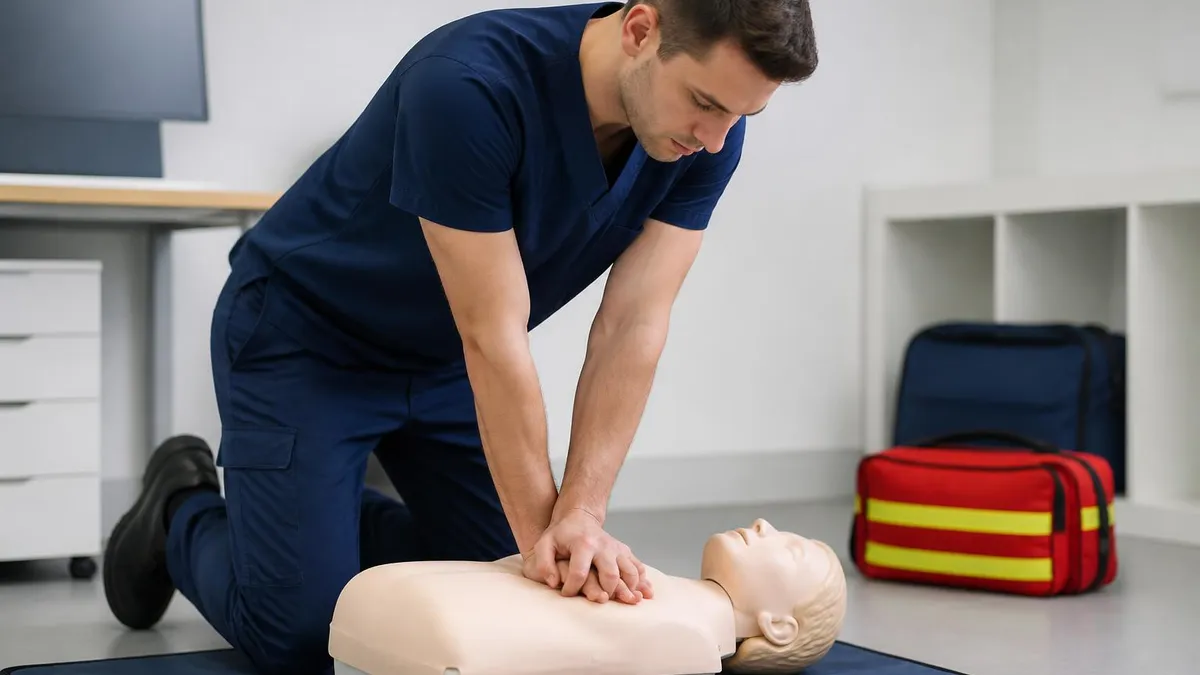
Adult CPR: Complete Step-by-Step Guide to Hands-Only and Standard CPR in 2026
Free CPR Training: Complete Guide to ACLS Algorithm, PALS Certification, and Life Support Skills in 2026
About the Author

Registered Nurse & Healthcare Educator
Johns Hopkins University School of NursingDr. Sarah Mitchell is a board-certified registered nurse with over 15 years of clinical and academic experience. She completed her PhD in Nursing Science at Johns Hopkins University and has taught NCLEX preparation and clinical skills courses for nursing students across the United States. Her research focuses on evidence-based exam preparation strategies for healthcare certification candidates.
Join the Discussion
Connect with other students preparing for this exam. Share tips, ask questions, and get advice from people who have been there.
View discussion (5 replies)