
CPR First Aid Online: Complete Guide to Certification, Skills, and Career Paths in 2026
Master CPR first aid online with ACLS algorithm training, infant CPR, AED use, and certification paths. ✍🏼 Career duties, salaries, and skills explained.
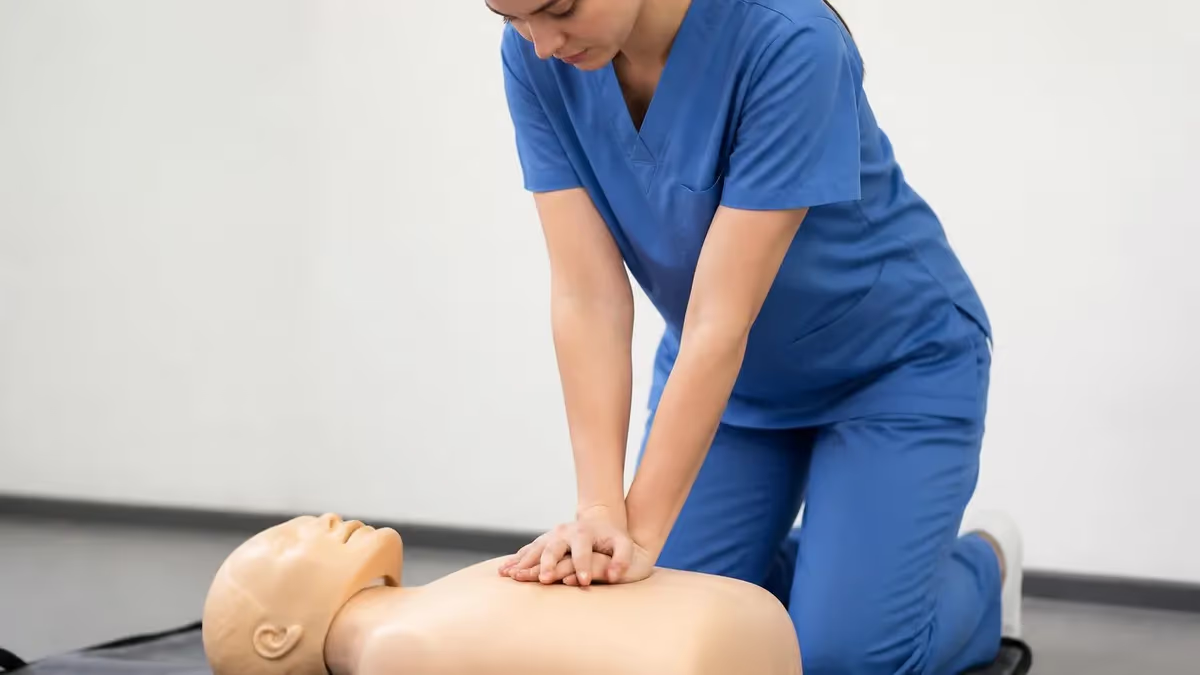
Taking CPR first aid online has become the fastest and most flexible way for healthcare workers, teachers, parents, fitness professionals, and everyday citizens to gain lifesaving skills in 2026. With virtual classrooms, video-based skill checks, and blended learning options, learners can study the ACLS algorithm, infant CPR techniques, and AED operation from home, then complete hands-on validation locally. This guide explains what online CPR courses cover, who needs them, and how they support a wide range of careers in emergency response, nursing, childcare, and public safety.
The demand for certified responders has surged, driven by workplace OSHA requirements, school district mandates, and rising public awareness of sudden cardiac arrest. The acls algorithm is now embedded in nearly every advanced provider course, while basic life support and first aid remain the foundation for entry-level certifications. Online programs through organizations like the national cpr foundation, the American Heart Association, and the American Red Cross have made certification accessible 24/7, eliminating the geographic barriers that once kept rural learners or shift workers from training.
For career-focused students, online CPR is more than a credential — it is a gateway to roles in pre-hospital care, allied health, lifeguarding, personal training, and even corporate safety officer positions. Many employers explicitly list pals certification, BLS, or ACLS as hiring prerequisites, and online providers have responded with stackable certifications that let candidates layer credentials without taking weeks off work. Understanding which course fits your role is the first step toward a portable, lifelong skill set.
Online learning also reshapes how skills like rescue breathing, chest compression depth, and recovery position are taught. Modern platforms use animated 3D anatomy, real-time feedback manikins, and AI-driven coaching to ensure that even fully remote learners can practice respiratory rate counting, pulse checks, and ventilation timing accurately. Critics once doubted whether online instruction could match in-person training, but recent peer-reviewed studies show comparable retention when blended models are used with periodic hands-on validation.
This article walks through every layer of cpr first aid online: course types, certification levels, costs, duties of certified responders, career paths, and what to expect from each provider. We cover infant CPR specifics, what does aed stand for and how to use one, the role of life support algorithms in cardiac arrest response, and how to verify any certification you earn. Whether you are renewing for the fifth time or taking your first class, this guide will help you choose wisely.
If you are also exploring how to verify or replace existing credentials, our CPR Card Lookup: How to Verify, Replace, and Access Your CPR Certification in 2026 resource walks through the digital verification systems most employers now use. Combined with the information here, you will have a complete roadmap from initial enrollment to renewal three years down the line, including how to navigate audits, expired cards, and provider transitions when your employer changes credentialing requirements.
Throughout this guide, we balance practical instruction with career insights, so you not only know how to perform compressions on a collapsed adult but also how a CPR certification can open doors to higher-paying roles in healthcare, education, and emergency services. Online learning is no longer a shortcut — it is the standard pathway for millions of new responders every year, and understanding its full scope helps you make the most of your investment in time and money.
CPR First Aid Online by the Numbers

Types of Online CPR and First Aid Courses
Designed for non-medical adults: teachers, parents, coaches, and corporate staff. Covers adult, child, and infant CPR plus AED use and basic first aid for choking, bleeding, and shock. Typically 2-3 hours online.
Required for nurses, EMTs, dental staff, and most healthcare workers. Emphasizes team dynamics, high-quality compressions, and bag-valve-mask ventilation. Online theory plus in-person skills check.
For providers managing cardiac arrest: physicians, ICU nurses, paramedics. Trains learners to apply the acls algorithm, interpret rhythms, administer medications, and lead resuscitation teams.
Pals certification focuses on pediatric emergencies — respiratory distress, shock, and arrhythmias in children. Required in pediatric ICUs, ERs, and many ambulatory clinics.
Standalone courses covering wound care, burns, sprains, allergic reactions, and environmental emergencies. Often bundled with CPR for OSHA-compliant workplace safety programs.
Online CPR first aid courses are structured around evidence-based curricula updated every five years by ILCOR, the international resuscitation alliance. The 2025 guidelines reaffirmed the importance of high-quality chest compressions, minimal interruptions, and early defibrillation — concepts that translate well into the video-based teaching used in virtual classrooms. Students typically begin with a foundational module on recognizing cardiac arrest, calling EMS, and starting compressions within ten seconds of finding an unresponsive victim. Online platforms reinforce these steps with branching scenarios.
The infant cpr portion of most online courses receives special attention because the techniques differ significantly from adult resuscitation. Learners practice using two fingers on the sternum for infants under one year, with compression depth of approximately 1.5 inches and a rate of 100-120 per minute. Online video demonstrations slow down hand placement and ventilation timing so learners can study each step. Many platforms add interactive checks where learners must identify correct hand positioning before progressing to the next lesson.
Respiratory rate assessment is another core skill taught online. Whether the victim is breathing normally, agonally, or not at all changes the response entirely. Most courses teach students to count breaths for ten seconds while watching chest rise and fall, classifying any rate below 8 or above 30 per minute in adults as abnormal. In pediatric victims, the respiratory rate thresholds change with age, which is why pals certification spends significant time on age-specific norms and warning signs.
Online programs also cover the recovery position thoroughly. After return of spontaneous circulation, or for unresponsive but breathing victims with no suspected spine injury, the position recovery technique helps maintain an open airway and prevents aspiration. Learners practice the side-lying posture, head tilt, and chin support through guided videos. The skill is essential not only in cardiac scenarios but in opioid overdose, seizure recovery, and intoxication cases — situations that account for a growing share of bystander interventions.
Understanding what does aed stand for is one of the first questions answered in any online CPR course. AED stands for Automated External Defibrillator, a portable device that analyzes heart rhythm and delivers a shock to restore normal electrical activity. Online courses teach pad placement, voice-prompt following, and special considerations for wet skin, pacemakers, medication patches, and pregnancy. Many platforms include virtual AED simulators so learners can practice the device interface before encountering one in real life.
For a deeper dive into how the American Heart Association structures its online curricula, our AHA CPR: What It Is, Which Course You Need, and How to Get Certified guide compares Heartsaver, BLS, ACLS, and PALS pathways side by side. The AHA dominates the healthcare certification market and most hospitals require AHA-issued cards, though many corporate employers and schools accept Red Cross, National Safety Council, or national cpr foundation credentials at the layperson level.
Behind every online lesson is a backend that tracks completion, generates wallet cards, and reports continuing education hours to licensing boards. When you complete the cognitive portion, the platform issues either an immediate digital card or a referral to a local instructor for a hands-on skills check. Blended learning has become the gold standard for healthcare-level courses, while pure online completion is acceptable for most layperson and refresher contexts. Knowing which model your employer accepts saves time, money, and frustration during renewal.
CPR Practice Test Questions
Prepare for the CPR Cardiopulmonary Resuscitation Practice exam with our free practice test modules. Each quiz covers key topics to help you pass on your first try.
CPR Basic CPR
CPR Exam Questions covering Basic CPR. Master CPR Test concepts for certification prep.
CPR and First Aid
Free CPR Practice Test featuring and First Aid. Improve your CPR Exam score with mock test prep.
CPR (Cardiopulmonary Resuscitation) Adult ...
CPR Mock Exam on (Cardiopulmonary Resuscitation) Adult CPR and AED Usage. CPR Study Guide questions to pass on your first try.
CPR (Cardiopulmonary Resuscitation) Airway...
CPR Test Prep for (Cardiopulmonary Resuscitation) Airway Obstruction and Choking. Practice CPR Quiz questions and boost your score.
CPR (Cardiopulmonary Resuscitation) Cardio...
CPR Questions and Answers on (Cardiopulmonary Resuscitation) Cardiopulmonary Emergency Recognition. Free CPR practice for exam readiness.
CPR (Cardiopulmonary Resuscitation) Child ...
CPR Mock Test covering (Cardiopulmonary Resuscitation) Child and Infant CPR. Online CPR Test practice with instant feedback.
CPR (Cardiopulmonary Resuscitation) High-P...
Free CPR Quiz on (Cardiopulmonary Resuscitation) High-Performance Team Dynamics. CPR Exam prep questions with detailed explanations.
CPR (Cardiopulmonary Resuscitation) Legal ...
CPR Practice Questions for (Cardiopulmonary Resuscitation) Legal and Ethical Considerations. Build confidence for your CPR certification exam.
CPR for Specific Populations
CPR Test Online for for Specific Populations. Free practice with instant results and feedback.
CPR Airway & Breathing Management
CPR Exam Questions covering Airway & Breathing Management. Master CPR Test concepts for certification prep.
CPR Assessment & Recognition of Cardiac Ar...
Free CPR Practice Test featuring Assessment & Recognition of Cardiac Arrest. Improve your CPR Exam score with mock test prep.
CPR Chest Compressions & Defibrillation
CPR Mock Exam on Chest Compressions & Defibrillation. CPR Study Guide questions to pass on your first try.
CPR Post-Resuscitation Care & Recovery
CPR Test Prep for Post-Resuscitation Care & Recovery. Practice CPR Quiz questions and boost your score.
ACLS Algorithm and Life Support Skills
The acls algorithm is a structured decision tree used by advanced providers to manage cardiac arrest, bradycardia, tachycardia, and post-arrest care. It begins with the BLS survey — check responsiveness, call for help, start compressions — and transitions to the ACLS survey, which adds airway management, breathing assessment, IV access, and rhythm interpretation. Online ACLS courses use animated algorithm flowcharts to walk learners through every branch.
Mastery of the algorithm requires understanding shockable rhythms (VF, pulseless VT) versus non-shockable rhythms (asystole, PEA), and the drugs used in each scenario — epinephrine every 3-5 minutes, amiodarone or lidocaine for refractory VF. Online practice scenarios place learners in megacode simulations where they call out compressions, defibrillation, and medication doses while a virtual team responds. Mastery typically requires multiple practice runs before the final certification test.

CPR First Aid Online vs In-Person: What to Consider
- +Complete coursework on your own schedule, 24/7 access
- +Lower cost — typically 30-50% less than classroom training
- +No travel time or geographic barriers for rural learners
- +Replay videos and modules as many times as needed
- +Stackable certifications let you add credentials over time
- +Digital wallet cards issued instantly upon completion
- +Updated content rolls out faster than print materials
- −Pure online courses may not meet employer requirements for healthcare roles
- −Hands-on skill retention requires manikin practice not available at home
- −Some providers are not nationally recognized — verify before enrolling
- −Requires self-discipline to complete without classroom structure
- −Skills checks for BLS/ACLS still need in-person validation
- −Technical issues can delay certification on test day
Pros and Cons at a Glance
| Pros | Cons |
|---|---|
| No travel time or geographic barriers for rural learners | Pure online courses may not meet employer requirements for healthcare roles |
| Replay videos and modules as many times as needed | Hands-on skill retention requires manikin practice not available at home |
| Stackable certifications let you add credentials over time | Some providers are not nationally recognized — verify before enrolling |
| Digital wallet cards issued instantly upon completion | Requires self-discipline to complete without classroom structure |
| Updated content rolls out faster than print materials | Skills checks for BLS/ACLS still need in-person validation |
Online CPR First Aid Certification Checklist
- ✓Verify the provider is recognized by your employer or licensing board
- ✓Confirm course covers adult, child, and infant CPR with AED training
- ✓Check whether a hands-on skills validation is required for your role
- ✓Ensure the certification card is valid for 2 years from issue date
- ✓Test your computer or mobile device meets technical requirements
- ✓Set aside 2-4 uninterrupted hours for a basic course completion
- ✓Take notes on the acls algorithm or BLS sequence as you progress
- ✓Complete the final exam in one sitting to avoid timeout issues
- ✓Download or print your digital wallet card immediately
- ✓Schedule a renewal reminder 60 days before expiration
Blended learning beats pure online for healthcare roles
Studies in Resuscitation and the Journal of the American Heart Association show that learners who complete online theory followed by a 30-60 minute in-person skills check retain compression quality and AED proficiency at rates equal to or better than full classroom training. If your career requires BLS, ACLS, or PALS, always choose a blended pathway rather than an unaccredited online-only option.
The career duties associated with a CPR first aid online certification vary enormously depending on the role you hold. For a classroom teacher or daycare worker, the credential means being prepared to recognize an unresponsive child, initiate compressions, deploy an AED, and direct a colleague to call 911. These are duties that may go unused for an entire career — and then, in a single moment, define the outcome of a child's life. Online certification ensures every responder can perform competently under stress.
For healthcare professionals, the duties extend much further. Registered nurses, respiratory therapists, and patient care technicians are expected to recognize deteriorating patients before arrest occurs, by tracking respiratory rate, oxygen saturation, blood pressure, and mental status. Rapid response teams rely on BLS-trained members to deliver high-quality compressions during the first minutes of arrest while ACLS providers lead pharmacological intervention. Online certification underpins this team-based response.
Emergency medical technicians and paramedics use online training for initial certification and continuing education hours. Their duties include scene safety assessment, primary survey, oxygen administration, IV initiation (for paramedics), and transport to definitive care. Online courses help maintain knowledge of evolving protocols — for example, the increased emphasis on capnography to verify endotracheal tube placement and gauge compression quality, both of which are now standard in advanced training.
Personal trainers, lifeguards, and group fitness instructors often hold CPR first aid online certifications as a condition of employment or insurance. Their duties focus on recognizing exercise-induced cardiac events, pool emergencies, and heat-related illness. The combination of CPR plus first aid is particularly valuable here because gym and aquatic settings see frequent minor injuries — sprains, lacerations, and dehydration — that benefit from immediate, competent first aid response before EMS arrives.
Workplace safety officers and corporate safety leads coordinate OSHA-compliant training across employees, often using online platforms to certify dozens or hundreds of staff at once. Their duties include maintaining first aid supplies, AED inspection logs, certification records, and incident reports. Many companies now also assign a designated responder per floor or shift, ensuring rapid bystander response anywhere on premises. Online courses make this scaling affordable and trackable.
Outside of work, certified responders frequently serve as community volunteers — coaching youth sports, leading scout troops, or assisting at faith-based events. The Good Samaritan laws of all 50 states protect bystanders who provide reasonable assistance in emergencies, even without formal certification, but having current training dramatically improves the responder's confidence and the victim's outcome. This is one of the strongest arguments for keeping certification active throughout life.
Finally, for those pursuing more advanced healthcare careers, the foundation of online CPR and first aid training opens doors to nursing school, physician assistant programs, and paramedic academies. Most prerequisite checklists require BLS certification before clinical rotations begin, and many programs expect students to maintain it throughout their education. Online courses make this requirement achievable even for students balancing work and family responsibilities while preparing for entry into competitive healthcare programs.

Dozens of websites offer instant CPR certification for as little as $15 with no skills check. While these may satisfy general awareness, they are typically NOT accepted by hospitals, schools, or most employers requiring OSHA compliance. Before paying, confirm the provider is recognized by your specific employer or licensing board. Look for adherence to ILCOR or ECC guidelines and ask for the provider's accreditation details in writing.
Choosing the right online provider for CPR first aid begins with understanding your endgame. If you need BLS for a nursing job, the American Heart Association is the safest choice because virtually every US hospital accepts AHA-issued cards. The American Red Cross is also widely accepted, particularly in school districts, summer camps, and aquatic facilities. The national cpr foundation is popular among laypersons and many small businesses but is not universally accepted in healthcare environments, so verify acceptance before enrolling.
Cost is the second consideration. AHA blended BLS courses typically run $60-$110, including the in-person skills validation. Red Cross prices are similar. Layperson Heartsaver courses online average $35-$60. Discount providers like ProCPR, ProTrainings, and the National Health Care Provider Solutions offer pricing as low as $15-$30 for fully online completion. The price differences reflect curriculum depth, instructor support, and the rigor of the final assessment, not just brand recognition.
Course delivery format matters too. Some providers offer self-paced modules where you start and stop at will, while others require synchronous attendance at virtual classrooms with live instructors. Self-paced is ideal for shift workers and parents juggling schedules, while live instruction provides accountability and the chance to ask real-time questions. Many platforms blend both — pre-recorded lessons followed by scheduled live Q&A sessions or skills demonstrations through webcam validation.
For those entering basic responder roles, our BLS CPR Course: Complete Guide to Basic Life Support Certification in 2026 resource breaks down every accredited BLS provider, fee structure, and renewal pathway. BLS is the workhorse certification of American healthcare, held by roughly 8 million active professionals at any given time. Choosing the right provider on the first attempt prevents re-certification headaches when employers change accreditation requirements or institutional policies shift.
Beyond accreditation and cost, look at the platform's user experience. Is the video quality high enough to clearly show hand placement during compressions? Are subtitles available? Can you access materials on mobile? Do you receive a downloadable card immediately or wait days for shipping? These small details affect your study quality and whether you can produce proof of certification quickly when a new employer asks. The best providers issue digital cards with QR-code verification within minutes of passing.
Customer support and reissue policies are often overlooked but matter when problems arise. If you lose your wallet card, how fast can you get a replacement? If you fail the final exam, how many retakes are included and at what cost? Reputable providers offer at least one free retake and 24-48 hour support for technical or administrative issues. Reading user reviews on Trustpilot, the Better Business Bureau, and Reddit's r/EMS or r/nursing forums often surfaces real-world reliability data not visible on marketing pages.
Finally, consider whether the provider includes first aid modules or treats them as add-ons. OSHA-compliant workplaces typically require both CPR and first aid, and bundles save money. Make sure the first aid content covers wound care, burns, splinting, allergic reactions, opioid overdose response with naloxone, and environmental emergencies — heat stroke, hypothermia, frostbite. A comprehensive bundle gives you the broadest preparation for the widest range of real-world incidents you might encounter as a certified responder.
To get the most from your CPR first aid online experience, begin by treating the course as a serious investment rather than a checkbox. Block out a quiet two-to-four-hour window with a strong internet connection, a notepad, and ideally a friend or family member who can practice positioning techniques with you. Even pure online courses benefit from low-fi at-home practice: rolling someone into the recovery position, simulating compressions on a pillow, and rehearsing the 911 call script all improve real-world performance dramatically.
Take notes on the most testable content: compression rate (100-120 per minute), depth (at least 2 inches for adults, about 2 inches for children, 1.5 inches for infants), and the universal compression-to-ventilation ratio of 30:2 for single-rescuer CPR on all ages. Memorize the choking response sequence — encourage coughing for partial obstruction, abdominal thrusts for complete obstruction in conscious adults and children, and back slaps alternating with chest thrusts for infants. These quantitative anchors carry through every certification level.
Plan for the skills validation phase if your course requires it. Bring your photo ID, your printed completion certificate from the online portion, and any pre-class study materials. Skills checks typically run 30-60 minutes and assess compression quality on a feedback manikin, ventilation timing with a bag-valve-mask, AED pad placement, and one-rescuer plus two-rescuer team CPR. Arrive 15 minutes early, wear comfortable clothing, and avoid heavy meals beforehand since the work is physically demanding.
After certification, integrate your skills into daily life by reviewing a brief refresher every six months. Many online providers offer free interim micro-lessons that take 10 minutes and reinforce key skills like the acls algorithm, choking response, or AED operation. Skill decay begins within three months of initial training, particularly for compression depth and ventilation rate, so periodic refreshers dramatically improve your readiness when an actual emergency occurs in your home, workplace, or community.
Renewal planning starts the moment you receive your card. Set calendar reminders 90, 60, and 30 days before expiration. Renewals are usually shorter than initial courses — often 90 minutes online plus a brief skills check — and pricing is typically 20-40% less. Many employers cover renewal costs directly, so check with your HR department before paying out of pocket. Letting a credential lapse usually means retaking the full initial course, costing more time and money.
Document everything in a personal credentials folder. Keep digital copies of your wallet cards in cloud storage, save email confirmations from the provider, and screenshot any QR-code verification links. When applying for new jobs or licensing renewals, having instant access to proof of certification accelerates onboarding. Some healthcare workers maintain a single PDF containing BLS, ACLS, PALS, and continuing education hours — a portable career record that survives employer changes and platform shutdowns.
Finally, share your knowledge. Once certified, talk with friends and family about basic recognition of cardiac arrest, choking, and stroke. Encourage them to learn hands-only CPR through the free public videos available from the AHA, Red Cross, and CDC. Every additional bystander trained in even rudimentary CPR raises community survival rates from cardiac arrest dramatically — current data suggests bystander CPR can double or triple a victim's chance of survival when delivered within the first few minutes of collapse.
CPR Questions and Answers
CPR Card Lookup: How to Verify, Replace, and Access Your CPR Certification in 2026
AHA CPR: What It Is, Which Course You Need, and How to Get Certified
BLS CPR Course: Complete Guide to Basic Life Support Certification in 2026
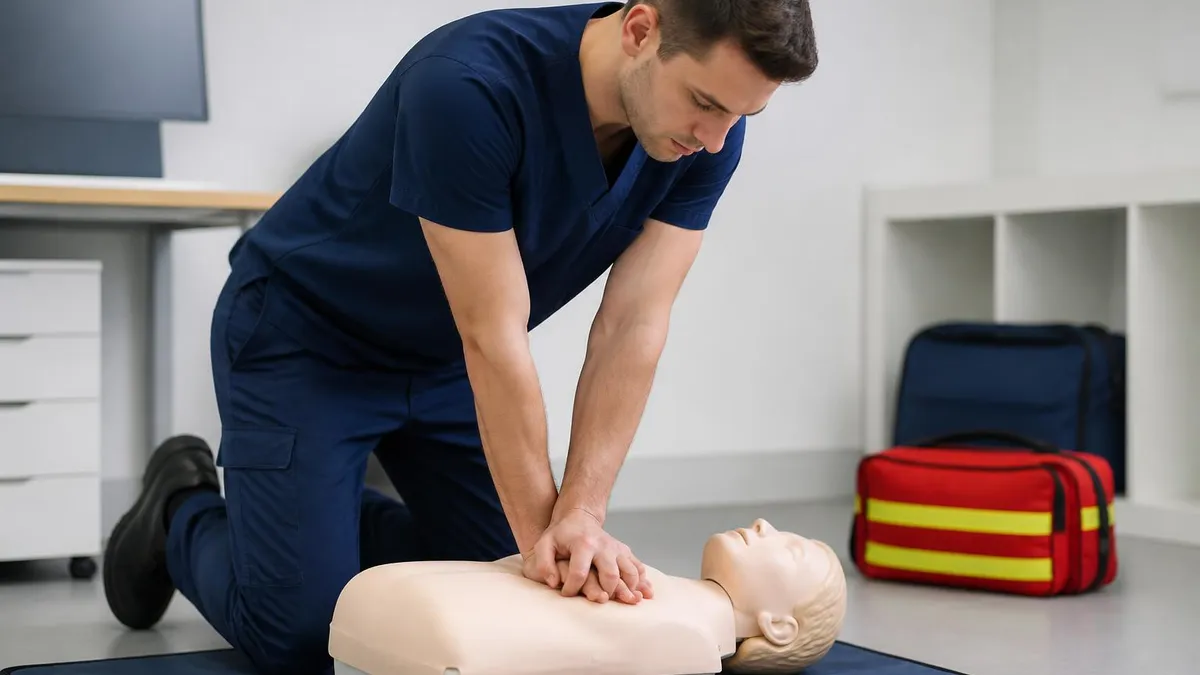
Adult CPR: Complete Step-by-Step Guide to Hands-Only and Standard CPR in 2026
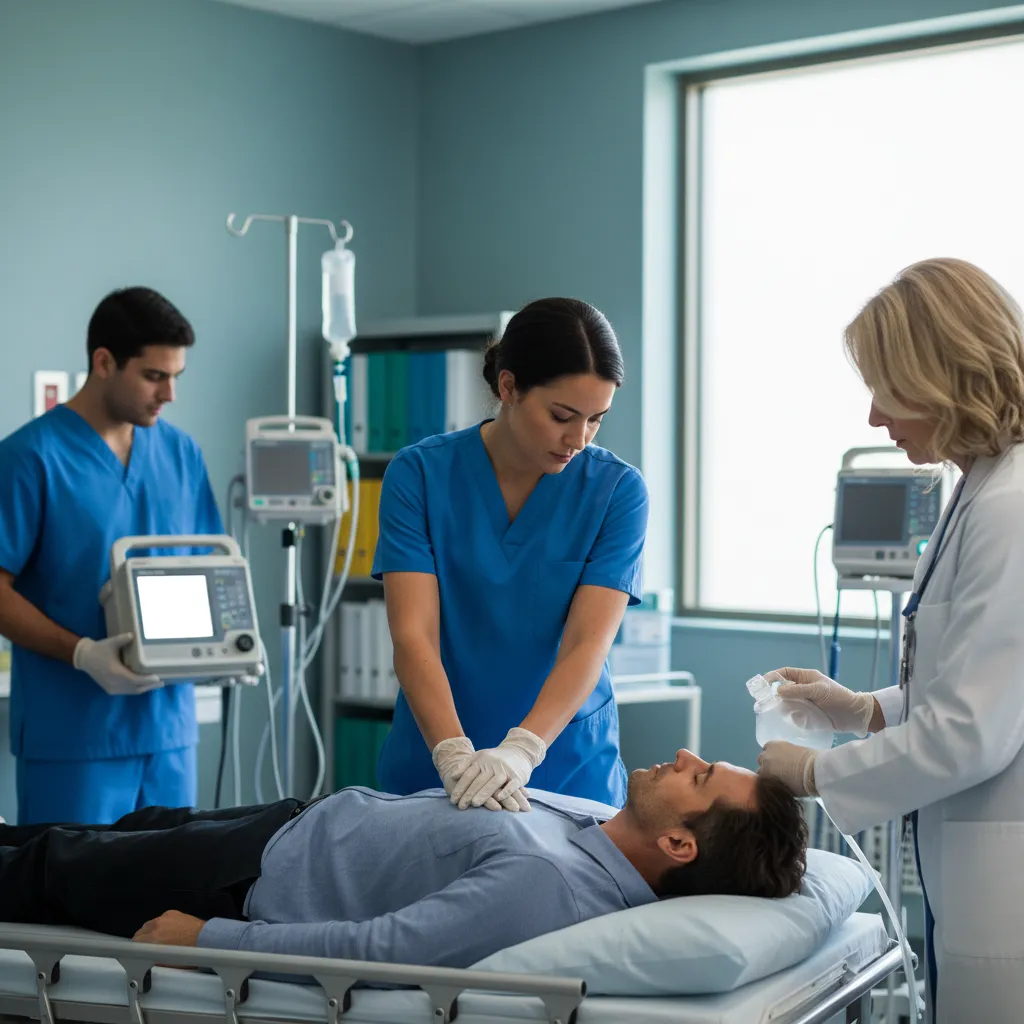
CPR - Cardiopulmonary Resuscitation: Complete Study Guide 2026
How this page was made: written with AI tools and published by Nathan Beja, founder of Practice Test Geeks, who is responsible for its content. Exam facts are checked against the official sources listed below. Not reviewed by a subject-matter expert. Editorial policy
Sources & references
Exam facts on this page (fees, format, dates, passing scores) are checked against these official sources; the date is our last check. Editorial policy
- redcross.org — Score validity, renewal, test delivery, passing score · verified Oct 2026
- elearning.heart.org — Fees, score validity, passing score · verified Oct 2026
- shopcpr.heart.org — Test delivery · verified Oct 2026