
Rough Terrain Forklift Training: Complete Guide to Certification, Requirements, and Safe Operation
Master rough terrain forklift training with our complete guide. OSHA requirements, certification steps, costs & safety tips. 🏆 Get certified today.

Forklift rental and equipment procurement decisions often hinge on a critical factor that many employers overlook: whether their operators have completed proper rough terrain forklift training. Unlike standard warehouse forklifts that glide across smooth concrete floors, rough terrain forklifts are purpose-built machines designed to navigate uneven ground, muddy construction sites, steep inclines, and outdoor job sites where conventional equipment simply cannot operate safely or effectively. These powerful machines require specialized knowledge, and OSHA mandates formal training before any operator climbs into the cab.
Rough terrain forklifts differ fundamentally from the electric forklift or stand up forklift models common in distribution centers. They typically feature large pneumatic tires, four-wheel drive capability, high ground clearance, and extended masts capable of reaching significant heights even on unstable surfaces. Capacity ratings commonly range from 5,000 to 35,000 pounds, making these machines among the most powerful in the forklift family. Because of this power and complexity, operators need comprehensive instruction covering stability principles, load management, and site-specific hazards before they ever move a load.
The demand for qualified rough terrain forklift operators has grown substantially alongside construction, agriculture, and infrastructure development sectors. Whether you are an employer seeking to build a compliant workforce, an individual operator looking to expand your skill set, or a training manager building a comprehensive safety program, understanding the full landscape of rough terrain forklift training requirements is essential. Proper certification not only keeps workers safe but also protects employers from costly OSHA citations and liability exposure.
OSHA's forklift standard, 29 CFR 1910.178, does not distinguish between forklift types when it comes to training mandates — every powered industrial truck operator must be trained and evaluated before operating independently. However, the specific content of that training must match the equipment type and workplace environment. Training programs for rough terrain forklifts must address the unique hazards of outdoor operation, including unstable ground conditions, weather impacts on traction, overhead hazard awareness, and slope operation protocols that differ significantly from indoor warehouse scenarios.
Beyond regulatory compliance, proper rough terrain forklift training delivers measurable operational benefits. Studies from the National Safety Council consistently show that untrained or undertrained forklift operators are involved in a disproportionate share of workplace incidents. The forklift industry sees approximately 85 fatal accidents and 34,900 serious injuries annually in the United States, with a significant portion involving tip-overs — the single greatest hazard for rough terrain equipment. Training that specifically addresses tip-over prevention, load securing on slopes, and emergency procedures dramatically reduces these statistics in workplaces that implement it thoroughly.
Cost considerations also factor heavily into training decisions. Many operators wonder whether formal rough terrain forklift training is worth the investment when equipment can be rented or purchased relatively affordably. The answer is unambiguous: an OSHA citation for operating an untrained forklift operator can reach $15,625 per violation, and willful violations can exceed $156,259. Those figures dwarf the typical cost of a quality training program, which generally runs between $150 and $500 per operator for classroom and hands-on instruction combined.
This comprehensive guide covers everything you need to know about rough terrain forklift training — from the specific OSHA requirements that apply, to what good training programs cover, how to choose a provider, what certification looks like, and how to maintain compliance over time. Whether you are managing a construction site, a lumber yard, an agricultural operation, or any other outdoor worksite where forklifts are deployed on unpaved surfaces, the information in these pages will help you build a safer, more compliant operation from the ground up.
Rough Terrain Forklift Training by the Numbers

Rough Terrain Forklift Training Program Structure
Pre-Training Assessment
Formal Classroom Instruction
Equipment Familiarization
Supervised Hands-On Practice
Practical Evaluation
Certification and Documentation
OSHA's certification of forklift operators is not optional — it is a legal requirement under 29 CFR 1910.178(l) that applies to every employer whose workers operate powered industrial trucks, including rough terrain forklifts. The standard requires that training be completed before an operator works independently, that training be specific to the equipment type and workplace hazards involved, and that a qualified person evaluate each operator's actual performance before certification is granted. Understanding exactly what the law requires helps employers build programs that withstand OSHA inspection scrutiny.
The OSHA standard divides required training content into three main categories. First is truck-related topics, which must include operating instructions and warnings, differences between forklifts and automobiles, visibility limitations, fork and attachment weight capacities, vehicle stability principles, inspection and maintenance requirements, and refueling or recharging procedures. Second is workplace-related topics, including surface conditions, load composition and stability, pedestrian traffic hazards, narrow aisles and restricted areas, hazardous locations, ramp and incline operations, and closed environments. Third is the practical evaluation, which must demonstrate competency in actual operation conditions.
For rough terrain forklifts specifically, the workplace-related training component carries extra weight. Outdoor worksites present hazards that simply do not exist in a warehouse: soft or muddy ground that reduces effective load capacity, slope angles that shift the forklift's center of gravity, wind that affects stability when handling sheet materials or large surface-area loads, wet grass or gravel that eliminates the traction assumptions built into a machine's rated capacity, and power line proximity that creates electrocution risks during improved load operations. All of these topics must be addressed explicitly in a compliant training program.
Employers are responsible for ensuring that training is conducted by a person with the knowledge, training, and experience to train operators — OSHA does not specify that trainers must hold any particular external credential, but internal trainers must demonstrably understand both the regulatory requirements and the operational realities of rough terrain forklift use. Many employers use third-party training companies, equipment dealers, or community college programs precisely because establishing internal trainer competency requires its own investment of time and documentation.
Refresher training requirements are another area where employers frequently misunderstand their obligations. OSHA mandates retraining whenever an operator is observed operating unsafely, is involved in an accident or near-miss, receives an evaluation indicating deficiencies, encounters a different type of truck, or works in conditions that differ significantly from prior training. Beyond these triggered events, OSHA recommends — though does not explicitly mandate — full recertification every three years. Most safety professionals treat the three-year mark as a hard deadline to avoid ambiguity during inspections.
Documentation is the backbone of a defensible forklift certification program. Employers must maintain records showing each operator's name, the date of training, the date of evaluation, and the identity of the person performing the training and evaluation. While OSHA does not mandate a specific form for these records, the information must be retrievable and current. Many employers use digital tracking systems that send automatic recertification reminders, which is particularly valuable for large workforces or multiple job sites where tracking manually becomes impractical.
One nuance that surprises many employers is that OSHA's forklift standard requires equipment-specific training. An operator certified on a sit-down counterbalanced warehouse forklift is not automatically qualified to operate a rough terrain model, even if both machines perform similar lifting functions. The differences in stability dynamics, tire behavior on varied terrain, mast configurations, and operator interface layouts are significant enough that OSHA's equipment-specific language means what it says. Operators transitioning from indoor electric forklift or stand up forklift experience to rough terrain equipment need formal instruction covering the differences before they operate independently on a construction site or outdoor yard.
Forklift Operator Roles: Rough Terrain vs. Other Forklift Types
Rough terrain forklifts are engineered specifically for outdoor and uneven surface operation. They feature large, deep-tread pneumatic tires, high ground clearance, four-wheel drive systems, and strong frames capable of handling the stresses of construction sites, lumber yards, agricultural facilities, and oil field applications. Operators must understand how shifting ground conditions affect stability and load capacity in ways that never arise in a warehouse environment.
Training for rough terrain forklift operators emphasizes slope navigation, load securing on uneven ground, and hazard identification in dynamic outdoor environments. A forklift operator who has only ever worked indoors will need substantial additional instruction before being considered competent on a rough terrain machine. Capacity ratings typically range from 5,000 to 35,000 pounds, and mast heights can exceed 20 feet even in challenging terrain conditions, making proper training absolutely essential for both operator safety and equipment longevity.

Pros and Cons of Third-Party vs. In-House Rough Terrain Forklift Training
- +Third-party trainers bring specialized expertise and current OSHA regulatory knowledge without requiring internal investment in trainer development
- +External programs typically include professionally developed curriculum, printed materials, and standardized evaluation forms that satisfy documentation requirements immediately
- +Many third-party providers offer training on multiple forklift types, allowing employers to efficiently certify operators on rough terrain, electric, and stand-up equipment in one engagement
- +In-house training can be customized precisely to your specific equipment models, site conditions, and company-specific hazards for more relevant instruction
- +Internal certified trainers can conduct refresher training and new-hire onboarding on demand without scheduling external providers or paying per-session fees
- +Blended programs that use third-party curriculum with in-house practical evaluation combine the benefits of both approaches and satisfy OSHA's equipment-specific evaluation requirement
- −Third-party training can be expensive when certifying large workforces, particularly when multiple sessions must be scheduled to accommodate shift workers
- −Generic external programs may not address the specific rough terrain conditions, load types, or equipment models present at your particular worksite
- −Scheduling third-party providers around project timelines and equipment availability can be logistically challenging on active construction sites
- −Developing qualified in-house trainers requires significant upfront investment in trainer certification, curriculum development, and ongoing education to stay current
- −In-house trainers may carry blind spots about site-specific hazards that an outside expert would immediately identify, creating gaps in training content
- −Small employers with only one or two operators may find the economics of developing internal training capacity difficult to justify compared to occasional third-party use
Pros and Cons at a Glance
| Pros | Cons |
|---|---|
| Third-party trainers bring specialized expertise and current OSHA regulatory knowledge without requiring internal investment in trainer development | Third-party training can be expensive when certifying large workforces, particularly when multiple sessions must be scheduled to accommodate shift workers |
| External programs typically include professionally developed curriculum, printed materials, and standardized evaluation forms that satisfy documentation requirements immediately | Generic external programs may not address the specific rough terrain conditions, load types, or equipment models present at your particular worksite |
| Many third-party providers offer training on multiple forklift types, allowing employers to efficiently certify operators on rough terrain, electric, and stand-up equipment in one engagement | Scheduling third-party providers around project timelines and equipment availability can be logistically challenging on active construction sites |
| In-house training can be customized precisely to your specific equipment models, site conditions, and company-specific hazards for more relevant instruction | Developing qualified in-house trainers requires significant upfront investment in trainer certification, curriculum development, and ongoing education to stay current |
| Internal certified trainers can conduct refresher training and new-hire onboarding on demand without scheduling external providers or paying per-session fees | In-house trainers may carry blind spots about site-specific hazards that an outside expert would immediately identify, creating gaps in training content |
| Blended programs that use third-party curriculum with in-house practical evaluation combine the benefits of both approaches and satisfy OSHA's equipment-specific evaluation requirement | Small employers with only one or two operators may find the economics of developing internal training capacity difficult to justify compared to occasional third-party use |
Rough Terrain Forklift Certification Compliance Checklist
- ✓Verify that all rough terrain forklift operators have completed formal classroom instruction covering OSHA 29 CFR 1910.178(l) required topics before independent operation begins.
- ✓Ensure training content specifically addresses rough terrain hazards: slope operation, soft ground, weather effects on traction, and overhead power line proximity.
- ✓Confirm that a qualified evaluator has observed and documented each operator's practical performance on the actual equipment type they will operate.
- ✓Maintain written records for every operator showing training date, evaluation date, equipment types covered, and trainer/evaluator identity.
- ✓Conduct refresher training immediately after any observed unsafe operation, accident, near-miss incident, or operator evaluation showing performance deficiencies.
- ✓Schedule full recertification for all rough terrain forklift operators at least every three years, using a calendar or digital tracking system to prevent lapses.
- ✓Require equipment-specific retraining whenever operators are assigned to a different rough terrain forklift model or encounter significantly different site conditions.
- ✓Include pre-operation inspection training covering fluid levels, tire condition, hydraulic systems, mast and forks, safety devices, and load capacity plate verification.
- ✓Train operators on the specific load capacity charts for each rough terrain forklift used at the worksite, including effects of mast extension and load center distance.
- ✓Document all training with signed operator acknowledgment forms and store records in a location accessible for OSHA inspection at each active job site.
Tip-Overs Are the #1 Rough Terrain Killer — Training Cuts Risk Dramatically
Lateral tip-overs account for the majority of fatal rough terrain forklift accidents, and nearly all occur when operators attempt turns on slopes, carry loads that exceed capacity on uneven ground, or fail to lower loads before traveling. A properly trained operator who understands the stability triangle and practices slope protocols reduces tip-over risk by an estimated 70% compared to untrained peers, according to industry safety research.
Understanding the true cost of rough terrain forklift training requires looking beyond the per-session training fee to consider the full financial picture of compliance versus non-compliance. The direct cost of a quality training program for a single operator typically ranges from $150 for an online-only course to $500 or more for a full-day program that includes hands-on evaluation. Group training through an equipment dealer or safety company can reduce the per-person cost to $75–$150 when ten or more operators train together, making fleet-wide certification more accessible for medium and large employers.
For employers evaluating the forklift for sale market and considering purchasing rough terrain equipment rather than renting, training costs should be factored into the total cost of ownership calculation from day one. A new rough terrain forklift might cost $50,000 to $120,000 depending on capacity and features, and the OSHA-required training for each operator who will use that machine is a non-negotiable line item in the ownership budget.
Skipping training to save a few hundred dollars per operator while owning a six-figure machine is a risk calculus that rarely makes financial sense when OSHA penalties and liability exposure are factored in.
Forklift rentals present a slightly different dynamic. When a company rents rough terrain equipment for a short-term project, operators still must be certified — the rental duration does not affect OSHA's training mandate. Many forklift rental companies offer operator training as an add-on service, and some include basic safety orientation in the rental agreement. However, it is critical to distinguish between a brief equipment orientation provided by a rental company and the full OSHA-compliant training and evaluation that the standard requires. Orientation is not certification, and employers cannot rely on rental company orientations to satisfy their legal training obligations.
The timeline for completing rough terrain forklift training varies based on the operator's prior experience and the program format. A complete newcomer to forklifts typically needs a full day of training — four to six hours of classroom instruction followed by four to eight hours of supervised hands-on practice — before being ready for a practical evaluation.
Experienced operators transitioning from other forklift types may complete a transition-focused program in four to six hours if their existing knowledge base is strong. Employers planning project timelines should budget at least one full workday for training and evaluation per operator, plus additional time if initial evaluations reveal deficiencies requiring remediation.
Online rough terrain forklift training courses have proliferated in recent years, and they serve a legitimate role in the overall training system — but only for the knowledge-based portion of the requirement. OSHA is explicit that the practical evaluation component cannot be completed online; it requires actual performance observation by a qualified evaluator on real equipment.
Employers who use online courses for the classroom portion and then conduct an in-person practical evaluation satisfy OSHA's requirements. Employers who attempt to certify operators using online-only programs without any hands-on evaluation component are not in compliance, regardless of what certificate the online course issues.
Hidden costs of inadequate training extend well beyond OSHA fines. Workers' compensation claims from forklift accidents average significantly more than claims from other workplace injuries due to the severity typical of forklift incidents. Equipment damage from operator error — bent forks, damaged masts, collisions with structures — adds up quickly on expensive rough terrain machines. Project delays caused by accidents or OSHA work stoppages can dwarf training costs in a single incident. When viewed through this lens, investing $300–$500 per operator in quality training is clearly one of the highest-return safety expenditures available to construction and outdoor operations employers.
State-specific requirements can layer additional obligations on top of federal OSHA standards. California's Cal/OSHA, for instance, has historically maintained stricter forklift training documentation requirements than the federal standard, and several other states with their own OSHA programs have enacted specific rough terrain forklift provisions. Employers operating in state-plan states — including California, Michigan, Washington, and approximately two dozen others — should verify both federal and state requirements apply to their specific operations and ensure their training programs satisfy the more stringent of the two where differences exist.

OSHA explicitly requires that forklift operator evaluation include direct observation of the operator performing tasks on actual equipment. No online course, video-based program, or written test alone satisfies this requirement. Employers who certify operators without a supervised hands-on evaluation component risk citations of up to $15,625 per violation — and willful or repeat violations can reach $156,259. Always pair online classroom instruction with an in-person practical evaluation before issuing certification.
Recertification and renewal requirements represent an area where many otherwise compliant employers fall short. OSHA's forklift standard requires retraining whenever specific triggering events occur — unsafe operation observed, accident or near-miss, equipment change, or condition change — but does not set a hard periodic recertification interval in its text. The three-year recertification cycle widely practiced in the industry comes from OSHA guidance documents and informal enforcement positions rather than explicit regulatory language. Safety professionals universally recommend treating the three-year mark as a mandatory deadline to maintain compliance posture.
Maintaining forklift license renewal records across a mobile workforce is one of the practical challenges that rough terrain forklift employers face most acutely. Construction workers often move between employers, and each employer bears independent responsibility for verifying that any operator they hire is currently certified on the specific equipment that worker will use.
Best practice is to conduct a brief practical evaluation of any newly hired operator before they operate independently, even if that worker presents a valid-looking certification from a prior employer — this protects the new employer and also catches any skill gaps that may have developed since the original training.
The content of recertification training should not simply repeat initial training verbatim. Effective recertification programs review incident reports from the intervening period — both company-specific incidents and industry-wide trends — to incorporate lessons learned. They update operators on any regulatory changes, equipment modifications, or new hazard types relevant to current projects. They use practical evaluation as a skill refresher, not merely a compliance checkbox. The difference between box-checking recertification and genuinely effective recertification is measurable in safety outcomes over time.
Employers who operate across multiple states or jurisdictions face additional complexity in managing recertification cycles. A workforce spread across California, Texas, and Florida, for instance, must track varying state requirements alongside federal mandates. Digital workforce management platforms that integrate forklift certification tracking with HR systems have become increasingly popular for this reason, automatically flagging upcoming expiration dates and maintaining the documentation needed for multi-jurisdictional compliance. The investment in such systems pays dividends in audit readiness alone, as OSHA inspectors routinely request certification records as a first step in any forklift-related inspection.
Seasonal operations present particular recertification challenges. Agricultural employers who operate rough terrain forklifts during harvest seasons, for example, may have operators who go months without operating the equipment between seasons. When a significant gap in operation occurs, best practice calls for refresher training and re-evaluation before the operator resumes independent work, even if the formal three-year cycle has not elapsed. Skill degradation during extended non-use periods is a documented phenomenon, and the hazards of rough terrain operation are serious enough that over-caution is always the appropriate stance when deciding whether additional training is warranted.
The relationship between forklift training and insurance costs is also worth considering for employers managing operating budgets. Many commercial insurance carriers offer premium discounts for employers who can demonstrate strong forklift training programs, including documented recertification cycles and incident response training. Some carriers require evidence of OSHA-compliant training programs as a condition of coverage for forklift-related liability. Employers who treat training as a compliance cost center may be missing an opportunity to negotiate insurance terms that partially offset the training investment over time, particularly for operations with large fleets or high operating hours on rough terrain equipment.
For individual operators seeking to advance their careers, maintaining current rough terrain forklift certification is increasingly important in a competitive labor market. Operators who can document current certification on multiple equipment types — particularly rough terrain models, which are in high demand on construction and infrastructure projects — consistently command higher wages and have access to a broader range of employment opportunities than operators certified only on warehouse equipment.
The wage differential between a certified rough terrain operator and an uncertified general laborer on a construction site can exceed $10 per hour in many markets, making the investment in quality forklift training one of the most direct paths to earnings improvement available to skilled trades workers.
Practical tips for succeeding in rough terrain forklift training begin long before the first day of instruction. Operators who arrive at training having reviewed the specific equipment manual for the forklift model they will be trained on consistently perform better during both classroom and hands-on phases. Most manufacturers provide operator manuals online or through their dealer networks at no cost. Spending two to three hours with the manual before training begins familiarizes you with the machine's specific controls, capacity charts, safety devices, and inspection requirements — knowledge that gives you a foundation to build on rather than starting from zero.
During the classroom portion of training, take notes even if handouts are provided. The act of writing reinforces retention of critical safety principles, and your notes will be useful when studying for any written knowledge assessment the program includes.
Pay particular attention to the sections covering load capacity charts and the stability triangle — these two topics underpin virtually every practical decision a forklift operator makes, and they are also the areas where OSHA inspectors most commonly probe operator knowledge during workplace investigations. If anything is unclear, ask — training programs that rush through classroom content without allowing questions are doing operators a disservice.
The hands-on portion of rough terrain forklift training is where real competency develops. Approach each practice task deliberately: slow down at the start of each maneuver, announce your intentions out loud if your evaluator encourages it, and focus on precision over speed. Evaluators are looking for safe habits, not fast operation.
Common errors that derail practical evaluations include failing to perform a complete pre-operation inspection, traveling with loads improved above the safe travel height, not checking for overhead hazards before raising the mast, and failing to honk the horn at intersections or blind corners — all habits that must be demonstrated consistently, not just occasionally.
Slope operation deserves special attention during the hands-on phase of rough terrain forklift training. The fundamental rule — loaded forks face uphill when traveling on slopes, regardless of direction of travel — must become second nature. Practice this until it is automatic rather than something you have to consciously remember under pressure.
Similarly, practice the appropriate speed reduction on descents: gravity assists acceleration on slopes, and rough terrain forklifts can reach unsafe speeds quickly on even moderate grades if the operator does not actively manage travel speed. Your evaluator will be watching your slope habits closely, as this is one of the highest-risk operation scenarios in real-world use.
Load assessment is another practical skill that distinguishes experienced rough terrain operators from beginners. Before lifting any load, operators should visually assess the load's dimensions, estimated weight, and center of gravity. Uneven loads, oddly shaped materials, and loads that approach the machine's rated capacity all require extra caution and often a different approach than standard pallet handling.
When load weight is uncertain, use the load capacity plate to verify that the intended lift is within the machine's rated capacity at the relevant load center distance and mast height — never assume, and never exceed the plate rating. This verification habit protects both operator safety and equipment integrity.
Pre-operation inspections are a daily requirement that many operators underperform in real-world settings once initial training enthusiasm fades. Commit to conducting a thorough pre-operation check every shift, every day — not as a paperwork exercise but as a genuine assessment of whether the machine is fit for service.
Check fluid levels, tire condition and pressure, fork condition for cracks or bends, hydraulic hose integrity, warning horn function, backup alarm if equipped, seat belt condition, and all safety devices. Rough terrain forklifts work in demanding environments that accelerate wear on all these components compared to indoor machines, making daily inspection genuinely critical rather than bureaucratic box-checking.
Finally, approach your training as the beginning of an ongoing learning process rather than a one-time credential to acquire and forget. The safest rough terrain forklift operators are those who remain genuinely curious about their equipment and continuously seek to improve their technique. Participate actively in refresher training rather than treating it as an interruption.
Report near-misses and equipment issues promptly rather than ignoring them. Mentor newer operators when you have the experience to do so. These habits collectively build workplace safety cultures where serious forklift incidents become rare rather than routine, and they distinguish the operators whom employers trust with the most demanding and highest-stakes rough terrain assignments.
Forklift Questions and Answers
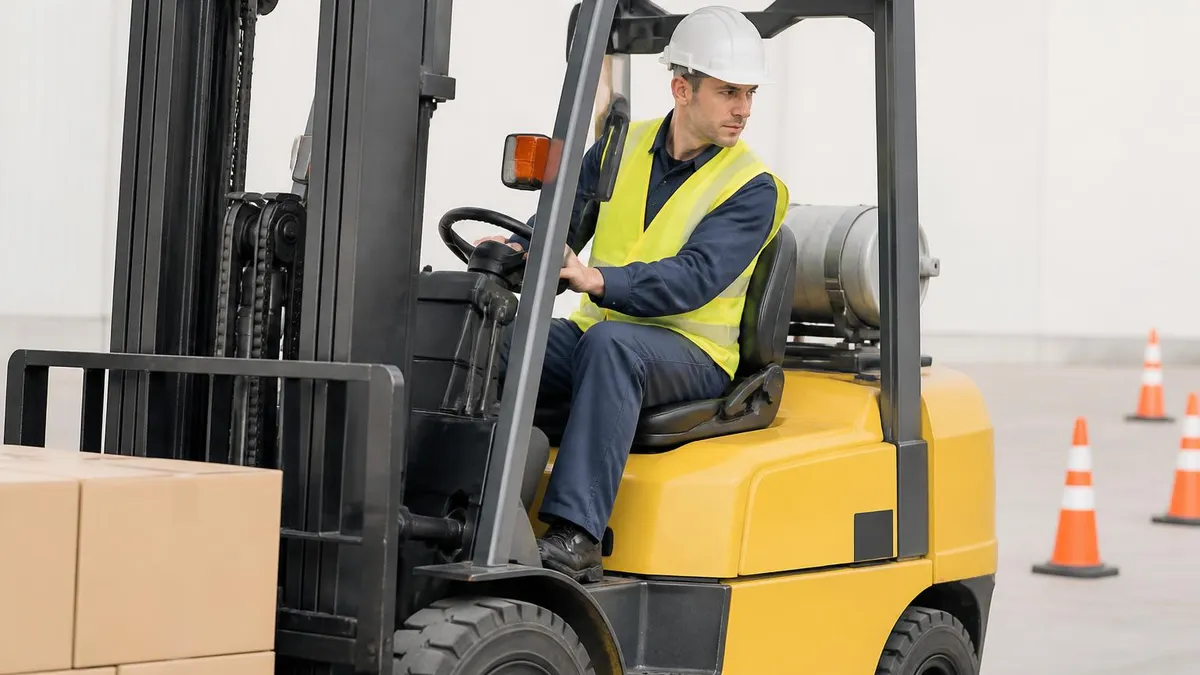
Forklift Rentals: Complete Guide to Pricing, Types, and Operator Requirements
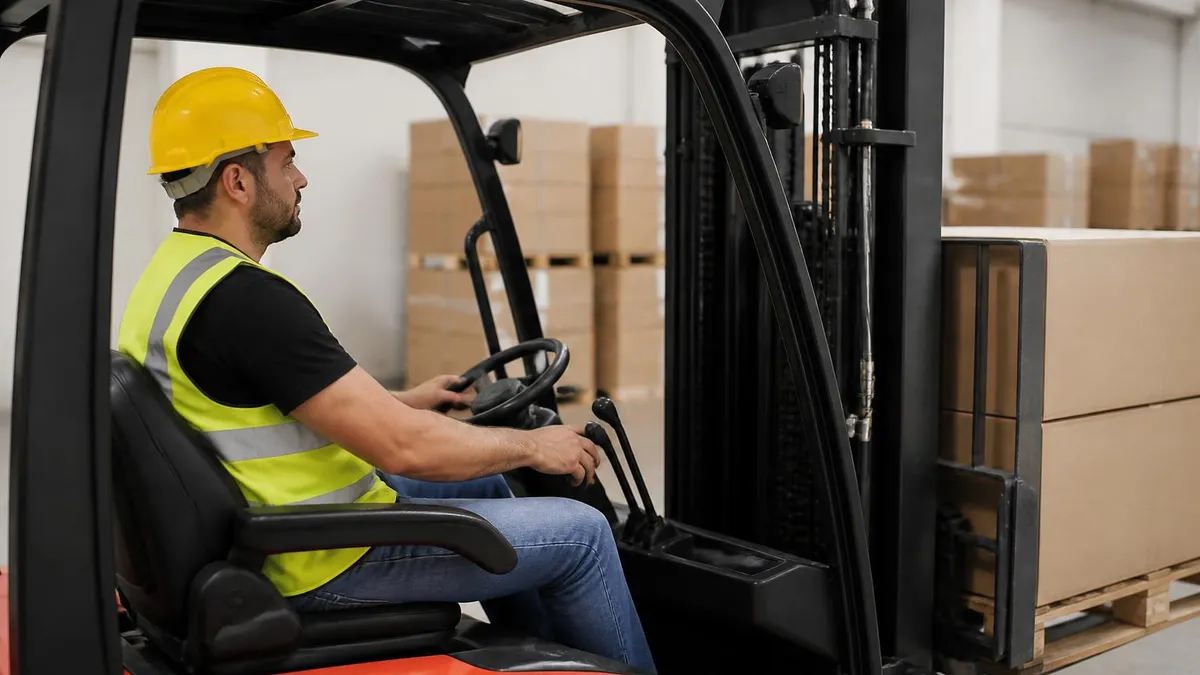
Forklift Hydraulic Fluid: Complete Guide to Types, Specifications, Change Intervals, and Troubleshooting for 2026
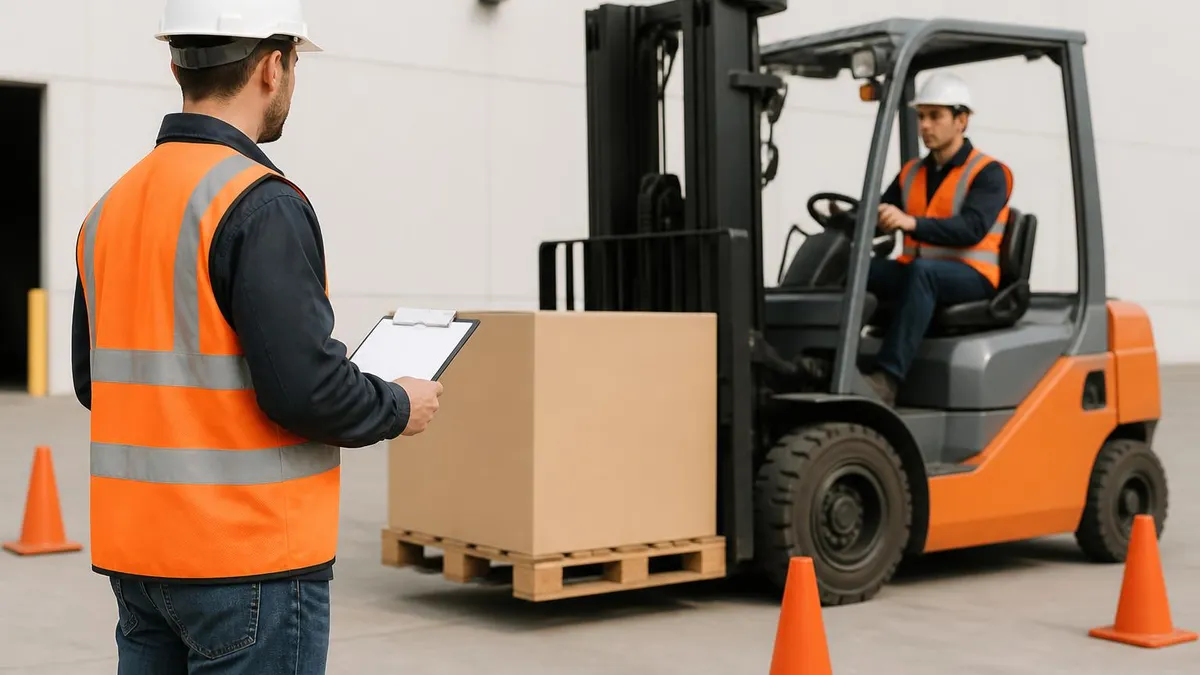
Forklift Parts and Maintenance: Complete Guide to Batteries, Chargers, and Replacement Components
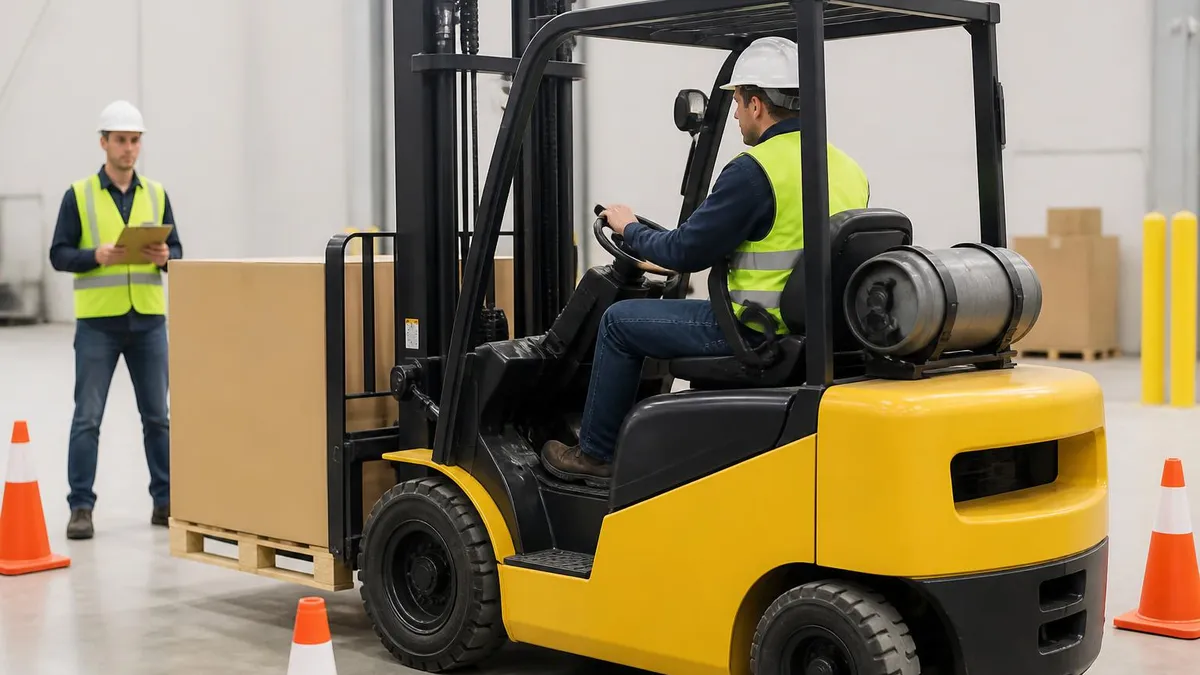
Big Forklift Guide: Heavy-Duty Lift Trucks, Capacity Classes, Rental Costs, and Operator Requirements
Forklift License Renewal: Complete Guide to Forklift License Expiry, OSHA Recertification, and Operator Requirements for 2026
About the Author

Certified Crane Operator & Skilled Trades Exam Specialist
Ferris State UniversityRobert Martinez is a Journeyman Ironworker, NCCCO-certified crane operator, and forklift trainer with a Bachelor of Science in Construction Technology from Ferris State University. He has 21 years of ironworking, rigging, and heavy equipment operation experience across high-rise and industrial construction sites. Robert prepares candidates for crane operator, rigger, forklift, and skilled trades certification examinations.