
Rough Terrain Forklift for Sale Near Me: Complete Buyer's Guide to Outdoor Forklifts, Rental Options, and Operator Certification
Find a rough terrain forklift for sale near me. Compare new vs used, rental costs, and certification requirements. ✅ Complete 2026 September buyer's guide.

If you are searching for a rough terrain forklift for sale near me, you already know that standard warehouse forklifts simply cannot handle the demands of outdoor job sites, lumber yards, construction zones, and agricultural operations.
Rough terrain forklifts are purpose-built machines engineered with large pneumatic tires, high ground clearance, and powerful engines that allow them to navigate mud, gravel, slopes, and uneven surfaces where conventional electric forklifts would fail completely. Whether you are a contractor, a materials supplier, or a site manager, understanding the purchasing process — from machine specifications to operator certification — is essential before committing your budget.
The market for forklifts is broader than many buyers realize. Forklift rental remains the most popular short-term solution, with the forklift rental near me search being one of the highest-volume queries in the equipment space, reflecting just how many businesses prefer flexible access over capital ownership.
However, for operations that run outdoor lifts more than 60 days per year, purchasing or financing a rough terrain unit almost always delivers a lower total cost of ownership. New rough terrain forklifts from leading brands like Toyota, JLG, Manitou, and Gradall range from roughly $25,000 for a compact 5,000-lb model to well over $120,000 for heavy-duty 36,000-lb industrial units.
Understanding the difference between machine types matters enormously when shopping this category. A stand up forklift is designed for narrow-aisle warehouse work and would be completely unsuitable outdoors. Similarly, an electric forklift — while increasingly popular for indoor sustainability goals — lacks the torque, tire profile, and weather resistance needed for rough terrain applications. Rough terrain models are almost exclusively powered by internal combustion engines running on diesel, liquid propane, or gasoline, giving them the sustained power output required for sloped surfaces and loaded travel across unpaved ground.
Certification of forklift operators is not optional on any job site, regardless of terrain type. OSHA 1910.178 mandates that every powered industrial truck operator be trained and evaluated before operating any forklift, and rough terrain machines fall squarely within that regulation. Employers who put uncertified workers behind the controls of a rough terrain forklift face fines starting at $15,625 per violation, with willful violations reaching $156,259. Beyond compliance, certified forklift operators statistically cause 85 percent fewer accidents — a figure that translates directly to lower insurance premiums and reduced liability exposure on every project.
The forklift training landscape has expanded significantly in recent years, with both in-person and online blended options now available from OSHA-authorized training providers. A complete rough terrain forklift certification program covers pre-shift inspection procedures, load capacity calculations, slope navigation, load center concepts, refueling safety, and emergency response. Most programs can be completed in four to eight hours, and certification must be renewed every three years or whenever an operator is observed operating the equipment unsafely, is involved in an accident, or is assigned to a different type of forklift.
Before you rough terrain forklift for sale search turns into a purchase decision, it pays to evaluate your actual utilization rate, site conditions, and whether you need a mast-based rough terrain forklift or a telehandler — the telescoping boom variant that has become extremely popular on construction sites for its ability to place loads at height and reach over obstacles. Telehandlers are technically classified separately from traditional forklifts but require the same OSHA-compliant operator training and share many of the same purchasing considerations including tire type, engine displacement, and lift capacity ratings.
This guide covers everything a buyer or renter needs to know: machine types, new versus used pricing, forklift rentals cost structures, what to look for in a used unit inspection, how forklift training and certification fit into your purchase timeline, and how to compare dealers when evaluating a rough terrain forklift for sale in your local market. By the time you finish reading, you will have a clear framework for making a smart equipment decision that matches your operational needs, budget, and compliance obligations.
Rough Terrain Forklifts by the Numbers

Types of Rough Terrain Forklifts You Can Buy or Rent
The traditional design with a vertical mast and two-stage or three-stage lift. Ideal for stable outdoor surfaces, lumber yards, and precast concrete yards. Typically offered in 6,000 to 36,000 lb capacity ranges with diesel engines and large pneumatic tires.
The fastest-growing rough terrain category. A telescoping boom replaces the mast, allowing operators to reach over obstacles and place loads at heights up to 55 feet. Extremely popular on construction sites and increasingly available through forklift rentals programs.
Smaller footprint units in the 5,000 to 8,000 lb range designed for tight job sites, vineyards, nurseries, and agricultural operations. Lower acquisition cost makes these the most accessible entry point for buyers exploring forklift for sale listings.
Industrial-class machines rated from 20,000 to 100,000+ lbs, used in steel yards, precast plants, and port operations. These forklifts require specially credentialed forklift operators with site-specific training beyond standard OSHA baseline requirements.
Deciding between purchasing and renting a rough terrain forklift is fundamentally a utilization and cash flow calculation. If your operation needs a machine for a single project lasting three months or less, forklift rental is almost always the financially superior choice.
Rental eliminates ownership costs like depreciation, storage, insurance, and scheduled maintenance, all of which are bundled into the monthly rate your rental company charges. The average forklift rental near me for a rough terrain unit in the 10,000-lb class runs between $1,800 and $3,500 per month depending on your market, the machine's age, and whether delivery and fuel are included in the contract.
Long-term rental, sometimes called a lease-to-own or flex-rental arrangement, sits in the middle of the buy-versus-rent spectrum. Many national dealers offer 12- to 60-month rental agreements with purchase options at the end of the term. This approach lets your business preserve capital, test a specific machine model in your actual operating environment, and then decide whether to purchase that unit at a predetermined residual value. For growing companies uncertain about their five-year equipment needs, this structure provides flexibility that a straight purchase cannot match without significant resale risk.
Purchasing a new rough terrain forklift makes the most economic sense when utilization exceeds 1,000 hours per year — a threshold that roughly equates to about five hours of daily use across a standard 200-working-day calendar. At that level of utilization, ownership cost per hour typically falls below $8 to $12 for a mid-range diesel unit, compared to $18 to $30 per hour when you factor full rental costs into the calculation. The crossover point shifts depending on your local rental market rates, fuel costs, and how aggressively the dealer prices maintenance contracts alongside the machine purchase.
Used rough terrain forklifts represent a significant portion of the for-sale market, and they can deliver excellent value if you know what to inspect. Machines with fewer than 5,000 hours on major components — engine, transmission, and hydraulic pump — and a documented maintenance history can be purchased for 40 to 65 percent of their original MSRP.
The biggest risk categories in used rough terrain purchases are frame stress cracks from overloading, hydraulic cylinder seal degradation from outdoor UV exposure, and tire wear patterns that indicate poor load handling technique by previous operators. Always request an independent pre-purchase inspection from a certified forklift mechanic before finalizing any used equipment deal.
One frequently overlooked cost in the purchase calculation is operator certification. Whether you buy or rent a rough terrain forklift, every person who operates the machine must hold a valid certification of forklift competence per OSHA standards. Certification costs range from $50 to $250 per operator depending on the training provider, and refresher courses every three years add a recurring cost to your total equipment ownership budget.
Factor this into your analysis: a five-person crew operating rough terrain forklifts over a three-year period will spend $750 to $3,750 on certification alone, not including any paid time for classroom and hands-on evaluation hours.
Electric forklift technology, while transforming the indoor warehouse market, has made relatively limited inroads into the rough terrain segment as of 2026. Battery capacity limitations, the weight of large battery packs on sloped terrain, and the lack of widespread outdoor charging infrastructure all constrain electric adoption in this category. Hybrid rough terrain prototypes from JCB and Manitou have shown promise in controlled testing, but for buyers making purchasing decisions today, diesel and LPG remain the dominant and most practically supported powertrain options for outdoor rough terrain applications across the United States.
Financing options have expanded considerably for forklift purchases. Many equipment finance companies offer 60-month terms on rough terrain forklifts with down payments as low as 10 percent, and Section 179 tax deductions allow small and medium businesses to deduct the full purchase price of qualifying equipment in the year it is placed into service — potentially making a $60,000 rough terrain forklift purchase cost significantly less in net after-tax terms than the sticker price suggests. Consult your accountant before closing any equipment transaction to ensure you are capturing all available depreciation and deduction benefits under current IRS rules.
Forklift Operator Training: What Certification Covers
The classroom portion of forklift training covers OSHA regulations, load capacity theory, stability triangle principles, pre-operation inspection checklists, and hazard recognition. Trainees learn how load weight, load center distance, and mast tilt angle interact to determine safe operating limits. Most OSHA-compliant programs dedicate two to four hours to this phase, and many providers now offer this content online through video modules and interactive assessments that meet the knowledge-verification requirement.
During classroom training, rough terrain-specific content addresses slope navigation rules — typically no more than a 15-degree maximum grade for loaded travel — as well as tire inspection protocols for pneumatic outdoor tires, fuel handling for diesel and LPG systems, and site-specific hazard communication. Operators who complete this phase receive a written evaluation score that becomes part of their certification record, which employers must retain for the duration of the operator's employment and at least three years beyond their last evaluation date per OSHA documentation requirements.

Buying vs. Renting a Rough Terrain Forklift: Pros and Cons
- +Lower cost per hour when utilization exceeds 1,000 hours annually
- +Full control over maintenance scheduling and machine condition
- +Section 179 tax deduction can significantly reduce net purchase cost
- +Asset builds equity and can be resold when operational needs change
- +No rental contract restrictions on modifications or attachments
- +Eliminates availability risk during peak demand seasons when rental fleets run short
- −High upfront capital requirement — $25,000 to $120,000+ for new units
- −Depreciation begins immediately, averaging 15–20% in year one
- −Owner responsible for all maintenance, repairs, and storage costs
- −Resale market for used rough terrain forklifts can be slow in rural areas
- −Operator certification and ongoing training costs fall entirely on the owner
- −Technology obsolescence risk if electric or hybrid rough terrain matures rapidly
Rough Terrain Forklift Purchase Checklist
- ✓Confirm the machine's lift capacity matches your heaviest anticipated load at maximum required load center distance.
- ✓Verify tire type — pneumatic foam-filled for puncture resistance or air-filled pneumatic — matches your site surface conditions.
- ✓Request a full service history and hour meter log from the seller or dealer before any price negotiation.
- ✓Inspect the mast channels, carriage rollers, and fork blades for wear, cracks, or deformation using ASME B56.1 criteria.
- ✓Test all hydraulic functions — lift, tilt, and any side-shift attachment — under full rated load before signing.
- ✓Confirm engine compression and check for oil leaks, excessive exhaust smoke, or unusual mechanical noise during a cold start.
- ✓Verify the data plate is legible, accurate, and matches the machine's actual configuration and attachment setup.
- ✓Check frame welds for cracks, especially at the counterweight mounting points and front axle pivot brackets.
- ✓Ensure the ROPS (Roll-Over Protective Structure) meets current OSHA and ANSI/ITSDF standards for the machine class.
- ✓Confirm that operator certification training is scheduled for all personnel before the machine arrives on site.
Hour Meter Reading Alone Is Not Enough
A rough terrain forklift with 4,000 hours used primarily on flat gravel can be in far better mechanical condition than a 2,500-hour unit that spent its life navigating 12-degree slopes with overloaded forks. Always combine hour meter review with a physical inspection of the frame, hydraulics, and drivetrain — and insist on a cold-start test and loaded lift cycle before any purchase commitment.
Finding a reputable dealer when searching for a rough terrain forklift for sale near me requires more than a quick Google search. The rough terrain forklift market is served by a mix of national dealer networks — Toyota Material Handling, Crown Equipment, and Hyster-Yale among the largest — as well as regional independent dealers who often specialize in construction and agricultural equipment. National networks offer brand consistency, certified technicians, and established parts supply chains, but regional independents frequently offer more competitive pricing on used inventory and faster response times for field service calls in rural markets.
When evaluating a dealer, look for three core indicators of reliability: a physical service facility with factory-trained technicians, a demonstrated used equipment inspection process with written reports, and references from customers in your industry who have operated the same machine class you are considering. Any dealer unwilling to provide references or share an inspection report before purchase should be viewed with significant caution. The rough terrain forklift market attracts equipment brokers who resell machines from auctions without performing any mechanical assessment, and distinguishing these brokers from full-service dealers is a critical buyer skill.
Online forklift marketplaces including Machinery Trader, IronPlanet, and Equipment Trader have expanded dramatically since 2020, creating a national secondary market that gives buyers access to inventory far beyond their local geography. IronPlanet, in particular, operates an Inspected by IronPlanet program that sends a certified inspector to the seller's location and produces a detailed condition report with photographs and operational test results. For buyers comfortable purchasing equipment sight-unseen, this inspection program significantly reduces risk and has become a trusted standard for remote rough terrain forklift transactions across the United States.
Auction purchasing — through companies like Ritchie Bros. Auctioneers or Purple Wave — offers the lowest entry price points for used rough terrain forklifts but carries the highest risk. Most auction sales are final, as-is, with limited or no inspection access before bidding.
Experienced equipment managers who can assess machine condition from a walkaround and a brief operational test sometimes find exceptional value at auction, particularly when bidding on estate or fleet liquidation sales where maintenance records are available. First-time buyers, however, are strongly advised to bring a qualified mechanic to any in-person auction preview before placing bids on high-hour rough terrain units.
Parts availability is a critical consideration that many buyers overlook during the purchase evaluation process. Rough terrain forklifts from manufacturers with established US dealer networks — Manitou, Gradall, JLG, Caterpillar, and Gehl — generally have superior parts availability compared to imported brands with limited service representation. When a hydraulic cylinder fails on a rough terrain forklift at a remote job site, the difference between a one-day repair and a ten-day wait for parts translates directly to project delays and rental costs for replacement equipment. Evaluate parts availability as seriously as you evaluate purchase price.
Dealer financing terms vary significantly and deserve careful scrutiny alongside machine price. Some dealers inflate equipment prices in exchange for below-market interest rates, while others offer true invoice pricing with market-rate financing.
Always calculate the total cost of financing over the full loan term — not just the monthly payment — and compare dealer financing against equipment finance companies, your business bank, and SBA 7(a) loan programs before signing. For purchases above $50,000, the difference between financing options can represent $8,000 to $15,000 in total interest cost over a 60-month term, a meaningful sum that belongs in your equipment acquisition budget analysis.
Warranty terms on new rough terrain forklifts typically cover the powertrain for 12 months or 2,000 hours (whichever comes first), with structural components sometimes covered for longer periods depending on the manufacturer. Extended warranty programs from dealers add one to three years of additional coverage for a premium of $2,500 to $8,000 depending on machine size and coverage scope.
For buyers who plan to operate machines heavily and lack in-house mechanical capacity, extended warranties often deliver positive ROI — a single major hydraulic or transmission repair on a rough terrain forklift can easily exceed $6,000 in parts and labor at dealer service rates.

Do not allow any employee to operate a newly purchased or rented rough terrain forklift until they have completed OSHA-compliant forklift training and been formally evaluated on that specific machine type. OSHA inspectors can issue citations during unannounced site visits, and fines for operating uncertified forklift operators start at $15,625 per incident. Ensure certification records are on file and accessible at the job site at all times.
Forklift training for rough terrain operators encompasses significantly more terrain-specific content than standard warehouse forklift programs, and employers should verify that the training provider they select addresses outdoor operation explicitly rather than offering a generic curriculum adapted from indoor counterbalanced forklift standards. The key rough terrain-specific competencies include slope travel procedures — always travel with the load downhill on grades — surface assessment before transit, load securing on uneven ground, and tire pressure monitoring protocols for pneumatic tires operating in high-puncture environments like construction debris fields.
The most effective rough terrain forklift training programs combine classroom instruction with hands-on evaluation on actual rough terrain surfaces, not on a flat warehouse floor designated as a training area. Operators who complete their practical evaluation on pavement and are then deployed to a muddy construction site or a gravel quarry without site-specific orientation are at significantly elevated risk of accident in the first weeks of operation. OSHA's standard requires site-specific hazard training, which means your training program must address the actual conditions at your specific work location — not generic outdoor scenarios.
Many employers integrate rough terrain forklift training into a broader equipment competency program that also covers related machines like skid steers, telehandlers, and compact track loaders. While this integration improves operational flexibility and reduces overall training time per employee, it is important to ensure that each specific machine type receives its own documented evaluation session. OSHA auditors look specifically for machine-type-specific evaluation records and will cite employers who rely on a single generic heavy equipment certification to cover multiple distinct machine classes.
Third-party training providers typically offer either on-site programs — where a trainer comes to your facility and evaluates operators on your machines — or open-enrollment programs at a training center where participants bring their own certification documentation needs. On-site programs cost more per session ($500 to $1,500 for a group of up to ten operators) but offer the advantage of evaluating operators on the actual machines and site conditions they will encounter daily. Open-enrollment programs run $75 to $200 per individual and work well for businesses that need to certify one or two operators without bringing a trainer on-site.
Online forklift certification programs have grown in availability and sophistication since OSHA's acceptance of blended learning formats. A compliant blended program delivers the knowledge training component online — covering regulations, theory, and hazard recognition — and then requires a separate in-person practical evaluation with a qualified trainer before issuing certification. Programs that claim to offer complete OSHA certification entirely online, without any hands-on evaluation component, do not meet the standard and should be avoided regardless of price. The practical evaluation requirement is explicit in OSHA 1910.178(l) and cannot be satisfied through video viewing or online testing alone.
Employer-conducted forklift training is fully permissible under OSHA's standard, provided the person delivering the training meets the definition of a qualified trainer — someone with the knowledge, training, and experience necessary to train operators and evaluate their competence. Many operations designate a senior forklift operator or site safety manager as the designated trainer after that individual completes a train-the-trainer program. This approach reduces ongoing certification costs significantly for large workforces while keeping the training program tightly aligned with site-specific conditions and machine inventory.
For businesses that have purchased a rough terrain forklift and are managing certification internally, maintaining a complete and organized certification record system is as important as the training itself. Each operator's file should include their name, the date of training and evaluation, the name of the trainer, the specific machine type(s) they were evaluated on, and the outcome of the evaluation.
These records must be retained for the duration of employment and are subject to OSHA inspection on request. Digital record management systems designed specifically for forklift certification tracking have become widely available and dramatically simplify the administrative burden of maintaining a compliant program across large or multi-site workforces.
Preparing to pass your forklift certification evaluation on a rough terrain machine requires focused study across three domains: regulatory knowledge, mechanical understanding, and practical operation technique. On the regulatory side, you need to know OSHA 1910.178 inside and out — specifically the operator responsibilities section, the employer training requirements, the inspection requirements, and the rules governing load handling and travel on grades. OSHA's official forklift e-tool, available at OSHA.gov, is a free and comprehensive study resource that most certification trainers recommend as a primary reference.
Mechanical understanding for rough terrain forklifts goes beyond simply knowing how to operate the controls. Certified operators are expected to understand how the stability triangle functions and why it changes shape as load weight increases, as mast height rises, and as the machine travels on a slope.
They need to understand how pneumatic tire pressure affects load capacity ratings — an underinflated tire can reduce a machine's rated capacity by as much as 20 percent — and why overinflation creates its own risks on rocky surfaces where tire puncture probability is elevated. This knowledge underpins the pre-shift inspection skills that OSHA evaluates in every certification program.
Practical operation technique on rough terrain forklifts is best developed through deliberate, supervised repetition rather than unstructured practice time. Focus specifically on smooth hydraulic control — jerky mast movements destabilize loads significantly more on rough terrain than on flat surfaces — and on developing an intuitive sense for when a load feels properly centered on the forks versus shifted forward or laterally.
Forks that are too close together for a wide load, or too far apart for a narrow one, are among the most common root causes of load drops on rough terrain machines, and recognizing this during load pickup rather than during travel is a key competency evaluators assess.
Study resources for forklift certification have expanded well beyond paper manuals and classroom slide decks. Practice question banks — like those available on PracticeTestGeeks.com — allow operators to identify knowledge gaps before the written evaluation, dramatically reducing first-attempt failure rates.
Operators who complete at least 50 practice questions in each major category (regulations, load handling, inspection, and emergency procedures) consistently outperform those who rely solely on trainer-led instruction without self-assessment. Use practice tests as a diagnostic tool: review every question you answer incorrectly, look up the regulatory basis for the correct answer, and circle back to your weakest categories in the final days before your evaluation.
Emergency procedure knowledge is tested heavily in rough terrain certification programs, and it is also the area where inadequate preparation has the most serious real-world consequences. The correct response to a rough terrain forklift tip-over — stay in the cab, grip the steering wheel, brace your feet, and lean away from the direction of fall — runs counter to many people's instinct to jump clear of the machine.
Yet jumping from a tipping forklift is statistically far more dangerous than remaining restrained within the ROPS cage. Practice articulating and internalizing the correct tip-over response procedure until it is reflexive rather than something you have to recall under stress.
Site familiarization before beginning operation is a step that experienced operators never skip, yet it receives relatively little emphasis in generic certification curricula. Before operating a rough terrain forklift on any new job site, walk the entire travel path on foot.
Identify soft spots in the ground where the machine may sink, look for hidden drop-offs or drainage culverts, note any overhead power lines that constrain mast height, and understand where pedestrian traffic zones intersect with forklift travel routes. This pre-operation site survey takes fifteen minutes but significantly reduces the probability of an incident in the first days of operation at any new location.
Finally, remember that certification is a floor, not a ceiling. The OSHA standard establishes the minimum required training and evaluation, but the best rough terrain forklift operators develop their skills continuously through experience, peer observation, and self-reflection after each shift.
Reviewing any near-miss incidents — even those that did not result in injury or equipment damage — with your trainer or safety manager is one of the highest-leverage activities available to a developing operator. A culture where near-misses are reported and analyzed rather than ignored is the single strongest predictor of long-term safety performance in any operation that relies on rough terrain forklifts for its core materials handling work.
Forklift Questions and Answers
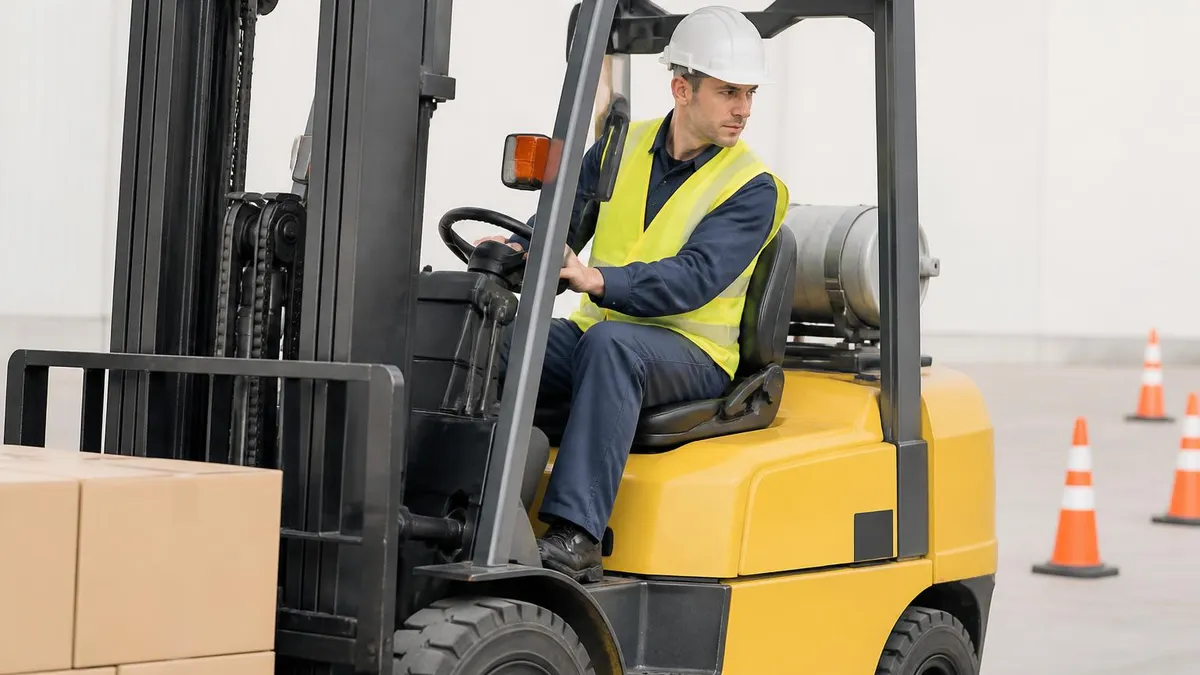
Forklift Rentals: Complete Guide to Pricing, Types, and Operator Requirements
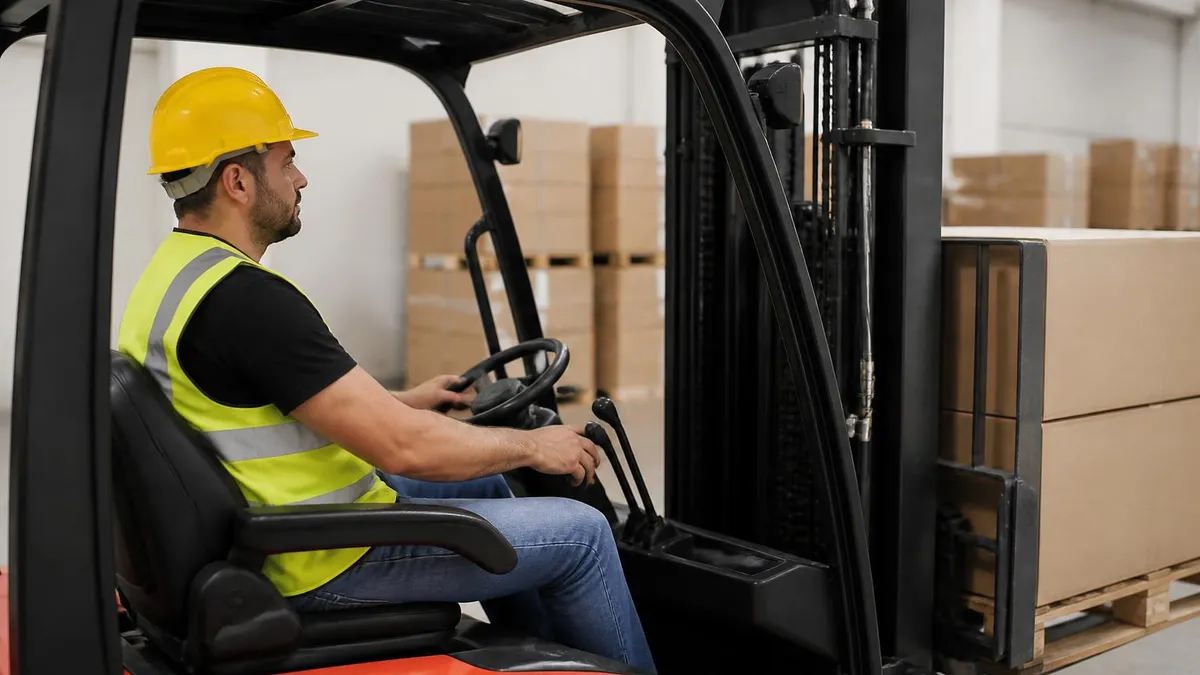
Forklift Hydraulic Fluid: Complete Guide to Types, Specifications, Change Intervals, and Troubleshooting for 2026
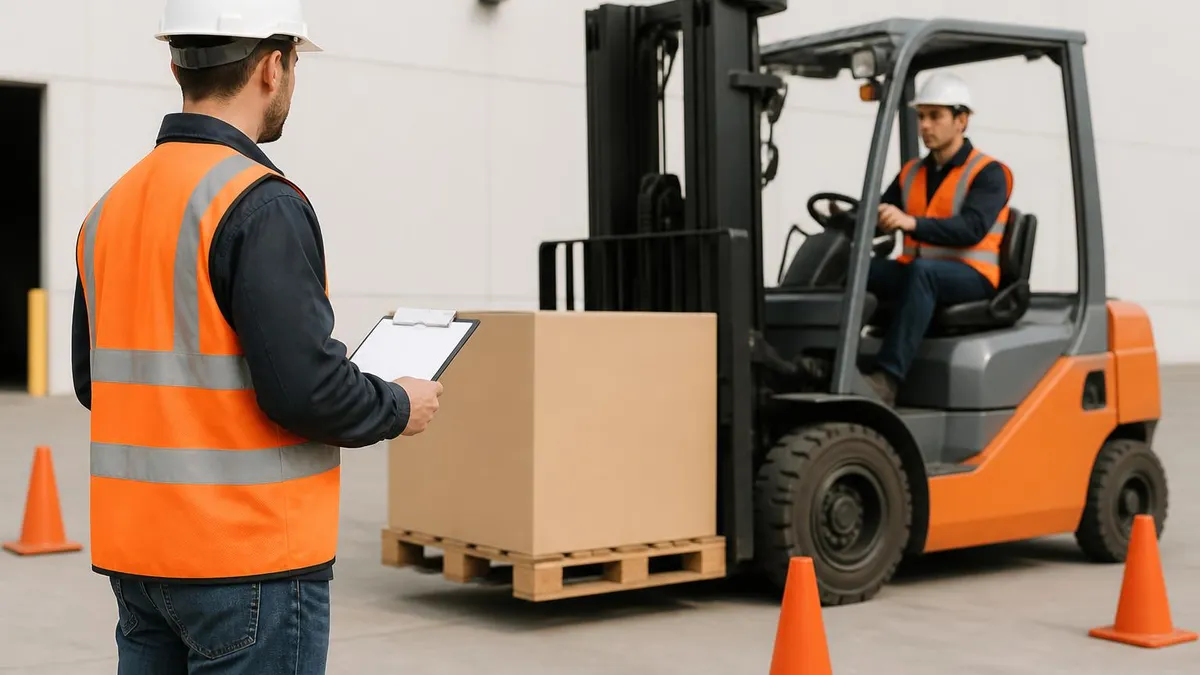
Forklift Parts and Maintenance: Complete Guide to Batteries, Chargers, and Replacement Components
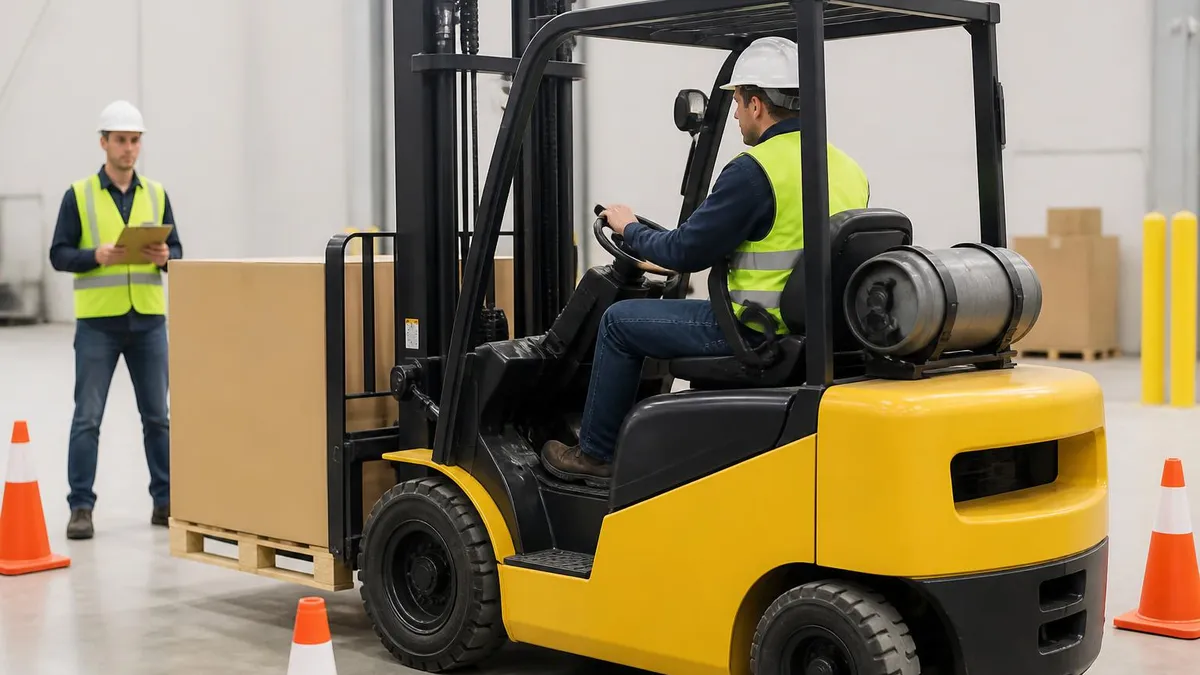
Big Forklift Guide: Heavy-Duty Lift Trucks, Capacity Classes, Rental Costs, and Operator Requirements
Forklift License Renewal: Complete Guide to Forklift License Expiry, OSHA Recertification, and Operator Requirements for 2026
About the Author

Certified Crane Operator & Skilled Trades Exam Specialist
Ferris State UniversityRobert Martinez is a Journeyman Ironworker, NCCCO-certified crane operator, and forklift trainer with a Bachelor of Science in Construction Technology from Ferris State University. He has 21 years of ironworking, rigging, and heavy equipment operation experience across high-rise and industrial construction sites. Robert prepares candidates for crane operator, rigger, forklift, and skilled trades certification examinations.