
How to Become Forklift Certified: Complete Training Guide for 2026 September
Learn how to become forklift certified in 2026 September. 🆕 OSHA requirements, training steps, costs, and tips for forklift operators in the US.
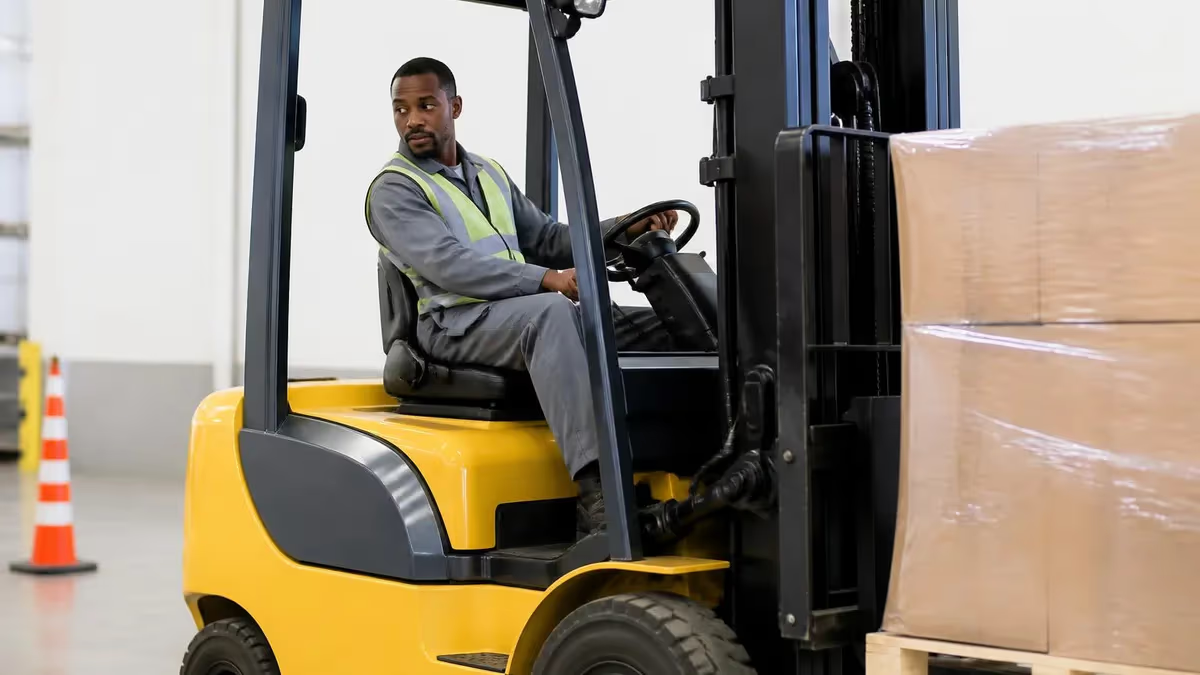
Understanding how to become forklift certified is the essential first step for anyone pursuing a career as a forklift operator in the United States. OSHA mandates that all powered industrial truck operators — including those who handle stand up forklifts, electric forklifts, and sit-down counterbalance machines — receive formal training and certification from their employer before operating any equipment independently. This requirement applies whether you work in a warehouse, distribution center, construction site, or retail facility. Skipping certification is not just illegal; it puts your coworkers and yourself at serious risk every shift.
The demand for certified forklift operators has grown significantly over the past decade. With e-commerce expanding rapidly, warehouses across the country are hiring thousands of new forklift operators each year. Whether you're exploring forklift training for the first time or looking to upgrade your existing skills, certification opens doors to stable, well-paying employment. The Bureau of Labor Statistics projects continued growth in material moving occupations, which means now is an excellent time to invest in your certification and career development as a skilled forklift operator.
Many new operators wonder whether certification is tied to the specific equipment they'll be operating. The answer is yes — OSHA regulations require operators to be trained and evaluated on each type of forklift they will use. If your employer uses both electric forklifts and propane-powered counterbalance models, you need separate hands-on evaluation for each truck class. Understanding these distinctions early in your training journey helps you plan efficiently and avoid costly gaps in your qualifications once you're on the job.
The certification of forklift operators is not a one-time event. OSHA requires re-evaluation every three years, or sooner if an operator is observed operating the truck unsafely, is involved in an accident or near-miss, receives an evaluation that reveals deficiencies, or is assigned to a different type of forklift. This ongoing requirement keeps the workforce sharp and safety standards consistently high across industries. Knowing this upfront helps experienced operators budget time and resources for regular recertification throughout their careers.
Forklifts represent a significant capital investment for businesses. A new sit-down counterbalance forklift can cost between $20,000 and $50,000, while specialty models run even higher. Companies that rely on forklift rental to manage short-term demand need certified operators on hand immediately — making your credential valuable from day one. Even operators who primarily work with employer-owned fleets benefit from understanding the rental landscape, since many businesses supplement their owned equipment with short-term forklift rentals during peak seasons.
This guide covers everything you need to know about forklift certification in 2026: OSHA requirements, types of training programs, step-by-step processes, costs, timelines, and practical tips for passing your evaluation on the first attempt. Whether you're a complete beginner or a seasoned warehouse worker looking to formalize your skills, the information here will help you navigate the certification process with confidence and land the forklift operator role you want.
Before diving into the training process itself, it's worth exploring the full picture of what certified forklift operators do on the job. Learning about how to become forklift certified includes understanding equipment maintenance responsibilities, pre-shift inspection protocols, and load-handling techniques that separate safe operators from risky ones. The more thoroughly you understand the operational demands of the job, the better prepared you'll be for both the formal training and the real-world evaluation that determines whether you earn your certification.
Forklift Certification by the Numbers
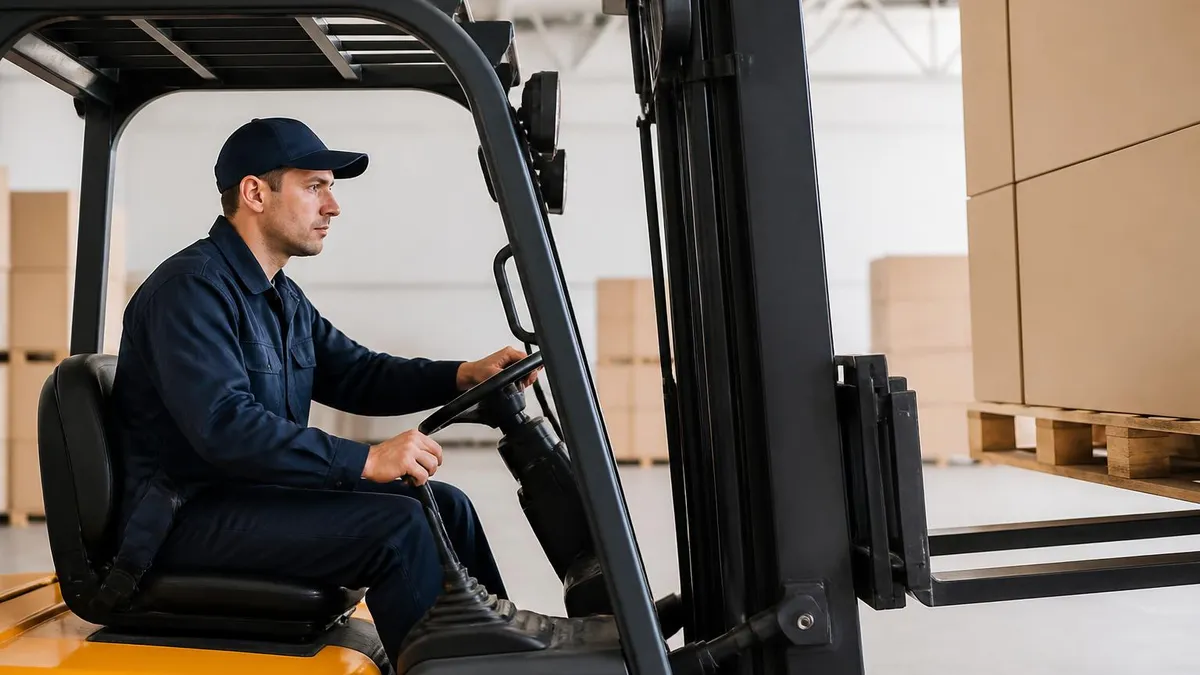
Step-by-Step: How to Become Forklift Certified
Step 1 — Meet Basic Eligibility Requirements
Step 2 — Complete Formal Classroom Instruction
Step 3 — Complete Hands-On Practical Training
Step 4 — Pass Your Operator Evaluation
Step 5 — Receive Documentation from Your Employer
Forklift training programs vary widely in format, duration, and cost depending on where you obtain them. The three most common pathways are employer-sponsored training, community college or vocational school programs, and private third-party training providers. Each approach has distinct advantages depending on your employment situation and how quickly you need to become certified. Understanding what each option includes — and what it costs — helps you choose the right path for your career goals and schedule.
Employer-sponsored training is the most common route for workers who already have a job lined up. Under OSHA 29 CFR 1910.178(l), employers are legally required to provide forklift training to all operators before they use equipment on the job. This training is almost always provided at no cost to the employee and takes place during paid work hours. The major advantage is that training occurs on the actual equipment you'll operate in your real work environment, which directly addresses the specific hazards and conditions you'll encounter daily as a forklift operator.
Community college and vocational school programs are ideal for workers who want to build credentials before job hunting. These programs typically run one to three days and cost between $150 and $400. You'll receive classroom instruction followed by hands-on time in a training yard on various forklift models. Completing a vocational program before applying for jobs demonstrates initiative to prospective employers and can give you a competitive edge in a crowded applicant pool, particularly for stand up forklift and electric forklift positions in distribution centers.
Private third-party training providers — sometimes called forklift safety companies — offer flexible scheduling including evening and weekend sessions. Costs range from $200 to $600 per person depending on location, class size, and the number of forklift classes covered. Some providers offer online courses for the classroom portion, combined with an in-person practical session. While convenient, it's important to verify that any third-party provider uses OSHA-compliant curriculum and employs qualified evaluators who meet regulatory standards for certification training.
Online-only forklift certification programs deserve special attention — and special caution. OSHA is explicit: the hands-on evaluation component cannot be completed online. Any certificate issued without an in-person practical evaluation is not OSHA-compliant and will not protect you or your employer from citations. Some online programs provide the classroom portion legitimately, issuing a certificate of completion that must be paired with an in-person evaluation before full certification is achieved. Read the fine print carefully and ask exactly what the online program does and does not cover.
Many workers who are new to forklifts combine approaches: they complete an online classroom course at their own pace, then schedule a one-day in-person practical session with a local training provider. This hybrid approach keeps costs low while meeting all OSHA requirements. After certification, continuing education through practice tests and refresher modules helps operators maintain sharp knowledge of safety regulations, equipment checks, and load-handling best practices — especially before the mandatory three-year recertification evaluation.
Regardless of which training pathway you choose, the content covered should be consistent. OSHA specifies that forklift training must include truck-related topics such as operating instructions, warnings, and pre-shift inspections; workplace-related topics such as surface conditions, ramp grades, and pedestrian traffic areas; and operator-related topics including any operating limitations that apply to that specific individual. A quality training program covers all three categories in depth, using real equipment examples and workplace scenarios rather than purely theoretical discussions.
When evaluating training programs, look for instructors with documented experience operating and training on the specific forklift classes you'll use. Ask about the student-to-instructor ratio during hands-on sessions — OSHA doesn't specify a maximum ratio, but smaller groups give each trainee significantly more supervised practice time. Also confirm whether the program provides any written materials to take home, since having reference documents during your first weeks on the job accelerates skill development and reinforces what you learned during the formal training period.
Forklift certification Practice Test Questions
Prepare for the Forklift certification Certification exam with our free practice test modules. Each quiz covers key topics to help you pass on your first try.
Forklift certification Certification Forkl...
Forklift certification Exam Questions covering Certification Forklift certification Maintenance and Repairs. Master Forklift certification Test concepts for certification prep.
Forklift certification Certification Forkl...
Free Forklift certification Practice Test featuring Certification Forklift certification Maintenance and Repairs Questions and Answers. Improve your Forklift certification Exam score with mock test prep.
Forklift certification Certification Forkl...
Forklift certification Mock Exam on Certification Forklift certification Operator Training and Certification Requirements. Forklift certification Study Guide questions to pass on your first try.
Forklift certification Certification Forkl...
Forklift certification Test Prep for Certification Forklift certification Operator Training and Certification Requirements Questions and Answers. Practice Forklift certification Quiz questions and boost your score.
Forklift certification Load Handling and S...
Forklift certification Questions and Answers on Load Handling and Stability. Free Forklift certification practice for exam readiness.
Forklift certification OSHA Regulations an...
Forklift certification Mock Test covering OSHA Regulations and Compliance. Online Forklift certification Test practice with instant feedback.
Forklift certification Pre-Operation Inspe...
Free Forklift certification Quiz on Pre-Operation Inspections. Forklift certification Exam prep questions with detailed explanations.
Forklift certification Refueling and Recha...
Forklift certification Practice Questions for Refueling and Recharging Procedures. Build confidence for your Forklift certification certification exam.
Forklift certification Safe Driving and Ma...
Forklift certification Test Online for Safe Driving and Maneuvering. Free practice with instant results and feedback.
Forklift certification Workplace Hazard Id...
Forklift certification Study Material on Workplace Hazard Identification. Prepare effectively with real exam-style questions.
Forklift certification Forklift Instructions
Free Forklift certification Test covering Forklift Instructions. Practice and track your Forklift certification exam readiness.
Forklift certification Forklift MCQ
Forklift certification Exam Questions covering Forklift MCQ. Master Forklift certification Test concepts for certification prep.
Forklift certification Forklift Employer R...
Free Forklift certification Practice Test featuring Forklift Employer Responsibilities. Improve your Forklift certification Exam score with mock test prep.
Forklift certification Forklift Penalties ...
Forklift certification Mock Exam on Forklift Penalties for Non-Compliance. Forklift certification Study Guide questions to pass on your first try.
Forklift Classes and Equipment Types Explained
Electric forklifts are increasingly popular in warehouses and distribution centers because they produce zero emissions, making them ideal for indoor use. Class I includes electric motor rider trucks — the sit-down counterbalance machines most people picture when they think of forklifts. Class II covers electric motor narrow-aisle trucks, including reach trucks and order pickers used in high-density racking systems. Operators must be separately evaluated on each class they intend to use, even within the electric category.
Training on electric forklifts emphasizes battery management, including how to safely swap or charge battery packs, proper connection procedures, and recognizing signs of battery failure. Operators also learn about the different braking behavior of electric machines compared to internal combustion models — electric forklifts use regenerative braking, which feels noticeably different during deceleration. Stand up forklift models in this category require specific balance and stance techniques that differ from sit-down operation and must be practiced extensively before solo operation begins.
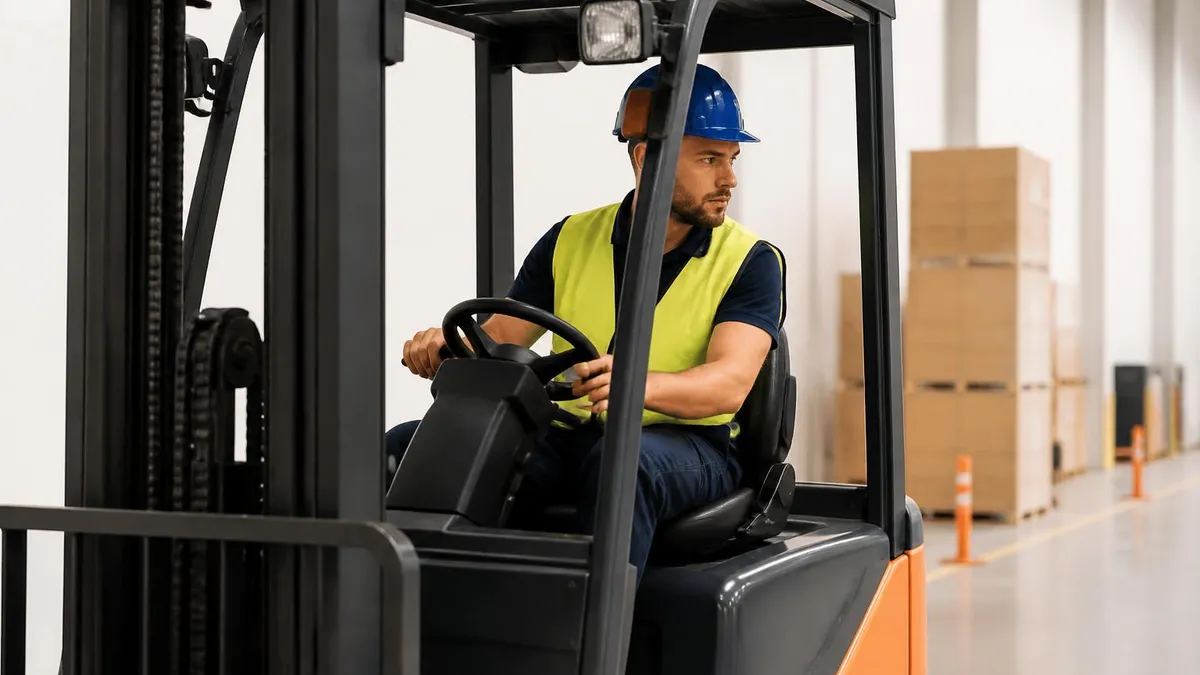
Is Getting Forklift Certified Worth It?
- +Increases earning potential — certified operators earn $5,000–$10,000 more annually than uncertified warehouse workers on average
- +Opens doors to a wider range of job opportunities across warehousing, manufacturing, construction, and retail distribution
- +Provides legal protection for both you and your employer under OSHA 1910.178 compliance requirements
- +Builds a transferable credential recognized across employers and industries throughout the United States
- +Improves workplace safety awareness, reducing your personal risk of injury on the job
- +Creates a foundation for career advancement into lead operator, trainer, or warehouse supervisor roles
- −Employer-sponsored certification is tied to that employer — if you change jobs, the new employer must re-evaluate you on their equipment
- −Third-party training programs can cost $200–$600 out of pocket if your employer does not sponsor training
- −Certification must be renewed every three years, requiring ongoing time commitment even for experienced operators
- −Online-only certifications are not OSHA-compliant and can create legal liability if accepted at face value
- −Training on each additional forklift class requires separate hands-on evaluation sessions, increasing time investment
- −Maintaining certification requires avoiding safety incidents — a serious accident can trigger mandatory re-training
Forklift Certification Requirements Checklist
- ✓Confirm you meet the minimum age requirement (18 for most US workplaces, 16 in limited non-construction settings)
- ✓Identify which OSHA forklift class or classes apply to the equipment you will operate
- ✓Complete a formal classroom or online classroom training module covering all OSHA-required content areas
- ✓Attend hands-on practical training supervised by a qualified trainer on the actual equipment class
- ✓Complete a live operator evaluation in the real work environment — not a written test
- ✓Ensure your employer documents your certification with your name, training date, evaluation date, and equipment type
- ✓Request a personal copy of your certification documentation for your own employment records
- ✓Obtain separate evaluations for each additional forklift class or attachment type you will use on the job
- ✓Schedule your three-year recertification evaluation before your current certification expires
- ✓Complete refresher training immediately if involved in a near-miss, accident, or observed operating unsafely
Your Employer Is Legally Responsible for Your Certification
Under OSHA 29 CFR 1910.178(l), the responsibility for ensuring forklift operator training and certification falls squarely on the employer — not the employee. If an employer allows an uncertified worker to operate a forklift and an incident occurs, the employer faces fines starting at $15,625 per willful violation. This legal structure means you should never feel pressured to operate equipment before your certification is complete, regardless of what a supervisor says about production deadlines or staffing shortages.
Understanding the costs associated with forklift training and certification helps you plan your career investment wisely. If you already have a job at a warehouse, distribution center, or manufacturing facility, your employer is legally required to train you at no cost. This is by far the most affordable pathway — and the most common one. However, if you're seeking certification independently to improve your job prospects before applying, expect to invest between $150 and $600 depending on the program format, location, and number of equipment classes covered in the training.
Community college forklift programs typically cost between $150 and $300 and often run on evenings or weekends to accommodate working adults. These programs provide solid classroom instruction and hands-on time in a training yard, making them a reliable option for first-time operators. Some programs bundle multiple forklift classes into a single course, giving participants exposure to sit-down counterbalance trucks, stand up forklifts, and occasionally reach trucks within the same training package. Community college certificates are widely recognized by employers and signal that you've proactively invested in your qualifications.
Private forklift training companies charge a premium for flexibility and convenience, with costs often ranging from $300 to $600 per trainee. Many offer weekend or evening sessions, small class sizes, and the option to complete the online classroom component from home before attending a half-day in-person practical session. Some companies also offer group training packages that bring the training to an employer's facility — a common arrangement for businesses that have recently purchased or leased new forklifts and need to certify multiple employees quickly.
Beyond training costs, consider the broader financial picture of a forklift operating career. Companies that manage large equipment fleets often invest in forklift rental to supplement owned equipment during peak demand periods. Forklift rentals typically cost between $150 and $400 per day for standard warehouse models, and understanding this forklift rental landscape helps you appreciate why employers place a premium on operators who are immediately ready to work without additional training delays. Certified operators who can jump on rented equipment are especially valuable during high-volume periods like holiday fulfillment seasons.
When comparing training programs, watch for hidden costs. Some providers charge separate fees for the classroom portion, the practical evaluation, and the certificate documentation itself. Ask for a fully itemized quote before enrolling. Also ask whether the cost includes re-evaluation if you do not pass on the first attempt — some programs offer one free re-test, while others charge an additional fee. For programs that include multiple forklift classes, confirm exactly which classes are covered and whether hands-on time is provided for each one or only for the primary class.
If you're managing your own certification budget, consider starting with the single forklift class most in demand with local employers — typically Class V (sit-down, pneumatic tire, IC engine) or Class I (electric motor rider) depending on your local job market. Once you're employed and earning, you can pursue additional certifications on the job or through employer-sponsored programs. This staged approach keeps your upfront investment manageable while still making you competitive in the job market for the specific types of forklift operator roles that are most available in your area.
Investing in forklift certification pays off quickly. Entry-level forklift operator positions typically start between $16 and $20 per hour, while experienced operators with multiple class certifications and clean safety records can earn $22 to $28 per hour or more in high-demand markets. Over a 20-year career, the wage premium associated with holding current, multi-class forklift certification can represent hundreds of thousands of dollars in additional earnings compared to uncertified warehouse positions. Viewed through that lens, even a $500 out-of-pocket training investment yields an exceptional return on investment within the first few months of employment.
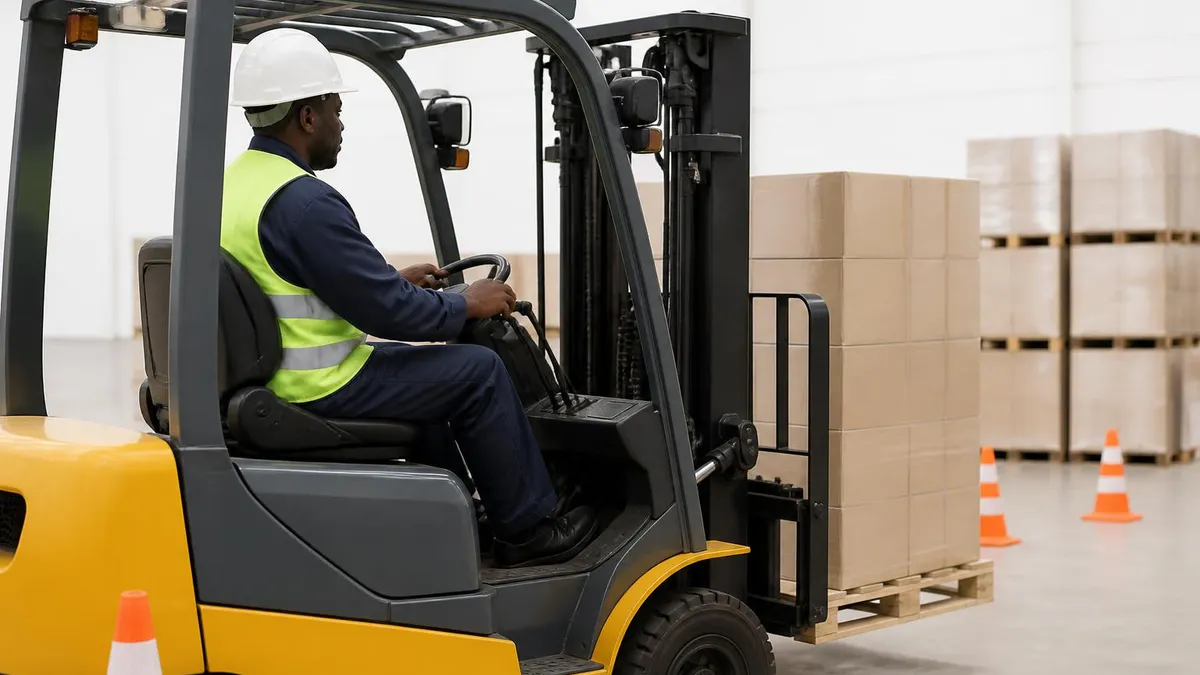
OSHA regulations explicitly require that forklift operator certification include a hands-on practical evaluation conducted in the operator's actual work environment. Any certificate issued by an online-only program without an in-person evaluation component is not OSHA-compliant and will not satisfy legal requirements. Employers who accept these certificates risk significant fines, and operators who rely on them may be directed to complete full re-training before being allowed to operate equipment on any compliant worksite.
Maintaining your forklift certification is just as important as earning it in the first place. OSHA requires that all forklift operators be re-evaluated at least every three years, and sooner under specific circumstances: if the operator is observed operating the truck unsafely, if the operator is involved in an accident or near-miss incident, if a periodic evaluation reveals operating deficiencies, or if the operator is assigned to a different type of forklift that requires new qualifications. Staying ahead of these requirements protects both your employment status and your coworkers' safety on the floor.
The three-year recertification evaluation follows the same format as initial certification — your employer's qualified trainer evaluates your actual operating performance in the work environment using real equipment and loads. There is no mandatory written test component, though some employers add a written refresher element to ensure operators are current on any OSHA regulatory updates or company policy changes. If equipment or worksite conditions have changed since your last evaluation, the re-evaluation must address those new conditions specifically and cannot simply repeat the same assessment from three years ago.
Refresher training can be triggered at any time by specific events, not just by the three-year calendar. If your supervisor observes you making an unsafe maneuver — even a minor one — OSHA requires that refresher training and re-evaluation occur before you continue operating. The same applies after any accident or near-miss, regardless of who was at fault. Rather than viewing these triggers as punitive, experienced operators treat them as opportunities to sharpen skills and identify blind spots before they cause serious injuries or equipment damage that disrupts operations.
Forklift operators who change employers face a commonly misunderstood aspect of certification: your previous employer's certification does not automatically transfer to your new workplace. Your new employer is required to evaluate your performance in their specific work environment, on their specific equipment, before you can operate independently. This is not a formality — conditions, surface types, pedestrian traffic patterns, racking configurations, and equipment models all differ between facilities. New-employer evaluations typically take less time than initial training, but they cannot be skipped or waived simply because you have prior experience.
Keeping personal records of your training and certification history is wise professional practice even though the legal obligation falls on your employer. Maintain a folder with copies of all certification documentation, including training dates, equipment classes, evaluator names, and any refresher training completion records. These records are valuable when changing jobs, negotiating pay, or demonstrating compliance history to new employers. Some operators also track CPD (continuing professional development) activities like voluntary safety courses, equipment manufacturer training, or industry association seminars that demonstrate commitment to professional growth.
Technology is changing how employers manage forklift certification records. Many large distribution centers now use digital certification management systems that track operator credentials, send automatic reminders before the three-year renewal deadline, and flag operators whose certifications have lapsed or been suspended due to incidents. If your employer uses such a system, make sure your records are entered accurately and that you have access to your own credential status. Errors in digital systems can inadvertently block certified operators from assignments, so periodic verification that your records are current is good professional hygiene.
For operators who want to go beyond the minimum OSHA requirements, additional certifications and training programs can significantly boost career prospects. The Industrial Truck Association and the National Safety Council offer advanced operator training programs. Equipment manufacturers like Toyota, Crown, and Hyster-Yale provide factory-certified training that covers their specific models in depth. These advanced credentials are particularly valuable for operators who want to move into trainer, supervisor, or fleet management roles — positions that require deep technical knowledge of forklift operation, maintenance, and regulatory compliance that goes well beyond the foundational OSHA requirements covered in standard certification programs.
Preparing effectively for your forklift operator evaluation is about more than memorizing rules — it's about building genuine operating confidence through deliberate practice. The most important thing you can do before your formal evaluation is to log as many supervised practice hours as possible on the specific equipment you'll be assessed on. Quantity of practice matters, but quality matters more. Use each practice session to focus on one skill at a time: smooth starts and stops, precise load placement, tight turning in confined spaces, and maintaining safe following distances from pedestrians and other equipment.
Pre-shift inspection proficiency is a critical competency that evaluators specifically look for during certification assessments. Learn the inspection checklist for your specific forklift model thoroughly — not just the items, but the reasons behind each check. Evaluators want to see that you understand why you check hydraulic fluid levels, tire condition, horn function, and load backrest integrity, not just that you can recite the list. Operators who demonstrate genuine understanding of why inspections matter communicate to evaluators that their safety habits will hold up even when no one is watching.
Load handling is where many certification candidates struggle. Common errors include approaching loads at improper angles, lifting loads too high during travel, failing to tilt the mast back fully before moving, and traveling too fast for conditions. Practice each load cycle slowly and deliberately until the sequence becomes automatic: approach, square up, insert forks fully, tilt back slightly, lift just enough to clear the ground, travel with load low, arrive at destination, tilt forward, lower precisely, withdraw forks cleanly. This systematic approach impresses evaluators and, more importantly, prevents the tip-over and dropped-load accidents that injure thousands of forklift operators annually.
Understanding forklift physics — particularly the stability triangle concept — gives operators a mental model that improves decision-making in every operating situation. A forklift's stability depends on the triangle formed between the two front wheels and the center of the rear axle. The combined center of gravity of the truck plus the load must stay within this triangle at all times.
When this is understood viscerally rather than just memorized for a test, operators naturally slow down on ramps, handle loads conservatively near maximum capacity, and maintain appropriate speeds when turning, because they feel how the physics changes in different conditions.
Practicing in the conditions you'll actually face during your evaluation — not ideal conditions — prepares you for real-world performance. If your workplace has tight aisles, practice maneuvering in tight aisles. If ramps are involved, practice ramp procedures specifically. If your evaluation will include stacking loads at height, practice at that height until you're comfortable. Many candidates practice only on open floor space and then struggle when the actual evaluation involves the specific obstacles and constraints of their real work environment. The more your practice mirrors your evaluation conditions, the more confident and controlled you'll perform when it counts.
Study OSHA 29 CFR 1910.178 directly — not just a summary of it. Reading the actual regulatory language familiarizes you with the specific terminology evaluators use and the exact requirements your employer is obligated to meet. Pay particular attention to Sections (l)(3) through (l)(6), which cover training content requirements, evaluation requirements, refresher training triggers, and certification documentation standards. Operators who understand the regulatory framework behind certification requirements are better equipped to advocate for proper training, identify compliance gaps, and maintain their own certification proactively throughout their careers.
Finally, approach your certification evaluation with the mindset that it is a demonstration of skills you've already developed — not a high-stakes test you might fail. If you've completed your training thoroughly and practiced consistently, the evaluation is simply an opportunity to show your qualified trainer what you already know how to do.
Ask your trainer in advance what specific tasks will be included in the evaluation so you can prepare those scenarios directly. Most evaluators want you to succeed and will provide feedback to help you improve if your first attempt on any task needs additional work before certification is granted.
Forklift Questions and Answers
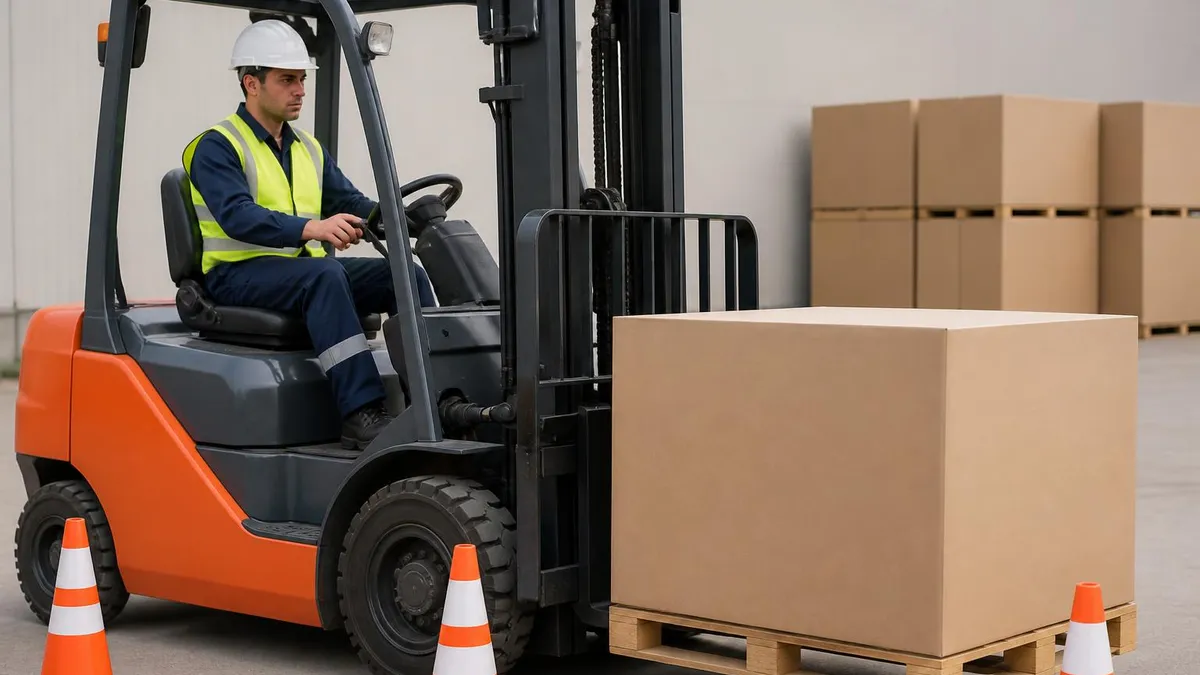
Forklift Tires: Complete Guide to Types, Sizing, Wear Patterns, and Replacement Costs
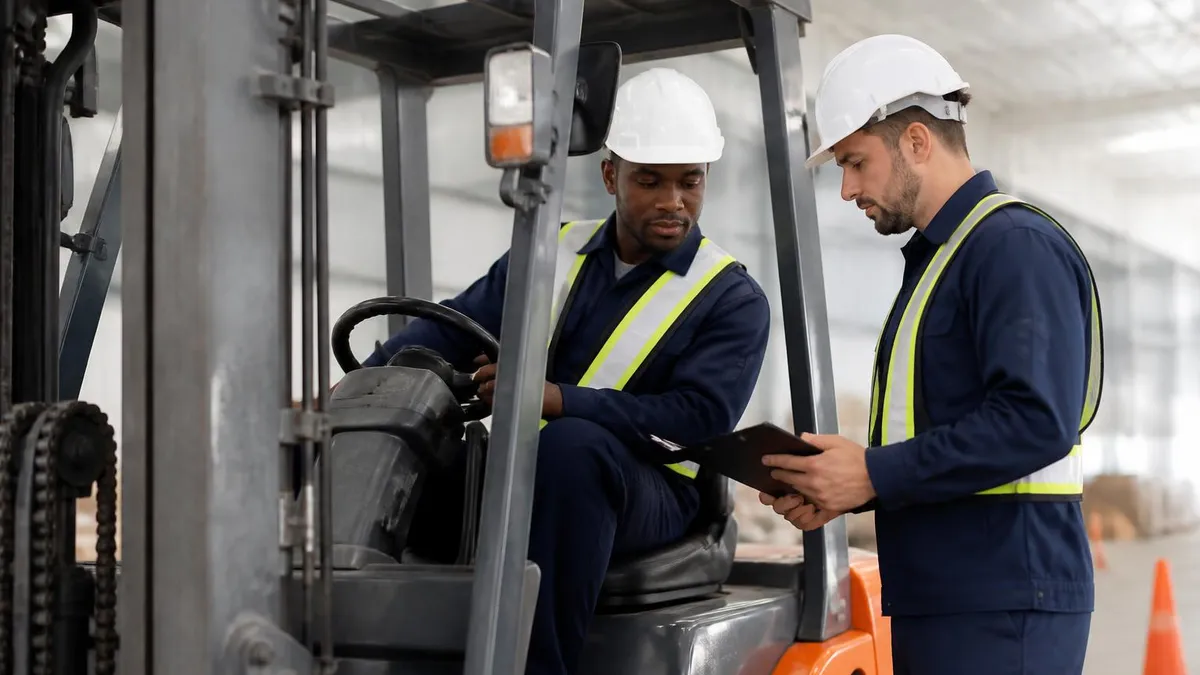
Forklift Operator Duties: Complete Guide to Daily Responsibilities, Safety Tasks, and Career Path for 2026
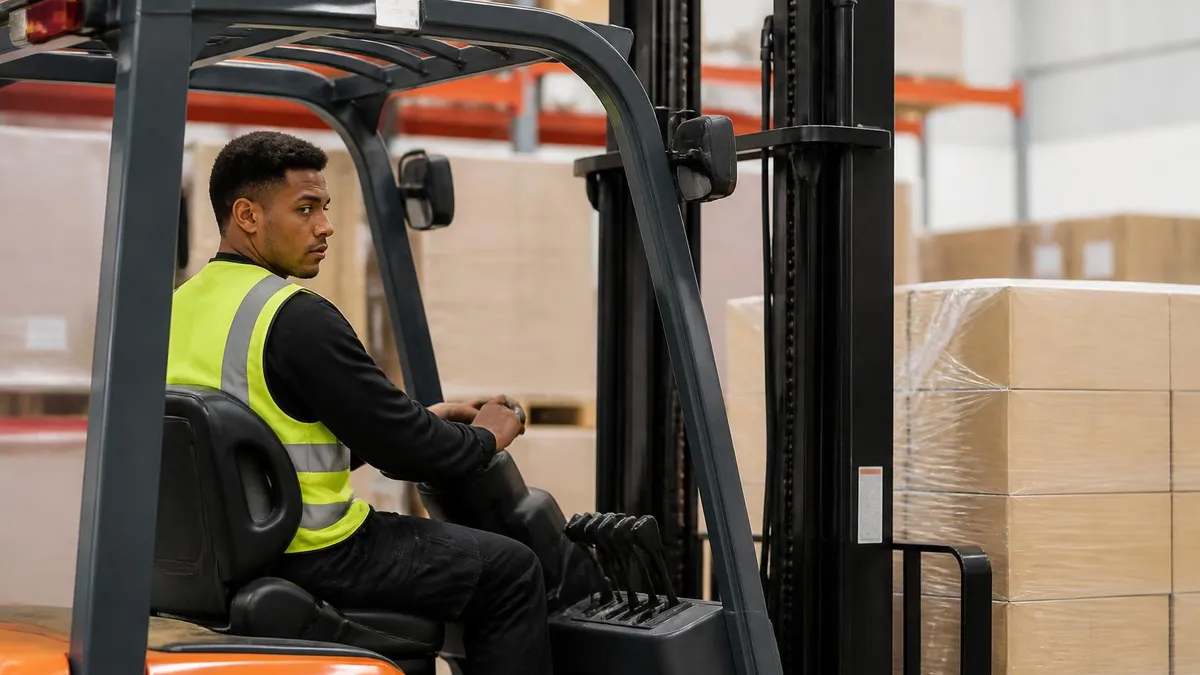
Forklift Course: Complete Training Guide, Certification Requirements, and Operator Tips for 2026
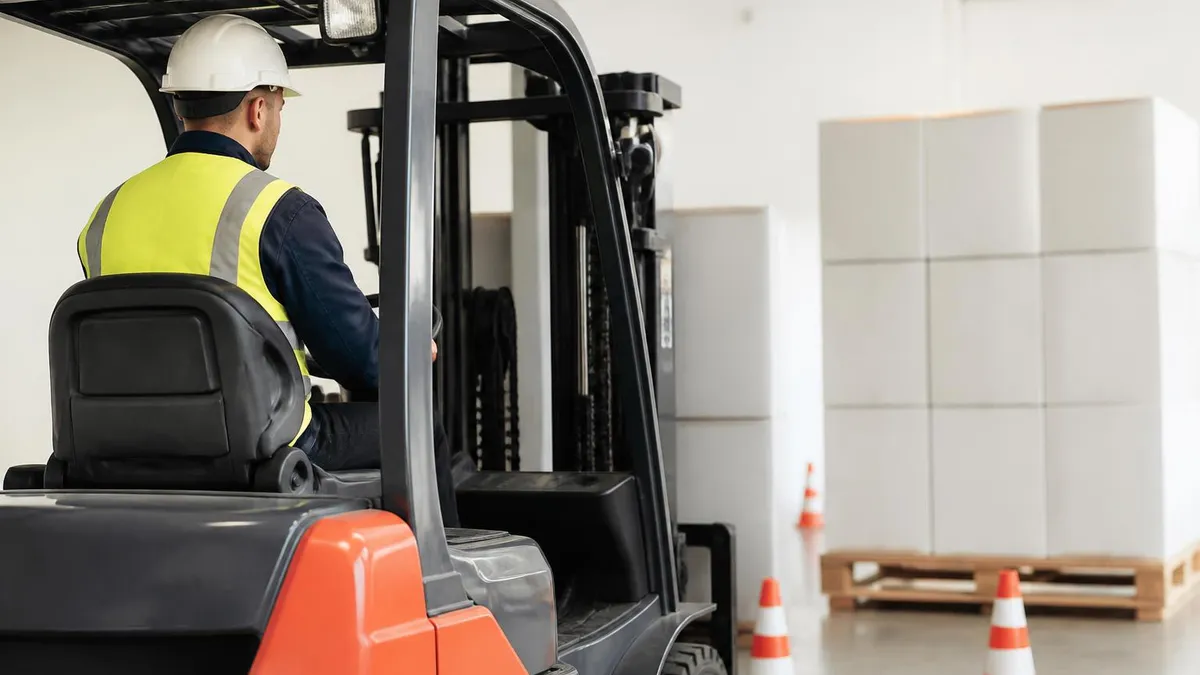
Forklift License Renewal: Complete Guide to Forklift License Expiry, OSHA Recertification, and Operator Requirements for 2026
Sit Down Forklift Jobs: Complete Guide to Careers, Pay, Training, and Hiring in 2026
About the Author

Certified Crane Operator & Skilled Trades Exam Specialist
Ferris State UniversityRobert Martinez is a Journeyman Ironworker, NCCCO-certified crane operator, and forklift trainer with a Bachelor of Science in Construction Technology from Ferris State University. He has 21 years of ironworking, rigging, and heavy equipment operation experience across high-rise and industrial construction sites. Robert prepares candidates for crane operator, rigger, forklift, and skilled trades certification examinations.