
Skid Steer vs Forklift: Which Machine Do You Really Need? 2026 September
Skid steer vs forklift — compare costs, uses & certification needs. Find the right machine for your job. ✅ Includes rental & training tips.

When your job site demands heavy lifting, the question of skid steer vs forklift comes up fast — and the wrong choice can cost you thousands in lost productivity or forklift rental fees. Both machines move materials, but they do it in fundamentally different ways, under different conditions, and with very different operator requirements. Understanding the distinction before you rent or buy is critical for any warehouse manager, contractor, or site supervisor trying to make a smart equipment decision in 2026.
Forklifts are purpose-built machines designed to lift palletized loads to significant heights inside warehouses, loading docks, and distribution centers. The classic counterbalance forklift can raise a load 15 to 20 feet in the air with precision, making it the gold standard for stacking racks, loading trucks, and managing high-bay storage. The stand up forklift variant is especially popular in tight-aisle warehouse environments where space is at a premium and operators need to get on and off quickly throughout the shift.
Skid steers, on the other hand, are compact, rubber-tired or tracked machines that excel at outdoor earthmoving, grading, demolition, and material handling in rough terrain. They are extraordinarily versatile because they accept dozens of attachments — from bucket scoops to hydraulic breakers — but they are not designed to stack pallets to height or operate in the narrow aisles of a commercial warehouse. Comparing these two machines is a bit like comparing a race car to an SUV: both are vehicles, but they serve completely different masters.
From a cost perspective, forklift rental rates typically run $200 to $500 per day for a standard internal combustion or electric forklift, while skid steer rentals average $300 to $600 per day depending on size and attachments. If you need to move palletized goods inside a building, a forklift is almost always the more cost-effective option. For outdoor landscaping, excavation, or construction site work, a skid steer delivers far more utility per dollar. Knowing which category your work falls into is the first step toward a smart equipment decision.
Operator qualifications are another major differentiator. OSHA Standard 29 CFR 1910.178 mandates that all powered industrial truck operators — which includes forklifts — receive formal certification of forklift operation before driving on any covered worksite. This means forklift training that covers pre-operation inspection, load handling, safe travel, and emergency procedures. Skid steers operated outdoors on construction sites fall under different OSHA standards and may not require the same structured certification program, though employer-provided training is still legally required.
The electric forklift segment has grown dramatically over the past several years as battery technology has improved and fuel costs have risen. Modern lithium-ion electric forklifts can operate for a full eight-hour shift on a single charge, produce zero emissions, and require significantly less maintenance than propane or diesel counterparts. For indoor operations in food processing, pharmaceuticals, or cold storage, an electric forklift is often the only compliant option. Skid steers have also seen electric variants emerge, but adoption in that segment remains far slower due to the outdoor, high-draw nature of their work cycles.
Throughout this guide, we will break down every major comparison point between forklifts and competing equipment — including reach trucks, telehandlers, pallet jacks, and skid steers — so you can make a confident, well-informed decision. Whether you are searching for a forklift for sale, evaluating forklift vs other equipment rental options, or preparing for your certification of forklift exam, this resource covers everything you need to know to choose the right machine and operate it legally and safely.
Forklifts & Equipment Comparisons by the Numbers

Key Differences: Forklift vs Skid Steer at a Glance
Forklifts are optimized for lifting palletized loads to height in structured environments like warehouses and loading docks. Skid steers are built for outdoor earthmoving, grading, demolition, and rough-terrain material transport where vertical height is rarely needed.
Forklifts require flat, hard surfaces — concrete floors or compacted asphalt. Skid steers thrive on uneven dirt, gravel, mud, and slopes. Attempting to operate a standard forklift on soft or uneven ground creates a dangerous tip-over risk that training programs emphasize heavily.
A counterbalance forklift can stack loads 15 to 25 feet high. A skid steer with forks attached can only lift loads a few feet off the ground, making it unsuitable for multi-level racking. For vertical warehouse storage, the forklift wins without contest.
Forklift operators must complete OSHA-compliant forklift training and obtain a certification of forklift operation renewed every three years. Skid steer operators need employer-provided training under OSHA 29 CFR 1926 but do not face the same structured certification renewal timeline.
Skid steers accept 50+ attachments including buckets, augers, trenchers, and sweepers, making them multi-purpose workhorses on construction sites. Forklifts accept some attachments like clamps and rotators, but their design is fundamentally optimized around the standard pallet fork configuration.
When evaluating forklifts against other lifting equipment, two competitors come up constantly alongside the skid steer: the telehandler and the reach truck. Each machine occupies a specific niche, and understanding where they overlap — and where they do not — helps you avoid paying for capability you do not need or renting the wrong machine for a critical task. The telehandler, also called a telescopic handler or boom lift, bridges the gap between a forklift and a construction crane in many outdoor applications.
A telehandler uses an extendable boom arm to place loads at height and horizontal distance simultaneously, making it invaluable on construction sites where materials need to be delivered to the second floor of a building under construction or over obstacles like barriers and scaffolding.
While telehandlers can be fitted with pallet forks, they are far less precise and stable than a counterbalance forklift when handling loads inside a building. They also require significantly more open space to operate safely and are typically priced higher in the forklift rental near me market — often $400 to $800 per day versus $200 to $500 for a standard forklift.
The reach truck is perhaps the closest relative to the standard counterbalance forklift in the warehouse environment. Designed specifically for narrow-aisle operations, reach trucks feature outriggers at the front and a mast that extends forward to place loads in racking without the machine needing to drive all the way into the aisle. This allows warehouses to run aisles as narrow as eight feet — compared to the twelve to fourteen feet required for a counterbalance forklift — dramatically increasing storage density. Reach trucks are typically electric and represent a major segment of the electric forklift market.
Pallet jacks — both manual and electric — represent the bottom rung of the material handling ladder. A manual pallet jack can move loads up to 5,000 pounds horizontally across a flat floor but provides zero vertical lift beyond a few inches to clear the ground. An electric pallet jack, sometimes called a walkie, adds powered drive and can handle heavier loads, but still does not stack to height. They are the right tool for moving loaded pallets from a truck trailer to a staging area but cannot replace forklifts for actual racking operations.
The stand up forklift deserves special mention as a high-productivity alternative to the sit-down counterbalance in certain warehouse environments. Also known as a stand-up rider or counterbalance stand-up, these machines allow the operator to face the load directly, improve sightlines in tight spaces, and enable faster mounts and dismounts when operators need to frequently step off to handle paperwork, open doors, or check product. Search volume data confirms that stand up forklift is one of the top searched forklift queries, reflecting genuine demand from warehouse operators who have discovered the productivity benefits of this configuration.
Rough terrain forklifts occupy yet another category that blurs the line between the conventional warehouse forklift and the construction site skid steer. Equipped with large pneumatic tires, high ground clearance, and four-wheel drive, rough terrain forklifts can handle gravel yards, lumber yards, and outdoor construction material staging that would be impossible for a standard indoor machine. They are heavier, slower, and more expensive to rent or buy than standard forklifts, but for operations that span both indoor loading docks and outdoor staging areas, they offer a compelling single-machine solution.
When deciding between these machine types, the most important question is always: where will the load travel, and how high does it need to go? For indoor, vertical, palletized work on flat concrete, a standard counterbalance or reach truck forklift is the correct answer. For outdoor rough terrain with varying heights and distances, a telehandler wins.
For earthmoving, demolition, or construction site prep, a skid steer is the tool. For simple horizontal pallet movement, a pallet jack suffices. Matching machine capability to actual job requirements — rather than defaulting to the most familiar machine — is the hallmark of an experienced forklift operator and operations manager.
Forklift Types: Electric, Stand Up, and Rough Terrain Compared
The electric forklift has become the dominant choice for indoor warehouse operations over the past decade. Powered by lead-acid or lithium-ion batteries, these machines produce zero direct emissions, run significantly quieter than propane or diesel units, and cost far less to fuel — electricity typically costs 70 to 80 percent less per operating hour than liquid propane. Modern lithium-ion electric forklifts support opportunity charging, meaning operators can top off the battery during breaks without the capacity degradation that plagued older lead-acid technology.
From a certification standpoint, operating an electric forklift requires the same OSHA-compliant forklift training as any other powered industrial truck. Operators must learn battery charging safety, including the prohibition on smoking near charging stations and the correct procedure for checking electrolyte levels in lead-acid batteries. Forklift rental near me searches for electric units have increased sharply as facilities pursue sustainability goals and lower operating costs, with rental rates typically running $250 to $450 per day for a standard 5,000-pound capacity sit-down electric counterbalance.

Forklift vs Skid Steer: Pros and Cons for Your Operation
- +Forklifts provide precise vertical lifting to 15–25 feet, enabling full warehouse racking utilization
- +Electric forklifts operate with zero emissions, meeting indoor air quality and food-safety compliance requirements
- +Standardized OSHA certification of forklift operators creates a large, credentialed labor pool
- +Forklift rental networks are widespread — forklift rental near me returns results in virtually every US metro area
- +Stand up forklift models reduce cycle times significantly in high-frequency pick-and-deposit operations
- +Forklifts offer a forklift for sale market with strong residual values and established dealer networks
- −Forklifts require flat, hard surfaces — they cannot safely operate on dirt, gravel, or significant slopes
- −Minimum aisle width requirements (10–14 feet for counterbalance) limit storage density in older facilities
- −OSHA-mandated forklift training and certification add upfront cost and scheduling complexity for employers
- −Internal combustion forklifts produce emissions requiring ventilation systems or prohibiting indoor use entirely
- −Forklifts lack the attachment versatility of skid steers, limiting them primarily to fork-based material handling
- −Propane and diesel fuel costs for IC forklifts are significantly higher than electricity per operating hour
Choosing the Right Equipment: 10-Point Decision Checklist
- ✓Confirm whether your primary work environment is indoor (hard floor) or outdoor (dirt, gravel, uneven terrain)
- ✓Determine the maximum lift height required — if loads must be racked above 10 feet, choose a forklift or reach truck
- ✓Assess aisle width in your facility — narrow aisles under 10 feet require a reach truck or order picker, not a counterbalance
- ✓Check whether loads are palletized and uniform, or irregular shapes requiring specialized attachments
- ✓Evaluate indoor air quality requirements — enclosed spaces mandate an electric forklift to avoid emission exposure
- ✓Confirm that the site has level, hard-surface travel paths if you plan to use a standard warehouse forklift
- ✓Verify that all operators hold a current certification of forklift operation compliant with OSHA 29 CFR 1910.178
- ✓Compare forklift rental vs forklift for sale costs based on frequency of use — daily rental makes sense under 60 days/year
- ✓Obtain at least three forklift rental near me quotes to benchmark daily and weekly rates before committing
- ✓Schedule forklift training for any operator who has not completed site-specific evaluation within the last three years
OSHA Fines for Uncertified Forklift Operators Can Reach $16,131 Per Violation
Under OSHA's current penalty structure, a serious violation for allowing an uncertified operator to drive a forklift carries a fine of up to $16,131 per incident, with willful or repeat violations reaching $161,323. Forklift training is not optional — it is federal law for every powered industrial truck operator in a covered workplace, and the certification must be renewed at minimum every three years or whenever the operator is observed operating unsafely.
Forklift certification requirements in the United States are governed primarily by OSHA Standard 29 CFR 1910.178(l), which mandates that employers ensure all forklift operators are trained and evaluated before operating a powered industrial truck on company property. The certification of forklift process must include formal instruction — either classroom or online — covering the specific type of truck the operator will use, followed by practical evaluation in the actual workplace where the operator will be working. Generic certification alone is not sufficient; site-specific training is legally required.
The forklift training curriculum mandated by OSHA covers a broad range of topics. These include pre-operation inspection procedures, battery charging and fueling safety, load capacity and stability principles, the physics of the stability triangle and how it shifts with different load positions, safe travel speeds and turning practices, pedestrian interaction protocols, ramp and grade travel procedures, and emergency response including what to do if a forklift tips over. Operators who are trained to standard without covering emergency procedures are statistically more likely to be involved in serious incidents when unexpected situations arise.
One of the most misunderstood aspects of forklift certification is the difference between initial training and recertification. OSHA requires that operators be re-evaluated at least every three years, or sooner if the operator is observed operating the equipment unsafely, is involved in an accident or near-miss, or is assigned to operate a different type of forklift than they were originally trained on. This means an operator who is certified on a sit-down counterbalance cannot simply jump into a reach truck or stand up forklift without additional type-specific training and evaluation.
Online forklift training programs have grown significantly in popularity because they allow workers to complete the classroom portion of certification on their own schedule, reducing downtime during business hours. However, OSHA is explicit that online-only training is not sufficient — the practical evaluation component must be conducted in person by a qualified trainer in the actual work environment. Employers who attempt to substitute a certificate of completion from an online course for the full OSHA-required program face liability exposure in any subsequent injury investigation or OSHA audit.
The forklift operator role carries real career weight. A certified forklift operator earns an average of $18 to $24 per hour in most US metro markets, with experienced operators at large distribution centers, automotive plants, or ports earning $28 or more.
Supervisory roles that grow from forklift operator positions — like warehouse lead, logistics coordinator, or equipment fleet manager — can command salaries of $55,000 to $75,000 annually. For workers entering the trades, obtaining a certification of forklift operation is one of the fastest ways to increase earning power with a credential that is recognized across virtually every sector of the US economy.
Employers who invest in high-quality forklift training programs see measurable returns beyond legal compliance. OSHA data shows that forklift incidents account for approximately 85,000 injuries and 85 fatalities annually in the US. Facilities with robust, regularly refreshed training programs report 40 to 60 percent fewer forklift-related incidents than those that treat certification as a one-time checkbox.
The cost of comprehensive forklift training — typically $150 to $300 per operator — is a fraction of the direct and indirect costs of a single forklift accident, which OSHA estimates can exceed $38,000 even for non-fatal incidents when medical, legal, and productivity costs are fully accounted for.
For organizations managing fleets of forklifts, telehandlers, and other powered industrial trucks, a systematic approach to tracking certification expiration dates is essential. Many fleet management software platforms now include operator certification modules that send automated alerts when renewals are approaching. This is particularly important for facilities that use temporary staffing agencies — the employer of record, not the staffing agency, is ultimately responsible under OSHA for ensuring that every operator working on their site meets certification requirements before touching the equipment. Misunderstanding this legal liability structure is a common — and expensive — compliance mistake.

OSHA's forklift training standard applies to every employer in general industry, construction, maritime, and agriculture. There are no exceptions for small businesses, short-term use, or experienced workers who learned on the job without formal certification. If an operator is involved in an accident and cannot produce evidence of OSHA-compliant training and a site-specific practical evaluation, your organization faces both regulatory fines and significant civil liability exposure in any resulting personal injury litigation.
Whether you ultimately need to rent or buy a forklift depends on the frequency and duration of your material handling needs. The general rule of thumb used by equipment finance professionals is that if you will use a machine more than 60 to 70 days per year, purchasing or financing typically produces a lower total cost of ownership than renting. Below that threshold, forklift rental preserves capital, eliminates maintenance liability, and gives you flexibility to right-size the equipment to each specific job without being locked into one machine type.
Forklift rental costs vary considerably by machine type, capacity, and duration. A standard 5,000-pound counterbalance forklift rents for approximately $200 to $350 per day, $800 to $1,200 per week, or $2,000 to $3,500 per month from most major national rental chains. An electric forklift of comparable capacity runs slightly higher — $250 to $450 per day — due to battery management requirements. Specialty machines like reach trucks, rough terrain forklifts, and telehandlers command premiums of 30 to 60 percent over standard counterbalance rates, reflecting their higher acquisition costs and lower utilization rates in the rental fleet.
When searching for forklift rental near me, it is worth comparing national chains like Sunbelt Rentals, United Rentals, and Sunstate Equipment against local independent dealers, who often offer more competitive pricing for weekly and monthly rentals. National chains generally provide better assurance that the equipment meets current safety standards and has been properly maintained, but independent dealers sometimes offer more flexible terms and on-site delivery for large multi-unit orders. Always ask whether the quoted rate includes delivery, fuel, and damage waiver coverage — those add-ons can increase the effective daily cost by 25 to 40 percent.
For operations that need a forklift for sale rather than rental, the used market offers significant savings. A five-year-old sit-down electric forklift from a reputable manufacturer like Toyota, Crown, or Raymond can often be purchased for $12,000 to $25,000 — compared to $30,000 to $50,000 new.
The key risks in the used forklift for sale market are hidden battery degradation in electric units, deferred maintenance on mast and hydraulic systems, and undisclosed accident history that may have compromised the structural integrity of the frame. Always request service records and commission a third-party inspection before purchasing a used forklift from a private seller or auction.
Leasing is a middle path between renting and buying that suits many mid-size operations. A fair market value lease on a new 5,000-pound electric forklift typically runs $400 to $700 per month over a 36 to 60 month term, including maintenance packages in many cases. This approach preserves cash flow, provides predictable operating costs, and allows the facility to upgrade to new technology at the end of each lease cycle — a significant advantage as electric forklift battery and control system technology continues to evolve rapidly. Most major forklift dealers offer manufacturer-backed leasing programs with competitive residuals.
Total cost of ownership calculations for forklifts must account for more than the purchase price or rental rate. Maintenance costs — including routine service, tire replacement, battery replacement on electric units, and hydraulic system repairs — typically add 15 to 25 percent to the annual operating cost of an owned forklift. Fuel or electricity costs add another $1,500 to $6,000 per year depending on machine type and operating intensity.
When all costs are factored in, operating a standard electric counterbalance forklift costs approximately $8,000 to $15,000 per year in a typical warehouse environment, not counting the operator's wages. This full-cost picture is what makes accurate forklift vs other equipment comparisons meaningful at the financial decision-making level.
For organizations that are evaluating their first forklift acquisition or expanding an existing fleet, we strongly recommend building a detailed utilization log before committing to a purchase or long-term lease. Track every instance where a forklift was needed, the duration, the load type, and the environment.
After 90 days, that data will tell you exactly what machine class you need, how many units are required to avoid operational bottlenecks, and whether rental or ownership produces the better economic outcome for your specific volume. This evidence-based approach consistently outperforms gut-feel decisions, particularly for operations that fluctuate seasonally in their material handling demands.
Practical preparation for your forklift certification exam starts well before you sit down in front of a test. The most effective study strategy combines reviewing OSHA's published powered industrial truck standard (29 CFR 1910.178) with hands-on practice time on the specific machine type you will be certified to operate. Regulatory knowledge without practical experience — or practical experience without regulatory knowledge — leaves critical gaps that show up both on written exams and in real workplace situations. The two halves of forklift training reinforce each other in ways that make integrated preparation significantly more effective.
When reviewing for the written portion of your forklift certification exam, prioritize the stability triangle principle, which is tested almost universally across all certification programs. The stability triangle defines the three-point fulcrum formed by the two front drive wheels and the rear steer axle pivot point. The load's combined center of gravity must remain within this triangle for the forklift to remain stable — and that triangle shifts dramatically depending on load weight, lift height, mast tilt, and travel speed. Understanding these dynamics, not just memorizing the term, is essential for both exam success and real-world safe operation.
Pre-operation inspection procedures are the second most frequently tested topic area on forklift certification exams. OSHA requires that forklifts be inspected before each shift — not just daily, but before each operator takes control of the machine.
The inspection covers fluid levels (hydraulic oil, engine oil, coolant, fuel), tire condition and pressure, fork condition including cracks and bend, mast chain condition, warning devices and lights, brakes and steering, and the overhead guard and load backrest extension. Memorizing this list is good; understanding why each item matters for safety is what separates genuinely prepared operators from those who are just checking boxes.
Load handling questions on certification exams typically focus on calculating safe operating loads using the capacity plate, understanding how load center distance affects rated capacity, and knowing the correct procedures for picking up, traveling with, and depositing loads at height.
Many candidates are surprised to discover that a forklift rated at 5,000 pounds capacity at a 24-inch load center can safely carry significantly less if the load's center of gravity is farther from the forks — a 48-inch load center might reduce the effective capacity to 2,500 pounds or less. This inverse relationship between load distance and safe capacity is both testable and critically important for accident prevention.
Emergency procedures make up a dedicated section of most forklift certification curricula and are specifically covered in the exam materials for this category. The most important emergency procedure — what to do if the forklift tips over — is counterintuitive to most people and therefore receives heavy emphasis in training programs.
Operators are instructed to stay in the cab, grip the steering wheel, brace their feet, and lean away from the direction of fall. Jumping out of a tipping forklift dramatically increases the risk of being crushed, which is how most forklift tip-over fatalities occur. Internalizing this counterintuitive instruction through repeated mental rehearsal is an important study technique.
Practice tests are one of the most valuable tools in your certification preparation toolkit. Research consistently shows that retrieval practice — actively recalling information through testing — produces significantly stronger long-term retention than passive review methods like re-reading notes. Taking multiple practice exams under timed conditions helps you identify knowledge gaps, builds familiarity with question formats and terminology, and reduces the anxiety of encountering unexpected phrasing on the actual exam. Aim to complete at least five to seven full practice sessions covering all major topic areas before your evaluation date.
After passing your written exam and practical evaluation, maintain your certification by staying current with OSHA updates, participating in refresher training whenever your employer offers it, and self-reporting any near-misses or unsafe conditions you observe on the job.
The certification of forklift is not just a card in your wallet — it represents a commitment to operating one of the most injury-prone pieces of industrial equipment in the country at the highest possible safety standard. Operators who treat it that way build careers; those who treat it as a minimum compliance hurdle create the statistics that make forklift safety such a persistent regulatory priority.
Forklift Questions and Answers
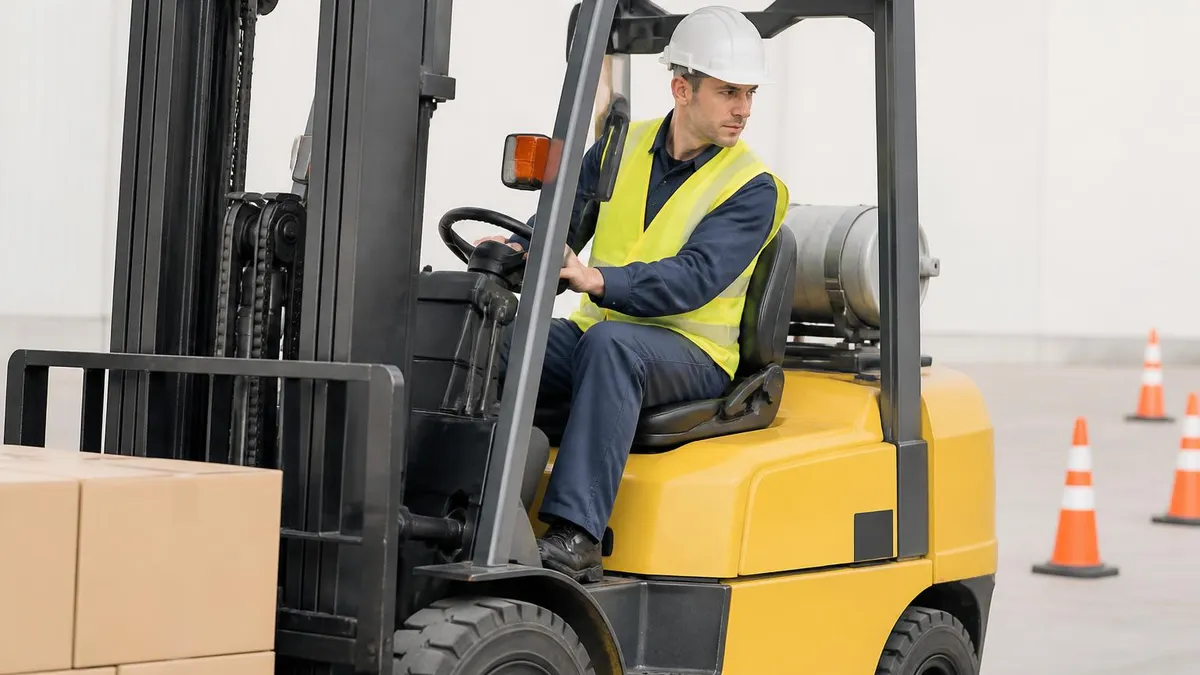
Forklift Rentals: Complete Guide to Pricing, Types, and Operator Requirements
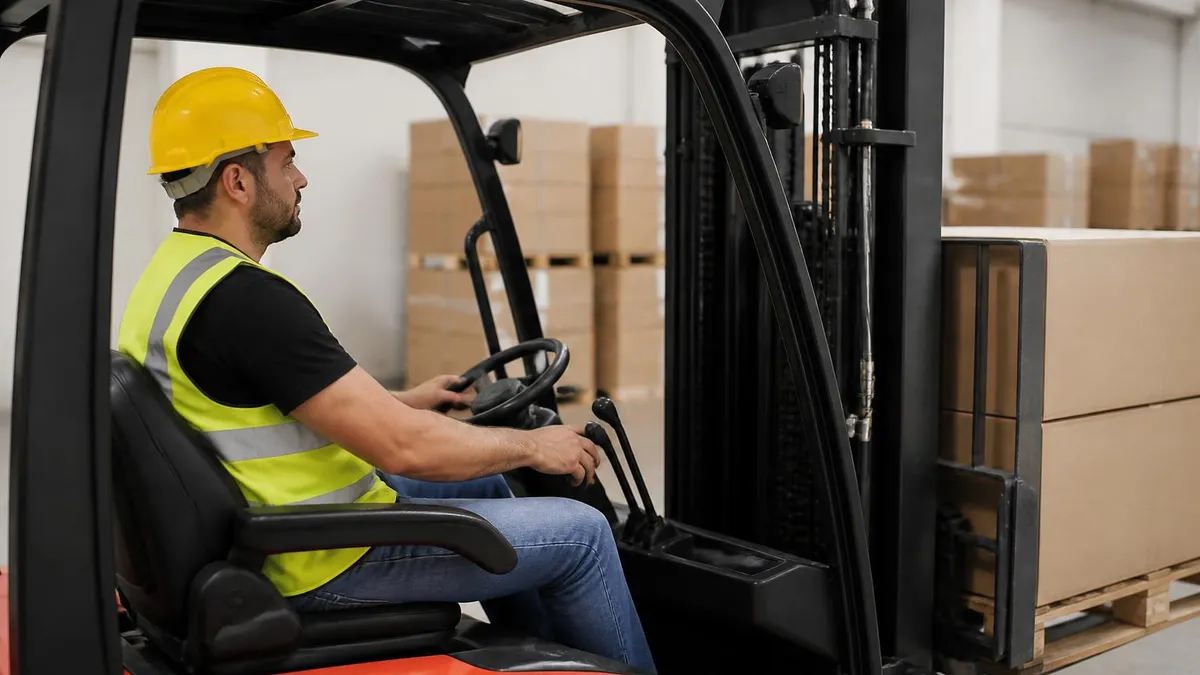
Forklift Hydraulic Fluid: Complete Guide to Types, Specifications, Change Intervals, and Troubleshooting for 2026
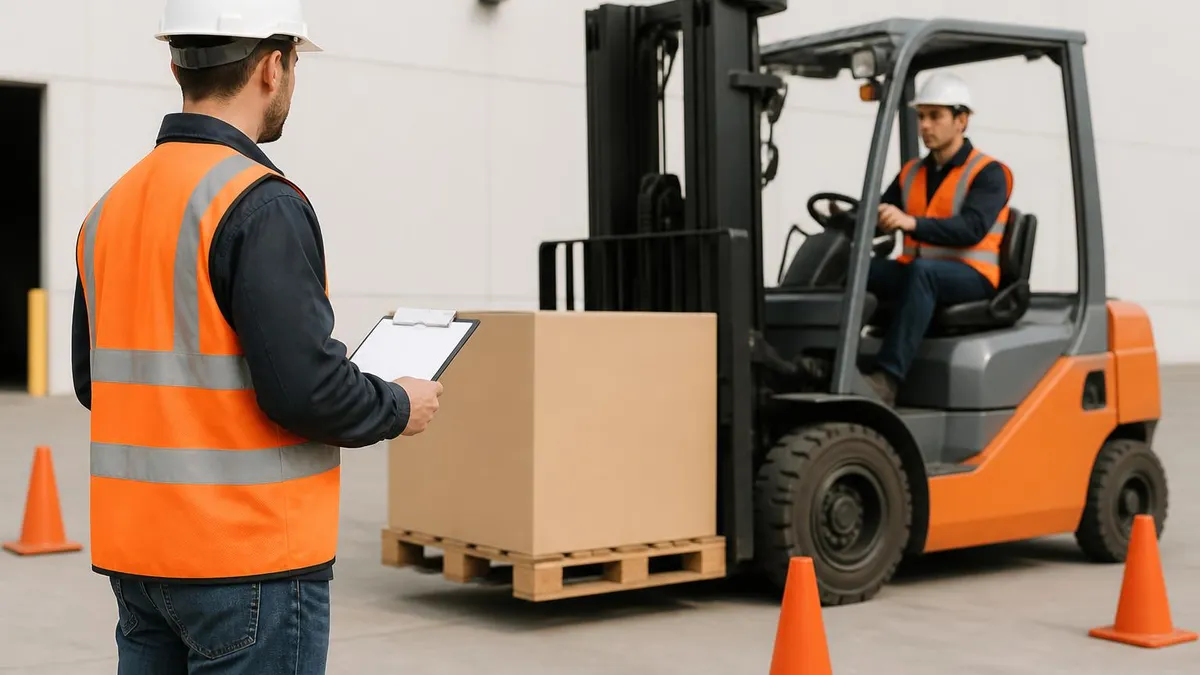
Forklift Parts and Maintenance: Complete Guide to Batteries, Chargers, and Replacement Components
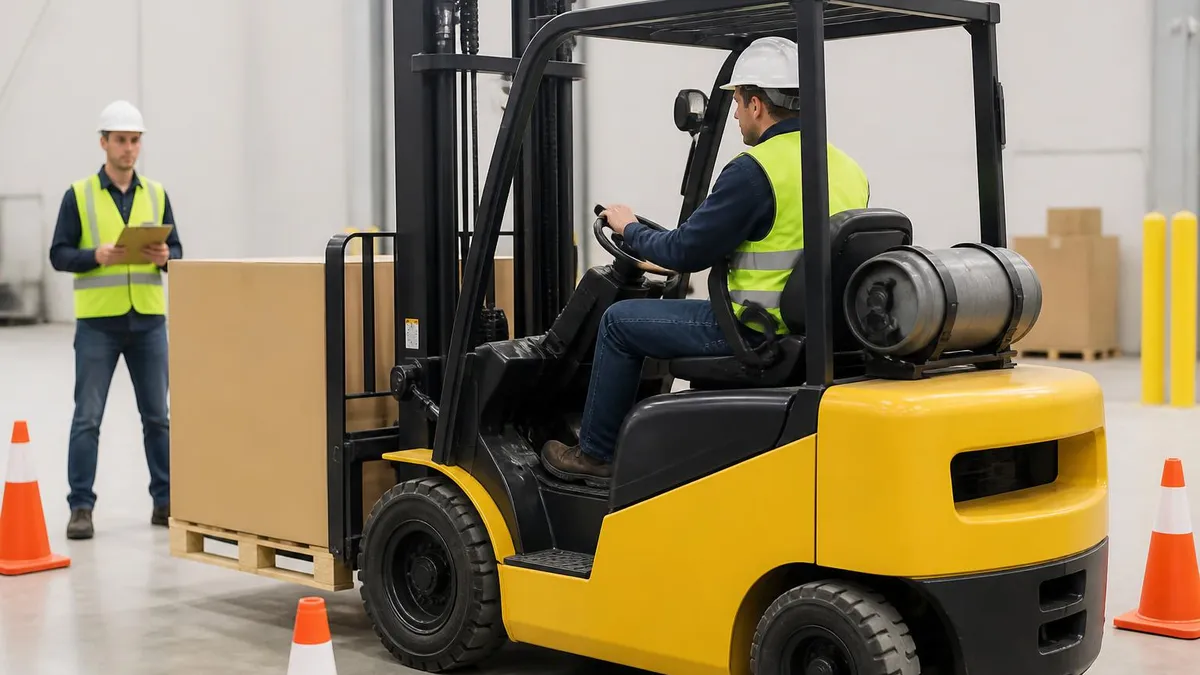
Big Forklift Guide: Heavy-Duty Lift Trucks, Capacity Classes, Rental Costs, and Operator Requirements
Forklift License Renewal: Complete Guide to Forklift License Expiry, OSHA Recertification, and Operator Requirements for 2026
About the Author

Certified Crane Operator & Skilled Trades Exam Specialist
Ferris State UniversityRobert Martinez is a Journeyman Ironworker, NCCCO-certified crane operator, and forklift trainer with a Bachelor of Science in Construction Technology from Ferris State University. He has 21 years of ironworking, rigging, and heavy equipment operation experience across high-rise and industrial construction sites. Robert prepares candidates for crane operator, rigger, forklift, and skilled trades certification examinations.