
Forklift Services: Complete Guide to Rentals, Training, Certification, and Equipment in 2026 September
Complete guide to forklift services in the US: 📚 rental options, operator training, certification requirements, equipment types, and costs for 2026 September.

Forklift services cover a wide spectrum of needs for warehouses, construction sites, manufacturing facilities, and distribution centers across the United States. Whether you are searching for short-term forklift rental to handle a seasonal surge, looking to invest in forklifts for permanent fleet use, or pursuing the certification of forklift operators to stay OSHA compliant, understanding the full landscape of available services helps you make smarter decisions and avoid costly mistakes. The right service approach saves both time and money while keeping your workforce safe.
The demand for qualified forklift operators has never been higher. With e-commerce growth driving warehouse expansion at an unprecedented pace, companies are scrambling to find trained, certified personnel who can operate electric forklifts, stand up forklifts, and counterbalanced sit-down models safely and efficiently. Forklift training programs have multiplied across the country in response to this demand, with options ranging from employer-conducted on-site sessions to accredited third-party schools offering nationally recognized credentials that satisfy OSHA's 29 CFR 1910.178 requirements.
For businesses evaluating their equipment strategy, the choice between renting and purchasing forklifts is a critical financial decision. Forklift rental rates vary significantly based on equipment type, lift capacity, fuel source, and rental duration. A short-term rental for a standard 5,000-pound propane counterbalanced forklift typically runs between $200 and $400 per day, while monthly contracts for the same unit might cost $800 to $1,500 depending on the provider and your geographic market. Understanding these pricing dynamics helps budget-conscious managers plan projects without overspending on equipment access.
Electric forklifts have become increasingly popular across industries thanks to zero direct emissions, lower operating costs, and quieter operation — making them ideal for indoor environments, food-grade warehouses, and facilities with strict air quality standards. The shift toward electrification is reshaping both the rental market and the used forklift for sale inventory, as companies upgrade their fleets and release older propane or diesel units. Savvy buyers can find excellent value in the secondary market, provided they conduct thorough pre-purchase inspections and verify maintenance records.
Operator safety remains the cornerstone of all forklift services. OSHA requires that every powered industrial truck operator be trained and evaluated before operating equipment in the workplace. This mandate applies to all forklift types — sit-down counterbalanced, reach trucks, stand up forklift models, order pickers, and rough-terrain units. Employers who fail to provide documented training and triennial re-evaluation face substantial penalties, including fines that can reach $15,625 per willful violation under current OSHA enforcement guidelines.
This comprehensive guide walks you through every major category of forklift services available in the United States: rental and leasing options, training and certification pathways, equipment sales and financing, maintenance contracts, and inspection services. Whether you are a business owner building a new warehouse operation, a safety manager updating your compliance program, or an individual pursuing a career as a forklift operator, you will find actionable information to help you navigate the market with confidence and make decisions that serve your long-term goals.
By the end of this article, you will understand how to evaluate forklift service providers, what certification programs are worth your investment, how rental pricing works across different equipment categories, and what steps you need to take to keep your operation compliant, productive, and profitable in an industry where the margin for error is slim and the stakes for getting it right are very high.
Forklift Services by the Numbers

Types of Forklift Services Available in the US
Short-term daily and weekly rentals for project-based needs, plus long-term operating leases of 12–60 months for businesses wanting predictable monthly costs without capital expenditure. Rental fleets typically include counterbalanced, reach, and rough-terrain models.
OSHA-compliant training programs covering pre-operation inspection, load handling, stability principles, pedestrian safety, and refueling or recharging procedures. Available as on-site employer training or through third-party schools and community colleges.
Purchase options spanning brand-new units from authorized dealers to refurbished used forklifts for sale through auctions or secondary market dealers. Financing and extended warranty packages are widely available for qualified buyers.
Scheduled service agreements covering fluid changes, filter replacements, mast lubrication, brake inspections, and battery maintenance for electric units. PM contracts reduce unexpected downtime and extend equipment service life significantly beyond industry averages.
Third-party inspections verify OSHA compliance, check equipment for safety defects, and audit operator training records. Ideal for companies preparing for regulatory visits or acquiring used forklifts that lack documented maintenance histories.
Forklift rental is the most flexible and widely used forklift service for businesses that need equipment access without the long-term financial commitment of ownership. The forklift rental market in the United States is dominated by national players like United Rentals, Sunbelt Rentals, and BlueLine Rental, alongside regional independent dealers who often offer more competitive pricing and personalized service. When evaluating forklift rental near me options, comparing daily, weekly, and monthly rates across multiple providers is essential to securing the best value for your project timeline and budget.
Daily rental rates for the most common forklifts — 5,000 lb capacity propane counterbalanced units — typically range from $200 to $400 per day at national chains, with weekly rates falling between $600 and $900 and monthly rates between $1,200 and $2,000. Electric forklifts command slightly higher rental prices due to their higher purchase cost and the need to include compatible charging equipment. Stand-up reach trucks, which are essential for narrow-aisle warehouse operations, often rent for $250 to $450 per day, reflecting their specialized capability and higher replacement value compared to standard sit-down models.
Long-term operating leases offer a compelling alternative to both outright purchase and short-term rental. A typical 36-month lease on a 5,000 lb electric forklift might run $500 to $800 per month, which includes scheduled maintenance in many agreements. This structure appeals to companies that want predictable monthly expenses, access to newer equipment without depreciation risk, and the flexibility to upgrade models at lease end. Many lease providers also bundle operator training credits and annual inspections into their lease packages, adding substantial value beyond the equipment access itself.
When searching for forklift certification near me to satisfy your rental agreement requirements, keep in mind that most rental companies require documented proof that designated operators hold current OSHA-compliant certification before releasing equipment. Some larger rental providers maintain a network of training partners and can refer you to certified programs in your area, streamlining the compliance process. Others offer basic operator familiarization sessions as part of their rental package, though these sessions typically do not replace the formal evaluation and documentation required by OSHA.
Specialty equipment rentals represent a growing segment of the market. Rough-terrain forklifts for construction sites, telehandlers for agricultural and outdoor applications, and high-capacity units rated for 15,000 lbs or more for heavy manufacturing are all available through specialty rental providers. These units command significantly higher rental rates — rough-terrain models often start at $350 per day and can exceed $700 — but they provide capabilities that standard warehouse forklifts simply cannot match. Understanding which equipment category your project actually requires prevents costly over-specification or dangerous under-specification.
Rental agreements deserve careful review before signing. Pay close attention to damage waiver provisions, fuel or battery condition return requirements, overtime hour charges (some contracts cap free hours at eight per day), and transportation or delivery fees which can add $100 to $300 per round trip depending on distance. Late return penalties are common and can add up quickly on projects that experience schedule slippage. Always clarify whether the quoted rate includes or excludes sales tax, environmental fees, and any mandatory insurance or damage protection charges that the provider requires.
The used forklift market provides another important pathway to equipment access. A well-maintained used 5,000 lb propane forklift with under 5,000 hours can be purchased for $8,000 to $15,000, compared to $20,000 to $30,000 or more for a new equivalent unit. For businesses with predictable, long-term lift needs, ownership often becomes financially superior to rental within 18 to 24 months of continuous use. However, ownership shifts all maintenance responsibility and depreciation risk to the buyer, making a thorough pre-purchase inspection by a qualified technician an absolute necessity before any secondary market acquisition.
Forklift Training and Certification of Forklift Operators
OSHA standard 29 CFR 1910.178(l) mandates that all powered industrial truck operators complete formal training before operating equipment independently. Training must cover truck-related topics such as load capacity, stability, refueling, and pre-shift inspection, as well as workplace-specific topics including surface conditions, ramp grades, pedestrian traffic areas, and any unique hazards present at the specific facility. Employers must document training completion and conduct an observed evaluation of each operator performing actual job tasks.
Re-evaluation is required at least every three years, and immediately whenever an operator is observed operating equipment unsafely, is involved in a near-miss or accident, or is assigned to operate a different type of forklift. OSHA does not prescribe a specific number of training hours, placing the responsibility on employers to determine when an operator demonstrates sufficient competency. Most third-party programs recommend a minimum of four to eight hours of combined classroom and hands-on instruction for new operators with no prior forklift experience.

Forklift Rental vs. Purchasing: Which Is Right for Your Operation?
- +No large upfront capital expenditure required — preserve cash flow for operations
- +Access to latest equipment models and technology without depreciation risk
- +Maintenance often included in rental or lease agreements, reducing surprise costs
- +Easy to scale fleet size up or down based on seasonal or project demand
- +Short-term rentals provide flexibility for one-time projects without long-term commitment
- +Rental providers handle compliance with updated safety and emissions standards
- −Higher total cost of ownership over multi-year periods compared to outright purchase
- −Rental availability in your area may be limited during peak demand seasons
- −Equipment may not be optimized for your specific application or facility layout
- −Rental agreements often include penalties for damage, overtime hours, or early return
- −Operators must still be independently certified regardless of rental provider
- −Long-term operating leases lock you into multi-year contracts with early termination fees
Forklift Operator Certification Compliance Checklist
- ✓Verify that every forklift operator has completed documented OSHA-compliant training before operating equipment.
- ✓Ensure training covers both truck-related topics and site-specific workplace hazards.
- ✓Confirm that a qualified trainer conducted and recorded the practical hands-on evaluation.
- ✓Store written training records that include operator name, training date, trainer name, and evaluation outcome.
- ✓Schedule re-certification for all operators on a maximum three-year cycle and track expiration dates.
- ✓Immediately retrain any operator observed performing unsafe maneuvers or involved in a near-miss incident.
- ✓Document additional training when operators are assigned to a forklift class or type they have not previously operated.
- ✓Review and update site-specific training content whenever facility layout, surface conditions, or hazards change.
- ✓Obtain a signed operator acknowledgment form confirming understanding of safety rules and operating procedures.
- ✓Audit training records at least annually and correct any gaps before an OSHA inspection occurs.
There Is No Government-Issued Forklift License in the United States
Unlike a motor vehicle driver's license, there is no federal or state government-issued forklift license in the US. OSHA requires employers to train and evaluate operators, but certification is employer-specific and equipment-specific. Operators who change jobs must be re-evaluated by their new employer, even if they carry a third-party training certificate — the certificate demonstrates training completion, not universal authorization to operate at every worksite.
Electric forklifts represent one of the fastest-growing segments of the powered industrial truck market, driven by corporate sustainability commitments, tightening indoor air quality standards, and significant improvements in battery technology that have eliminated range anxiety as a practical concern for most single-shift warehouse operations. Modern lithium-ion electric forklifts can complete a full eight-hour shift on a single charge and recharge to 80 percent capacity in under two hours using fast-charging infrastructure, a dramatic improvement over the lead-acid battery packs that dominated the market as recently as a decade ago.
The operating cost advantages of electric forklifts over propane or diesel counterparts are substantial and quantifiable. A typical propane forklift consumes approximately one gallon of propane per hour of operation at full load, costing roughly $2.50 to $3.50 per hour in fuel alone at current US propane prices.
An equivalent electric forklift running on grid electricity costs approximately $0.20 to $0.40 per hour in energy, representing savings of $15 to $25 per eight-hour shift per unit. For a fleet of ten forklifts operating 250 days per year, that energy cost differential alone amounts to $37,500 to $62,500 in annual savings — a compelling financial argument independent of any environmental considerations.
Maintenance cost comparisons further favor electric forklifts. Internal combustion engines require regular oil changes, filter replacements, spark plug or fuel injector service, exhaust system maintenance, and transmission service that electric drivetrains simply do not need. Industry analyses consistently find that total annual maintenance costs for electric forklifts run 20 to 40 percent lower than equivalent propane or diesel units over their service life.
The primary maintenance focus for electric forklifts shifts to battery management — ensuring proper watering of lead-acid cells, avoiding deep discharge cycles, and maintaining clean and tight electrical connections — or to lithium-ion battery monitoring for newer generation equipment.
The stand up forklift category, which includes stand-up counterbalanced, reach truck, and order picker variants, is dominated by electric power for good reason. These units operate primarily in indoor warehouse and distribution center environments where emissions are unacceptable and the stop-and-go duty cycle of aisle work is perfectly matched to battery-electric drivetrain characteristics. Stand-up reach trucks allow operators to access racking heights of 30 feet or more in aisles as narrow as eight feet, making them indispensable for high-density storage operations. The operator's upright stance also reduces physical fatigue during repetitive short-distance travel compared to sit-down models.
When evaluating electric forklift purchase or rental options, battery chemistry deserves serious consideration. Lead-acid flooded batteries remain the most common and least expensive option, with replacement costs of $1,500 to $4,000 per battery depending on capacity. They require weekly watering, monthly equalization charges, and careful depth-of-discharge management to achieve their rated 1,500 to 2,000 cycle lifespan.
Lithium-ion batteries cost three to five times more upfront — often $8,000 to $15,000 — but offer 3,000 or more cycles, zero watering maintenance, opportunity charging without damage, and consistent power delivery throughout the discharge cycle. For high-utilization multi-shift operations, the lithium-ion premium typically pays back within two to four years through reduced maintenance labor and longer battery service life.
The cherry picker forklift, sometimes called a cherry picker forklift or man-up order picker, is a specialized electric unit that elevates the operator along with the forks, allowing direct item picking from elevated rack positions. These units require specific operator training beyond standard forklift certification because operators must be protected by a safety harness and understand fall protection requirements. Cherry pickers are commonly rented or leased by distribution centers, grocery chains, and parts warehouses that require piece-level picking from tall racking systems rather than full-pallet retrieval.
The transition to electric fleets is accelerating across all forklift size classes, including the heavy-duty segment where diesel power previously dominated. Electric forklifts with capacities of 15,000 pounds or more are now commercially available from major manufacturers including Toyota, Crown, Raymond, Hyster, and Yale, opening electrification opportunities for steel service centers, paper mills, and heavy manufacturing facilities that previously had no viable electric alternative. Government incentive programs, including Section 179 tax deductions and state-level clean equipment rebates available in California, New York, and several other states, can offset a meaningful portion of the premium purchase cost for qualifying buyers.

A common misconception among first-time forklift renters is that the rental agreement itself authorizes their employees to operate the equipment. It does not. OSHA requires all operators to hold current training documentation specific to the equipment class being operated before their first shift. Renting a forklift without certified operators is a citable OSHA violation, and most rental providers explicitly disclaim liability for operator qualifications in their agreements. Secure certification before equipment arrives on-site.
Preventive maintenance services are a critical but often undervalued component of a comprehensive forklift services strategy. Industry data from the Industrial Truck Association indicates that properly maintained forklifts achieve service lives of 10,000 to 20,000 operating hours, while neglected equipment commonly fails at 5,000 to 7,000 hours — less than half the potential lifespan. For a $25,000 forklift operating 2,000 hours per year, the difference between a well-maintained unit and a neglected one can represent four to six additional years of service, translating to tens of thousands of dollars in deferred capital expenditure.
Preventive maintenance contracts from authorized dealers or independent service providers typically include quarterly or semi-annual scheduled service visits that cover oil and filter changes for internal combustion units, mast chain lubrication and tension adjustment, brake inspection and adjustment, tire wear assessment, battery water level and specific gravity checks for electric units, and hydraulic fluid condition evaluation. Most PM contracts are priced per service event based on equipment class, with a typical quarterly visit for a standard 5,000 lb forklift costing $150 to $300 in parts and labor. Annual PM contract costs for a single unit generally run $600 to $1,200.
Beyond scheduled maintenance, safety inspections play an essential role in protecting both operators and the business from OSHA citations. OSHA requires operators to conduct a pre-shift inspection before each use, checking fluid levels, tire condition, fork condition, mast operation, warning devices, and brakes. Operators who discover defects during pre-shift inspection must remove the unit from service and tag it out until repairs are completed. Supervisors bear responsibility for ensuring operators complete and document these daily checks, and for acting promptly on reported deficiencies rather than deferring repairs for convenience.
Annual third-party safety inspections, while not explicitly mandated by OSHA for all equipment, are strongly recommended as a supplement to daily operator checks and scheduled PM visits. Third-party inspectors bring fresh eyes and calibrated test equipment to evaluate components that operational staff may overlook due to familiarity or workload pressure. These inspections typically cost $100 to $250 per unit and produce a written report identifying any deficiencies, their severity, and recommended corrective actions. The inspection report creates a paper trail that demonstrates due diligence and can be invaluable in defending against liability claims following an accident.
For operators and safety managers seeking deeper knowledge of maintenance requirements and inspection standards, forklift training near me programs that include maintenance content are an excellent resource. Many community college forklift programs and OSHA-authorized training providers incorporate hands-on maintenance modules covering oil and filter changes, battery watering procedures, fork inspection criteria per ASME B56.1 standards, and hydraulic system basics. This knowledge helps operators identify developing problems during daily checks rather than waiting for catastrophic failures that endanger personnel and damage products or racking systems.
Tire management is another frequently underestimated aspect of forklift maintenance services. Worn or damaged tires compromise load stability, increase stopping distances, and can cause severe mast oscillation that endangers operators and nearby workers. Cushion tires for indoor forklifts should be replaced when the wear indicator groove disappears or when chunks are missing from the tread surface.
Pneumatic tires for outdoor or rough-terrain forklifts should be replaced at 1/8-inch tread depth or when sidewall cracking is observed. A professional tire replacement for a standard forklift runs $200 to $600 per tire for cushion types and $250 to $500 for solid pneumatic types, making proactive replacement far less expensive than the liability and downtime costs of a tire failure in service.
Fleet management software has transformed how larger operations handle maintenance scheduling, inspection records, and operator certification tracking. Cloud-based platforms allow fleet managers to set automated maintenance reminders, log daily inspection results from mobile devices, track certification expiration dates, and generate compliance reports for OSHA audits — all from a centralized dashboard. Several major forklift manufacturers now offer proprietary telematics systems that monitor equipment utilization, impact events, and battery state of charge in real time, providing data-driven insights that optimize both maintenance scheduling and operator behavior management across multi-unit fleets.
Navigating the forklift services market successfully requires a clear understanding of your operational needs, timeline, and budget before contacting any provider. Start by documenting your required lift capacity, maximum lift height, aisle width constraints, floor surface conditions, fuel preference, and estimated daily operating hours. This equipment specification baseline allows you to compare provider offerings on an apples-to-apples basis rather than being guided solely by marketing claims or price quotes that may not reflect your actual application requirements.
When evaluating forklift rental providers specifically, request references from customers in your industry or with similar operational profiles. Ask potential providers how quickly they can deliver replacement equipment if your rented unit goes down mid-project — response time commitments vary enormously between national chains that stock deep local fleets and smaller regional dealers that may have limited spare inventory. Service response commitments for breakdowns should be documented in the rental agreement, with penalties or rent abatement provisions for excessive downtime caused by equipment failure rather than operator error.
For businesses pursuing certification of forklift operators through third-party training programs, verify that the program's curriculum explicitly addresses OSHA 29 CFR 1910.178 requirements. Legitimate programs will be transparent about their curriculum content, trainer qualifications, and evaluation methods. Be cautious of programs that offer certification solely through online testing without any in-person practical evaluation component — OSHA's standard requires that operators be evaluated performing actual job functions, which cannot be accomplished through a screen-based quiz alone regardless of how comprehensive the theoretical content may be.
Staffing agencies that specialize in warehouse and logistics labor represent another important channel through which forklift services are delivered in the US economy. These agencies maintain rosters of certified forklift operators available for temporary, temp-to-hire, or direct placement assignments. When hiring through a staffing agency, confirm that the agency independently verifies operator certifications rather than simply relying on self-reported credentials from candidates. Ask specifically whether the agency conducts its own practical evaluation before placing operators, as this additional screening step significantly reduces the risk of placing operators whose certifications do not reflect actual skill levels.
Building a relationship with a full-service forklift dealer — one that offers sales, rentals, parts, service, and training under one roof — provides strategic advantages for growing operations. These dealers typically offer priority service scheduling for equipment sold or rented through their branch, parts availability from stocked inventory rather than special order, and access to factory-trained technicians who know the specific equipment in your fleet.
Many full-service dealers also offer fleet consultation services, helping customers optimize their equipment mix based on actual utilization data, identify candidates for trade-in or disposal, and plan capital equipment purchases with lead times that avoid costly last-minute rentals during the replacement process.
Government and municipal buyers face additional procurement requirements that can complicate forklift service acquisition. State contracts, cooperative purchasing agreements, and GSA schedule pricing all offer pathways to certified vendors with pre-negotiated pricing that satisfies public procurement rules. Several major forklift dealers hold active GSA schedule contracts for equipment sales, rental, and maintenance services, allowing federal agencies to procure forklift services without conducting full competitive solicitations for each transaction. State and local government buyers should check their state's cooperative purchasing program catalog for pre-approved forklift service contracts before initiating new procurement actions.
The future of forklift services is being shaped by automation, electrification, and connected fleet technology converging simultaneously. Autonomous mobile robots and automated guided vehicles are beginning to compete with traditional sit-down forklifts for high-repetition pallet movement tasks in purpose-built distribution centers, while human-operated forklifts retain advantages in flexibility, complex judgment tasks, and mixed-product environments.
Understanding where automation makes economic sense and where skilled human forklift operators remain essential is a strategic planning question that more and more operations managers will face in the decade ahead, making investment in high-quality operator training and certification more important — not less — as the industry evolves.
Forklift Questions and Answers
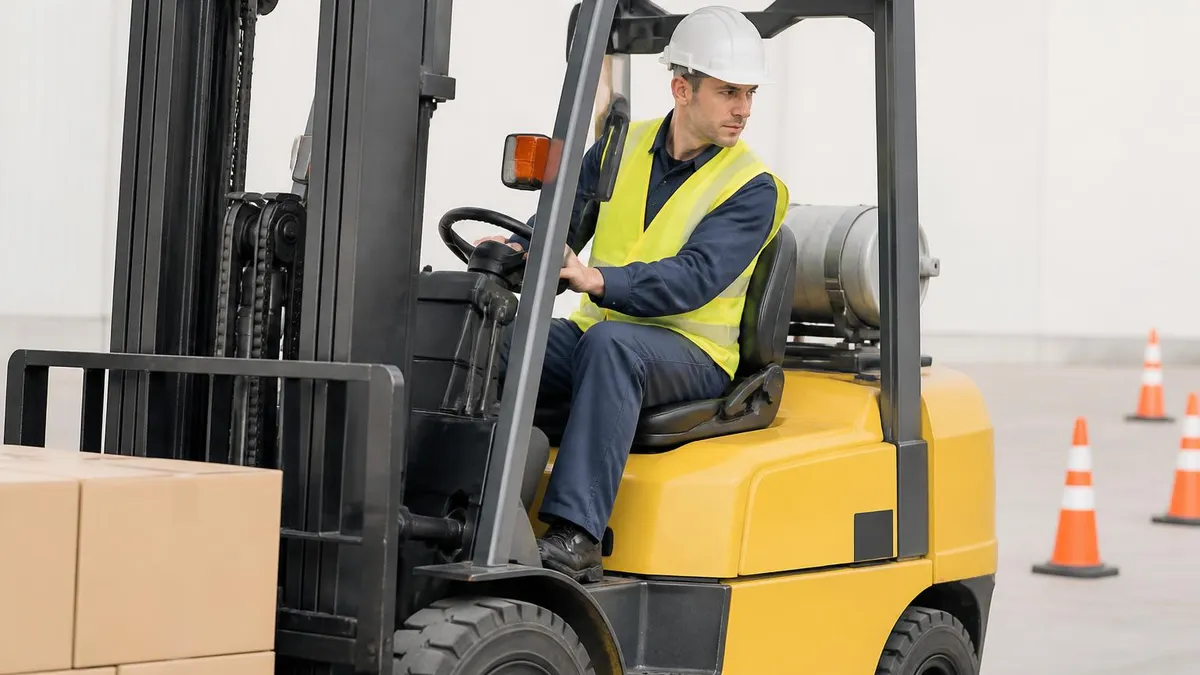
Forklift Rentals: Complete Guide to Pricing, Types, and Operator Requirements
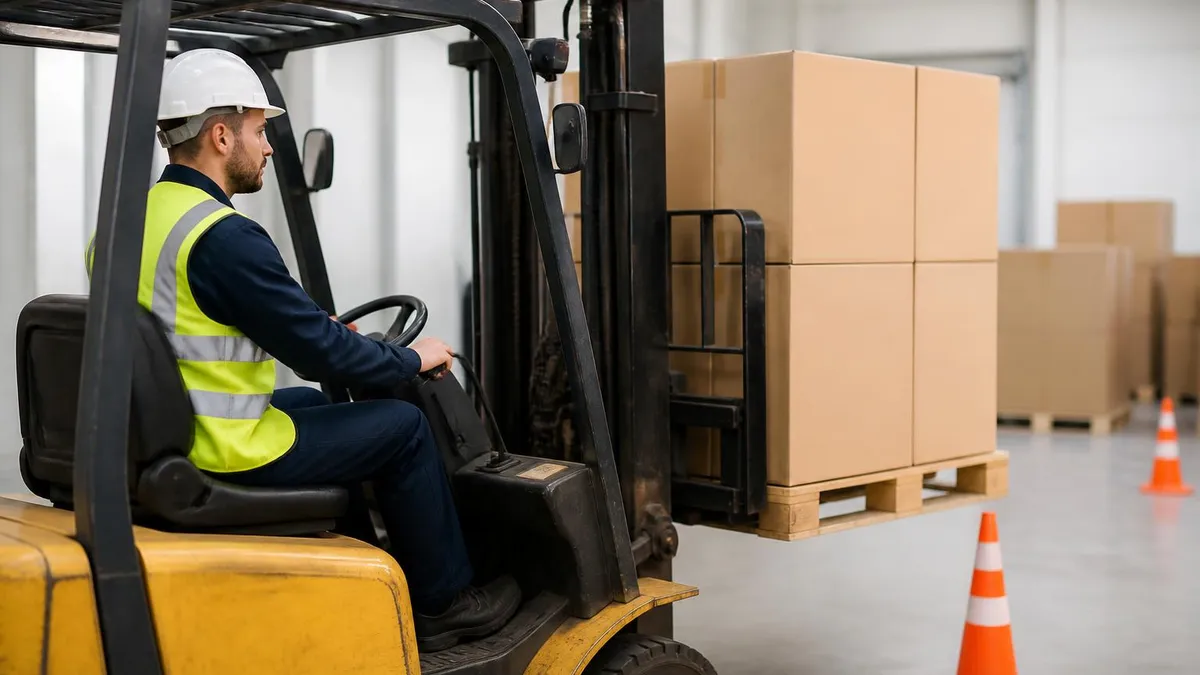
Forklift Training Course Near Me: Complete Guide to Finding Local OSHA-Certified Programs, Costs, and Schedules in 2026
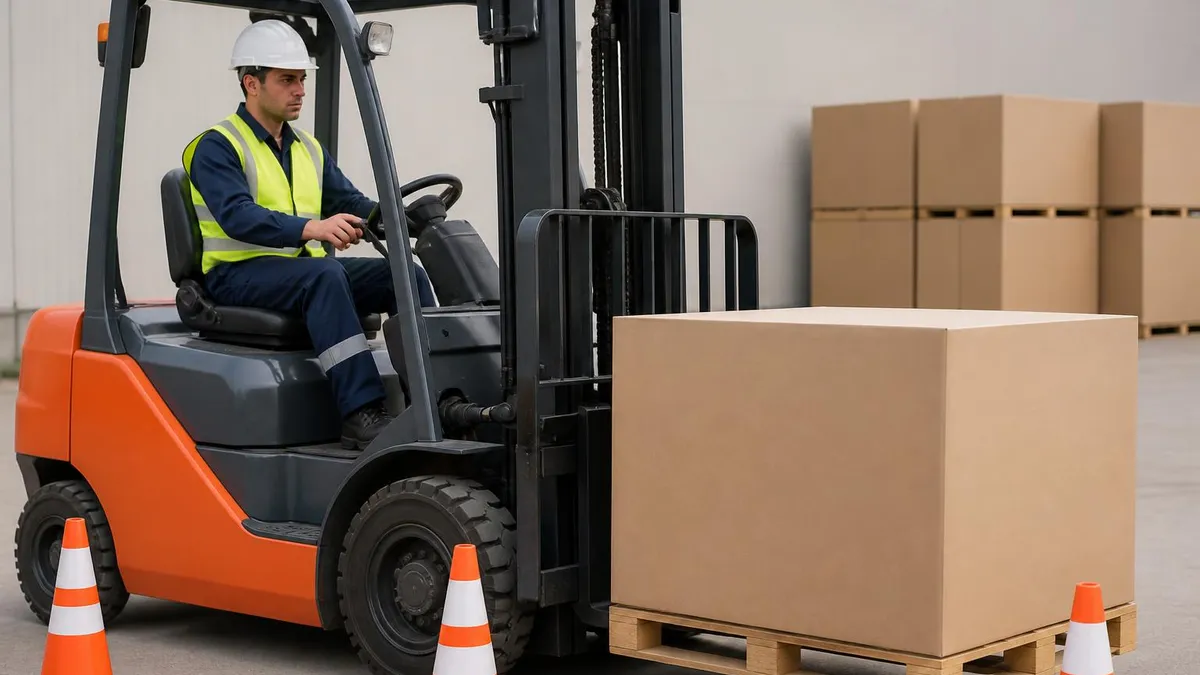
Forklift Tires: Complete Guide to Types, Sizing, Wear Patterns, and Replacement Costs
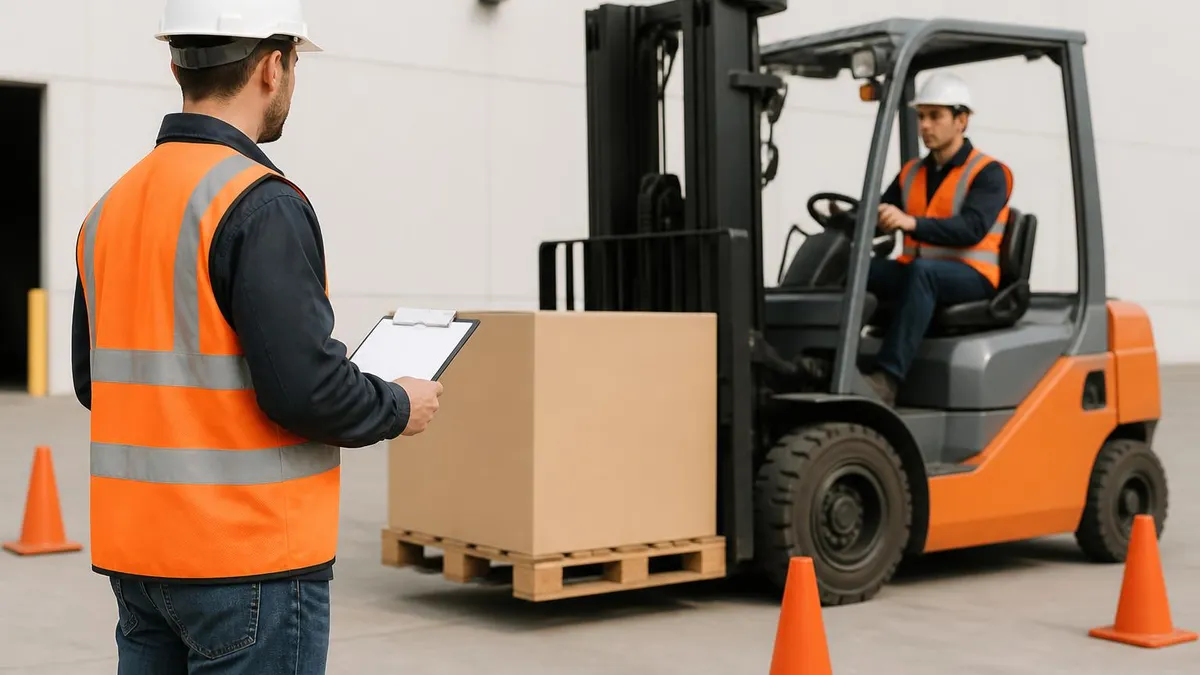
Forklift Parts and Maintenance: Complete Guide to Batteries, Chargers, and Replacement Components
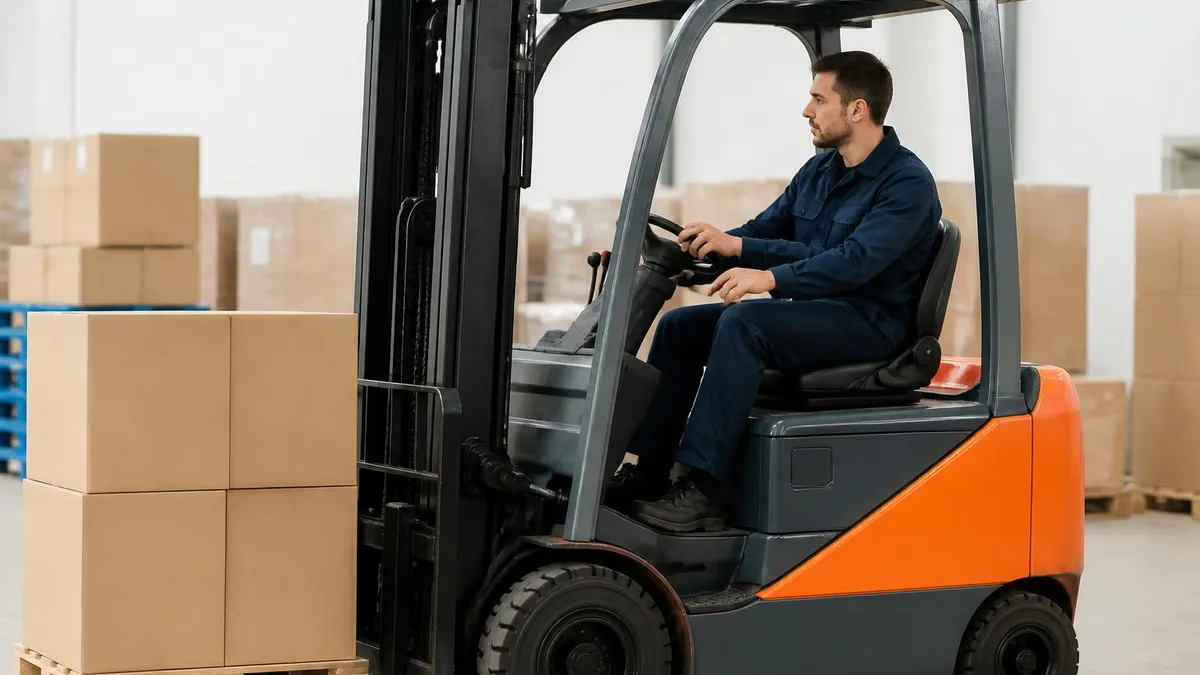
What Is a Forklift? Complete Guide to Types, Uses, Operation, and Certification Requirements
About the Author

Certified Crane Operator & Skilled Trades Exam Specialist
Ferris State UniversityRobert Martinez is a Journeyman Ironworker, NCCCO-certified crane operator, and forklift trainer with a Bachelor of Science in Construction Technology from Ferris State University. He has 21 years of ironworking, rigging, and heavy equipment operation experience across high-rise and industrial construction sites. Robert prepares candidates for crane operator, rigger, forklift, and skilled trades certification examinations.