
Forklift Hazards: Complete Guide to Workplace Safety, Risks, and Prevention
Understand forklift hazards before renting or operating. ✅ OSHA stats, top risks, prevention tips, and certification requirements for US workplaces.

Forklift rental has never been more accessible — with thousands of dealers offering short-term and long-term agreements nationwide — but the availability of equipment does not automatically translate into a safe workplace. Understanding forklift hazards is the single most critical step any forklift operator, site manager, or business owner can take before putting a powered industrial truck into service. According to OSHA, forklifts are involved in roughly 85 fatal accidents and nearly 35,000 serious injuries every year across American workplaces, making them one of the most dangerous pieces of equipment in the industrial sector.
Whether you are considering a forklift rental near me for a short warehouse project or you operate a full fleet of electric forklifts in a distribution center, the hazard profile remains consistent: tip-overs, struck-by incidents, falls from elevated platforms, and collisions with pedestrians account for the vast majority of injuries. Each of these risks is preventable when operators receive proper forklift training and supervisors maintain a culture of safety compliance. Yet statistics reveal that operator error — often rooted in inadequate training or complacency — is the leading contributing factor in forklift-related fatalities.
The certification of forklift operators is not optional under federal law. OSHA Standard 29 CFR 1910.178 requires every powered industrial truck operator to be trained and evaluated before operating any forklift. This requirement applies regardless of whether the machine is a stand up forklift used in narrow aisles, a large counterbalanced sit-down model, or a rough-terrain forklift used on outdoor construction sites. Employers who fail to certify their operators face fines that can exceed $15,625 per violation, and repeated or willful violations can reach $156,259 per incident.
One of the most underappreciated aspects of forklift hazards is that they extend well beyond the operator's seat. Pedestrians working near forklifts face serious struck-by risks, especially in busy warehouse environments where visibility is limited by tall racking systems and the noise of operations masks the sound of approaching equipment. OSHA data shows that 36 percent of forklift fatalities involve pedestrians rather than operators, underscoring the need for comprehensive site safety programs that protect everyone in the facility.
The type of forklift in use also shapes the hazard landscape. An electric forklift operating indoors produces no exhaust fumes but introduces electrical hazard risks during charging. A propane or diesel-powered forklift for sale or rent in an outdoor setting creates carbon monoxide risks if used in enclosed spaces. Rough-terrain models with elevated masts create tip-over risks on uneven surfaces that differ substantially from those encountered on smooth warehouse floors. Recognizing how equipment type influences hazard exposure is foundational knowledge for any site safety plan.
Forklift rentals are particularly hazard-prone from a training standpoint because operators may be unfamiliar with a specific truck model, its load rating, or its braking behavior. A forklift operator who has spent years on a counterbalanced sit-down truck may not immediately recognize the handling differences when switching to a stand up forklift or a reach truck. Rental companies are not always equipped to provide model-specific training, which places the burden of ensuring competency squarely on the employer. This makes pre-operational inspection and site-specific familiarization critical steps before any rented equipment is used.
This guide covers the full spectrum of forklift hazards — from mechanical failures and load instability to pedestrian safety and environmental risks — providing the practical knowledge needed to protect workers, achieve compliance, and pass your forklift certification exam with confidence. We include real statistics, actionable prevention strategies, and a comprehensive checklist so that every reader leaves with a clear, actionable understanding of what it takes to run a safe forklift operation.
Forklift Hazards by the Numbers

Top Forklift Hazard Categories Every Operator Must Know
Lateral tip-overs are the single leading cause of forklift fatalities. They occur when a load exceeds the truck's rated capacity, when turning too fast, or when operating on an uneven surface. Operators must never exit a tipping forklift and should always brace and lean away from the fall direction.
Pedestrians and co-workers are struck by forklifts or crushed between a truck and a fixed structure in 36 percent of fatal incidents. Designated pedestrian walkways, spotter systems, and enforced speed limits dramatically reduce this risk in busy warehouse and loading dock environments.
Lifting workers on the forks or on an unsecured pallet is illegal and extremely dangerous. Falls from elevation account for a significant share of non-operator fatalities. Approved work platforms with guardrails and restraint systems must always be used when elevating personnel.
Internal combustion forklifts — propane, gasoline, and diesel — emit CO gas that can rapidly reach dangerous concentrations in enclosed spaces. Symptoms include headache, dizziness, and loss of consciousness. Proper ventilation, CO detectors, and limiting IC engines indoors are essential countermeasures.
Improperly secured or unbalanced loads can shift or fall at any time, especially when the mast is elevated or the truck brakes suddenly. Operators must verify load stability before travel, keep loads low during movement, and use load backrest extensions when carrying tall or loose materials.
Understanding OSHA's regulatory framework is essential for any forklift operator or employer managing forklifts in the United States. The primary standard governing powered industrial trucks is 29 CFR 1910.178, which applies to general industry workplaces such as warehouses, manufacturing plants, and distribution centers. Construction sites are governed by 29 CFR 1926.602, while agricultural settings fall under separate OSHA agricultural standards. Employers must identify which standard applies to their operation and ensure full compliance, including operator training, equipment inspection, and safe operating procedures.
The certification of forklift operators under OSHA requires that training be both classroom-based and practical. Operators must receive instruction covering truck-related topics — including stability, load handling, refueling, and pre-shift inspections — as well as workplace-related topics such as surface conditions, pedestrian traffic patterns, and ramp procedures. Critically, the standard requires that training be specific to the type of truck the operator will actually use. An operator certified on a counterbalanced sit-down truck must receive additional training before operating a stand up forklift or a rough-terrain model.
Refresher training is triggered by specific events: a near-miss incident, an observed unsafe operation, an accident, a change in workplace conditions, or a new type of forklift being introduced. Many employers mistakenly believe that OSHA certification lasts indefinitely once issued. In practice, the standard requires re-evaluation at least every three years, and more frequently whenever any triggering event occurs. Employers who maintain annual refresher programs consistently see lower incident rates than those who train only at hire and at the three-year interval.
Documentation is a critical but often overlooked component of compliance. Employers must maintain records showing that each operator was trained and evaluated, including the name of the operator, the date of training, and the identity of the person who performed the evaluation. These records must be available for OSHA inspection. In the event of an incident, documentation demonstrating that proper training occurred can significantly mitigate employer liability, while the absence of records is treated as evidence of non-compliance.
The forklift training landscape has expanded considerably in recent years, with online pre-certification courses now widely available. These programs cover the theoretical knowledge required for safe operation and can be completed at the operator's own pace, making them practical for new hires and refresher purposes alike. However, OSHA mandates that the practical evaluation — hands-on assessment of the operator's ability to safely operate the specific truck in the actual workplace — must always be completed in person and cannot be substituted by an online module alone.
Employers who provide forklifts for sale alongside rental services are also subject to OSHA compliance obligations, particularly when their customers are employers who will put the equipment into service. Dealers who offer operator training as part of their sales or rental package can add significant value while helping customers meet regulatory requirements. Many forklift rentals agreements now include a requirement that the renting employer certify that their operators have been trained before taking possession of the equipment — a trend driven by increased OSHA enforcement and the growing liability awareness among rental providers.
One practical way to ensure operators understand the full scope of their regulatory obligations is to include OSHA standards coverage as part of formal forklift training programs. Practice exams that simulate the types of questions asked during certification evaluations help operators internalize critical rules, standard load charts, and safe operating procedures. Regular knowledge checks also give supervisors early warning when operators' understanding has gaps that could translate into real-world hazards on the floor.
Forklift Types and Their Unique Hazard Profiles
Electric forklifts are increasingly common in indoor warehouse environments because they produce zero emissions during operation, making them safe for use in enclosed spaces without the carbon monoxide risk associated with internal combustion engines. However, they introduce a distinct set of hazards. Battery charging stations must be properly ventilated because lead-acid batteries emit hydrogen gas during charging — a potentially explosive concentration can build up in poorly ventilated areas. Operators should never smoke near charging stations and should ensure that metal objects cannot create sparks near battery terminals.
Another key electric forklift hazard is battery weight and handling. Industrial batteries can weigh 1,000 to 3,000 pounds, and improper battery change procedures can result in crush injuries or acid burns. Operators and maintenance personnel must wear appropriate PPE — including acid-resistant gloves and face shields — when servicing batteries, and approved battery handling equipment must be used for battery swaps. Additionally, electric forklifts tend to be quieter than IC models, which can actually increase pedestrian strike risk because workers may not hear them approaching in busy facilities.

Forklift Safety Programs: Strengths and Gaps to Address
- +Mandatory OSHA certification reduces operator error and establishes a legal safety baseline for all workplaces
- +Pre-shift inspection checklists catch mechanical defects before they cause tip-overs or brake failures in operation
- +Designated pedestrian walkways physically separate foot traffic from forklift travel lanes, eliminating a major struck-by risk
- +Regular refresher training keeps operators current with changing site conditions, new equipment models, and updated OSHA standards
- +Incident reporting systems create data that enables employers to identify hazard hotspots and intervene before a fatality occurs
- +Electric forklifts eliminate carbon monoxide risk indoors and are quieter during operation, improving the work environment
- −Online-only certification programs cannot satisfy OSHA's hands-on evaluation requirement, leaving many employers unknowingly non-compliant
- −Forklift rental agreements rarely include adequate model-specific training, creating a skills gap when operators switch to unfamiliar equipment
- −High operator turnover in warehouse and logistics sectors means training investments are lost and new hazard exposures are continuously created
- −Carbon monoxide from IC forklifts in partially enclosed loading docks is frequently underestimated, and monitoring equipment is not universally deployed
- −Pedestrian traffic control measures are often implemented reactively after a near-miss rather than proactively during facility design
- −Documentation of training evaluations is inconsistently maintained, creating compliance exposure and legal liability during OSHA inspections
Pre-Operation Forklift Safety Checklist
- ✓Inspect the forklift for fluid leaks, damaged forks, cracked welds, and missing safety guards before every shift.
- ✓Verify that the data plate is legible and that the load you intend to carry does not exceed the rated capacity at the required load center.
- ✓Test all lights, horn, backup alarm, and warning devices to confirm they are operational prior to moving the truck.
- ✓Check tire condition and inflation pressure — flat spots, cuts, or underinflation on pneumatic tires significantly affect stability.
- ✓Confirm the seatbelt or operator restraint device is functioning and fasten it before operating any sit-down forklift.
- ✓Test the brakes, steering, and mast controls at slow speed in an open area before entering the active work zone.
- ✓Assess travel routes for overhead clearance, floor load ratings, wet or oily surfaces, and pedestrian crossing points.
- ✓Verify the load is properly positioned on the forks — centered, as far back as possible, and stable before elevating.
- ✓Confirm that the operating environment is free from CO accumulation if using an internal combustion forklift indoors.
- ✓Report any defects discovered during inspection to a supervisor immediately and remove the forklift from service until repaired.
The Three-Second Rule That Saves Lives
OSHA data shows that the majority of tip-over fatalities occur when operators make sharp turns while traveling with a raised load. The three-second rule — always lower your load to travel height and reduce speed three seconds before any turn — is the single habit that most reliably prevents lateral tip-overs. Never sacrifice this rule for speed, regardless of time pressure on the job.
Effective forklift training programs go far beyond regulatory checkbox compliance. The best programs combine classroom instruction, simulation or video-based scenario training, and extensive hands-on practice in the actual workplace environment where the operator will work. Research consistently shows that operators who receive scenario-based training — where they practice responding to simulated hazards such as unexpected pedestrians, shifting loads, and slippery surfaces — retain safety knowledge significantly longer than those trained through lecture-only methods.
Load handling is one of the most technically demanding aspects of forklift operation, and it is an area where inadequate training produces the most serious consequences. Operators must understand the concept of the load center — the point at which the load's weight is concentrated — and how moving that center even a few inches away from the rated distance dramatically reduces the truck's effective capacity.
A forklift rated for 5,000 pounds at a 24-inch load center may only safely carry 3,500 pounds if the load center is at 36 inches, a difference that is invisible on the load rating plate without careful calculation.
Workplace layout and traffic management are environmental factors that are just as important as operator skill in preventing forklift hazards. Facilities should conduct a formal traffic analysis to identify conflict points where forklifts and pedestrians share space, and then implement physical controls — barriers, guardrails, painted travel lanes, and designated pedestrian crosswalks — to eliminate those conflicts wherever possible. Where conflicts cannot be eliminated, administrative controls such as speed limits, horn zones, and spotter requirements must be strictly enforced with consistent supervision and accountability.
Visibility is a persistent challenge in forklift operations, particularly when carrying loads that block the forward view. In these situations, OSHA and forklift manufacturers recommend traveling in reverse so the operator has an unobstructed view of the travel path. Many operators resist this practice because it feels counterintuitive, but accident investigations consistently show that forward travel with an obscured view is a primary cause of pedestrian struck-by incidents. Supervisors must model and enforce correct reverse-travel practices to make them the standard on the floor.
Ramp and grade operations represent a specialized hazard category that requires specific training. The fundamental rule — always keep the load on the uphill side — is well established in OSHA standards, but its application in practice is frequently misunderstood. On a loading dock ramp, for example, an operator carrying a load down the ramp must travel in reverse so the load is uphill (behind the operator) and the counterweight is on the downhill side. Traveling forward with the load downhill shifts the center of gravity forward, dramatically increasing tip-over risk, especially if the truck brakes or encounters a bump.
Fatigue management is an emerging focus in warehouse safety programs. Studies of transportation and industrial accidents consistently identify shift length, time of day, and sleep deprivation as significant risk multipliers. A forklift operator working a double shift or the overnight portion of a rotating schedule is statistically more likely to make judgment errors, miss hazards, and react slowly to unexpected situations. Forward-thinking employers implement fatigue monitoring check-ins, rotate operators through non-driving tasks, and set shift-length limits for forklift operators based on occupational health guidelines rather than general labor scheduling practices.
Technology is increasingly being integrated into forklift safety programs. Proximity detection systems use ultrasonic or radio-frequency sensors to alert operators when pedestrians or obstacles enter the danger zone around the truck. Speed controllers automatically limit travel speed in pedestrian zones. Camera systems provide real-time views of blind spots. Black-box-style data recorders log speed, impact events, and mast activity to support incident investigation. While technology cannot replace trained operators or eliminate hazards from a poorly designed facility, it can provide meaningful layers of protection that reduce the consequence of human error.

Exceeding a forklift's rated load capacity — even on a single lift — can permanently damage the truck's hydraulic system, bend the forks, and fatally compromise the counterbalance system. An overloaded forklift may complete one lift without incident and then tip over on the next routine lift because internal components have been weakened. Always check the data plate before every lift, account for attachment weight deductions, and when in doubt, use a larger-capacity truck.
Forklift rentals introduce a unique layer of safety complexity that permanent fleet operations do not face. When a business rents a forklift — whether for a day, a week, or a multi-month project — the operators assigned to that equipment may have limited or no familiarity with the specific model. Unlike a company-owned fleet where operators develop deep familiarity with their assigned trucks, rental equipment rotates through different makes, models, and configurations. The braking distance, mast responsiveness, turning radius, and load feel can vary substantially between brands and generations of equipment.
Responsible employers who use forklift rental services should require operators to complete a formal familiarization session on each rented truck before beginning productive work. This session should include reviewing the data plate, testing all controls at slow speed in an open area, practicing load pick-up and set-down, and confirming that all safety devices are functional. This familiarization requirement should be formalized in the company's written safety program and documented in the same way that initial certification training is recorded — both for compliance purposes and to demonstrate due diligence in the event of an incident.
The forklift for sale market creates additional safety considerations for buyers acquiring used equipment. A used forklift may have maintenance history gaps, undisclosed impact damage, or worn components that are not immediately apparent on visual inspection.
Before placing any used forklift into service, employers should obtain a full service history, conduct a comprehensive mechanical inspection by a qualified technician, and verify that all OSHA-required safety devices — including the overhead guard, load backrest extension, seat restraint, and warning devices — are present and functional. Cosmetic refurbishment of a mechanically compromised truck is a significant source of latent hazards in workplaces that purchase used equipment without adequate due diligence.
Carbon monoxide monitoring is a legal and moral obligation for any workplace where internal combustion forklifts operate indoors or in semi-enclosed spaces. OSHA's permissible exposure limit for carbon monoxide is 50 parts per million over an eight-hour time-weighted average, with a ceiling of 200 ppm that should never be exceeded.
Loading docks with roll-up doors that are partially or fully closed, freezer loading areas, and basement receiving floors are particularly high-risk environments. Fixed CO monitoring stations with audible alarms should be installed in these areas, and operators should be trained to immediately exit and ventilate any space where the alarm activates.
Personal protective equipment for forklift operators is sometimes underemphasized relative to the focus on mechanical controls and training, but it plays a meaningful role in injury severity reduction. Hard hats protect against falling objects in areas where overhead storage is present. High-visibility vests make operators more visible to each other and to pedestrians. Safety shoes with steel toes protect against crush injuries during loading and unloading. In dusty or chemical environments, appropriate respiratory protection may also be required. PPE requirements should be specified in the workplace's forklift safety program and enforced consistently across all operators regardless of their experience level.
Emergency procedures deserve dedicated coverage in every forklift training program. Operators must know exactly what to do if they experience a hydraulic failure at elevation, a tire blowout, a load shift, or a tip-over in progress. In a tip-over scenario, the instinctive response — to jump away from the truck — is almost always fatal because the operator lands in the path of the falling overhead guard.
OSHA training materials and forklift manufacturer guidelines both specify the correct response: grip the steering wheel, brace your feet, and lean in the opposite direction of the fall to stay inside the operator protection system. This counterintuitive response requires deliberate conditioning through training and scenario practice.
Finally, the organizational safety culture surrounding forklift operations is ultimately the most powerful determinant of outcome. When supervisors enforce safe practices consistently, when near-misses are reported without punishment, and when operators feel empowered to refuse an unsafe task without fear of retaliation, injury rates fall dramatically.
Conversely, when production pressure regularly overrides safety protocols, when training is treated as a one-time compliance event rather than an ongoing investment, and when near-misses go unreported and unanalyzed, the statistical probability of a serious injury or fatality is simply a matter of time. Leadership commitment to safety culture is the multiplier that determines whether all other investments in training, technology, and compliance actually translate into protected workers.
Preparing for your forklift certification exam requires a strategic approach that mirrors the real-world hazard recognition skills you will need on the job. The certification evaluation has two distinct components: a written or oral knowledge test covering OSHA standards, load capacity principles, and safe operating procedures, and a practical skills assessment where the evaluator observes you operating a specific forklift type in your actual workplace. Both components require preparation, and the practical portion cannot be completed without hands-on time on the equipment you will be certified to operate.
For the knowledge component, focus your study on four core areas: stability and the stability triangle, load handling and capacity calculations, pre-shift inspection requirements, and OSHA's specific prohibitions — such as the ban on lifting personnel on forks, the requirement to sound the horn at intersections, and the rules for ramp travel.
These areas generate the highest frequency of exam questions and are also the most directly connected to the hazards that cause real-world accidents. Understanding the why behind each rule — not just the rule itself — will help you retain the information and apply it correctly in unfamiliar scenarios.
Practice exams are one of the most effective preparation tools available because they expose gaps in your knowledge before the actual evaluation rather than during it. When you answer a practice question incorrectly, treat it as a learning opportunity: look up the underlying OSHA standard, understand the accident scenario the rule was designed to prevent, and mentally rehearse how you would apply the correct procedure in your workplace. This active learning approach produces far better retention than simply re-reading training materials passively and hoping the information sticks.
For the practical assessment, rehearse your pre-shift inspection in a deliberate, methodical sequence so that it becomes automatic. Evaluators are looking for operators who demonstrate a systematic inspection process — not one who appears to be improvising or who skips components. Practice narrating your inspection steps aloud, since some evaluators will ask you to explain what you are checking and why at each point. This verbal reinforcement also helps you catch your own gaps before the evaluator does.
Load handling practice should emphasize precision over speed. During your certification evaluation, demonstrate that you pick up loads smoothly, confirm stability before traveling, maintain proper travel height, approach racking or drop zones at a controlled speed, and set loads down without jarring movements. Evaluators specifically watch for operators who tilt the mast correctly to engage loads, who look in the direction of travel at all times, and who stop completely before raising or lowering the mast. Speed comes naturally with experience; the evaluation is testing your safety habits, not your throughput.
One commonly overlooked aspect of certification preparation is understanding how to read and apply the load capacity data plate on each specific truck you will operate. Many operators memorize a single capacity number without understanding that the capacity changes based on load center distance, attachment use, and mast height. Spend time studying the data plate format and practicing the calculation of effective capacity at different load centers so that you can answer evaluation questions about load limits quickly and accurately, and so that you apply this knowledge correctly in daily operations.
After passing your certification, your safety education should not stop. Workplace hazard landscapes change constantly as new products move through facilities, seasonal demand shifts traffic patterns, new equipment is introduced, and physical layouts evolve.
Committed forklift operators treat every near-miss as a learning event, seek out refresher opportunities proactively rather than waiting for the mandated three-year cycle, and actively participate in safety committees and toolbox talks. The operators with the lowest incident records over a career are almost universally those who maintain a genuinely curious and humble attitude toward safety — always asking what could go wrong and what they can do to prevent it.
Forklift Questions and Answers
Forklift Rentals: Complete Guide to Pricing, Types, and Operator Requirements
Forklift Hydraulic Fluid: Complete Guide to Types, Specifications, Change Intervals, and Troubleshooting for 2026
Forklift Parts and Maintenance: Complete Guide to Batteries, Chargers, and Replacement Components
Big Forklift Guide: Heavy-Duty Lift Trucks, Capacity Classes, Rental Costs, and Operator Requirements
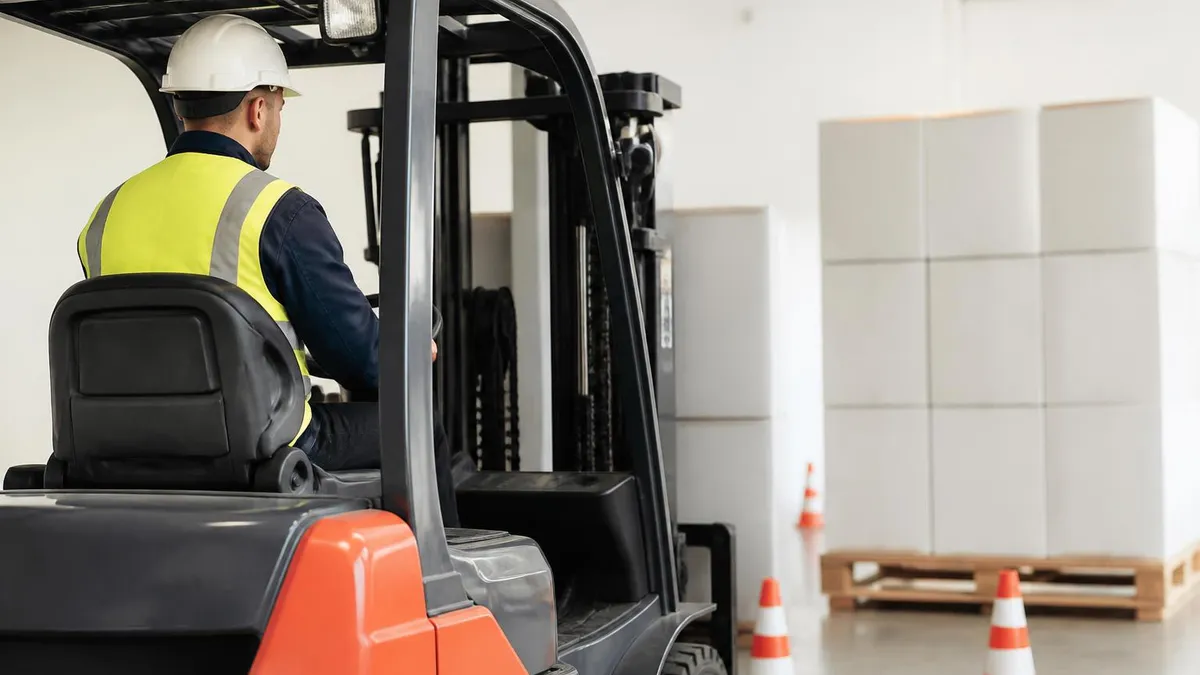
Forklift License Renewal: Complete Guide to Forklift License Expiry, OSHA Recertification, and Operator Requirements for 2026
About the Author

Certified Crane Operator & Skilled Trades Exam Specialist
Ferris State UniversityRobert Martinez is a Journeyman Ironworker, NCCCO-certified crane operator, and forklift trainer with a Bachelor of Science in Construction Technology from Ferris State University. He has 21 years of ironworking, rigging, and heavy equipment operation experience across high-rise and industrial construction sites. Robert prepares candidates for crane operator, rigger, forklift, and skilled trades certification examinations.