
CPR Recertification Near Me: Complete 2026 September Guide to Renewing Your CPR Card Locally and Online
Find CPR recertification near me in 2026 September. Compare local classes, online renewal, costs, AHA vs Red Cross, ACLS, PALS, BLS — 🆕 fast and affordable.
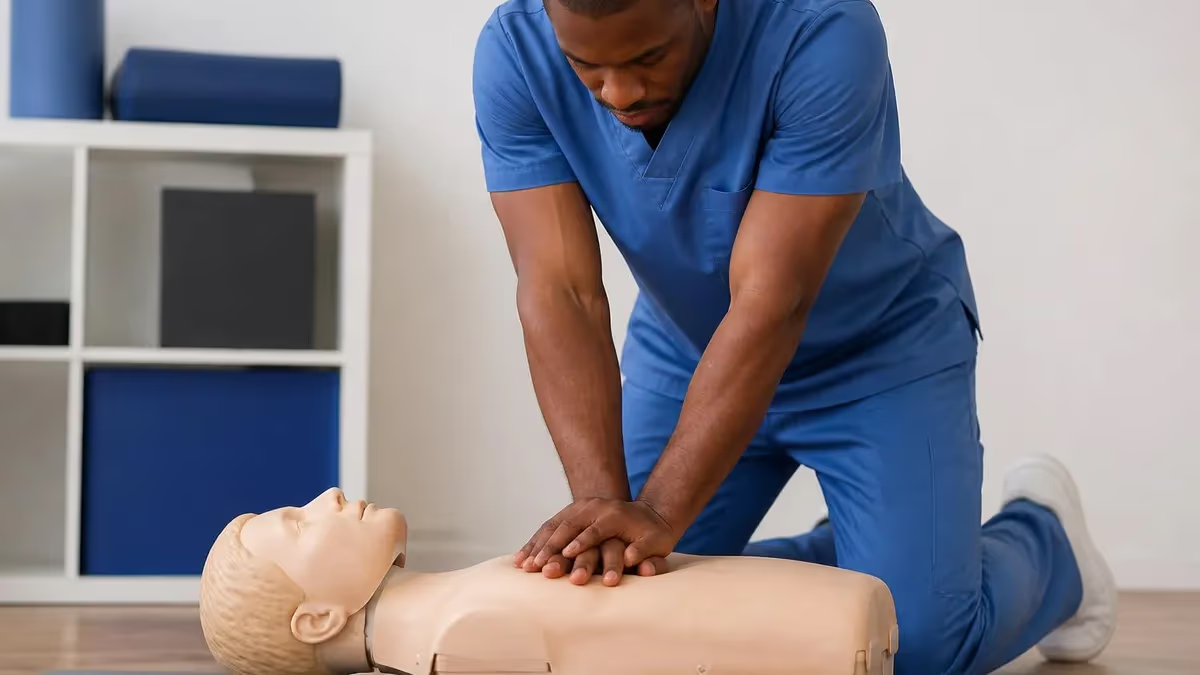
Searching for cpr recertification near me usually means one thing: your current card is about to expire, your employer needs proof, and you have about a week to figure out where to go. The good news is that recertification in 2026 is faster, cheaper, and more flexible than it was even three years ago. Most providers now offer blended learning, weekend skills checks, and same-day card delivery, which means you can renew on a lunch break if you plan it right. This guide walks you through every legitimate option.
The challenge is that not every course on Google qualifies. Some employers only accept American Heart Association (AHA) or American Red Cross credentials, while others accept the national cpr foundation, ASHI, or Emergency Care & Safety Institute. Before you pay for anything, confirm with your HR department or licensing board which issuing organizations are recognized. A $39 online card that gets rejected by your nursing board is far more expensive than a $75 in-person class that counts toward your license renewal on the first try.
Recertification covers the same core skills as initial certification: high-quality chest compressions, rescue breathing, infant cpr techniques, choking relief, and proper aed pad placement. What changes is the depth. Renewal courses assume you already know the basics, so they move faster, focus on skill correction, and add updates from the latest ILCOR and AHA guidelines. The 2025 guideline cycle introduced refinements around compression depth feedback devices and pediatric ventilation rates, which every renewal student should review carefully.
Cost varies widely by region and provider. In major metros like Los Angeles, Chicago, and New York, expect to pay $65 to $120 for a Heartsaver or BLS renewal. In smaller cities, the same course often runs $45 to $85. Online-only renewals with mailed skills verification cost as little as $25, but they are not accepted for healthcare licensure in most states. Always read the certification card description before checkout — it should clearly say which standard it meets and which providers honor it.
Timing matters more than most people realize. AHA cards expire on the last day of the month printed on them, and many employers require renewal at least 30 days before that date. If you let your card lapse, some training centers require you to retake the full initial course rather than the shorter renewal. That can mean four to five hours of class time instead of two, plus a higher fee. Set a calendar reminder 60 days before expiration to start your search.
Throughout this guide we compare in-person classes, blended learning, fully online options, and employer-provided training. We also cover ACLS and PALS recertification for advanced providers, what to bring to your skills session, and how to verify your new card the moment it is issued. For a deeper background on the underlying science, the normal breathing rate reference covers ventilation standards used in every modern course.
By the end of this article you should know exactly which type of recertification fits your job, your timeline, and your budget — and how to book it today rather than scrambling next week. We will also flag the red flags that signal a low-quality provider, because the recertification industry attracts a fair number of operators selling cards that look real but will not pass an employer audit.
CPR Recertification by the Numbers
Key Facts at a Glance
| Item | Value | Details |
|---|---|---|
| Standard Card Validity | 2 yrs | AHA & Red Cross |
| Typical Renewal Cost | $45-120 | varies by region |
| Recommended Renewal Buffer | 30 days | before expiration |
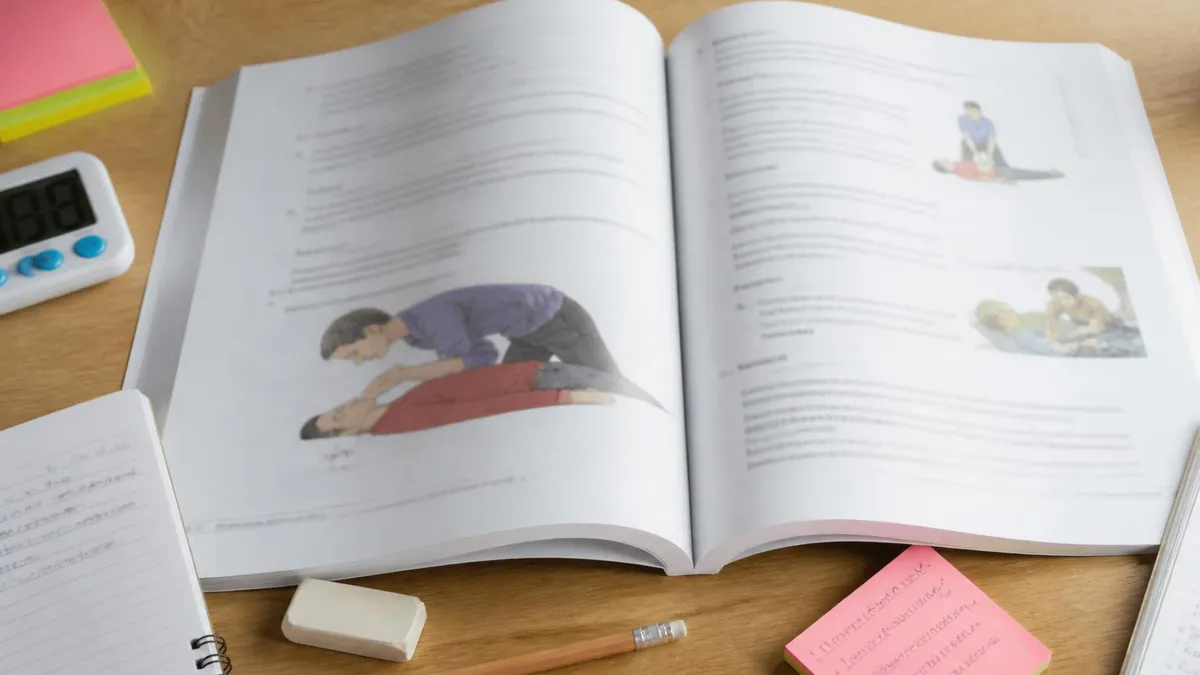
Five Ways to Recertify Your CPR Card
Full instructor-led renewal at a local training center. Best for hands-on learners and those whose employers require documented skills demonstration. Usually 2-3 hours.
Complete cognitive coursework online at your pace, then attend a 60-90 minute in-person skills session. Most popular option for healthcare professionals in 2026.
Cognitive and practical evaluation conducted via webcam or self-attestation. Cheapest option but not accepted by most hospitals, nursing boards, or EMS agencies.
Many hospitals, fire departments, and corporate offices host quarterly recertification days. Free to employees and counts toward continuing education hours.
Instructor travels to your home or office to verify skills after you complete online modules. Convenient for groups of 4 or more learners.
The three biggest names in CPR training are the American Heart Association, the American Red Cross, and the national cpr foundation. Each issues recertification cards that are valid for two years, but they are not interchangeable in every workplace. Hospitals, dental offices, and skilled nursing facilities overwhelmingly require AHA Basic Life Support (BLS). Schools, daycares, and lifeguard programs more often accept Red Cross. Corporate first-aid teams and gym staff frequently use national cpr foundation cards because the renewal process is faster and less expensive.
The AHA recertification model uses Instructor-led classes through Training Centers and Training Sites. You can find them through the AHA Class Connector tool, which lets you filter by zip code, course type, and date. Red Cross uses a similar locator at redcross.org/take-a-class. For a closer look at AHA-specific course requirements, the red cross cpr classes near me resource breaks down both major providers side by side and explains which one your employer is most likely to accept.
National CPR Foundation occupies a different niche. It is an online-first provider that issues cards immediately after a passing score on a multiple-choice exam. The course covers adult, child, and infant cpr along with AED use and choking response. For non-clinical roles like personal trainers, coaches, and office safety officers, it is a legitimate and budget-friendly choice. For clinical roles, always confirm with your licensing board before purchasing, because acceptance varies by state and even by individual employer.
Pricing across providers reflects the depth of instruction. AHA BLS renewal typically costs $70 to $95 in person, while Heartsaver CPR/AED renewal runs $55 to $80. Red Cross prices are nearly identical. National CPR Foundation charges around $20 to $30 for a fully online renewal with instant digital card. ACLS and PALS recertification are significantly more expensive — $150 to $250 — because they cover advanced cardiac rhythms, the acls algorithm sequences, and pediatric resuscitation scenarios.
One detail that catches many renewers off guard is the eCard system. AHA stopped issuing paper cards in 2017 and moved entirely to electronic credentials. Your eCard arrives via email within 24 hours of passing your skills check, and you claim it through the AHA student portal. Red Cross uses a similar digital system. Keep the email confirmation forever, because reissuing a lost card costs around $20 and can take several business days.
Verification is the other piece employers care about. Every legitimate eCard includes a QR code or 16-digit ID that can be looked up on the issuer's website. If a recertification provider cannot offer this verification feature, treat that as a serious red flag. Counterfeit cards are a real problem in the industry, and HR departments increasingly scan every card during onboarding and renewal cycles to confirm authenticity before granting clinical privileges or shift assignments.
Finally, pay attention to the difference between Healthcare Provider courses and Layperson courses. BLS for Healthcare Providers and Heartsaver CPR/AED are not equivalent. A Heartsaver card will not satisfy a hospital BLS requirement, even though both teach similar core skills. The healthcare versions add two-rescuer techniques, bag-valve-mask ventilation, pulse checks, and team dynamics — all of which appear on the renewal skills sheet and add roughly 30 minutes to class time.
CPR Practice Test Questions
Prepare for the CPR Cardiopulmonary Resuscitation Practice exam with our free practice test modules. Each quiz covers key topics to help you pass on your first try.
CPR Basic CPR
CPR Exam Questions covering Basic CPR. Master CPR Test concepts for certification prep.
CPR and First Aid
Free CPR Practice Test featuring and First Aid. Improve your CPR Exam score with mock test prep.
CPR (Cardiopulmonary Resuscitation) Adult ...
CPR Mock Exam on (Cardiopulmonary Resuscitation) Adult CPR and AED Usage. CPR Study Guide questions to pass on your first try.
CPR (Cardiopulmonary Resuscitation) Airway...
CPR Test Prep for (Cardiopulmonary Resuscitation) Airway Obstruction and Choking. Practice CPR Quiz questions and boost your score.
CPR (Cardiopulmonary Resuscitation) Cardio...
CPR Questions and Answers on (Cardiopulmonary Resuscitation) Cardiopulmonary Emergency Recognition. Free CPR practice for exam readiness.
CPR (Cardiopulmonary Resuscitation) Child ...
CPR Mock Test covering (Cardiopulmonary Resuscitation) Child and Infant CPR. Online CPR Test practice with instant feedback.
CPR (Cardiopulmonary Resuscitation) High-P...
Free CPR Quiz on (Cardiopulmonary Resuscitation) High-Performance Team Dynamics. CPR Exam prep questions with detailed explanations.
CPR (Cardiopulmonary Resuscitation) Legal ...
CPR Practice Questions for (Cardiopulmonary Resuscitation) Legal and Ethical Considerations. Build confidence for your CPR certification exam.
CPR for Specific Populations
CPR Test Online for for Specific Populations. Free practice with instant results and feedback.
CPR Airway & Breathing Management
CPR Exam Questions covering Airway & Breathing Management. Master CPR Test concepts for certification prep.
CPR Assessment & Recognition of Cardiac Ar...
Free CPR Practice Test featuring Assessment & Recognition of Cardiac Arrest. Improve your CPR Exam score with mock test prep.
CPR Chest Compressions & Defibrillation
CPR Mock Exam on Chest Compressions & Defibrillation. CPR Study Guide questions to pass on your first try.
CPR Post-Resuscitation Care & Recovery
CPR Test Prep for Post-Resuscitation Care & Recovery. Practice CPR Quiz questions and boost your score.
Comparing Recertification Formats for the ACLS Algorithm and BLS
A traditional classroom renewal lasts two to three hours and includes instructor demonstration, hands-on practice on manikins, and a final skills check. You leave the same day with confirmation that your eCard is on the way. This format is mandatory for most hospital BLS, ACLS, and PALS renewals because the skills evaluation must be witnessed live by a certified instructor.
Expect to spend time on bag-valve-mask ventilation, two-rescuer cycles, and AED operation. Instructors also review the acls algorithm if you are renewing an advanced credential. The biggest downside is scheduling — popular weekend slots fill up two to three weeks in advance, so book early if your card expires soon. Group rates for four or more learners can drop the per-person cost substantially.

Online vs In-Person Recertification: Which Wins?
- +In-person classes provide hands-on feedback that catches bad habits
- +Blended learning saves 60-90 minutes of classroom time
- +Online-only renewal can cost under $35 with instant card delivery
- +Local classes let you network with other healthcare professionals
- +Skills sessions confirm proper aed pad placement and compression depth
- +Group rates at training centers often drop per-person fees by 20-30%
- +Digital eCards eliminate the risk of losing a paper certificate
- −Fully online cards are rejected by most hospitals and licensing boards
- −In-person weekend slots fill up 2-3 weeks ahead in major metros
- −Some providers charge extra for re-test or card replacement
- −Blended learning still requires travel to a skills site
- −Cheapest online options may not include the latest AHA guideline updates
- −Counterfeit card mills look legitimate until an employer scans them
Pre-Class Checklist for CPR Recertification Near Me
- ✓Confirm your employer's accepted certification providers in writing
- ✓Locate your current card and note the exact expiration date
- ✓Search the AHA Class Connector or Red Cross locator by zip code
- ✓Compare three local providers on price, schedule, and reviews
- ✓Verify the course is the correct level (BLS, Heartsaver, ACLS, or PALS)
- ✓Complete any required online cognitive module at least 48 hours before class
- ✓Print your online completion certificate to bring to the skills session
- ✓Wear comfortable clothing that allows kneeling on the floor
- ✓Bring a photo ID and your current expiring CPR card
- ✓Arrive 15 minutes early to complete sign-in paperwork
- ✓Save the eCard claim email immediately and download the PDF
- ✓Notify your employer of your new expiration date and upload the card
Renew 30-60 days before expiration
If your AHA or Red Cross card lapses, many training centers require the full initial course rather than the shorter renewal — that means double the class time and a higher fee. Set a calendar reminder 60 days before the printed expiration date and book your renewal class immediately. Employers typically want proof of renewal at least 30 days before the old card expires.
For healthcare providers, ACLS and PALS recertification deserve their own discussion. Advanced Cardiac Life Support renewal focuses on the acls algorithm pathways for cardiac arrest, bradycardia, tachycardia, acute coronary syndromes, and stroke. The renewal class assumes you can already lead a code team, so most of the four hours is spent on megacode simulations. Pediatric Advanced Life Support renewal covers similar advanced pathways for infants and children, including pediatric respiratory failure, shock recognition, and post-resuscitation care.
Both ACLS and pals certification renewals require a current BLS card before you can register. Most training centers will verify this at sign-in, and some will turn you away if your BLS expired more than 30 days ago. Plan your renewals in sequence: BLS first, then ACLS or PALS within the same week if possible. Many hospitals bundle all three renewals into a single all-day session to minimize staff downtime.
Expect to demonstrate proficiency with bag-valve-mask ventilation at the correct respiratory rate, defibrillator pad placement, IV and IO access decision-making, and ECG rhythm recognition. The written exam includes 50 multiple choice questions, and you need 84% to pass. Most students who fail do so on rhythm strips rather than algorithm sequences, so spend extra study time on identifying ventricular fibrillation, pulseless electrical activity, asystole, and the unstable tachycardias.
Pricing for advanced renewals reflects the additional content. ACLS recertification typically runs $175 to $250, and PALS is similar. Blended learning options exist and cost roughly the same as full classroom courses, but they save time by moving the algorithm review and rhythm identification online. The in-person megacode and skills check remain mandatory and are the most common reason students need to repeat sections.
For neonatal providers, the Neonatal Resuscitation Program (NRP) operates on its own renewal schedule of two years and uses a different curriculum focused on the first minutes of life. Pediatric Emergency Assessment, Recognition and Stabilization (PEARS) is a lighter-weight pediatric course for providers who do not need full PALS. Each has its own card and verification process, so check which one your unit or specialty actually requires before signing up for the wrong class.
Continuing education credits often come bundled with advanced renewals. AHA-issued ACLS cards typically include 8 to 10 CE hours from the American Nurses Credentialing Center, the Commission on Accreditation for Pre-Hospital Continuing Education, and similar bodies. Make sure you download the CE certificate from the AHA portal separately from your eCard — they are two different documents and many nurses miss the CE certificate at renewal time, leaving valuable credits unclaimed.
A surprising number of recertification searches accidentally land on phone repair franchise pages because of brand-name overlap. When you search online, add words like "class," "renewal," or "certification" to filter out unrelated results and reach legitimate training centers faster.

If your CPR card has been expired for more than 30 days, AHA Training Centers may require you to take the full initial course rather than the renewal class. This doubles your time commitment and increases cost by 30-50%. Some employers also impose penalties or restricted duty status until you produce a current card, so renew before the printed expiration date whenever possible.
The renewal process itself is straightforward if you follow it step by step. Start by identifying which certification you need to renew — BLS, Heartsaver CPR/AED, ACLS, PALS, or a specialty course like NRP. Pull your current card and note the exact expiration date and issuing organization. If the card is older than two years, you are technically already expired and may need to retake the full course. Photograph the card front and back for your records before you do anything else.
Next, search by zip code on the official locator tools. The AHA Class Connector at heart.org and the Red Cross locator at redcross.org both let you filter by course type, date range, and language. For the national cpr foundation, browse directly at nationalcprfoundation.com. Compare at least three local providers on price, schedule flexibility, instructor reviews, and class size. Smaller classes — under 12 students — generally produce better skills retention because instructors can give individual feedback during practice.
Once you have selected a provider, register and pay online. You will receive a confirmation email with class location, parking instructions, and any pre-class assignments. For blended learning, the email contains a link to the online cognitive module that you must complete and bring proof of completion to the skills session. Block out a quiet two hours to complete the online module and take the practice tests included with it.
On the day of class, arrive 15 minutes early with your photo ID, expiring card, and online completion certificate if applicable. Wear comfortable clothing that allows kneeling and bending. The instructor will run through any major guideline changes since your last renewal, demonstrate updated techniques, and then move to skills stations. Compression depth, rate, recoil, ventilation volume, and AED operation are all evaluated against published standards.
The final skills check is straightforward but requires concentration. You will demonstrate one-rescuer adult CPR, two-rescuer CPR with BVM (for healthcare providers), infant cpr, AED use, and adult and infant choking relief. Compression depth must reach at least 2 inches for adults and 1.5 inches for infants, with a rate of 100-120 per minute. The instructor uses a feedback device or visual check to verify performance. If you fail a station, most instructors will let you re-test once before requiring a return visit. For background on ventilation standards, review aed pad placement guidance which covers anatomy-based positioning in detail.
After passing, your eCard is processed within 24 hours. AHA sends a claim email to the address you provided at registration; click the link, log into your AHA student portal, and download both the PDF card and the QR-coded verification page. Forward the verification link to your HR department or upload it directly to your hospital credentialing system. Save the PDF in three places — email, cloud storage, and a printed copy in your work bag — because you will be asked for it more often than you expect.
Set a renewal reminder for 22 months from the issue date. This gives you a two-month buffer to schedule and complete your next renewal before the card expires. Many providers send automatic reminder emails at 90 and 30 days before expiration, but do not rely on them — provider databases occasionally miss email addresses, and you are ultimately responsible for maintaining a valid card. A simple calendar event prevents the expensive scramble of last-minute renewal.
Practical tips can make the difference between a smooth renewal and a frustrating retake. Practice compression depth and rate at home before your skills session — use the beat of any 100-to-120 BPM song and press firmly on a couch cushion or pillow stack. Two inches is deeper than most untrained people expect, and instructors fail more students for shallow compressions than for any other reason. Five minutes of practice the night before class pays off enormously.
Review the algorithm changes in the most recent AHA Focused Update before your renewal. Each update cycle introduces small but important changes — recent cycles tightened guidance on compression-only CPR for laypersons, defined more specific recommendations for cardiac arrest in pregnancy, and updated post-cardiac-arrest temperature management. Your instructor will cover the highlights, but reading the official AHA summary in advance helps you contribute intelligently to discussion and pass the written portion easily.
If you are renewing as part of a workplace team, ask your employer to arrange an on-site class. Most training centers offer group rates for 6 to 12 learners, and on-site delivery eliminates travel time for everyone. Many hospitals and dental offices schedule quarterly on-site renewal days that any expiring employee can join. This is by far the most efficient way to renew if your workplace supports it.
For solo learners, look at adult education centers, community colleges, fire departments, and EMS agencies — all of which frequently offer affordable public CPR classes. Fire stations sometimes host free or donation-based community CPR events, especially during national CPR and AED Awareness Week each June. These events use the same curriculum as paid classes and issue identical eCards. Search local government and fire department websites for upcoming sessions in your area.
Pay attention to position recovery technique during the renewal, even though it gets less classroom time than chest compressions. The recovery position prevents airway compromise in unconscious but breathing patients and is tested on most renewal skills sheets. Know which side to roll the patient toward, how to position the arm and leg for stability, and how to monitor for changes in respiratory rate and adult normal respiration patterns while waiting for EMS arrival.
Documentation matters as much as performance. Immediately after class, photograph your skills sheet if the instructor signs one, save the eCard claim email, and update your professional license file with the new expiration date. If you work in a hospital, upload the verification page to your credentialing software the same day. Delays here have caused more than one nurse to be pulled from a shift because the credentialing system still showed an expired card even though the new one was issued.
Finally, treat recertification as a learning opportunity rather than a checkbox. Skills decay measurably within six months of certification, and the renewal class is your chance to correct accumulated bad habits. Ask the instructor for honest feedback on your compression depth, rate, and hand position. The investment of two hours every two years saves lives, and the difference between a refresher you took seriously and one you sleepwalked through is measurable in real-world cardiac arrest outcomes.
CPR Questions and Answers
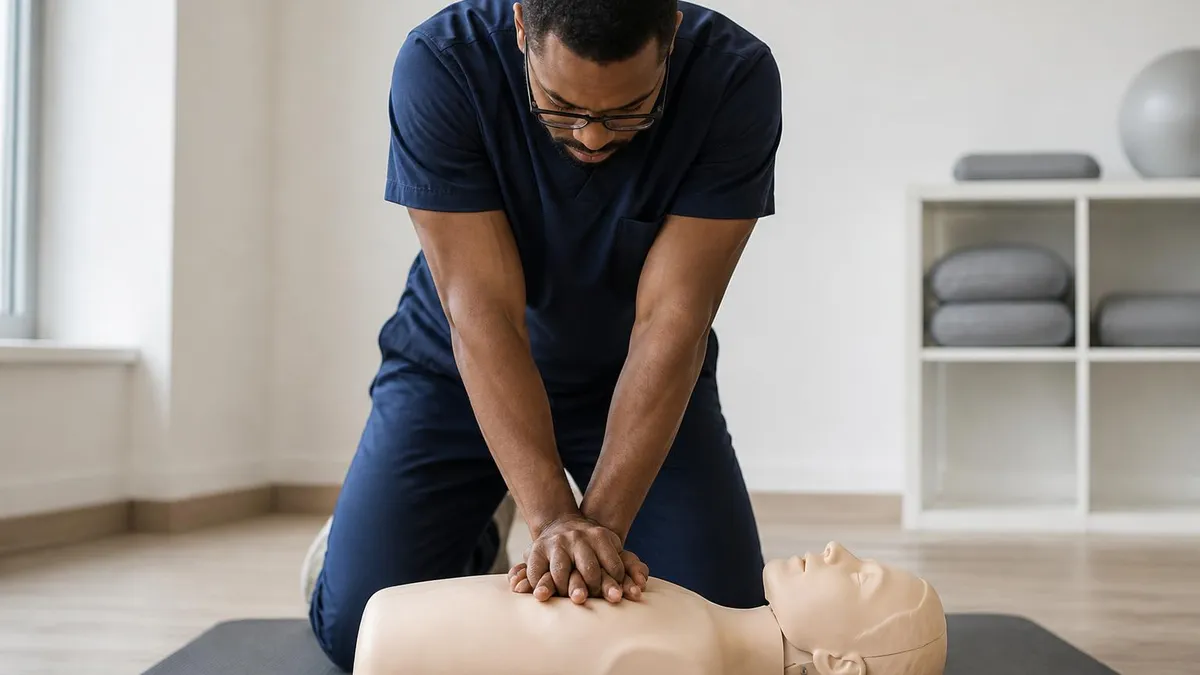
CPR Card Lookup: How to Verify, Replace, and Access Your CPR Certification in 2026
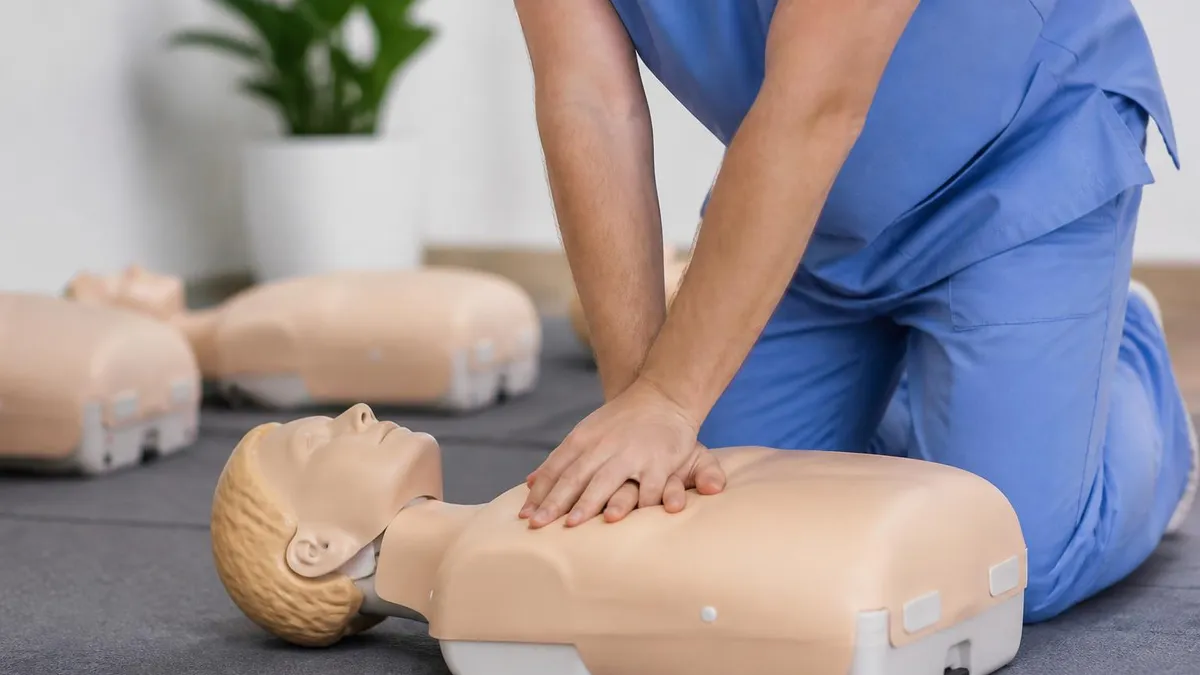
AHA CPR: What It Is, Which Course You Need, and How to Get Certified
Adult CPR: Complete Step-by-Step Guide to Hands-Only and Standard CPR in 2026
CPR - Cardiopulmonary Resuscitation: Complete Study Guide 2026
Inappropriate CPR Songs: What Not to Play, Why It Matters, and Better Beat-Per-Minute Alternatives
About the Author

Registered Nurse & Healthcare Educator
Johns Hopkins University School of NursingDr. Sarah Mitchell is a board-certified registered nurse with over 15 years of clinical and academic experience. She completed her PhD in Nursing Science at Johns Hopkins University and has taught NCLEX preparation and clinical skills courses for nursing students across the United States. Her research focuses on evidence-based exam preparation strategies for healthcare certification candidates.
Join the Discussion
Connect with other students preparing for this exam. Share tips, ask questions, and get advice from people who have been there.
View discussion (5 replies)