
Forklift Training Center: Complete Guide to Certification, Requirements, and Operator Training
Find the best forklift training center near you. Learn certification requirements, costs, and how to become a certified forklift operator. 🎯

Finding the right forklift training center is one of the most important steps any aspiring forklift operator can take before entering the workforce. Whether you are looking into forklift rental options for a short-term project, purchasing forklifts outright, or pursuing the certification of forklift credentials required by OSHA, the path begins with structured, hands-on training at an accredited facility. The right center will teach you everything from safe operation to equipment inspection protocols that protect you and everyone around you.
Forklift training is not optional under federal law. OSHA Standard 29 CFR 1910.178(l) mandates that every forklift operator must be formally trained and evaluated before operating powered industrial trucks in a workplace. This regulation applies across all industries — warehousing, construction, manufacturing, retail logistics, and agriculture. Training centers fulfill this legal requirement by delivering a standardized curriculum that covers both classroom theory and practical hands-on operation on actual equipment, including electric forklift models and stand up forklift variants.
The demand for certified forklift operators continues to grow across the United States. The Bureau of Labor Statistics reports over 500,000 forklift operators employed nationally, with steady job growth driven by e-commerce expansion and increased warehouse construction. Because employers are legally obligated to hire only trained operators, graduating from a recognized training center dramatically improves your employability. Many graduates receive job offers before they even complete their coursework, particularly in high-demand metro areas.
When evaluating training centers, it is critical to look beyond price. Quality programs include evaluations on multiple forklift classes — from Class I electric forklifts and Class IV internal combustion cushion-tire trucks to Class V pneumatic-tire forklifts. Centers that only train on a single machine type may leave you under-qualified for many job openings. The best facilities maintain a fleet of modern equipment, including both sit-down counterbalanced models and stand up forklift units used in narrow-aisle warehouse applications.
Costs at training centers vary considerably depending on your location, the depth of the program, and whether the course is online, in-person, or a hybrid format. Most entry-level forklift training programs in the United States run between $150 and $500 for a complete course. Some employers sponsor their workers through training entirely, which means zero out-of-pocket cost for the operator. Community colleges and vocational technical schools frequently offer the most affordable options, sometimes charging less than $200 for full certification of forklift credentials.
If you have already secured a forklift rental or access to equipment at your worksite, some training centers will conduct on-site evaluations. This approach works especially well for companies that need to certify multiple employees simultaneously and want to minimize downtime. On-site training can often be customized to the specific forklifts you use — whether they are propane-powered warehouse lifts, electric reach trucks, or heavy-duty rough-terrain models used in outdoor construction environments.
This comprehensive guide will walk you through every aspect of choosing and attending a forklift training center: what the curriculum covers, how long certification takes, what it costs, what OSHA requires, and how to prepare for your practical assessment. By the end, you will have a clear roadmap to becoming a fully certified forklift operator ready to work safely and legally anywhere in the United States.
Forklift Training by the Numbers

Types of Forklift Training Programs
The gold standard for new operators. Combines written instruction on OSHA regulations, load physics, and pre-shift inspections with real equipment practice on multiple forklift classes. Most programs run 1–2 days and award a wallet-sized certification card upon completion.
A flexible hybrid format where operators complete the knowledge portion online at their own pace, then schedule a practical hands-on evaluation with a local certifier. Popular with employers certifying existing staff without pulling them from production for a full day.
Companies with large forklift fleets often conduct in-house training led by a designated trainer. OSHA permits this provided the trainer is fully qualified and the curriculum meets federal standards. Workers are trained and evaluated on the exact equipment they will operate daily.
Semester-length programs at community colleges combine forklift certification with broader warehouse logistics or material handling credentials. These programs cost $200–$800 and often connect graduates directly with regional employers actively hiring certified forklift operators.
Advanced training centers offer courses dedicated to specific equipment classes — electric forklift operation, stand up forklift narrow-aisle maneuvering, or rough-terrain vehicles. These are ideal for experienced operators seeking to expand their certifiable equipment range.
OSHA's forklift training requirements are among the most specific in any industry regulation, and understanding them is essential before you choose a program or begin operator work. Under 29 CFR 1910.178(l), employers bear the ultimate legal responsibility for ensuring that every forklift operator is trained and evaluated. However, that training can be delegated to a qualified external forklift training center, a certified in-house trainer, or a combination of both — as long as the program meets all federal content and evaluation standards.
The regulation requires training to cover three broad categories: truck-related topics, workplace-related topics, and operator-related topics. Truck-related content includes pre-operation inspection procedures, load capacity ratings, stability triangle physics, refueling and recharging procedures, and the differences between forklift types like the electric forklift versus internal combustion models. Workplace-related content addresses surface conditions, ramps, narrow aisles, pedestrian traffic zones, dock operations, and hazardous areas. Operator-related training focuses on seat belt use, speed limits, traveling rules, and load handling technique.
After completing formal instruction, every new operator must undergo a workplace-specific practical evaluation conducted by the employer or a qualified designee. This evaluation tests whether the operator can safely perform all job functions in their actual work environment using the specific forklifts they will operate. A training center certificate alone does not satisfy this requirement — the practical evaluation at the actual worksite is a non-negotiable additional step that employers often overlook until an OSHA inspector arrives.
Certification is not permanent. OSHA requires operators to be recertified when they are observed operating unsafely, after an accident or near-miss incident, when assigned to a different type of forklift, and — at minimum — once every three years. Smart operators stay ahead of this schedule by keeping documentation of their original training and setting calendar reminders well before the three-year mark. Many training centers send renewal reminders automatically if you register your certificate in their database.
One area of frequent confusion involves the difference between forklift types for certification purposes. OSHA recognizes seven forklift classes, and certification in Class I electric counterbalanced forklifts does not automatically authorize someone to operate Class IV internal combustion cushion-tire trucks. If your job requires operating multiple classes — say, a sit-down counterbalanced lift and a stand up forklift reach truck — you need training and evaluation on each class separately. Reputable training centers will clarify this distinction upfront and offer multi-class packages at reduced rates.
Documentation is a critical element of OSHA compliance that training centers help operators navigate. After completing a program, you should receive a training certificate that includes your name, the date of training, the name of the certifying trainer, and the forklift types covered. Keep both physical and digital copies. Employers are required to maintain training records for each operator, and OSHA inspectors frequently request these during safety audits. Operators who cannot produce documentation may be suspended from forklift duties until recertification is completed.
Finally, the certification of forklift credentials carries real legal weight beyond just workplace compliance. In the event of an accident, an operator's training record becomes central to any liability investigation or workers' compensation claim. Operators who can demonstrate up-to-date, complete training through an accredited center are in a significantly stronger legal position than those whose records are incomplete or lapsed. This is one reason experienced safety professionals strongly recommend using formal training centers rather than informal, undocumented on-the-job instruction.
Forklift Training Curriculum: What You Will Learn
The classroom portion of forklift training covers the foundational knowledge every operator needs before touching equipment. Students study OSHA regulations, the physics of forklift stability including the stability triangle concept, load capacity nameplates, and the differences between electric forklift models and propane-powered units. Instructors explain how center of gravity shifts during travel, why speed matters on ramps, and how to interpret manufacturer data plates mounted on every forklift.
Written assessments typically follow classroom instruction to confirm comprehension before moving to practical work. Topics on these tests include pre-shift inspection checklists, rules for traveling in reverse, pedestrian right-of-way protocols, and the correct procedures for refueling or recharging different forklift types. Most training centers require a passing score of 70–80% before allowing a student to proceed to the hands-on evaluation phase of the program.

Forklift Training Center vs. Self-Directed Employer Training
- +Structured curriculum meets all OSHA content requirements without gaps or omissions
- +Professional instructors with real-world forklift operation experience guide every session
- +Access to multiple forklift classes including electric forklift and stand up forklift variants
- +Official certification card issued immediately upon successful completion
- +Training records maintained by the center, providing legal documentation backup
- +Many centers offer job placement assistance or employer referrals for graduates
- −Upfront cost of $150–$500 must be paid before training even begins
- −Fixed class schedules may conflict with current work shifts or personal obligations
- −Travel to the training facility adds time and transportation expense
- −Generic training may not fully replicate conditions at your specific worksite
- −Workplace-specific practical evaluation still required separately by employer after training
- −Quality varies significantly between centers — poor programs still issue certificates
Forklift Operator Pre-Training Checklist
- ✓Confirm you meet the minimum age requirement of 18 years for most forklift operator positions.
- ✓Obtain a valid government-issued photo ID to present at the training center on enrollment day.
- ✓Review the OSHA forklift standards document (29 CFR 1910.178) to familiarize yourself with terminology.
- ✓Identify which forklift classes your target employer uses and ensure your training program covers them.
- ✓Wear closed-toe shoes and comfortable clothes suitable for physical activity on the training day.
- ✓Ask the training center whether they offer multi-class packages if you need certifications on several forklift types.
- ✓Bring a notebook to record instructor tips and specific workplace protocols during the classroom portion.
- ✓Confirm the training center issues a wallet-sized certification card that meets employer documentation requirements.
- ✓Arrange transportation to the training facility in advance — many centers are located in industrial areas with limited transit.
- ✓If your employer is sponsoring training, get written confirmation of payment before your scheduled class date.
A Training Certificate Is Not Enough — You Still Need a Worksite Evaluation
Many new operators mistakenly believe that graduating from a training center fully satisfies OSHA requirements. It does not. Your employer is legally required to conduct an additional practical evaluation at your actual worksite, on the specific equipment you will use. Until that evaluation is documented and signed off by a qualified trainer, you are not fully OSHA-compliant — even with a training center certificate in hand.
The cost of forklift training is one of the first questions prospective operators ask, and the answer depends heavily on several variables: program type, geographic location, the number of forklift classes covered, and whether you are self-paying or employer-sponsored. Understanding the full cost picture helps you budget appropriately and avoid programs that appear cheap upfront but deliver substandard training that employers do not recognize.
Entry-level forklift training programs at independent training centers typically range from $150 to $300 for a single-day course covering one forklift class. If you need training on multiple classes — for example, both a sit-down counterbalanced lift and a stand up forklift reach truck — expect to pay $350 to $600 for a comprehensive multi-class program. Community college vocational programs are often the most cost-effective option, sometimes delivering the same content for as little as $150 when bundled with state workforce development subsidies.
Online-only certification courses are widely advertised at prices as low as $50 to $100, but these must be evaluated carefully. OSHA explicitly requires hands-on evaluation — a computer-based test alone does not satisfy the practical component of certification. These online programs can be legitimately used for the classroom knowledge portion if the employer then conducts a separate worksite practical evaluation, but they should never be presented as complete standalone certifications. Employers familiar with OSHA standards will immediately recognize the deficiency.
Many operators do not realize that forklift training costs can often be recovered quickly through higher wages. Certified forklift operators earn a national median wage of approximately $19–$23 per hour, compared to $15–$17 for uncertified general warehouse labor. At that wage premium, even a $500 training investment is recovered within the first two to three weeks of employment. When viewed as a career investment rather than an expense, training center costs become much more palatable — especially given that the credential can be used across multiple employers over a three-year cycle.
Financial assistance is available for qualifying workers in many states. The Workforce Innovation and Opportunity Act (WIOA) funds vocational training for eligible adults and displaced workers, and forklift certification frequently qualifies as an approved program. Contact your local American Job Center to find out if your training costs could be covered under this federal program. Some states also offer additional grants through their departments of labor specifically targeting industrial skills training for high-demand occupations.
Employers in sectors like logistics, manufacturing, and construction are frequently willing to sponsor training costs entirely, particularly for candidates who demonstrate strong work history and commitment. If you are applying for warehouse or distribution center positions, it is worth negotiating training sponsorship as part of your job offer. Many large employers — including major retailers, third-party logistics providers, and food distribution companies — have established relationships with local training centers and routinely fund operator certification as part of onboarding.
When comparing training center costs, always ask what is included in the quoted price. A comprehensive program should cover classroom instruction, hands-on equipment time, the written assessment, the practical evaluation, and the certification card. Watch out for programs that quote a low base price but then charge separately for the practical evaluation, the certification document, or same-day card printing. The total all-in cost is what matters for accurate budget planning.

Fraudulent forklift certifications are a real problem in the industry. Some online providers sell certificates that list no qualified trainer, no evaluation date, or no specific forklift class — all of which are red flags that OSHA inspectors are trained to detect. Using an invalid certification exposes both the operator and the employer to fines up to $15,625 per violation and potential criminal liability in the event of an accident. Always verify your training center's credentials before enrolling.
Choosing the right training center in your area requires more than a quick online search for the nearest location. The quality of instruction, the condition of training equipment, the qualifications of instructors, and the center's reputation with local employers all matter enormously. A low-cost program that local employers do not recognize may leave you certified on paper but struggling to find work — wasting both time and money.
Start by asking potential employers directly which training centers they prefer or recognize. Large warehouse operators, third-party logistics companies, and manufacturing plants often have established relationships with specific local training providers. Some employers maintain approved vendor lists and will only accept certificates from centers on that list. Getting this information before you enroll saves you from completing a program that does not meet your target employer's specific requirements.
Look for training centers that are members of recognized industry organizations such as the Industrial Truck Association (ITA) or the National Safety Council. Membership in these organizations signals that the center stays current with evolving OSHA standards and industry best practices. Many reputable centers also carry affiliations with specific forklift manufacturers — Toyota, Crown, Raymond, Hyster, or Yale — which can indicate access to quality, well-maintained training equipment that reflects what you will encounter on actual job sites.
Instructor qualifications are perhaps the most important factor and the one most prospective students overlook. OSHA requires that trainers be qualified — meaning they have the knowledge, training, and experience to train and evaluate forklift operators. Ask the center directly: What are your instructors' backgrounds? How long have they been training operators? Are they certified by any industry body? Instructors who are themselves former warehouse supervisors or long-tenured operators bring irreplaceable real-world context to their teaching that purely academic instructors simply cannot replicate.
The physical training environment also deserves scrutiny. Visit the facility before enrolling if possible. Observe whether the training area resembles actual warehouse conditions — does it have racking systems, simulated dock areas, narrow aisles, and varied floor surfaces? Centers that train operators only in open parking lots may be leaving out critical scenario practice. The more realistic the training environment, the better prepared you will be for the complexity of actual workplace operation, especially in tight spaces where most forklift accidents occur.
Equipment condition is another reliable indicator of training quality. Well-maintained training forklifts — including functional electric forklift models with properly calibrated load displays and stand up forklift units with working safety systems — signal that the center invests in delivering authentic training rather than cutting corners. Ask how frequently training equipment is inspected and serviced. If the answer is vague or the instructor seems uncertain, consider that a warning sign worth taking seriously before committing your money and time.
Finally, consider post-certification support. The best training centers stay connected with their graduates, providing renewal reminders, offering discounted recertification rates, and sometimes facilitating job placement through employer networks. When weighing two similarly priced programs, the center that offers ongoing support provides significantly more value over the three-year lifecycle of your certification. This longer-term relationship can be the difference between a one-time transaction and a genuine career development partnership that serves you through multiple renewal cycles.
Preparing thoroughly for both the written and practical components of your forklift training assessment dramatically increases your chance of passing on the first attempt and leaving the center with full confidence in your skills. Most operators who struggle on assessment day do so because they underestimated one of two things: the depth of OSHA knowledge tested in the written portion, or the precision of movement expected during the hands-on evaluation. Both can be addressed with focused preparation.
For the written assessment, study the OSHA 1910.178 regulation directly — not just a summary. Pay particular attention to the sections on pre-operation inspection (paragraphs (j) and (q)), load handling (paragraph (n)), traveling (paragraph (n)(8) through (n)(15)), and refueling (paragraph (f)). Training centers base their written tests heavily on this source material. Free OSHA publications, practice quizzes on certification prep websites, and your center's own study materials are all valuable preparation tools in the days before your class.
For the practical evaluation, mental rehearsal is genuinely effective. Visualize the sequence of actions before you ever sit in the operator's seat: approach the forklift, perform the visual walkaround inspection, check fluid levels and tire condition, mount using three points of contact, fasten the seat belt, start the unit, test the horn and lights, adjust the mirrors. Running through this sequence mentally the night before training helps it feel natural rather than forced when you are under observation with an instructor watching your every move.
On training day, ask questions freely and early. Instructors universally prefer students who ask for clarification over those who quietly proceed with an incorrect understanding. If you are uncertain about the correct fork height for traveling, the maximum grade you can drive on a loaded lift, or how to handle a load that is approaching the rated capacity — ask immediately. No question is too basic at the training stage. Confusion during training is free to correct; confusion on the job can be catastrophic.
Pay special attention to the stability triangle concept during classroom instruction, as it appears on virtually every forklift certification written test. The stability triangle is formed by the two front wheels and the center of the rear axle. The combined center of gravity of the forklift and its load must stay within this triangle for the machine to remain stable. Overloading, raising loads too high while traveling, and turning too sharply with a load are all ways operators push the center of gravity outside the stability triangle — causing tip-overs that account for the majority of forklift fatalities annually.
After receiving your certification, build good habits from day one on the job. Always conduct pre-shift inspections even when you are in a hurry. Never disable safety systems like the overhead guard or seat belt interlock to gain a speed advantage. Maintain a daily log of any equipment defects you observe and report them to your supervisor immediately. Operators who develop these habits early develop the professional reputation that leads to advancement into lead operator, trainer, and supervisory roles with correspondingly higher wages.
Keep your training documentation organized in a dedicated folder — physical and digital copies of your certification card, any renewal records, and your employer's worksite-specific evaluation sign-off. When you change employers or work sites, bring these records with you. A new employer may require their own worksite evaluation, but having proof of your base training from an accredited center streamlines that process considerably and demonstrates the professional seriousness that employers value in an experienced forklift operator.
Forklift Questions and Answers
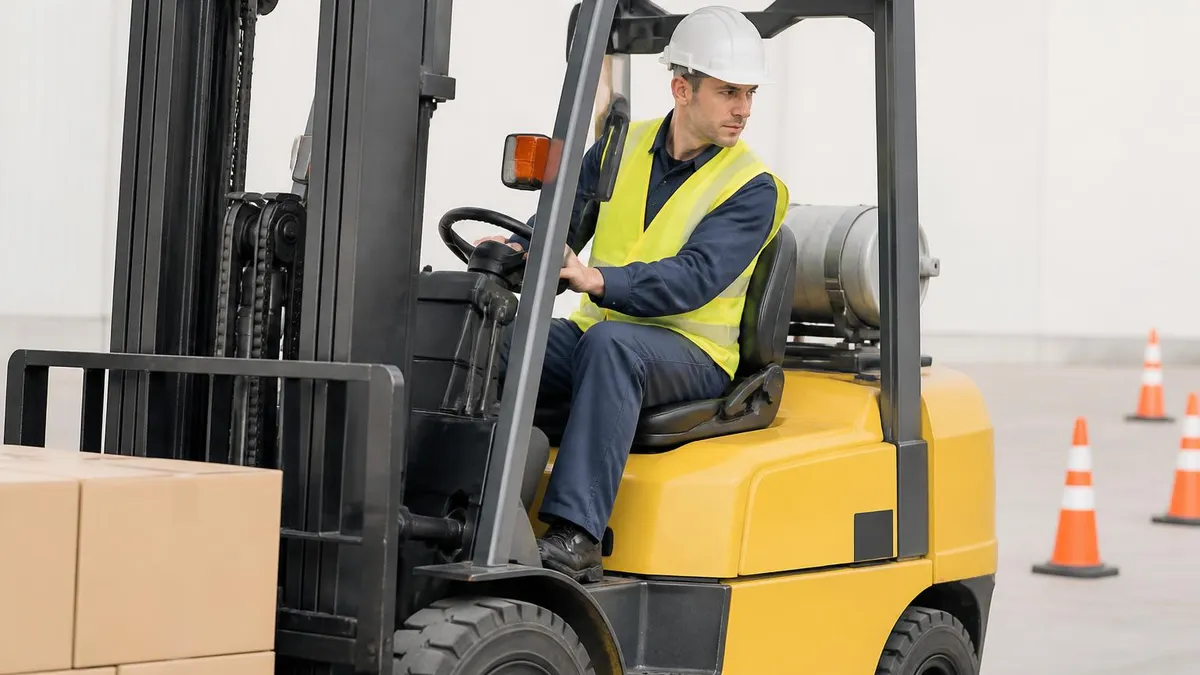
Forklift Rentals: Complete Guide to Pricing, Types, and Operator Requirements
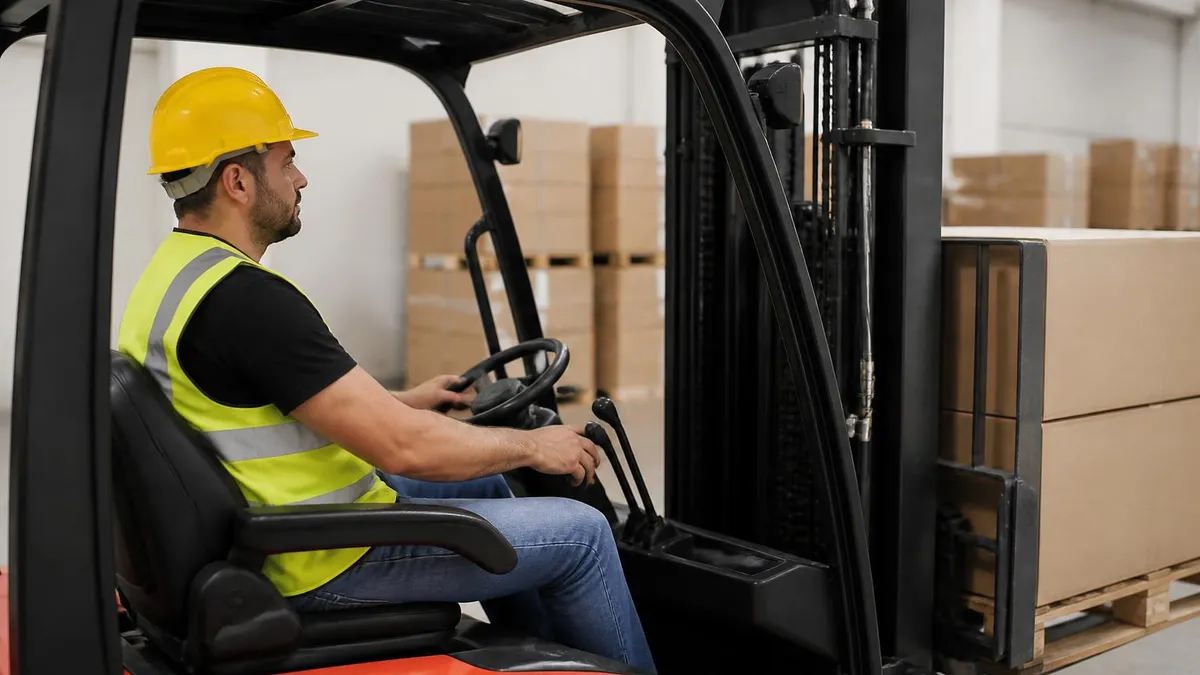
Forklift Hydraulic Fluid: Complete Guide to Types, Specifications, Change Intervals, and Troubleshooting for 2026
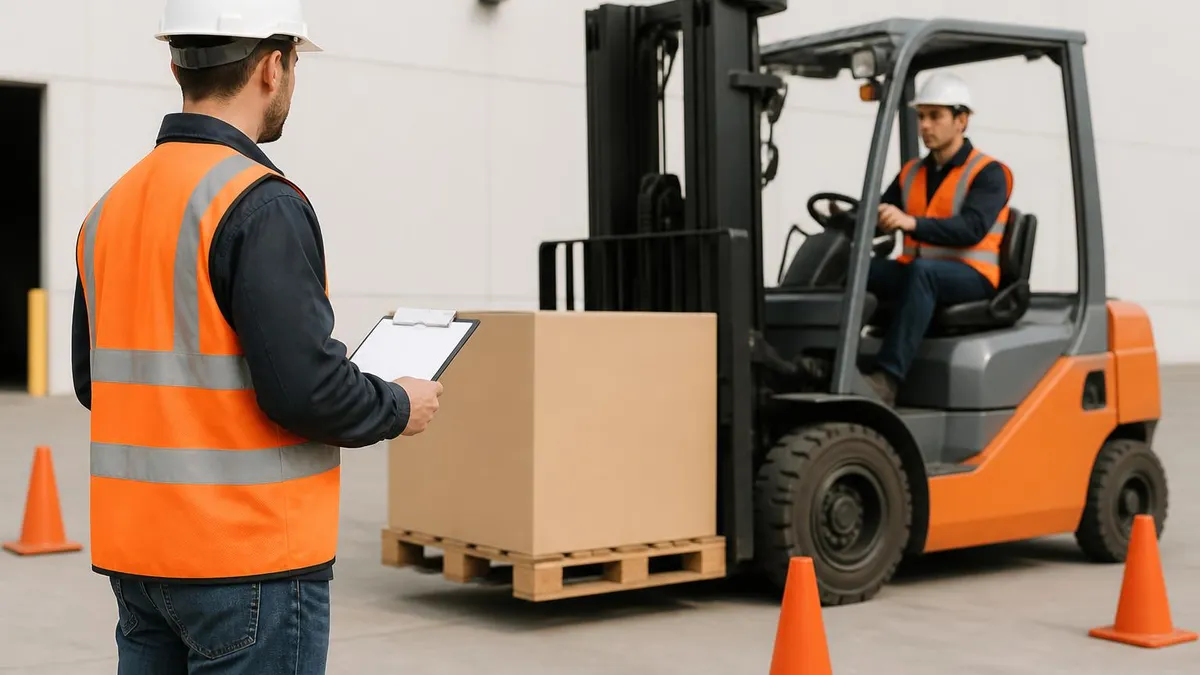
Forklift Parts and Maintenance: Complete Guide to Batteries, Chargers, and Replacement Components
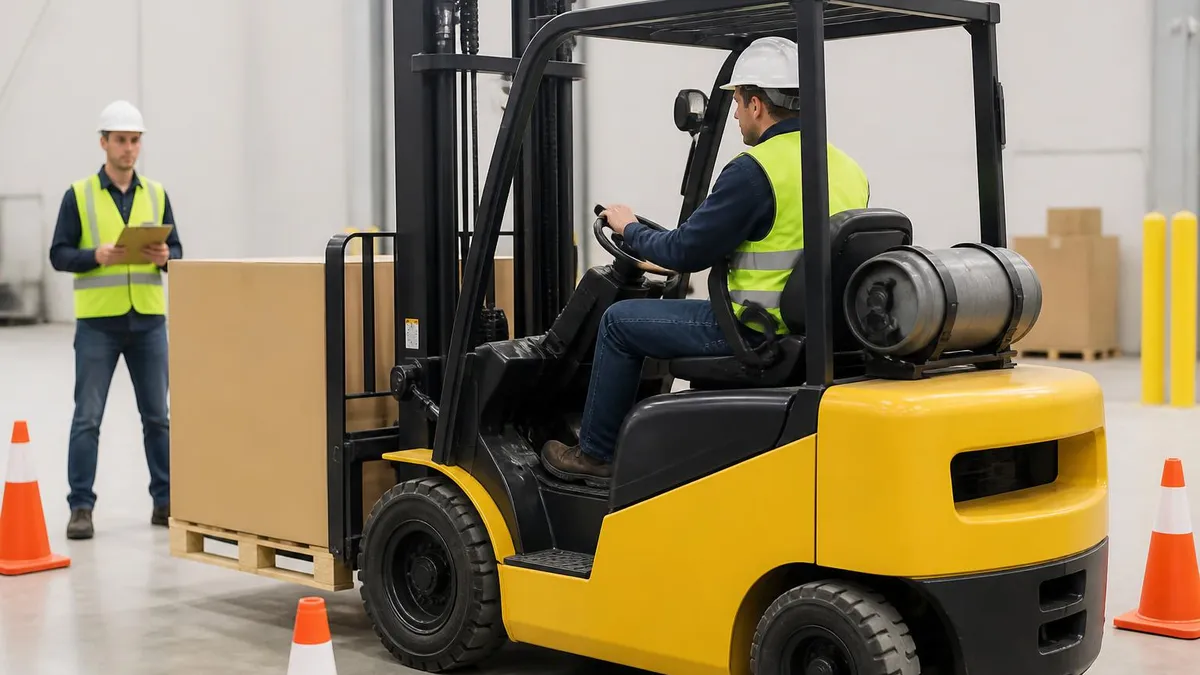
Big Forklift Guide: Heavy-Duty Lift Trucks, Capacity Classes, Rental Costs, and Operator Requirements
Forklift License Renewal: Complete Guide to Forklift License Expiry, OSHA Recertification, and Operator Requirements for 2026
About the Author

Certified Crane Operator & Skilled Trades Exam Specialist
Ferris State UniversityRobert Martinez is a Journeyman Ironworker, NCCCO-certified crane operator, and forklift trainer with a Bachelor of Science in Construction Technology from Ferris State University. He has 21 years of ironworking, rigging, and heavy equipment operation experience across high-rise and industrial construction sites. Robert prepares candidates for crane operator, rigger, forklift, and skilled trades certification examinations.