
Forklift Rental, Sales, and Operator Training: The Complete Guide to Equipment, Certification, and Industry Email Resources for 2026 September
Complete forklift rental, sales, training, and forklifts email resource guide covering OSHA certification, electric models, and operator requirements. 🔎
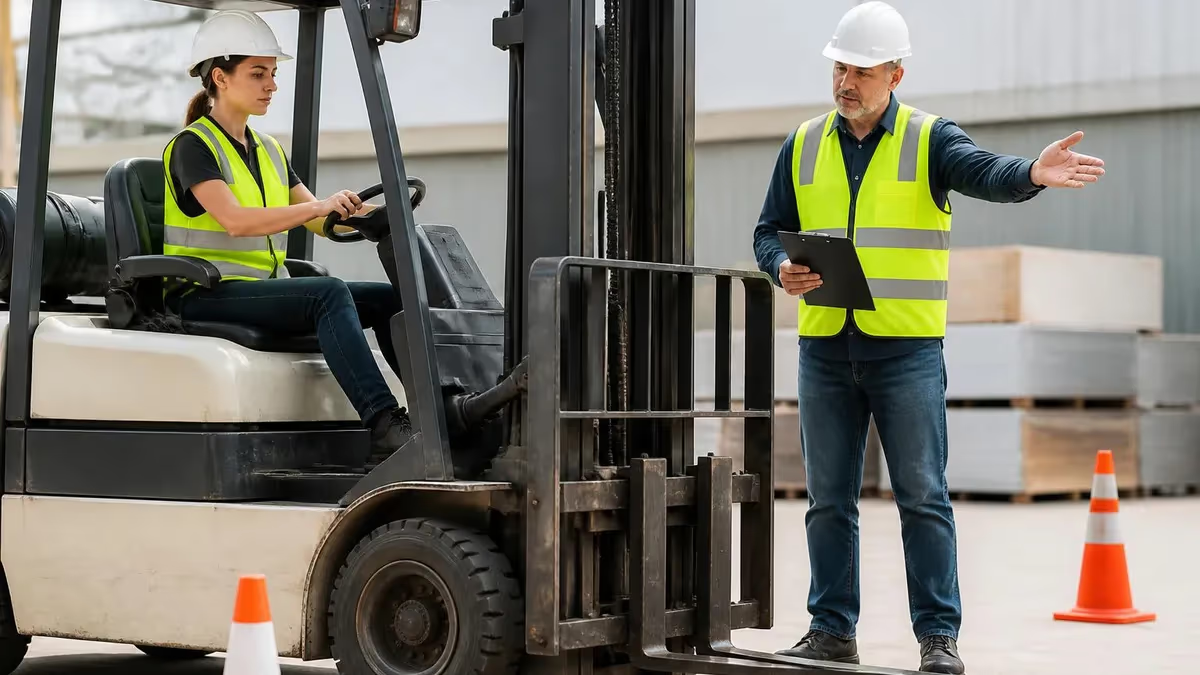
Whether you searched for forklift rental, forklifts for sale, or signed up for a forklifts email newsletter, you have landed on a guide built to answer the questions warehouse managers, fleet supervisors, and new operators ask every single day. The lift truck industry in the United States moves roughly $14 billion in equipment annually, and decisions about renting, buying, training, and maintaining these machines shape productivity, insurance costs, and worker safety outcomes for years. This guide covers all of it in plain language.
Forklifts come in dozens of configurations, including counterbalance, reach trucks, order pickers, pallet jacks, and rough terrain models. Choosing among them depends on your aisle width, ceiling height, load weight, indoor versus outdoor use, and the type of pallets or product you handle. A 5,000-pound capacity propane sit-down rider works for most warehouses, but a narrow distribution center may demand a 36-volt stand up forklift to fit 8-foot aisles and reach 25-foot racking systems efficiently.
Cost is the second decision driver. A new diesel lift truck sells for $35,000 to $60,000, while a comparable used unit runs $12,000 to $25,000. Forklift rental rates average $175 per day, $750 per week, and $2,200 per month, with delivery, fuel, and damage waiver fees often adding 15 to 25 percent. Renting makes sense for seasonal volume, project work, or while waiting on a new purchase order. Owning makes sense when daily utilization passes four hours.
Operator certification is non-negotiable. OSHA standard 1910.178(l) requires every powered industrial truck operator in the United States to complete formal training, hands-on evaluation, and a competency test before driving solo. Certifications expire after three years or sooner if the operator is involved in an accident, observed driving unsafely, or assigned to a different truck class. Many companies hire a forklift driver only after verifying current credentials and conducting their own site-specific evaluation.
Email lists matter more than you might expect. Equipment dealers, training schools, and manufacturers send monthly bulletins covering new model releases, recall notices, OSHA enforcement updates, rental promotions, and parts discounts. Subscribing to two or three reputable forklifts email lists keeps you ahead of regulatory changes and helps you spot equipment deals before they hit the public market. We will recommend specific lists later in this guide.
This article walks through equipment categories, rental versus purchase math, certification requirements, training program structure, common exam questions, daily inspection checklists, and a robust FAQ section. By the end, you should be able to choose the right truck, find a reputable trainer, pass your operator exam, and avoid the five most expensive mistakes new fleet owners make in their first year of operations.
If you are studying for a certification test or refreshing your knowledge before a recertification deadline, use the embedded practice quizzes throughout this guide. They mirror the actual question format used by ITSDF-aligned training providers and cover maintenance, inspection, load handling, and stability triangle scenarios that show up on most evaluations conducted across the United States today.
Forklift Industry by the Numbers

OSHA Forklift Classes and Equipment Categories
Sit-down and stand up forklift models powered by 36 to 80 volt battery packs. Ideal for indoor warehouses, food processing, and pharmaceutical facilities where zero emissions and quiet operation matter most for compliance.
Reach trucks and order pickers built for aisles under 10 feet wide. Common in high-density distribution centers running selective pallet racking up to 30 feet tall with advanced lift height precision.
Walkie and rider pallet trucks for ground-level loading dock work. The most common rental category, averaging $95 per day, and used heavily by retail backrooms and grocery distribution operations.
Internal combustion forklifts on solid cushion tires for smooth indoor surfaces. Propane is the most common fuel, offering quick refueling and consistent 8-hour shift performance for medium-volume manufacturing.
Diesel and gas forklifts with air-filled tires for outdoor lumber yards, ports, and construction sites. Capacities range from 3,000 to 36,000 pounds with rated lift heights to 25 feet.
Deciding between forklift rental and purchase comes down to utilization hours, capital budget, and how predictable your workload looks across the next 36 months. A finance team running a discounted cash flow model typically finds that owning beats renting once daily usage passes four hours, five days a week, for at least two years. Below that threshold, forklift rentals preserve cash, eliminate maintenance liability, and let you swap classes as demand changes.
Short term forklift rental near me searches dominate Google during seasonal peaks like back-to-school inventory pushes in July and holiday surges from October through December. Rental yards know this and raise daily rates 10 to 18 percent during those windows. If you can forecast a 90-day surge, lock in a monthly rental contract in August or September at standard rates rather than scrambling for daily units in November when local inventory thins out fast.
Purchasing a new electric forklift from a major dealer like Toyota, Hyster, Crown, or Raymond ranges from $28,000 for a 3,000-pound walkie rider to $55,000 for a 5,000-pound four-wheel sit-down. Add $6,500 to $9,000 for a lithium-ion battery upgrade and another $2,800 for an opportunity charger. Used forklifts from reconditioned dealers cost 40 to 60 percent less but typically come with shorter warranties, usually 90 days powertrain only.
Total cost of ownership over a seven-year hold is the figure that matters. For a $42,000 new electric forklift, expect roughly $18,000 in cumulative maintenance, $9,000 in battery replacements, $4,500 in tire changes, and $3,200 in operator training over that period. Compared to renting the same unit for seven years at $2,200 per month, ownership saves about $107,000. That gap closes quickly if utilization drops below three hours per day.
Lease-to-own financing splits the difference. Captive lender programs from manufacturers offer 60-month terms at 6.9 to 8.4 percent interest with $1 buyout options. Monthly payments on a $42,000 unit land near $830 with no down payment for qualified businesses. Many fleet managers prefer this structure because it preserves working capital, builds equity, and includes bundled maintenance contracts that cap surprise repair invoices at predictable monthly amounts.
Buying used forklifts for sale requires more diligence. Always request hour meter readings, hydraulic pressure test results, recent service records, and a 30-day return clause. Inspect mast channels for cracks, check fork heels for wear past the 10 percent rule, and verify that the data plate matches the serial number on the frame. A reputable used dealer will also include OSHA-compliant decals and an overhead guard certification letter for your records and audits.
One final consideration is parts and accessory availability. A great deal on an off-brand forklift becomes painful when a $400 alternator turns into a $1,400 special order with a six-week lead time. Stick with brands carried by at least two dealers within 100 miles. Browse community forklift resources and parts marketplaces to gauge availability before signing any purchase agreement on an unfamiliar make or model.

Forklift certification Practice Test Questions
Prepare for the Forklift certification Certification exam with our free practice test modules. Each quiz covers key topics to help you pass on your first try.
Forklift certification Certification Forkl...
Forklift certification Exam Questions covering Certification Forklift certification Maintenance and Repairs. Master Forklift certification Test concepts for certification prep.
Forklift certification Certification Forkl...
Free Forklift certification Practice Test featuring Certification Forklift certification Maintenance and Repairs Questions and Answers. Improve your Forklift certification Exam score with mock test prep.
Forklift certification Certification Forkl...
Forklift certification Mock Exam on Certification Forklift certification Operator Training and Certification Requirements. Forklift certification Study Guide questions to pass on your first try.
Forklift certification Certification Forkl...
Forklift certification Test Prep for Certification Forklift certification Operator Training and Certification Requirements Questions and Answers. Practice Forklift certification Quiz questions and boost your score.
Forklift certification Load Handling and S...
Forklift certification Questions and Answers on Load Handling and Stability. Free Forklift certification practice for exam readiness.
Forklift certification OSHA Regulations an...
Forklift certification Mock Test covering OSHA Regulations and Compliance. Online Forklift certification Test practice with instant feedback.
Forklift certification Pre-Operation Inspe...
Free Forklift certification Quiz on Pre-Operation Inspections. Forklift certification Exam prep questions with detailed explanations.
Forklift certification Refueling and Recha...
Forklift certification Practice Questions for Refueling and Recharging Procedures. Build confidence for your Forklift certification certification exam.
Forklift certification Safe Driving and Ma...
Forklift certification Test Online for Safe Driving and Maneuvering. Free practice with instant results and feedback.
Forklift certification Workplace Hazard Id...
Forklift certification Study Material on Workplace Hazard Identification. Prepare effectively with real exam-style questions.
Forklift certification Forklift Instructions
Free Forklift certification Test covering Forklift Instructions. Practice and track your Forklift certification exam readiness.
Forklift certification Forklift MCQ
Forklift certification Exam Questions covering Forklift MCQ. Master Forklift certification Test concepts for certification prep.
Forklift certification Forklift Employer R...
Free Forklift certification Practice Test featuring Forklift Employer Responsibilities. Improve your Forklift certification Exam score with mock test prep.
Forklift certification Forklift Penalties ...
Forklift certification Mock Exam on Forklift Penalties for Non-Compliance. Forklift certification Study Guide questions to pass on your first try.
Forklift Training and Certification of Forklift Operators
Initial forklift training under OSHA 1910.178(l)(2) combines three required components: formal classroom instruction, hands-on practical demonstration, and a workplace performance evaluation. The classroom portion covers stability triangles, load center mathematics, hazard recognition, and pre-shift inspection procedures. Most programs deliver this segment in four to six hours through a combination of slide presentations, video case studies, and instructor-led discussion of real warehouse incident reports from the past three years.
The practical portion requires the trainee to demonstrate competent operation under direct supervision, including starting procedures, traveling loaded and unloaded, stacking, retrieving, and parking the truck safely. The final workplace evaluation verifies the operator can perform job-specific tasks at their actual site. Total time investment averages eight hours for new operators and three hours for experienced operators changing equipment classes or job sites between employers across industries.
Renting Forklifts vs Buying Outright: Pros and Cons
- +No upfront capital investment, preserving cash for inventory and payroll needs
- +Maintenance, repairs, and parts are typically included in monthly rental contracts
- +Easy to swap equipment classes as workload demands change throughout the year
- +Delivery and pickup handled by the rental yard, reducing logistics coordination
- +Newer equipment with current safety features and lower emissions for compliance
- +Predictable monthly expense that simplifies budgeting and accounting forecasts
- +Insurance and damage waivers available for extra protection on rental contracts
- −Higher long-term cost when daily utilization passes four hours over multiple years
- −Limited customization options for attachments, lighting, or specialty fork sizes
- −Daily or weekly rentals often have minimum delivery fees of $150 to $300
- −Damage charges at return can be significant if pre-rental photos are not taken
- −Equipment availability shrinks during peak seasons like Q4 holiday inventory
- −No equity buildup or asset value to depreciate against business taxes
- −Operator must adapt to slightly different controls if the rental unit varies

Daily Pre-Shift Forklift Inspection Checklist
- ✓Walk around the truck and check for visible damage, leaks, or missing components
- ✓Verify all warning decals, capacity plates, and OSHA placards are readable and intact
- ✓Check tire condition for cuts, chunks missing, or excessive wear past the wear bar
- ✓Inspect forks for cracks at the heel, bent tips, or wear exceeding 10 percent
- ✓Test all lights including headlights, taillights, blue spot, and turn signals if equipped
- ✓Verify horn, backup alarm, and reverse beeper function correctly before any movement
- ✓Check hydraulic fluid, engine oil, coolant, and battery electrolyte at the start of shift
- ✓Test service brake, parking brake, and steering response in a clear area
- ✓Operate mast through full lift, lower, tilt forward, and tilt back functions safely
- ✓Document the inspection on the official daily log and report any defects to supervisor
Daily inspections are legally required, not optional
OSHA 1910.178(q)(7) mandates that powered industrial trucks be examined at least daily before being placed in service. Skipping the inspection is the single most common citation issued during forklift compliance audits. Documentation must be retained for the current shift at minimum, and many employers keep records for 12 months to defend against incident investigations and insurance claims.
Forklift safety in the United States is governed primarily by OSHA standard 1910.178, which covers powered industrial trucks across general industry, construction, and maritime applications. The standard runs nearly 40 pages and addresses operator training, vehicle modifications, fuel handling, battery charging, maintenance schedules, and operational restrictions. Every employer that uses lift trucks is expected to maintain a written safety program, conduct documented training, and perform regular workplace inspections to identify and correct hazards.
The Bureau of Labor Statistics records approximately 85 forklift-related fatalities and 34,900 serious injuries each year in the United States. Roughly 42 percent of fatalities involve a tip-over, 25 percent involve a pedestrian struck by the truck, and 11 percent involve falling loads. These statistics have remained stubbornly consistent over the past decade despite improvements in equipment design, suggesting that operator behavior and workplace layout remain the most influential variables in incident prevention strategies.
Site-specific training is just as important as the OSHA-required core curriculum. Each warehouse has unique hazards: blind intersections, loading dock edges, ramp grades, overhead obstructions, narrow aisles, and pedestrian traffic patterns. A competent forklift operator should walk the entire facility with a supervisor during onboarding to identify high-risk zones, understand pedestrian flow, locate emergency stops, and verify the location of fire extinguishers, first aid kits, and eyewash stations relative to charging areas.
Pedestrian safety deserves special attention. Roughly 20 percent of forklift incidents in distribution centers involve a worker on foot. Effective programs combine engineering controls like painted walkways, physical barriers, and convex mirrors with administrative controls like horn-at-intersection rules and high-visibility vest requirements. Newer technology including pedestrian proximity detection systems and blue spotlight projectors has reduced struck-by incidents by 35 to 50 percent at facilities that have invested in the upgrades in measured pilots.
Battery charging safety is another high-risk area frequently overlooked. Lead-acid batteries release hydrogen gas during charging, which can accumulate to explosive levels in poorly ventilated rooms. Charging areas must have eyewash stations within 25 feet, signage prohibiting smoking and open flames, and ventilation rated to keep hydrogen concentration below one percent of the lower explosive limit. Lithium-ion batteries eliminate the hydrogen risk but introduce thermal runaway hazards requiring different fire suppression strategies and storage protocols.
Fall protection during elevated work requires extra planning. Workers riding on forks or in a poorly secured platform face fall risks that have killed 14 to 22 workers annually over the past decade. OSHA permits the use of approved work platforms with secondary safety chains, fall arrest anchor points, and a dedicated spotter. Any platform must be designed for the specific truck capacity, properly secured to the forks or carriage, and rated by a qualified engineer for the load being lifted.
Documentation closes the safety loop. Every incident, near miss, training event, and inspection must be logged with date, personnel involved, equipment serial numbers, and corrective actions taken. Insurance carriers increasingly require digital safety management systems and offer premium discounts of 8 to 15 percent for employers using telematics-enabled lift trucks. Programs that track operator behavior, impact events, and inspection compliance pay for themselves within 18 to 24 months at most facilities.
OSHA 1910.178(a)(4) explicitly prohibits modifications affecting capacity or safe operation without prior written approval from the manufacturer. Adding extended forks, counterweight changes, or attachments without an updated data plate can void insurance coverage and trigger citations of $15,000 per instance. Always document approvals and update the truck capacity plate to reflect any change made to the lifting configuration.
Forklift maintenance directly drives total ownership cost, operator safety, and equipment availability. A well-maintained 5,000-pound propane sit-down rider delivers 12,000 to 18,000 service hours before major rebuild, while a neglected unit may need a $9,000 powertrain overhaul at 7,000 hours. The single most influential maintenance variable is consistency: scheduled preventive service every 250 hours catches developing problems before they become safety incidents or expensive emergency repairs that idle the entire operation.
Preventive maintenance schedules are published by every manufacturer in the operator and service manual. The 250-hour interval typically includes engine oil and filter changes, hydraulic filter inspection, brake adjustment, mast chain lubrication, and a complete fluid level check. The 1,000-hour service adds spark plug replacement on propane units, hydraulic fluid change, differential service, and transmission inspection. The 2,000-hour service is the major one, often including water pump, alternator, and timing belt service as preventive replacements.
Tires are the most frequently replaced wear item on any lift truck fleet. A typical solid pneumatic tire lasts 2,500 to 4,000 service hours depending on surface conditions, load weights, and operator habits. Cushion tires on smooth indoor surfaces last longer, often 4,500 to 6,000 hours. Replacement costs range from $185 per tire for small cushion units to $850 per tire for large pneumatic outdoor models. A complete set of four can run between $750 and $3,400 plus mounting labor.
Battery health on electric forklifts is the second largest lifecycle expense. A lead-acid traction battery costs $4,500 to $9,500 and typically lasts 1,200 to 1,500 charge cycles when properly maintained. Watering schedules, equalization charges, and avoiding deep discharges below 20 percent state of charge all extend battery life significantly. Lithium-ion batteries cost two to three times more upfront but deliver 3,000 to 5,000 cycles and require no watering, making them increasingly popular for multi-shift operations.
Hydraulic system care prevents the most expensive failures in the entire truck. Contaminated hydraulic fluid is the leading cause of pump, cylinder, and valve failures, which can cost $3,500 to $8,000 to repair. Fluid sampling every 1,000 hours identifies contamination, water intrusion, and metal particulate before damage compounds. Reputable service providers include free sampling with annual service contracts, and the lab reports give fleet managers data-driven evidence of equipment condition for budgeting and capital planning decisions.
Telematics systems have transformed maintenance from a calendar-based to a condition-based discipline. Modern fleet management platforms from Crown, Toyota, Hyster, and aftermarket vendors like PowerFleet track engine hours, impact events, fuel consumption, operator login, and fault codes in real time. Average ROI on a $1,200 per truck telematics installation is 14 months through reduced damage, lower fuel use, and better scheduled maintenance compliance across the entire fleet. Pair this with a reliable lull forklift service partner for specialty equipment coverage.
End-of-life decisions matter too. A forklift with 18,000 hours and $14,000 in deferred maintenance often has more value as a parts donor than as an operating asset. Reputable dealers offer trade-in credits of $2,500 to $6,500 for older units against new equipment purchases, and scrap value for a complete forklift averages $1,100 to $1,800 depending on weight and current steel market pricing. Plan replacement cycles in advance to avoid being forced into emergency rentals at peak rates.
Final preparation for a forklift certification exam or new equipment purchase comes down to combining classroom knowledge with realistic hands-on rehearsal. The most common reason candidates fail the practical evaluation is poor load handling, especially on the stability triangle and load center math questions. Spend at least two hours practicing the formula for shifted load centers and how additional inches forward of the standard 24-inch center reduce the truck capacity by a measurable percentage.
Subscribe to two or three reputable forklifts email lists. The Industrial Truck Association sends a monthly bulletin covering regulatory updates, recall notices, and safety alerts. OSHA QuickTakes is free and delivers enforcement summaries every two weeks. Dealer newsletters from Toyota, Crown, and Raymond often include exclusive promotions, used equipment listings, and parts discounts that are never published publicly. A single email subscription has saved many fleet managers thousands on a timely purchase.
Build a personal study plan before any certification deadline. Allow two weeks of 30-minute daily sessions covering one topic per day: stability, inspection, load handling, pedestrian safety, battery maintenance, regulations, and emergency procedures. Use the practice quizzes embedded in this article to test retention, and track your accuracy by topic. Areas scoring below 80 percent need extra review before the test date. This approach consistently produces first-attempt pass rates above 92 percent.
Choose your training provider carefully. Look for OSHA-aligned curriculum, hands-on evaluation at your actual worksite, certified evaluators with at least five years of industry experience, and clear documentation including a wallet card and digital record. Avoid online-only providers that promise instant certification without an in-person evaluation, because those certificates do not satisfy federal requirements. Reputable schools also offer free recertification reminders three months before your expiration date for added convenience.
Build relationships with two rental yards in your area. Even if you primarily own your fleet, having pre-negotiated rental terms for surge capacity, breakdowns, or special applications saves time and money during emergencies. Establish a corporate account, complete the credit application in advance, and document your insurance certificate of coverage. When you need a truck on Monday morning, the paperwork should already be done and delivery can happen within hours rather than days.
Always inspect forklifts for sale before any purchase, regardless of dealer reputation. Bring a checklist, request maintenance records, check the hour meter against the wear patterns on tires and forks, verify the data plate matches the serial number, and test every hydraulic function under load. If the dealer refuses any of these requests, walk away. A reputable seller welcomes inspection and may even pay for an independent third-party evaluation to close the sale, because confidence in equipment condition translates directly into closed transactions.
Finally, invest in your operators beyond the minimum required training. Advanced courses in narrow aisle techniques, attachment use, defensive driving, and load securement reduce damage, increase throughput, and improve retention. The average cost of a workplace forklift incident is $48,000 when medical, property damage, lost productivity, and insurance increases are combined. A $400 advanced training course pays for itself many times over the first prevented incident, and well-trained operators are statistically far less likely to leave for competing employers. Check forklifts for sale safety resources for ongoing operator development materials.
Forklift Questions and Answers
Forklift Tires: Complete Guide to Types, Sizing, Wear Patterns, and Replacement Costs
Forklift Accessories: Complete Guide to LED Lights, Attachments, Safety Gear, and Productivity Upgrades for 2026
Forklift License Renewal: Complete Guide to Forklift License Expiry, OSHA Recertification, and Operator Requirements for 2026
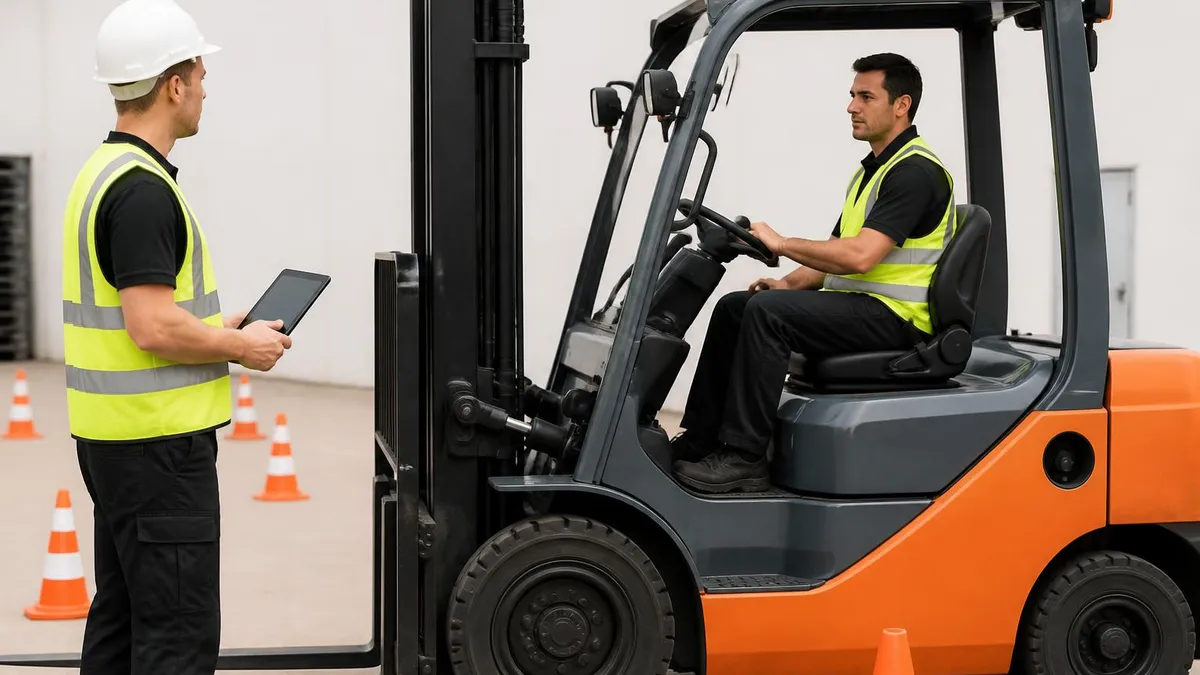
Forklift Safety Training: Complete OSHA Compliance Guide for Operators and Employers
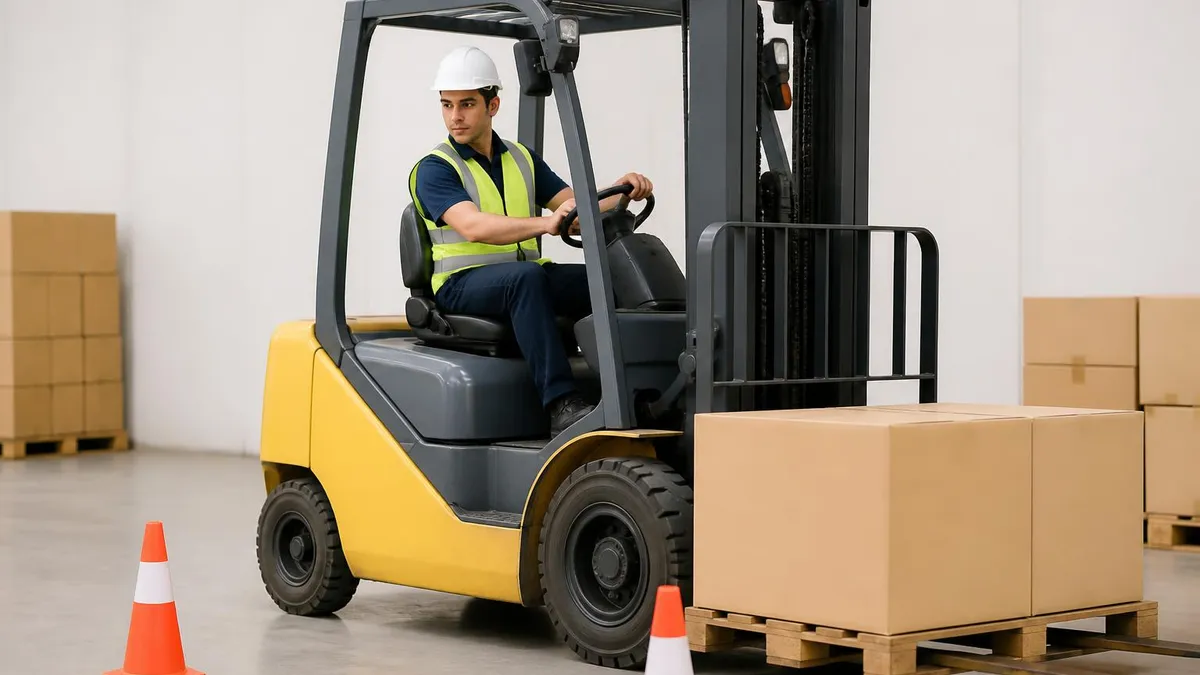
Forklift Repair Service: Complete Guide to Costs, Common Repairs, and Choosing the Right Technician
About the Author

Certified Crane Operator & Skilled Trades Exam Specialist
Ferris State UniversityRobert Martinez is a Journeyman Ironworker, NCCCO-certified crane operator, and forklift trainer with a Bachelor of Science in Construction Technology from Ferris State University. He has 21 years of ironworking, rigging, and heavy equipment operation experience across high-rise and industrial construction sites. Robert prepares candidates for crane operator, rigger, forklift, and skilled trades certification examinations.