
Forklift Safety Resources: Essential Banners, Training Materials, and Workplace Compliance Tools
⏳ Discover forklift safety banners, rental options, training resources, and operator certification guides to keep your warehouse compliant and accident-free.
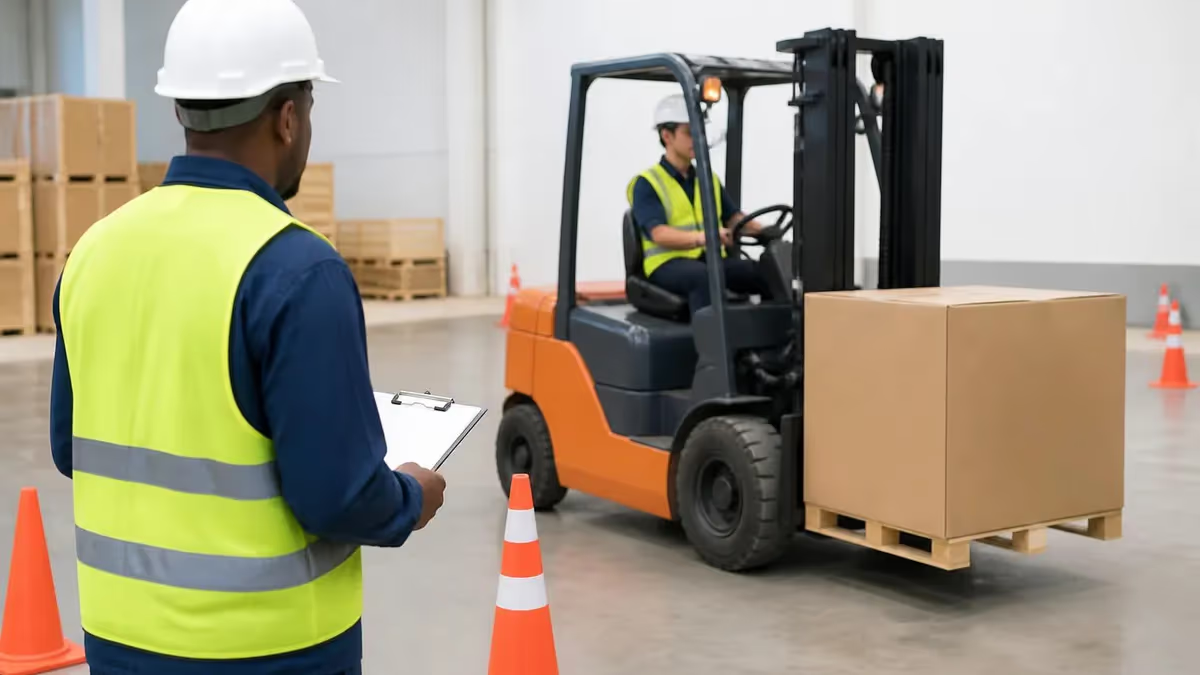
Whether you manage a busy distribution center or oversee a small construction site, forklift safety banners serve as constant visual reminders that protect workers from preventable injuries every single shift. These banners, combined with proper forklift rental agreements, comprehensive training programs, and regularly updated safety materials, form the foundation of any effective workplace safety culture. In the United States alone, OSHA reports roughly 85 forklift-related fatalities and nearly 35,000 serious injuries each year, making proactive safety communication absolutely critical for every employer who operates powered industrial trucks.
Forklift rental companies have increasingly bundled safety resources into their service packages, recognizing that customers need more than just equipment delivery. When you search for forklift rental near me, you will find that many dealers now offer complimentary safety posters, laminated inspection checklists, and digital training modules alongside the physical equipment. This trend reflects growing awareness that operators who see daily safety messaging are statistically less likely to take shortcuts that lead to tip-overs, pedestrian strikes, or load-handling failures that cause devastating workplace accidents.
The certification of forklift operators remains the single most important safety measure any facility can implement. OSHA standard 29 CFR 1910.178 mandates that every forklift operator receive formal instruction, practical training, and performance evaluation before operating equipment independently. Safety banners reinforce these training concepts by displaying critical reminders about speed limits, load capacity calculations, right-of-way rules, and proper horn usage at intersections where visibility is limited and pedestrian traffic is heaviest throughout the workday.
Modern forklifts come equipped with advanced safety features including automatic speed governors, proximity sensors, blue spot warning lights, and rear-view camera systems that reduce blind-spot accidents considerably. However, technology alone cannot replace a safety-first culture that starts with visible commitment from management. Posting forklift safety banners in high-traffic areas, break rooms, and near charging stations demonstrates organizational dedication to protecting every person who enters the facility regardless of their role or experience level.
Electric forklift adoption has grown substantially because these machines produce zero emissions, operate more quietly, and require less maintenance than internal combustion models. Facilities transitioning to electric forklifts need updated safety resources addressing battery charging hazards, hydrogen gas ventilation requirements, and proper watering procedures for lead-acid batteries. Safety banners specific to charging areas prevent fires and chemical burns that occur when operators ignore established protocols for connecting and disconnecting battery charging equipment.
Stand up forklift operators face unique ergonomic and safety challenges because they remain standing throughout their entire shift while maneuvering in tight spaces. Dedicated safety banners for stand up forklift areas should address proper mounting and dismounting techniques, overhead clearance awareness, and the increased tip-over risk when turning at speed. These specialized resources acknowledge that different equipment types demand different safety messaging rather than generic one-size-fits-all signage that operators eventually learn to ignore completely.
Throughout this comprehensive guide, you will discover exactly which safety resources your facility needs, where to source high-quality banners and training materials, how to implement an effective visual safety communication program, and what OSHA inspectors specifically look for during surprise audits. Every recommendation aligns with current federal regulations and incorporates best practices from facilities that have achieved zero lost-time incident records through dedicated commitment to continuous safety improvement and worker education programs.
Forklift Safety by the Numbers

Types of Forklift Safety Banners and Signage
Bright yellow or red banners alerting workers to specific dangers like overhead obstructions, narrow aisles, pedestrian crossings, and maximum load capacity zones requiring immediate attention.
Step-by-step visual guides showing proper pre-shift inspection sequences, safe parking procedures, correct load stacking methods, and emergency shutdown protocols for new and experienced operators.
OSHA-mandated signs displaying speed limits, authorized operator only notices, no-ride zones, and required personal protective equipment specifications meeting ANSI Z535 color and symbol standards.
Positive reinforcement displays tracking consecutive days without incidents, celebrating safety milestones, and encouraging workers to report hazards before they cause injuries or equipment damage.
Critical information banners showing evacuation routes, fire extinguisher locations, spill kit positions, first aid station directions, and emergency contact numbers clearly visible from operating positions.
Forklift training resources have evolved dramatically from the simple classroom lectures and VHS tapes that characterized operator education programs throughout the nineteen nineties. Today, comprehensive training combines interactive computer-based modules, virtual reality simulations, hands-on driving evaluations, and ongoing refresher courses that keep operators current on evolving regulations and equipment technologies. The best programs integrate safety banner messaging directly into training curricula so operators recognize and respond appropriately to every sign posted throughout their facility.
Every forklift operator must complete three distinct training phases before receiving authorization to drive independently. Formal instruction covers operating principles, equipment-specific controls, load handling physics, and workplace hazard recognition through classroom or online presentations. Practical training provides supervised hands-on experience with the actual equipment in the actual workplace environment where the operator will work daily. Performance evaluation requires a qualified trainer to observe and document that the operator can safely handle every situation they might reasonably encounter during normal operations.
Free forklift training resources exist through multiple channels that budget-conscious operations should explore thoroughly before spending money unnecessarily. OSHA provides free educational materials, fact sheets, and training guidelines on their official website that cover every aspect of powered industrial truck safety. Equipment manufacturers often include operator training videos and safety posters with equipment purchases or forklift rentals, providing facility-specific content that directly addresses the machines your workers actually operate every day without additional expense.
The forklift operator role demands continuous education beyond initial certification because workplace conditions, equipment configurations, and regulatory requirements change over time. OSHA requires evaluation and potential retraining whenever an operator is observed operating unsafely, is involved in an accident or near-miss, receives a different equipment type assignment, or when workplace conditions change significantly enough to affect safe operation. Facilities posting safety banners near training areas reinforce that learning never stops for professional operators.
Digital training platforms now offer subscription-based forklift training programs that automatically track completion dates, schedule renewal reminders, and generate compliance documentation ready for OSHA inspection. These systems typically cost between forty and one hundred fifty dollars per operator annually and include multilingual content, competency assessments, and printable certificates. Many platforms also provide downloadable safety banner templates and poster designs that facilities can print locally and customize with site-specific information and corporate branding elements.
Simulator training has become increasingly accessible for operations that want to evaluate operator skills without risking expensive equipment damage or worker injuries during the learning process. Modern forklift simulators accurately replicate controls, visibility limitations, load dynamics, and environmental hazards including wet floors, uneven surfaces, and pedestrian traffic patterns. Operators who train on simulators before touching real equipment demonstrate measurably better spatial awareness and make fewer critical errors during their first weeks of independent operation.
Peer-to-peer training and mentorship programs complement formal instruction by pairing experienced operators with newer workers for ongoing guidance and support. Senior operators who serve as safety mentors often identify subtle bad habits that formal evaluations miss because they observe daily behaviors over extended periods rather than during single evaluation sessions. Facilities that formalize mentorship through posted banner programs recognizing safety mentors create positive cultural reinforcement that motivates continued participation from experienced team members.
Forklift certification Practice Test Questions
Prepare for the Forklift certification Certification exam with our free practice test modules. Each quiz covers key topics to help you pass on your first try.
Forklift certification Certification Forkl...
Forklift certification Exam Questions covering Certification Forklift certification Maintenance and Repairs. Master Forklift certification Test concepts for certification prep.
Forklift certification Certification Forkl...
Free Forklift certification Practice Test featuring Certification Forklift certification Maintenance and Repairs Questions and Answers. Improve your Forklift certification Exam score with mock test prep.
Forklift certification Certification Forkl...
Forklift certification Mock Exam on Certification Forklift certification Operator Training and Certification Requirements. Forklift certification Study Guide questions to pass on your first try.
Forklift certification Certification Forkl...
Forklift certification Test Prep for Certification Forklift certification Operator Training and Certification Requirements Questions and Answers. Practice Forklift certification Quiz questions and boost your score.
Forklift certification Load Handling and S...
Forklift certification Questions and Answers on Load Handling and Stability. Free Forklift certification practice for exam readiness.
Forklift certification OSHA Regulations an...
Forklift certification Mock Test covering OSHA Regulations and Compliance. Online Forklift certification Test practice with instant feedback.
Forklift certification Pre-Operation Inspe...
Free Forklift certification Quiz on Pre-Operation Inspections. Forklift certification Exam prep questions with detailed explanations.
Forklift certification Refueling and Recha...
Forklift certification Practice Questions for Refueling and Recharging Procedures. Build confidence for your Forklift certification certification exam.
Forklift certification Safe Driving and Ma...
Forklift certification Test Online for Safe Driving and Maneuvering. Free practice with instant results and feedback.
Forklift certification Workplace Hazard Id...
Forklift certification Study Material on Workplace Hazard Identification. Prepare effectively with real exam-style questions.
Forklift certification Forklift Instructions
Free Forklift certification Test covering Forklift Instructions. Practice and track your Forklift certification exam readiness.
Forklift certification Forklift MCQ
Forklift certification Exam Questions covering Forklift MCQ. Master Forklift certification Test concepts for certification prep.
Forklift certification Forklift Employer R...
Free Forklift certification Practice Test featuring Forklift Employer Responsibilities. Improve your Forklift certification Exam score with mock test prep.
Forklift certification Forklift Penalties ...
Forklift certification Mock Exam on Forklift Penalties for Non-Compliance. Forklift certification Study Guide questions to pass on your first try.
Electric Forklift vs Internal Combustion Safety Considerations
Electric forklift operations require dedicated charging station safety banners addressing hydrogen gas accumulation risks, proper ventilation requirements, and correct connection procedures that prevent arc flash injuries. Charging areas must display clear signage prohibiting open flames, smoking, and metal tools near battery terminals where short circuits could cause explosions or severe chemical burns to unprotected workers nearby.
Battery maintenance for electric forklifts presents unique hazards including sulfuric acid exposure, heavy lifting injuries during battery swaps, and electrical shock risks when working on high-voltage systems. Safety banners in battery rooms must specify required personal protective equipment including face shields, rubber gloves, and acid-resistant aprons while reminding operators to use designated eyewash stations immediately if contact occurs during routine watering or equalization charging procedures.

Investing in Comprehensive Forklift Safety Resources
- +Reduces workplace injuries by up to seventy percent when consistently implemented
- +Lowers workers compensation insurance premiums through documented safety programs
- +Satisfies OSHA compliance requirements and avoids citations averaging thirteen thousand dollars each
- +Increases operator confidence and productivity through clear visual communication
- +Extends equipment lifespan by promoting proper operation and maintenance habits
- +Creates positive workplace culture attracting skilled forklift operators to your facility
- −Initial investment ranges from two to fifteen thousand dollars for comprehensive programs
- −Requires dedicated staff time for installation, maintenance, and regular content updates
- −Banners lose effectiveness when workers become desensitized to unchanged messaging over time
- −Multilingual facilities need translated materials doubling or tripling printing costs
- −Some workers perceive excessive signage as management distrust rather than genuine concern
- −Outdoor banners require weather-resistant materials and frequent replacement from UV damage
Pros and Cons at a Glance
| Pros | Cons |
|---|---|
| Reduces workplace injuries by up to seventy percent when consistently implemented | Initial investment ranges from two to fifteen thousand dollars for comprehensive programs |
| Lowers workers compensation insurance premiums through documented safety programs | Requires dedicated staff time for installation, maintenance, and regular content updates |
| Satisfies OSHA compliance requirements and avoids citations averaging thirteen thousand dollars each | Banners lose effectiveness when workers become desensitized to unchanged messaging over time |
| Increases operator confidence and productivity through clear visual communication | Multilingual facilities need translated materials doubling or tripling printing costs |
| Extends equipment lifespan by promoting proper operation and maintenance habits | Some workers perceive excessive signage as management distrust rather than genuine concern |
| Creates positive workplace culture attracting skilled forklift operators to your facility | Outdoor banners require weather-resistant materials and frequent replacement from UV damage |
Daily Forklift Safety Inspection Checklist
- ✓Verify all safety banners and warning signs are visible, undamaged, and properly positioned before shift begins
- ✓Check tire condition for cuts, chunking, flat spots, and proper inflation on pneumatic models
- ✓Test horn, backup alarm, lights, and all audible and visual warning devices for proper function
- ✓Inspect forks for cracks, bends, heel wear exceeding ten percent, and proper locking pin engagement
- ✓Confirm hydraulic system shows no leaks at cylinders, hoses, connections, or reservoir levels
- ✓Test service brake, parking brake, and deadman switch for proper engagement and holding ability
- ✓Verify overhead guard is secure with no cracks, loose bolts, or structural damage present
- ✓Check fluid levels including engine oil, coolant, hydraulic fluid, and battery electrolyte as applicable
- ✓Ensure seatbelt or operator restraint system latches securely and retracts without binding
- ✓Confirm load capacity plate is legible, current, and matches any installed attachment configurations
One Simple Change Cuts Accidents by 40%
Research from the National Safety Council shows that facilities implementing visual safety communication programs including strategically placed forklift safety banners experience a forty percent reduction in material handling incidents within the first twelve months. The key is rotating banner messaging quarterly to prevent habituation and combining visual cues with brief daily safety huddles lasting under five minutes.
Budgeting for forklift safety resources requires understanding both direct costs and the substantial return on investment that comprehensive programs deliver over time. A complete safety banner program for a medium-sized warehouse typically costs between two thousand and eight thousand dollars initially, covering design, printing, mounting hardware, and professional installation. This investment pales compared to the average direct cost of a single forklift accident, which OSHA estimates at thirty-eight thousand dollars before considering indirect costs like production downtime and replacement worker training expenses.
Forklift for sale listings often include safety accessories and resource packages when dealers want to differentiate their offerings from competitors in crowded markets. Purchasing forklifts rather than renting makes economic sense for operations running equipment more than fifteen hundred hours annually, and buyers should negotiate safety resource packages into purchase agreements. Smart buyers request operator training materials, safety poster sets, inspection checklist pads, and digital maintenance tracking subscriptions as purchase incentives that dealers readily provide to close sales.
Forklift rentals typically range from one hundred fifty to five hundred dollars daily depending on capacity, fuel type, and attachment requirements for specific applications. Rental agreements increasingly include safety compliance packages because rental companies face liability exposure when customers operate equipment unsafely and cause injuries attributable to inadequate training or missing safety signage. Requesting comprehensive safety materials with every forklift rental protects both parties and ensures temporary equipment additions receive the same safety treatment as permanent fleet units.
Insurance carriers offer premium discounts ranging from five to twenty percent for facilities demonstrating documented safety programs that include posted safety communications, regular training records, and equipment inspection logs. These savings compound annually and often exceed the total cost of safety resource programs within the first two years of implementation. Contact your workers compensation carrier specifically and request their safety program discount requirements because documentation standards vary significantly between insurance providers serving the material handling industry.
Government grants and safety consultation programs provide additional funding pathways for smaller operations that struggle to finance comprehensive safety programs independently. OSHA On-Site Consultation programs offer free confidential safety assessments and improvement recommendations without any risk of citations or penalties during the consultation visit. State workforce development agencies occasionally fund safety training initiatives for industries with high injury rates, and forklift operations frequently qualify for these competitive grant programs when applications emphasize injury prevention outcomes.
Calculating return on investment for safety banner programs requires tracking both leading indicators like near-miss reports and inspection compliance rates alongside lagging indicators including injury frequency, severity rates, and associated costs over time. Facilities that track these metrics consistently demonstrate clear financial benefits justifying continued investment in updated safety resources and expanded communication programs. The most successful operations allocate between two and four percent of their annual operating budget specifically to safety program maintenance and improvement activities.
Cost-effective alternatives to professionally printed banners include digital signage systems that display rotating safety messages on monitors mounted throughout the facility without requiring physical replacement when content needs updating. Digital systems cost more initially but eliminate recurring printing expenses and allow real-time message changes responding to specific hazards, weather conditions, or operational changes. Many facilities use hybrid approaches combining permanent regulatory signage with digital systems for rotating motivational and awareness messaging throughout their operations.

Failure to post required safety signs including forklift operating rules, speed limits, and pedestrian warnings constitutes a serious OSHA violation carrying fines up to fifteen thousand six hundred twenty-five dollars per instance. Repeat violations discovered within five years of a previous citation can result in penalties up to one hundred fifty-six thousand two hundred fifty-nine dollars. Schedule quarterly signage audits to ensure all required postings remain visible and legible.
Building a genuine safety culture extends far beyond posting forklift safety banners on warehouse walls because true cultural change requires consistent leadership commitment, worker engagement, and accountability systems that reinforce safe behaviors daily. Organizations where safety culture genuinely thrives share common characteristics including management that prioritizes safety over production pressure, workers who feel enabled to stop unsafe operations without fear of retaliation, and reporting systems that treat near-misses as learning opportunities rather than blame assignments.
Forklift operator engagement in safety program development dramatically increases compliance because workers who help create rules and select safety messaging feel genuine ownership over outcomes. Invite experienced operators to review banner designs before printing, suggest optimal placement locations based on their daily traffic patterns, and identify specific hazards that current signage fails to address adequately. This participatory approach costs nothing additional but consistently produces better results than top-down mandates that workers perceive as disconnected from operational realities.
Safety committees combining management representatives, forklift operators, maintenance technicians, and warehouse associates provide diverse perspectives that improve program effectiveness considerably. Effective committees meet monthly, review incident and near-miss data, conduct facility walkthroughs evaluating safety communication adequacy, and recommend improvements with assigned deadlines and responsible parties. Posting committee meeting summaries on bulletin boards near safety banners demonstrates transparency and shows all workers that their concerns receive genuine attention from decision makers.
Recognition programs celebrating safe behaviors motivate continued compliance more effectively than punishment-based approaches that create fear and discourage honest reporting. Consider implementing programs that publicly acknowledge operators completing one thousand hours without incidents, teams achieving quarterly safety goals, and individuals who identify and report hazards before injuries occur. Safety banner displays tracking team achievements create healthy competition between shifts and departments while reinforcing that management genuinely values worker safety over production metrics alone.
Technology integration enhances traditional safety banner programs through QR codes linking to training videos, augmented reality applications overlaying safety information on equipment, and IoT sensors triggering automated warnings when speed limits or proximity boundaries are violated. These modern approaches supplement rather than replace physical signage because digital systems can fail during power outages or network disruptions when physical banners continue communicating critical safety information regardless of technological conditions affecting electronic systems throughout the facility.
Measuring safety culture maturity requires honest assessment using established frameworks like the Bradley Curve or DuPont Safety Culture model that categorize organizations from reactive through interdependent safety stages. Facilities at reactive stages rely primarily on compliance-driven signage and enforcement while interdependent organizations demonstrate workers actively looking after each other's safety without management prompting. Your current banner program should reflect your cultural maturity level while gradually introducing messaging that advances workers toward greater personal responsibility and peer accountability over time.
Annual safety resource audits ensure your forklift safety banner program remains current, effective, and compliant with evolving regulations that OSHA updates periodically without significant advance notice to affected employers. During audits, verify all signs meet current ANSI color standards, confirm load capacity information reflects actual equipment configurations including any installed attachments, and validate that emergency contact numbers and evacuation routes still accurately reflect current facility layouts and staffing assignments throughout all operational shifts including weekends and holidays.
Implementing your forklift safety resource program requires systematic planning that addresses banner placement strategy, content rotation schedules, worker orientation procedures, and ongoing effectiveness measurement throughout each calendar year. Start by conducting a thorough facility walkthrough documenting every location where forklift operations occur, identifying high-risk zones where accidents have previously happened or near-misses have been reported, and noting areas where current signage is damaged, outdated, or completely absent despite clear operational hazards.
Banner placement follows specific principles that maximize visibility and impact based on decades of human factors research from industrial psychology professionals. Position critical warning signs at eye level between four and six feet height where operators naturally scan while driving, place procedural reminders at decision points where operators must choose between safe and unsafe actions, and ensure emergency information appears at multiple locations so workers can locate critical guidance regardless of their position when emergencies occur.
Content rotation every ninety days prevents the habituation effect where workers stop consciously processing familiar visual information after repeated exposure over time. Maintain a library of at least twelve different banner sets covering seasonal hazards, operational focus areas, and motivational themes that rotate quarterly throughout the year. Track which messages correlate with improved safety metrics using incident data analysis to identify your most effective communications and retire designs that show no measurable impact on worker behavior.
New employee orientation should include a dedicated facility tour specifically addressing safety signage explaining what each banner communicates, why it was placed in that particular location, and what specific actions workers must take when they encounter various warning types. This orientation investment takes approximately thirty minutes but dramatically improves new worker comprehension of facility hazards and establishes expectations about safety seriousness from their very first day on site.
Vendor selection for safety banner production should prioritize companies specializing in industrial safety communications rather than general printing services because specialized vendors understand regulatory requirements, provide content expertise, and use materials engineered for industrial environments including chemical resistance, UV stability, and tear strength appropriate for high-traffic warehouse conditions where standard materials deteriorate rapidly.
Maintenance scheduling ensures banners remain effective throughout their intended lifespan by addressing cleaning, damage repair, and replacement before degraded signage communicates that safety is not genuinely important to your organization. Assign specific individuals responsibility for monthly visual inspections of all posted safety materials with documented findings and immediate corrective action for any deficiencies discovered during routine rounds throughout the entire facility.
Continuous improvement drives long-term program success by incorporating lessons learned from incidents, near-misses, regulatory changes, operational modifications, and worker feedback into regular program updates that keep safety messaging relevant and impactful. Schedule formal program reviews semi-annually with input from safety committees, frontline operators, maintenance staff, and management to ensure your forklift safety resource investment continues delivering measurable value protecting workers while satisfying regulatory obligations effectively.
Sample Forklift certification Practice Questions
Try these questions from our free Forklift certification practice tests. The correct answer and an explanation follow each question.
An employee has been operating the same counterbalanced forklift safely for five years. Workplace conditions and the type of forklift have not changed. According to OSHA 29 CFR 1910.178(l)(4), what is the MAXIMUM interval at which this operator must receive refresher training and an evaluation?
- A. Every year.
- B. Only after an accident or near-miss.
- C. Every five years.
- D. At least once every three years.
Answer: D. At least once every three years.
OSHA standard 1910.178(l)(4)(iii) mandates that all forklift operators must be evaluated at least once every three years to ensure their skills are current. Refresher training is also required sooner if the operator is involved in an accident, is observed operating unsafely, is assigned to a different truck, or if workplace conditions change.
If the forklift's counterweight approaches any structure closer than a predetermined distance, extra safety precautions need to be taken. How far away is that?
- A. 750 mm
- B. 1000 mm
- C. 300 mm
- D. 600 mm
Answer: D. 600 mm
If a forklift's counterweight approaches any structure closer than 600 mm (approximately 2 feet), extra safety precautions are required. This predetermined distance is a safety standard to prevent crushing hazards for personnel or damage to structures. Operating within this zone necessitates heightened awareness, clear communication, and often the implementation of exclusion zones or spotters to ensure safety.
What must an employer do when workplace conditions that affect safe operation change?
- A. Nothing, initial training suffices
- B. Provide refresher training
- C. Only post a new sign
- D. Wait for the next 3-year cycle
Answer: B. Provide refresher training
Changes in workplace conditions require refresher training to address them.
When replacing a forklift battery, what safety precaution is most important?
- A. Wear rubber gloves and eye protection to prevent acid contact
- B. Change the battery as quickly as possible
- C. Leave the forklift running during the swap
- D. Only replace batteries in direct sunlight
Answer: A. Wear rubber gloves and eye protection to prevent acid contact
Battery acid is highly corrosive, so PPE including rubber gloves and eye protection must be worn during battery replacement.
Forklift Questions and Answers
Forklift Tires: Complete Guide to Types, Sizing, Wear Patterns, and Replacement Costs
Forklift Operator Duties: Complete Guide to Daily Responsibilities, Safety Tasks, and Career Path for 2026
Forklift Dealers: Complete Guide to Buying, Renting, and Servicing Material Handling Equipment
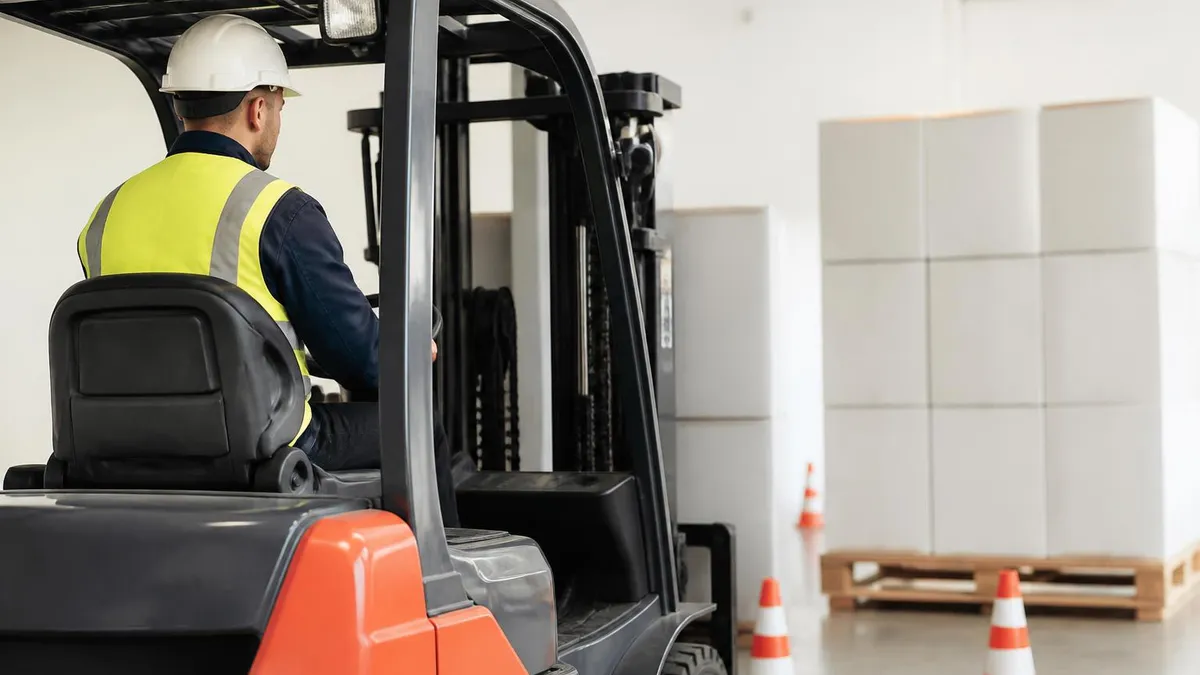
Forklift License Renewal: Complete Guide to Forklift License Expiry, OSHA Recertification, and Operator Requirements for 2026
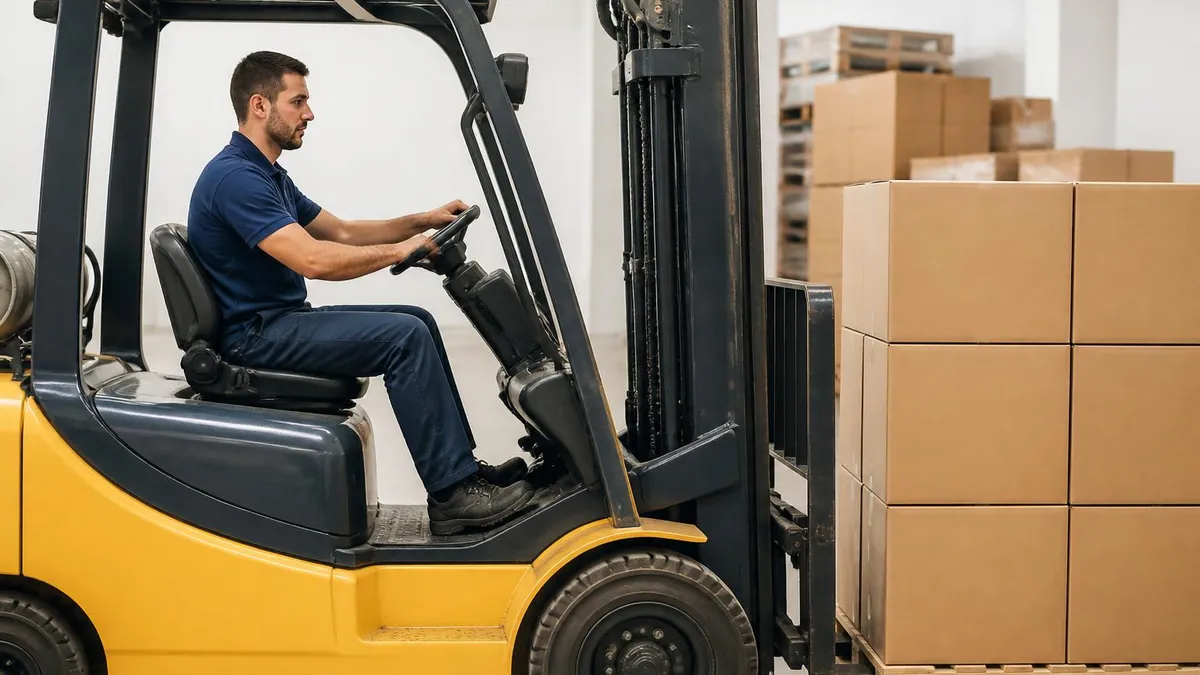
Free Forklift Training Near Me: Complete Guide to No-Cost Certification Programs, Employer-Paid Courses, and OSHA-Compliant Operator Training in 2026
About the Author

Certified Crane Operator & Skilled Trades Exam Specialist
Ferris State UniversityRobert Martinez is a Journeyman Ironworker, NCCCO-certified crane operator, and forklift trainer with a Bachelor of Science in Construction Technology from Ferris State University. He has 21 years of ironworking, rigging, and heavy equipment operation experience across high-rise and industrial construction sites. Robert prepares candidates for crane operator, rigger, forklift, and skilled trades certification examinations.