
Forklift Components: Complete Guide to Parts, Systems, and Operator Knowledge
Master forklift components, from mast to counterweight. Essential guide for forklift rental, training & certification. ✅ Updated 2026 September.

Understanding forklift components is the foundation of safe operation, smart forklift rental decisions, and passing your certification of forklift exam on the first try. Whether you are a new warehouse hire preparing for forklift training or an experienced forklift operator looking to sharpen your technical knowledge, knowing exactly what every part does — and how it can fail — is non-negotiable in any industrial environment. OSHA estimates that approximately 85 fatal accidents and 34,900 serious injuries involve forklifts every year in the United States, and a significant portion trace back to mechanical misunderstanding or missed pre-shift inspections.
A modern counterbalanced forklift is a sophisticated piece of machinery built around a handful of core systems: the power unit, the hydraulic system, the mast assembly, the carriage and forks, the steering system, and the safety devices that tie everything together. Each system plays a distinct role, and each one can become a liability if a forklift operator does not recognize early warning signs. The good news is that the knowledge is learnable, and once you internalize how these systems interact, pre-shift checklists transform from bureaucratic checkboxes into genuinely useful diagnostics.
Forklift rental is a major industry in the United States, with the equipment rental market valued at over $60 billion annually, and forklifts represent one of the most rented categories of industrial equipment. When a business searches for forklift rental near me, they are not just shopping for a machine — they are assuming temporary responsibility for a complex system that must be inspected before every shift. Understanding the components of whatever machine arrives on the truck is therefore a practical business skill, not just a certification requirement.
Electric forklifts and internal combustion forklifts share most of the same structural components but diverge significantly in their power and drivetrain systems. An electric forklift replaces the engine, fuel tank, and exhaust system with a battery pack, electric motor, and onboard charger. The hydraulic system, mast, forks, and safety systems remain largely identical. This distinction matters enormously when operators switch between machine types, because the handling characteristics, weight distribution, and pre-shift inspection steps differ in important ways that affect both safety and productivity.
The stand up forklift — also called a reach truck or stand-up rider — is a variation that deserves special attention because its component layout differs substantially from a sit-down counterbalanced machine. The operator compartment is redesigned for standing posture, the mast extends deeper into the racking system, and the counterbalance weight is distributed differently. Stand up forklifts are extremely common in high-density warehouse racking environments, and operators certified on counterbalanced machines must receive additional training before operating reach trucks safely.
For those pursuing a forklift for sale or evaluating used equipment, component knowledge is equally critical. A machine that looks clean externally may have a cracked mast weld, a leaking hydraulic cylinder, or a worn brake assembly that is invisible without a trained eye. Knowing the key inspection points for each major system helps buyers, fleet managers, and safety officers make informed decisions rather than discovering expensive problems after a purchase or rental agreement is signed.
Throughout this guide, we will break down every major forklift system, explain what each component does, describe common failure modes, and tie the technical knowledge directly to certification exam topics. We will also cover how component knowledge feeds into pre-shift inspection procedures, maintenance schedules, and the everyday decisions that separate safe operators from dangerous ones. forklift components knowledge is the single most transferable skill in the material handling industry — it applies to every machine, every job site, and every certification exam you will ever take.
Forklift Components & Industry by the Numbers

Core Structural Components of a Forklift
The vertical steel structure at the front of the forklift that guides the carriage up and down. Available in simplex, duplex, triplex, and quad configurations offering free lift heights from 83 inches to over 240 inches for high-rack warehousing.
The carriage is the horizontal platform that slides up and down the mast; the forks attach to it via hook or bolt-on mounting. Fork width, length, and taper angle are standardized to ISO specifications, with capacities typically ranging from 2,000 to 36,000 lbs.
A heavy cast-iron or steel block bolted to the rear of the machine to offset the load weight placed on the forks. Removing or modifying the counterweight is an OSHA violation and dramatically increases the risk of tip-over accidents.
A steel lattice frame above the operator compartment that protects against falling objects. OSHA 29 CFR 1910.178 mandates overhead guards on all forklifts unless the load type makes installation impractical — and even then, alternatives must be documented.
The main structural backbone connecting all other systems. The chassis houses the engine or battery compartment, hydraulic reservoir, transmission, and axles. Frame cracks, weld failures, or severe corrosion require the machine to be taken out of service immediately.
The hydraulic system is arguably the most critical active system on any forklift, because it directly controls load-handling capability — the core function the machine was built to perform.
A standard forklift hydraulic system consists of a reservoir that holds the hydraulic fluid, a pump driven by the engine or electric motor, control valves operated by the operator's levers, hydraulic cylinders that move the mast and tilt mechanism, and return lines that feed used fluid back through a filter to the reservoir. Each of these components must be in good condition for the machine to lift, lower, and tilt loads safely.
The lift cylinders are the tall, vertical cylinders you see running alongside the mast channels. On a simplex mast, a single free-lift cylinder raises the carriage before the mast itself begins to extend. On duplex and triplex masts, multiple cylinders work in staged sequence, allowing the machine to achieve significant lift height while keeping the lowered mast profile short enough to pass through standard doorways and loading docks.
A leaking lift cylinder typically manifests as load drift — the forks slowly creep downward under a load even when the operator is not commanding movement, which is an immediate out-of-service condition under OSHA regulations.
The tilt cylinders attach at the base of the mast and extend to the overhead guard or chassis rail, allowing the entire mast to tilt forward or backward. Forward tilt is used to slide forks under a pallet; backward tilt stabilizes the load against the carriage backrest during travel.
Maximum backward tilt is typically 5 to 12 degrees depending on the machine model. Tilting forward beyond neutral while carrying a load at height is one of the most common causes of tip-over accidents, because it dramatically shifts the combined center of gravity of the machine and load forward and to the side.
Hydraulic control valves are the link between the operator's lever inputs and the actual movement of the cylinders. Most forklifts use directional spool valves that open flow paths when the operator pushes a lever forward or back. These valves can develop internal leakage over time, which causes sluggish response or unintended movement. Contaminated hydraulic fluid — containing water, metal particles, or degraded oil — is the primary cause of valve wear and seal failure. This is why regular hydraulic fluid analysis is a best practice on high-cycle machines used in demanding distribution environments.
The hydraulic reservoir typically holds between 5 and 15 gallons of fluid on a standard sit-down counterbalanced forklift. Manufacturers specify fluid type very precisely — using the wrong viscosity grade or an incompatible fluid chemistry can destroy seals and void warranties within a single work shift. Most modern electric forklifts and many LP gas machines now use zinc-free, ashless hydraulic fluids to comply with environmental regulations and to protect the precision components in modern proportional valve systems. Always verify the fluid specification in the service manual before adding fluid during a pre-shift check.
The load backrest extension, sometimes called the backrest or load guard, is a structural component that attaches to the carriage above the fork blades. Its function is to prevent palletized loads from sliding backward off the forks and onto the operator's compartment during travel and lifting. While it is not technically part of the hydraulic system, it interacts directly with the carriage and is inspected alongside it. Cracks, bends, or missing mounting hardware on the load backrest are serious defects that require immediate repair before the machine is returned to service.
Understanding how the hydraulic system and mast assembly work together as an integrated load-handling unit is essential knowledge for both forklift operators preparing for their certification of forklift exam and fleet managers evaluating forklift rental options. Machines with well-maintained hydraulic systems provide smooth, responsive load control — a characteristic that is immediately noticeable during a test drive and that has a direct impact on operator productivity and load-handling safety throughout the workday. Poorly maintained hydraulics are not just an annoyance; they are a measurable safety hazard that increases cycle times and accident risk simultaneously.
Forklift Training: Power System Comparisons
Electric forklifts run on large lead-acid or lithium-ion battery packs typically rated between 24V and 80V, with capacities from 500 to 1,500 amp-hours. The electric motor drives both the traction system and the hydraulic pump, eliminating exhaust emissions entirely and making electric forklifts the standard choice for food-grade warehouses, cold storage facilities, and any indoor environment where air quality is regulated. Battery charging typically requires 8 hours, meaning most operations use battery-swapping systems or opportunity-charging protocols to maintain uptime across multiple shifts.
A key component unique to electric forklifts is the battery management system (BMS), which monitors cell voltage, temperature, and state of charge in real time. The BMS protects the battery from deep discharge — discharging below 20% significantly shortens battery lifespan and can permanently reduce capacity. Operators should report unusual heat, swelling, or electrolyte leaks immediately, as these are signs of thermal runaway risk in lead-acid batteries or cell failure in lithium-ion packs. Proper watering of lead-acid batteries is a maintenance task often delegated to operators and must be performed correctly to prevent premature failure.

Electric vs. IC Forklifts: Pros and Cons for Your Operation
- +Electric forklifts produce zero direct emissions, ideal for indoor and food-grade environments
- +Lower fuel and maintenance costs over the machine's lifespan compared to IC models
- +Quieter operation reduces workplace noise levels and operator fatigue
- +Regenerative braking recaptures energy and extends battery range on heavy-cycle applications
- +No engine fluids (oil, coolant, transmission fluid) to monitor, reducing maintenance complexity
- +Modern lithium-ion electric forklifts can opportunity-charge during breaks with no memory effect
- −Higher upfront purchase price due to battery pack cost, especially with lithium-ion technology
- −Battery charging infrastructure requires investment in chargers, electrical capacity, and sometimes HVAC
- −Cold storage environments below 32°F significantly reduce battery capacity and range
- −Lead-acid batteries require watering, equalization charges, and careful handling of corrosive electrolyte
- −IC forklifts refuel in under two minutes; swapping batteries takes longer and requires training
- −Electric forklifts are less suitable for rough outdoor terrain, ramps, or very heavy loads above 15,000 lbs
OSHA Pre-Shift Forklift Inspection Checklist
- ✓Check hydraulic fluid level in the reservoir and inspect hoses for cracks, chafing, or leaks.
- ✓Inspect fork blades for cracks, bends, or heel wear exceeding 10% of original thickness.
- ✓Test the horn, backup alarm, and all lights (headlights, brake lights, warning lights).
- ✓Check tire condition — solid tires for chunking or flat spots; pneumatic tires for pressure and damage.
- ✓Verify the overhead guard is secure with no missing bolts, cracks, or structural deformation.
- ✓Test all hydraulic functions: lift, lower, tilt forward and back, and any auxiliary attachments.
- ✓Confirm the load backrest extension is securely mounted with no cracks or bending damage.
- ✓Inspect the battery condition (electric) or LP/diesel fuel level and hose connections (IC models).
- ✓Test the service brake and parking brake for proper engagement and holding power.
- ✓Check the nameplate (data plate) is legible and matches the attachment configuration in use.
- ✓Verify the counterweight is intact and all mounting bolts are present and torqued correctly.
- ✓Document the inspection on the required pre-shift form and report any defects before operating.
A Forklift With Defects Must Be Tagged Out Immediately
OSHA 29 CFR 1910.178(p)(1) states that any forklift found to be unsafe must be taken out of service until it has been restored to safe operating condition. Operators who continue using a defective machine — even under supervisor pressure — face personal liability and risk serious injury. Tag the machine, report the defect in writing, and do not operate it until a qualified mechanic clears it for return to service.
Forklift certification in the United States is governed by OSHA Standard 29 CFR 1910.178(l), which mandates that all powered industrial truck operators be trained and evaluated by a qualified trainer before operating a forklift independently.
This standard applies to every type of forklift — counterbalanced, reach truck, pallet jack, order picker, rough terrain, and more — and requires both classroom instruction and hands-on evaluation on the specific truck type and in the specific workplace conditions where the operator will work. There is no OSHA-issued national forklift license; rather, each employer is responsible for running a compliant training program and issuing site-specific authorization.
The certification of forklift process typically covers three main knowledge areas: pre-operational inspection procedures, safe operating techniques, and refueling or recharging procedures. Component knowledge underpins all three. You cannot conduct a meaningful pre-shift inspection without understanding what each component does and what a defective component looks like. You cannot operate safely without understanding how the hydraulic system, mast, and counterbalance interact to define the stability envelope. And you cannot refuel or recharge safely without understanding the fuel system components and their failure modes.
Forklift training programs must be refreshed every three years at a minimum, or whenever an operator is involved in an accident or near-miss, whenever the operator is observed operating unsafely, or whenever the operator is assigned to a different type of truck or a different operating environment. These refresh triggers exist because component knowledge that was accurate for a sit-down LP forklift may not transfer correctly to a stand up forklift or an order picker. The specific components, their locations, their operating characteristics, and their failure modes differ enough across machine types that distinct training is required.
Forklift training costs vary widely depending on delivery method. Online pre-certification courses are available for as little as $50 to $150 and cover the classroom knowledge component. Hands-on evaluation, which is required by OSHA and cannot be replaced by online training alone, typically adds $100 to $300 per operator when provided by a third-party trainer. Employer-run programs built around OSHA-compliant materials can bring the per-operator cost down significantly when training large groups, but the initial development and trainer qualification costs are substantial.
Forklifts for sale in the used equipment market require buyers to verify not only the mechanical condition of major components but also the availability of accurate documentation. A forklift purchased without service records, a current data plate, or documentation of completed safety repairs creates training and liability complications. Operators must be trained on the specific machine they will use, which means the buyer needs to know the exact capacity ratings, mast height, and attachment configurations of any machine before completing the purchase.
The connection between component knowledge and exam performance is direct and measurable. The OSHA forklift certification exam — whether administered by an employer, a community college, or a third-party training company — routinely tests knowledge of mast types and their lift height capabilities, hydraulic system inspection points, counterweight function and modification prohibitions, fork inspection criteria, and the operating differences between electric and IC machines. Candidates who understand the physical components and their interactions consistently outperform those who memorize answers without building underlying conceptual knowledge.
Practical application of component knowledge also shows up in productivity metrics. Experienced forklift operators who understand hydraulic system response can modulate their lever inputs to handle fragile loads more smoothly, reducing product damage. Operators who understand counterbalance physics travel with loads lower to the ground, improving stability and visibility. Understanding the geometry of different mast types helps operators pre-plan rack placement approaches that avoid collisions with overhead structures — a common cause of rack damage in distribution centers.

OSHA 29 CFR 1910.178(a)(4) prohibits making any modification or addition that affects the capacity or safe operation of a forklift without written approval from the manufacturer or a licensed professional engineer. This includes adding counterweight, changing fork length, installing non-approved attachments, or modifying the overhead guard. Unauthorized modifications void the original equipment certification and create serious legal liability in the event of an accident.
Forklift maintenance is not optional — it is a legal requirement under OSHA and a practical necessity for maximizing the return on what is typically a $20,000 to $80,000 capital investment. The maintenance schedule for any forklift is built around service intervals tied to operating hours, with typical checkpoints at 250 hours, 500 hours, 1,000 hours, and annually regardless of hours. Each interval triggers a specific set of component inspections, fluid changes, filter replacements, and adjustment procedures that are detailed in the manufacturer's service manual for that specific model and serial number.
The hydraulic system requires particularly disciplined maintenance attention. Hydraulic fluid degrades through oxidation, contamination with metal particles from system wear, and water ingestion — especially in outdoor or coastal environments. Most manufacturers recommend fluid analysis every 250 operating hours and a complete fluid and filter change every 1,000 hours or 12 months, whichever comes first. Using fluid that does not meet the viscosity and additive specifications in the service manual — even a seemingly minor substitution — can accelerate seal degradation and lead to catastrophic cylinder failure within a single season of heavy use.
Fork inspection is an area where many operations fall short of best practices. OSHA requires that forks be inspected at least annually by a qualified person, but ASME B56.1 — the industry safety standard for forklifts — recommends inspection every six months for heavily used machines. The inspection checks for surface cracks (using dye-penetrant or magnetic particle testing in high-stakes applications), blade wear at the heel where the fork meets the shank, and blade angle deviation — a difference of more than 3 degrees between the two forks creates an uneven load platform that increases tip-over risk.
Tire maintenance is frequently overlooked until a problem becomes undeniable. Solid press-on rubber tires should be replaced when the wear indicator band becomes visible, or when chunking reduces the effective diameter by more than the manufacturer's specified maximum. Pneumatic tires must be maintained at the correct inflation pressure — over-inflation on a forklift creates a harsh ride that transmits shock loads to the mast bearings and hydraulic cylinders, while under-inflation causes heat buildup and sidewall failure. Both conditions accelerate structural wear throughout the machine.
Battery maintenance for electric forklifts represents a significant component knowledge domain in its own right. A standard 48V lead-acid forklift battery weighing 2,000 to 4,000 pounds must be watered regularly — typically after every fifth charge cycle — using only distilled or deionized water, added to the correct level above the plates after charging (not before). Equalizing charges, performed monthly on most systems, bring all cells to the same voltage level and reverse sulfation buildup. Failure to equalize regularly is one of the most common causes of premature battery capacity loss in fleet environments.
The braking system on a forklift receives less attention than it deserves given its safety criticality. Counterbalanced forklifts use a combination of service brakes (typically hydraulic disc or drum brakes on the drive wheels), regenerative braking on electric models, and a parking brake that locks the drive wheels when engaged.
Service brake adjustment is a routine maintenance task that becomes urgent if the operator reports increased stopping distance, brake fade under load, or a soft or spongy pedal feel. Brake fluid should be replaced on the manufacturer's schedule, as it absorbs moisture over time and reduces boiling point — a potentially catastrophic condition under heavy braking loads on grades.
Investing in comprehensive maintenance documentation for each machine in your fleet pays dividends that extend well beyond compliance. When evaluating a forklift for sale, a complete service history is one of the most reliable indicators of remaining component life and likely future repair costs. For businesses considering forklift rental near me options, asking the rental company about their maintenance protocols and inspection documentation before signing an agreement is a legitimate due-diligence step that professional rental companies should be able to answer without hesitation.
Preparing effectively for the forklift certification exam means building real component knowledge rather than memorizing isolated facts. The most effective study approach combines reviewing the physical machine — walking around an actual forklift and identifying each component by name and function — with targeted practice questions that mirror the format and difficulty of real certification exams. This dual approach embeds the knowledge at both a conceptual and a recall level, which is exactly what the exam tests and what the job demands every single day.
Begin your study with the mast system, because it generates the most exam questions and the most real-world accidents. Understand the difference between a simplex, duplex, triplex, and quad mast in terms of free lift height, overall collapsed height, and maximum lift height. Know that free lift is the distance the carriage can rise before the outer mast channel begins to extend — this is critical for working in buildings with overhead obstructions. Understand that the free lift cylinder on a duplex mast operates first and that the main lift cylinders operate the outer channel extension stages in sequence.
Next, focus on load capacity and the data plate. Every forklift has a data plate affixed to the machine that specifies rated capacity at a standard load center — typically 24 inches for most standard counterbalanced forklifts.
This capacity decreases when attachments are added (because attachments shift the load center forward and add weight), when load center distance increases beyond the standard (because the load is farther from the front axle), when lift height increases (because the raised load shifts center of gravity upward), and when the mast is tilted forward. Understanding load center physics is one of the highest-yield exam topics and directly affects daily operating safety.
Steering system knowledge is another high-priority study area. Unlike a car, where the front wheels steer, most forklifts steer from the rear axle. This rear-wheel steering creates a dramatically different turning radius and swing-out pattern — the rear of the machine swings outward opposite to the direction of the front turn. Operators who approach corners from experience with automobiles frequently create incidents by not allowing adequate clearance for the rear swing. This counterintuitive handling characteristic is tested on virtually every forklift certification exam and is the root cause of a substantial number of pedestrian near-miss incidents in warehouses.
Safety systems deserve dedicated study time because they are frequently tested and because understanding them shapes operator behavior beyond the exam room. The deadman seat switch (also called the presence sensor) cuts drive and hydraulic power when the operator leaves the seat on a sit-down counterbalanced forklift — understanding this helps operators diagnose unexpected power loss during operation. The tip-over protection system on some modern machines uses accelerometers and gyroscopes to detect impending tip-over and automatically lower the mast or apply brakes, but operators should understand that these systems are supplemental safety nets, not substitutes for correct operating technique.
Practice with timed questions under realistic exam conditions is the most efficient way to convert component knowledge into exam performance. Forklift certification exams typically include 25 to 50 questions covering pre-shift inspection, component identification, load handling principles, pedestrian safety, refueling procedures, and OSHA regulatory requirements. Most passing scores fall between 70% and 80%, but many employers set internal standards of 80% or higher for safety-sensitive roles. Using practice test resources that mirror real exam difficulty levels helps candidates calibrate their preparation and identify knowledge gaps before the actual test.
Finally, remember that forklift certification is not a lifetime achievement — it requires periodic renewal, and employers must document retraining when operators are involved in accidents, observed operating unsafely, or assigned to new machine types. Building deep component knowledge now creates a foundation that makes every future retraining faster, every pre-shift inspection more meaningful, and every operating decision better informed. Whether you are pursuing your first certification, studying for a retest, or expanding your authorization to operate additional machine types, understanding forklifts at the component level is the investment that pays the highest long-term return in this career.
Forklift Questions and Answers
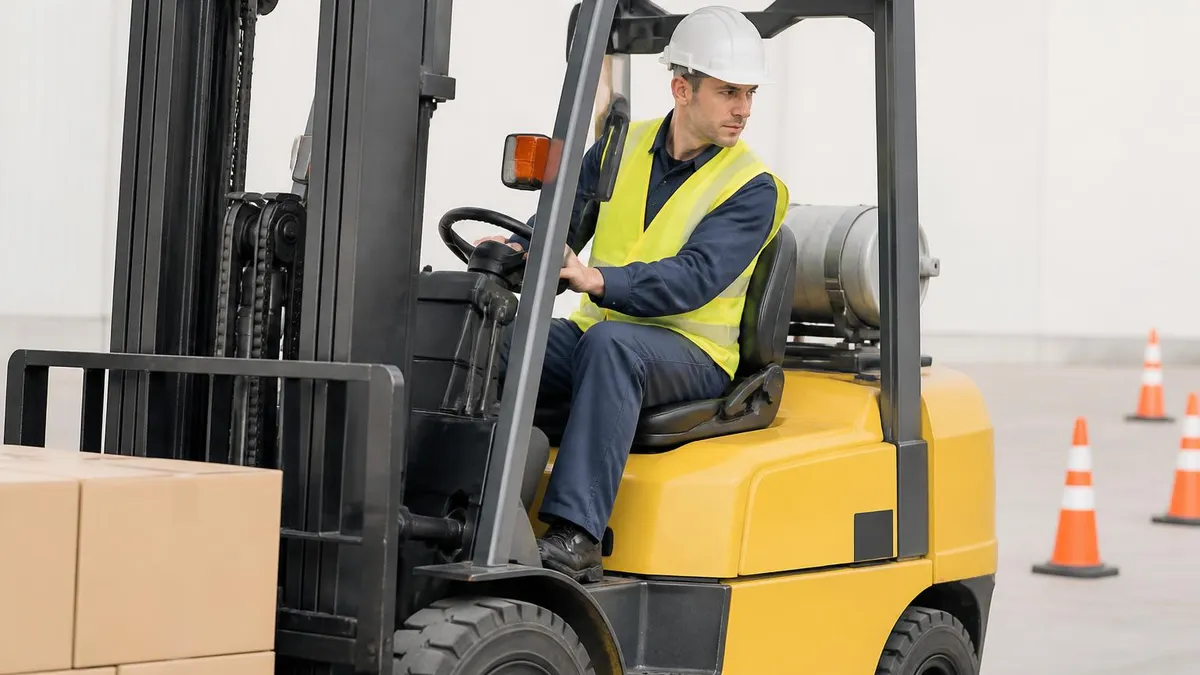
Forklift Rentals: Complete Guide to Pricing, Types, and Operator Requirements
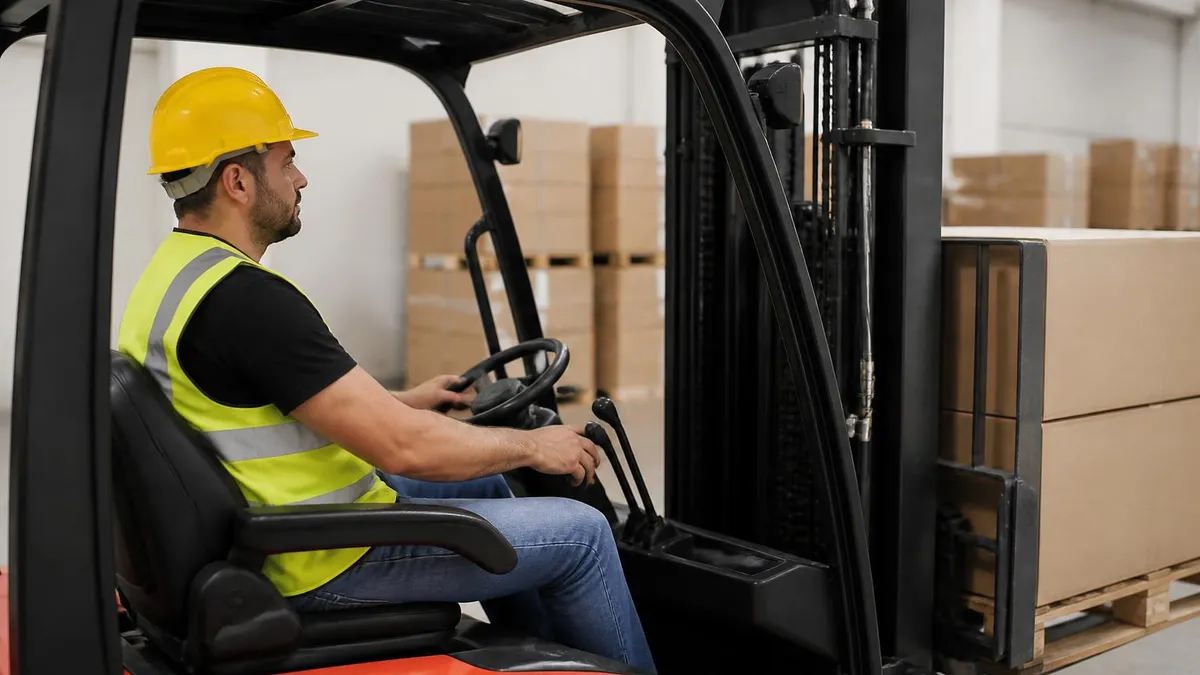
Forklift Hydraulic Fluid: Complete Guide to Types, Specifications, Change Intervals, and Troubleshooting for 2026
Forklift Certification 2026
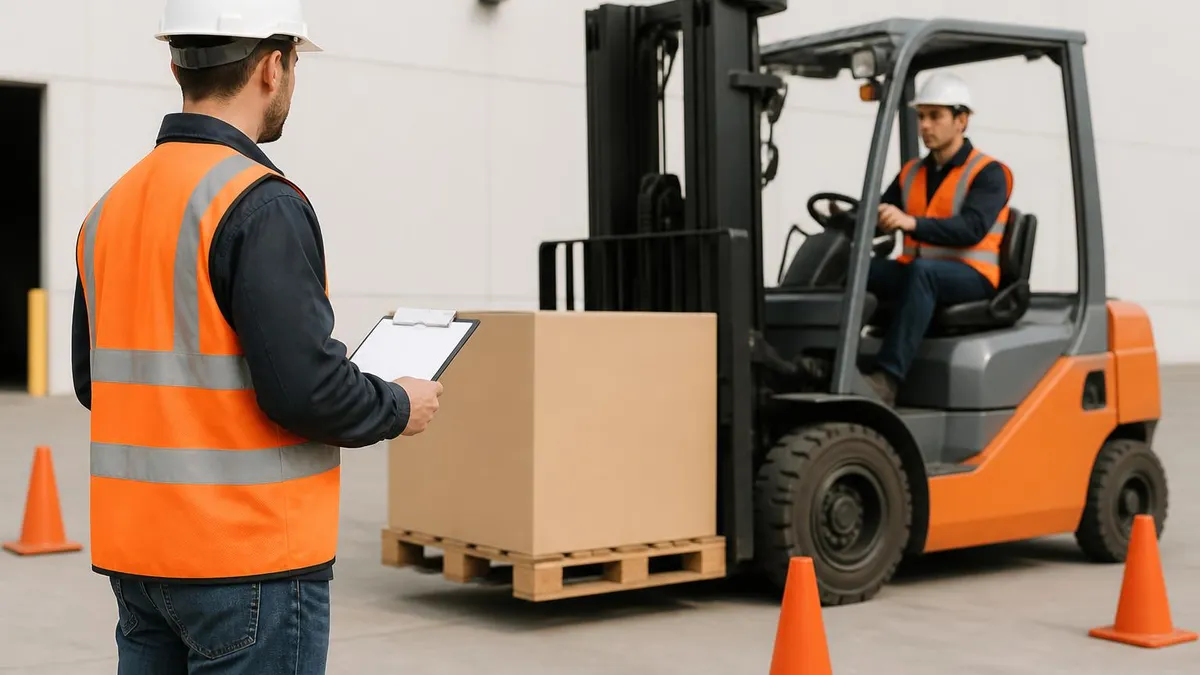
Forklift Parts and Maintenance: Complete Guide to Batteries, Chargers, and Replacement Components
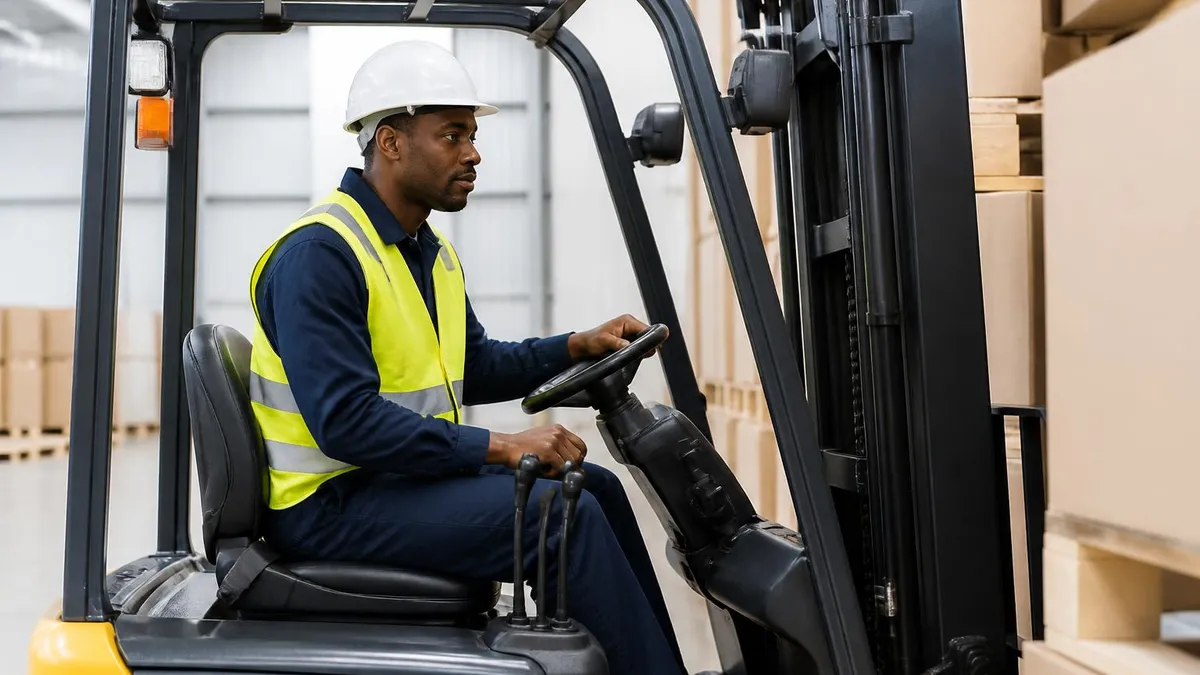
Can a Forklift Enter a 26 ft Box Truck? Complete Guide to Loading, Operations, and Equipment Selection
About the Author

Certified Crane Operator & Skilled Trades Exam Specialist
Ferris State UniversityRobert Martinez is a Journeyman Ironworker, NCCCO-certified crane operator, and forklift trainer with a Bachelor of Science in Construction Technology from Ferris State University. He has 21 years of ironworking, rigging, and heavy equipment operation experience across high-rise and industrial construction sites. Robert prepares candidates for crane operator, rigger, forklift, and skilled trades certification examinations.