
How Many Rounds of CPR in 2 Minutes? Complete Guide to CPR Cycles, Compression Rates, and Rescuer Rotation
💡 How many rounds of CPR in 2 minutes? Learn the 5-cycle standard, compression rate, ratio, and rescuer rotation rules used in ACLS and BLS.
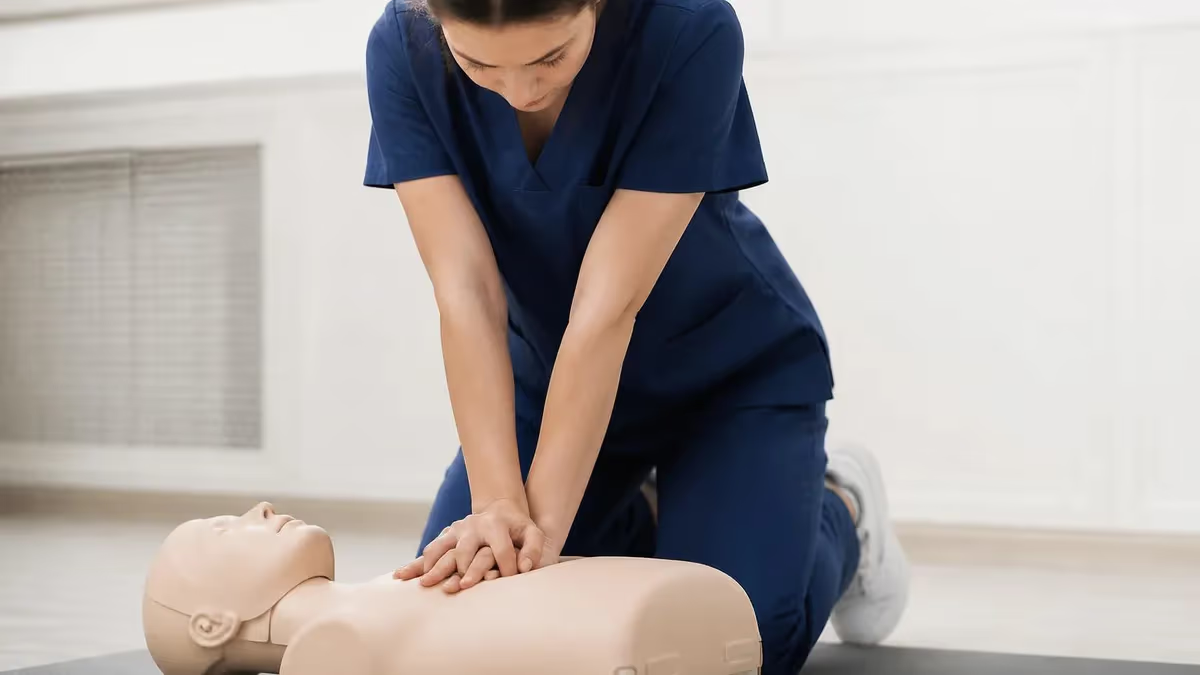
If you have ever taken a Basic Life Support class, an instructor has almost certainly asked you the question: how many rounds of CPR in 2 minutes? The standard answer, drilled into every certified rescuer, is five complete cycles of 30 chest compressions followed by 2 rescue breaths. That number is not arbitrary. It is engineered into the acls algorithm and the broader life support framework because two minutes is the optimal window between rhythm checks, defibrillator analyses, and rescuer swaps during a cardiac arrest.
The two-minute interval exists because human rescuers fatigue quickly. Studies from the American Heart Association and the national cpr foundation show that compression depth and rate begin degrading after about 90 seconds of continuous CPR, even when the rescuer believes they are still performing well. By capping each cycle block at two minutes, the algorithm forces a fresh rescuer to take over before quality drops, which directly improves the chance of restoring spontaneous circulation.
Counting five rounds is also a practical way for rescuers to track time without staring at a clock. Each cycle of 30 compressions at the recommended 100 to 120 per minute rate takes about 18 seconds, and adding the two breaths brings the total to roughly 24 seconds. Multiply by five and you land at almost exactly 120 seconds, which is why the five-cycle rule is taught universally in adult, child, and infant cpr courses.
For infants and children with two rescuers present, the math changes. The compression-to-ventilation ratio drops to 15:2, and the goal becomes roughly ten cycles in two minutes. The compression rate stays at 100 to 120 per minute, but the smaller ratio means breaths come more frequently. This is critical because pediatric arrests are most often respiratory in origin rather than cardiac, so oxygen delivery matters more than in adults.
The two-minute mark is also when the rhythm gets re-checked. If an AED is attached, this is when it re-analyzes. If you are in a hospital and pals certification trained team members are present, this is when leadership calls for pulse checks and considers the next medication push. Understanding why the timing matters helps rescuers stay calm and methodical instead of getting lost in the chaos of an arrest scene.
This guide breaks down exactly how the cycle math works, what the compression rate should look like, when to rotate rescuers, and how the rules shift for adults, children, and infants. We will also cover the role of the AED in the two-minute cycle, what does AED stand for in practical terms, and how the cycle timing fits into the larger picture of high-quality resuscitation.
Whether you are preparing for a certification renewal, brushing up before a shift, or simply trying to be ready as a bystander, mastering the two-minute cycle is the single most important rhythm concept in modern resuscitation. Let's walk through the numbers, the science, and the technique step by step so you can perform with confidence when it actually matters.
CPR Cycles by the Numbers

The Anatomy of a 2-Minute CPR Cycle
Compressions 1-30
Rescue Breaths
Cycles 2 Through 4
Cycle 5 Completion
Rhythm Check and Swap
Getting five rounds of CPR done in two minutes only works if your compression rate is in the correct zone. The American Heart Association and the national cpr foundation both recommend 100 to 120 compressions per minute. Faster than 120 and you lose depth because the chest cannot fully recoil. Slower than 100 and coronary perfusion pressure drops, which directly reduces the odds of return of spontaneous circulation. This is why pacing is taught with songs like Stayin' Alive or Baby Shark, both of which sit squarely in the target range.
Depth matters just as much as rate. For adult patients, the recommended compression depth is 2 to 2.4 inches, or 5 to 6 centimeters. Going shallower fails to generate adequate cardiac output, and going deeper risks rib fractures and internal injury without additional benefit. Many CPR feedback devices now provide real-time depth measurement, and hospital systems use these because human perception of depth is notoriously inaccurate, with most rescuers underestimating how hard they need to push.
Full chest recoil between compressions is the third critical element. When you let the chest spring back completely, negative pressure inside the thorax pulls venous blood back to the heart, refilling the chambers for the next compression. Rescuers who lean on the chest between pushes, even slightly, cut cardiac output significantly. This is one of the most common quality failures in real arrests, and it directly impacts the effectiveness of every cycle you complete.
The compression-to-ventilation ratio for an adult with one or two rescuers is 30:2. Each breath should take about one second and produce visible chest rise. Hyperventilation is a real risk in stressed rescuers, and overinflation increases intrathoracic pressure, which paradoxically reduces venous return and cardiac output. Slow, controlled breaths over one second each are the standard, with no more than a 10-second total interruption to compressions for the breath phase.
When an advanced airway is in place, the math shifts. Compressions become continuous at 100 to 120 per minute, and breaths are delivered asynchronously at a respiratory rate of about 10 per minute, or one breath every six seconds. This is common during ACLS-level care once an endotracheal tube or supraglottic airway has been inserted. The two-minute cycle structure remains, but you no longer pause for ventilations, which dramatically improves compression fraction.
Compression fraction refers to the percentage of the resuscitation during which compressions are actually being delivered. The goal is greater than 60%, with elite teams achieving over 80%. Every unnecessary pause, including long pulse checks, slow AED operation, or fumbling for equipment, reduces this number and harms outcomes. The two-minute cycle structure is designed to maximize compression fraction while still allowing necessary rhythm assessments at predictable intervals.
Quality always trumps quantity. Five perfect cycles delivered with correct rate, depth, and full recoil will save more lives than seven sloppy ones. If you find yourself getting fatigued, slowing down, or pushing too shallow, that is the signal to swap with another rescuer immediately rather than push through and degrade the entire resuscitation effort.

CPR Practice Test Questions
Prepare for the CPR Cardiopulmonary Resuscitation Practice exam with our free practice test modules. Each quiz covers key topics to help you pass on your first try.
CPR Basic CPR
CPR Exam Questions covering Basic CPR. Master CPR Test concepts for certification prep.
CPR and First Aid
Free CPR Practice Test featuring and First Aid. Improve your CPR Exam score with mock test prep.
CPR (Cardiopulmonary Resuscitation) Adult ...
CPR Mock Exam on (Cardiopulmonary Resuscitation) Adult CPR and AED Usage. CPR Study Guide questions to pass on your first try.
CPR (Cardiopulmonary Resuscitation) Airway...
CPR Test Prep for (Cardiopulmonary Resuscitation) Airway Obstruction and Choking. Practice CPR Quiz questions and boost your score.
CPR (Cardiopulmonary Resuscitation) Cardio...
CPR Questions and Answers on (Cardiopulmonary Resuscitation) Cardiopulmonary Emergency Recognition. Free CPR practice for exam readiness.
CPR (Cardiopulmonary Resuscitation) Child ...
CPR Mock Test covering (Cardiopulmonary Resuscitation) Child and Infant CPR. Online CPR Test practice with instant feedback.
CPR (Cardiopulmonary Resuscitation) High-P...
Free CPR Quiz on (Cardiopulmonary Resuscitation) High-Performance Team Dynamics. CPR Exam prep questions with detailed explanations.
CPR (Cardiopulmonary Resuscitation) Legal ...
CPR Practice Questions for (Cardiopulmonary Resuscitation) Legal and Ethical Considerations. Build confidence for your CPR certification exam.
CPR for Specific Populations
CPR Test Online for for Specific Populations. Free practice with instant results and feedback.
CPR Airway & Breathing Management
CPR Exam Questions covering Airway & Breathing Management. Master CPR Test concepts for certification prep.
CPR Assessment & Recognition of Cardiac Ar...
Free CPR Practice Test featuring Assessment & Recognition of Cardiac Arrest. Improve your CPR Exam score with mock test prep.
CPR Chest Compressions & Defibrillation
CPR Mock Exam on Chest Compressions & Defibrillation. CPR Study Guide questions to pass on your first try.
CPR Post-Resuscitation Care & Recovery
CPR Test Prep for Post-Resuscitation Care & Recovery. Practice CPR Quiz questions and boost your score.
Infant CPR vs Child vs Adult: How Cycles Differ
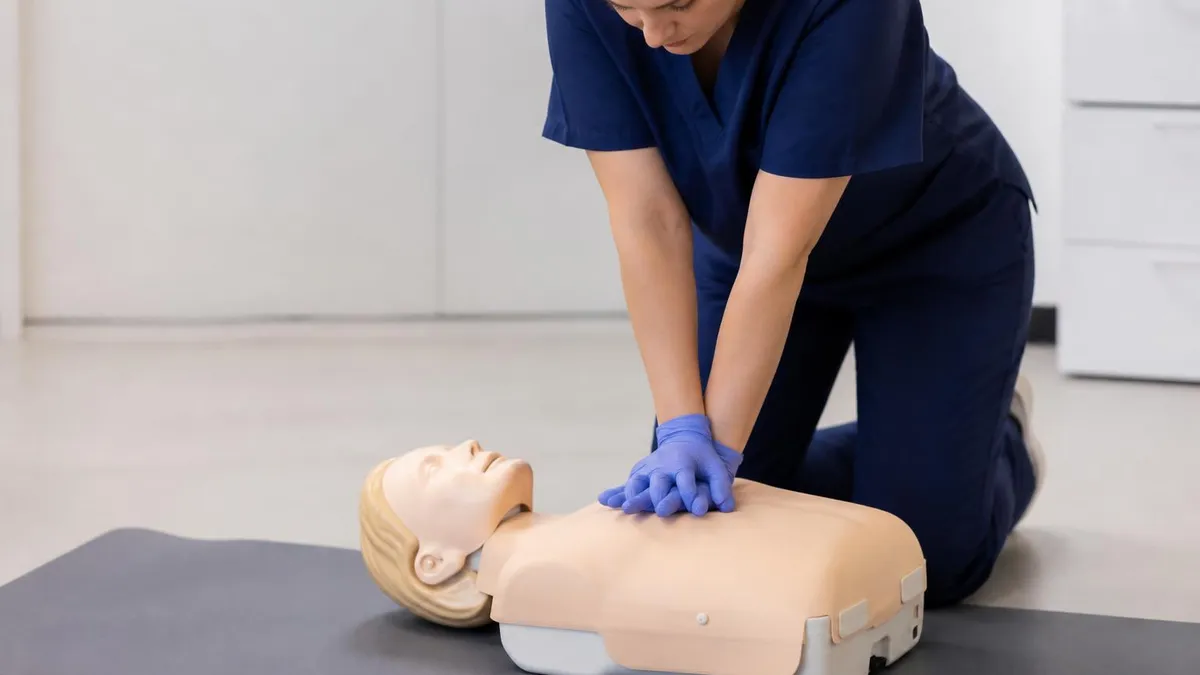
Adult CPR uses a 30:2 compression-to-ventilation ratio whether one or two rescuers are present. This produces exactly five cycles in two minutes when performed correctly at the 100 to 120 per minute compression rate. Compression depth is 2 to 2.4 inches, with both hands stacked on the lower half of the sternum and arms locked straight to use body weight rather than arm strength.
The two-minute rhythm-check interval is universal for adult arrests, and rescuers should swap every two minutes to maintain compression quality. AED pads are placed in the anterior-lateral position, and the device will prompt a rhythm analysis every two minutes automatically, syncing perfectly with the five-cycle structure.
Is the Five-Cycle Two-Minute Standard the Best Approach?
- +Provides a predictable structure that rescuers can mentally count under stress
- +Aligns perfectly with AED rhythm-analysis intervals built into every modern device
- +Limits rescuer fatigue by enforcing rotation before compression quality degrades
- +Maximizes compression fraction by minimizing unnecessary pauses
- +Synchronizes team-based resuscitation in hospital and ACLS environments
- +Easy to teach to laypersons in short Heartsaver or community courses
- +Backed by decades of outcome data from registries like CARES and Get With The Guidelines
- −Counting cycles can be difficult for solo rescuers under extreme stress
- −Two minutes may feel much longer than it is, causing premature rhythm checks
- −Some rescuers fatigue earlier than two minutes and should swap sooner
- −Rigid cycle counting can distract from focusing on compression quality
- −Less applicable once advanced airway changes timing to continuous compressions
- −Bystanders without training often skip breaths entirely, breaking the cycle structure
- −Requires accurate awareness of time, which is hard without a timer or partner

Two-Minute CPR Cycle Quality Checklist
- ✓Confirm scene safety and check responsiveness before starting any cycles
- ✓Call 911 and request an AED before beginning compressions when possible
- ✓Position heel of hand on lower half of sternum between the nipples
- ✓Compress at a rate of 100 to 120 per minute using a song or metronome
- ✓Push 2 to 2.4 inches deep for adults, allowing full chest recoil each time
- ✓Deliver two rescue breaths over one second each with visible chest rise
- ✓Complete five full cycles of 30:2 within the two-minute window
- ✓Minimize pauses in compressions to under 10 seconds for any reason
- ✓Swap rescuers every two minutes or sooner if quality starts to drop
- ✓Resume compressions immediately after any shock, pulse check, or analysis
Compression Quality Degrades After 90 Seconds
Research consistently shows that compression depth and rate begin to deteriorate after about 90 seconds of continuous CPR, even when rescuers report feeling fine. The two-minute rotation rule is built directly on this data. If you have a partner, swap at every rhythm check. If you are alone, focus on quality over fatigue, and continue until EMS arrives or an AED takes over the cycle structure for you.
Rescuer rotation is one of the most undertaught elements of CPR. The two-minute cycle structure exists in large part to create a natural, predictable swap point. When a fresh rescuer steps in every two minutes, average compression depth stays in the target zone, the rate stays controlled, and chest recoil remains complete. Without rotation, the same person delivering compressions for five or six minutes will almost always begin pushing too shallow without realizing it, regardless of their fitness level.
The handoff itself must be fast. Best practice is for the incoming rescuer to be in position before the cycle ends. As the fifth cycle finishes and the brief rhythm check occurs, the new rescuer drops into place and begins compressions within seconds. A clean handoff costs less than three seconds of compression time, while a fumbled one can stretch to fifteen seconds or more, dramatically reducing compression fraction during that critical interval.
In team-based resuscitations, such as in-hospital arrests or ACLS-led codes, a closed-loop communication system makes this seamless. The team leader announces, two-minute rhythm check coming, and the next compressor positions themselves. After the pulse or rhythm assessment, the leader calls resume compressions, and the new rescuer immediately begins. This pattern repeats throughout the code, ensuring no single person performs more than two minutes of continuous compressions.
For lay rescuers operating alone, rotation is not an option, so cycle counting becomes a different kind of mental tool. Counting out loud to thirty for each compression set, then announcing the breath phase, helps maintain rhythm and prevents the brain from drifting under stress. If you are alone for an extended period before EMS arrives, switching hands or briefly adjusting position between cycles can give small muscle groups a momentary reset, though it will not fully prevent fatigue.
The position recovery rule applies when CPR is paused for any reason. If the patient regains a pulse and starts breathing, place them in the recovery position on their side. But during active resuscitation, the patient stays flat on a firm surface, and any movement that delays compression resumption should be avoided. The recovery position is for post-resuscitation care, not part of the active cycle structure.
Two-person CPR introduces a coordination challenge worth practicing. The ventilator must be ready with bag-mask or pocket mask, the compressor must pause cleanly for the two breaths, and both rescuers must agree on cycle counting. In adult CPR, the 30:2 ratio means the compressor counts to thirty out loud, signals the ventilator with the final number, and the ventilator delivers two breaths in under five seconds before compressions resume.
The biggest enemy of effective rescuer rotation is hesitation. Rescuers often feel they should push through fatigue rather than slow the resuscitation by swapping. The opposite is true. A fresh rescuer producing high-quality compressions for the next two-minute block is always more valuable than a tired one struggling to maintain depth. Train yourself and your team to view the swap as a positive transition, not an interruption.
Pausing for the rhythm check feels counterintuitive when everything in you wants to keep compressing. But that pause is when the AED analyzes whether a shockable rhythm has developed, and when team leaders decide on next interventions. Skipping it can mean missing the exact moment when defibrillation would have saved the patient. Keep the pause under 10 seconds, then resume immediately.
The automated external defibrillator is the silent partner to your two-minute cycles. Many people ask what does aed stand for and the answer reveals its purpose: it is an automated external defibrillator, designed so a layperson without medical training can deliver a life-saving shock. The device analyzes the heart's electrical rhythm and, if a shockable pattern like ventricular fibrillation is detected, delivers a defibrillation shock. Crucially, AEDs are programmed to re-analyze every two minutes, which is exactly why the cycle structure is built around that interval.
When the AED arrives, the rescuer should expose the chest, attach the pads in the anterior-lateral position, and let the device begin analysis. Compressions must stop during analysis, which takes about 10 to 15 seconds. If a shock is advised, ensure no one is touching the patient, deliver the shock, and resume compressions immediately. The next two-minute cycle begins right then, and the AED will re-analyze automatically at the end of that block.
For pediatric patients, most modern AEDs include pediatric pads or a key that attenuates the energy dose. If pediatric equipment is unavailable on a child older than one year, adult pads can be used in an anterior-posterior configuration. For infants, manual defibrillators are preferred, but an AED is acceptable if no other option exists. The cycle structure remains five rounds in two minutes for solo rescuers regardless of age.
AED use integrates seamlessly with the broader life support framework. In a hospital, the same two-minute cycles continue with a manual defibrillator instead of an AED, allowing the ACLS-trained team leader to interpret the rhythm directly and choose the appropriate energy level. The two-minute timing also dictates when epinephrine is administered, when an advanced airway might be placed, and when reversible causes are reviewed.
Reversible causes are summarized in the Hs and Ts mnemonic, which any ACLS provider should be able to recite. The two-minute cycle creates the natural cadence for the team to mentally walk through these potential causes, looking for hypoxia, hypovolemia, hydrogen ion buildup, hypo or hyperkalemia, hypothermia, tension pneumothorax, tamponade, toxins, thrombosis pulmonary, or thrombosis coronary. Identifying and treating a reversible cause is often the only path to a sustained return of circulation.
Continuous quality monitoring during cycles is now standard in many hospital systems. End-tidal CO2 monitoring is the gold standard, with sustained values above 10 mmHg indicating adequate compression quality and a sudden rise often signaling return of spontaneous circulation. If you have access to a capnography reading during resuscitation, use it as your real-time feedback tool between cycle handoffs and rhythm checks.
The two-minute cycle is the heartbeat of every resuscitation, and the AED, the team, and the algorithms all revolve around it. Master the cycle structure first, and every other element of high-quality CPR becomes easier to layer on top. Whether you are a bystander or a critical care nurse, the same five-round principle applies.
Practical preparation for performing five cycles of CPR in two minutes starts with hands-on practice. Reading about compression rate and chest recoil is one thing, but feeling the resistance of a manikin chest, counting your own pace, and getting feedback from an instructor or device is irreplaceable. Take a certified BLS, Heartsaver, or pals certification course at least every two years, and use the practice opportunities to internalize the cycle rhythm until it is muscle memory.
Use music to lock in your tempo. Songs at 100 to 120 BPM include Stayin' Alive by the Bee Gees, Crazy in Love by Beyoncé, I Will Survive by Gloria Gaynor, Hips Don't Lie by Shakira, and Walk the Line by Johnny Cash. Pick one you can hear in your head under stress and practice with it. The cell phone in your pocket can be a tool here, but make sure it is not a cpr cell phone repair situation where the battery dies right when you need to call 911.
Speaking of phones, if your screen is cracked or your speaker is failing, address the cpr phone repair issue before you actually need to make an emergency call. A reliable phone in your pocket is part of being prepared. Many people only realize their phone is barely functional when they are trying to dial 911 during a crisis, which adds critical seconds to response time. This sounds trivial, but it has caused real delays in real arrests.
Practice transitioning into and out of cycles with a partner. Stand on opposite sides of the manikin, count cycles together, and execute clean handoffs at the two-minute mark. Many trainees never rehearse the swap, then fumble badly when it happens during a real arrest. Twenty minutes of partner rehearsal will transform your team response. Pair this with mock AED use so the analyze-shock-resume sequence becomes automatic.
Stay current with guideline updates. The American Heart Association publishes resuscitation science updates roughly every five years, with focused updates in between. Subscribe to a CPR newsletter, follow your local training center on social media, or set a calendar reminder to check for changes annually. The five-cycle two-minute standard has been stable for years, but specific elements like compression depth, AED energy levels, and pediatric ratios occasionally get refined.
Build mental rehearsal into your routine. Pilots and surgeons use visualization to prepare for high-stakes events, and CPR rescuers should do the same. Spend two minutes a week walking through an arrest scenario in your head, including scene safety, compressions, breaths, AED arrival, cycle counting, and rescuer rotation. When the real event happens, your brain will not be encountering the sequence for the first time.
Finally, take care of yourself emotionally after performing real CPR. Even when the outcome is positive, resuscitation is intense and adrenaline-driven. Talk to a colleague, debrief with your team, or seek support if needed. Being a rescuer is meaningful work, and your readiness to perform five clean cycles every two minutes is exactly what the patient on the floor or in the bed needs from you in their worst moment.
CPR Questions and Answers
CPR Card Lookup: How to Verify, Replace, and Access Your CPR Certification in 2026
Adult CPR: Complete Step-by-Step Guide to Hands-Only and Standard CPR in 2026

CPR - Cardiopulmonary Resuscitation: Complete Study Guide 2026
Inappropriate CPR Songs: What Not to Play, Why It Matters, and Better Beat-Per-Minute Alternatives
AHA CPR Recertification: How to Recertify CPR Online with the American Heart Association in 2026
About the Author

Registered Nurse & Healthcare Educator
Johns Hopkins University School of NursingDr. Sarah Mitchell is a board-certified registered nurse with over 15 years of clinical and academic experience. She completed her PhD in Nursing Science at Johns Hopkins University and has taught NCLEX preparation and clinical skills courses for nursing students across the United States. Her research focuses on evidence-based exam preparation strategies for healthcare certification candidates.
Join the Discussion
Connect with other students preparing for this exam. Share tips, ask questions, and get advice from people who have been there.
View discussion (5 replies)