
CPR Procedure: Complete Step-by-Step Guide for 2026 October
🎓 Master the CPR procedure with our step-by-step guide covering ACLS algorithm, infant CPR, AED use, and recovery position for adults, children, and infants.
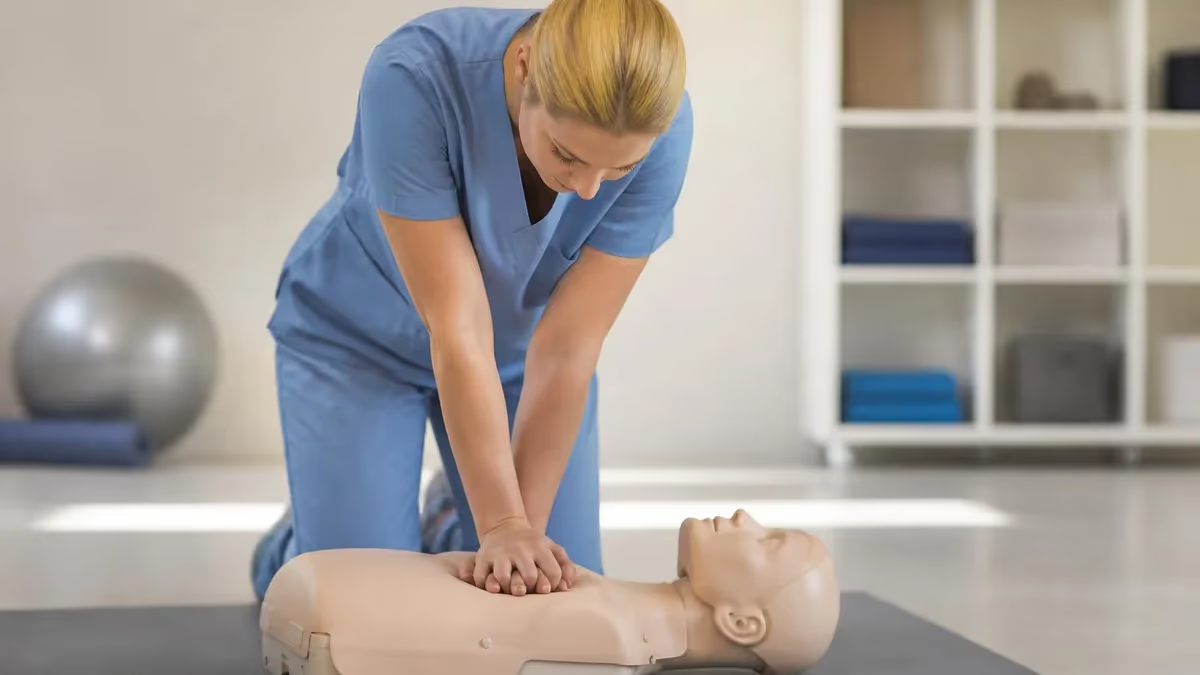
The cpr procedure is a sequence of life-saving actions that can double or triple a cardiac arrest victim's chance of survival when performed correctly within the first minutes of collapse. Whether you are a healthcare provider following the acls algorithm or a bystander acting on instinct in a grocery store, understanding the precise steps separates effective resuscitation from wasted compressions. The American Heart Association updates these guidelines every five years, and the 2025-2026 cycle emphasizes high-quality chest compressions, minimal interruptions, and rapid defibrillation as the three pillars of survival.
Cardiac arrest claims more than 350,000 lives outside hospitals each year in the United States, and roughly 70% of those events occur at home in front of family members. Bystander CPR is initiated in only about 40% of cases, yet survival nearly doubles when a witness starts compressions before emergency medical services arrive. The procedure itself is simple enough to learn in an afternoon, but the confidence to act under pressure requires repeated practice, scenario-based training, and a clear mental model of what to do first.
This guide walks through the complete cpr procedure for adults, children, and infants, integrating current evidence on compression depth, rate, ventilation ratios, and AED deployment. We will cover the differences between lay-rescuer compression-only CPR and the more comprehensive sequences used by trained providers running through advanced cardiac life support algorithms. You will also learn how to recognize agonal breathing, when to switch rescuers, and how to use feedback devices that measure compression quality in real time.
Equally important is what comes after the rhythm returns. Post-resuscitation care, targeted temperature management, and the rapid transition into a hospital-based life support pathway determine neurological outcome long after the heart restarts. We will also touch on the legal protections offered by Good Samaritan laws in all 50 states, which shield untrained bystanders who act in good faith from civil liability when they attempt resuscitation.
Before diving into the steps, it helps to understand why timing matters so much. Brain cells begin dying within four to six minutes of oxygen deprivation, and irreversible damage typically occurs by minute ten. Every minute that passes without CPR or defibrillation reduces survival probability by roughly 7% to 10%. A community where bystanders consistently start compressions within two minutes and use a public AED within five minutes can achieve survival rates above 50%, compared to the national average of around 12%.
If you want a deeper understanding of how sudden cardiac events differ from myocardial infarction, our breakdown of heart attack vs cardiac arrest clarifies the physiology, symptoms, and why CPR is appropriate for one but not the other. Confusing the two costs lives because a heart attack victim who is still breathing does not need compressions, while a cardiac arrest victim without a pulse needs them immediately.
By the end of this article you will be able to perform the cpr procedure on any age group, troubleshoot common rescuer errors, integrate an AED into the sequence, and recognize when to stop. Whether you are preparing for a Basic Life Support recertification, studying for the pals certification exam, or simply want to be ready if someone collapses in front of you, the following sections lay out everything you need in one place.
CPR Procedure by the Numbers

The CPR Procedure: Step-by-Step Sequence
Scene Safety & Responsiveness Check
Activate EMS & Retrieve AED
Begin Chest Compressions
Deliver Rescue Breaths
Attach AED & Follow Prompts
Continue Until ROSC or Relief
Chest compression quality is the single greatest predictor of survival after cardiac arrest, outweighing virtually every other intervention including drug therapy and advanced airway management. The 2025 guidelines reinforce that compressions must be deep enough, fast enough, and uninterrupted enough to generate roughly one-third of normal cardiac output. Anything less fails to perfuse the brain and coronary arteries, and the longer interruptions last, the longer it takes for coronary perfusion pressure to climb back to threshold once compressions resume.
Depth targets remain at least two inches for adults but not more than 2.4 inches, since excessive depth causes rib fractures, pulmonary contusions, and occasional liver lacerations without improving outcomes. For children, push down about two inches or roughly one-third the depth of the chest, and for infants compress about 1.5 inches using the two-finger or two-thumb encircling technique. Feedback devices that beep or display real-time depth measurements have improved performance significantly in clinical studies, particularly in hospital settings.
Rate is equally critical. The sweet spot is 100 to 120 compressions per minute, a range memorized by generations of rescuers through the rhythm of popular songs like 'Stayin' Alive' or 'Baby Shark.' Going too slow fails to maintain perfusion pressure, while going too fast prevents full chest recoil and reduces stroke volume per compression. Many practitioners use cpr songs as cognitive anchors during high-stress events, and there is solid evidence this approach improves consistency in untrained rescuers.
Recoil is the often-overlooked third element. Failing to let the chest spring fully back between compressions traps blood in the thorax and prevents venous return, choking off the very perfusion the procedure is meant to provide. Lean too heavily on the chest during the upstroke and your effective output drops by 20% to 30%. Feedback gloves and accelerometer-based monitors quantify this 'leaning' error and have become standard in many tertiary-care institutions during code events.
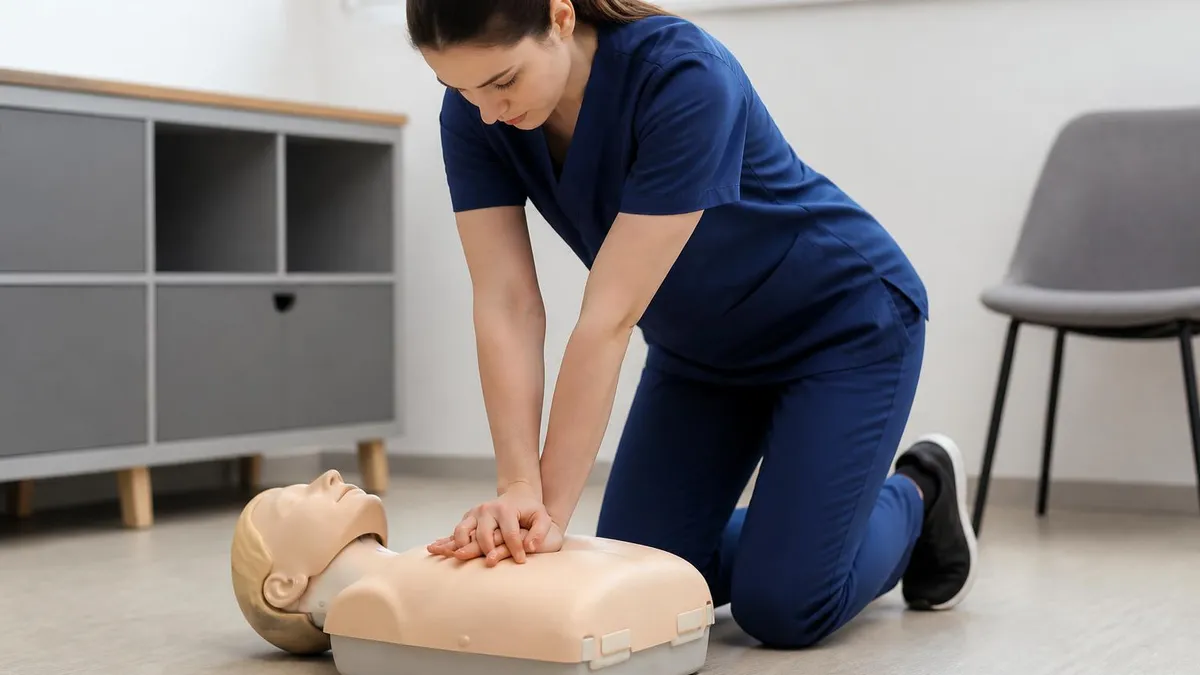
Hand placement matters more than many lay rescuers realize. The heel of the dominant hand should land squarely on the lower half of the sternum, with the second hand stacked on top and fingers interlocked off the ribs. Compressing too high reduces effectiveness, while compressing over the xiphoid process risks puncturing the liver. For pregnant patients in late gestation, manual left uterine displacement during compressions improves venous return by relieving aortocaval compression from the gravid uterus.
Rescuer fatigue is a real and measurable phenomenon. Studies using compression-quality monitors show that depth declines noticeably within sixty to ninety seconds, even though rescuers usually perceive themselves as performing well for much longer. This is why current guidelines recommend swapping compressors every two minutes, which conveniently aligns with the AED rhythm-check interval. The pause for switching should take no more than five seconds to preserve the perfusion pressure already built up.
Finally, minimize interruptions. The 'chest compression fraction' or CCF measures the percentage of resuscitation time spent actively compressing, and a fraction above 80% is associated with significantly improved return of spontaneous circulation. Pauses for ventilation, rhythm checks, pulse checks, and intubation attempts all eat into CCF, which is why modern protocols favor continuous compressions with asynchronous ventilation once an advanced airway is placed.

CPR Practice Test Questions
Prepare for the CPR Cardiopulmonary Resuscitation Practice exam with our free practice test modules. Each quiz covers key topics to help you pass on your first try.
CPR Basic CPR
CPR Exam Questions covering Basic CPR. Master CPR Test concepts for certification prep.
CPR and First Aid
Free CPR Practice Test featuring and First Aid. Improve your CPR Exam score with mock test prep.
CPR (Cardiopulmonary Resuscitation) Adult ...
CPR Mock Exam on (Cardiopulmonary Resuscitation) Adult CPR and AED Usage. CPR Study Guide questions to pass on your first try.
CPR (Cardiopulmonary Resuscitation) Airway...
CPR Test Prep for (Cardiopulmonary Resuscitation) Airway Obstruction and Choking. Practice CPR Quiz questions and boost your score.
CPR (Cardiopulmonary Resuscitation) Cardio...
CPR Questions and Answers on (Cardiopulmonary Resuscitation) Cardiopulmonary Emergency Recognition. Free CPR practice for exam readiness.
CPR (Cardiopulmonary Resuscitation) Child ...
CPR Mock Test covering (Cardiopulmonary Resuscitation) Child and Infant CPR. Online CPR Test practice with instant feedback.
CPR (Cardiopulmonary Resuscitation) High-P...
Free CPR Quiz on (Cardiopulmonary Resuscitation) High-Performance Team Dynamics. CPR Exam prep questions with detailed explanations.
CPR (Cardiopulmonary Resuscitation) Legal ...
CPR Practice Questions for (Cardiopulmonary Resuscitation) Legal and Ethical Considerations. Build confidence for your CPR certification exam.
CPR for Specific Populations
CPR Test Online for for Specific Populations. Free practice with instant results and feedback.
CPR Airway & Breathing Management
CPR Exam Questions covering Airway & Breathing Management. Master CPR Test concepts for certification prep.
CPR Assessment & Recognition of Cardiac Ar...
Free CPR Practice Test featuring Assessment & Recognition of Cardiac Arrest. Improve your CPR Exam score with mock test prep.
CPR Chest Compressions & Defibrillation
CPR Mock Exam on Chest Compressions & Defibrillation. CPR Study Guide questions to pass on your first try.
CPR Post-Resuscitation Care & Recovery
CPR Test Prep for Post-Resuscitation Care & Recovery. Practice CPR Quiz questions and boost your score.
Infant CPR, Child, and Adult Procedure Differences
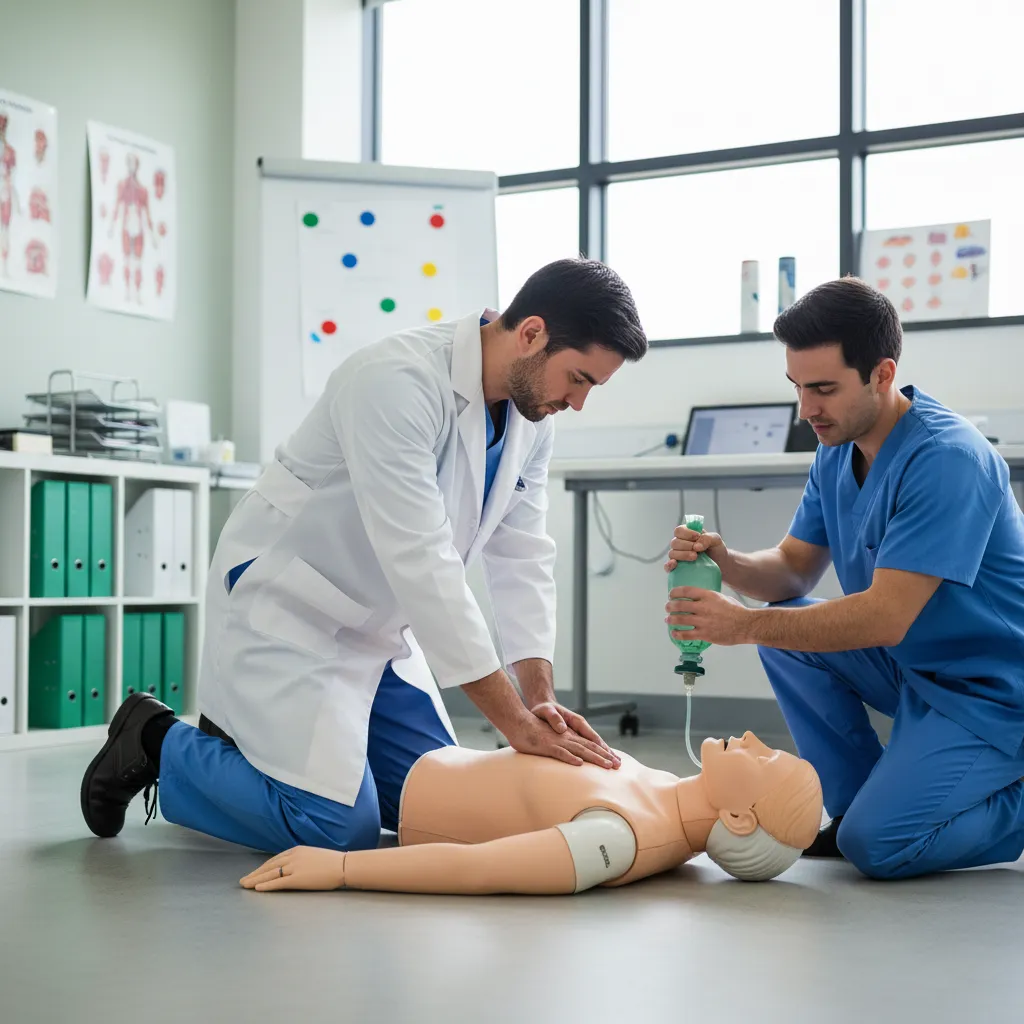
Adult CPR applies to anyone who has reached puberty and uses the standard two-handed compression technique on the lower sternum to a depth of at least two inches. The compression-to-ventilation ratio is 30:2 for a single rescuer with no advanced airway in place, and the procedure typically prioritizes early defibrillation because shockable rhythms like ventricular fibrillation are the most common initial rhythm in witnessed adult collapse.
Adult arrests are most often cardiac in origin, meaning that the heart fails before breathing stops. This is why compression-only CPR is acceptable for untrained lay rescuers responding to a collapsed adult: maintaining circulation of already-oxygenated blood is more valuable than pausing for breaths the rescuer may not deliver effectively. Healthcare providers, however, should still incorporate ventilations because of the longer downtime and higher likelihood of mixed presentations.
Compression-Only vs Standard 30:2 CPR
- +Easier for untrained bystanders to remember under stress
- +Eliminates rescuer hesitation about mouth-to-mouth contact
- +Maintains higher chest compression fraction overall
- +Equivalent survival in witnessed adult cardiac arrest
- +Reduces gastric insufflation and aspiration risk
- +Faster dispatch-assisted instruction over the phone
- −Inferior in pediatric and asphyxial arrests requiring oxygen
- −Less effective beyond the first six to eight minutes
- −Not recommended for drowning, drug overdose, or trauma
- −Misses opportunity to deliver oxygen-rich rescue breaths
- −Inadequate for prolonged resuscitations without EMS arrival
- −Skill atrophy still occurs without regular hands-on practice

AED Integration Checklist for the CPR Procedure
- ✓Power on the AED immediately upon arrival and follow voice prompts
- ✓Expose the patient's bare chest, removing wet clothing and drying skin
- ✓Shave excessive chest hair only if pads will not adhere properly
- ✓Place one pad upper right chest below clavicle, the other lower left ribs
- ✓Use pediatric pads or attenuator for victims under eight years old when available
- ✓Ensure no one is touching the patient during rhythm analysis
- ✓Loudly announce 'clear' before pressing the shock button
- ✓Resume chest compressions immediately after shock delivery without pulse check
- ✓Reanalyze rhythm every two minutes as prompted by the device
- ✓Leave pads attached and powered on until EMS assumes care
The first five minutes decide everything
Survival from out-of-hospital cardiac arrest drops by roughly 7-10% for each minute that passes without CPR and defibrillation. Communities with strong bystander response and accessible public AEDs routinely achieve survival rates above 40%, more than triple the national average. The cpr procedure is only as good as the speed with which it begins.
Recognizing cardiac arrest quickly is the gateway to every other step in the cpr procedure. A patient in arrest is unresponsive, not breathing normally, and has no pulse. The catch is that all three signs can be subtle, and the most common error among both lay rescuers and professionals is mistaking agonal breathing for normal breathing. Agonal respirations are slow, gasping, irregular, and sometimes loud, and they occur in roughly 40% of witnessed arrests during the first minute. Treating them as a sign of life delays compressions and costs survival.
The current AHA guidance for healthcare providers is to assess responsiveness, breathing, and a carotid pulse simultaneously, taking no more than ten seconds total. Lay rescuers skip the pulse check entirely because evidence shows even trained providers are unreliable at it under stress. If the patient is unresponsive and either not breathing or only gasping, begin compressions. The 911 dispatcher will guide a caller through the procedure if needed, and modern dispatch protocols actively coach bystanders on recognition.
The clinical concept that distinguishes cardiac arrest from other emergencies is that the heart has stopped circulating blood effectively, regardless of whether some residual electrical activity remains. Ventricular fibrillation, pulseless ventricular tachycardia, asystole, and pulseless electrical activity are all forms of cardiac arrest, but only the first two are shockable. Knowing the underlying rhythm changes drug choices and procedural priorities within the broader acls algorithm, though it does not change the immediate need for high-quality compressions.
Witnessed versus unwitnessed arrest also matters. A witnessed sudden collapse, particularly during exercise or strong emotion, suggests a primary cardiac event and a higher likelihood of a shockable rhythm. An unwitnessed arrest with extended downtime usually progresses to asystole or PEA, and survival drops dramatically. This is why public access defibrillation programs in gyms, airports, and casinos have such outsized impact: they shorten the interval between collapse and the first shock, which is the single greatest predictor of neurologically intact survival.
The respiratory rate at the moment of collapse provides a quick sanity check. Normal adult respiratory rate is 12 to 20 breaths per minute. A patient breathing fewer than six times per minute with shallow, ineffective breaths is in pre-arrest and needs immediate intervention even if they technically still have a pulse. Capnography, when available, can confirm or rule out effective ventilation and compression quality through the end-tidal CO2 reading, which is one of the most useful tools in modern resuscitation science.
Recovery position has its own role in this picture. Once a patient regains a pulse and spontaneous breathing but remains unresponsive, the lateral position recovery technique helps maintain a patent airway, drain secretions, and prevent aspiration while awaiting EMS arrival. It is not appropriate for trauma patients with possible spinal injury, in whom airway management with manual stabilization is preferred. Practicing the recovery position roll on a partner takes about thirty seconds and is included in nearly every Basic Life Support course.
Children present recognition challenges because their reserves are larger and their decompensation more abrupt. A child who appears tired and lethargic with a respiratory rate of 50 may suddenly arrest, while an adult with similar vitals might tolerate the state for hours. This is why the pediatric assessment triangle—appearance, work of breathing, and circulation to the skin—is taught alongside compression mechanics in every pals certification course. Recognition precedes intervention by mere seconds in pediatrics, but those seconds determine the outcome.
Once compressions begin, do not interrupt for pulse checks unless prompted by the AED rhythm analysis or until the patient shows obvious signs of return of spontaneous circulation such as purposeful movement, coughing, or normal breathing. Each interruption longer than ten seconds significantly drops coronary perfusion pressure and reduces survival probability.
Successful resuscitation is not the end of the cpr procedure—it is the beginning of post-arrest care, which is just as important to long-term outcome as the resuscitation itself. The first priority after return of spontaneous circulation is securing the airway, supporting oxygenation, and avoiding hypotension. Mean arterial pressure should be maintained above 65 mmHg, and oxygen saturation kept between 92% and 98% to avoid both hypoxia and the lesser-known dangers of hyperoxia, which produces reactive oxygen species that worsen brain injury.
Targeted temperature management, sometimes called therapeutic hypothermia, is the most evidence-supported neuroprotective intervention available. Patients who remain comatose after ROSC benefit from active temperature control between 32°C and 36°C for at least 24 hours, followed by slow rewarming. This intervention has been shown in multiple randomized trials to improve survival with favorable neurological outcome, and it remains a cornerstone of every modern life support pathway in tertiary cardiac centers.
Once the patient stabilizes, the search for an underlying cause begins. Coronary angiography is indicated for adult patients with suspected acute coronary syndrome, particularly those with ST-elevation on the post-arrest electrocardiogram. The national cpr foundation and other certification bodies emphasize that survival to hospital discharge is heavily dependent on what happens in this 'fourth link' of the chain of survival, which has steadily improved over the past decade with better protocolization.
Family presence during resuscitation is now widely accepted and even encouraged in many institutions. Studies show that loved ones who witness the resuscitation effort, with a dedicated support person to explain what is happening, experience less post-traumatic stress and complicated grief regardless of outcome. The procedure can feel chaotic from the outside, but transparent communication transforms a traumatic event into one with meaning, even when the outcome is not the one everyone hoped for.
Debriefing the rescue team afterward is another evidence-based practice that improves future performance. Structured 'hot debriefs' immediately after the event identify what went well, what could improve, and what specific equipment or process changes might help next time. Hospitals that adopt this practice see measurable improvements in compression quality, ventilation rates, and time-to-defibrillation within months. It also reduces the burden of moral distress carried by code team members after difficult cases.
The legal landscape around CPR is also worth understanding. Every state has Good Samaritan laws that protect bystanders who provide care in good faith, and many extend specific protections to AED users. Healthcare providers acting within their scope of practice have additional protections, while DNR orders and advance directives must be respected when validly documented and presented at the scene. For more nuanced practice scenarios you might encounter on exams, the leather cpr video question bank walks through realistic mock codes.
Finally, the long arc of survivorship matters. Cardiac arrest survivors often face cognitive deficits, post-arrest depression, and PTSD, and their families face their own psychological aftermath. Modern centers increasingly offer post-arrest clinics that coordinate cardiology, neurology, and psychological support in one place. The cpr procedure saved the body, but rebuilding the life takes a coordinated team and months of structured follow-up after discharge.
Practical mastery of the cpr procedure comes from repetition under realistic conditions, not from passively watching videos or skimming protocols. The single best predictor of strong performance during a real arrest is recent hands-on practice within the previous six months. Skills decay rapidly, and even providers who certify every two years show measurable degradation in compression depth, rate, and recoil within three to six months of training. Brief, frequent refreshers—sometimes called low-dose, high-frequency training—outperform longer infrequent courses on every quality metric studied.
Many candidates studying for certification exams overlook the value of mental rehearsal, which costs nothing and demonstrably improves performance. Walking through a code scenario in your mind, naming each step out loud, and visualizing the team roles activates the same neural pathways as physical practice. Pair this with manikin practice and feedback devices, and your improvement trajectory accelerates dramatically. The most successful pals certification candidates often combine manikin work with case-based scenario review.
For lay rescuers, the most useful drill is the 'one-minute commit.' Watch a video on agonal breathing, then practice telling the difference between agonal and normal breathing on five sample clips. Practice calling 911 with the appropriate information sequence. Practice running through the AED voice prompts on a trainer device. Each one-minute drill builds confidence in a discrete step, and the combined effect after a week of daily practice is significant compared to a single classroom session.
Equipment familiarity is another underrated factor. Knowing where the AED is in your office, gym, or church building, and being comfortable opening it under stress, takes thirty seconds to learn and could save a life. Encourage your workplace to host a 'find the AED' walk and to time AED retrieval. Public-access AED programs are most effective when staff can locate and apply the device within two minutes, and most underperform that benchmark in audit studies.
Common errors worth drilling against include shallow compressions, leaning between compressions, hyperventilation during rescue breaths, and long pauses for rhythm analysis or intubation. Each of these errors degrades coronary perfusion pressure and reduces survival probability. Real-time feedback devices, whether built into the AED pads or worn on the rescuer's hand, eliminate most of these errors by giving the rescuer immediate metrics to correct against during the resuscitation itself.
Finally, do not forget psychological readiness. Cardiac arrest scenes are loud, chaotic, and emotionally overwhelming, especially when the victim is a family member or coworker. Acknowledging this in advance, mentally pre-deciding to act, and giving yourself permission to be imperfect under pressure all increase the probability that you will actually initiate compressions when the moment comes. Bystander hesitation is the single largest gap in the chain of survival, and addressing it is as much psychological preparation as technical training.
If you take only one thing away from this guide, let it be this: imperfect CPR is dramatically better than no CPR. The procedure is forgiving, the science is clear, and the data on bystander intervention is overwhelming. Push hard, push fast, send for an AED, and do not stop until help arrives or the patient wakes up. Every additional minute of effective compressions buys another window of viability, and you may never know which compression was the one that saved a life.
CPR Questions and Answers

About the Author

Registered Nurse & Healthcare Educator
Johns Hopkins University School of NursingDr. Sarah Mitchell is a board-certified registered nurse with over 15 years of clinical and academic experience. She completed her PhD in Nursing Science at Johns Hopkins University and has taught NCLEX preparation and clinical skills courses for nursing students across the United States. Her research focuses on evidence-based exam preparation strategies for healthcare certification candidates.
Join the Discussion
Connect with other students preparing for this exam. Share tips, ask questions, and get advice from people who have been there.
View discussion (5 replies)