
CPR BLS Training: Complete Guide to Basic Life Support Certification in 2026 October
CPR BLS training guide covering acls algorithm, infant cpr, 🔎 AED use, certification costs, and how to pass your BLS exam on the first try in 2026 October.
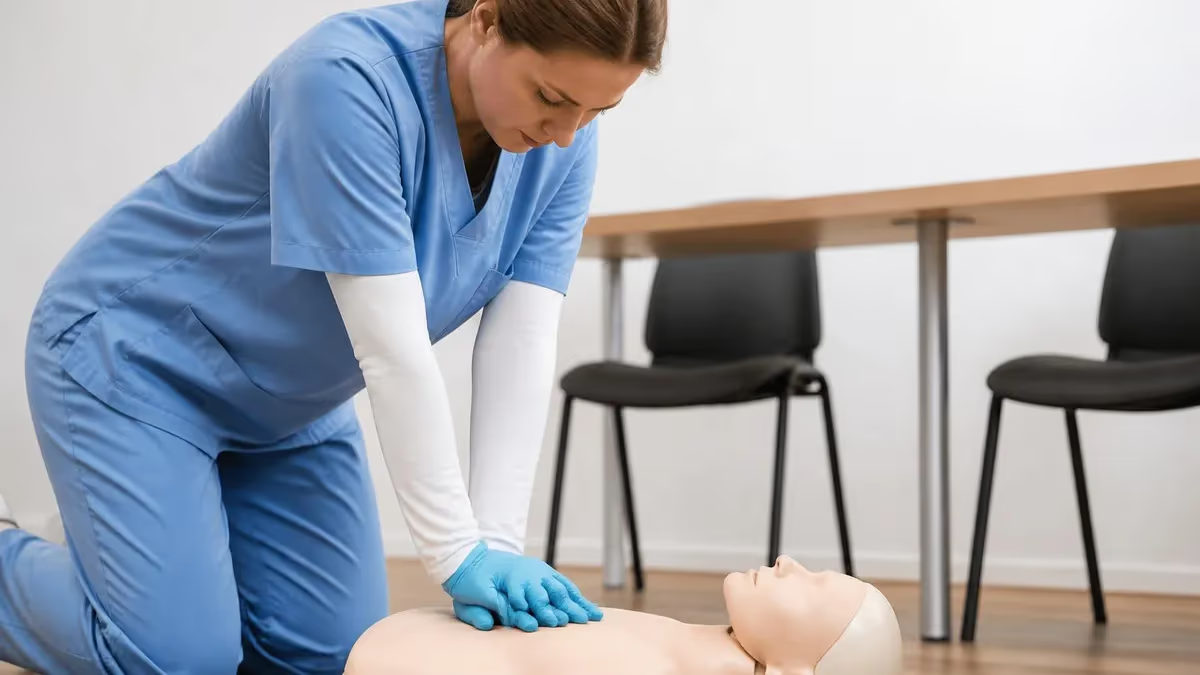
CPR BLS training is the foundational healthcare provider course that teaches you to recognize cardiac arrest, deliver high-quality chest compressions, use an automated external defibrillator, and coordinate team-based resuscitation. The course is required for nurses, paramedics, dental staff, medical students, lifeguards, personal trainers, and many corporate first responders. Unlike a layperson hands-only CPR class, a Basic Life Support course teaches the full chain of survival, integrates the acls algorithm at a foundational level, and prepares you to function inside a clinical or pre-hospital code team. Most courses run four to five hours and cost between $50 and $120.
The 2026 update to BLS guidelines emphasizes minimizing interruptions in compressions, achieving a compression depth of at least two inches in adults, and allowing complete chest recoil between compressions. Compression rate has been refined to 100 to 120 per minute, and the compression-to-ventilation ratio for single-rescuer adult CPR remains 30:2. These numbers seem small on paper but make a measurable difference in survival: studies show that compressions delivered at the correct rate and depth more than double the chance of return of spontaneous circulation in witnessed cardiac arrest.
Many learners confuse BLS with ACLS or PALS. BLS is the entry-level provider course that every clinician needs. ACLS adds advanced airway management, rhythm interpretation, and pharmacology for adult cardiac emergencies. PALS certification covers the same advanced skills but for pediatric patients. You generally must hold a current BLS card before sitting for ACLS or PALS, because the advanced courses assume you can already deliver flawless compressions, ventilations, and AED shocks under stress. Think of BLS as the operating system everything else runs on.
The course curriculum covers adult, child, and infant cpr, two-rescuer techniques, bag-valve-mask ventilation, AED operation in all three age groups, choking management for responsive and unresponsive victims, opioid-associated emergency response, and team dynamics. You will be tested on both a written multiple-choice exam and a hands-on megacode-style skills evaluation. Most providers fail the practical not because they cannot perform compressions but because they fumble the sequence: assess scene safety, check responsiveness, activate emergency response, check breathing and pulse simultaneously for no more than 10 seconds, then begin compressions.
Certification is valid for two years from the issue date. Renewal can be completed through a skills-only check if your card is current, or through a full repeat course if you let it lapse. The American Heart Association, American Red Cross, and Health & Safety Institute all issue cards accepted by hospitals nationwide. The national cpr foundation also offers fully online courses, but these are not universally accepted by clinical employers, so always verify with your employer's education department before enrolling in an online-only program.
Whether you are renewing for a hospital job, completing a clinical rotation prerequisite, or stepping into your first EMS role, this guide walks you through every requirement, cost, study tip, and common pitfall. You'll see exactly what to expect on test day, how to prepare for the practical skills station, and how BLS connects to the broader resuscitation knowledge base including life support algorithms, post-arrest care, and recognition of high-risk arrhythmias before they deteriorate into arrest.
If you want the full picture, the cpr bls training guide walks through it step by step.
For a deeper look at this topic, see our guide to cpr bls training.
CPR BLS Training by the Numbers

BLS Course Structure & Core Modules
Scene safety, responsiveness check, simultaneous breathing and pulse check, activation of EMS, high-quality compressions at 100–120/min, and integration of an AED as soon as it arrives.
Modified compression depth (about 1.5 inches for infants, 2 inches for children), two-thumb encircling technique for infants with two rescuers, and a 15:2 ratio in two-rescuer pediatric resuscitation.
Pad placement for adults, children, and infants under 8, shock-advised vs no-shock-advised rhythms, and the critical concept of minimizing pause time around defibrillation to keep perfusion pressure high.
Closed-loop communication, clear roles, constructive intervention, and knowledge sharing during a code. BLS-level providers must function inside a larger team led by ACLS or physician staff.
Abdominal thrusts for responsive adults, chest thrusts for pregnant or obese patients, back blows and chest thrusts for infants, and naloxone administration for suspected opioid overdose during arrest.
A full BLS course is structured around the chain of survival: early recognition and activation, early CPR with high-quality compressions, rapid defibrillation, advanced resuscitation, post-cardiac arrest care, and recovery. BLS providers own the first three links and hand off seamlessly to ACLS or pediatric teams. Your training will repeatedly drill this sequence because hesitation at any link drops survival rates dramatically. Every minute without defibrillation in a shockable rhythm reduces survival by roughly 7 to 10 percent, which is why AED retrieval and pad placement are treated as urgent priorities.
Compression quality is the single most important variable. Instructors will use a feedback device or manikin sensor to grade your depth, rate, recoil, and hand position. Adults need compressions at least two inches deep but not exceeding 2.4 inches, with full recoil between each compression. Leaning on the chest, even slightly, prevents venous return and tanks coronary perfusion pressure. Compression fraction — the percentage of code time spent actually compressing — should be at least 60 percent, and elite teams push above 80 percent.
Ventilation technique is where many providers stumble. Over-ventilation is one of the most common errors in real resuscitations. Each breath should last about one second, produce just enough chest rise to be visible, and be delivered without interrupting compressions once an advanced airway is in place. With a bag-valve-mask, use the E-C clamp technique, and consider a two-person BVM seal whenever possible. Excessive tidal volume increases intrathoracic pressure, reduces venous return, and worsens outcomes — a counterintuitive but critical concept.
The respiratory rate during CPR matters too. For an adult in cardiac arrest with an advanced airway, deliver one breath every six seconds, or about 10 breaths per minute. For rescue breathing in a patient with a pulse but inadequate breathing, the rates are different: one breath every six seconds for adults and one every two to three seconds for children and infants. Memorizing these rates cold is non-negotiable because they appear on nearly every written exam and you will be expected to recite them during the skills station.
AED use is integrated throughout the course. You'll learn to turn the device on first, attach pads to dry bare skin, clear the patient before analysis, and shock without delay if the device advises. Pediatric pads or a pediatric key should be used for children under 8 or weighing less than 55 pounds when available, but adult pads are acceptable if pediatric pads are not on hand. Never delay defibrillation searching for pediatric pads — adult pads on a child save more lives than no defibrillation at all.
The course also addresses recognition of agonal breathing, which is frequently mistaken for normal breathing by panicked rescuers. Agonal gasps are slow, irregular, sometimes accompanied by snoring or gurgling sounds, and represent brainstem reflexes — not effective ventilation. If you see these, treat the patient as in cardiac arrest. Similarly, the position recovery technique applies only to unresponsive patients who are clearly breathing normally with a pulse, not to suspected arrest victims who still need immediate compressions.
CPR Practice Test Questions
Prepare for the CPR Cardiopulmonary Resuscitation Practice exam with our free practice test modules. Each quiz covers key topics to help you pass on your first try.
CPR Basic CPR
CPR Exam Questions covering Basic CPR. Master CPR Test concepts for certification prep.
CPR and First Aid
Free CPR Practice Test featuring and First Aid. Improve your CPR Exam score with mock test prep.
CPR (Cardiopulmonary Resuscitation) Adult ...
CPR Mock Exam on (Cardiopulmonary Resuscitation) Adult CPR and AED Usage. CPR Study Guide questions to pass on your first try.
CPR (Cardiopulmonary Resuscitation) Airway...
CPR Test Prep for (Cardiopulmonary Resuscitation) Airway Obstruction and Choking. Practice CPR Quiz questions and boost your score.
CPR (Cardiopulmonary Resuscitation) Cardio...
CPR Questions and Answers on (Cardiopulmonary Resuscitation) Cardiopulmonary Emergency Recognition. Free CPR practice for exam readiness.
CPR (Cardiopulmonary Resuscitation) Child ...
CPR Mock Test covering (Cardiopulmonary Resuscitation) Child and Infant CPR. Online CPR Test practice with instant feedback.
CPR (Cardiopulmonary Resuscitation) High-P...
Free CPR Quiz on (Cardiopulmonary Resuscitation) High-Performance Team Dynamics. CPR Exam prep questions with detailed explanations.
CPR (Cardiopulmonary Resuscitation) Legal ...
CPR Practice Questions for (Cardiopulmonary Resuscitation) Legal and Ethical Considerations. Build confidence for your CPR certification exam.
CPR for Specific Populations
CPR Test Online for for Specific Populations. Free practice with instant results and feedback.
CPR Airway & Breathing Management
CPR Exam Questions covering Airway & Breathing Management. Master CPR Test concepts for certification prep.
CPR Assessment & Recognition of Cardiac Ar...
Free CPR Practice Test featuring Assessment & Recognition of Cardiac Arrest. Improve your CPR Exam score with mock test prep.
CPR Chest Compressions & Defibrillation
CPR Mock Exam on Chest Compressions & Defibrillation. CPR Study Guide questions to pass on your first try.
CPR Post-Resuscitation Care & Recovery
CPR Test Prep for Post-Resuscitation Care & Recovery. Practice CPR Quiz questions and boost your score.
ACLS Algorithm Foundations Inside BLS
Although the full acls algorithm is taught in the advanced course, BLS providers must understand the entry points. The cardiac arrest algorithm begins exactly where BLS ends: high-quality CPR is already in progress, the AED or monitor is attached, and the team is checking rhythm every two minutes. BLS providers continue compressions while ACLS providers manage the airway and administer drugs like epinephrine every three to five minutes.
Recognizing shockable versus non-shockable rhythms at a conceptual level helps BLS responders anticipate what's coming next. Ventricular fibrillation and pulseless ventricular tachycardia are shocked. Asystole and pulseless electrical activity are not — they require continued compressions, epinephrine, and a search for reversible causes. Understanding this prevents the BLS rescuer from pausing compressions unnecessarily when no shock is advised.

Online vs In-Person BLS Training: Which Is Better?
- +In-person courses include hands-on manikin practice with real-time instructor feedback
- +Practical skills evaluation is completed on the same day with no follow-up appointment
- +Cards issued by AHA or Red Cross are universally accepted by U.S. hospitals and clinics
- +Group dynamics rehearsed live, which is closer to real code-team performance
- +Instructors can spot subtle errors like incomplete chest recoil or shallow compressions
- +Networking with other healthcare students and providers in your local area
- −Online-only courses save 2–3 hours and let you study at your own pace at home
- −Lower price points, often $20–$60 cheaper than blended or classroom options
- −No commute, no scheduling conflicts with shift work or clinical rotations
- −Some employers do not accept online-only certification from non-AHA providers
- −sometimes share the cpr acronym confusing search
- −Skills not validated in-person can leave gaps in real-world muscle memory
Pros and Cons at a Glance
| Pros | Cons |
|---|---|
| In-person courses include hands-on manikin practice with real-time instructor feedback | No commute, no scheduling conflicts with shift work or clinical rotations |
| Practical skills evaluation is completed on the same day with no follow-up appointment | Some employers do not accept online-only certification from non-AHA providers |
| Group dynamics rehearsed live, which is closer to real code-team performance | Skills not validated in-person can leave gaps in real-world muscle memory |
BLS Exam Preparation Checklist
- ✓Memorize compression rate (100–120/min) and depth (≥2 inches adult, ~2 inches child, ~1.5 inches infant)
- ✓Know the 30:2 single-rescuer ratio for all ages and the 15:2 two-rescuer pediatric ratio
- ✓Practice the E-C clamp technique for one-rescuer BVM and the thumbs-up two-rescuer seal
- ✓Memorize ventilation rates: 10/min with advanced airway in arrest; 10/min adult rescue breathing
- ✓Know pediatric rescue breathing: every 2–3 seconds (20–30 breaths per minute)
- ✓Drill AED steps: power on, attach pads, clear, analyze, shock, immediately resume compressions
- ✓Review choking sequence: abdominal thrusts responsive adult, back blows and chest thrusts infants
- ✓Identify agonal breathing as a sign of cardiac arrest, not adequate respiration
- ✓Practice opioid overdose response with naloxone alongside continued ventilations or CPR
- ✓Run at least two full megacode simulations with a partner before exam day
When in doubt, push hard and push fast.
The most commonly missed exam question involves a healthcare provider who finds an unresponsive adult and is unsure whether the patient has a pulse. The correct answer is to begin compressions if you cannot definitively feel a pulse within 10 seconds. Hesitation kills more patients than any technical error in chest compression depth.
AED literacy is one of the highest-yield skills in BLS, and many test-takers ask what does aed stand for: automated external defibrillator. The device analyzes the patient's rhythm and delivers a shock only when it detects a shockable rhythm. Modern AEDs guide rescuers with voice prompts, but you should never wait passively — the device pauses compressions during rhythm analysis, and every second of that pause matters. Pre-charge the device when possible, clear the patient quickly, deliver the shock, and resume compressions within five seconds of delivery.
Pad placement varies by patient size. For adults, the anterior-lateral position is standard: one pad below the right clavicle, the other on the left lateral chest. For infants and small children, use anterior-posterior placement — one pad on the chest, one on the back — so the pads don't touch each other. Wet skin, medication patches, implanted pacemakers, and excessive chest hair all require quick adjustments. Wipe water off the chest, remove any visible patches with a gloved hand, place pads at least one inch from a pacemaker bulge, and shave or strip chest hair if pad adhesion is poor.
Infant cpr requires specific technique modifications you must master before testing. For a single rescuer, use two fingers in the center of the chest just below the nipple line, compressing about 1.5 inches at a rate of 100 to 120 per minute. For two rescuers, switch to the two-thumb encircling hands technique, which produces deeper, more consistent compressions and better hemodynamics. Always avoid compressing on the xiphoid process, and provide ventilations with just enough volume to see the chest rise — over-ventilation is even more harmful in infants than adults because their small lungs are easily over-inflated.
Choking management is tested on every BLS exam. For a responsive adult or child older than one year, deliver abdominal thrusts until the object is expelled or the victim becomes unresponsive. For pregnant or obese victims, use chest thrusts instead. For infants under one, alternate five back blows and five chest thrusts while supporting the head and neck. If the victim becomes unresponsive, lower them to the ground, begin CPR starting with compressions, and check the mouth for the object only when opening the airway for ventilation — never perform blind finger sweeps.
Opioid overdose response is integrated into the modern BLS curriculum because of the ongoing overdose crisis. For a suspected opioid overdose with a pulse but inadequate breathing, deliver rescue breaths and administer naloxone (intranasal or intramuscular) per local protocol. If there is no pulse, treat as cardiac arrest with full CPR and consider naloxone as an adjunct. The same approach applies whether you encounter the patient in a hospital, on the street, or at home — early ventilation often makes the most immediate difference because the underlying problem is respiratory arrest.
Maternal cardiac arrest deserves special attention. For a pregnant patient in the second half of pregnancy, perform manual left uterine displacement during compressions to relieve aortocaval compression. Place defibrillation pads in the standard position, and do not hesitate to shock — the fetus is in no greater danger from defibrillation than from a dead mother. Coordinate early with obstetric and neonatal teams for possible perimortem cesarean section if return of spontaneous circulation is not achieved within four minutes.
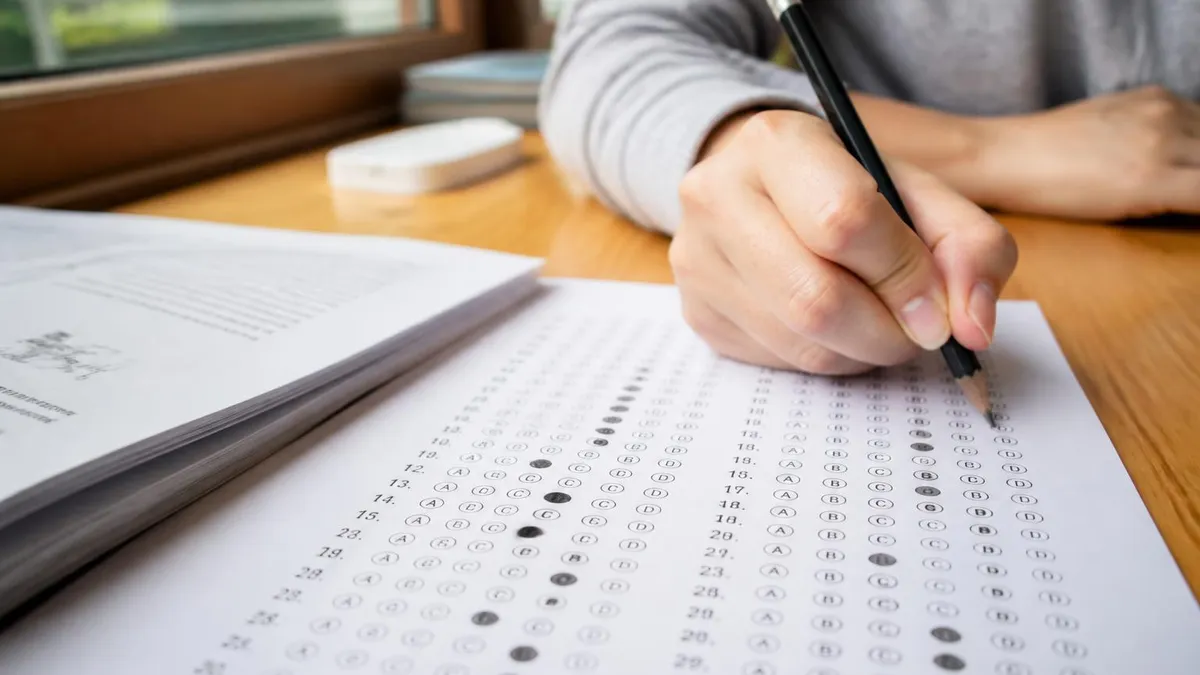
Always verify your training provider is American Heart Association, American Red Cross, or American Safety & Health Institute affiliated to ensure your card will be accepted by healthcare employers and credentialing bodies.
Choosing the right certification provider matters as much as passing the course. The American Heart Association issues the most widely accepted card in U.S. hospitals and is required by most state nursing boards, residency programs, and EMS agencies. The Red Cross BLS for Healthcare Providers is equally rigorous and accepted by most employers, though a small number of hospital systems still specify AHA-only. The Health & Safety Institute issues cards under brands like ASHI and MEDIC FIRST AID, also broadly accepted. Always confirm with your specific employer or school before paying for a course.
Course delivery formats include traditional classroom, blended (online cognitive portion plus in-person skills check), and fully online — though fully online certification is restricted in scope and not accepted everywhere. The blended format is the most popular among working healthcare providers because it lets you complete the lecture portion on your own schedule and book a 60-90 minute skills check at a local training center. The online cognitive module typically takes two to three hours and includes embedded scenario videos and knowledge checks.
Cost ranges from about $55 for a basic blended course at a community training center to $120 or more at a hospital-run program with bundled study materials. Renewal is usually $20 to $30 cheaper than initial certification because the cognitive portion is shorter. Some employers reimburse certification costs or run free internal courses for staff, so check with your HR or education department before paying out of pocket. Free community classes exist but are usually layperson hands-only CPR, not healthcare provider BLS.
Renewing your card is straightforward if you stay on top of the expiration date. The two-year clock starts on the issue date, not the day you took the course. Most providers send email reminders 60 and 30 days before expiration. If you let your card lapse, you'll need to take the full initial course again rather than the shorter renewal course, which means extra cost and time. Mark your calendar, set a phone reminder, and renew at least three weeks before expiration to allow time for skills check scheduling.
Digital cards are now standard. You can download your eCard from the AHA Atlas portal, Red Cross account, or HSI portal within 24 hours of passing your final skills evaluation. Most hospitals now accept the digital QR-coded card directly, but many providers also print a copy for their wallet. Employers can scan the QR code to verify the card is real and currently valid — a major improvement over the old paper card system, where forged cards occasionally slipped through hiring verification.
Beyond the card itself, BLS is the gateway credential to advanced life support training. Once you hold a current BLS card, you can register for ACLS, PALS, NRP (Neonatal Resuscitation Program), or specialty courses like PEARS and BLS Instructor. Many providers stack BLS and ACLS in the same week to minimize time off work, and some bundled course packages discount the combined registration. If you're entering critical care, emergency medicine, or anesthesia, plan for BLS, ACLS, and often PALS within your first year of practice.
On exam day, eat a real meal, hydrate, and arrive 15 minutes early so you have time to settle and stretch. You'll be tested in two parts: a written multiple-choice exam, usually 25 questions with a passing score of 84 percent, and a hands-on skills test on an adult and infant manikin. The written portion takes about 25 minutes and the skills test takes another 25 to 40 minutes depending on whether you're tested individually or in a pair with another candidate. Bring a snack — back-to-back testing on an empty stomach is a needless handicap.
During the skills check, narrate your actions. Saying "scene is safe," "checking responsiveness," "calling for help and an AED," and "checking breathing and pulse for no more than 10 seconds" tells the instructor exactly what you're doing and prevents marks-off for skipped steps. Even if you perform the action correctly, instructors cannot give credit for steps they cannot verify. Speaking your sequence out loud also slows your hands just enough to prevent the rushed, sloppy movements that often cost candidates points on chest recoil or hand placement.
Many candidates are surprised by how physically demanding two minutes of high-quality compressions actually is. Practice at home on a firm surface (couch cushions and beds give false feedback) with a metronome app set to 110 beats per minute. The Bee Gees song Stayin' Alive is the classic cadence cue at 103 bpm, but any 100–120 bpm song works. If you fatigue before two minutes, your compression depth will drop in the second half — exactly when the rhythm check and shock decision happen during a real code, so train for endurance not just technique.
If you fail any portion, you typically get one remediation attempt the same day or within 30 days. Failure usually traces back to one of three things: inadequate compression depth, slow recognition of cardiac arrest, or skipping a step in the AED sequence. Ask your instructor for specific feedback so you can drill the exact deficit before retesting. Don't take the failure personally — instructor-led feedback is more useful than years of self-practice if you absorb it without ego.
After certification, keep your skills sharp. Studies show CPR competency degrades within three to six months without practice. Many hospitals now run quarterly "low-dose, high-frequency" refresher drills lasting just 5 to 10 minutes, which dramatically improves real-world performance compared to a single two-year course. If your employer doesn't offer these, organize informal practice with colleagues on a training manikin in a break room or skills lab. Even five minutes a month maintains compression quality far better than nothing.
Finally, remember that BLS is a team skill, not just a personal skill. The next time you're in a code, focus on what your role is in that exact moment — compressions, ventilations, AED, recorder, or backup — and execute it cleanly without trying to be everywhere at once. The best codes look almost boring because everyone knows their job and the team leader runs the algorithm calmly. That's the standard BLS training is preparing you to deliver, and it's the standard that saves lives at 3 a.m. when nothing else feels under control.
CPR Questions and Answers
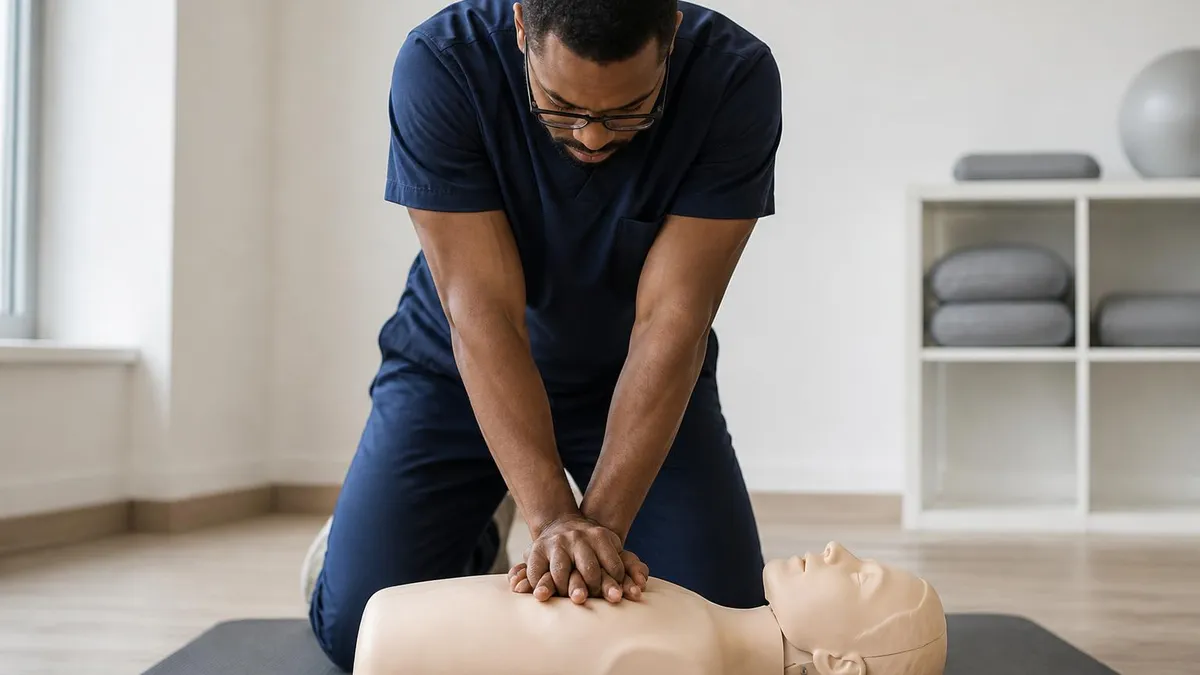
CPR Card Lookup: How to Verify, Replace, and Access Your CPR Certification in 2026
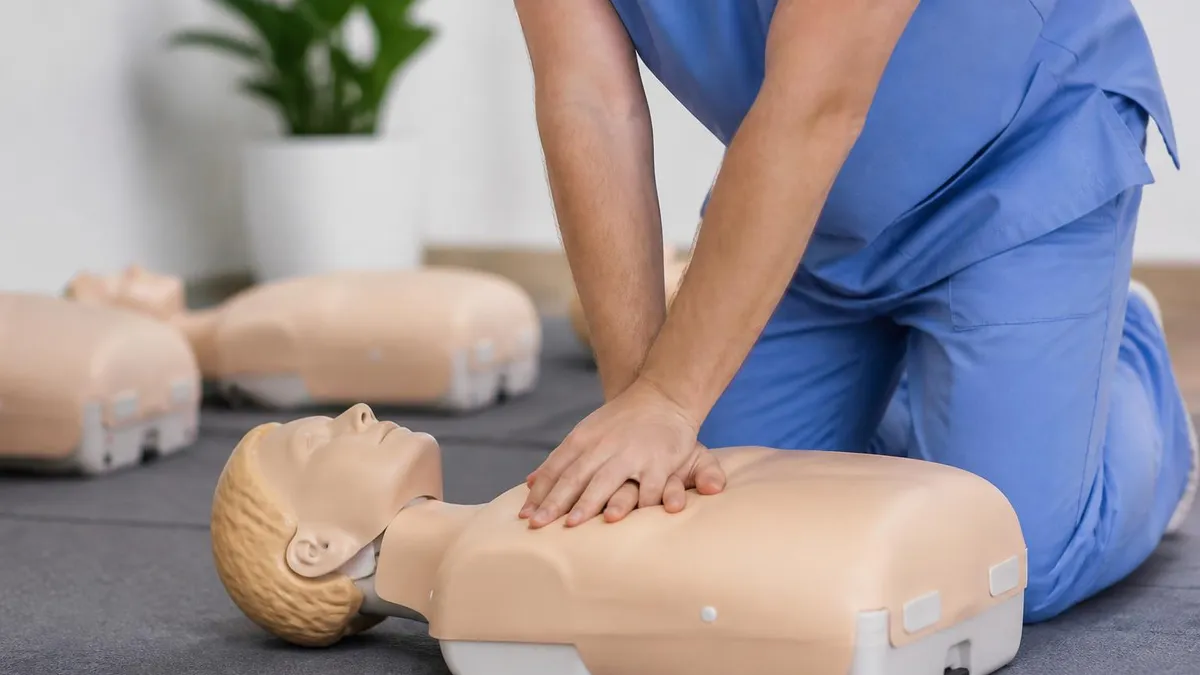
AHA CPR: What It Is, Which Course You Need, and How to Get Certified
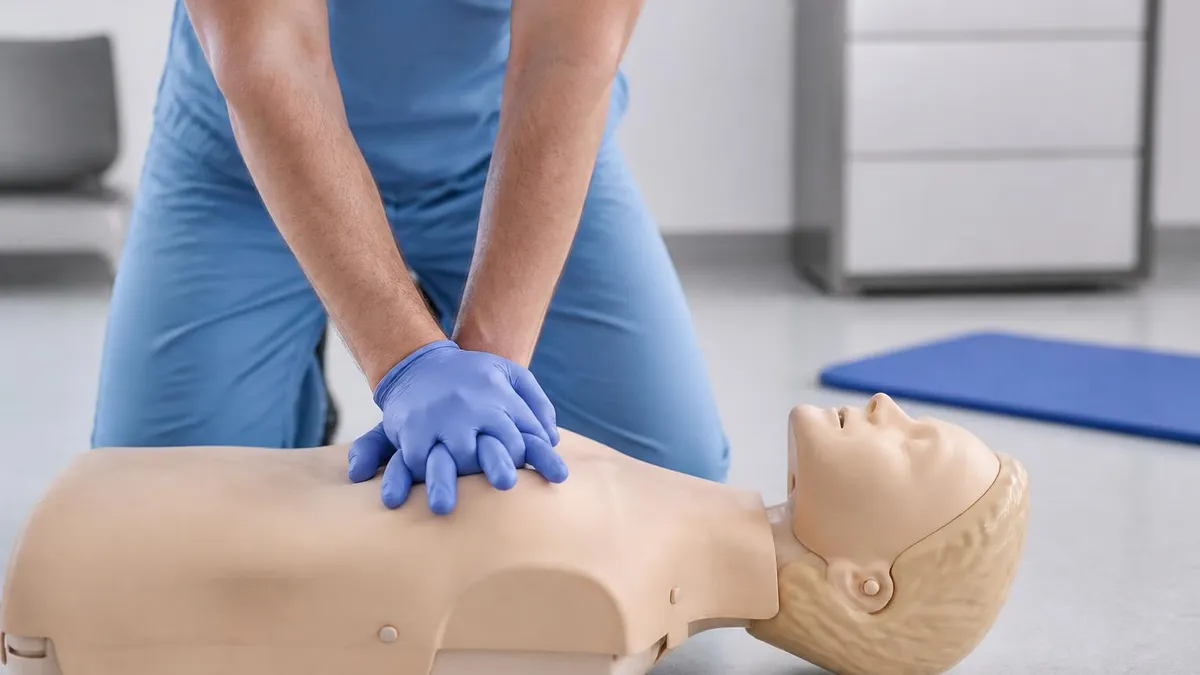
BLS CPR Course: Complete Guide to Basic Life Support Certification in 2026
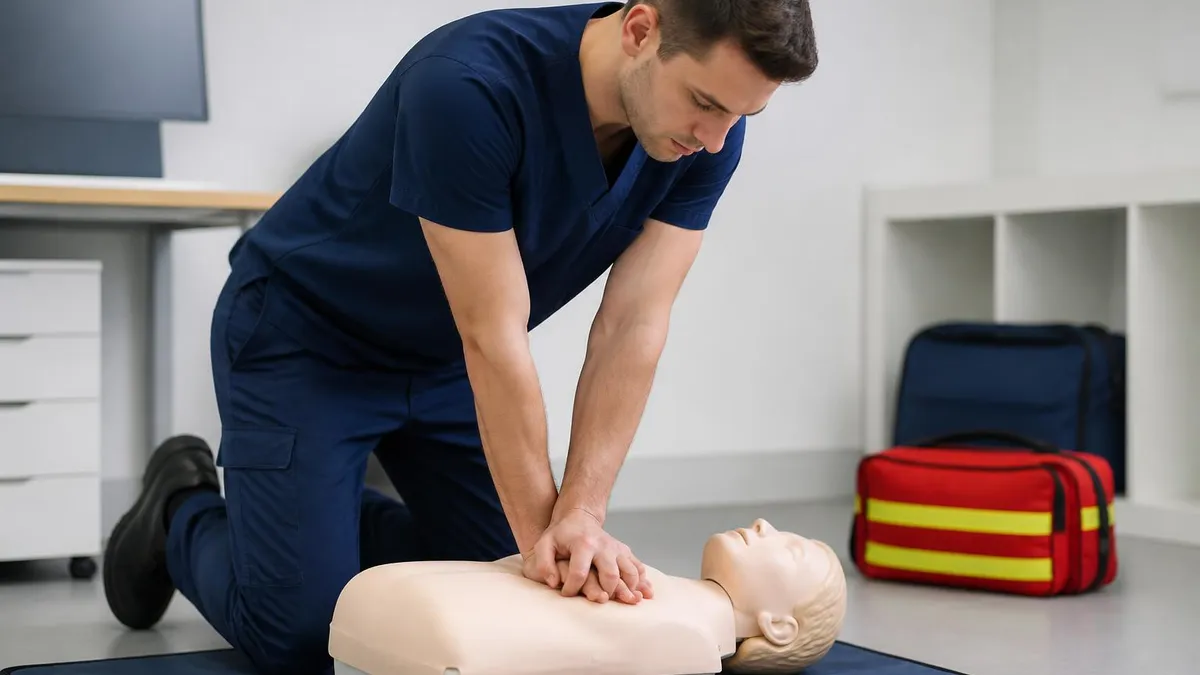
Adult CPR: Complete Step-by-Step Guide to Hands-Only and Standard CPR in 2026
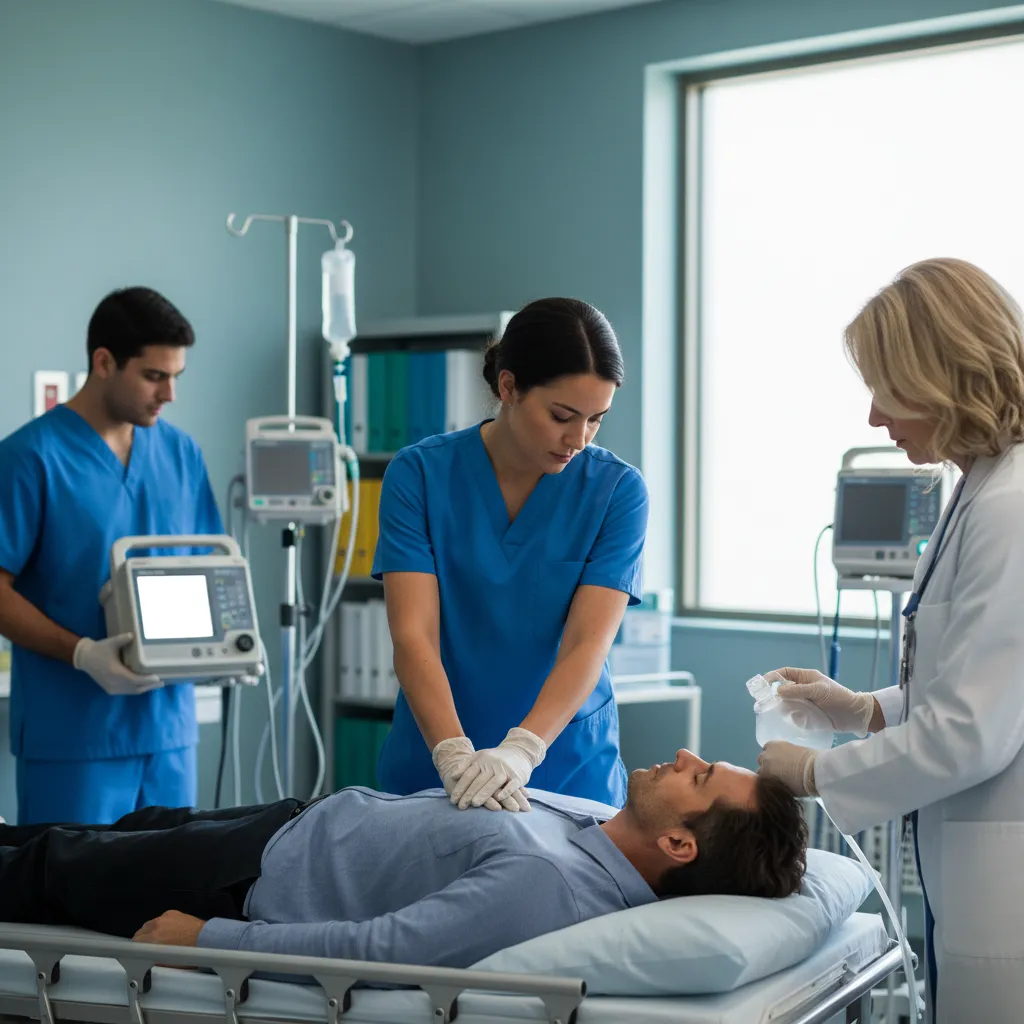
CPR - Cardiopulmonary Resuscitation: Complete Study Guide 2026
About the Author

Registered Nurse & Healthcare Educator
Johns Hopkins University School of NursingDr. Sarah Mitchell is a board-certified registered nurse with over 15 years of clinical and academic experience. She completed her PhD in Nursing Science at Johns Hopkins University and has taught NCLEX preparation and clinical skills courses for nursing students across the United States. Her research focuses on evidence-based exam preparation strategies for healthcare certification candidates.
Join the Discussion
Connect with other students preparing for this exam. Share tips, ask questions, and get advice from people who have been there.
View discussion (5 replies)