
Skills Module 3.0: Wound Care Pretest — Complete Study Guide for Wound Care Certification
Master wound care wound care certification with our Skills Module 3.0 pretest guide. Practice questions, exam tips & dressings covered. 🎓

If you are preparing for wound care certification, mastering the skills module 3.0: wound care pretest is one of the most strategic steps you can take. This pretest module targets the core competencies that appear most frequently on credentialing exams such as the WCC, CWCN, and CWS. Understanding wound care wound care principles — from tissue assessment to dressing selection — forms the backbone of every question you will encounter. This guide walks you through every concept systematically, giving you the confidence to walk into exam day fully prepared.
Wound care wound care as a discipline covers far more ground than basic bandaging. It encompasses pathophysiology, wound classification, infection control, nutritional support, documentation using wound care icd 10 codes, patient education, and evidence-based dressing selection. The skills module 3.0 pretest is specifically designed to expose gaps in your foundational knowledge before you sit for the full exam. Think of it as a diagnostic tool: your wrong answers reveal exactly where to focus your remaining study hours.
One of the first concepts tested in the pretest is wound bed preparation. The TIME framework — Tissue, Infection/inflammation, Moisture balance, and Edge of wound — gives clinicians a structured approach to evaluating any wound regardless of etiology. Candidates who can apply this framework systematically tend to perform significantly better on both the pretest and the full certification exam. Memorizing the framework is not enough; you must be able to apply it to clinical vignettes describing real patient presentations.
Wound care products form another high-yield area on the pretest. You will encounter questions distinguishing hydrocolloids from alginates, foams from films, and standard gauze from advanced moisture-retentive dressings. Each product category has specific indications based on wound depth, exudate level, infection status, and patient tolerance. Knowing not just what each product is but when to use it — and critically, when NOT to use it — separates high scorers from average ones. The pretest will present you with complex scenarios requiring you to justify your dressing choice with clinical reasoning.
Infection management is a recurring theme across the skills module 3.0 pretest. Candidates must differentiate between contamination, colonization, critical colonization, and infection. They must also recognize the signs of biofilm, understand when systemic antibiotics are warranted versus topical antimicrobials, and know which wound care products have antimicrobial properties. Questions in this domain often use clinical photographs described in text, so developing strong pattern-recognition skills from your study materials is essential. Manuka honey wound care is one evidence-based antimicrobial option you should understand in depth, including its mechanism, appropriate wound types, and contraindications.
Patient-centered care and documentation accuracy also appear in the pretest. This includes correct coding practice, accurate measurement techniques, and defensible charting. Wound care icd 10 coding errors are a common pitfall for clinicians who have not studied documentation standards. The pretest will test your ability to select the correct code based on wound etiology, laterality, and chronicity. Pairing strong clinical knowledge with documentation accuracy is what the full wound care certification exam ultimately tests, and the skills module 3.0 pretest gives you a preview of exactly that challenge.
Finally, understanding the scope of practice for a wound care nurse is essential context for interpreting pretest questions correctly. Some questions hinge on whether an intervention falls within nursing scope, requires a physician order, or demands a multidisciplinary team approach. Having a clear mental model of the wound care team — including the wound care nurse, the wound care center medical director, and allied health professionals — will help you select the most appropriate answer when questions present ambiguous clinical situations.
Wound Care Certification by the Numbers

Wound Care Certification Exam Format
| Section | Questions | Time | Weight | Notes |
|---|---|---|---|---|
| Wound Assessment & Diagnosis | 45 | 54 min | 30% | Etiology, staging, wound bed prep |
| Wound Treatment & Products | 52 | 62 min | 35% | Dressings, biologics, advanced therapies |
| Infection & Inflammation Control | 30 | 36 min | 20% | Biofilm, antimicrobials, systemic signs |
| Documentation & Quality Improvement | 23 | 28 min | 15% | ICD-10 coding, outcomes measurement |
| Total | 150 | 3 hours | 100% |
Wound assessment is the foundation of every question in the skills module 3.0 pretest, and it begins with accurate wound classification. Wounds are broadly categorized by etiology — pressure, venous, arterial, diabetic/neuropathic, surgical, traumatic, and malignant. Each etiology carries distinct physical characteristics, risk factors, and treatment protocols. A pressure injury over a bony prominence looks and behaves very differently from a venous leg ulcer with a shallow, irregular bed. On the pretest, you must rapidly identify etiology from a clinical description and then match your assessment findings to the correct classification system.
The National Pressure Injury Advisory Panel (NPIAP) staging system is one of the most frequently tested classification frameworks. Stage 1 involves non-blanchable erythema of intact skin. Stage 2 is partial-thickness skin loss with exposed dermis. Stage 3 represents full-thickness skin loss without exposed fascia. Stage 4 involves full-thickness skin and tissue loss with exposed fascia, muscle, tendon, or bone. Unstageable injuries are covered with slough or eschar preventing accurate staging. Deep tissue pressure injury presents as persistent non-blanchable deep red, maroon, or purple discoloration. Memorize these distinctions cold — the pretest will test subtle differences between stages.
Wound measurement techniques are another area where candidates lose easy points. Length is measured head to toe along the longest axis. Width is measured side to side perpendicular to length. Depth is measured at the deepest point using a sterile probe. Undermining describes tissue destruction extending under intact skin at the wound edges, while tunneling refers to a channel extending from the wound in any direction. Both must be measured in clock-face orientation, with 12 o'clock toward the patient's head. Consistent, reproducible measurement is essential for tracking healing trajectories over time.
The Wound Bed Preparation paradigm — specifically the TIME acronym — gives you a systematic approach to any wound regardless of etiology. Tissue management involves debridement of necrotic or devitalized tissue. Infection and inflammation control requires recognizing both overt infection and the subtler signs of critical colonization.
Moisture balance means selecting dressings that either add moisture to a dry wound or absorb excess exudate from a heavily draining wound. Edge effect addresses non-advancing or undermined wound edges that signal a stalled healing process requiring intervention such as a wound care clinic referral or advanced therapy. Hydrogel in wound care is a classic tool for addressing moisture deficits in dry, necrotic wounds requiring autolytic debridement.
Exudate assessment is a skill frequently underestimated by pretest candidates. Exudate characteristics include volume (scant, moderate, heavy), consistency (serous, serosanguineous, sanguineous, purulent), and odor. Heavy purulent exudate with a foul odor strongly suggests infection, while serosanguineous exudate in moderate amounts is typical of a healing wound. The pretest may present a wound description and ask you to interpret the exudate findings, select an appropriate dressing, or identify the next clinical action. Linking exudate characteristics to clinical decisions is a high-yield skill.
Periwound skin assessment is equally important in the pretest. Maceration — the white, soft, waterlogged appearance of surrounding skin — indicates excessive moisture and suggests the current dressing is not absorbing enough exudate. Excoriation, erythema, and denudation of periwound tissue can result from adhesive trauma, enzymatic damage from proteolytic exudate, or contact dermatitis from dressing components. Protecting the periwound skin is as important as treating the wound itself, and several pretest questions will test your ability to select protective interventions such as skin barriers, silicone dressings, or non-adhesive wound contact layers.
Wound photography and objective documentation tie together the entire assessment process. Accurate, consistent photography using standardized positioning and lighting creates a visual record that supports clinical decision-making, regulatory compliance, and reimbursement. The pretest may include questions about frequency of wound assessment documentation, required elements for defensible charting, or the nurse's legal obligations when wound deterioration is observed. A thorough understanding of documentation standards reinforces both your clinical competency and your readiness for real-world wound care practice.
Wound Care Dressings: What the Pretest Tests
Moisture-retentive dressings are among the most commonly tested wound care products on the skills module 3.0 pretest. Hydrocolloids create a gel when they contact wound exudate, maintaining a moist environment that promotes autolytic debridement and epithelialization. They are best suited for partial-thickness wounds with light to moderate exudate and intact periwound skin. Foam dressings offer superior absorption and are indicated for moderate to heavily draining wounds, including stage 3 pressure injuries and venous ulcers with significant drainage.
Alginate dressings, derived from seaweed, are highly absorbent and convert to a gel upon contact with wound fluid. They are ideal for heavily exudating wounds and can be used as packing material for deep cavity wounds or tunneling wounds. Transparent film dressings allow visual monitoring of the wound without removal and are appropriate for shallow wounds with minimal exudate, such as stage 1 and stage 2 pressure injuries. Hydrogel dressings add moisture to dry wounds and support autolytic debridement of eschar and slough, making them a key tool in the dressing selection toolkit.

Wound Care Certification: Is It Worth Pursuing?
- +Significantly higher earning potential — certified wound care nurses earn 15-25% more than non-certified peers
- +Expanded career opportunities including wound care center director and wound care NP roles
- +Nationally recognized credential that validates clinical expertise to employers and patients
- +Deeper clinical knowledge that directly improves patient outcomes and reduces wound complications
- +Professional credibility within multidisciplinary teams, supporting advocacy for evidence-based protocols
- +Eligibility for advanced positions in skilled nursing facilities, home health, and hospital wound programs
- −Significant upfront study investment — most candidates need 10-12 weeks of dedicated preparation
- −Exam fees and application costs can exceed $400-$500 depending on the certifying body
- −Continuing education requirements for recertification every 5 years add ongoing time and cost
- −Pass rates hover around 54% first attempt, meaning many candidates need to retake the exam
- −Clinical hour requirements may disqualify newer nurses from sitting for the exam immediately
- −Study materials, prep courses, and practice tests represent additional financial investment before exam day
Skills Module 3.0 Pretest Readiness Checklist
- ✓Memorize all six NPIAP pressure injury stages including unstageable and deep tissue injury definitions
- ✓Practice wound measurement using the clock-face system for tunneling and undermining documentation
- ✓Study the TIME wound bed preparation framework and apply it to at least 10 clinical case scenarios
- ✓Review wound care dressings by category: absorbency level, indication, contraindication, and change frequency
- ✓Differentiate contamination, colonization, critical colonization, and infection using clinical signs and lab findings
- ✓Study wound care icd 10 coding conventions for the most common wound etiologies and laterality rules
- ✓Review NPWT indications, contraindications, pressure settings, and troubleshooting for foam and canister issues
- ✓Practice identifying wound etiology from clinical descriptions — pressure vs. venous vs. arterial vs. neuropathic
- ✓Study nutritional requirements for wound healing including protein, vitamin C, zinc, and caloric needs
- ✓Complete at least two full-length wound care pretest simulations under timed, exam-like conditions

The 30-70 Rule for Wound Care Study
Research on certification exam performance consistently shows that candidates who spend 30% of their study time on content review and 70% on active practice questions outperform those who reverse this ratio. The skills module 3.0 pretest is your primary active-practice tool — use it early, use it often, and treat every wrong answer as a targeted study directive rather than a discouragement.
Documentation accuracy is not a peripheral skill for the wound care certification exam — it is a core competency tested throughout the skills module 3.0 pretest and the full credentialing examination. Wound care icd 10 coding is the standardized language that bridges clinical assessment with reimbursement, quality reporting, and legal defensibility.
Every wound care encounter must be coded accurately to reflect etiology, severity, laterality, and chronicity. Errors in coding can result in claim denials, audit flags, and in some cases, allegations of fraudulent billing. The pretest will present coding scenarios and ask you to identify the correct ICD-10-CM code or to spot an error in a provided code selection.
The most frequently tested ICD-10 categories in wound care include L89 (pressure ulcers), L97 (non-pressure chronic ulcers of lower extremity), L98.4 (chronic skin ulcer — unspecified location), E11.621 (type 2 diabetes with foot ulcer), and I83.009 (varicose veins with ulcer). Each of these categories contains multiple subcodes specifying staging, laterality, and tissue involvement depth. For pressure injuries specifically, the code must reflect the most recent documented stage even if the wound has improved — downgrading stage codes as wounds heal is a documented and tested coding error that candidates must avoid.
Accurate wound measurement documentation supports both clinical tracking and coding accuracy. Measurements must be recorded in centimeters (not inches) and must include length, width, and depth at every assessment. Tunneling and undermining measurements must also be documented using clock-face notation. When a wound has multiple tunnels, each must be documented separately with its own clock position and depth. This level of precision is tested directly on the pretest through scenario-based questions asking you to identify documentation errors or select the most complete documentation example from several options.
Outcome measurement tools add another layer of documentation knowledge tested on the pretest. The Bates-Jensen Wound Assessment Tool (BWAT), formerly called the Pressure Sore Status Tool, provides a standardized numerical score based on 13 wound characteristics. A lower score indicates a healing wound; a higher score reflects deterioration. The Wound Healing Index and the Photographic Wound Assessment Tool (PWAT) are other validated instruments that may appear on examination questions. Understanding which tool to apply in which clinical context — and how to interpret scores over time — demonstrates the documentation competency wound care certification exams require.
Defensible charting requires not just accuracy but timeliness and specificity. A wound assessment must be documented at every patient encounter where the wound is evaluated or treated. If a wound deteriorates between assessments, the documentation must reflect the exact changes observed, the clinical actions taken, and any notifications made to the physician or multidisciplinary team. Failure to document notification of wound deterioration is a major liability exposure that the pretest will address through legal or ethical scenario questions. The wound care nurse's role as a patient advocate and a documentation steward is clearly embedded in exam content.
Quality improvement and outcome tracking at the organizational level are also covered in the skills module 3.0 pretest. Hospital-acquired pressure injury (HAPI) rates are a nationally reported quality metric, and wound care nurses often lead or support HAPI prevention programs. Understanding how to calculate incidence versus prevalence, how to conduct a root cause analysis after a HAPI event, and how to design a unit-level prevention protocol are all within the scope of wound care certification content. The pretest may present an organizational scenario and ask you to identify the correct quality improvement response.
Electronic health record (EHR) integration has changed how wound care documentation flows. Many wound care programs now use dedicated wound care modules within the EHR that prompt for standardized assessment fields, auto-populate measurement trends, and generate wound photography attachments. However, these tools only improve documentation quality when the clinician understands the underlying standards. The pretest tests your foundational knowledge, not your ability to navigate a specific software system, which means the conceptual frameworks you master through pretest preparation will translate directly to EHR-based documentation in practice.
Most wound care certification programs require a minimum of 1,500-2,000 clinical hours in wound care within the past 3 years, along with a current RN license. Submitting an application without meeting the clinical hour requirement results in disqualification without refund. Check your certifying body's current eligibility criteria — requirements were updated in 2024 by several credentialing organizations, and grandfathering provisions for experienced nurses have specific deadlines.
Wound care certification opens career pathways that span acute care, post-acute care, home health, outpatient clinics, and wound care center leadership. The wound care nurse credential — whether WCC, CWCN, or CWS — signals to employers that you have achieved a nationally recognized standard of competency. This matters increasingly as healthcare systems build dedicated wound care programs to reduce hospital-acquired conditions, lower readmission rates, and improve CMS quality scores. Certified wound care nurses are routinely recruited to lead these programs, making certification a career accelerant rather than just a credential.
The wound care center model has expanded dramatically over the past decade. These outpatient specialty clinics bring together wound care nurses, physicians, hyperbaric technicians, vascular surgeons, and podiatrists under one roof to manage complex chronic wounds. Working in a wound care center near me provides exposure to a higher volume and acuity of wound types than most inpatient settings, which accelerates clinical skill development. For nurses pursuing certification, wound care center employment often fulfills clinical hour requirements more efficiently than general medical-surgical nursing.
The wound care nurse practitioner (NP) pathway is a growing area of career opportunity for advanced practice clinicians. NPs in wound care can independently diagnose, order diagnostic testing, prescribe medications including systemic antibiotics, and perform procedures such as sharp debridement.
This expanded scope of practice allows wound care NPs to function as de facto wound care center medical directors in many states, particularly in rural and underserved areas with limited access to wound care physicians. The demand for wound care NPs is projected to grow substantially over the next decade as the prevalence of diabetes and chronic venous insufficiency continues to rise.
Home health wound care is another career niche where certified wound care nurses are in high demand. Patients discharged from acute care with complex wounds — surgical dehiscence, stage 3 or 4 pressure injuries, or diabetic foot ulcers — require skilled nursing visits to assess wound progress, perform dressing changes, and coordinate care with the treating physician.
Home health wound care nurses must be highly autonomous, resourceful, and skilled at patient and caregiver education, since family members often perform dressing changes between skilled nursing visits. Certification strengthens your credibility with home health agencies and supports billing for specialized wound care services under Medicare Part A. Finding a wound care clinic or home health position that matches your certification goals is a strategic career step worth researching early.
Long-term care and skilled nursing facilities (SNFs) represent the highest-risk setting for pressure injury development, making certified wound care nurses essential in these environments. Regulatory requirements under the Centers for Medicare and Medicaid Services (CMS) mandate that SNFs have policies and systems to prevent and manage pressure injuries. Certified wound care nurses who work in SNFs often serve in a consultative or supervisory role, conducting weekly wound rounds, training staff on prevention protocols, and ensuring documentation meets survey standards. A deficiency citation for pressure injury management can result in significant financial penalties and reputational damage for a facility.
Wound care education and consulting represent less traditional but increasingly viable career paths for experienced certified wound care nurses. Healthcare system wound care programs, medical device companies, and wound care product manufacturers all employ clinical educators and consultants who train clinicians, develop educational content, and support product launches. These roles use your clinical expertise in a non-bedside capacity and often offer flexibility, travel, and competitive compensation. Many experienced wound care nurses transition into consulting after accumulating 5-10 years of direct clinical experience and a track record of program development or quality improvement leadership.
Staying current with evidence-based wound care practice is an ongoing professional responsibility regardless of your career setting. Wound care wound care guidelines are updated regularly by organizations including NPIAP, the Wound Healing Society, and the Association for the Advancement of Wound Care (AAWC). Reading peer-reviewed journals, attending wound care conferences, and completing continuing education credits are all part of maintaining certification and staying at the leading edge of your specialty. The skills module 3.0 pretest is your first step in this lifelong learning journey — and completing it successfully signals that your foundational knowledge is exam-ready.
Practical exam preparation for the skills module 3.0 wound care pretest requires a structured, multi-modal approach. Begin by completing a diagnostic pretest without any preparation to establish your baseline score and identify your weakest content domains. Use that initial score to prioritize your study calendar — allocate the most time to your lowest-scoring areas rather than reviewing content you already know well. This targeted approach is more efficient than a linear chapter-by-chapter review and will yield faster improvement on timed practice questions.
Spaced repetition is one of the most evidence-supported study techniques for certification exam preparation. Rather than cramming all wound care dressings content into one marathon session, distribute your dressing reviews across multiple shorter sessions spaced several days apart. Each repetition strengthens long-term retention and reduces the forgetting curve. Digital flashcard tools that implement spaced repetition algorithms can automate this process for high-volume factual content like ICD-10 codes, NPIAP staging criteria, and dressing indications and contraindications.
Active recall practice is significantly more effective than passive re-reading of textbook content. After reading a section on wound infection management, close the book and attempt to reconstruct the key concepts from memory before checking your accuracy. This retrieval practice approach strengthens the neural pathways associated with the information and more closely mirrors the cognitive demands of answering exam questions under time pressure. Combine active recall with practice questions that require application rather than simple recognition.
Clinical case analysis is the highest-order preparation strategy for the wound care pretest. Obtain a collection of complex wound care clinical cases — ideally from wound care textbooks, journal articles, or case-based question banks — and work through each one systematically using the TIME framework and a structured decision-making process. Identify the wound etiology, assess wound bed characteristics, select an appropriate dressing, plan the reassessment timeline, and document the case using correct ICD-10 terminology. This integrated practice mirrors the cognitive complexity of the actual certification examination.
Study group participation can accelerate preparation when structured appropriately. Peer teaching is one of the most effective learning strategies — when you explain a concept to a colleague, you identify gaps in your own understanding and consolidate your knowledge simultaneously. Organize study sessions around specific pretest domains, assign each participant a topic to present, and use practice questions as discussion prompts. Online study communities for wound care certification candidates provide access to peers across the country who are preparing for the same exam and can share resources, strategies, and encouragement.
Time management during the actual exam is a skill that requires deliberate practice. The wound care certification exam allocates approximately 72 seconds per question for a 150-question exam completed in 3 hours. Some questions will take less time; complex clinical vignettes may require 2-3 minutes of careful analysis. Practice pacing yourself during timed pretest simulations to develop an accurate sense of your natural pace and identify whether you tend to rush or linger. Build in a buffer by targeting completion of all questions with at least 15 minutes remaining for review of flagged items.
On the day before the exam, shift your preparation from intensive study to light review and mental preparation. Attempting to learn new material the day before the exam is counterproductive — your brain needs rest to consolidate everything you have studied over the preceding weeks.
Review your summary notes and flashcards briefly, then engage in stress-reduction activities such as moderate exercise, adequate sleep, and proper nutrition. Arrive at the testing center early with your required identification documents. Approach the exam with confidence grounded in your systematic preparation — the skills module 3.0 wound care pretest has already given you a clear picture of your readiness.
Sample Wound Care Certification Exam Practice Questions
Try these questions from our free Wound Care Certification Exam practice tests. The correct answer and an explanation follow each question.
When evaluating wound exudate as part of wound bed preparation, which exudate characteristic suggests wound infection rather than normal healing?
- A. Clear to straw-colored serous exudate
- B. Thin, blood-tinged serosanguineous exudate
- C. Cloudy, malodorous, purulent exudate
- D. Moderate serous exudate after dressing change
Answer: C. Cloudy, malodorous, purulent exudate
Purulent, malodorous, cloudy exudate is a hallmark of wound infection requiring bioburden reduction strategies.
A wound care specialist identifies lymphedema as a contributing factor in a patient's non-healing lower extremity wound. Lymphedema impairs healing primarily because:
- A. Lymphatic fluid has a high pH that inactivates wound healing enzymes
- B. Protein-rich edema fluid creates a hypoxic environment and serves as a bacterial culture medium
- C. Lymphatic obstruction prevents platelet delivery to the wound site
- D. Excess lymph fluid dilutes growth factors below therapeutic concentrations
Answer: B. Protein-rich edema fluid creates a hypoxic environment and serves as a bacterial culture medium
Lymphedema causes protein-rich fluid accumulation that increases tissue oxygen diffusion distance, impairs immune cell trafficking, and supports bacterial growth.
A wound care nurse selects a foam dressing for a moderate-exudate wound. What is the PRIMARY advantage of foam over gauze in this situation?
- A. Foam is cheaper than gauze
- B. Foam provides a moist wound environment and thermal insulation
- C. Foam eliminates the need for secondary dressings
- D. Foam has inherent antimicrobial properties
Answer: B. Foam provides a moist wound environment and thermal insulation
Foam dressings maintain a moist healing environment and provide thermal insulation, which promotes wound healing compared to gauze.
In wound bed preparation, which factor is MOST responsible for converting a chronic wound environment to an acute wound environment?
- A. Increasing the frequency of dressing changes
- B. Effective debridement that removes senescent cells and reduces bioburden
- C. Applying growth factor therapy without debridement
- D. Increasing systemic nutritional support alone
Answer: B. Effective debridement that removes senescent cells and reduces bioburden
Effective debridement removes senescent cells, reduces bioburden, and resets the wound biochemistry toward an acute, healing-responsive state.
Wound Care Questions and Answers
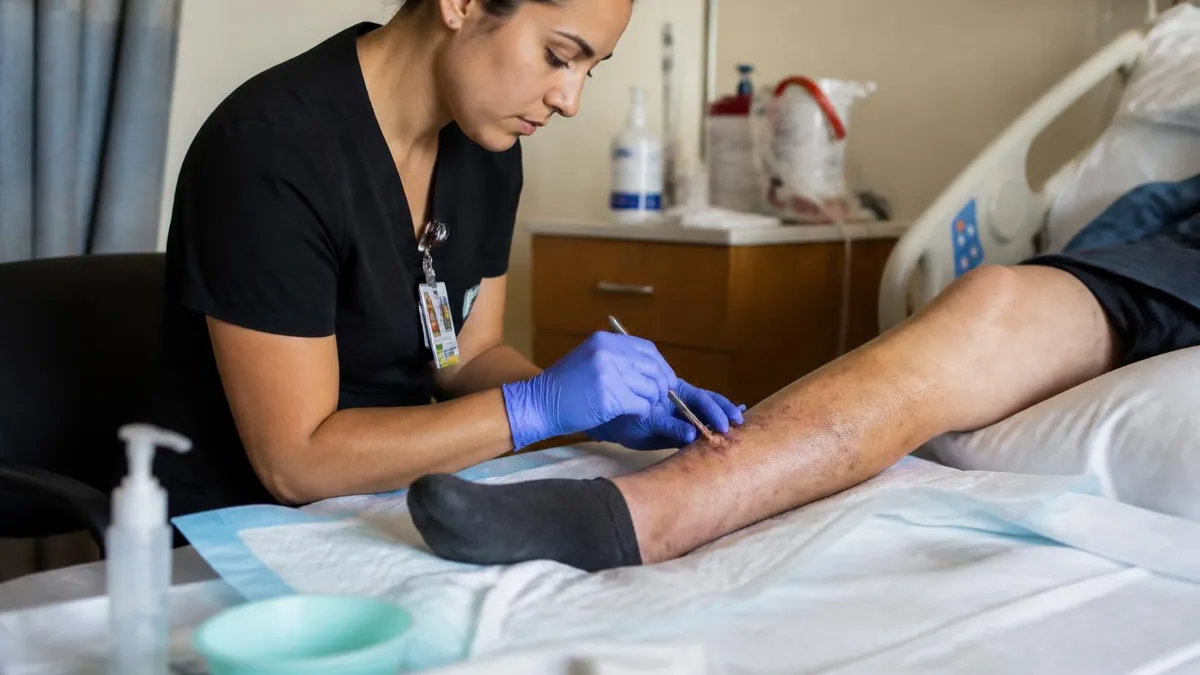
Hydrogel in Wound Care: How It Works, When to Use It, and Types in 2026

Wound Care Procedures: A Complete Guide to Sterile Gloves, Dressings, and Best Practices
After Surgery Wound Care: Complete Recovery Guide for Patients & Caregivers
Wound Care NP Jobs: Career Guide for Nurse Practitioners in Wound Management

Wound Care Courses: Your Complete Guide to Training, Certification, and Career Advancement
About the Author

Registered Nurse & Healthcare Educator
Johns Hopkins University School of NursingDr. Sarah Mitchell is a board-certified registered nurse with over 15 years of clinical and academic experience. She completed her PhD in Nursing Science at Johns Hopkins University and has taught NCLEX preparation and clinical skills courses for nursing students across the United States. Her research focuses on evidence-based exam preparation strategies for healthcare certification candidates.