
Skills Module 3.0: Wound Care Pretest — Complete Guide to Wound Care Certification
Master wound care wound care certification with Skills Module 3.0 pretest strategies, dressings, ICD-10 codes, and free practice questions. ✅

The skills module 3.0: wound care pretest is a critical milestone for every clinician preparing to earn wound care certification. This structured pretest evaluates your readiness across foundational domains — wound assessment, wound care wound care protocols, dressing selection, infection control, and patient education — giving you a precise diagnostic snapshot before you sit for the full certification exam.
Whether you are a wound care nurse working at a wound care center or a clinician studying independently, the module helps you pinpoint gaps so you can target your remaining study time with precision rather than guessing at what the exam will emphasize.
Wound care wound care is a field that demands both clinical judgment and encyclopedic product knowledge. The Skills Module 3.0 pretest reflects this dual demand by blending scenario-based questions with knowledge recall items. You will encounter cases involving pressure injuries staged I through IV, venous and arterial ulcers, diabetic foot wounds, surgical dehiscence, and complex burns.
Each question type mirrors the cognitive level tested on the board exam, so scoring well on the pretest is a reliable predictor of success on certification day. Understanding your score report — not just the number, but which domain triggered the most errors — is the first actionable step toward closing knowledge gaps.
If you have been searching for wound care near me resources or specialty wound care center programs, you already understand that wound care is a fast-evolving clinical discipline. New wound care products, advanced wound care dressings, and biologics enter the market every year, and certification bodies update their blueprints to keep pace.
Skills Module 3.0 specifically addresses these contemporary additions, ensuring that candidates who work through the pretest are reviewing content that reflects current evidence-based practice rather than outdated clinical guidelines. That currency is one reason clinicians report that the pretest feels harder than older study materials — it is designed to stretch your thinking beyond rote memorization.
For nurses and allied health professionals new to the specialty, the pretest can initially feel overwhelming. The breadth of wound care wound care content — from hydrogel in wound care applications to advanced negative pressure wound therapy — means that every question may seem to draw on a different knowledge domain.
The key insight is that Skills Module 3.0 is not designed to intimidate; it is designed to simulate. Every scenario you encounter in the pretest mirrors a realistic clinical situation you may face during the board exam, and every distractor answer is written to expose a specific misconception that the examiners have identified as common among candidates.
Preparing effectively for the skills module pretest requires a structured approach that balances reading core references, practicing questions in timed conditions, and reviewing the rationale behind every answer — both correct and incorrect. Candidates who skip the rationale review phase consistently underperform on test day because they memorize correct answers without internalizing the clinical logic that would allow them to handle a novel presentation of the same concept.
This guide walks you through everything you need to know: what the pretest covers, how to interpret your results, which wound care products and wound care dressings to master, and how to build a realistic study schedule that prepares you for the full certification exam.
The wound care nurse credential pathway is competitive, and employers increasingly list wound care certification as a preferred or required qualification for specialty positions. Completing the Skills Module 3.0 pretest with a strong score signals to hiring managers that you have invested in structured self-assessment, not just passive reading.
As you work through this guide, you will also find free practice quizzes aligned to the same content domains tested in the pretest, so you can begin measuring your progress right now without waiting until you feel fully prepared. Starting early and iterating often is the single most effective preparation strategy the data supports.
Wound Care Certification by the Numbers
Key Facts at a Glance
| Item | Value | Details |
|---|---|---|
| Exam Questions | 150+ | Multiple choice format |
| Exam Duration | 3 hrs | Timed board exam |
| Content Domains | 10 | Covered in Skills Module 3.0 |

Skills Module 3.0 Exam Format
| Section | Questions | Time | Weight | Notes |
|---|---|---|---|---|
| Wound Assessment & Classification | 35 | 42 min | 23% | Staging, etiology, wound bed preparation |
| Wound Care Products & Dressings | 30 | 36 min | 20% | Selection, application, advanced modalities |
| Infection Control & Prevention | 25 | 30 min | 17% | Biofilm, antimicrobials, wound care ICD 10 coding |
| Patient Education & Nutrition | 25 | 30 min | 17% | Self-care, dietary support for healing |
| Specialty Wounds & Clinical Scenarios | 35 | 42 min | 23% | Diabetic, venous, pressure, surgical wounds |
| Total | 150 | 3 hours | 100% |
Understanding the core content domains of the Skills Module 3.0 pretest is essential for building a study plan that actually works. The first domain — wound assessment and classification — covers every major wound etiology a certified wound care nurse is expected to identify and stage correctly.
This includes the National Pressure Injury Advisory Panel staging system for pressure injuries, the Rutherford classification for arterial insufficiency, the CEAP classification for venous disease, the University of Texas classification for diabetic foot wounds, and the Wagner grading system. Candidates who confuse staging criteria across systems frequently lose points on what should be straightforward recall questions.
The infection control domain deserves special attention because it integrates clinical knowledge with regulatory knowledge. Beyond recognizing the signs of wound infection — erythema, induration, warmth, purulent exudate, and increased pain — you must understand the distinction between contamination, colonization, critical colonization, and infection. You must also know when systemic antibiotics are indicated versus when topical antimicrobials such as silver-impregnated dressings or iodine-based products are the appropriate first-line choice. Wound care ICD 10 coding appears in this domain as well, and many candidates are surprised to discover how many coding questions appear on the board exam and the pretest alike.
Nutrition is a domain that candidates consistently underestimate. Protein is the single most critical macronutrient for wound healing, and the pretest will ask you to calculate protein requirements for patients with wounds. The standard recommendation for patients with pressure injuries is 1.25 to 1.5 grams of protein per kilogram of body weight per day, significantly higher than the 0.8 g/kg/day recommendation for healthy adults.
Micronutrients including zinc, vitamin C, and vitamin A also play measurable roles in collagen synthesis and immune function, and the pretest includes questions that require you to identify deficiency signs and recommend appropriate supplementation strategies in clinical scenarios.
Patient education questions on the pretest often trip up candidates who focus exclusively on clinical skills. The board exam expects wound care nurses to demonstrate competency in health literacy principles, teach-back methodology, and culturally competent communication. Scenario questions may describe a patient who is non-adherent with offloading a diabetic foot ulcer, and you must choose the most therapeutically appropriate nursing intervention — which typically involves exploring barriers to adherence before escalating to clinical consequences. These questions reward candidates who have studied motivational interviewing and adult learning theory alongside wound biology and product selection.
Specialty wound scenarios in Skills Module 3.0 draw on all the other domains simultaneously. A single case study may require you to correctly stage a wound, select an appropriate wound care dressing, identify a sign of biofilm, recommend a nutritional supplement, and document using the correct ICD-10 code — all within the same scenario.
This integrative demand is why the pretest is so effective as a diagnostic tool: it reveals not just what you know in isolation, but whether you can synthesize knowledge under realistic clinical conditions. Candidates who perform well on isolated flashcard review but struggle with scenario questions are the ones who benefit most from timed pretest practice.
The wound care nurse role extends far beyond the bedside, and the pretest reflects this breadth. Questions cover documentation requirements, reimbursement principles under Medicare's local coverage determinations for wound care products, and quality improvement frameworks used in wound care centers across the US. Understanding how a wound care center operates — from intake assessment to discharge planning — provides context that helps you answer management and systems-level questions you might not anticipate from studying clinical protocols alone. Connecting policy knowledge to clinical practice is a hallmark of the certified wound specialist mindset.
Advanced modalities such as negative pressure wound therapy, hyperbaric oxygen therapy, electrical stimulation, and ultrasound-assisted wound care appear in the specialty scenarios section of the pretest. For each modality, you are expected to know the primary mechanism of action, the most common clinical indication, absolute and relative contraindications, and expected outcomes.
For example, negative pressure wound therapy works by removing excess exudate, reducing edema, increasing local blood flow, and promoting granulation tissue formation — but it is contraindicated in wounds with exposed blood vessels, untreated osteomyelitis, and malignant wounds. Knowing the exceptions is often what separates a passing score from a failing one.
Wound Care Dressings: What Every Candidate Must Know
Moisture balance is the cornerstone of modern wound care dressings science. Wounds that are too dry lose the moist environment required for cell migration and epithelialization, while wounds that are excessively wet develop maceration of the periwound skin, which both compromises the barrier and creates conditions favorable to bacterial overgrowth. The ideal dressing maintains a consistently moist wound bed while absorbing excess exudate and protecting the surrounding skin from breakdown. Hydrocolloids, foams, and alginates each address different points on the moisture spectrum, and selecting the right product requires accurate assessment of exudate volume and wound bed characteristics.
On the Skills Module 3.0 pretest, moisture management questions typically present a wound description and ask you to select the most appropriate primary dressing. Low-exudate wounds covered with a dry, adherent eschar benefit from hydrogels or transparent films that donate moisture. Moderate-exudate wounds — such as a healing surgical wound or a Stage III pressure injury — typically respond well to foam dressings or hydrofibers that absorb without drying. High-exudate wounds including fungating tumors and heavily draining venous leg ulcers require highly absorbent products like alginates or superabsorbent polymer dressings, often combined with a secondary dressing that provides additional absorptive capacity and protects the surrounding skin.

Skills Module 3.0 Pretest: Is It Worth Your Study Time?
- +Identifies specific knowledge gaps before the full certification exam so you can target weak domains
- +Question format mirrors actual board exam style, including clinical scenario integration
- +Covers contemporary wound care products and advanced modalities updated to current evidence
- +Provides a realistic time-pressure simulation that improves exam-day performance
- +Immediate score report categorized by domain helps prioritize remaining study hours
- +Rationale explanations teach clinical reasoning, not just correct answer memorization
- −Pretest difficulty may discourage early-stage candidates who are not yet ready
- −Does not replace reading core references such as the WOCN Wound Management guidelines
- −ICD-10 coding questions require separate regulatory study not covered in clinical textbooks
- −Advanced modality questions assume hands-on clinical exposure many candidates lack
- −Timed format may disadvantage candidates with test anxiety if used without practice conditions
- −Some wound care products featured in questions may not be available in every clinical setting
Wound Care Pretest Readiness Checklist
- ✓Review NPUAP/EPUAP/PPPIA pressure injury staging criteria including suspected deep tissue injury and unstageable wounds
- ✓Memorize the indications and contraindications for each major category of wound care dressings
- ✓Study the mechanism of action for silver, iodine, PHMB, and manuka honey wound care antimicrobials
- ✓Practice calculating protein requirements for patients with Stage III and Stage IV pressure injuries
- ✓Learn the ICD-10 wound care coding hierarchy for pressure injuries, diabetic foot ulcers, and venous ulcers
- ✓Complete at least two full timed practice tests under realistic exam conditions before the pretest
- ✓Review the Medicare local coverage determination criteria for advanced wound care products
- ✓Study contraindications for negative pressure wound therapy, hyperbaric oxygen, and electrical stimulation
- ✓Practice the Ankle-Brachial Index interpretation criteria for vascular assessment in lower extremity ulcers
- ✓Identify five evidence-based offloading options for diabetic foot ulcers and their clinical indications

Domain-Weighted Scoring Changes Your Study Priority
Most candidates spend equal time on every topic, but the Skills Module 3.0 pretest weights Wound Assessment and Specialty Scenarios at 23% each — together nearly half the exam. Prioritizing these two domains in the final two weeks before your pretest date will produce a faster score improvement than evenly distributed review. Track your practice question accuracy by domain, not just your overall percentage, and redirect your study hours accordingly.
Building an effective study strategy for wound care certification requires understanding how adults retain clinical information under examination conditions. The most evidence-supported learning approach combines spaced repetition, interleaved practice, and retrieval practice — three techniques that have been repeatedly validated by cognitive science research on professional licensing exam preparation.
Spaced repetition means reviewing wound care wound care content at increasing intervals rather than massing all your study into a single marathon session. Interleaved practice means mixing question types from different domains within a single study session rather than completing all pressure injury questions before moving to diabetic wound questions. Retrieval practice means actively testing yourself rather than re-reading the same textbook pages.
The spaced repetition principle is particularly powerful for the factual content that appears on the pretest: wound care ICD 10 codes, dressing indications and contraindications, staging criteria, and normal healing timeframes. Flashcard systems that implement algorithmic spaced repetition — such as those built into digital study platforms — can reduce the total study time required to achieve reliable recall of this content by 40 to 60 percent compared to passive re-reading.
If you are using printed study guides, manually scheduling content review at one day, three days, one week, and two week intervals achieves a similar effect, though with more self-discipline required to maintain the schedule.
Interleaved practice produces better discrimination between similar concepts, which is exactly what the scenario-based questions on the pretest demand. When you study all venous ulcer content together, your brain tags those answers with a domain cue — making them easy to retrieve in a context that signals venous ulcers, but harder to retrieve when the question buries the venous etiology within a broader clinical description.
By mixing venous, arterial, diabetic, and pressure wound questions within the same study block, you force your brain to identify the relevant wound type from context rather than from a domain label, replicating the cognitive demand of the actual pretest.
Retrieval practice — the act of generating answers from memory rather than recognizing them in a highlighted textbook — is the single most impactful study technique identified in the educational psychology literature. Every time you attempt a practice question, you are engaging in retrieval practice even if you get the answer wrong.
Counterintuitively, wrong answers followed by immediate feedback and correct rationale produce better long-term retention than simply re-reading the correct information because the error creates a prediction signal that draws your attention to the specific gap in your knowledge. This is why doing practice questions before you feel ready is actually more effective than waiting until you have finished reading all the material.
Time management on the pretest itself requires practice. With 150 questions in 3 hours, you have an average of 72 seconds per question. Questions that include a lengthy clinical scenario followed by a detailed answer choices table can easily consume 2 to 3 minutes if you approach them without a systematic strategy.
The most effective approach is to read the final line of the stem first — which usually contains the actual question — before reading the scenario. This allows you to filter the scenario for relevant information rather than reading every detail and then having to re-read after encountering the question. On flagged questions, resist the urge to change your first answer unless you identify a specific factual error in your original reasoning.
Study groups can significantly accelerate preparation when structured around active learning rather than passive discussion. The most effective wound care certification study groups assign each member a domain to teach to the group, then use that teaching session as a springboard for group question practice.
Teaching a concept — explaining why negative pressure wound therapy is contraindicated in osteomyelitis, for example — requires a depth of understanding that passive reading cannot produce. If you cannot teach a concept clearly enough that a colleague could answer a pretest question about it, you have identified a gap that needs additional study before exam day.
Practice with wound care for dogs questions and other applied clinical scenarios may also appear in your certification prep materials, reflecting the breadth of wound care expertise expected of certified specialists. While veterinary wound care is not directly tested on the human certification exam, the underlying wound biology — granulation tissue formation, debridement principles, infection recognition, and moisture balance — is identical.
Cross-domain reading can occasionally surface a clinical analogy that makes a human wound care concept click in a way that textbook-focused study does not, particularly for visual learners who benefit from encountering the same concept presented in a different context.
Most wound care certification bodies require candidates to submit their application, eligibility documentation, and examination fee at least 60 days before their desired test date. Late applications are typically not accepted, and examination fees are non-refundable once the application is processed. Verify your specific certification body's deadlines — WOCNCB, ABWM, or NAWCO — at least 90 days before you plan to sit for the exam to avoid losing your scheduled testing window.
The final weeks before your wound care certification exam should shift emphasis from learning new content to consolidating what you already know. This phase of preparation — sometimes called the review and reinforce phase — focuses on drilling high-yield topics that appear across multiple domains, reviewing every practice question you previously answered incorrectly, and simulating full exam conditions including timing, environment, and strategy.
Candidates who continue trying to learn new material in the final week before the exam often experience increased anxiety without proportional improvement in their score, because working memory is finite and cramming displaces previously consolidated knowledge as often as it adds new knowledge.
High-yield topics for the final review phase include the complete NPUAP pressure injury staging system with all subtypes, the full differential diagnosis of lower extremity ulcers with distinguishing clinical features for arterial versus venous versus neuropathic presentations, the indications matrix for the five most commonly tested wound care dressings categories, the absolute contraindications for every advanced modality tested on the exam, and the ICD-10 coding rules for the most frequently coded wound diagnoses. If you can answer a randomly selected practice question from any of these categories without hesitation, you are ready for the pretest and the full certification examination.
Mental and physical preparation in the days immediately before the pretest is as important as content review. Sleep deprivation impairs retrieval of consolidated memories — the exact cognitive function most demanded by a timed multiple choice examination. Candidates who study until midnight before a morning exam consistently underperform relative to their practice scores because impaired working memory makes it harder to reason through scenario-based questions, even when the underlying factual knowledge is intact. A full night of sleep the two nights before the exam is the single highest-return-on-investment preparation you can do in the final 48 hours.
On the day of the pretest, arrive early enough to complete any check-in procedures without feeling rushed. Rushing activates the sympathetic nervous system, which impairs the prefrontal cortical function you need for clinical reasoning. If you are taking the exam at a testing center, review the security procedures in advance so there are no surprises about what you can bring into the examination room.
If you are taking the pretest in a digital format through a study platform, test your internet connection, browser compatibility, and audio equipment the day before to eliminate technical variables that could disrupt your performance on the day itself.
During the exam, manage cognitive fatigue strategically. Research on professional licensing exams consistently shows that performance decrements begin appearing after approximately 90 minutes of sustained concentration. Building micro-breaks into your pacing strategy — taking 30 seconds to close your eyes, breathe slowly, and mentally reset after every 30 questions — can measurably reduce cognitive fatigue effects in the final third of the exam, when the most complex scenario questions are often clustered. Developing this micro-break habit during practice tests ensures it feels natural rather than disruptive on actual exam day.
Understanding the wound care and nursing relationship at a systems level will help you contextualize the wound care certification within your broader professional development trajectory. Wound care certification is not a terminal credential — it is an entry point into a specialty career pathway that includes advanced practice roles, wound care consultant positions, wound care center director roles, and academic faculty positions in nursing and allied health programs.
Many certified wound care nurses report that the preparation process for certification — including the pretest — changed the way they practice clinically, not just the credential they hold. The habits of systematic assessment, evidence-based dressing selection, and comprehensive documentation that the pretest reinforces are the same habits that produce better patient outcomes in everyday clinical work.
As you finalize your preparation, remember that the Skills Module 3.0 pretest is a tool designed to help you succeed, not to gatekeep you from the credential. Every question you struggle with during the pretest is a question that will not catch you off guard on the full certification examination.
Approach each incorrect pretest answer not as a failure but as a precisely targeted learning opportunity — the examination blueprint is telling you exactly what to review next. Candidates who adopt this growth mindset consistently report lower exam anxiety and higher satisfaction with their preparation process, regardless of whether their initial pretest score was at or below their target level.
Practical test-taking tips for the Skills Module 3.0 pretest begin with mastering the process of elimination under time pressure. On scenario-based questions, two of the four answer choices are typically designed to be clearly incorrect on clinical grounds — eliminating these first allows you to focus your reasoning on the two plausible distractors, which is a significantly easier cognitive task than evaluating all four choices simultaneously.
The incorrect distractors are usually drawn from common misconceptions: selecting a dressing category that addresses the wrong aspect of wound management, choosing a debridement method that is contraindicated for the wound type described, or selecting a staging classification that applies to the wrong etiology.
The language of wound care certification questions contains predictable signal words that help you identify what the question is really asking. Words like FIRST, MOST, PRIORITY, and INITIAL signal that the question is asking about clinical sequencing or triage — not about what is eventually correct, but about what comes first in the correct clinical order of operations.
Words like BEST and MOST APPROPRIATE signal a judgment question where multiple answers may be partially correct, and you must select the one that most fully satisfies all the conditions described in the scenario. Developing sensitivity to these signal words during practice will make you faster and more accurate on the actual pretest.
Wound care wound care documentation questions appear throughout the pretest and deserve dedicated preparation. The MEASURE acronym — Measure, Exudate, Appearance, Suffering, Undermining/tunneling, Re-evaluate, Edge — provides a systematic framework for wound documentation that both satisfies regulatory requirements and communicates the clinical picture to other providers. Many pretest questions present an incomplete wound documentation note and ask you to identify what is missing, which requires you to have internalized a comprehensive documentation framework rather than simply recognizing correct information when you see it. Practice writing complete wound documentation notes during your study sessions to build this active recall skill.
Photography and measurement are increasingly tested on wound care certification examinations, reflecting the growing role of telemedicine and digital wound care management in contemporary clinical practice.
Correct wound measurement technique — measuring at the longest length and widest width perpendicular to the length, using a clock face reference for wound depth and tunneling, and photographing wounds with a standardized ruler and color reference card — is testable content that many candidates skip because it seems too practical to appear on a written examination. Do not make this mistake; measurement and documentation questions are straightforward points that require minimal study time relative to their impact on your score.
Vascular assessment for lower extremity wounds is an area where many wound care certification candidates have knowledge gaps, particularly if they trained in settings where vascular testing was performed by a separate department.
The Ankle-Brachial Index is the foundational screening tool for arterial insufficiency, and the pretest expects you to know not just the normal range (0.9 to 1.3) but also the clinical significance of each range: ABI below 0.5 indicates severe arterial disease and precludes most compression therapy; ABI of 0.5 to 0.8 indicates moderate arterial disease where modified compression may be used cautiously; ABI above 1.3 indicates calcified vessels and requires additional testing such as toe-brachial index for accurate assessment.
Compression therapy for venous leg ulcers is one of the highest-yield topics on the full certification examination and on the Skills Module 3.0 pretest. The evidence base for compression is among the strongest in wound care: sustained compression reduces venous hypertension, decreases edema, and improves venous return — which together create conditions that allow venous ulcers to heal at rates four to five times faster than without compression.
The pretest will ask you to select between compression modalities — short-stretch bandages, long-stretch bandages, multi-layer systems, inelastic devices, and compression hosiery — based on the clinical features described and the patient's ambulatory status, arterial perfusion status, and wound exudate volume.
The final practical tip for the Skills Module 3.0 pretest is to review your answer report the same day you take the test, before the memory of your reasoning fades. Write down every question you answered incorrectly and the reasoning you used to select your wrong answer, then compare that reasoning to the correct rationale.
This analysis reveals patterns — for example, consistently selecting debridement methods that are too aggressive, or consistently overestimating wound exudate level — that a simple score report cannot reveal. These patterns point directly to the specific conceptual corrections your study needs to make before the full certification examination, making your remaining preparation time more targeted and more effective than any generic review schedule could achieve.
Sample Wound Care Certification Exam Practice Questions
Try these questions from our free Wound Care Certification Exam practice tests. The correct answer and an explanation follow each question.
A comprehensive wound assessment should include multiple components to guide the plan of care. Which of the following is the MOST complete list of essential assessment components?
- A. Wound size and color only.
- B. Location, size, drainage amount, and pain level.
- C. Anatomical location, dimensions (length, width, depth), wound bed tissue types, drainage characteristics, and condition of the periwound skin.
- D. Presence of odor and the patient's nutritional status.
Answer: C. Anatomical location, dimensions (length, width, depth), wound bed tissue types, drainage characteristics, and condition of the periwound skin.
A thorough wound assessment must be comprehensive to be effective. This includes precise anatomical location, measurements (length, width, depth, and any undermining or tunneling), assessment of the tissue types in the wound bed (e.g., granulation, slough, eschar), characteristics of any exudate (amount, color, consistency), and the condition of the skin surrounding the wound (periwound).
A wound care specialist documents 'epithelialization at 30% of wound surface.' This finding indicates the wound is in which phase of healing?
- A. Inflammatory phase
- B. Hemostasis phase
- C. Proliferative phase
- D. Remodeling phase
Answer: C. Proliferative phase
Epithelialization occurs during the proliferative phase, alongside granulation tissue formation, as keratinocytes migrate across the wound surface.
A 25-year-old woman comes to the ED with a small, 2-cm cut in the middle of her forehead. You clean the wound and put a bandage on it. The patient wants to be an actress and is worried about how her looks will change over time. She wants detailed instructions on how to care for a wound. Which of the following is a good way to tell someone how to care for a wound?
- A. The wound should not be washed until sutures are removed.
- B. Avoid direct sun exposure while the wound is healing.
- C. Appearance of the scar at suture removal will be the final cosmetic outcome.
- D. Sutures should be removed in 7 to 10 days.
Answer: B. Avoid direct sun exposure while the wound is healing.
Protecting a healing wound and newly formed scar from direct sun exposure is crucial for achieving the best cosmetic outcome. Ultraviolet (UV) radiation can cause hyperpigmentation (darkening) of the scar, making it more noticeable and potentially permanent. Patients should be advised to avoid direct sun exposure or use sunscreen and protective clothing for at least 6-12 months post-injury to minimize scar discoloration.
A wound care nurse notes that a patient with rheumatoid arthritis on methotrexate has impaired wound healing. Methotrexate contributes primarily by:
- A. Blocking TNF-α receptors on fibroblasts
- B. Inhibiting folate metabolism required for DNA synthesis and cell proliferation
- C. Directly lysing collagen type I fibers
- D. Stimulating excess MMP-9 activity
Answer: B. Inhibiting folate metabolism required for DNA synthesis and cell proliferation
Methotrexate is a folate antagonist; by blocking dihydrofolate reductase it impairs DNA synthesis, reducing fibroblast and keratinocyte proliferation.
Wound Care Questions and Answers
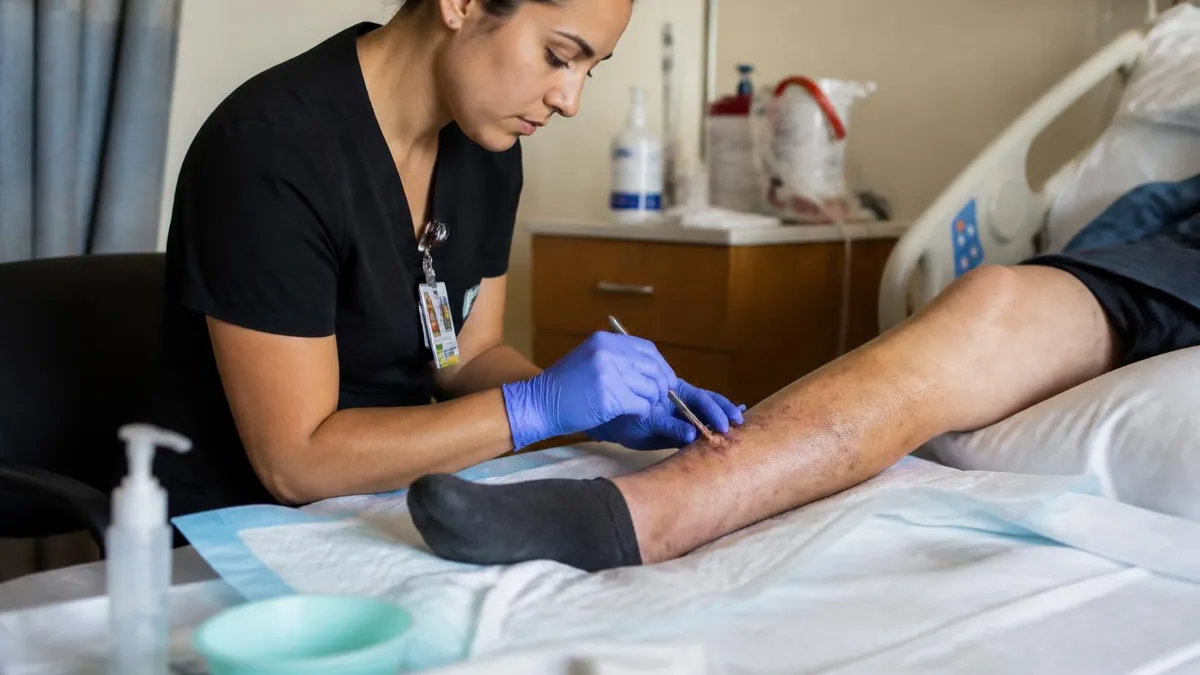
Hydrogel in Wound Care: How It Works, When to Use It, and Types in 2026

Wound Care Procedures: A Complete Guide to Sterile Gloves, Dressings, and Best Practices

After Surgery Wound Care: Complete Recovery Guide for Patients & Caregivers

Infection Control Measures for Wound Care: A Complete Clinical Guide

Skin and Wound Care: Complete Guide to Wound Care Products, Dressings, and Certification
About the Author

Registered Nurse & Healthcare Educator
Johns Hopkins University School of NursingDr. Sarah Mitchell is a board-certified registered nurse with over 15 years of clinical and academic experience. She completed her PhD in Nursing Science at Johns Hopkins University and has taught NCLEX preparation and clinical skills courses for nursing students across the United States. Her research focuses on evidence-based exam preparation strategies for healthcare certification candidates.