
Hyperbaric Wound Care: How It Works, Who Benefits, and What to Expect
🧠 Learn how hyperbaric wound care works, who qualifies, and what clinicians need to know for wound care certification exam success.

Hyperbaric wound care is one of the most specialized and scientifically compelling treatment modalities available to wound care clinicians today. At its core, hyperbaric oxygen therapy (HBOT) involves placing a patient inside a pressurized chamber and delivering 100% pure oxygen at pressures greater than atmospheric sea level. This process dramatically increases the amount of oxygen dissolved in the bloodstream, which in turn accelerates tissue repair, fights infection, and supports angiogenesis in wounds that have failed to respond to standard therapies. For clinicians pursuing wound care wound care excellence, understanding HBOT is increasingly essential.
The mechanism behind hyperbaric wound care is rooted in basic physiology. Under normal atmospheric conditions, oxygen is carried almost exclusively by hemoglobin in red blood cells. However, when a patient breathes pure oxygen at two to three times normal atmospheric pressure, oxygen dissolves directly into the plasma, cerebrospinal fluid, and lymphatic fluid. This allows oxygen to reach tissues that are poorly perfused or where red blood cell delivery is compromised — exactly the conditions found in chronic non-healing wounds such as diabetic foot ulcers, radiation tissue injuries, and refractory osteomyelitis.
Wound care specialists and nurses who work in hyperbaric medicine centers frequently see patients who have exhausted conventional treatment options. These patients often present with wounds that have persisted for months or even years, causing significant morbidity, limiting mobility, and threatening limb viability. By the time a patient is referred for hyperbaric wound care, their wound team has typically already tried multiple dressing strategies, offloading devices, debridement protocols, and adjunctive therapies. HBOT represents a powerful next step when the wound biology itself needs to be reset through hyperoxia.
There are currently 14 indications approved by the Undersea and Hyperbaric Medical Society (UHMS) and the Centers for Medicare and Medicaid Services (CMS) for hyperbaric oxygen therapy. These range from carbon monoxide poisoning and air embolism to chronic diabetic wounds and compromised skin grafts. For wound care professionals specifically, the most commonly encountered HBOT indications include diabetic lower extremity wounds that have not healed after 30 days of standard care, chronic refractory osteomyelitis, necrotizing soft tissue infections, and radiation tissue damage including osteoradionecrosis and radiation cystitis.
Understanding reimbursement and documentation requirements is also critical for clinicians in this field. CMS requires detailed documentation demonstrating that a wound qualifies as a diabetic foot wound, that standard wound care has been attempted for at least 30 days without adequate healing progress, and that the patient has adequate arterial perfusion to benefit from HBOT. A transcutaneous oxygen measurement (TcPO2) of less than 40 mmHg on room air is commonly used as one qualifying criterion. Wound care nurses and specialists play a central role in gathering this documentation and ensuring patients meet coverage criteria before initiating a treatment course.
The typical course of hyperbaric wound care for a chronic diabetic wound involves 20 to 40 individual treatment sessions, each lasting approximately 90 to 120 minutes. Sessions are usually conducted five days per week in an outpatient wound care center equipped with a monoplace or multiplace hyperbaric chamber. Patient compliance is essential because the cumulative effect of repeated hyperoxia exposures is what drives the biological changes — including collagen synthesis stimulation, reduction of tissue edema, enhancement of leukocyte killing capacity, and promotion of new blood vessel formation — that ultimately allow the wound to close.
For anyone preparing for a wound care certification exam, hyperbaric wound care represents a high-yield topic that tests both clinical judgment and scientific understanding. Examiners frequently ask about patient selection criteria, contraindications such as untreated pneumothorax and claustrophobia, oxygen toxicity risks, and the physiological rationale behind treatment pressures. Mastering this content not only supports exam success but directly translates into better patient outcomes in clinical practice, making it one of the most rewarding areas of wound care specialty knowledge to develop.
Hyperbaric Wound Care by the Numbers

How a Hyperbaric Wound Care Treatment Course Unfolds
Initial Wound Care Consultation
Hyperbaric Medicine Evaluation
Treatment Authorization & Scheduling
Active Treatment Phase
Mid-Course Evaluation
Transition to Maintenance Wound Care
Patient selection is the single most important factor in determining whether hyperbaric wound care will be clinically effective and financially reimbursable. Not every chronic wound benefits from HBOT, and referring inappropriate patients wastes resources while delaying access to more suitable interventions.
The most rigorously studied indication for wound care purposes is the diabetic lower extremity wound — specifically Wagner Grade III or higher ulcers, or Wagner Grade II ulcers that have failed to demonstrate meaningful healing after at least 30 days of comprehensive standard wound care. These patients must also demonstrate adequate perfusion to transport the dissolved oxygen to wound tissue.
Transcutaneous oxygen measurement is the gold standard physiological test used to confirm that a patient will benefit from HBOT. A TcPO2 reading below 40 mmHg on room air at the wound site suggests tissue hypoxia that may respond to hyperoxia, but the reading must rise above 200 mmHg while breathing 100% oxygen in the chamber to confirm that the tissue is recruitable.
Patients whose TcPO2 does not rise adequately with oxygen challenge are unlikely to respond and should not be prescribed a full treatment course. This in-chamber challenge test is a critical clinical decision point that wound care specialists must understand.
Radiation tissue injuries represent another major wound care indication for HBOT. Patients who have received radiation therapy for head and neck cancers, pelvic malignancies, or breast cancer may develop late radiation tissue damage characterized by obliterative endarteritis, progressive fibrosis, and loss of tissue vascularity. These changes can manifest as soft tissue radionecrosis, osteoradionecrosis of the jaw, radiation proctitis, radiation cystitis, and impaired surgical wound healing in previously irradiated fields. HBOT promotes neovascularization through hypoxia-inducible factor pathways and stimulates stem cell mobilization, helping to restore the compromised vascularity in these tissues.
Contraindications to hyperbaric wound care must be screened for systematically before initiating treatment. Absolute contraindications include untreated pneumothorax, because the pressure changes during chamber pressurization and decompression can cause a tension pneumothorax in an already compromised lung. Concurrent use of doxorubicin (Adriamycin) or cisplatin is contraindicated due to enhanced oxygen toxicity risk. Patients taking disulfiram (Antabuse) cannot be treated because disulfiram blocks the superoxide dismutase enzyme needed to neutralize reactive oxygen species generated during HBOT. Relative contraindications include chronic obstructive pulmonary disease with CO2 retention, uncontrolled high fever, and active malignancy being treated with certain chemotherapeutic agents.
Ear and sinus barotrauma is the most common adverse effect of hyperbaric wound care, occurring when patients are unable to equalize pressure in the middle ear space during pressurization. Wound care nurses working in hyperbaric units spend considerable time teaching patients the Valsalva maneuver, the Frenzel maneuver, and jaw movement techniques before their first session.
Patients with chronic sinusitis, upper respiratory infections, or Eustachian tube dysfunction are at higher risk and may require myringotomy tubes for chronic treatment courses. Oxygen toxicity manifesting as tonic-clonic seizures is rare but represents the most serious acute adverse effect, occurring in approximately 1 in 10,000 patient treatments.
When considering wound care near me options for patients who have been recommended HBOT, it is important to recognize that not all wound care centers offer hyperbaric services. Specialized hyperbaric wound care programs are typically located in hospital outpatient settings or dedicated wound care centers affiliated with academic medical centers. The distance patients must travel for daily treatment sessions is a significant barrier to completion, and wound care teams should factor geography and transportation access into their referral decisions. Telemedicine-assisted monitoring between sessions can help maintain continuity when the hyperbaric center is not the patient's primary wound care provider.
The wound care nurse's role in a hyperbaric program extends well beyond chamber operation and session monitoring. These nurses serve as patient educators, documentation specialists, wound assessment experts, and care coordinators. They track healing metrics across the treatment course, communicate progress to referring providers, identify early signs of oxygen toxicity or barotrauma, and ensure that the wound dressing regimen between sessions supports rather than undermines the gains achieved through hyperoxia. Certification in hyperbaric nursing through the Baromedical Nurses Association (BNA) or wound care certification through NACCWS or WOCN can distinguish nurses who specialize in this complex intersection of disciplines.
Wound Care Dressings During Hyperbaric Treatment
Choosing appropriate wound care dressings for patients undergoing HBOT requires balancing the goals of moisture management, infection control, and tissue protection during the approximately 22 hours between daily sessions. Foam dressings, hydrocolloids, and alginate dressings are commonly used because they can be left in place for 24 hours or changed at the wound center just before the patient enters the chamber. The dressing should not impede transcutaneous oxygen measurement if periodic TcPO2 monitoring is planned.
Silver-containing antimicrobial dressings are frequently used in hyperbaric wound care patients because many present with wounds that have chronic bacterial biofilm or overt infection. It is important to note that some silver dressings must be removed before HBOT sessions because metallic components can cause burns or sparks in a pure oxygen environment. The wound care team must review the composition of every dressing product used and confirm it is chamber-safe. Non-metallic antimicrobial alternatives such as iodine-cadexomer or PHMB-based dressings offer effective biofilm management without fire risk.

Hyperbaric Wound Care: Benefits and Limitations
- +Dramatically increases tissue oxygen levels in hypoxic wound environments, directly supporting collagen synthesis and angiogenesis
- +Reduces risk of major amputation by 25–30% in qualifying diabetic lower extremity wounds with documented evidence from randomized controlled trials
- +Enhances leukocyte killing capacity against anaerobic bacteria, providing a powerful adjunct to antibiotic treatment in severe infections
- +Promotes neovascularization in radiation-damaged tissue where conventional wound care alone cannot restore vascularity
- +Reduces wound edema through hyperoxygenation-driven vasoconstriction, which helps stabilize tissue and reduce inflammatory swelling
- +Supported by 14 UHMS-approved indications and CMS reimbursement pathways, providing a financially viable treatment option for qualifying patients
- −Requires daily patient travel to a specialized center for 4–8 weeks, creating significant access and compliance barriers for elderly or mobility-limited patients
- −High upfront equipment and facility costs mean HBOT is available only at select hospital-affiliated or specialized wound care centers, limiting geographic access
- −Oxygen toxicity, though rare, can cause tonic-clonic seizures that require immediate chamber depressurization and emergency management
- −Ear and sinus barotrauma affect a meaningful percentage of patients, sometimes requiring myringotomy tubes or early treatment termination
- −Insurance reimbursement is strictly limited to approved indications with required documentation; off-label use is generally not covered and creates financial risk
- −Fire risk from 100% oxygen environment requires strict protocols, fire-retardant materials, and staff training that add operational complexity and cost
Wound Care Nurse Safety Checklist Before HBOT Sessions
- ✓Confirm the patient has removed all petroleum-based products including lotions, lip balm, and ointments from their skin
- ✓Verify the patient is wearing only 100% cotton facility-provided clothing with no synthetic fibers, zippers, or metallic elements
- ✓Review the current wound dressing and remove any silver-impregnated or metallic components before chamber entry
- ✓Assess the patient's ability to equalize ear pressure and reinforce Valsalva or Frenzel technique as needed
- ✓Check blood glucose for diabetic patients — hold treatment and notify physician if glucose is below 70 mg/dL or above 400 mg/dL
- ✓Confirm no new respiratory symptoms, upper respiratory infection, or fever that could increase barotrauma risk
- ✓Screen for any new medications since last session, particularly doxorubicin, cisplatin, or disulfiram, which are contraindicated
- ✓Document baseline vital signs including oxygen saturation and blood pressure before chamber pressurization
- ✓Confirm the patient has not consumed alcohol within the previous 24 hours, which can lower seizure threshold
- ✓Verify that the patient's emergency contact information and any implanted device documentation is current and on file
The 30-Day Standard Care Rule Is Non-Negotiable for CMS Coverage
Medicare and most commercial insurers require documented evidence that a diabetic lower extremity wound has been treated with comprehensive standard wound care for a minimum of 30 consecutive days without adequate healing before HBOT will be authorized. This is not a soft guideline — it is a hard coverage requirement. Wound care teams must maintain meticulous wound measurement records, dressing logs, and offloading compliance documentation throughout those 30 days to build an unassailable authorization case.
Wound care certification exams — including those offered by the National Alliance of Wound Care and Ostomy (NAWCO), the Wound Ostomy and Continence Nursing Certification Board (WOCNCB), and the American Board of Wound Management (ABWM) — all include content related to advanced wound care modalities such as hyperbaric oxygen therapy. Understanding the scope and limitations of HBOT within the broader wound care certification body of knowledge requires clinicians to integrate physiology, clinical judgment, documentation skills, and patient education competencies into a coherent conceptual framework.
Certification exam questions on hyperbaric wound care most frequently test knowledge in four domains: the physiological rationale for HBOT, approved indications and contraindications, patient assessment and selection criteria, and safety protocols. In the physiology domain, candidates should be able to explain Henry's Law — the principle that gas dissolves into liquid in proportion to its partial pressure — as the scientific basis for why pressurized oxygen delivery increases plasma-dissolved oxygen far beyond what is possible at normal atmospheric pressure. They should also understand how this plasma oxygen drives fibroblast proliferation, collagen cross-linking, and endothelial progenitor cell mobilization.
For wound care certification candidates, the distinction between absolute and relative contraindications is a high-yield testable concept. Absolute contraindications are conditions where HBOT could cause immediate, life-threatening harm regardless of clinical benefit: untreated pneumothorax, concurrent doxorubicin or cisplatin chemotherapy, and disulfiram use. Relative contraindications are conditions that increase risk but may be manageable with precautions: severe claustrophobia that does not respond to anxiolytic premedication, chronic obstructive pulmonary disease with bullae, and uncontrolled high fever. Exam questions may present clinical scenarios and ask candidates to determine whether treatment should proceed, be modified, or be withheld.
Documentation competencies are also tested in wound care certification exams, and hyperbaric wound care requires a particularly detailed documentation trail. Candidates should know that CMS-compliant HBOT documentation for a diabetic foot wound must include the wound's Wagner or University of Texas classification at baseline, a record of all standard wound care interventions applied during the mandatory 30-day trial period, vascular assessment results (ABI, TcPO2), a statement of why the wound qualifies as a diabetic wound per ICD-10 criteria, and evidence of adequate glycemic management. Missing any of these elements can result in claim denial or post-payment audit recovery.
The wound care ICD-10 coding landscape is an area where clinicians frequently feel uncertain, and hyperbaric wound care adds complexity because multiple codes may apply simultaneously. The primary wound diagnosis code — such as E11.621 for type 2 diabetes mellitus with foot ulcer — must be accompanied by codes for wound location (L97.xx series for non-pressure chronic ulcers), wound depth, and any associated infection.
The procedure code for HBOT (CPT 99183) requires a supervising physician to be present in the facility during treatment, and documentation of physician oversight must appear in the medical record. Understanding this coding architecture supports both exam success and real-world reimbursement compliance.
Preparing for wound care certification while working in a hyperbaric wound care setting offers a unique advantage: clinical exposure to the complex patients and interdisciplinary workflows that exam content is designed to assess. Hyperbaric wound care nurses and specialists regularly encounter Wagner Grade III and IV diabetic foot wounds, radiation tissue injuries, refractory osteomyelitis, and compromised skin grafts — all high-frequency certification exam topics. The challenge is converting that clinical experience into the standardized, evidence-based terminology that certification exams reward. Structured review using practice question banks organized around wound care specialty domains can help bridge that gap efficiently.
For clinicians who want to deepen their hyperbaric wound care expertise beyond what a general wound care certification covers, the Certified Hyperbaric Technologist (CHT) and Certified Hyperbaric Registered Nurse (CHRN) credentials offered by the National Board of Diving and Hyperbaric Medical Technology (NBDHMT) provide specialty-specific recognition.
These certifications require documented hyperbaric clinical hours, completion of a hyperbaric technologist or nurse training program, and passing a separate written examination focused on hyperbaric physics, chamber operations, oxygen toxicity management, and hyperbaric pharmacology. Holding both a wound care certification and a hyperbaric credential positions a clinician as a true specialist at the intersection of these two fields.

CMS auditors have identified hyperbaric oxygen therapy as a high-risk area for improper payments. To protect against post-payment recoupment, wound care teams must document wound measurements at minimum every five sessions, note the wound's response to treatment, and demonstrate that healing progress justifies continued therapy. If a wound is not showing measurable improvement by session 20–30, the clinical record must reflect the team's rationale for continuing — or the decision to discontinue — the treatment course.
The evidence base supporting hyperbaric wound care has grown substantially over the past two decades, with systematic reviews and meta-analyses consistently demonstrating benefit in the populations for which it is approved. The landmark Löndahl et al. randomized controlled trial published in Diabetes Care demonstrated that diabetic patients with ischemic foot ulcers who received HBOT were significantly more likely to achieve complete wound healing at one year compared to sham-treated controls.
The Cochrane Collaboration's systematic review on HBOT for chronic wounds similarly found evidence supporting its use for diabetic foot ulcers, though it called for higher-quality trials and larger sample sizes to strengthen the evidence base.
For radiation tissue injuries, the evidence supporting HBOT is perhaps even more compelling, particularly for osteoradionecrosis of the jaw. Radiation oncologists and oral surgeons have long recognized that patients who develop mandibular osteoradionecrosis after head and neck cancer treatment face a devastating complication with limited treatment options.
The Marx protocol — which involves 20 pre-operative and 10 post-operative HBOT sessions surrounding surgical debridement — has become a standard approach in many academic centers and is supported by multiple prospective studies demonstrating improved surgical outcomes and reduced risk of recurrent necrosis. Understanding this protocol is relevant both for wound care certification exam preparation and for clinical consultation work in oncology settings.
The biology of radiation injury explains why HBOT is so mechanistically well-suited to treating radiation tissue damage. Radiation causes permanent obliteration of small blood vessels through endarteritis obliterans, creating a chronically hypoxic, hypovascular, hypocellular tissue environment that cannot support normal wound healing.
This radiation-induced hypoxia paradoxically prevents the same oxygen-dependent processes — collagen synthesis, leukocyte function, angiogenesis — that are needed to repair the damage. HBOT directly addresses this paradox by flooding the tissue with dissolved oxygen that does not depend on an intact vascular delivery system, while simultaneously stimulating the formation of new blood vessels through upregulation of vascular endothelial growth factor (VEGF) and other angiogenic mediators.
Emerging research is exploring HBOT's potential utility beyond its currently approved indications, including applications in diabetic neuropathy, traumatic brain injury, post-COVID syndrome, and even aesthetic wound healing after reconstructive surgery. While none of these applications have achieved UHMS approval or CMS coverage, they reflect the broad biological mechanisms through which hyperoxia influences tissue repair and neurological function. Wound care specialists who stay current with hyperbaric research literature are better positioned to counsel patients about realistic expectations and to recognize when an off-label HBOT referral might be appropriate within a research or clinical trial context.
Cost-effectiveness analyses of hyperbaric wound care have consistently shown that despite the high per-session cost of HBOT — typically $300 to $500 per treatment under Medicare reimbursement rates — the therapy is cost-effective in properly selected patients when measured against the alternative of major lower extremity amputation. A below-knee amputation generates lifetime costs exceeding $500,000 when prosthetic, rehabilitation, and long-term care expenses are included.
Even a 20–30% reduction in amputation risk in a population of patients with qualifying diabetic foot wounds generates substantial net savings that more than offset the cost of a 30- to 40-session HBOT course. This economic argument is increasingly important in value-based care contracts and shared savings arrangements.
For patients who have undergone successful hyperbaric wound care, long-term outcomes depend heavily on addressing the underlying conditions that caused the wound in the first place. In diabetic patients, sustained glycemic control, regular podiatric surveillance, appropriate footwear and offloading, and patient education about foot self-inspection are the foundations of recurrence prevention. Wound care specialists who can implement these preventive strategies — not just the acute interventions — deliver the greatest long-term value. The connections between dog wound care principles such as offloading and debridement and hyperbaric medicine illustrate how all wound care disciplines reinforce one another in comprehensive patient management.
The future of hyperbaric wound care will likely involve greater integration of point-of-care diagnostics, including advanced TcPO2 mapping, near-infrared spectroscopy for tissue oxygenation monitoring, and biomarker-guided treatment response prediction. Artificial intelligence tools that analyze wound photographs to predict HBOT response are already in early clinical testing. As these technologies mature, wound care specialists will need to interpret their outputs and integrate them into clinical decision-making — yet another reason why building deep foundational knowledge of wound physiology and hyperbaric biology is a career-long investment rather than a certification-cycle exercise.
Practical preparation for a wound care certification exam that includes hyperbaric content requires a deliberate, structured approach to studying a topic that many clinicians encounter only peripherally in their daily practice. Even nurses who work in general wound care centers without an on-site hyperbaric program will be tested on HBOT indications, contraindications, and physiological rationale, so building a working knowledge base is non-negotiable.
The most effective strategy is to organize study around clinical scenarios rather than isolated facts — for example, practicing the thought process of determining whether a specific patient with a specific wound presentation qualifies for HBOT under both UHMS guidelines and CMS coverage criteria.
Active recall is the most evidence-supported study technique for the kind of application-level knowledge tested on wound care certification exams. Rather than re-reading notes about hyperbaric wound care, candidates should practice explaining the mechanism of HBOT out loud, drawing the physiological cascade from pressurized oxygen delivery through to collagen synthesis and angiogenesis without referring to reference materials.
This technique forces the brain to retrieve and reconstruct information in the same way an exam question demands, building retrieval pathways that hold up under the pressure of test conditions. Spaced repetition — returning to HBOT content at increasing intervals over several weeks — consolidates this knowledge into long-term memory.
Case-based learning is particularly effective for hyperbaric wound care preparation because this content is heavily judgment-oriented. Creating or finding short clinical vignettes — a 68-year-old man with type 2 diabetes, a Wagner Grade III plantar ulcer, an ABI of 0.72, and 35 days of documented standard care without healing — and working through the clinical decision tree (Does he qualify? What TcPO2 threshold must be met? What contraindications must be screened?) builds the pattern recognition that differentiates high-scoring candidates. Many wound care certification prep resources include case-based questions specifically designed to test this kind of integrated reasoning.
Understanding the wound care products landscape is also essential context for studying hyperbaric wound care, since HBOT does not replace wound dressings — it works in concert with them. Candidates should know which wound care dressings are appropriate for use between sessions in a hyperbaric program, which materials are prohibited inside the chamber, and how dressing selection should evolve as the wound responds to treatment over a 4–8 week HBOT course. This integrated understanding of advanced therapy plus dressing management reflects the complexity of real wound care practice and the level of sophistication that certification exams are designed to verify.
Time management during wound care certification exams is an underappreciated preparation element. Most wound care certification exams present 150–200 multiple-choice questions in a 3–4 hour window, allowing approximately 60–90 seconds per question. Hyperbaric wound care questions often involve clinical scenarios with multiple data points — wound grade, vascular status, treatment history, contraindication screening — that require methodical analysis. Practicing with timed question banks builds the habit of reading questions efficiently, identifying the key qualifying or disqualifying variable, and committing to an answer without over-analyzing. This skill is developed only through repeated timed practice, not passive reading.
Peer study groups and case discussion with colleagues who work in hyperbaric programs can significantly accelerate preparation for exam content that goes beyond textbook descriptions. A nurse who has watched a patient seize from oxygen toxicity inside a chamber carries a visceral understanding of the clinical sequence — monitoring for prodromal symptoms like facial twitching or tunnel vision, signaling the chamber operator, managing pressurization rate during emergency egress — that textbook knowledge alone cannot provide.
If direct clinical experience is not available, seeking out case reports, hyperbaric nursing conference presentations, and UHMS educational webinars can supply the contextual depth that transforms memorized facts into integrated clinical knowledge.
Staying current with guideline updates is important for anyone preparing for wound care certification, because exam content reflects current evidence-based standards rather than historical practice. The UHMS publishes updated Hyperbaric Oxygen Therapy Indications reports periodically, and CMS Local Coverage Determinations for HBOT are revised when the clinical evidence base evolves. Monitoring these updates through UHMS membership, NACCWS newsletters, or wound care specialty journals ensures that exam preparation is aligned with the standards that will actually be tested. It also builds the habit of evidence-based practice updating that distinguishes expert wound care clinicians throughout their careers.
Wound Care Questions and Answers
Wound Care General Knowledge: Dressings, DSD & Drain Care
Wound Care Home: Complete Guide to Home Wound Care Services in 2026
Diabetic Wound Care: Why Wounds Are Different, Treatment, and Prevention in 2026
Wound Care Products: Types, Selection, and Clinical Use
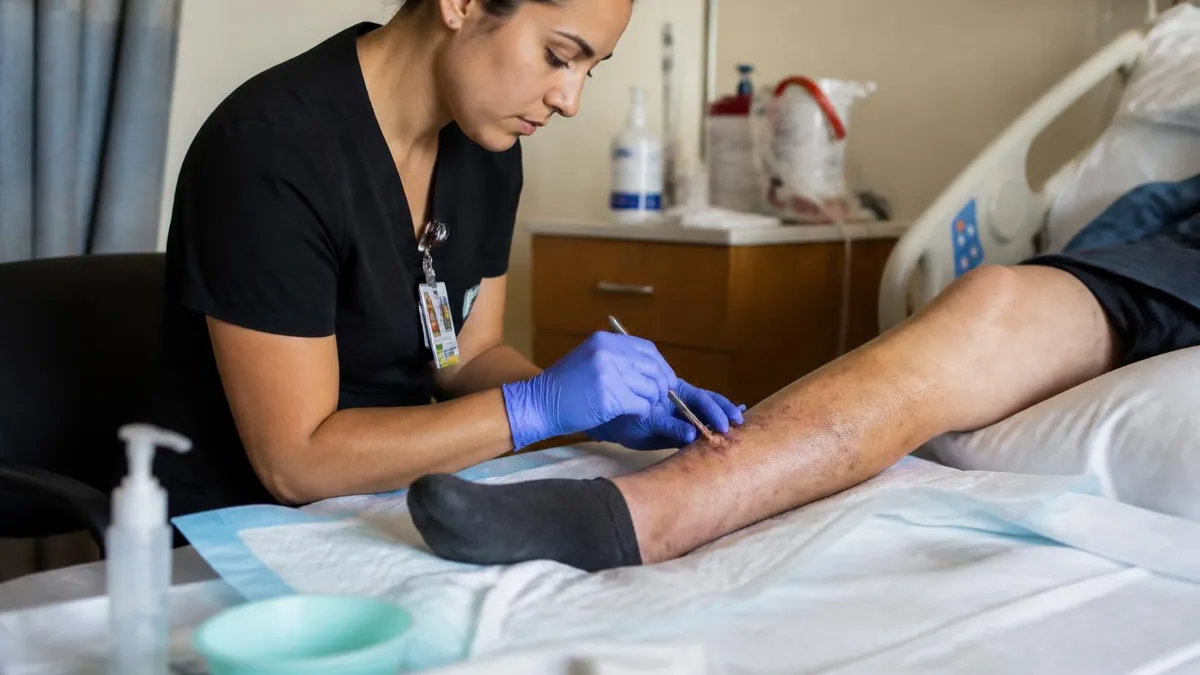
Hydrogel in Wound Care: How It Works, When to Use It, and Types in 2026
About the Author

Registered Nurse & Healthcare Educator
Johns Hopkins University School of NursingDr. Sarah Mitchell is a board-certified registered nurse with over 15 years of clinical and academic experience. She completed her PhD in Nursing Science at Johns Hopkins University and has taught NCLEX preparation and clinical skills courses for nursing students across the United States. Her research focuses on evidence-based exam preparation strategies for healthcare certification candidates.