
Hospice Wound Care: Complete Guide to Wound Care Orders, Products, and Certification
Master hospice wound care orders, dressings, and certification. 🎯 Complete guide for nurses and specialists on wound care wound care in end-of-life settings.

Wound care wound care in hospice settings represents one of the most nuanced and compassionate disciplines in modern nursing. When patients transition to end-of-life care, hospice wound care orders shift their primary focus from aggressive healing to comfort, dignity, and symptom management. Understanding how to write, implement, and evaluate these orders is essential for every wound care nurse, wound care specialist, and interdisciplinary hospice team member. Proper hospice wound management can dramatically reduce pain, prevent infection, and protect the patient's sense of self-worth during an incredibly vulnerable time.
Unlike traditional acute wound care wound care protocols that prioritize tissue regeneration and closure, hospice wound management accepts that some wounds—particularly pressure injuries in patients with terminal illness—may never fully heal. This philosophical shift changes everything: the frequency of dressing changes, the choice of wound care dressings, the goals documented in the care plan, and the metrics by which success is measured. A wound care specialist working in hospice must balance clinical expertise with deep empathy, communicating openly with families about realistic outcomes.
Hospice wound care orders must be comprehensive yet flexible, addressing not only the physical wound but also pain management during dressing changes, odor control, and moisture balance. Selecting appropriate wound care products—from foam dressings to antimicrobial silver dressings—requires an understanding of both wound characteristics and the patient's overall prognosis. For clinicians seeking to deepen their expertise, pursuing a formal wound care certification provides structured knowledge in pathophysiology, assessment, and evidence-based treatment across all care settings.
The prevalence of complex wounds in hospice populations is striking. Pressure injuries, fungating tumors, arterial and venous ulcers, and moisture-associated skin damage are all common in patients with advanced illness. Each wound type demands a tailored approach. Correctly applying wound care icd 10 codes ensures proper documentation and reimbursement while supporting continuity of care when patients transition between settings. Accurate coding also helps interdisciplinary teams communicate wound status clearly to incoming providers.
The hospice interdisciplinary team—typically comprising physicians, nurses, social workers, chaplains, and aides—all play roles in wound care planning. The wound care nurse or certified wound care specialist often serves as the subject matter expert, educating colleagues and family caregivers on proper dressing application, signs of infection, and when to escalate concerns. Family caregiver training is particularly critical in home hospice settings, where professional nursing visits may be limited to several times per week and caregivers perform the majority of daily wound maintenance.
Manuka honey wound care products have gained considerable traction in hospice settings because of their antimicrobial properties, gentle mechanism of action, and ability to manage odor—one of the most distressing symptoms for both patients and families. Unlike systemic antibiotics, which may be inappropriate in comfort-focused care, topical antimicrobials like medical-grade manuka honey address local infection risk without burdening the patient with systemic side effects. Learn more about evidence-based options at manuka honey wound care resources.
Whether you are a newly licensed nurse stepping into your first hospice position or an experienced clinician preparing for a wound care certification examination, understanding the full spectrum of hospice wound management—from order writing to product selection to family education—will make you a more effective advocate for your patients. This guide covers the essential concepts, clinical frameworks, and practical strategies you need to deliver excellent, compassionate wound care wound care in hospice environments.
Hospice Wound Care by the Numbers

Writing Effective Hospice Wound Care Orders: Step-by-Step
Conduct a Comprehensive Wound Assessment
Establish Goals of Care Aligned with Hospice Philosophy
Select Appropriate Wound Care Products
Write Clear, Specific Orders with Change Frequency
Educate the Patient, Family, and Aide Team
Reassess and Update Orders at Every Visit
Choosing the right wound care products is central to successful hospice wound management. The modern wound care market offers dozens of dressing categories, each designed for specific wound characteristics and clinical goals. For hospice patients, the primary criteria shift from healing potential to comfort maximization, odor control, infection prevention, and minimizing the frequency and pain of dressing changes. A thorough understanding of wound care dressings allows the wound care nurse to match the right product to each patient's unique presentation and care context.
Silicone foam dressings are among the most widely used products in hospice wound care because of their exceptional ability to manage moderate-to-heavy exudate while maintaining a moist wound environment. Their soft silicone wound contact layer adheres gently to periwound skin without trauma on removal—a critical feature for fragile, aged, or steroid-thinned skin commonly seen in terminal patients. Silicone foam dressings can remain in place for three to seven days, reducing dressing change frequency and the associated discomfort that patients and caregivers often dread.
For wounds with heavy exudate or sinus tracts, alginate dressings derived from seaweed provide superior absorption capacity. When alginate fibers contact wound exudate, they form a soft gel that maintains moisture at the wound surface while drawing excess fluid away from periwound skin. This prevents maceration, a common complication in high-output wounds. Many hospice formularies also include calcium alginate with antimicrobial additives for wounds showing signs of critical colonization—improved bacterial burden without frank infection—particularly when systemic antibiotics are not aligned with the comfort-focused care plan.
Hydrogel dressings serve a different niche: rehydrating dry, necrotic wounds and providing cooling, soothing relief in painful wounds such as radiation-induced skin injuries or dry gangrenous lesions. Available as gels, sheets, and impregnated gauze, hydrogels donate moisture to wound tissue, softening eschar and supporting autolytic debridement without the need for sharp debridement, which is often inappropriate in hospice contexts. For patients with neuropathic pain or intense wound-related discomfort, hydrogel's cooling properties can provide meaningful symptom relief between visits.
Antimicrobial dressings—including silver-impregnated, iodine-releasing, and medical-grade honey products—are increasingly important in hospice wound care as an alternative to systemic antibiotics. Silver ions disrupt bacterial cell membranes and provide broad-spectrum coverage against gram-positive and gram-negative organisms, including methicillin-resistant Staphylococcus aureus (MRSA). Medical-grade manuka honey products offer antimicrobial action through multiple mechanisms—low pH, high osmolarity, and enzymatic hydrogen peroxide production—while also managing wound odor and supporting debridement through osmotic action.
Wound care supplies management is a practical consideration that is often underestimated in hospice settings. Families and aides need adequate supplies on hand at all times to prevent missed dressing changes due to shortages. The hospice agency's supply chain must be coordinated with the wound care order frequency, ensuring that the right products arrive before existing supplies run out. Detailed supply lists, reorder instructions, and storage guidance should be part of every family education session. Explore comprehensive resources on wound care supplies to better understand procurement and formulary management options.
It is also worth addressing wound care near me resources for families supporting loved ones at home. Hospice programs typically deliver wound care supplies directly to the home, but families may need to locate backup supplies at local pharmacies or medical supply stores in emergency situations. Wound care specialists and hospice nurses should proactively provide families with a list of local suppliers and after-hours hospice contacts so that wound care wound care is never interrupted by supply chain gaps, especially during weekends and holidays when standard delivery windows may not apply.
Wound Care Certification: Pathways for Hospice Nurses and Specialists
The Certified Wound Care Nurse (CWCN) credential offered by the Wound, Ostomy and Continence Nursing Certification Board (WOCNCB) is widely regarded as the gold standard for registered nurses specializing in wound management. Candidates must hold a current RN license, complete at least 1,500 hours of wound care practice within the past three years, and pass a comprehensive written examination covering wound assessment, treatment planning, and evidence-based interventions across acute, long-term, and hospice settings.
For hospice nurses, the CWCN provides structured education in palliative wound management, including pressure injury staging, moisture-associated skin damage differentiation, and comfort-focused dressing selection. The certification examination includes questions on wound care ICD-10 coding, documentation requirements, and interdisciplinary communication—all highly relevant to the complex regulatory environment of hospice care. Recertification every five years ensures that credentialed nurses maintain up-to-date clinical competencies as wound care evidence and technology evolve.

Comfort-Focused vs. Healing-Focused Wound Care in Hospice: Weighing the Approaches
- +Reduces dressing change frequency, minimizing patient pain and caregiver burden
- +Aligns wound care goals with the patient's overall hospice comfort care plan
- +Focuses resources on symptom relief—odor control, exudate management, pain reduction
- +Reduces unnecessary interventions such as sharp debridement or hyperbaric oxygen
- +Supports family caregiver confidence by simplifying wound care routines
- +Improves patient dignity and quality of life during the final weeks of life
- −Some wounds may deteriorate faster without aggressive healing interventions
- −Families may struggle emotionally with accepting non-healing wound goals
- −Comfort products may not always be covered by hospice formularies without prior authorization
- −Clinicians must navigate difficult conversations about wound progression with families
- −Risk of under-treating wounds that have healing potential in patients with longer prognosis
- −Documentation of comfort-only goals requires careful wording to satisfy payer requirements
Pros and Cons at a Glance
| Pros | Cons |
|---|---|
| Reduces dressing change frequency, minimizing patient pain and caregiver burden | Some wounds may deteriorate faster without aggressive healing interventions |
| Aligns wound care goals with the patient's overall hospice comfort care plan | Families may struggle emotionally with accepting non-healing wound goals |
| Focuses resources on symptom relief—odor control, exudate management, pain reduction | Comfort products may not always be covered by hospice formularies without prior authorization |
| Reduces unnecessary interventions such as sharp debridement or hyperbaric oxygen | Clinicians must navigate difficult conversations about wound progression with families |
| Supports family caregiver confidence by simplifying wound care routines | Risk of under-treating wounds that have healing potential in patients with longer prognosis |
| Improves patient dignity and quality of life during the final weeks of life | Documentation of comfort-only goals requires careful wording to satisfy payer requirements |
Hospice Wound Assessment Checklist: 10 Essential Steps
- ✓Measure wound length, width, and depth in centimeters at every skilled nursing visit.
- ✓Document wound bed tissue type: granulation, slough, eschar, or mixed tissue percentages.
- ✓Assess exudate amount (none, scant, moderate, heavy) and character (serous, serosanguineous, purulent).
- ✓Inspect and document periwound skin condition for maceration, erythema, induration, or satellite lesions.
- ✓Evaluate wound odor and determine if antimicrobial or odor-absorbing dressings are indicated.
- ✓Assess patient pain at rest and during dressing changes using a validated pain scale.
- ✓Identify and document the correct wound etiology for accurate ICD-10 code assignment.
- ✓Review current wound care orders to confirm dressing selection aligns with current wound status.
- ✓Confirm that wound care supplies on hand match the current order and reorder if supply is low.
- ✓Document wound trajectory (improving, stable, deteriorating) and update care plan goals accordingly.
Kennedy Terminal Ulcers Are Not Preventable — Document Accordingly
Kennedy Terminal Ulcers (KTUs) are a recognized skin phenomenon that occurs in the days to hours before death as the body shuts down. They typically appear suddenly on the sacrum or coccyx, are butterfly- or pear-shaped, and progress rapidly despite optimal wound care. Documenting these as Kennedy Terminal Ulcers—not facility-acquired pressure injuries—is critical for accurate ICD-10 coding, family communication, and protecting both the patient and the hospice agency from inappropriate quality-of-care scrutiny.
Family and caregiver education is arguably the most impactful intervention a hospice wound care nurse can deliver. In home hospice settings, family members and professional caregivers provide the majority of daily wound care between nursing visits. The quality of that care—whether dressings are changed at the right frequency, applied correctly, and monitored for warning signs—directly determines patient comfort and wound status. Investing substantial time in education at the outset of the hospice episode pays dividends throughout the patient's care journey.
Effective family education begins with a needs assessment. Not all family caregivers have the same baseline knowledge, physical ability, or emotional readiness to perform wound care. A nurse might discover that the primary caregiver has poor vision, arthritic hands, or intense anxiety about touching the wound. Tailoring the education approach—using larger-print written instructions, adaptive equipment, or asking another family member to serve as the primary wound care provider—addresses these barriers proactively rather than discovering them during a crisis dressing change call at midnight.
Return demonstrations are essential for confirming caregiver competency. After the nurse demonstrates the dressing change procedure step by step, the caregiver should perform the entire procedure independently while the nurse observes and provides real-time coaching. This simulation-based approach identifies technique errors—overly tight tape application, missed periwound skin inspection, improper disposal of contaminated dressings—before they become clinical problems. Document that return demonstration was completed and that the caregiver demonstrated competency in the visit note.
Odor management education is a sensitive but necessary component of family caregiver training. Wound odor is one of the most psychologically distressing aspects of hospice wound care for both patients and families, affecting appetite, social interaction, and the patient's sense of dignity. Teaching families to use charcoal dressings, medical-grade honey products, or dilute metronidazole gel for anaerobic-bacterial-driven odor can make a profound difference in the home environment. Room deodorizers, frequent linen changes, and proper wound dressing disposal techniques are equally important practical strategies.
Pain management during dressing changes deserves explicit education and order support. Many families and aides are reluctant to administer PRN analgesics before wound care because they fear over-medicating or misunderstand the PRN (as needed) order. The hospice nurse should clearly explain that pre-medicating with the prescribed opioid or non-opioid analgesic 30 to 45 minutes before a dressing change is both appropriate and encouraged. Providing a simple written schedule that coordinates dressing change timing with analgesic administration removes the decision burden from caregivers and ensures that pain management is proactive rather than reactive.
Dog wound care questions occasionally arise from hospice families whose pets are integral to their emotional support and daily routine. While formal veterinary guidance is outside the scope of hospice nursing practice, acknowledging the family's concern about their pet's health reflects the holistic, family-centered approach that distinguishes excellent hospice care. Directing the family to a local veterinarian for pet wound concerns while keeping the focus on the patient's wound care ensures that the clinical encounter remains efficient and appropriately scoped.
Wound care near me resources should be compiled and provided to every hospice family at the start of the home care episode. This resource list should include the local hospice supply vendor's phone number and after-hours line, nearby pharmacies that carry common wound care products, emergency wound care contacts within the hospice agency, and information about local wound care clinics in case questions arise that exceed the hospice nurse's scope.
Enabling families with this information reduces after-hours emergency calls and builds the family's confidence in managing unexpected wound care situations between visits. Resources on hydrogel in wound care can further support families seeking to understand their loved one's dressing options.

Even in comfort-focused care, wound infections cause significant pain, odor, and distress that must be addressed. Watch for increased periwound erythema, warmth, edema, purulent exudate, new or worsening odor, and fever (though immunocompromised and actively dying patients may not mount a fever). Notify the hospice physician immediately and reassess the wound care order. Topical antimicrobials are usually the first-line intervention in hospice; systemic antibiotics require a team discussion about goals alignment.
Accurate ICD-10 coding and thorough documentation are foundational to hospice wound care compliance, reimbursement, and quality measurement. Every wound a hospice patient presents with must be assigned the most specific applicable ICD-10 code, reflecting wound etiology, anatomic location, laterality, and wound stage or severity. Failure to code wounds accurately can result in claim denials, compliance audits, and inaccurate quality reporting that misrepresents the clinical complexity of the hospice population. The wound care nurse plays a critical role in ensuring documentation supports correct coding.
Pressure injury coding under ICD-10 requires documentation of both the anatomic location and the stage (Stage 1 through 4, unstageable, and deep tissue pressure injury). The distinction between a pressure injury and moisture-associated skin damage (MASD) is clinically and coding-significant: pressure injuries are caused by sustained mechanical loading, while MASD results from prolonged exposure to moisture such as incontinence, wound exudate, or perspiration. Miscoding MASD as a pressure injury inflates pressure injury prevalence data and may trigger inappropriate quality-of-care investigations.
Kennedy Terminal Ulcer (KTU) coding presents a specific challenge because ICD-10 does not have a dedicated code for this phenomenon. Current guidance from coding experts recommends coding KTUs as Stage 2 or Stage 3 pressure injuries based on their clinical appearance, with supporting documentation in the clinical note that identifies the wound as a Kennedy Terminal Ulcer secondary to multi-organ failure and end-stage illness. This documentation protects the hospice agency by contextualizing the wound within the patient's terminal trajectory and clearly distinguishing it from a facility-acquired pressure injury.
Wound care documentation in the hospice visit note should be sufficiently detailed to support the ICD-10 code assigned, justify the wound care order, and demonstrate the clinical decision-making process. A best-practice wound note includes: objective wound measurements, tissue description, exudate assessment, periwound skin evaluation, pain assessment, dressing applied, patient and family response to care, and the plan for the next visit. Vague documentation such as "wound care performed, patient tolerated well" does not meet payer documentation standards and cannot support accurate coding or defend care quality in an audit.
The hospice Conditions of Participation (CoPs) require that the comprehensive assessment be updated at defined intervals and whenever there is a significant change in the patient's condition. A significant wound change—such as new wound development, stage progression, or onset of infection—triggers an updated assessment and potentially a revised plan of care. The wound care nurse must communicate these changes to the hospice physician promptly to obtain updated orders and must document the communication in the medical record, including the physician's response and any new orders received.
Hospice quality metrics increasingly include wound-related indicators. The Centers for Medicare and Medicaid Services (CMS) Hospice Item Set (HIS) and the CAHPS Hospice Survey both capture data elements relevant to pain management—including wound-related pain—and family satisfaction with symptom management. Wound care nurses who understand how their clinical documentation feeds into quality reporting can be more intentional about capturing the outcomes that matter most to their agency's quality ratings and value-based purchasing performance.
For clinicians seeking authoritative guidance on the intersection of wound documentation and coding, reviewing the resources available through the Wound, Ostomy and Continence Nursing Society (WOCN) and the American Association of Professional Coders (AAPC) is highly recommended. Additionally, explore detailed resources on wound care icd 10 coding workflows to strengthen the connection between clinical assessment and compliant documentation in your hospice practice.
Preparing for a wound care certification examination while working in hospice requires a strategic study approach that uses your clinical experience while systematically addressing knowledge gaps. Hospice nurses often have deep practical competency in wound assessment and dressing selection but may need additional study in wound care pathophysiology, microbiology, and the healing biology that underlies treatment rationale. A structured study plan that allocates specific time to each content domain will produce more efficient and effective preparation than unsystematic review.
Begin your certification preparation by obtaining the official examination blueprint from the credentialing body you are targeting—WOCNCB for the CWCN, or NAWCO for the WCC. The blueprint lists every content domain and its approximate percentage of examination questions, allowing you to weight your study time proportionally. If pressure injury prevention and management represents 20% of examination questions, it deserves approximately 20% of your total study time. Ignoring the blueprint and studying randomly is the most common mistake certification candidates make.
Active recall practice—using flashcards, practice questions, and self-testing—consistently outperforms passive review methods such as re-reading textbooks or highlighting notes. When you practice answering examination-style questions on wound care dressings, wound assessment parameters, or ICD-10 coding principles, you are simultaneously retrieving information and reinforcing memory pathways. Research consistently shows that students who spend at least 40% of their study time on active recall outperform those who spend the same total hours on passive review.
Spaced repetition is another evidence-based study technique with particular relevance to wound care certification preparation. Rather than marathon review sessions the week before the examination, spaced repetition spreads your study across weeks or months, returning to previously reviewed material at gradually increasing intervals. This approach exploits the brain's forgetting curve, reinforcing memories just before they fade. Many digital flashcard platforms incorporate spaced repetition algorithms automatically, making the technique easy to implement even for busy clinicians with unpredictable schedules.
Study groups of two to five clinicians preparing for the same certification examination provide accountability, diverse clinical perspectives, and the opportunity to teach material to peers—one of the most powerful consolidation strategies available. When you teach a concept such as the Wound Healing Cascade or the clinical differentiation between arterial and venous ulcers to a colleague, you identify gaps in your own understanding that passive study would not reveal. Structured peer teaching sessions of 60 to 90 minutes once per week complement individual study effectively without adding excessive time demands.
On examination day, time management is critical. Most wound care certification examinations allow approximately one to two minutes per question. Candidates who spend five minutes deliberating over a single difficult question risk running out of time for the remaining questions they could answer confidently. A best practice strategy is to answer every question you know immediately, mark uncertain questions for review, and return to marked questions with remaining time. This approach ensures that easier questions—which represent the majority of any well-constructed examination—are answered before time runs out.
After passing your wound care certification examination, maintaining your credential requires ongoing continuing education and clinical practice documentation. Most wound care certifications require recertification every five years through a combination of continuing education hours and clinical practice verification. Building these CE hours into your annual professional development plan—rather than scrambling to accumulate them in the final year of the certification cycle—keeps you current with evolving wound care evidence and avoids the stress of last-minute recertification. Certified wound care specialists who stay continuously engaged with professional education deliver measurably better patient outcomes across all care settings, including hospice.
Sample Wound Care Certification Exam Practice Questions
Try these questions from our free Wound Care Certification Exam practice tests. The correct answer and an explanation follow each question.
What is the shortest amount of time that an EMLA cream (Eutectic Mixture of Local Anesthetics) should be applied before initiating a dressing change in order to relieve pain?
- A. 10 minutes
- B. 15 minutes
- C. 35 minutes
- D. 60 minutes
Answer: D. 60 minutes
EMLA cream, a topical anesthetic, requires sufficient time to penetrate the skin layers and effectively numb the nerve endings. For optimal pain relief during procedures like dressing changes, it is generally recommended to apply the cream for at least 60 minutes (1 hour) before initiating the intervention. This ensures adequate absorption and therapeutic effect, minimizing patient discomfort.
A composite dressing combines which layers into a single product?
- A. A wound contact layer, absorbent layer, and bacterial barrier
- B. Only a contact layer and adhesive border
- C. An antimicrobial layer and hydrogel layer only
- D. A debridement layer and moisture-retentive layer
Answer: A. A wound contact layer, absorbent layer, and bacterial barrier
Composite dressings integrate a non-adherent wound contact layer, an absorbent middle layer, and an outer bacterial barrier into one product.
Which product offers the best and longest skin protection against incontinence?
- A. Moisturizers
- B. Powders
- C. Lotions
- D. Moisture Barriers
Answer: D. Moisture Barriers
Moisture barriers, typically in cream or paste form, create a protective layer on the skin that repels urine and feces, preventing direct contact with irritants. This physical barrier is crucial for shielding the skin from breakdown and irritation caused by prolonged exposure to moisture and enzymes in incontinent individuals. Unlike lotions or moisturizers, their primary function is to provide long-lasting protection against external moisture and irritants.
A nutritional assessment should be performed within ___ of admission, as recommended by the Joint Commission.
- A. superficial partial thickness
- B. Predicting pressure ulcer development and determining risk level
- C. 24 hours
- D. 24-48 hours
Answer: C. 24 hours
The Joint Commission, a healthcare accreditation organization, mandates that a nutritional screening or assessment be completed for all patients within 24 hours of admission to a healthcare facility. This requirement ensures early identification of patients at risk for malnutrition, allowing for timely nutritional interventions to support recovery and healing.
Wound Care Questions and Answers
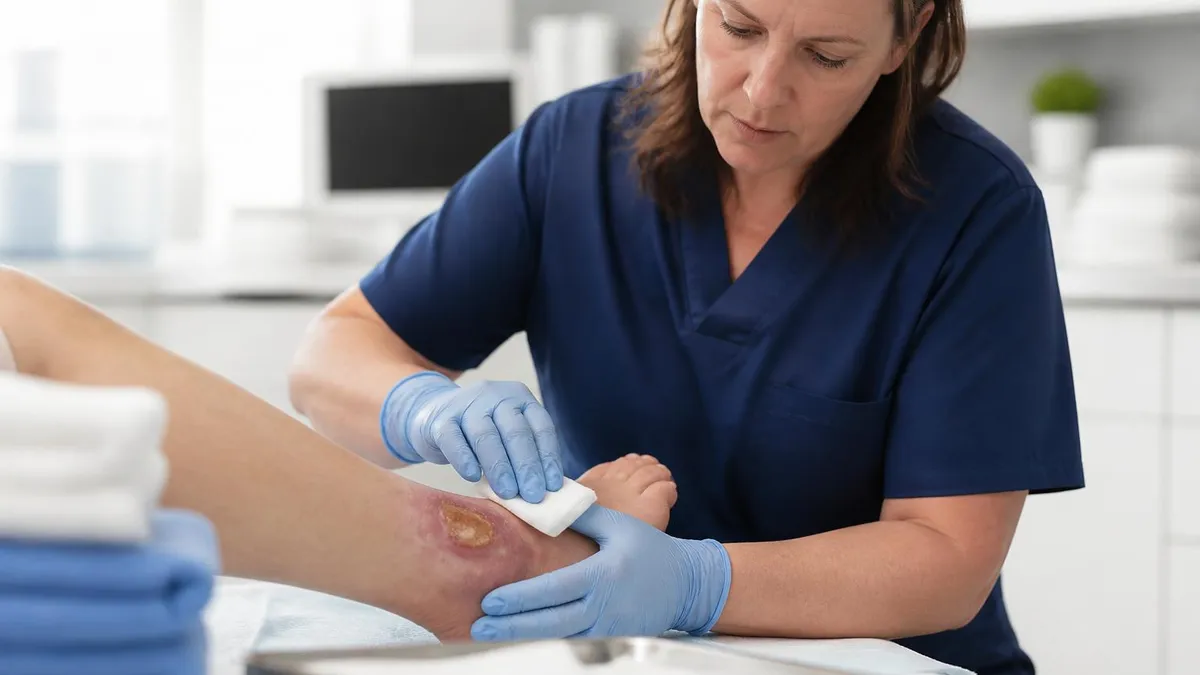
Wound Care Home: Complete Guide to Home Wound Care Services in 2026
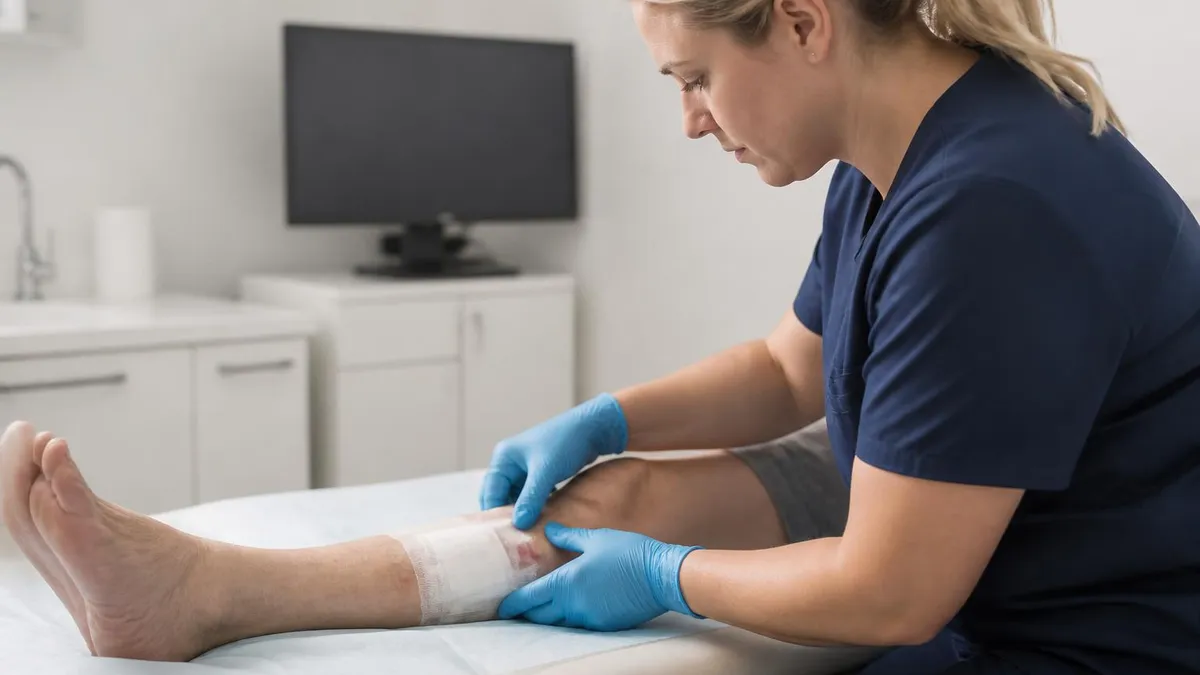
After Surgery Wound Care: Complete Recovery Guide for Patients & Caregivers
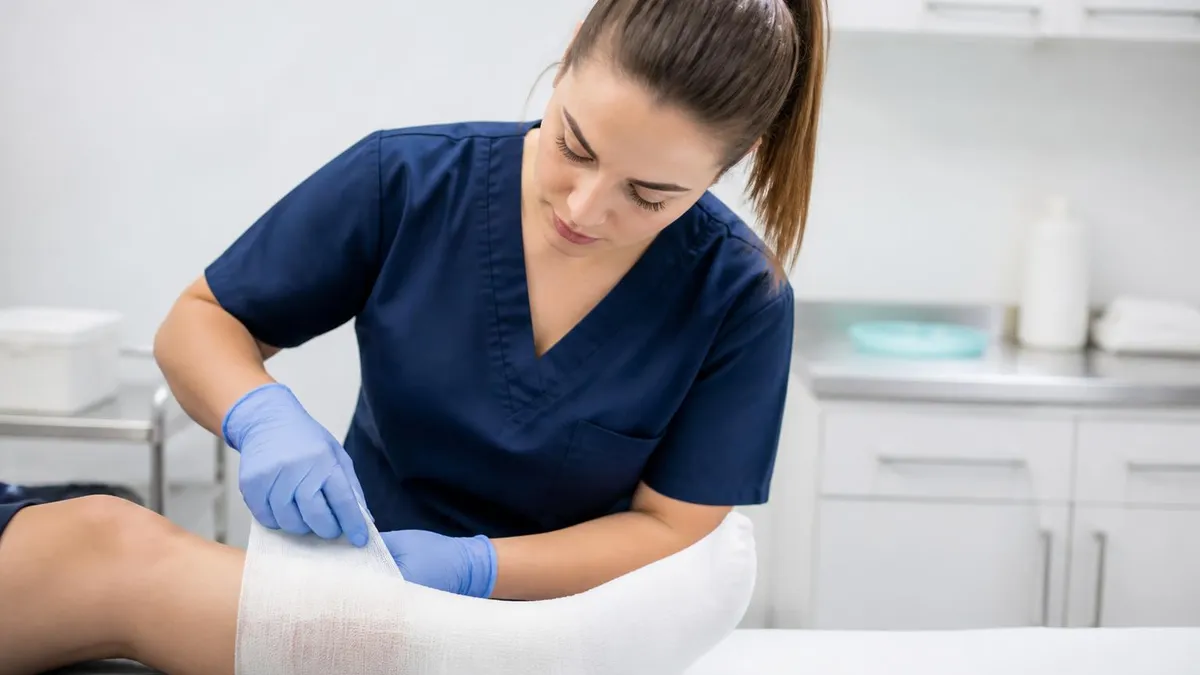
Wound Care Clinics in the U.S.: Services, Networks, and How to Find One

Skin and Wound Care: Complete Guide to Wound Care Products, Dressings, and Certification
Wound Care Assistant Practice Test Video Answers
About the Author

Registered Nurse & Healthcare Educator
Johns Hopkins University School of NursingDr. Sarah Mitchell is a board-certified registered nurse with over 15 years of clinical and academic experience. She completed her PhD in Nursing Science at Johns Hopkins University and has taught NCLEX preparation and clinical skills courses for nursing students across the United States. Her research focuses on evidence-based exam preparation strategies for healthcare certification candidates.