
Industrial Forklift Guide: Types, Rentals, Operator Certification, and Buying Tips for 2026 September
Complete industrial forklift guide: rental costs, operator certification, electric vs LP models, buying tips, and OSHA training requirements for 2026 September. 💯
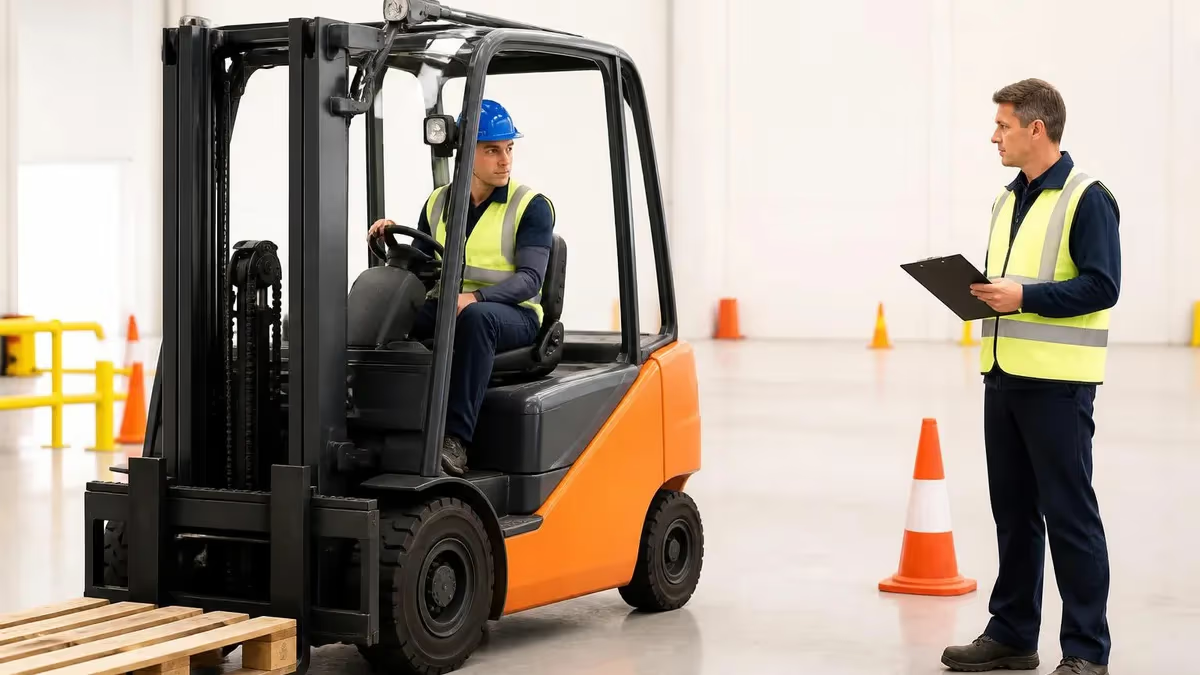
An industrial forklift is the backbone of modern warehousing, manufacturing, and distribution, moving billions of pallets across American supply chains every year. Whether you operate a 3,000-pound electric walkie in a cold-storage facility or a 36,000-pound diesel cushion truck at a steel mill, the principles of safe operation, certification, and equipment selection remain remarkably consistent. This guide walks through everything employers, fleet managers, and aspiring operators need to know to make smart decisions in 2026.
The forklift market in the United States is dominated by a handful of categories: Class I electric counterbalance, Class II narrow-aisle reach trucks, Class III electric walkies and stand-up models, Class IV cushion-tire internal combustion units, and Class V pneumatic-tire LP and diesel trucks. Each class addresses a specific environment, load profile, and aisle width, and matching the right machine to the job dramatically reduces both operating cost and accident risk.
Demand for forklift rental has surged as companies face longer equipment lead times, fluctuating order volumes, and pressure to convert capital expenses into operating expenses. National rental rates for a standard 5,000-pound LP cushion truck currently average $650 to $950 per month, while electric reach trucks rent for $1,100 to $1,800. Short-term daily rentals for special projects or peak-season coverage typically run $200 to $350 per day with a four-hour minimum.
Operator safety remains the single biggest cost driver in any forklift program. OSHA estimates roughly 85 fatalities and 34,900 serious injuries occur annually from powered industrial trucks, and nearly every one is preventable with proper training, daily inspections, and adherence to load-handling fundamentals. Investing in robust certification — not just a one-hour video — pays dividends in lower workers-comp premiums, fewer rack-strike repairs, and longer equipment life.
Buying decisions in 2026 are increasingly influenced by total cost of ownership rather than sticker price. A new 5,000-pound electric forklift may cost $35,000 to $48,000 up front, but lithium-ion power packs, regenerative braking, and lower scheduled maintenance often beat LP trucks on five-year TCO by 18 to 24 percent. For specialized lifting at heights above 22 feet or rough terrain work, a telehandler forklift remains the go-to option, offering reach, stability, and outdoor versatility that traditional warehouse trucks cannot match.
Throughout this guide, we cover certification pathways, rental versus purchase math, fuel-type tradeoffs, attachment compatibility, and the inspection routines that keep your fleet running. We also include OSHA-aligned checklists, FAQ answers to the questions employers ask most, and free practice quizzes you can use to prepare yourself or your team for the written portion of operator certification.
By the end of this article, you should be able to confidently choose between a stand-up reach truck and a sit-down counterbalance, calculate whether a 36-month rental beats a cash purchase, and build a training program that satisfies 29 CFR 1910.178 while actually changing behavior on the warehouse floor. Let's dig into the numbers, the equipment, and the certification framework that holds it all together.
Industrial Forklifts by the Numbers

The Seven Classes of Industrial Forklifts
Sit-down or stand-up electric trucks with cushion or pneumatic tires. Common in indoor warehousing, food processing, and manufacturing where zero emissions are required. Capacities typically range from 3,000 to 12,000 pounds.
Reach trucks, order pickers, and turret trucks built for VNA aisles as tight as 66 inches. Lift heights commonly reach 30 to 45 feet, making them essential for high-bay distribution centers and 3PL operations.
Electric pallet jacks, stackers, and stand-up end-control trucks. Ideal for dock work, light staging, and order assembly. Capacities run 3,500 to 8,000 pounds with travel speeds under 4 mph.
LP, gasoline, or diesel sit-down counterbalance trucks. Class IV uses cushion tires for smooth indoor surfaces; Class V uses pneumatic tires for yards, lumber, and outdoor loading. Capacities reach 36,000+ pounds.
Pneumatic-tire trucks and telehandlers for construction sites, lumberyards, and agriculture. Four-wheel drive, high ground clearance, and extended boom reach define this class for outdoor lifting.
Deciding between forklift rental and outright purchase comes down to utilization, cash flow, and how variable your workload is. As a rule of thumb, if you'll use the truck more than 1,400 hours per year for at least four years, ownership usually wins on total cost. Below that threshold — or if your demand spikes seasonally — renting almost always delivers a better dollar-per-hour figure once you factor in maintenance, downtime, and end-of-life disposal.
A typical short-term rental of a 5,000-pound LP cushion forklift runs $200 to $350 per day, $650 to $950 per month, and $1,800 to $2,400 per quarter. Electric reach trucks command a 40 to 60 percent premium because of the lithium or thin-plate pure lead battery, the charger, and the smaller national rental fleet. Long-term rentals (36 to 60 months) typically include full-maintenance contracts, which shift unscheduled repair risk to the rental house and protect your operating budget.
Searching for forklift rental near me usually surfaces three categories of providers: national dealers like Toyota, Crown, and Raymond; regional independent dealers carrying brands such as Mitsubishi, Hyundai, or Komatsu; and equipment rental yards like United Rentals and Sunbelt that stock generalist machines. National dealers offer the deepest spec selection and consistent service standards; regional dealers often beat national pricing by 8 to 15 percent and provide faster local response times.
Buying used can be tempting when fleet budgets tighten. The used forklift market in 2026 is well supplied because lease returns from 2021 to 2023 are flooding back into inventory. A four-year-old 5,000-pound LP truck with 6,000 hours typically sells for $11,000 to $16,000 — roughly 40 percent of new pricing. Always look up the serial number, request the dealer's maintenance history, and inspect the mast for cracks, the chains for stretch, and the forks for heel wear before signing. Reputable dealers selling used forklifts for sale will provide a written 30-day powertrain warranty at minimum.
When evaluating any forklift purchase, calculate total cost of ownership rather than fixating on sticker price. TCO for a five-year horizon includes acquisition, financing, fuel or electricity, scheduled PM, tires, batteries, operator training, and insurance. For electric trucks, the battery and charger account for 25 to 35 percent of TCO; lithium-ion adds about $7,000 to $12,000 over lead-acid but eliminates watering, equalization, and the second-shift battery swap labor that lead-acid demands.
Tax treatment matters too. Section 179 expensing allowed up to $1,160,000 in 2025 for qualifying equipment, and most industrial forklifts qualify when purchased outright or via a $1 buyout lease. Operating leases (FMV leases) keep the truck off your balance sheet but typically don't qualify for Section 179. Consult your CPA before the fiscal year closes — the choice between a capital lease, operating lease, and outright purchase can shift effective cost by 10 to 18 percent.
Finally, factor in the soft costs that spreadsheets miss. Truck reliability, parts availability in your region, response time on emergency calls, and the strength of the dealer's certified forklift truck operators training program all influence productivity. A truck that sits idle waiting for parts is more expensive than a slightly higher monthly payment, and a strong local dealer relationship pays back many times over when your operation runs three shifts and cannot afford downtime.
Forklift certification Practice Test Questions
Prepare for the Forklift certification Certification exam with our free practice test modules. Each quiz covers key topics to help you pass on your first try.
Forklift certification Certification Forkl...
Forklift certification Exam Questions covering Certification Forklift certification Maintenance and Repairs. Master Forklift certification Test concepts for certification prep.
Forklift certification Certification Forkl...
Free Forklift certification Practice Test featuring Certification Forklift certification Maintenance and Repairs Questions and Answers. Improve your Forklift certification Exam score with mock test prep.
Forklift certification Certification Forkl...
Forklift certification Mock Exam on Certification Forklift certification Operator Training and Certification Requirements. Forklift certification Study Guide questions to pass on your first try.
Forklift certification Certification Forkl...
Forklift certification Test Prep for Certification Forklift certification Operator Training and Certification Requirements Questions and Answers. Practice Forklift certification Quiz questions and boost your score.
Forklift certification Load Handling and S...
Forklift certification Questions and Answers on Load Handling and Stability. Free Forklift certification practice for exam readiness.
Forklift certification OSHA Regulations an...
Forklift certification Mock Test covering OSHA Regulations and Compliance. Online Forklift certification Test practice with instant feedback.
Forklift certification Pre-Operation Inspe...
Free Forklift certification Quiz on Pre-Operation Inspections. Forklift certification Exam prep questions with detailed explanations.
Forklift certification Refueling and Recha...
Forklift certification Practice Questions for Refueling and Recharging Procedures. Build confidence for your Forklift certification certification exam.
Forklift certification Safe Driving and Ma...
Forklift certification Test Online for Safe Driving and Maneuvering. Free practice with instant results and feedback.
Forklift certification Workplace Hazard Id...
Forklift certification Study Material on Workplace Hazard Identification. Prepare effectively with real exam-style questions.
Forklift certification Forklift Instructions
Free Forklift certification Test covering Forklift Instructions. Practice and track your Forklift certification exam readiness.
Forklift certification Forklift MCQ
Forklift certification Exam Questions covering Forklift MCQ. Master Forklift certification Test concepts for certification prep.
Forklift certification Forklift Employer R...
Free Forklift certification Practice Test featuring Forklift Employer Responsibilities. Improve your Forklift certification Exam score with mock test prep.
Forklift certification Forklift Penalties ...
Forklift certification Mock Exam on Forklift Penalties for Non-Compliance. Forklift certification Study Guide questions to pass on your first try.
Electric Forklift vs LP vs Diesel: Choosing Power
An electric forklift produces zero tailpipe emissions, runs quieter than 70 dBA, and now dominates new sales for indoor warehousing. Lithium-ion power packs charge in 1 to 2 hours, accept opportunity charging during operator breaks, and last 3,000 to 5,000 cycles — roughly three times the life of flooded lead-acid. The upfront premium of $8,000 to $14,000 typically pays back in 28 to 40 months.
Lead-acid batteries remain the budget-friendly choice for single-shift operations and warehouses with established watering and equalization routines. They require dedicated charging rooms with ventilation, eyewash stations, and acid spill kits per OSHA 1910.178(g). For multi-shift operations, modern lithium platforms eliminate battery rooms entirely, recovering 80 to 200 square feet of operational floor space.

Stand Up Forklift vs Sit-Down Counterbalance: What's Better?
- +Stand up forklift offers faster operator on/off cycling for dock and order-pick work
- +Tighter turning radius fits narrow aisle layouts under 9 feet wide
- +Better rearward visibility when traveling loads backward — the standard safe direction
- +Lower step-in height reduces ergonomic strain over an 8-hour shift
- +Generally lower acquisition cost than equivalent reach trucks
- +Excellent for cross-docking, staging, and short-distance pallet transfer
- −Operator fatigue increases on shifts requiring constant long-distance travel
- −Lower top speed than sit-down counterbalance (typically 7 mph vs 11 mph)
- −Reduced lift capacity at height compared to sit-down trucks of similar footprint
- −Not suited for outdoor pneumatic-tire applications
- −Operators must wear back support and proper footwear; standing dynamics differ
- −Heavier loads above 5,000 pounds typically require a sit-down truck
Forklift Operator Certification Checklist
- ✓Verify the trainer is qualified by knowledge, training, and experience per 1910.178(l)(2)(iii)
- ✓Complete formal classroom instruction covering truck-specific and workplace-specific topics
- ✓Pass a written or oral knowledge evaluation with documented score
- ✓Complete hands-on practical evaluation on each truck type the operator will use
- ✓Document operator name, training date, evaluation date, and trainer identity
- ✓Issue a wallet card or certification document the operator can produce on demand
- ✓Schedule refresher training every three years or sooner if performance issues occur
- ✓Provide refresher training immediately after any near-miss, accident, or unsafe observation
- ✓Re-evaluate any operator assigned to a new truck type, attachment, or environment
- ✓Retain all training and evaluation records for the duration of employment plus three years
One card does not cover every machine
OSHA requires evaluation on each distinct type of powered industrial truck an operator will use. Certifying a worker on a Class IV LP cushion truck does not authorize them to operate a Class II reach truck or Class III electric pallet jack. Document each evaluation separately and update wallet cards when scope changes — auditors flag this regularly.
OSHA's 29 CFR 1910.178 is the cornerstone regulation governing powered industrial trucks in the United States. It mandates that employers ensure each forklift operator is competent to operate safely as demonstrated by successful completion of training and evaluation. Critically, the standard does not specify how long training must last — only that the operator must be competent. A two-hour video plus a multiple-choice test is not enough; OSHA expects classroom instruction, hands-on demonstration, and a documented practical evaluation performed by a qualified trainer.
Daily pre-shift inspections are non-negotiable. The operator must complete a documented walk-around before placing the truck in service each shift, checking forks for cracks and heel wear, chains for stretch and proper tension, hydraulic lines for leaks, mast rollers, tire condition, horn function, lights, backup alarm, brakes, steering, parking brake, hour meter, fluid levels, data plate legibility, and seatbelt operation. Any defect that affects safety must take the truck out of service until repaired.
Load handling fundamentals save lives. Operators must know their truck's rated capacity, understand how attachments and load center distance derate capacity, and refuse to lift loads that exceed the data plate rating. Travel with the load low — typically 4 to 6 inches off the ground — tilted slightly back, and always look in the direction of travel. On grades steeper than 10 percent, drive with the load uphill regardless of travel direction. Speeding, sharp turns with raised loads, and tip-over recovery attempts cause the majority of fatal incidents.
Pedestrian interactions remain the deadliest hazard in any facility. Striking-and-pinning fatalities account for roughly one-third of forklift deaths each year. Engineering controls — physical barriers, separated pedestrian walkways, mirrors at blind intersections, and proximity warning systems — outperform behavioral controls. Spotters should be used wherever vision is blocked, and operators must sound the horn at every intersection, doorway, and blind corner.
Pre-shift inspection sheets should be retained for at least 30 days, and any defect noted should be cross-referenced to a work order. Many facilities now use mobile inspection apps that timestamp each line item, photo-document defects, and prevent the truck from starting until inspection is complete via interlock systems. These tools dramatically reduce skipped inspections, the leading root cause cited in post-incident investigations.
Charging and refueling areas demand specific engineering. Lead-acid charging requires Class I Division 2 electrical fixtures or equivalent ventilation, eyewash within 25 feet, acid-resistant flooring, and signage. LP storage must comply with NFPA 58, with cylinders stored upright, secured, and away from ignition sources. Lithium-ion installations require manufacturer-specified clearances, smoke detection, and emergency response plans addressing thermal runaway — a low-probability but high-consequence event.
Finally, recordkeeping ties the entire program together. OSHA inspectors typically request training records, evaluation documentation, inspection sheets, maintenance logs, and incident reports going back three years. Facilities with organized digital recordkeeping consistently fare better in audits and reduce citation amounts when issues arise. Investing in a simple fleet management system pays for itself the first time a compliance officer walks through the door.

Under 29 CFR 1910.178(l)(4), every forklift operator must be re-evaluated at least once every three years. Refresher training is also required after any accident, near-miss, unsafe operation observation, or assignment to a new truck type. Missing this deadline is one of the most cited violations in OSHA powered industrial truck inspections — and a leading factor in workers-comp claim denials.
Building a smart forklift fleet starts with an honest utilization study. Pull hour-meter data from each truck across a representative 90-day window and calculate engine-on hours, productive hours, and idle hours. A counterbalance truck logging fewer than 4 hours of productive use per shift is a candidate for shared assignment, downsizing, or replacement by a pallet jack. Conversely, trucks running over 7 hours per shift on a single battery indicate either under-equipment or operator inefficiency worth investigating.
Attachment strategy is often overlooked. Side shifters, fork positioners, paper roll clamps, carton clamps, push-pulls, and rotators each derate the truck's capacity per the manufacturer's adjusted capacity plate, which must be physically affixed to the truck. Operators must be trained on each attachment individually. The right attachment can eliminate two material-handling steps and dramatically improve cycles per hour — but only if it's matched to the load and the operator is certified to use it.
Telematics adoption has reached an inflection point. Modern fleet management systems track location, idle time, impacts, operator login, and inspection compliance in real time. Mid-sized fleets typically see 12 to 18 percent productivity gains and 25 to 40 percent reductions in rack damage within the first year of deployment. Subscription costs run $25 to $55 per truck per month, paying back through reduced damage and lower insurance premiums alone. For Crown trucks specifically, factory-integrated InfoLink data is industry-leading; comparable platforms from Toyota, Raymond, and Hyster-Yale have closed the gap considerably.
Brand selection often comes down to local dealer strength. Toyota, Crown, Raymond, Hyster, Yale, Mitsubishi-Cat, and Komatsu all build reliable trucks; the differentiator is service response time, parts inventory, and operator-training quality from the dealer in your market. Ask for service-call response time guarantees in writing, tour the parts warehouse, and talk to two other customers running similar fleets before committing. A crown forklift backed by a strong local dealer can outperform a cheaper brand with weak local support across the equipment's lifespan.
End-of-life planning protects asset value. Most industrial forklifts retain meaningful resale value through 12,000 to 15,000 hours when properly maintained. Plan to evaluate trade or auction value at year 5 or year 7, before major component overhauls become economically marginal. Mast rebuilds typically cost $4,500 to $8,500; engine swaps run $6,000 to $11,000 for IC trucks; battery replacements on electric trucks cost $4,500 to $9,000 for lead-acid and $11,000 to $18,000 for lithium. These thresholds often signal time to trade.
Insurance and liability strategy round out the program. General liability and workers-comp underwriters increasingly request documentation of operator training, inspection compliance, and incident response procedures during renewal. Facilities with formal programs, telematics data, and low loss ratios negotiate measurably better premiums. A well-documented forklift safety program is one of the highest-ROI risk management investments a warehousing operation can make.
Finally, look ahead. Lithium-ion adoption, automated guided vehicles (AGVs), and autonomous mobile robots (AMRs) are reshaping intralogistics. The labor pool for skilled forklift operators is tightening — average wages have climbed 18 percent since 2022 — and the operations that combine well-paid certified human operators with selective automation will out-compete pure-play approaches for the foreseeable future. The forklift isn't going away; it's getting smarter, cleaner, and more integrated into the broader warehouse technology stack.
Whether you're a new operator preparing for certification or a fleet manager standardizing training across multiple sites, success comes down to consistent execution of fundamentals. Start every shift with a thorough pre-operation inspection, and treat the inspection sheet as a tool rather than a formality. A genuine 5-minute walk-around catches the seal weep that becomes a hydraulic failure by Friday, the fork heel crack that becomes a dropped load by Tuesday, and the tire chunk that becomes a roll-over hazard by month-end.
For new operators, practice the basics until they're automatic. Travel with the load low. Tilt back slightly. Look in the direction of travel — including when reversing. Sound the horn at every intersection and blind corner. Slow to a walking pace in pedestrian areas. Use the parking brake whenever you dismount, even for thirty seconds. These habits become muscle memory through repetition, and they're the difference between a long career and a citation, injury, or worse.
For employers, build a culture where reporting near-misses and equipment defects is rewarded rather than punished. The best leading indicator of future incidents is the volume of reported near-misses; facilities that suppress reporting end up with higher lost-time injury rates. Recognize operators who flag issues, publish the fix, and close the feedback loop. A defect reported and ignored is far worse for safety culture than no report at all.
When preparing for the written portion of certification, focus on stability principles, load center calculations, capacity derating with attachments, fueling and charging hazards, and OSHA's specific recordkeeping requirements under 1910.178. Free practice quizzes cover these topics extensively. Pair written prep with deliberate practice on the truck — slow-speed precision work, parallel parking between cones, stacking loads at height — until your hands and eyes work together without conscious thought.
If you're considering forklift rental for the first time, ask your dealer for a free site survey before committing. A good rep will walk your facility, measure aisles, observe load profiles, and recommend equipment matched to your real operating conditions rather than pushing the easiest unit off the lot. The site survey often surfaces opportunities — narrow aisle reconfiguration, attachment changes, or charging infrastructure upgrades — that pay back faster than the rental itself.
For operators searching for forklift certification near me, prioritize OSHA-compliant in-person programs at accredited training centers, community colleges, or dealer training facilities. Online-only programs can complete the classroom component, but they cannot substitute for the hands-on practical evaluation OSHA mandates. Reputable training providers issue both a wallet card and a printable certificate, and they document the truck classes and attachments covered.
Lastly, treat forklift work as the skilled trade it is. The best operators handle their machines with the same pride and precision a skilled crane operator or heavy-equipment hand brings to the job. Stay current on regulation updates, attend dealer-sponsored advanced operator clinics, and pursue specialty certifications for narrow-aisle, order-picker, or rough-terrain trucks if your career path leads that direction. The market continues to reward operators who combine certification depth, mechanical awareness, and a documented safety record.
Forklift Questions and Answers
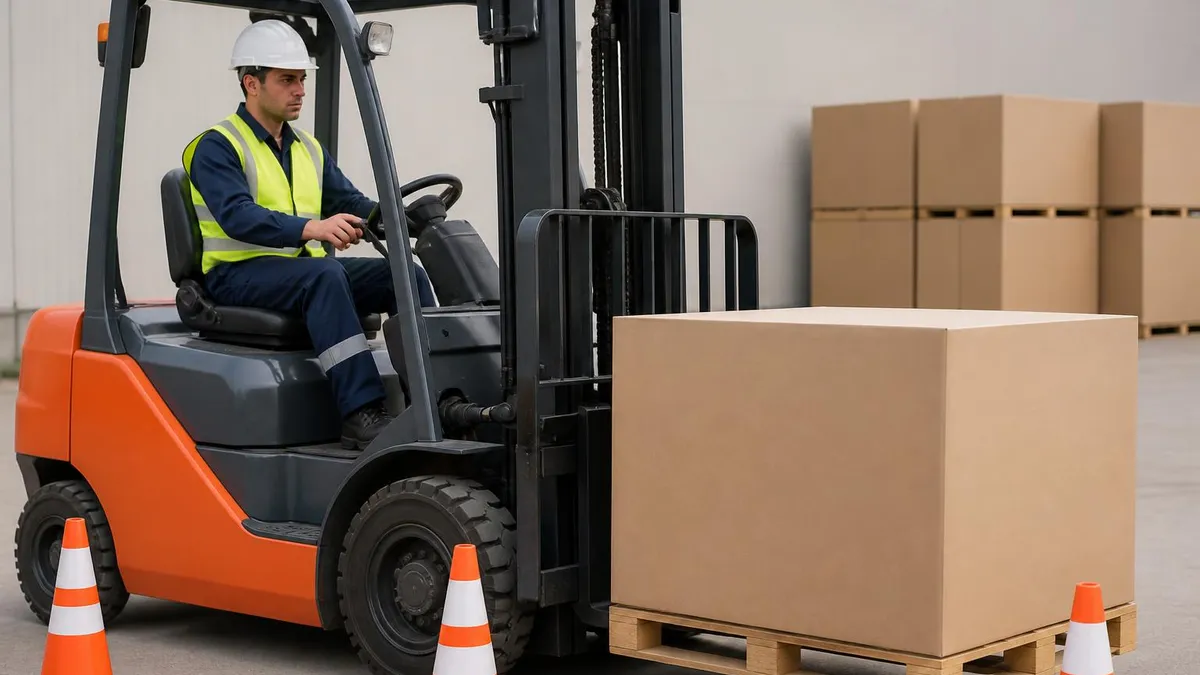
Forklift Tires: Complete Guide to Types, Sizing, Wear Patterns, and Replacement Costs
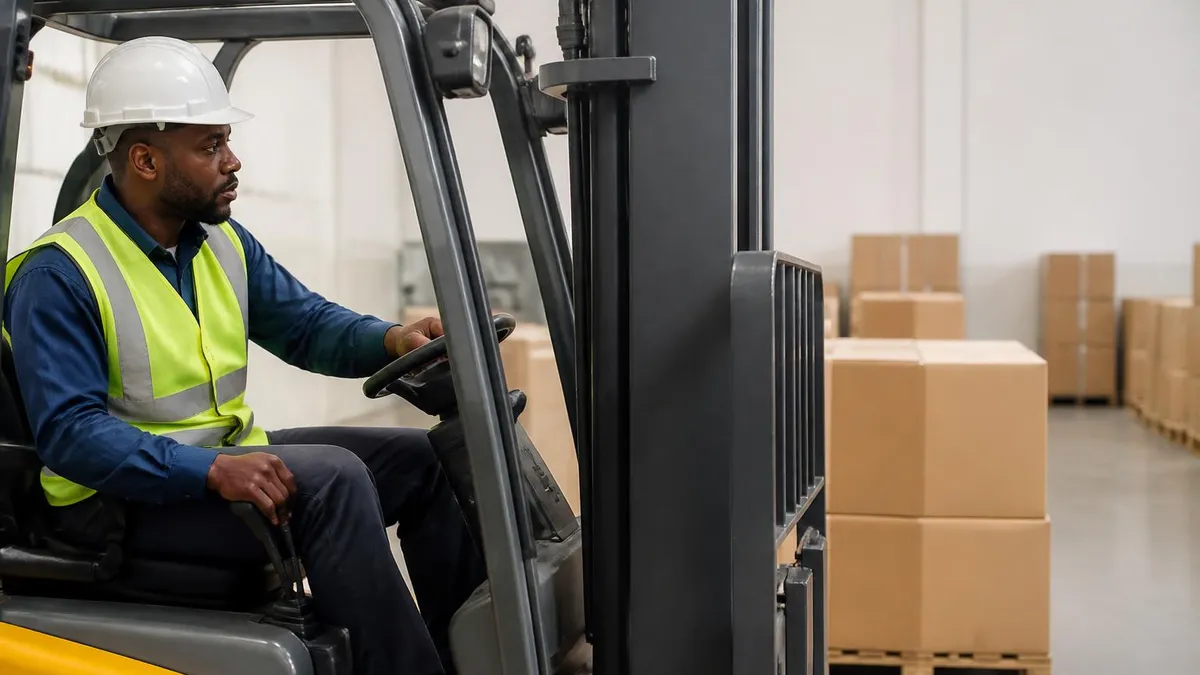
Forklift Accessories: Complete Guide to LED Lights, Attachments, Safety Gear, and Productivity Upgrades for 2026
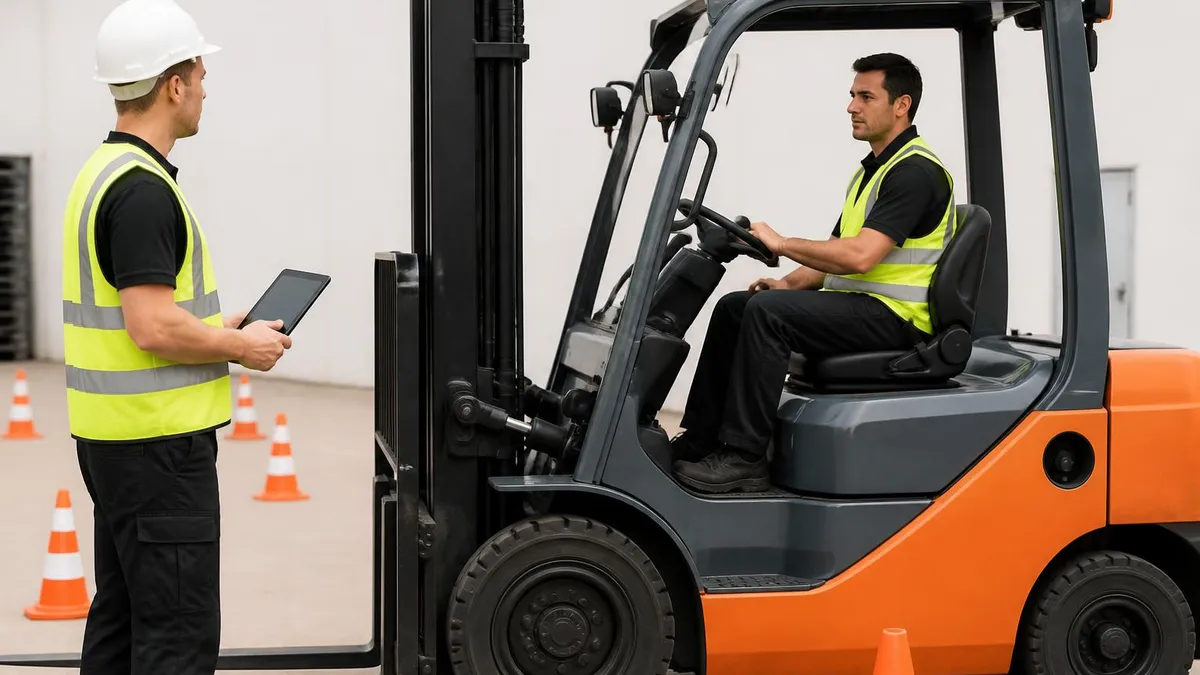
Forklift Safety Training: Complete OSHA Compliance Guide for Operators and Employers
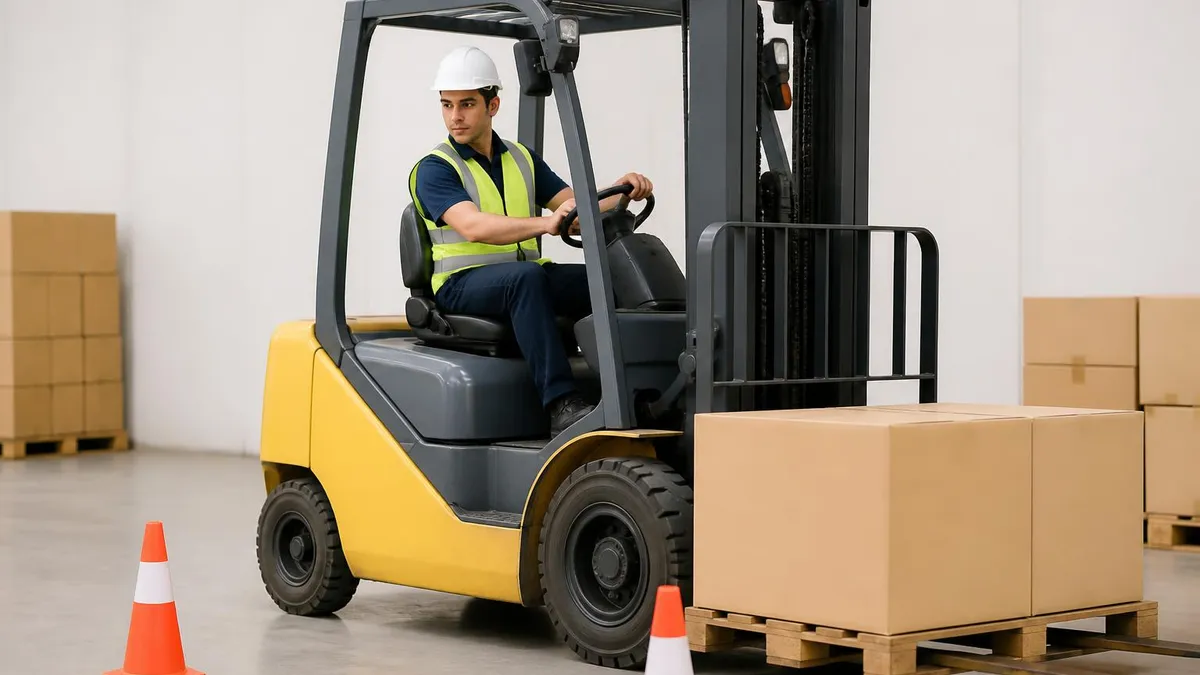
Forklift Repair Service: Complete Guide to Costs, Common Repairs, and Choosing the Right Technician
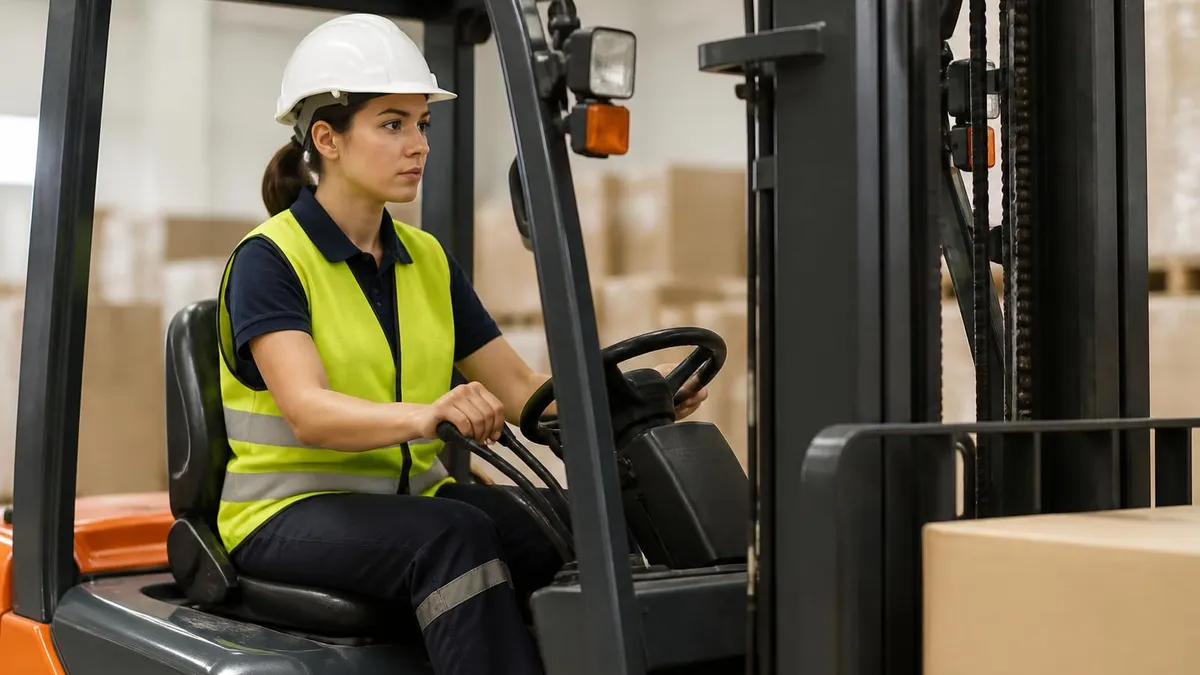
Forklift Price Guide 2026: New, Used, Rental, and Total Cost of Ownership Breakdown
About the Author

Certified Crane Operator & Skilled Trades Exam Specialist
Ferris State UniversityRobert Martinez is a Journeyman Ironworker, NCCCO-certified crane operator, and forklift trainer with a Bachelor of Science in Construction Technology from Ferris State University. He has 21 years of ironworking, rigging, and heavy equipment operation experience across high-rise and industrial construction sites. Robert prepares candidates for crane operator, rigger, forklift, and skilled trades certification examinations.