
Propane Forklift Tanks and Parts: Complete Guide for Forklift Operators and Fleet Managers
Everything about propane forklift tanks, parts & safety. Covers tank sizes, exchange costs, maintenance & certification. ✅ Essential for operators.

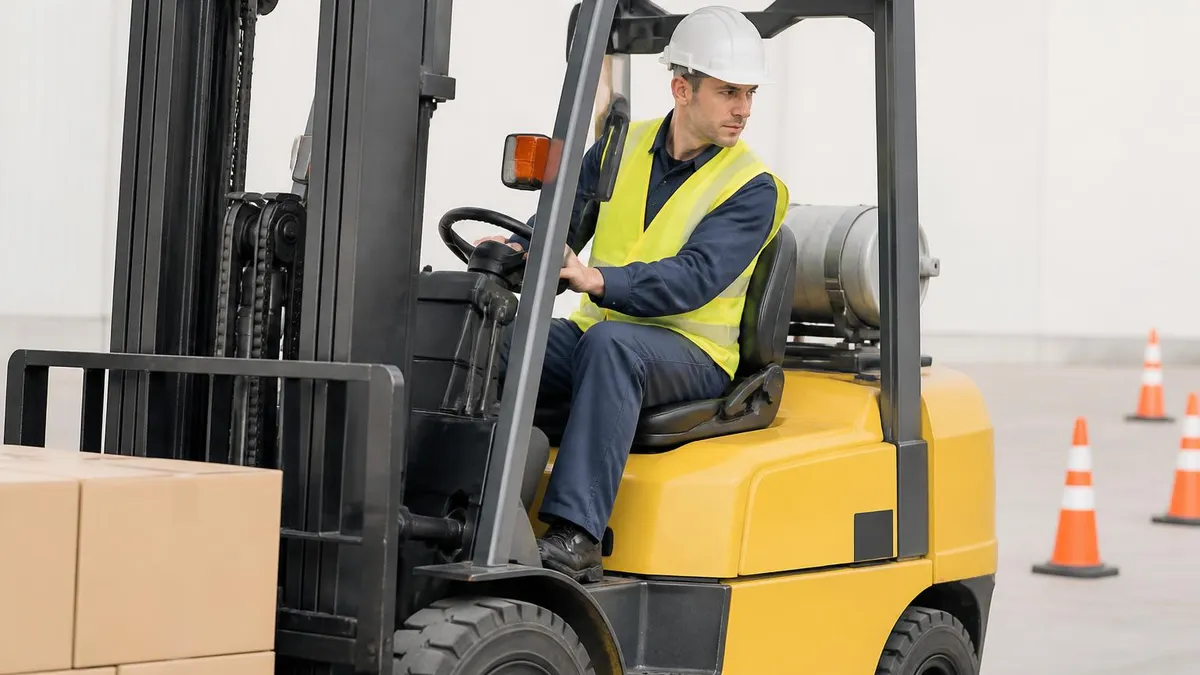
Forklift rental fleets and warehouse operators across the United States rely on propane forklift tanks as one of the most dependable fuel systems available in the material handling industry. Unlike diesel or gasoline-powered alternatives, propane forklifts deliver consistent horsepower from the first hour of a shift to the last, making them a preferred choice in distribution centers, manufacturing plants, and retail warehouses where productivity directly impacts the bottom line. Understanding how propane systems work — and how to maintain them properly — is foundational knowledge for any serious forklift operator.
Propane-powered forklifts account for roughly 90 percent of all fuel-powered lift trucks sold in the United States, according to the Propane Education and Research Council. That market dominance is not accidental. Propane burns cleaner than gasoline or diesel, produces fewer carbon monoxide emissions, and allows for rapid refueling in under five minutes — a significant operational advantage over electric forklifts that require multi-hour charging windows. For facilities that run multiple shifts, propane remains the gold standard for throughput and uptime.
Whether you are a fleet manager evaluating forklift propane tanks and parts for a new operation, a forklift operator seeking certification of forklift competency, or a maintenance technician responsible for keeping equipment running safely, this guide covers every dimension of propane forklift fuel systems. From standard tank sizes and exchange pricing to regulator maintenance, valve inspection, and OSHA compliance requirements, you will find actionable, accurate information grounded in current industry standards.
One of the most overlooked aspects of propane forklift operation is the interdependency between tank condition and overall equipment performance. A tank with a faulty pressure relief valve, corroded collar, or degraded O-ring seal does not just create a safety hazard — it directly degrades engine performance, increases fuel consumption, and can trigger costly downtime. Experienced forklift operators and shop mechanics understand that propane system maintenance is not optional; it is as critical as hydraulic fluid checks and tire inspections.
The forklift training and certification landscape in the United States requires that operators demonstrate safe handling of fuel systems, including propane tank exchange, leak detection, and emergency shutdown procedures. OSHA Standard 29 CFR 1910.178 specifically addresses powered industrial truck operation, and it encompasses fuel system safety as a mandatory competency area. Operators who lack this knowledge not only put themselves at risk — they expose their employers to significant regulatory penalties and liability.
This comprehensive guide is structured to serve both newcomers learning the basics of propane forklift systems and experienced professionals who want a reliable reference for parts specifications, maintenance intervals, and compliance requirements. We will walk through tank sizing and capacity, key components and their functions, safe exchange procedures, cost benchmarks for equipment and service, and the connection between propane system knowledge and forklift operator certification requirements under OSHA guidelines.
By the end of this article, you will have a complete working knowledge of propane forklift tanks and parts — enough to make informed purchasing decisions, conduct effective pre-shift inspections, manage vendor relationships for tank exchange programs, and approach your forklift certification training with a strong foundational understanding of the fuel systems you will be operating every day on the job.
Propane Forklifts by the Numbers

Standard Propane Forklift Tank Sizes and What They Mean for Your Operation
The industry-standard tank for counterbalance forklifts in the 3,000–6,000 lb capacity class. Holds approximately 8 gallons of liquid propane and typically delivers 6–8 hours of operation per fill under normal warehouse conditions. Available at virtually every propane exchange location in the US.
Used on larger forklifts with higher horsepower engines or in operations requiring extended shift coverage without a tank swap. Delivers approximately 10–12 hours of runtime. Less universally available for exchange programs, so many fleets use bulk fill stations instead.
Found on smaller pallet movers, walkie-stackers, and light-duty indoor forklifts. Runtime of approximately 4–5 hours. The same cylinder size used in standard backyard grills, though forklift-rated cylinders have specific valve configurations that differ from consumer cylinders.
Large operations with 20+ forklifts often install on-site bulk propane storage tanks (500–1,000 gallon) with a dedicated fueling station. Bulk systems reduce per-gallon cost by 20–40% compared to cylinder exchange programs and eliminate the logistics of managing cylinder inventory.
Understanding the individual components of a propane forklift fuel system is essential for forklift operators and maintenance personnel alike. The system is more complex than it appears on the surface — a network of precisely engineered parts that must work in concert to deliver safe, consistent fuel delivery to the engine. When any one component degrades or fails, the consequences range from reduced performance to dangerous fuel leaks that can ignite in the presence of an ignition source.
The propane cylinder itself is the most visible component, but it is just the starting point of the fuel delivery chain. Forklift propane cylinders are built to ASME (American Society of Mechanical Engineers) or DOT (Department of Transportation) standards, which dictate wall thickness, valve specifications, collar design, and requalification intervals. ASME cylinders, sometimes called DOT cylinders, must be requalified every 12 years, while DOT cylinders require requalification every 5 or 12 years depending on the type. Always check the collar stamp for the manufacture date and last requalification date before placing a cylinder in service.
The service valve — also called the POL valve or cylinder valve — is threaded into the top or side of the cylinder and controls fuel flow out of the tank. On most forklift cylinders, this is a left-hand threaded connection (tightens counterclockwise) to prevent accidental connection to incompatible equipment. The service valve also contains an internal excess-flow check valve that automatically closes if downstream flow exceeds a safe threshold, such as when a fuel line ruptures. This is a critical safety feature that operators should understand but should never attempt to bypass or override.
The pressure relief valve (PRV) is a mandatory safety device fitted to every propane cylinder. It is designed to open and vent propane vapor if internal tank pressure exceeds a safe level — typically around 375 PSI for standard forklift cylinders. PRVs can be damaged by corrosion, physical impact, or improper operation, and a faulty PRV represents a serious safety risk.
During pre-shift inspections, operators should visually check that the PRV is free of debris, corrosion, and physical damage. A PRV that has been activated (you may hear a brief hiss and smell propane) should be evaluated by a qualified technician before the cylinder is returned to service.
The regulator is the component that reduces high-pressure liquid propane from the cylinder to a safe, consistent vapor pressure suitable for the engine. Forklift regulators are typically two-stage units: the first stage drops cylinder pressure from as high as 200 PSI down to an intermediate pressure, and the second stage further reduces it to the 0.5–1.0 PSI range that the engine carburetor or fuel injection system requires. Regulators wear out over time — common failure symptoms include rough idling, hard starting, engine stalling under load, and visible frosting on the regulator body (a sign of excessive pressure drop).
The fuel lock-off solenoid is an electrically controlled valve that prevents propane from flowing to the engine when the ignition is off. This component is important for fire safety — it ensures that propane does not accumulate in the engine compartment during shutdown or in the event of an engine stall.
Solenoids can fail in either the open or closed position; a solenoid stuck closed will prevent the engine from starting, while one stuck open allows fuel to flow even when the machine is shut down. Replacement solenoids are relatively inexpensive ($50–$150) and should be kept as a spare part in any forklift maintenance shop.
The fuel filter, often overlooked during routine maintenance, protects the regulator and fuel system from particulate contamination. Propane is generally a clean fuel, but rust from aging cylinders, debris from damaged valves, or moisture contamination can introduce particles into the fuel stream. Most manufacturers recommend replacing the inline fuel filter every 1,000–2,000 operating hours. Neglecting this interval can result in regulator damage that costs significantly more to repair than a simple filter replacement. Always use OEM-compatible filters rated for LPG service — do not substitute automotive gasoline filters, which are not designed for propane pressure and chemical compatibility.
Propane vs. Electric vs. Diesel Forklifts: Which Is Right for Your Operation?
Propane forklifts are the dominant choice in North American warehouses because they combine the quick-refuel advantage of combustion engines with cleaner emissions than gasoline or diesel alternatives. A propane forklift can be back in service within five minutes of a tank exchange, making it ideal for multi-shift operations. Propane engines also maintain consistent power output throughout the shift — unlike electric forklifts, which can lose performance as the battery depletes.
The primary drawbacks of propane forklifts are the ongoing fuel cost and the need for outdoor or well-ventilated storage for propane cylinders. Facilities must also train all operators in safe propane handling and maintain a cylinder exchange or bulk fill program. Despite these requirements, propane remains the preferred choice for the majority of forklift operators running 8–12 hour shifts in medium to large warehouses where downtime is costly.

Propane Forklift Systems: Advantages and Disadvantages
- +Fastest refuel time of any forklift fuel type — tank swap under 5 minutes keeps shifts productive
- +Consistent full-power output from start to end of shift, unlike batteries that degrade as charge depletes
- +Lower carbon monoxide output than gasoline or older diesel engines, reducing indoor air quality risk
- +Propane cylinder exchange networks are widely available across the US with predictable per-unit pricing
- +Lower engine maintenance costs compared to diesel — simpler fuel delivery system with fewer wear components
- +Propane cylinders can be safely stored outdoors in compliant cage enclosures, simplifying facility layout
- −Ongoing fuel cost is a significant operating expense compared to electricity in low-rate utility markets
- −Cylinder handling and exchange training is required for all operators — adds to onboarding time and complexity
- −Propane storage requires dedicated outdoor cage or vault, which must meet NFPA 58 spacing and capacity rules
- −Propane is not a viable fuel type for food-grade freezer facilities where combustion byproducts are prohibited
- −Regulator and valve components require periodic inspection and replacement, creating planned maintenance costs
- −Propane fuel efficiency varies with load, elevation, and engine condition — harder to predict operating costs precisely
Pros and Cons at a Glance
| Pros | Cons |
|---|---|
| Consistent full-power output from start to end of shift, unlike batteries that degrade as charge depletes | Ongoing fuel cost is a significant operating expense compared to electricity in low-rate utility markets |
| Lower carbon monoxide output than gasoline or older diesel engines, reducing indoor air quality risk | Cylinder handling and exchange training is required for all operators — adds to onboarding time and complexity |
| Propane cylinder exchange networks are widely available across the US with predictable per-unit pricing | Propane is not a viable fuel type for food-grade freezer facilities where combustion byproducts are prohibited |
| Lower engine maintenance costs compared to diesel — simpler fuel delivery system with fewer wear components | Regulator and valve components require periodic inspection and replacement, creating planned maintenance costs |
| Propane cylinders can be safely stored outdoors in compliant cage enclosures, simplifying facility layout | Propane fuel efficiency varies with load, elevation, and engine condition — harder to predict operating costs precisely |
Safe Propane Tank Exchange Checklist for Forklift Operators
- ✓Park the forklift on level ground, set the parking brake, and turn off the ignition before beginning any tank exchange.
- ✓Move the forklift to a designated outdoor or well-ventilated exchange area — never swap propane tanks in enclosed spaces near ignition sources.
- ✓Inspect the replacement cylinder collar for the manufacture date stamp and confirm the tank is within its requalification period.
- ✓Check the replacement cylinder body for dents, gouges, corrosion, or any physical damage that could compromise structural integrity.
- ✓Inspect the service valve and pressure relief valve on the replacement cylinder for corrosion, debris, or visible damage before connecting.
- ✓Close the service valve on the depleted cylinder before disconnecting the fuel line to prevent residual propane release into the work area.
- ✓Verify the fuel line coupling and O-ring seal on the new cylinder connection — replace any cracked, flattened, or missing O-rings immediately.
- ✓Secure the new cylinder in the forklift's cylinder mounting bracket and confirm the retaining chain or strap is properly fastened before starting the engine.
- ✓Open the new cylinder's service valve slowly and check all connection points for propane odor, which indicates a leak requiring immediate attention.
- ✓Log the tank exchange in the forklift's maintenance record, noting the cylinder serial number, exchange date, and your operator ID for compliance documentation.
The Smell Test Is Your First Line of Defense
Propane is naturally odorless, but suppliers add ethyl mercaptan — a sulfur-based odorant — so leaks are detectable by smell. If you detect a rotten-egg or skunk-like odor during or after a tank exchange, do not attempt to start the forklift. Move away from the area, keep bystanders back, and call your supervisor or propane supplier immediately. Never use an open flame or electrical switch to locate a propane leak.
Budgeting for propane forklift fuel and parts requires a clear understanding of the cost drivers at each layer of the system — from per-tank exchange fees to component replacement schedules and the broader question of whether forklift rental or ownership makes more financial sense for your operation. For many small and mid-sized businesses, the economics of propane systems are a significant factor in the rent-vs-buy decision, so let us examine each cost category in detail.
The per-tank exchange cost for a standard 33-pound propane cylinder typically ranges from $4 to $8 at major industrial suppliers such as AmeriGas, Ferrellgas, and Suburban Propane when purchased through an exchange program contract. Spot pricing for non-contract customers is often higher — $10 to $15 per cylinder — making a volume contract essential for any operation running more than five or six forklifts. Some suppliers offer cylinder-included lease programs where the exchange price covers cylinder rental, eliminating the upfront cost of purchasing a cylinder fleet.
If your facility opts for bulk propane storage, the economics shift significantly. Bulk propane pricing typically runs $1.50 to $2.50 per gallon depending on region, market conditions, and contract volume — compared to the equivalent of $3.50 to $5.00 per gallon implied by cylinder exchange pricing. A 500-gallon above-ground storage tank costs approximately $1,500 to $3,000 installed, and a 1,000-gallon tank runs $3,000 to $5,000. Most operations with 15 or more propane forklifts find that bulk storage pays for itself within 12 to 18 months through fuel cost savings alone.
Component costs for propane system parts are generally reasonable compared to other forklift maintenance items. Replacement regulators from OEM suppliers typically cost $80 to $200 depending on the forklift make and model; aftermarket regulators are available for $40 to $90 but should only be used if they carry appropriate LPG certifications.
Fuel lock-off solenoids run $50 to $150, inline fuel filters are typically $10 to $25, and service valve rebuild kits cost $15 to $35. Keeping a spare regulator and solenoid on hand for each forklift model in your fleet is a best practice that can prevent costly downtime when a component fails mid-shift.
Forklift rental costs are another important data point for operations that are not ready to commit to a purchased fleet. A standard propane counterbalance forklift typically rents for $400 to $600 per month on a long-term contract, or $150 to $250 per day for short-term forklift rental near me pricing. These rental rates usually include basic maintenance but not fuel, so propane costs must be added to the total occupancy calculation. For seasonal or project-based operations, forklift rentals provide flexible access to equipment without the capital commitment of a purchase.
When evaluating a forklift for sale, propane-powered models from major manufacturers such as Toyota, Crown, Hyster, and Yale typically range from $15,000 to $35,000 for new counterbalance trucks in the 5,000–8,000 lb capacity range. Certified pre-owned propane forklifts are available from $5,000 to $18,000 depending on age, hours, and condition. Factor in the cost of a propane tank fleet ($150 to $250 per cylinder purchased outright), initial maintenance service, and any facility modifications needed for propane storage when calculating total cost of ownership.
Maintenance cost benchmarks for propane forklifts average $0.08 to $0.15 per operating hour for routine service — significantly lower than diesel trucks, which average $0.15 to $0.25 per hour due to more complex engine maintenance requirements. Annual propane system-specific maintenance — regulator inspection, fuel filter replacement, valve lubrication, hose inspection — typically adds $150 to $300 per truck per year when performed by a qualified technician. Building this into your maintenance budget from day one prevents deferred maintenance from accumulating into much larger repair bills down the road.

Propane cylinders used on forklifts must be requalified at DOT-specified intervals — typically every 5 years for most DOT-marked cylinders, or 12 years for ASME-coded cylinders. Using an out-of-date cylinder is a federal violation under 49 CFR and exposes your facility to OSHA inspection fines. Check the collar stamp on every cylinder in your fleet and remove any that are past their requalification date immediately.
Forklift operator certification is a legal requirement under OSHA Standard 29 CFR 1910.178, and propane fuel system competency is a core component of that certification. Employers are required by law to ensure that every forklift operator receives training and evaluation specific to the types of equipment and fuel systems they will operate. An operator certified on an electric stand up forklift cannot simply be reassigned to a propane counterbalance truck without additional training — the fuel systems, pre-shift inspection requirements, and hazard profiles are meaningfully different.
OSHA's forklift training standard requires that propane-related training cover three specific areas: safe fueling procedures (including tank exchange), hazard recognition related to propane leaks and fire risk, and emergency response procedures if a propane incident occurs. This training must be conducted by a qualified person — defined as someone with the knowledge, training, and experience to identify propane-related hazards and prescribe corrective measures. Many facilities use a combination of classroom instruction and hands-on practical evaluation to meet this requirement.
The certification of forklift operators does not have a fixed OSHA-mandated expiration date, but OSHA does require refresher training and re-evaluation when a supervisor observes unsafe operation, when an accident or near-miss occurs, or when an operator will be assigned to a different type of truck. Best practice in the industry is to conduct re-evaluation every three years regardless of incidents, which aligns with the requalification interval for propane cylinders and creates a natural checkpoint for reviewing fuel system safety knowledge alongside other operational competencies.
Forklift training programs that include propane system components typically cover the full pre-shift inspection checklist — checking cylinder collar dates, inspecting hose connections, testing the fuel lock-off solenoid function, verifying the pressure relief valve is clear, and confirming the mounting bracket is secure. Operators who understand why each step matters — not just that it is required — are more likely to identify developing problems before they become safety incidents or equipment failures. This is the difference between compliance training and genuinely effective safety education.
OSHA also requires that employers maintain written records of forklift operator training, including the name of the operator, the type of truck covered by the training, the date of training and evaluation, and the identity of the person who conducted the evaluation. For propane-specific training, documenting the specific fuel system components covered provides an additional layer of compliance protection. These records must be available for inspection and should be retained for the duration of the operator's employment plus a reasonable post-employment period.
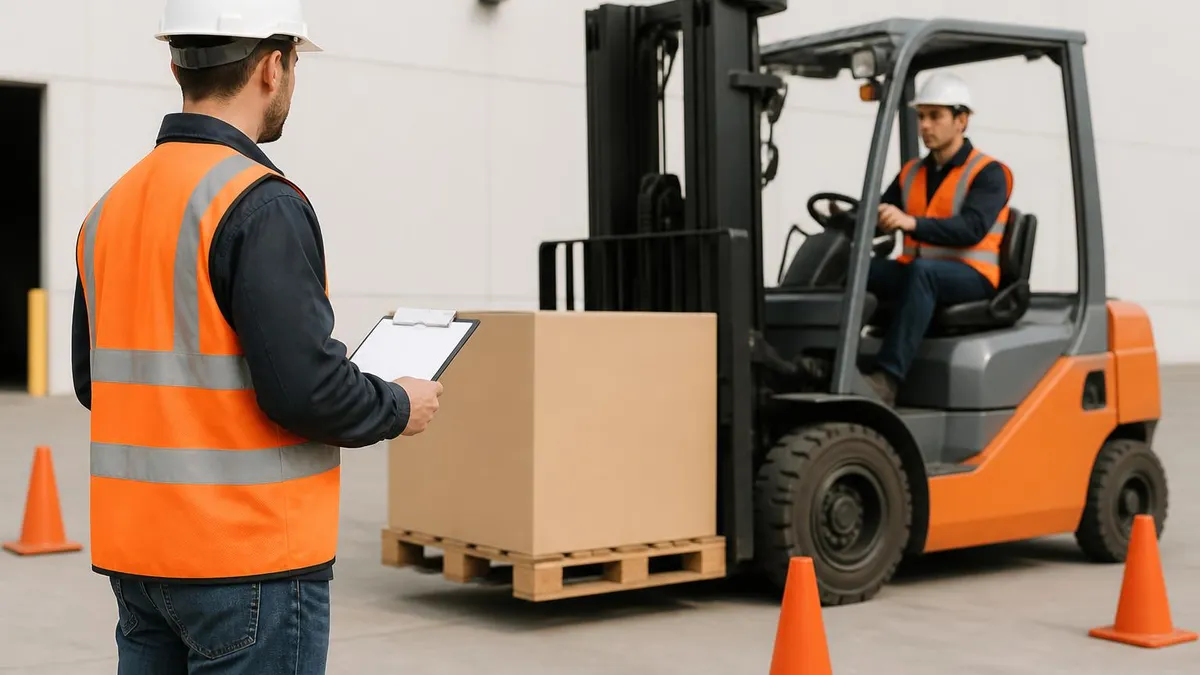
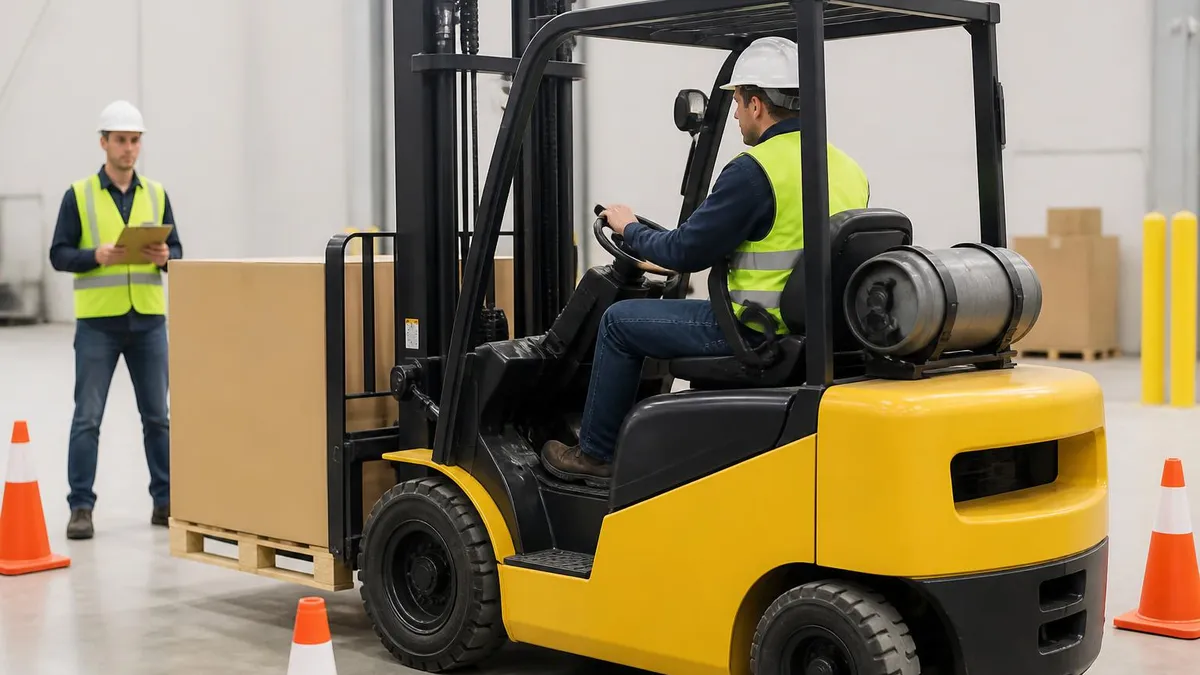
Many forklift training programs now offer online theory components supplemented by hands-on practical evaluations conducted at the employer's facility. The online portion typically covers OSHA regulations, propane system theory, pre-shift inspection protocols, and emergency procedures. The practical evaluation must be conducted in person using the actual equipment the operator will use — OSHA does not allow fully online certification for powered industrial trucks, as hands-on evaluation is explicitly required. Look for programs that provide both components and issue a certification card upon successful completion of both the written and practical portions.
For operators who want to verify their knowledge before sitting for a formal evaluation, practice tests covering propane forklift safety, fuel system components, and OSHA regulatory requirements are an excellent preparation tool. Taking timed practice quizzes helps identify knowledge gaps, builds familiarity with the types of questions asked in certification evaluations, and builds the confidence needed to perform well under evaluation conditions. The more thoroughly an operator understands propane system components and safety requirements, the better prepared they will be for both the written evaluation and the practical skills demonstration required for full certification.
Developing strong practical habits around propane forklift system inspection and maintenance is the single most effective thing an operator or fleet manager can do to extend equipment life, reduce downtime, and maintain a safe work environment. The following section pulls together the most important practical guidance from industry best practices, OSHA compliance requirements, and real-world fleet management experience into a set of actionable recommendations you can implement immediately.
Start every shift with a systematic pre-shift inspection that treats the propane fuel system as a priority — not an afterthought. Many operators focus on forks, mast, and hydraulic system during pre-shift checks but give only cursory attention to the propane cylinder and fuel components. This is a mistake. A loose coupling, a cracked hose, or a damaged pressure relief valve discovered during a pre-shift check takes five minutes to address; the same issue discovered during an active leak or fire incident takes far longer to resolve and carries far greater consequences.
Build a relationship with your propane supplier's service team. Good suppliers will conduct periodic cylinder inspections, identify out-of-date cylinders before they become compliance violations, and provide technical guidance on fuel system issues. They can also help you design an efficient cylinder exchange program that minimizes the number of spare cylinders you need to keep on hand while ensuring operators never face a mid-shift shortage. The best supplier relationships go beyond simple fuel delivery — they become a genuine safety and operational resource.
When troubleshooting propane forklift performance problems, work through the fuel system methodically rather than jumping to expensive repairs. Many issues that appear to be engine problems are actually fuel delivery problems rooted in a failing regulator, a clogged filter, or a degraded O-ring. Start with the simplest and cheapest components — clean or replace the fuel filter, inspect all O-rings, check the solenoid function with a multimeter — before pulling the regulator or carburetor. Systematic diagnosis saves time and money and builds your team's mechanical competency over time.
For fleet managers overseeing multiple forklifts, a centralized cylinder tracking system is worth the administrative effort. Log every cylinder serial number, its manufacture date, last requalification date, and which truck it is currently assigned to. Review this log monthly to flag cylinders approaching their requalification deadline, and remove them from service proactively rather than scrambling when an auditor or OSHA inspector arrives. Modern fleet management software often includes cylinder tracking modules, or a simple spreadsheet maintained consistently is perfectly adequate for smaller operations.
Invest in your team's knowledge through quality forklift training programs that cover propane system theory alongside operational skills. Operators who understand how a regulator works, why excess-flow valves exist, and what triggers a pressure relief valve discharge are better diagnosticians and safer workers than operators who have simply memorized a checklist. The depth of understanding that comes from genuine forklift training — as opposed to minimum-compliance checkbox training — pays dividends in reduced incidents, longer equipment life, and stronger OSHA audit outcomes.
Finally, keep spare parts on hand for the most common propane system failure points. A small parts inventory — spare regulators, fuel filters, solenoids, O-ring assortments, and coupling washers — can prevent hours of downtime when a component fails unexpectedly. Cross-reference your spare parts list with your forklift manufacturer's recommended maintenance kit, and review it annually to ensure you are stocked for the specific models in your fleet. The cost of maintaining a spare parts inventory is a fraction of the cost of a single full shift of unplanned downtime across your forklift fleet.
Sample Forklift certification Practice Questions
Try these questions from our free Forklift certification practice tests. The correct answer and an explanation follow each question.
For a propane (LPG) forklift, what should be inspected regarding the fuel system?
- A. Nothing, LPG needs no checks
- B. The tank mounting, hoses, and connections for leaks and damage
- C. Only the paint color of the tank
- D. The tank's weight rating for shipping
Answer: B. The tank mounting, hoses, and connections for leaks and damage
LPG tanks, hoses, and connections must be checked for secure mounting, leaks, and damage before use.
Under OSHA 29 CFR 1910.178(l), who is responsible for ensuring forklift operators are trained and evaluated?
- A. The forklift manufacturer
- B. The employer
- C. The local government
- D. The forklift operator themselves
Answer: B. The employer
OSHA places the legal responsibility on employers to ensure all forklift operators receive proper training and evaluation before operating powered industrial trucks.
For a propane (LPG) forklift, the inspection should include checking the:
- A. Windshield wipers
- B. Propane tank mounting and hose for leaks
- C. Radio antenna
- D. Cup holder
Answer: B. Propane tank mounting and hose for leaks
LPG forklifts require verifying the tank is secure and hoses show no leaks or damage.
How often must forklift operators be re-evaluated under OSHA to maintain compliance?
- A. Every 6 months
- B. At least every 3 years
- C. Every 10 years
- D. Only once, at initial hire
Answer: B. At least every 3 years
OSHA requires operator performance to be evaluated at least once every three years.
Forklift Questions and Answers
Forklift Rentals: Complete Guide to Pricing, Types, and Operator Requirements
Forklift Hydraulic Fluid: Complete Guide to Types, Specifications, Change Intervals, and Troubleshooting for 2026
Forklift Parts and Maintenance: Complete Guide to Batteries, Chargers, and Replacement Components
Big Forklift Guide: Heavy-Duty Lift Trucks, Capacity Classes, Rental Costs, and Operator Requirements
Forklift License Renewal: Complete Guide to Forklift License Expiry, OSHA Recertification, and Operator Requirements for 2026
About the Author

Certified Crane Operator & Skilled Trades Exam Specialist
Ferris State UniversityRobert Martinez is a Journeyman Ironworker, NCCCO-certified crane operator, and forklift trainer with a Bachelor of Science in Construction Technology from Ferris State University. He has 21 years of ironworking, rigging, and heavy equipment operation experience across high-rise and industrial construction sites. Robert prepares candidates for crane operator, rigger, forklift, and skilled trades certification examinations.