
Forklift Classifications: The Complete Guide to All 7 OSHA Types 2026 September
❓ Learn all 7 forklift classifications per OSHA standards. Covers electric, propane, diesel forklifts, certification requirements, and forklift rental options.

Forklift rental decisions, operator assignments, and workplace safety programs all depend on one foundational concept: forklift classifications. The Occupational Safety and Health Administration (OSHA) and the Industrial Truck Association (ITA) jointly recognize seven distinct forklift classifications, each designed for specific power sources, environments, and load capacities. Whether you are a new forklift operator preparing for certification, a warehouse manager building a safety program, or a business owner evaluating forklift rental options, understanding these seven classes is the essential starting point for every decision you will make about powered industrial trucks.
The seven OSHA forklift classifications divide powered industrial trucks by their power source — electric, internal combustion, or rough-terrain — and by the specific environment in which they safely operate. Class I through Class VII covers everything from the electric counterbalanced rider forklifts you see in grocery distribution centers to the rough-terrain variable-reach trucks used on construction sites. Each class carries its own set of hazards, maintenance requirements, and operator training mandates under 29 CFR 1910.178, the federal standard governing powered industrial truck safety in the United States.
Choosing the right class matters far beyond convenience. A Class III electric hand rider used indoors in a food-grade freezer warehouse has zero exhaust emissions — a critical advantage in enclosed, temperature-controlled spaces. Deploying an internal combustion Class IV or Class V truck in that same space would expose workers to carbon monoxide concentrations that can reach dangerous levels within minutes. The forklift classifications system exists precisely to match equipment capabilities with environmental conditions, protecting both operators and the workers nearby.
For certification purposes, OSHA requires that forklift training be specific to the type of truck the operator will actually drive. A certificate earned on a Class I electric counterbalanced forklift does not automatically qualify an operator to drive a Class V internal combustion pneumatic-tire truck or a Class VII rough-terrain unit. This is why understanding forklift repair near me resources and class-specific training programs is so important before you invest in operator development — you need to match training content to the exact equipment on your floor.
Beyond regulatory compliance, classification knowledge drives smarter purchasing and rental choices. When businesses search for forklift rental near me options, fleet managers need to specify the correct class to ensure rented equipment is compatible with their floor surfaces, racking configurations, and load types. Renting a Class II narrow-aisle reach truck when your application actually requires a Class IV cushion-tire truck is a costly mistake that affects productivity, increases damage risk, and may expose your organization to OSHA liability if the wrong equipment is pressed into service.
This guide covers all seven OSHA forklift classifications in detail, explaining the defining characteristics of each class, the environments where they excel, the power sources involved, and the certification considerations that every forklift operator and fleet manager needs to understand. You will also find practical guidance on selecting equipment for specific applications, understanding electric forklift advantages, and preparing for the written and hands-on evaluations required for forklift certification. The goal is to give you a complete working knowledge of the classification system so you can make informed, compliant decisions at every level of your operation.
Forklift Classifications by the Numbers

All 7 OSHA Forklift Classifications at a Glance
Battery-powered counterbalanced rider forklifts. Used indoors on smooth, hard surfaces. Zero direct emissions make them ideal for food-grade, pharmaceutical, and climate-controlled warehouses. Capacities typically range from 3,000 to 12,000 lbs.
Battery-powered trucks designed for very narrow aisles, including reach trucks, order pickers, and side loaders. Suited for high-density pallet racking systems where aisle widths may be as narrow as 8 feet.
Includes walkie stackers, pallet jacks, and hand/rider pallet trucks. Operator walks alongside or rides at low height. Low-speed, low-lift applications in warehouses, retail, and manufacturing environments.
Internal combustion trucks running on propane, gasoline, diesel, or LPG. Class IV uses cushion tires for smooth indoor floors; Class V uses pneumatic tires for outdoor use, loading docks, and uneven terrain.
Class VI covers electric and IC tow tractors used in airports and factories. Class VII includes rough-terrain forklifts and variable-reach telehandlers built for construction sites, lumber yards, and outdoor applications.
When comparing forklifts across the seven OSHA classes, the most consequential decision most operations face is the choice between electric motor trucks (Classes I, II, and III) and internal combustion trucks (Classes IV, V, VI, and VII). This is not a simple preference — it is an application-driven decision with direct implications for worker safety, operating costs, environmental compliance, and equipment longevity. Understanding the performance profile of each power type helps fleet managers and operators make choices that hold up over years of daily use.
Electric forklifts in Classes I through III run on lead-acid or lithium-ion batteries, producing zero direct emissions at the point of operation. This makes them the default choice for any indoor application where ventilation is limited: freezer warehouses, pharmaceutical manufacturing cleanrooms, food processing facilities, and enclosed retail distribution centers. A standard Class I electric counterbalanced truck can run a full eight-hour shift on a single battery charge, though operations with heavy duty cycles often invest in battery swapping systems or opportunity charging stations to maintain uptime across multiple shifts without interruption.
The stand up forklift — typically a Class II reach truck or Class I stand-on counterbalanced model — is one of the most ergonomically efficient designs in the electric lineup. Stand-up entry and exit is faster than sit-down models, reducing cycle times in high-frequency pick environments.
Operators can step on and off dozens of times per hour without the physical strain associated with climbing in and out of an enclosed cab. For order-picking operations where operators make hundreds of short moves per shift, the stand up forklift design meaningfully reduces fatigue and improves productivity metrics over the course of a workday.
Internal combustion trucks in Classes IV and V offer higher throughput power and performance in demanding outdoor or mixed-use settings. A Class V pneumatic-tire IC truck can handle rough loading dock surfaces, operate in light rain, and move loads across uneven asphalt or gravel lots where an electric truck would risk battery compartment damage or traction problems.
Propane-powered forklifts in these classes can be refueled in under two minutes — a significant operational advantage over battery charging cycles in facilities running two or three shifts per day where downtime is costly. If you need to understand how a forklift propane tank connects to the broader system of safe forklift operation, that topic covers the hand-signal protocols that govern all propane-powered truck movements on busy warehouse floors.
Diesel forklifts, classified under Class V or Class VII depending on tire configuration and intended terrain, deliver the highest raw torque and load capacity in the IC lineup. In outdoor lumber yards, steel service centers, and heavy manufacturing facilities where loads routinely exceed 15,000 to 30,000 lbs, diesel forklifts are often the only practical option. However, diesel exhaust emissions require robust ventilation when these trucks operate near building openings, and EPA Tier 4 Final emission standards now mandate diesel particulate filters (DPFs) on most new diesel industrial trucks sold in the United States.
From a total cost of ownership perspective, electric forklifts typically carry lower per-hour operating costs than IC alternatives because electricity is cheaper than propane or diesel fuel, and electric drivetrains have fewer moving parts to service. An electric motor has no oil changes, no spark plugs, no fuel injectors, and no exhaust system to maintain.
However, the upfront capital cost of lithium-ion battery packs can be significant — premium Li-ion batteries for Class I trucks can add $8,000 to $15,000 to the purchase price compared to lead-acid alternatives. For businesses evaluating forklift rentals near me, the rental market offers access to both electric and IC classes without the capital commitment, making it easier to test different configurations before making a long-term fleet investment.
Maintenance schedules also differ significantly between electric and IC classes. Electric trucks require regular battery watering (for lead-acid), terminal cleaning, charger maintenance, and periodic drivetrain inspections. IC trucks require engine oil changes typically every 250 hours, air filter replacements, fuel system maintenance, and more frequent brake system inspections due to higher operating weights and speeds. Both power types require daily pre-shift inspections per OSHA 29 CFR 1910.178(q), covering brakes, steering, lights, horn, mast integrity, forks, and tires — but the specific checklist items differ by class, reinforcing why class-specific training is a non-negotiable OSHA requirement.
Forklift Training Requirements by Classification
Class I electric counterbalanced rider forklifts and Class II narrow-aisle trucks require formal operator training that covers the specific controls, stability characteristics, and battery management procedures unique to electric equipment. Training must include classroom instruction on load capacity, center of gravity, and OSHA regulations, followed by practical driving exercises on the actual equipment type the operator will use on the job. Operators must demonstrate competency before operating independently, and employers must document the training date, the trainer's name, and the equipment type covered.
Class II reach trucks and order pickers introduce additional complexity because operators work at elevation — sometimes 30 feet or higher in high-bay warehouses — and must manage both the truck's ground movement and the raising and lowering of the forks or operator platform simultaneously. Training for these trucks specifically addresses load stability at height, racking impact avoidance, fall protection on operator-up order pickers, and battery management in high-cycle environments. OSHA requires refresher training any time an operator is observed operating the truck unsafely, regardless of how recently initial certification was completed.

Electric vs. Internal Combustion Forklifts: Pros and Cons
- +Zero direct emissions — safe for enclosed, food-grade, and pharmaceutical environments
- +Lower per-hour operating cost — electricity is cheaper than propane or diesel
- +Fewer mechanical components — no oil changes, spark plugs, or exhaust systems
- +Quieter operation reduces noise-induced fatigue and improves communication on the floor
- +Lithium-ion battery options enable opportunity charging for multi-shift operations
- +Eligible for electric vehicle incentives and sustainability reporting credits
- −Higher upfront cost — lithium-ion battery packs add $8,000–$15,000 to purchase price
- −Battery charging time (8–12 hours for lead-acid) limits multi-shift use without spares
- −Sensitive to water and extreme temperatures — not suitable for outdoor or wet applications
- −Lower maximum capacity — IC trucks dominate in the 15,000–50,000 lb range
- −Battery replacement every 5–7 years adds a significant recurring capital cost
- −Charging infrastructure (stations, ventilation for hydrogen off-gassing) requires facility investment
Forklift Classification Selection Checklist for Operators and Fleet Managers
- ✓Identify the primary operating environment: indoor smooth floor, indoor mixed surface, outdoor paved, or rough terrain
- ✓Determine the maximum load weight and load center distance required for your heaviest regular task
- ✓Check whether the workspace requires zero-emission equipment due to enclosure, ventilation limits, or food-safety regulations
- ✓Measure the narrowest aisle you need to navigate to determine whether a Class II narrow-aisle truck is required
- ✓Confirm whether operations run one, two, or three shifts per day to evaluate battery vs. IC refueling logistics
- ✓Verify that your operators hold current certification specifically for the class of truck you plan to deploy
- ✓Review OSHA 29 CFR 1910.178 to confirm the truck class meets the surface, environment, and capacity requirements of your site
- ✓Contact a forklift rental provider to request the correct class specification and confirm availability in your area
- ✓Establish a documented pre-shift inspection procedure tailored to the specific class of truck in your fleet
- ✓Schedule class-specific refresher training at least every three years or immediately after any observed unsafe operation
One Certificate Does NOT Cover All Classes
OSHA explicitly requires that forklift operator certification be specific to the type of truck being operated. An operator certified on a Class I electric sit-down counterbalanced forklift is not automatically qualified to operate a Class V pneumatic-tire IC truck, a Class II reach truck, or a Class VII telehandler. Employers who allow operators to cross class lines without documented class-specific training face potential OSHA citations and are liable if an injury occurs on an uncertified truck type.
Understanding forklift rental economics requires a solid grasp of forklift classifications because rental rates, availability, and minimum rental periods all vary significantly by class. A basic Class III electric walkie pallet jack can rent for as little as $150 to $300 per month in most US markets, while a Class I electric sit-down counterbalanced forklift typically runs $600 to $1,200 per month on a short-term rental.
Class II reach trucks and order pickers sit in the $1,000 to $2,000 monthly range, and specialized Class VII rough-terrain telehandlers can command $3,000 to $6,000 per month depending on reach height and capacity specification.
Short-term rental rates are naturally higher on a per-day basis. A Class IV propane cushion-tire forklift for a one-week construction project rental can cost $350 to $600 per week from a national dealer. Daily rental rates for a Class V pneumatic-tire IC truck commonly run $150 to $250 per day.
When you request forklift rental near me quotes, always specify the exact class, required capacity in pounds, lift height in inches or feet, power source preference, and any special attachments such as side shifters, fork positioners, or paper roll clamps — each attachment can add $50 to $200 per month to the rental rate and must be factored into operator training as well.
The forklift for sale market mirrors the rental market in terms of class-driven price variation. A used Class I 5,000 lb electric counterbalanced forklift with 3,000 to 5,000 hours on the meter typically sells for $8,000 to $18,000 depending on brand, battery condition, and mast configuration.
New Class I units from Tier 1 manufacturers — Toyota, Crown, Raymond, Hyster, Yale — range from $25,000 to $50,000 for standard warehouse configurations. Class VII telehandlers in the 10,000-lb, 55-foot reach category can exceed $120,000 new, which is why rental is so prevalent for construction-phase equipment needs where the truck is only required for a specific project duration.
Financing terms for forklift purchases vary by class and business credit profile, but most equipment finance companies offer 36- to 72-month terms on forklifts with rates ranging from 5% to 12% APR in 2025 market conditions.
Section 179 of the IRS tax code allows businesses to deduct the full purchase price of qualifying forklift equipment in the year of purchase rather than depreciating it over time — a significant cash flow advantage for businesses buying Class I through Class V trucks for ongoing operations. Always consult a tax professional before relying on Section 179 deductions, as annual deduction caps and business income limitations apply.
Lease-to-own programs are popular in the forklift industry and are offered by most major dealers across all seven classes. A typical lease-to-own arrangement structures monthly payments similarly to a rental but includes a purchase option at the end of the term — often a nominal $1 buyout or a fair market value purchase right.
For businesses that are unsure whether they want to commit to a specific class long-term, a 24-month lease-to-own on a Class I electric forklift provides the operational data needed to make a confident long-term fleet decision without the full capital commitment of an outright purchase at the start.
Fleet size planning also intersects with forklift classification knowledge. A distribution center moving 500 to 800 pallets per day might operate a mixed fleet: four to six Class I sit-down counterbalanced trucks for inbound receiving and outbound shipping, two to four Class II reach trucks for high-bay putaway and picking, and two to three Class III electric walkie pallets for trailer unloading at dock doors.
This multi-class fleet model requires operators who are certified on each specific class they will operate, a maintenance program structured around the different service intervals for each class, and a parts inventory that accounts for the different components of electric and IC drivetrains if both power types are in use.
Understanding the forklift classifications that apply to tire type is equally important when planning a fleet or rental order. Class I and Class IV trucks use cushion tires optimized for smooth concrete floors; Class V trucks use pneumatic tires for outdoor and uneven surfaces; Class II and III trucks use polyurethane wheels for precise maneuverability in tight spaces. Ordering a rental unit with the wrong tire type for your floor surface is a common and avoidable mistake that leads to traction problems, floor damage, and potential tip-over incidents on surfaces the tire was not designed to handle.

OSHA requires forklift operators to be evaluated at least every three years. Employers must also retrain operators immediately following any near-miss incident, observed unsafe operation, or assignment to a new class of equipment. Operating a forklift without current, class-specific certification exposes both the operator and the employer to OSHA citations carrying penalties up to $15,625 per violation for serious violations and up to $156,259 for willful or repeated violations under 2025 penalty schedules.
OSHA's powered industrial truck standard, 29 CFR 1910.178, establishes the minimum safety requirements that apply across all seven forklift classifications. However, the specific application of those requirements differs meaningfully between classes, which is why generic safety training is insufficient and class-specific operator certification is a legal mandate rather than a best practice recommendation. Employers who design safety programs without understanding classification-specific hazards consistently underperform on OSHA compliance audits and face higher incident rates than facilities that build class-specific protocols into their daily operations.
Stability is the most class-specific hazard in the forklift safety framework. Every forklift, regardless of class, operates within a stability triangle — a three-point suspension system defined by the two front drive wheels and the single rear pivot point of the steering axle. The center of gravity of the loaded truck must remain within this triangle at all times to prevent tip-over.
Class I sit-down counterbalanced trucks typically have a load center distance of 24 inches and a stability triangle sized accordingly, while Class VII telehandlers operating at full extension have a dramatically different stability envelope that requires the use of outriggers and the consultation of the manufacturer's load chart for every lift at maximum reach.
Speed limits inside facilities are not universally standardized across classes — they are set by employers based on OSHA's general duty clause requirement to maintain a hazard-free workplace. However, industry practice commonly limits Class I and II trucks to 5 mph in pedestrian areas and 8 mph in dedicated truck lanes, while Class V IC pneumatic-tire trucks operating in outdoor yard areas may be permitted up to 10 mph on straight, unobstructed surfaces.
Exceeding established speed limits is one of the leading contributing factors in forklift tip-over incidents, which account for approximately 24% of forklift-related fatalities annually according to OSHA data.
Pre-shift inspection requirements under 29 CFR 1910.178(q) apply to all seven classes but generate different inspection checklist items depending on the class. A Class I electric truck inspection includes checking battery charge level, battery connector condition, battery water level (for lead-acid), and charger function.
A Class IV propane truck inspection adds cylinder valve inspection, hose condition, LP fuel system leak check using soapy water or a combustible gas detector, and exhaust system integrity. A Class VII rough-terrain telehandler inspection additionally includes boom and attachment pin inspection, hydraulic cylinder seal inspection, and outrigger pad condition verification — a significantly longer checklist than a standard warehouse forklift.
Load capacity nameplates, required by OSHA on all forklifts, must accurately reflect the truck's rated capacity at the specified load center and must be updated if modifications are made to the truck. Common modifications that reduce rated capacity include adding a side-shifter attachment (typically reduces capacity by 200 to 500 lbs), installing a fork-mounted work platform (dramatically reduces allowable load), or extending fork length beyond the rated load center.
Operators must consult the nameplate capacity before every lift of an unusual or oversized load, not just during initial training — this is a point emphasized in every class-specific certification curriculum and reinforced in the forklift operator practical evaluation.
Pedestrian safety programs must be layered on top of class-specific operator training because forklift-pedestrian collisions are consistently among the most deadly incident types in industrial settings. OSHA's general industry standard requires employers to establish clearly marked pedestrian aisles separate from forklift travel lanes, install mirrors at blind corners, and implement intersection warning systems in high-traffic areas.
These requirements apply regardless of forklift class, but the specific implementation differs: a low-speed Class III walkie pallet jack operation in a retail store backroom requires different intersection management than a high-speed Class I electric forklift operation in a 500,000 square foot regional distribution center. Building class-appropriate pedestrian safety systems — speed-appropriate warning systems, appropriate sight-line distances, and class-specific approach procedures at pedestrian crossings — is a fundamental component of OSHA compliance across all seven forklift classifications.
Employers who invest in comprehensive, class-specific safety programs consistently see measurable returns beyond OSHA compliance. Insurance carriers routinely offer premium discounts of 5% to 15% for operations with documented class-specific training programs, written safety policies, and evidence of regular pre-shift inspections.
Workers' compensation costs decrease when operators are well-trained on their specific equipment class, and property damage rates drop when operators understand the precise stability limits and operating restrictions of the truck they are assigned. The business case for thorough forklift classification knowledge extends well beyond passing the certification exam — it is the foundation of a safe, productive, and legally compliant powered industrial truck operation.
Preparing for forklift certification requires more than memorizing the seven OSHA classes — it requires understanding how classification knowledge applies in practical, real-world scenarios that appear on both written exams and hands-on evaluations. Written certification tests frequently present scenario-based questions that ask operators to identify the correct truck class for a given application, calculate load capacity adjustments for attachments, or select the appropriate safety procedure for a class-specific hazard. Candidates who study classification concepts in applied context consistently outperform those who rely on rote memorization of class definitions.
One of the most effective study strategies for forklift certification is to cross-reference the seven class definitions with real equipment examples you have personally operated or observed. If you have spent time on a Crown RC 5500 Series reach truck, that is a Class II electric narrow-aisle truck. If you drove a Toyota 8FGU25 propane forklift, that is a Class V pneumatic-tire IC truck. Connecting abstract class definitions to specific, tangible equipment models builds the kind of durable understanding that holds up under exam pressure and transfers directly to safe on-the-job performance after certification.
The hands-on evaluation component of forklift certification directly tests class-specific competencies. For Class I trucks, evaluators typically assess: safe startup procedure, pre-operation inspection, load pickup and positioning accuracy, travel with load at correct fork height, stack and unstack from racking, parking procedure, and battery management.
For Class V IC trucks, the evaluation adds: propane cylinder exchange, engine temperature check, and outdoor travel on uneven surfaces. For Class VII telehandlers, the hands-on evaluation may include boom extension at various heights, load chart consultation, and outrigger deployment if the unit is equipped with stabilizers — all class-specific competencies that require direct instruction rather than general study.
Forklift training programs offered by employers must, under OSHA 29 CFR 1910.178(l), be delivered by a person with the knowledge, training, and experience to train operators and evaluate their competence. This means the person conducting forklift training must themselves be competent on the specific class of equipment being taught — a trainer who has only operated Class I electric trucks should not be certifying operators on Class VII rough-terrain telehandlers without first receiving training on that class themselves. This train-the-trainer requirement is frequently overlooked by smaller employers and represents a common source of OSHA citations during post-incident investigations.
Online forklift certification courses have become increasingly common, particularly for the classroom knowledge component of training. However, OSHA is explicit that the hands-on evaluation cannot be completed online — it must be conducted by a qualified trainer observing the operator on the actual equipment at the actual worksite.
Online training can cover forklift classifications, OSHA regulations, load capacity calculations, pre-shift inspection procedures, and stability principles, but the practical driving evaluation must be in-person and class-specific. Certificates issued by online-only providers that claim to cover the hands-on requirement without site-specific, in-person evaluation do not meet OSHA's standard and do not protect employers from liability.
Refresher training triggers are another area where classification knowledge is essential. OSHA requires refresher training when an operator is involved in an accident or near-miss incident, when an operator is observed operating the truck unsafely, when a re-evaluation reveals deficiencies, when the operator is assigned to a different type of truck (i.e., a different class), or when conditions in the workplace change in a manner that could affect safe operation.
The fifth trigger — assignment to a different class — directly requires employers to maintain records of which classes each operator is currently certified on and to track assignments to ensure no operator is asked to operate a class for which they lack current, documented certification.
Building a personal certification portfolio as a forklift operator strengthens your career prospects significantly. Operators with documented certification across multiple classes — such as Class I sit-down, Class II reach truck, and Class V pneumatic-tire IC — command higher wages and greater scheduling flexibility than single-class certified operators.
According to Bureau of Labor Statistics data, forklift operators in the 75th percentile of earnings make approximately $22 to $28 per hour in 2025, compared to $16 to $18 per hour for entry-level single-class operators in many markets. Pursuing multi-class certification is one of the most straightforward and cost-effective career development strategies available to workers in the warehousing, logistics, and manufacturing sectors.
Forklift Questions and Answers
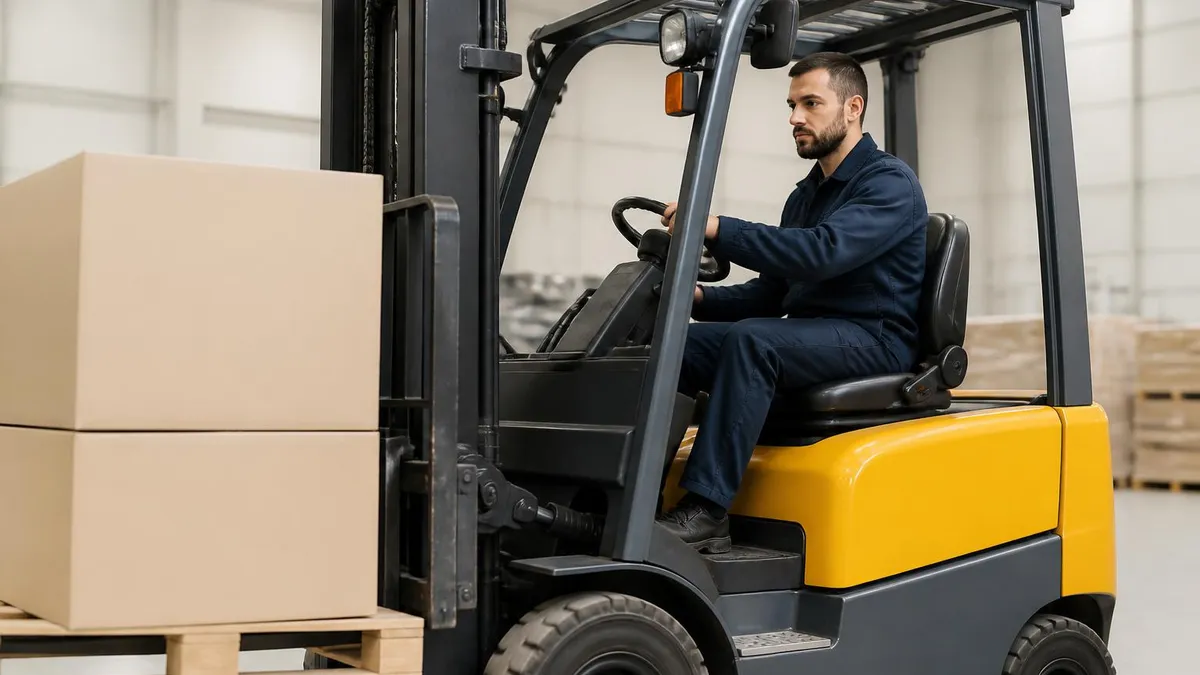
Forklift Classes — Complete Guide (2026)
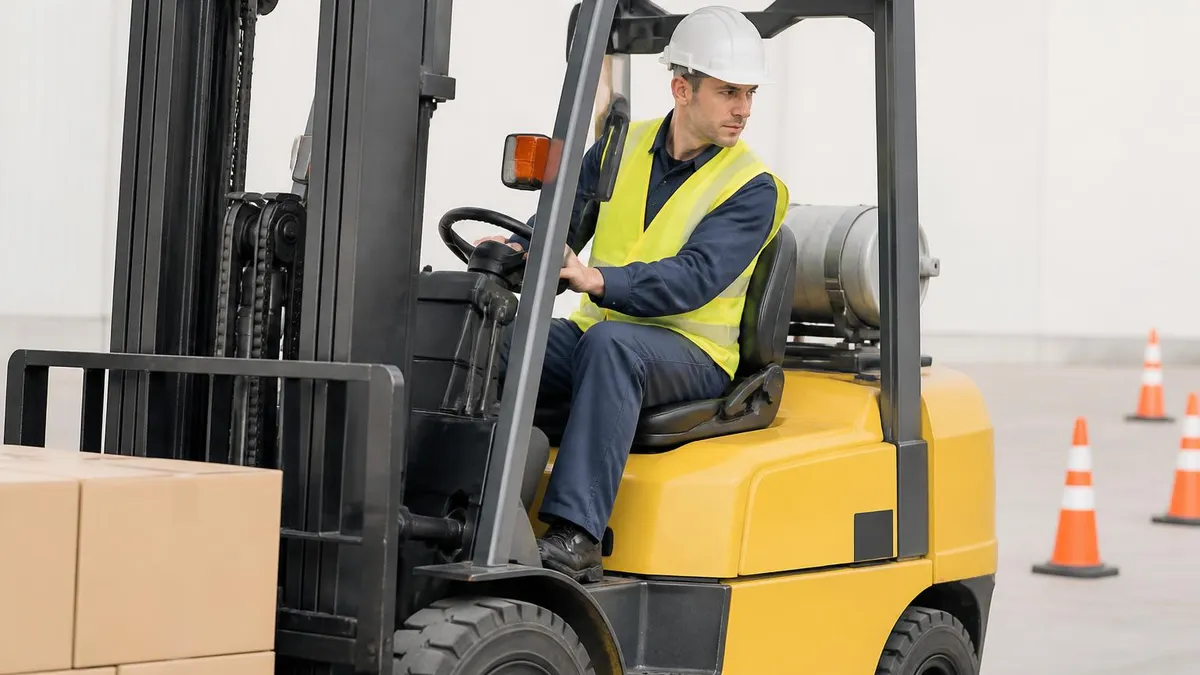
Forklift Rentals: Complete Guide to Pricing, Types, and Operator Requirements
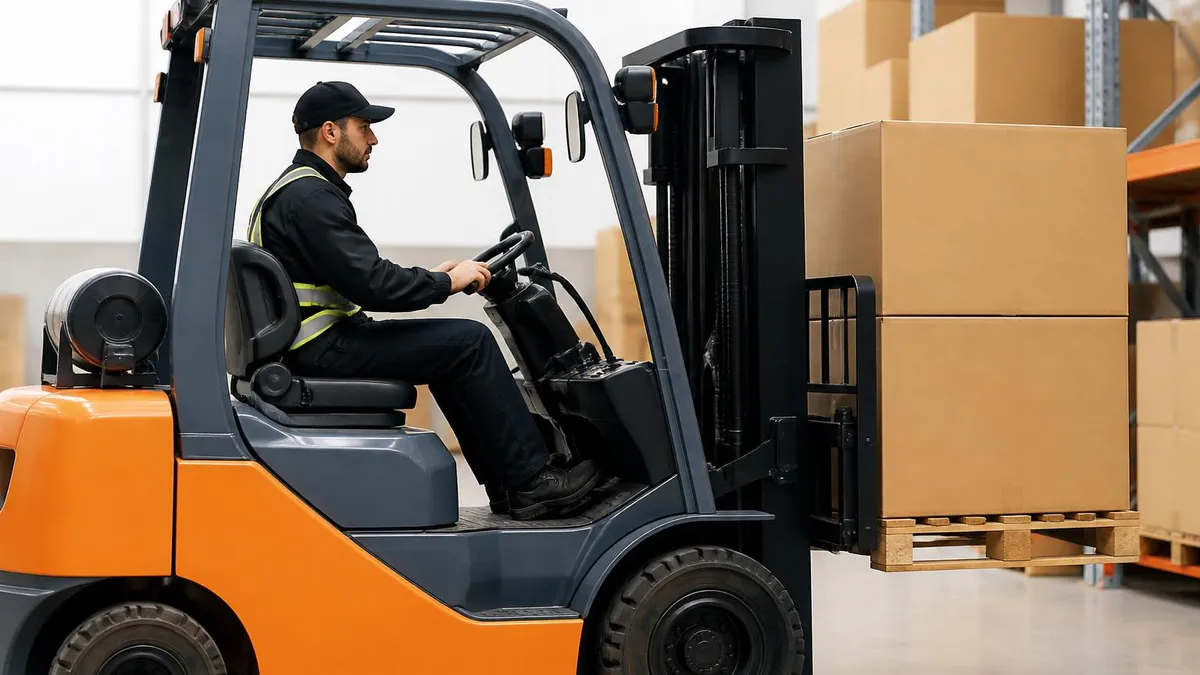
Forklift Hand Signals: The Complete OSHA Guide to Spotter Communication, Standard Gestures, and Safe Warehouse Operations
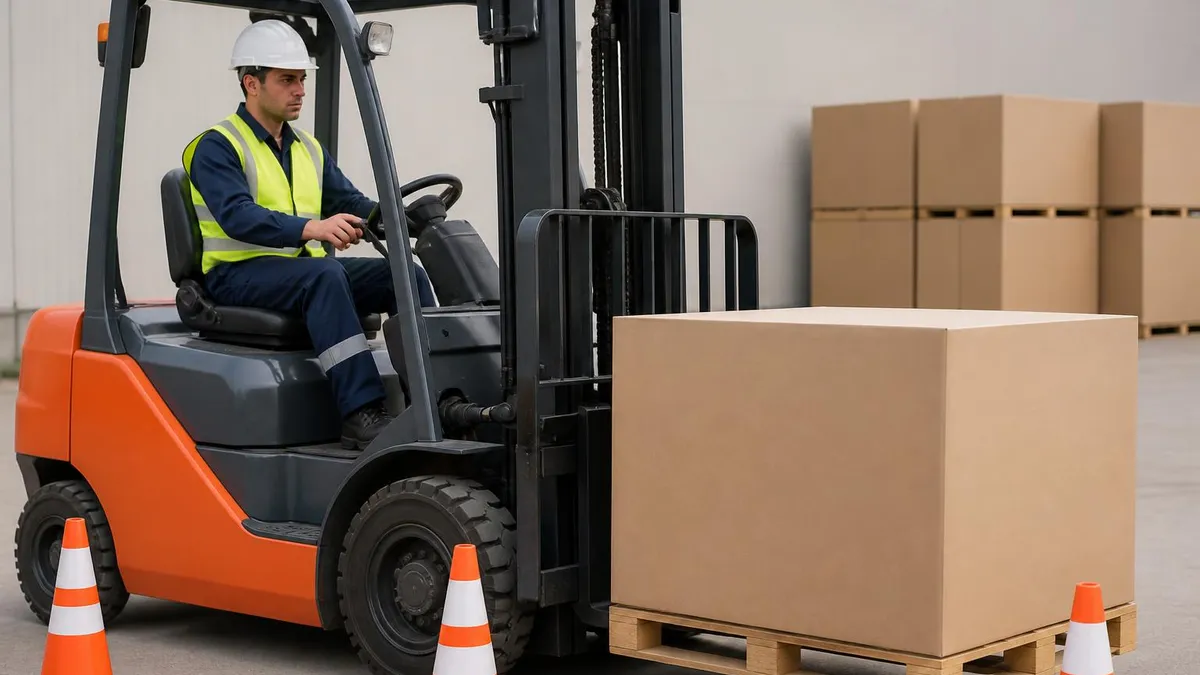
Forklift Tires: Complete Guide to Types, Sizing, Wear Patterns, and Replacement Costs
Forklift Parts and Maintenance: Complete Guide to Batteries, Chargers, and Replacement Components
About the Author

Certified Crane Operator & Skilled Trades Exam Specialist
Ferris State UniversityRobert Martinez is a Journeyman Ironworker, NCCCO-certified crane operator, and forklift trainer with a Bachelor of Science in Construction Technology from Ferris State University. He has 21 years of ironworking, rigging, and heavy equipment operation experience across high-rise and industrial construction sites. Robert prepares candidates for crane operator, rigger, forklift, and skilled trades certification examinations.