
First Aid CPR Classes Near Me: Complete Guide to Finding, Choosing, and Completing Local Certification in 2026 September
Find first aid CPR classes near me: compare AHA, Red Cross, and National CPR Foundation courses, costs, schedules, and certification in 2026 September. 💯
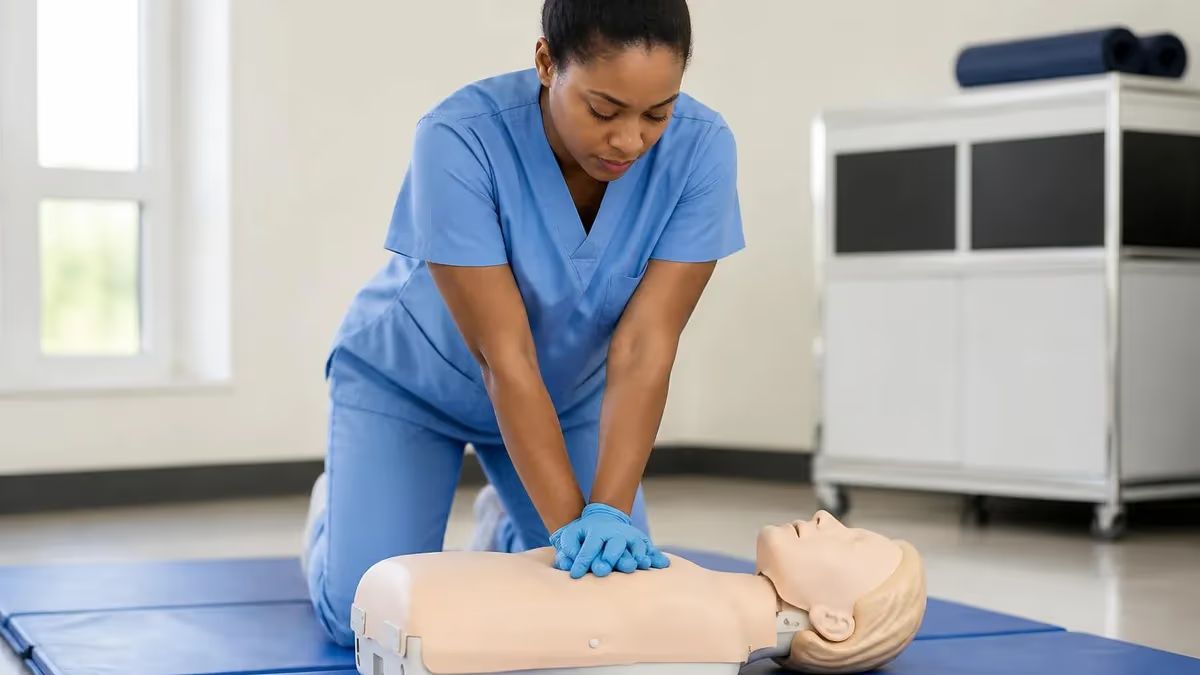
Searching for first aid cpr classes near me has become one of the most common health-and-safety queries in the United States, and for good reason. Roughly 350,000 out-of-hospital cardiac arrests happen every year, and bystander CPR doubles or triples the chance of survival. Whether you need a card for a new job, a daycare license, a teaching credential, or simple peace of mind for your family, a local class delivered by a credentialed instructor is still the fastest, most reliable route to a recognized certification you can actually use.
Local classes typically cover adult CPR, child and infant CPR, AED operation, choking response, and basic first aid for bleeding, burns, shock, fractures, and seizures. Some courses also touch on the acls algorithm at a high level so participants understand how advanced providers continue care after the paramedics arrive. Most beginner classes do not require any prior medical training, and a typical full-day session runs four to six hours including hands-on skills practice.
The biggest decision you face after location is which certifying body to choose. The American Heart Association (AHA), American Red Cross, American Safety and Health Institute (ASHI), and the national cpr foundation each offer different blends of in-person, blended, and online-only options. Employers, schools, and licensing boards do not all accept the same credentials, so confirming acceptance before you pay is the single most important step in the entire process.
Cost is the next variable. In-person community classes generally range from $55 to $120 for a Heartsaver CPR/AED/First Aid course, while healthcare-provider Basic Life Support (BLS) tends to run $65 to $140. Online-only certifications can cost as little as $20, but they rarely satisfy state licensing rules that require a physical skills test on a manikin. Blended learning (online theory plus a short in-person skills check) sits in the middle on both price and acceptance.
Geography matters more than people expect. In dense metro areas you may have a dozen classes within ten miles every week; in rural counties you might drive forty-five minutes and book three weeks out. Hospital education departments, community colleges, fire departments, YMCAs, and independent instructors all teach the same skill set, but scheduling, refund policies, and class size vary enormously. The right class is the one that fits your timeline without forcing you to compromise on hands-on practice.
This guide walks through everything a first-time learner needs: who needs which card, how to find and vet a local provider, what to expect during the class, how the skills tests work, how long the card is valid, and how to renew before it expires. By the end you will know exactly which course code to search for, what questions to ask the instructor, and what red flags signal a class you should walk away from.
If you want to test what you already know before signing up, run through a short practice set first. Honest self-assessment helps you pick the right level (Heartsaver vs. BLS vs. ACLS) and shortens the learning curve once you arrive at class. The chapters below break the topic into the order most learners actually need it: pick a provider, register, prepare, attend, pass, and renew.
First Aid CPR Classes by the Numbers

Course Types and Certifying Bodies You'll See Locally
The most common community class for the general public, teachers, coaches, childcare workers, and corporate safety teams. Covers adult, child, and infant CPR, AED use, and first aid basics. Runs 4-6 hours and issues a 2-year card.
Required for nurses, EMTs, medical assistants, dental staff, and pharmacy students. Faster paced, includes two-rescuer CPR, bag-mask ventilation, and team dynamics. Often a prerequisite for ACLS and PALS courses.
Equivalent to Heartsaver and widely accepted by schools, camps, and OSHA-covered workplaces. Blended online plus in-person skills check is the most popular delivery format and finishes in about 2.5 hours of seat time.
Fully online certification accepted by many private employers and volunteer organizations. Inexpensive and fast, but does not include a hands-on skills test, so it is not accepted by most state healthcare licensing boards.
Builds on BLS to teach the acls algorithm, pals certification scenarios, rhythm recognition, and pharmacology. Required for ER, ICU, paramedic, and pediatric staff. Plan on 8-16 hours and a written plus megacode exam.
The fastest way to find first aid cpr classes near me is to start with the official course-locator tools maintained by the certifying bodies themselves. The AHA Class Connector, Red Cross course search, and ASHI provider directory let you enter a ZIP code, select a course type, and see every authorized training center within a chosen radius. These tools list only credentialed instructors, so the card you earn is guaranteed to be recognized by employers that accept that organization's seal.
Community colleges, technical schools, and continuing-education programs at hospitals are the next tier. They tend to run classes on a fixed monthly calendar, charge slightly less than independent training centers, and often include the manual in the price. Their instructors are usually working clinicians, which means questions about real-world scenarios, infant cpr nuances, or how a hospital code team uses life support equipment get answered with practical detail you will not find in a purely online course.
Local fire departments, EMS agencies, and Red Cross chapters frequently host low-cost or free community classes, especially during National CPR and AED Awareness Week each June. These sessions sometimes focus on hands-only adult CPR rather than a full certification, but they are excellent for refreshers, household groups, and anyone who simply wants to learn without needing a card. Check your city or county website under Public Safety or Community Programs for a current schedule.
Independent training centers and mobile instructors round out the market. They offer the most flexible scheduling, including evenings, weekends, and on-site corporate classes at your workplace. Before you book, verify three things: the instructor's current AHA, Red Cross, or ASHI instructor ID; the specific course code that will appear on your card; and whether the price includes the eCard fee, which is usually $5 to $15 and is sometimes billed separately.
Avoid listings that promise a same-day certification with no in-person component if you need the card for a healthcare job, daycare license, or school district. State boards routinely reject these credentials, and you will pay twice when you have to retake an accepted course. A useful filter: if the provider cannot tell you which certifying body issues the card and what the course code is, keep scrolling.
Reviews matter, but read them with care. Look for comments about class pacing, manikin availability (one per two students is the floor for a good experience), how the skills test was conducted, and whether the eCard arrived within the promised 1-3 business days. A common complaint pattern around cpr cell phone repair shops or cpr phone repair listings appearing in local search results simply reflects an unrelated brand sharing the same acronym; ignore those listings and refine your search with the phrase "CPR certification class."
Finally, ask your employer or licensing board for a written list of accepted providers before you register. Many hospitals only accept AHA cards; many school districts only accept Red Cross or ASHI; some federal agencies require a specific blended-learning format with a documented skills check. A ten-minute email exchange up front saves a wasted Saturday and a non-refundable registration fee.
CPR Practice Test Questions
Prepare for the CPR Cardiopulmonary Resuscitation Practice exam with our free practice test modules. Each quiz covers key topics to help you pass on your first try.
CPR Basic CPR
CPR Exam Questions covering Basic CPR. Master CPR Test concepts for certification prep.
CPR and First Aid
Free CPR Practice Test featuring and First Aid. Improve your CPR Exam score with mock test prep.
CPR (Cardiopulmonary Resuscitation) Adult ...
CPR Mock Exam on (Cardiopulmonary Resuscitation) Adult CPR and AED Usage. CPR Study Guide questions to pass on your first try.
CPR (Cardiopulmonary Resuscitation) Airway...
CPR Test Prep for (Cardiopulmonary Resuscitation) Airway Obstruction and Choking. Practice CPR Quiz questions and boost your score.
CPR (Cardiopulmonary Resuscitation) Cardio...
CPR Questions and Answers on (Cardiopulmonary Resuscitation) Cardiopulmonary Emergency Recognition. Free CPR practice for exam readiness.
CPR (Cardiopulmonary Resuscitation) Child ...
CPR Mock Test covering (Cardiopulmonary Resuscitation) Child and Infant CPR. Online CPR Test practice with instant feedback.
CPR (Cardiopulmonary Resuscitation) High-P...
Free CPR Quiz on (Cardiopulmonary Resuscitation) High-Performance Team Dynamics. CPR Exam prep questions with detailed explanations.
CPR (Cardiopulmonary Resuscitation) Legal ...
CPR Practice Questions for (Cardiopulmonary Resuscitation) Legal and Ethical Considerations. Build confidence for your CPR certification exam.
CPR for Specific Populations
CPR Test Online for for Specific Populations. Free practice with instant results and feedback.
CPR Airway & Breathing Management
CPR Exam Questions covering Airway & Breathing Management. Master CPR Test concepts for certification prep.
CPR Assessment & Recognition of Cardiac Ar...
Free CPR Practice Test featuring Assessment & Recognition of Cardiac Arrest. Improve your CPR Exam score with mock test prep.
CPR Chest Compressions & Defibrillation
CPR Mock Exam on Chest Compressions & Defibrillation. CPR Study Guide questions to pass on your first try.
CPR Post-Resuscitation Care & Recovery
CPR Test Prep for Post-Resuscitation Care & Recovery. Practice CPR Quiz questions and boost your score.
Class Formats: Comparing In-Person, Blended, and National CPR Foundation Online
Traditional in-person classes run four to six hours in a single sitting with a live instructor, a manual, video lectures, and hands-on practice on adult, child, and infant manikins. Every student must demonstrate compressions, ventilations, AED pad placement, and choking response to pass. This format is the gold standard for healthcare licensing boards and OSHA-regulated workplaces.
The trade-off is time. You commit a full afternoon, you cannot skip ahead, and rescheduling typically costs a fee. The upside is depth: you ask questions in real time, you feel proper compression depth on a feedback device, and you leave with both a card and genuine muscle memory. Expect to pay $75 to $140 depending on city and provider.
In-Person Class vs. Online-Only Certification: Which Is Right for You?
- +Hands-on practice builds real muscle memory you can use in an emergency
- +Live instructor feedback corrects compression depth and rate immediately
- +Skills test satisfies almost every employer and state licensing board
- +AED practice on a training unit removes hesitation in a real cardiac arrest
- +Group scenarios mirror two-rescuer CPR and team communication
- +Questions about infant cpr, choking, and special situations get answered in real time
- +Networking with classmates often leads to job and volunteer opportunities
- −Higher cost, usually $55 to $140 versus $15 to $40 online
- −Full afternoon time commitment and limited reschedule windows
- −Travel and parking add hidden cost in major metro areas
- −Cancellation fees can reach 50% within 48 hours of class start
- −Class size of 12-20 can limit one-on-one instructor attention
- −Manikin shortages in budget classes reduce hands-on time per student

Pre-Class Checklist for Your First Aid CPR Class
- ✓Confirm the certifying body required by your employer or licensing board in writing
- ✓Verify the instructor's current AHA, Red Cross, or ASHI instructor ID number
- ✓Read the cancellation and refund policy before paying the registration fee
- ✓Complete any required pre-course online module at least 24 hours before class
- ✓Print or download the course manual and skim adult, child, and infant chapters
- ✓Wear loose, comfortable clothing — you will kneel on the floor for 60+ minutes
- ✓Bring a government-issued photo ID for the skills sign-off sheet
- ✓Eat a light meal before class to maintain stamina during compression practice
- ✓Bring a water bottle and a pen for the written knowledge check
- ✓Plan for the eCard email to arrive within 1-3 business days after passing
Compression depth is invisible without feedback.
Studies of bystander CPR show that even motivated rescuers compress only 30 to 40 millimeters deep on average — below the 50 mm minimum needed to perfuse the brain. A two-hour in-person session with a feedback manikin corrects this in a single afternoon. No video, app, or online quiz can replicate that tactile learning, which is why hands-on practice remains the core of every credible class.
A typical Heartsaver or Red Cross class opens with a short welcome, a sign-in for the skills roster, and an overview of the day's objectives. The instructor explains the chain of survival, walks through how to recognize a cardiac emergency, and reviews when to call 911 versus when to begin compressions immediately. Expect a brief discussion of normal versus abnormal respiratory rate in adults, children, and infants, since recognizing agonal or absent breathing is the trigger to start CPR.
Adult CPR comes first because the technique is foundational. You will practice 30 compressions at a rate of 100-120 per minute and a depth of at least two inches, followed by two rescue breaths if you are trained and willing to give them. Hands-only CPR is taught as the default for untrained bystanders. The instructor will use a feedback device or metronome so you can feel the correct pace, and most classes give every student a minimum of two full practice cycles on a manikin.
Child and infant cpr follow the same core sequence with adjusted depth, hand position, and ventilation volumes. For infants, you use two fingers (or two-thumb encircling for two rescuers) at one-third the depth of the chest, roughly 1.5 inches. Choking response is taught next: back blows and chest thrusts for infants, abdominal thrusts (the Heimlich maneuver) for children and adults, and a clear protocol for when to escalate to CPR if the victim becomes unresponsive.
AED training answers the practical question many learners arrive with: what does aed stand for, and how do I use one without making things worse? AED stands for Automated External Defibrillator, and modern units talk you through every step. You will practice turning the unit on, placing the pads correctly on adult and pediatric manikins, clearing the patient before a shock, and resuming compressions immediately after. Most classes include a quick segment on shaving, drying, and avoiding metal jewelry or transdermal patches.
First aid content typically follows the CPR block. Topics include controlling severe bleeding with direct pressure and tourniquets, recognizing stroke with the FAST test, managing shock by laying the victim flat and conserving body heat, treating burns with cool running water rather than ice, immobilizing suspected fractures, and responding to seizures by clearing the area and timing the event. The position recovery technique — rolling an unresponsive but breathing victim onto their side — is demonstrated and practiced.
Healthcare provider BLS classes go deeper. You will practice two-rescuer CPR with a bag-mask device, switch compressors every two minutes to avoid fatigue, and learn how the BLS team integrates with the acls algorithm once advanced providers arrive. Pulse checks, compression-to-ventilation ratios for infants in two-rescuer scenarios (15:2 instead of 30:2), and recognition of opioid-associated emergencies are added to the curriculum.
The day ends with a written knowledge check (usually 25-35 multiple-choice questions, open-book in most community classes) and an individual skills test. Pass rates exceed 90% on first attempt because the instructor coaches you throughout the day; remediation for a missed skill usually means repeating that one station, not retaking the entire class. Your eCard is issued within 1-3 business days and is verifiable online by any employer.
Several websites sell instant CPR cards for under $20 with no skills test, no proctor, and no recognized accreditation. These cards are routinely rejected by state nursing boards, EMS agencies, and most hospital HR departments. If a course offers full certification in under 30 minutes with no in-person component, assume it will not be accepted for licensure and verify with your employer in writing before purchasing.
Once you pass, your certification is documented as an eCard rather than a physical card from almost every major provider. The eCard contains a unique QR code and ID number that employers can verify on the issuing organization's website in seconds. Save a PDF copy in cloud storage and a screenshot on your phone — paper cards are no longer standard, and most HR systems require digital upload at hiring or annual compliance review.
Standard validity is two years from the date of issue, which is the day you completed the skills test, not the day you started the online module. Plan to renew at least 30 days before expiration; many hospitals automatically suspend clinical privileges the moment a card lapses. Renewal courses are shorter than initial classes (usually two to four hours) and cost about the same as a first-time class, since the skills test requirement does not change.
If you let your card expire by more than 30 days, most certifying bodies require you to retake the full initial course rather than the renewal. The exception is BLS through the AHA, which allows a renewal up to the expiration date and a brief grace policy at the discretion of the training center. Always check with the specific provider who issued your card before assuming a renewal window is open.
Some careers stack certifications. A new ICU nurse, for example, will hold a BLS card, then add ACLS within six months to master the acls algorithm and rhythm recognition, and may add pals certification if the unit treats pediatric patients. Each card is renewed on its own two-year cycle, but coordinating renewal dates into a single week every two years saves enormous administrative time and reduces the risk of an accidental lapse.
Verification is straightforward. AHA eCards are checked at the AHA Student Site, Red Cross digital certificates verify at the Red Cross learning portal, and ASHI cards verify through the HSI verification tool. Anyone with the card holder's first name, last name, and eCard code can confirm authenticity in under a minute, which is why HR departments now prefer digital cards over the old laminated paper versions.
For employers and instructors building a compliance program, internal tracking spreadsheets or learning management systems should pull expiration dates 90, 60, and 30 days out and trigger automated reminders. A single missed renewal in a healthcare setting can mean a paused shift, an audit finding, or — in the worst case — a denied insurance claim. The cost of a $90 renewal class is trivial next to the cost of an expired card discovered during a state inspection.
Finally, keep your skills sharp between renewal cycles. Free monthly hands-only CPR refreshers are offered by many fire departments, and short practice tests like the ones linked in this guide help maintain the cognitive knowledge that fades fastest. The card on your phone is the formal credential; the muscle memory and confidence you carry into a real emergency are what actually save a life.
The single best preparation move you can make before walking into a local CPR class is to spend 30 minutes the night before reading the compressions, ventilations, and AED chapters of the course manual. Even a light skim cuts your in-class cognitive load in half, because you will already recognize the vocabulary the instructor uses. Pair the reading with one short practice quiz to confirm you understand the basics of compression rate, depth, and the universal choking sign.
On class day, arrive 15 minutes early. Sign-in usually takes longer than expected, especially for blended-learning students whose online completion certificates need to be matched to the in-person roster. Wear flat shoes you can kneel in comfortably, leave bulky jackets in the car, and tie back long hair. If you wear long fingernails or rings, plan to remove them — they interfere with proper hand positioning on the chest and can damage the manikin.
During the hands-on portion, do not rush. Instructors care more about correct technique than speed. If you finish your 30 compressions and feel out of breath, that is normal and expected — real CPR is exhausting, which is why two-rescuer rotation every two minutes exists. Ask for a feedback device if the class has one available; even ten seconds of audible feedback teaches more about depth than any video.
Take notes on the first aid module, especially the FAST stroke check, the steps for severe bleeding control, and the recovery position recovery for an unresponsive breathing victim. These are the segments most likely to appear on the written test and the most likely to fade from memory between renewal cycles. A small notebook or the notes app on your phone works equally well.
For the written test, read each question fully before looking at the answers. Most failures happen on questions about ratios (30:2 vs 15:2), depths (2 inches adult, 1.5 inches infant), and special populations (pregnant victims, opioid overdose, hypothermia). The instructor is allowed to clarify a confusing question, so raise your hand rather than guess. The test is not designed to fail you; it is designed to confirm you understood the day.
After class, store your eCard in at least two places: a labeled folder in your phone's photo app and a cloud folder in Google Drive, iCloud, or Dropbox. Add a calendar reminder for 22 months from today titled "Renew CPR — book class." Two months of lead time guarantees you can find an open seat at a convenient location without paying rush pricing or driving across the metro to a less-preferred provider.
If your job requires multiple cards — BLS plus ACLS, or BLS plus pals certification — try to align all renewal dates within a single two-week window every two years. Many training centers offer combined ACLS-plus-BLS renewal packages at a discount, and consolidating the time off saves both your schedule and your employer's coverage plan. Treat the renewal as routine maintenance, not a fire drill, and the entire process becomes painless.
CPR Questions and Answers
CPR Card Lookup: How to Verify, Replace, and Access Your CPR Certification in 2026
AHA CPR: What It Is, Which Course You Need, and How to Get Certified
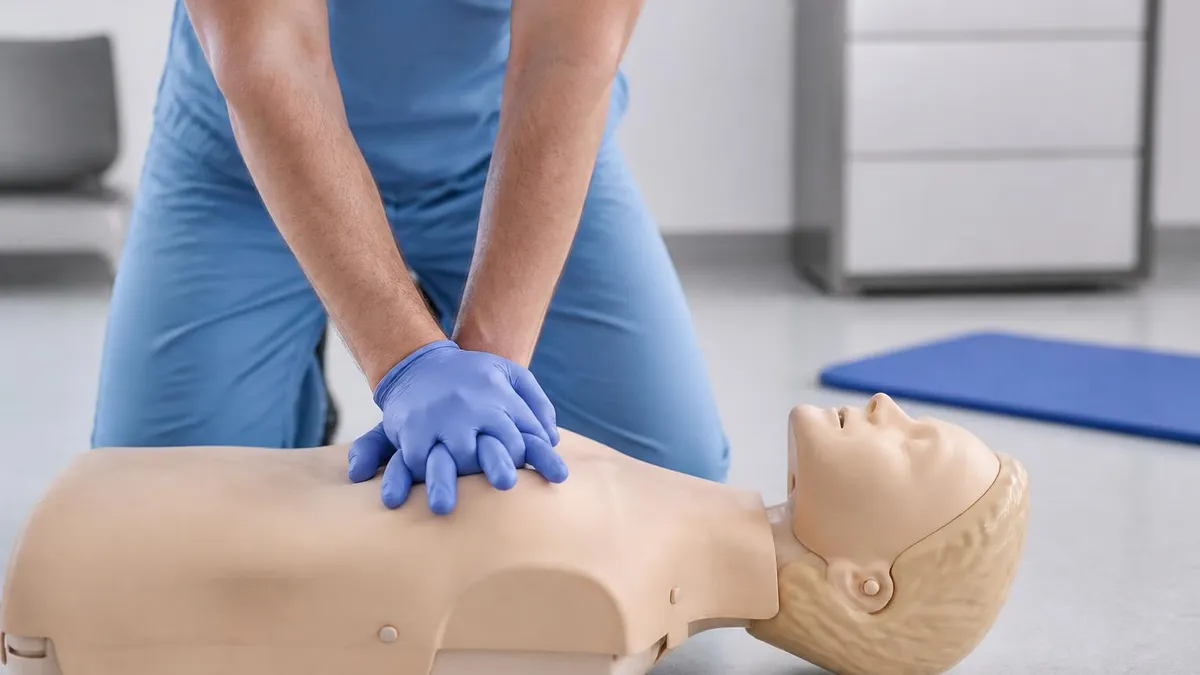
BLS CPR Course: Complete Guide to Basic Life Support Certification in 2026
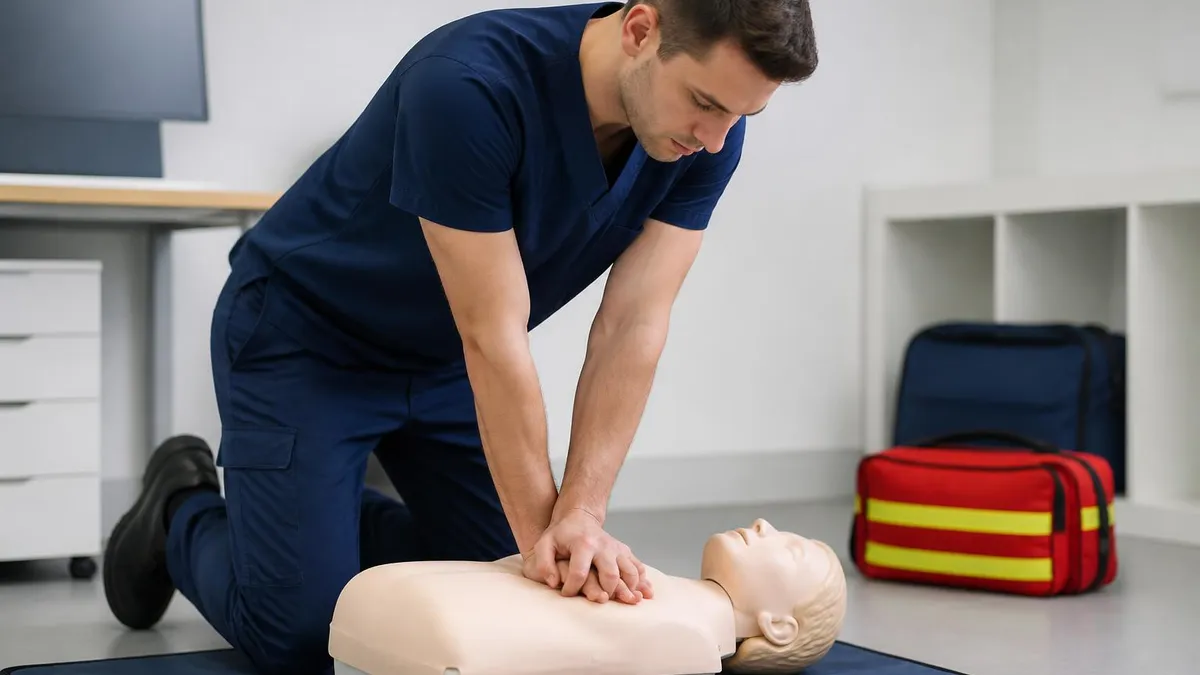
Adult CPR: Complete Step-by-Step Guide to Hands-Only and Standard CPR in 2026
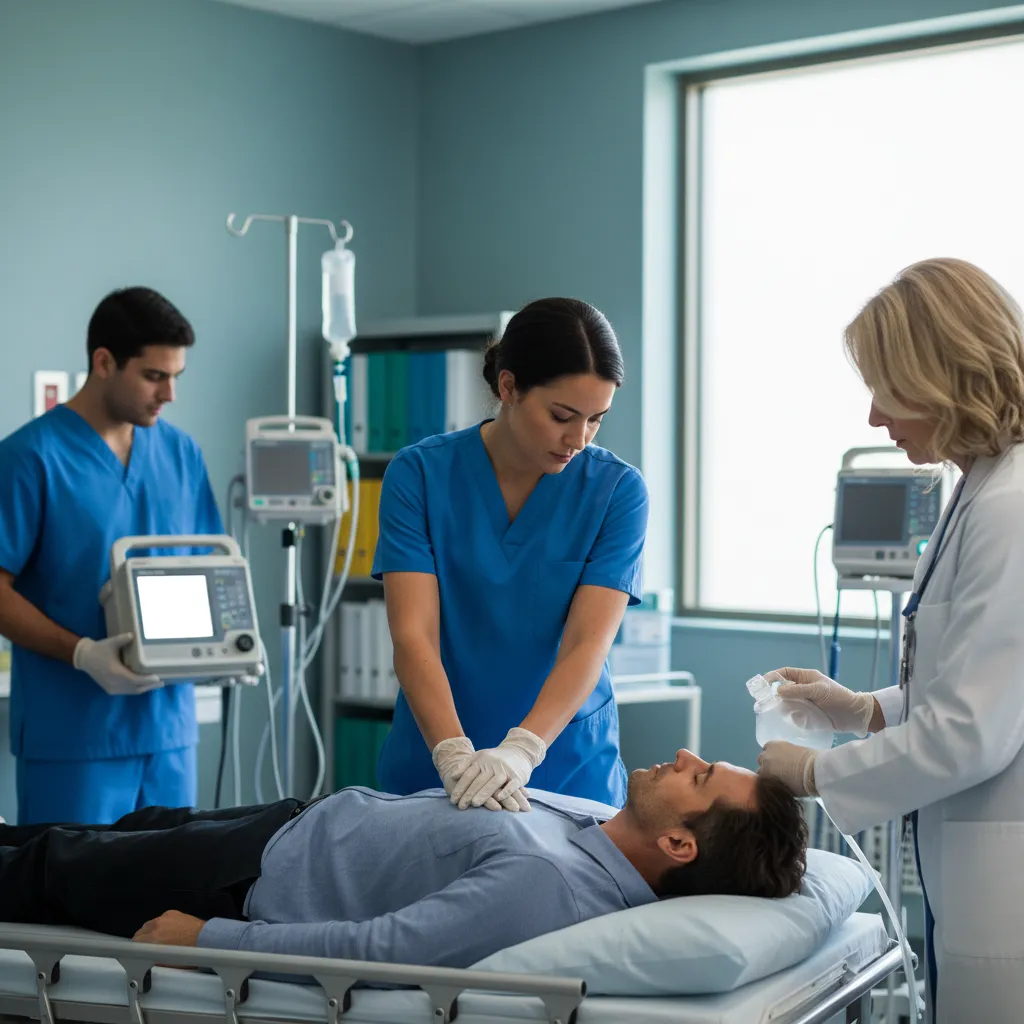
CPR - Cardiopulmonary Resuscitation: Complete Study Guide 2026
About the Author

Registered Nurse & Healthcare Educator
Johns Hopkins University School of NursingDr. Sarah Mitchell is a board-certified registered nurse with over 15 years of clinical and academic experience. She completed her PhD in Nursing Science at Johns Hopkins University and has taught NCLEX preparation and clinical skills courses for nursing students across the United States. Her research focuses on evidence-based exam preparation strategies for healthcare certification candidates.
Join the Discussion
Connect with other students preparing for this exam. Share tips, ask questions, and get advice from people who have been there.
View discussion (5 replies)