
CPR Kit: Complete Guide to Building, Buying, and Maintaining a Lifesaving Emergency Resuscitation Kit in 2026 September
Complete CPR kit guide: ✅ contents, ACLS algorithm essentials, AED use, infant CPR supplies, and how to build, buy, or maintain a lifesaving kit in 2026 September.
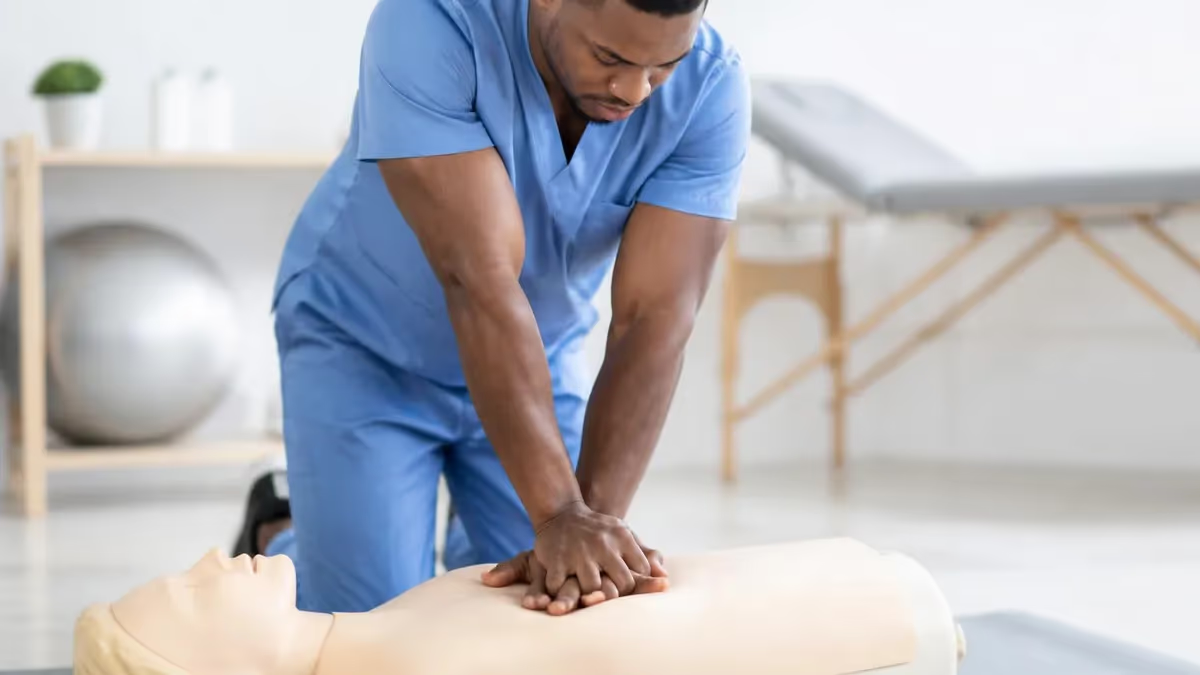
A well-stocked cpr kit can mean the difference between a save and a tragedy when sudden cardiac arrest strikes at home, in the workplace, or on the road. Cardiac arrest kills roughly 350,000 Americans outside hospitals each year, and survival rates more than double when bystanders begin compressions and apply an automated external defibrillator within the first three minutes. A purpose-built kit puts the right barrier devices, airway adjuncts, and reference cards within arm's reach so panic does not steal those critical seconds from the victim or the rescuer.
Modern resuscitation kits are far more than a face shield in a plastic pouch. They include CPR pocket masks with one-way valves, non-rebreather oxygen masks, oropharyngeal airways in graduated sizes, nitrile gloves, trauma shears, a printed acls algorithm card, and increasingly a quick-reference page covering the basics of infant cpr. Some kits add a compact bag-valve-mask, a suction device, and a laminated card explaining what does aed stand for and how to deploy one in under thirty seconds.
The audience for these kits is broader than ever. Parents of newborns keep one in the nursery closet, gym owners mount them next to AED cabinets, fleet managers place them in every service van, and small dental offices store them beside the emergency oxygen tank. Schools regulated under state Cardiac Emergency Response Plans now require kits at every athletic event, while life support certification programs increasingly hand them out to graduates as a tangible reminder that training is only useful if equipment is on hand.
Choosing the right kit means matching contents to risk. A homeowner with healthy children needs less than an industrial first responder, but both need barrier protection that meets bloodborne pathogen standards, a CPR mask sized for adults and infants, and a card explaining compression depth and respiratory rate. Buying a generic dollar-store pouch is rarely cheaper in the long run because the components expire, the gloves crack, and the mask filters degrade well before the case shows wear on the outside.
This guide walks through every category of cpr kit on the market, from pocket-sized keychain shields to full BLS jump bags carried by EMS first responders. We compare contents, certifications, storage temperatures, and replacement cycles. We also map the kit to what you actually do in an emergency, so each item earns its space rather than padding the price. By the end, you will know exactly which kit fits your home, vehicle, classroom, or clinic, and how to keep it ready for the day it matters most.
Throughout this article we reference guidance from the American Heart Association, the Red Cross, and the national cpr foundation curriculum, all of which converge on the same core kit contents in 2026. We also flag common myths, such as the idea that a CPR keychain shield substitutes for a real pocket mask, and the misconception that AED pads can be reused after one shock. Every section is written so a layperson can follow it without prior medical training, while still giving certified responders the depth they need.
Finally, we address the lifecycle of the kit itself: where to store it, how often to inspect contents, what triggers a full restock, and how to dispose of expired gloves and pads responsibly. A kit that sits ignored in a glove compartment for five years is almost worse than no kit at all, because the rescuer assumes everything works. Treat the kit as a living tool — inspect, refresh, and rehearse — and it will be ready the moment a life depends on it.
CPR Kit Readiness by the Numbers

Core Contents of a Standard CPR Kit
A clear plastic dome with a one-way valve that blocks fluids while letting the rescuer deliver rescue breaths. Look for masks with elastic head straps, oxygen inlet ports, and replaceable filters rated for bloodborne pathogen protection.
Two to four pairs of powder-free nitrile gloves in size large. Nitrile resists tears better than latex and avoids allergy issues. Pack them in a sealed pouch to prevent UV degradation and keep them flexible in cold storage conditions.
Alcohol-free antiseptic towelettes for cleaning the victim's chest before AED pad placement and the rescuer's hands afterward. Include at least four sealed packets so contamination does not compromise pad adhesion or electrical contact.
Blunt-tip shears strong enough to cut through jeans, leather, bras with underwires, and bicycle helmet straps. Exposing the chest quickly is essential for compressions and for placing self-adhesive defibrillator pads correctly.
Laminated card showing compression depth, rate, hand placement, and a simplified acls algorithm flow. Include normal respiratory rate ranges, child and infant compression ratios, and the recovery position diagram for unresponsive breathing patients.
Barrier devices are the single most important upgrade between a bare-hands rescue and a full cpr kit response. A pocket mask with a one-way valve protects the rescuer from vomit, blood, and respiratory pathogens while still delivering effective tidal volume to the patient. Without one, many bystanders skip rescue breaths entirely, which is acceptable for adult sudden cardiac arrest but inadequate for drowning, opioid overdose, and pediatric arrest where hypoxia is the primary trigger.
Pocket masks come in two basic shapes: hard-shell and soft-fold. Hard-shell masks form a tighter seal and accept supplemental oxygen tubing, but they take more room in the kit. Soft-fold masks compress into a keychain pouch and travel everywhere, though their seal is weaker and the filter typically lacks an oxygen port. Most home kits use a mid-sized hard-shell mask in a clamshell case, balancing portability with rescue performance during a real arrest.
The face shield is the budget barrier — a thin plastic sheet with a filtered mouth hole. Shields work for a single rescue and are easy to carry on a keychain, but they do not seal around the patient's mouth and nose, and the valve is much less robust. Treat shields as a backup, not a primary device. The national cpr foundation training materials specifically caution that shields should never replace a proper mask in a workplace or healthcare kit.
Beyond barrier masks, professional kits add oropharyngeal airways (OPAs) in three to five sizes. These curved plastic tubes hold the tongue away from the back of the throat in unconscious patients, opening the airway for bag-valve-mask ventilation. Sizing is measured from the corner of the mouth to the angle of the jaw. Inserting an OPA in a patient with a gag reflex causes vomiting, so OPAs belong in kits used by trained responders who can assess level of consciousness.
Nasopharyngeal airways (NPAs) are softer rubber tubes inserted through the nostril. They tolerate a partial gag reflex and are useful when the jaw is clenched or trauma blocks oral access. NPAs require lubricant — usually a sterile water-based gel packet — so a professional kit includes both the airway and the lube. Home kits skip NPAs because insertion technique requires hands-on training that goes well beyond standard layperson CPR certification.
Bag-valve-mask (BVM) units take ventilation to the next level by allowing one rescuer to squeeze a self-inflating bag while another performs compressions. Adult BVMs hold roughly 1,500 mL; pediatric versions hold 500 mL. A BVM with a reservoir bag and oxygen tubing can deliver near-100 percent oxygen when paired with a portable tank. BVMs are standard in workplace, school, and clinic kits but rarely needed in a home kit unless a family member has a chronic respiratory condition.
Finally, every barrier device has a finite shelf life. Latex straps perish, valve membranes stiffen, and clear plastic yellows under UV light. Inspect masks every six months, replace expired components on schedule, and write the install date on the case with a permanent marker. A barrier device that fails mid-rescue is worse than no barrier device, because it interrupts the flow of compressions while the rescuer fumbles with broken equipment.

CPR Practice Test Questions
Prepare for the CPR Cardiopulmonary Resuscitation Practice exam with our free practice test modules. Each quiz covers key topics to help you pass on your first try.
CPR Basic CPR
CPR Exam Questions covering Basic CPR. Master CPR Test concepts for certification prep.
CPR and First Aid
Free CPR Practice Test featuring and First Aid. Improve your CPR Exam score with mock test prep.
CPR (Cardiopulmonary Resuscitation) Adult ...
CPR Mock Exam on (Cardiopulmonary Resuscitation) Adult CPR and AED Usage. CPR Study Guide questions to pass on your first try.
CPR (Cardiopulmonary Resuscitation) Airway...
CPR Test Prep for (Cardiopulmonary Resuscitation) Airway Obstruction and Choking. Practice CPR Quiz questions and boost your score.
CPR (Cardiopulmonary Resuscitation) Cardio...
CPR Questions and Answers on (Cardiopulmonary Resuscitation) Cardiopulmonary Emergency Recognition. Free CPR practice for exam readiness.
CPR (Cardiopulmonary Resuscitation) Child ...
CPR Mock Test covering (Cardiopulmonary Resuscitation) Child and Infant CPR. Online CPR Test practice with instant feedback.
CPR (Cardiopulmonary Resuscitation) High-P...
Free CPR Quiz on (Cardiopulmonary Resuscitation) High-Performance Team Dynamics. CPR Exam prep questions with detailed explanations.
CPR (Cardiopulmonary Resuscitation) Legal ...
CPR Practice Questions for (Cardiopulmonary Resuscitation) Legal and Ethical Considerations. Build confidence for your CPR certification exam.
CPR for Specific Populations
CPR Test Online for for Specific Populations. Free practice with instant results and feedback.
CPR Airway & Breathing Management
CPR Exam Questions covering Airway & Breathing Management. Master CPR Test concepts for certification prep.
CPR Assessment & Recognition of Cardiac Ar...
Free CPR Practice Test featuring Assessment & Recognition of Cardiac Arrest. Improve your CPR Exam score with mock test prep.
CPR Chest Compressions & Defibrillation
CPR Mock Exam on Chest Compressions & Defibrillation. CPR Study Guide questions to pass on your first try.
CPR Post-Resuscitation Care & Recovery
CPR Test Prep for Post-Resuscitation Care & Recovery. Practice CPR Quiz questions and boost your score.
CPR Kit Types: Matching the Right Kit to Your Setting
A home cpr kit fits in a kitchen drawer or hall closet and focuses on the essentials: an adult pocket mask, an infant pocket mask, four pairs of nitrile gloves, antiseptic wipes, trauma shears, a small flashlight, and a printed reference card. The total weight is under one pound and the cost ranges from $25 to $50 depending on brand and mask quality.
Most families pair the kit with a consumer AED such as the Philips HeartStart or Lifepac CR2, stored in the same cabinet. Train every adult and teen in the household on where the kit lives and how to open it without reading the directions. A home kit should be reviewed annually on a memorable date — many households use the time change in November as their inspection reminder.
Pre-Built CPR Kit vs Building Your Own: Pros and Cons
- +Pre-built kits come stocked with matched, in-date components ready to use immediately
- +Manufacturers select FDA-cleared masks and ANSI-compliant gloves, reducing legal exposure
- +Cases are designed to keep contents organized and visible at a glance during high-stress events
- +Many include a printed reference card with current AHA guidelines and the acls algorithm
- +Bulk pricing on pre-built kits is often cheaper than buying each component separately
- +Refill packs from the same brand keep the kit consistent over years of use
- +Some brands include free replacement of AED pads or masks within the first warranty year
- −Pre-built kits sometimes include filler items like single bandaids that take space from essentials
- −Branded refills cost more than generic versions of the same OEM components
- −Cases may be larger than needed for a specific environment such as a small purse or glovebox
- −Reference cards become outdated when AHA guidelines update every five years
- −Some discount kits use thin gloves and shield-only barriers that under-perform in a real arrest
- −Custodial restocking is harder when each item comes from a different supplier and SKU
- −One-size-fits-all kits rarely include pediatric components unless explicitly labeled family or infant
Pros and Cons at a Glance
| Pros | Cons |
|---|---|
| Pre-built kits come stocked with matched, in-date components ready to use immediately | Pre-built kits sometimes include filler items like single bandaids that take space from essentials |
| Manufacturers select FDA-cleared masks and ANSI-compliant gloves, reducing legal exposure | Branded refills cost more than generic versions of the same OEM components |
| Cases are designed to keep contents organized and visible at a glance during high-stress events | Cases may be larger than needed for a specific environment such as a small purse or glovebox |
| Many include a printed reference card with current AHA guidelines and the acls algorithm | Reference cards become outdated when AHA guidelines update every five years |
| Bulk pricing on pre-built kits is often cheaper than buying each component separately | Some discount kits use thin gloves and shield-only barriers that under-perform in a real arrest |
| Refill packs from the same brand keep the kit consistent over years of use | Custodial restocking is harder when each item comes from a different supplier and SKU |

CPR Kit Inspection Checklist
- ✓Verify the pocket mask one-way valve is sealed, clear, and within its printed expiration date
- ✓Confirm nitrile gloves are flexible, unpowdered, and free from cracks or yellowing from UV exposure
- ✓Check antiseptic wipe packets for swelling, leakage, or torn foil that signals dried-out contents
- ✓Test trauma shears on a denim scrap to confirm sharp, smooth cuts without binding
- ✓Inspect the AED battery indicator light and replace pads more than six months before their expiration
- ✓Read the quick reference card to ensure it reflects the latest AHA guidelines, including respiratory rate ranges
- ✓Replace any rubber straps or elastic that has lost tension or developed a tacky surface
- ✓Confirm the kit case latches securely and is stored at room temperature out of direct sunlight
- ✓Restock any items used in training drills before returning the kit to its emergency location
- ✓Log the inspection date, inspector's name, and any actions taken in a dedicated maintenance binder
Reach your kit within 120 seconds or it is the wrong location
Studies of cardiac arrest survival show that defibrillation within three minutes of collapse can push survival above 70 percent. If you cannot retrieve and open your cpr kit within two minutes — leaving the third minute for pad placement and shock delivery — the kit is stored too far away. Walk the route at normal pace and time yourself before settling on a location.
Pediatric and infant cpr requirements differ from adult CPR in ways that directly affect what belongs in your kit. Infants under one year need compressions delivered with two fingers or two thumbs at a depth of about 1.5 inches, not the 2-inch adult depth. Children one through puberty are compressed with one or two hands to about 2 inches. Both groups require a normal respiratory rate of 20 to 30 breaths per minute as a baseline reference for assessing pre-arrest distress, which your kit's reference card should include.
Pediatric pocket masks are smaller than adult versions and form a seal across the child's mouth and nose simultaneously. Using an adult mask on an infant wastes tidal volume and risks gastric inflation, which can trigger vomiting and aspiration. Family kits should include both sizes clearly labeled with stickers or color coding. Some manufacturers sell a single reversible mask that flips between adult and pediatric orientation, saving space in compact kits.
AED pediatric pads or pediatric attenuators reduce the shock energy delivered to a child under eight years old or under 55 pounds. Many newer AEDs include a child mode switch instead of separate pads. If your kit serves a family with young children, confirm your AED model supports pediatric use and stock the appropriate accessories. In the absence of pediatric pads, adult pads can be used on a child by placing one on the chest and one on the back, ensuring the pads do not touch.
Choking response supplies overlap with CPR supplies and should live in the same kit. Include a quick-reference card showing the five back blows and five abdominal thrusts sequence for children over one year, and the alternating five back blows with five chest thrusts sequence for infants. A small infant manikin practice device can help parents and caregivers rehearse the maneuvers, though it is not strictly required for the emergency kit itself.
Pediatric oropharyngeal airways come in sizes 0 through 3 and are inserted under the supervision of someone trained in pediatric BLS or pals certification. Layperson kits typically omit OPAs entirely because the risk of misuse outweighs the benefit. If your household includes a child with a tracheostomy, seizure disorder, or other airway risk, consult your pediatrician about adding suction supplies and discussing them with your emergency action plan.
Cold environments and pediatric emergencies pair badly. A small foil rescue blanket added to your kit prevents hypothermia from accelerating after a drowning, prolonged seizure, or post-arrest recovery period. Keep the blanket sealed in its original wrapper until needed, and replace it every five years even if it appears intact, since the metallized coating degrades with handling and creasing.
Finally, train every caregiver in the household — including babysitters, grandparents, and older siblings — on the location and contents of the pediatric kit. A child's airway closes faster than an adult's, and seconds matter more. Run a tabletop drill every six months where caregivers verbally walk through finding the kit, opening it, and starting the correct sequence. Skills atrophy quickly without practice, and the kit is only as useful as the people who can deploy it under stress.
AED defibrillator pads are single-patient, single-use items. The conductive gel dries within minutes of opening, and the adhesive loses contact reliability after one application. Reusing pads on a second victim — or on the same victim after removal — can deliver an ineffective shock or no shock at all. Replace pads immediately after any deployment, even if the AED was not actually used to defibrillate.
Storing a cpr kit correctly extends its useful life and ensures every component works on the day it is needed. The ideal environment is between 50°F and 80°F, away from direct sunlight, with humidity below 60 percent. Garages, attics, and car trunks fail all three criteria in most US climates. Choose a hall closet, an office cabinet, or a wall-mounted cabinet in a temperature-controlled space, and never stack heavy items on top of the kit case.
Mounting hardware turns a portable kit into a fixed emergency station. Wall brackets next to the AED cabinet create a single visual cue for bystanders — when you see the AED sign, you see the kit. Add a battery-powered LED strip above the cabinet so the kit is visible during a power outage. In commercial settings, signage must meet ANSI Z535 standards with green and white symbols, and the path from any work area to the kit should be unobstructed at all times.
Replacement cycles vary by component. Nitrile gloves last roughly five years in sealed packaging but only one to two years after the pouch is opened. Pocket mask filters typically expire two years from the manufacture date. AED pads carry their own expiration printed on the foil, usually two to five years from purchase. Batteries in consumer AEDs last four to five years, while professional units use rechargeable packs with shorter cycles. Replace the oldest item first and update the kit log every time.
Post-use restocking is non-negotiable. After any rescue attempt — successful or not — every consumable in the kit must be replaced before the case is closed. Even items that appear unused may have been touched by contaminated hands, exposed to bodily fluids, or temperature-cycled outside their rated range. Document the incident, photograph the kit contents before disposal, and order replacements within 48 hours so the kit is back in service before the next emergency.
Training drills should use a separate training kit, not the emergency kit. Open the emergency kit only for inspection and real events. Training masks, dummy AED pads, and practice manikins are inexpensive and prevent accidental degradation of your real supplies. Color-code or label the training kit clearly so no one confuses the two during a high-stress event when reading labels carefully becomes difficult.
Disposal of expired items deserves attention. Nitrile gloves and pocket masks go in regular waste. AED pads and batteries contain lithium and gel that should be recycled through manufacturer take-back programs or municipal hazardous waste collection. Antiseptic wipes are landfill-safe but should never be flushed. Document each disposal in the kit log to demonstrate due diligence in any regulatory audit, especially in healthcare and education settings.
Finally, integrate kit maintenance into your broader emergency preparedness routine. Schedule kit inspections alongside smoke alarm battery changes, fire extinguisher pressure checks, and home AED self-tests. A consistent quarterly rhythm prevents any single component from being overlooked, and creates muscle memory for the day a real emergency forces you to open the case under pressure. The best kit is the one whose contents you have touched, inspected, and rehearsed with countless times before the moment of crisis.
Practical readiness goes beyond owning a cpr kit — it requires layered preparation that connects equipment, training, and response. The single most useful step after assembling your kit is enrolling every adult in your household, workplace, or school in a hands-on CPR and AED course. Online modules teach concepts, but only in-person practice builds the muscle memory to compress at the correct depth and rhythm under stress. Pair certification with quarterly refresher drills using your training kit, not your emergency kit.
Designate a kit captain. Whether at home, in a small business, or in a community organization, one person should own the inspection schedule, restocking budget, and incident documentation. The captain does not need clinical training — they need attention to detail. Rotate the role annually so multiple people develop familiarity with the contents and lifecycle, reducing single-point-of-failure risk if the primary captain is unavailable when an emergency occurs.
Integrate your kit with technology. Modern AEDs sync with smartphone apps that track battery life, pad expiration, and self-test results. Layer on a simple shared calendar reminder for kit inspection dates, and consider a Bluetooth tag inside the case so it can be located quickly during chaos. Some employers use RFID-tagged kits that automatically log inspection events when scanned with a custodian's phone, eliminating handwritten logbooks entirely.
Rehearse the call. In a real emergency, one person performs CPR while another retrieves the kit and AED, and a third calls 911 and unlocks the door for paramedics. If you live alone, set your phone to speakerphone, dial 911, and start compressions immediately — the dispatcher will coach you through. Knowing what does aed stand for matters less than knowing where yours lives and how to turn it on with one button press in the dark.
Build a written emergency action plan that includes kit locations, AED locations, the names of trained responders, and the phone tree for notifying family or management after an incident. Print the plan, post it near every kit, and rehearse it as a tabletop exercise twice a year. Plans that live only on a server or in a binder no one opens are not plans — they are paperwork. The act of rehearsal embeds the steps so deeply that even a frightened bystander can follow them.
Stay current on guidelines. The AHA updates the acls algorithm and basic life support sequence every five years, with interim focused updates as new evidence emerges. Subscribe to a credible newsletter such as the AHA's Currents or the national cpr foundation update list so you learn about changes within weeks rather than years. Update your kit's reference card whenever guidelines shift, even if no other component has changed.
Finally, normalize the conversation. Family members who think CPR is taboo will hesitate when it matters most. Talk about kits the way you talk about fire extinguishers and smoke alarms — ordinary household safety items that everyone should know how to use. Show kids the kit, let them watch you inspect it, and answer their questions. A community that openly discusses cardiac emergency response saves more lives than one that hides the equipment in a locked closet labeled only with a serial number.
CPR Questions and Answers
CPR Card Lookup: How to Verify, Replace, and Access Your CPR Certification in 2026
Adult CPR: Complete Step-by-Step Guide to Hands-Only and Standard CPR in 2026

CPR - Cardiopulmonary Resuscitation: Complete Study Guide 2026
Inappropriate CPR Songs: What Not to Play, Why It Matters, and Better Beat-Per-Minute Alternatives
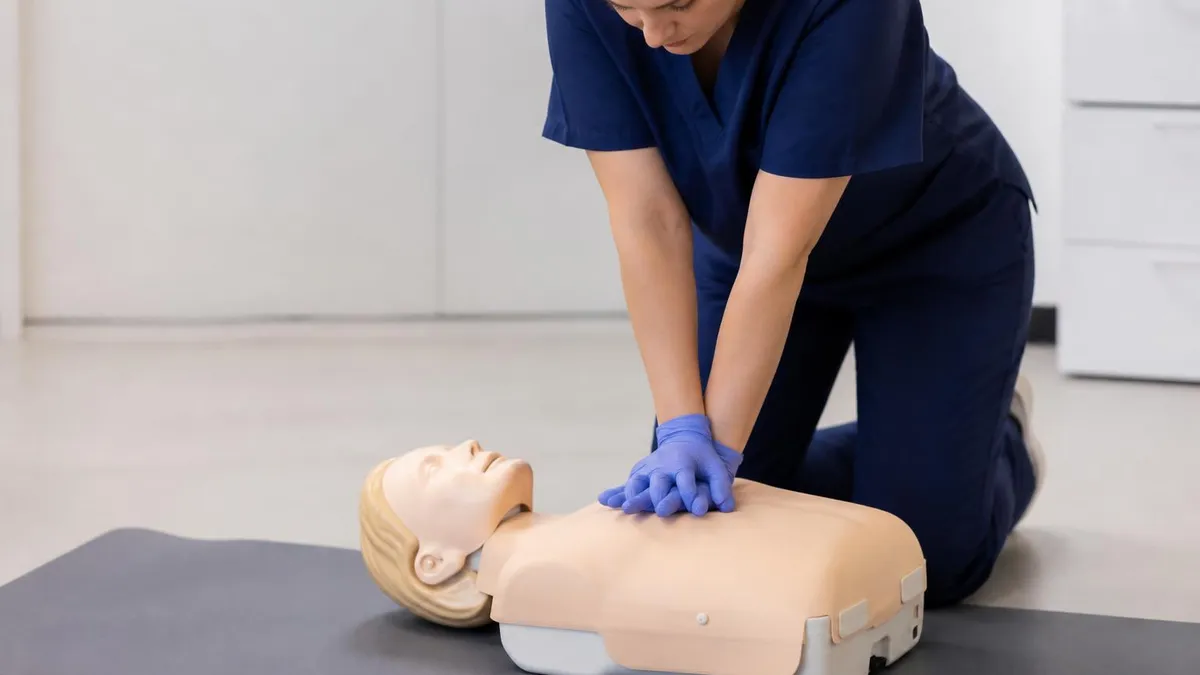
AHA CPR Recertification: How to Recertify CPR Online with the American Heart Association in 2026
About the Author

Registered Nurse & Healthcare Educator
Johns Hopkins University School of NursingDr. Sarah Mitchell is a board-certified registered nurse with over 15 years of clinical and academic experience. She completed her PhD in Nursing Science at Johns Hopkins University and has taught NCLEX preparation and clinical skills courses for nursing students across the United States. Her research focuses on evidence-based exam preparation strategies for healthcare certification candidates.
Join the Discussion
Connect with other students preparing for this exam. Share tips, ask questions, and get advice from people who have been there.
View discussion (5 replies)