
Why Everyone Should Know CPR: A Complete Guide to Lifesaving Skills
Why everyone should know CPR — save lives with ACLS algorithm, infant CPR, AED skills & more. 💡 Complete US guide for bystanders & professionals.
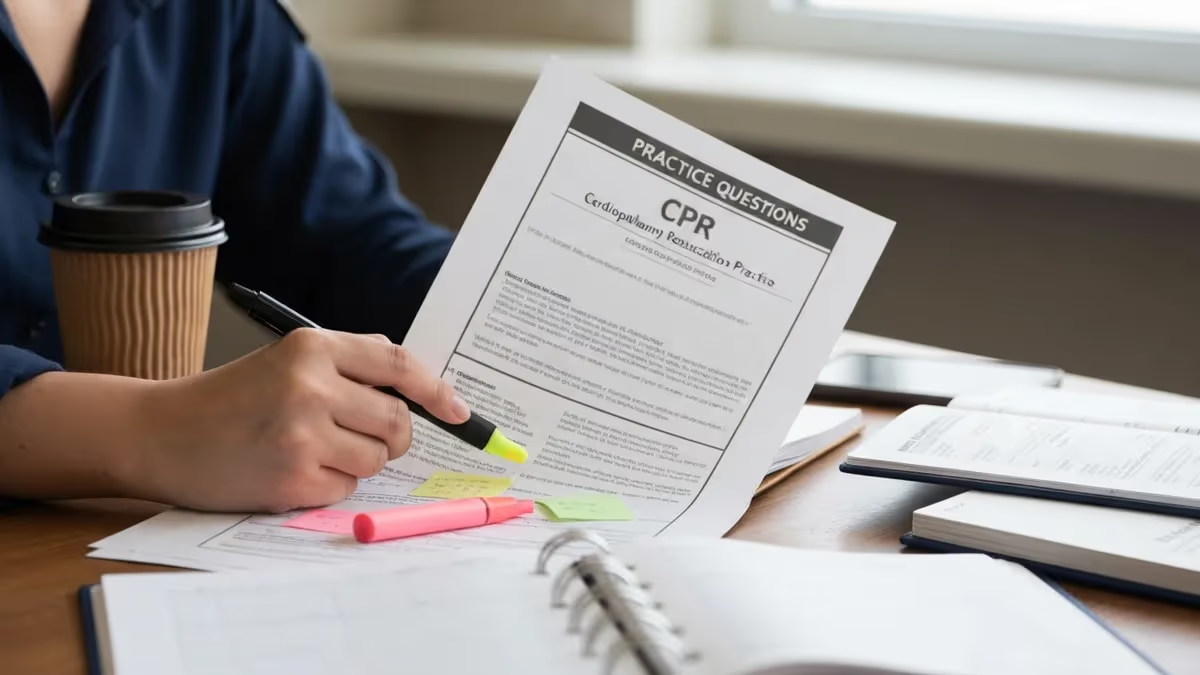
Understanding why everyone should know CPR is more than an academic exercise — it is a matter of life and death. Cardiac arrest strikes without warning, and the first moments after someone collapses are irreplaceable. Bystander CPR, delivered correctly while emergency services are still en route, can double or even triple a victim's chance of survival. The ACLS algorithm used by advanced rescuers builds on the same foundational chest compressions that any ordinary person can learn in a single afternoon, making this knowledge universally valuable regardless of your medical background.
Each year in the United States, approximately 350,000 out-of-hospital cardiac arrests occur. Of those victims, fewer than 12 percent survive when bystanders do nothing and wait for paramedics to arrive. Yet studies consistently show that immediate, high-quality CPR can sustain blood flow to the brain and heart for precious minutes, dramatically improving outcomes. The national CPR foundation and organizations like the American Heart Association have spent decades making training accessible, affordable, and straightforward for everyone from teenagers to senior citizens, removing the barrier of complexity that once kept ordinary people on the sidelines.
Many people mistakenly believe CPR is only relevant for healthcare workers who pursue certifications like PALS certification or advanced life support credentials. In reality, cardiac emergencies happen far more often at home, in restaurants, at sporting events, and in workplaces than in hospital settings. Family members collapse in kitchens. Coaches witness athletes go down on playing fields. Coworkers experience sudden cardiac events in office break rooms. In every one of those scenarios, the single most important factor determining survival is whether someone nearby knows what to do and acts immediately — not whether an ambulance arrives quickly.
The respiratory rate of a person in cardiac arrest drops to zero almost instantly, and without oxygen reaching the brain, irreversible neurological damage begins within four to six minutes. CPR artificially maintains circulation, buying time until a defibrillator or paramedic can restore a normal heart rhythm. Understanding what does AED stand for — Automated External Defibrillator — is part of that knowledge base. These devices are now widely available in airports, schools, gyms, and shopping centers, and they work best when paired with ongoing CPR compressions delivered by a trained bystander who began resuscitation immediately.
Learning CPR also means understanding techniques beyond adult chest compressions. Infant CPR requires a modified two-finger compression technique and gentler rescue breaths because an infant's anatomy differs significantly from an adult's. The recovery position, sometimes called position recovery, is equally important — it keeps an unconscious but breathing person safe from choking on their own secretions while help is on the way. These skills together form a comprehensive first-response toolkit that empowers ordinary individuals to act decisively and correctly when someone's life depends on split-second decisions.
Many Americans have heard of ACLS or PALS certifications through television dramas or because a family member works in healthcare, but they may not realize how accessible entry-level CPR training has become. Organizations including the national CPR foundation offer online courses, in-person skill checks, and blended learning options that fit into a lunch break or a single Saturday morning. The investment of a few hours yields a skill set that lasts — though it does require renewal, and if you want to understand how long that certification remains valid, why learn cpr renewal timelines are detailed in our dedicated guide.
Ultimately, CPR knowledge is one of the few life skills that costs almost nothing to acquire yet carries enormous potential value. It transforms a passive bystander into an active rescuer. It gives friends, parents, teachers, and coworkers the power to bridge the gap between a cardiac emergency and the arrival of professional help. The sections below explore every dimension of this topic — from the science of sudden cardiac arrest to the practical steps of certification — so you can make an informed decision to pursue training and perhaps one day save a life.
CPR & Cardiac Arrest by the Numbers
Core Reasons Why CPR Knowledge Matters
Sudden cardiac arrest can happen to anyone — young athletes, middle-aged adults, and seniors alike. Because it is unpredictable and strikes in everyday settings, having CPR-trained bystanders nearby is statistically the most reliable way to ensure someone receives help in those critical first minutes.
In the US, average emergency response times range from 7 to 14 minutes depending on location. Brain damage from oxygen deprivation begins in 4 to 6 minutes. CPR-trained bystanders fill that deadly gap, maintaining circulation until paramedics arrive with advanced life support equipment.
Automated External Defibrillators are now installed in airports, schools, gyms, and offices nationwide. But an AED works best when paired with uninterrupted CPR. Knowing what an AED is and how to operate one alongside compressions can be the difference between life and death.
Seventy percent of cardiac arrests happen at home. That means the most likely person you will ever need to resuscitate is a parent, spouse, child, or sibling — not a stranger on the street. CPR training is one of the most meaningful gifts you can give your own family.
Communities where a large percentage of residents hold CPR certification consistently show higher cardiac arrest survival rates. Each person trained is a node in a safety net. The more nodes exist in your neighborhood, workplace, or school, the stronger and more reliable that net becomes for everyone.
CPR certifications span a wide spectrum of complexity, from basic lay-rescuer courses to advanced professional credentials like ACLS and PALS certification. Understanding how these levels differ helps you choose the right training for your situation, whether you are a concerned parent, a fitness professional, a teacher, or a healthcare worker seeking to formalize skills you already use on the job. The national CPR foundation and the American Heart Association both offer tiered pathways that allow people to start at the appropriate level and advance as their needs change.
The most fundamental level is Heartsaver or Basic Life Support (BLS), designed for the general public. These courses teach adult CPR, infant CPR, and child CPR compressions, rescue breathing, choking relief, and AED use. You will learn the correct hand placement for adult compressions — two inches deep at 100 to 120 compressions per minute — and how that changes for children and infants. Infant CPR specifically uses two fingers placed just below the nipple line, at a depth of roughly one and a half inches, because the infant ribcage is far more delicate than an adult's.
BLS for Healthcare Providers is the next tier, targeting nurses, medical assistants, dental hygienists, and others who respond to emergencies in clinical settings. This course adds team dynamics, two-rescuer CPR coordination, and bag-mask ventilation skills. The respiratory rate during rescue breathing — roughly 10 to 12 breaths per minute for adults — is taught with precision, because over-ventilating actually reduces venous return to the heart and can worsen outcomes during resuscitation. These nuances distinguish professional-level training from lay-rescuer courses.
Advanced Cardiovascular Life Support, known as ACLS, is the gold standard for physicians, paramedics, advanced practice nurses, and respiratory therapists. The ACLS algorithm provides a systematic decision tree for managing cardiac arrest, arrhythmias, strokes, and respiratory emergencies. It incorporates pharmacology — knowing when to administer epinephrine or amiodarone — and sophisticated rhythm interpretation via ECG. While laypeople do not pursue ACLS themselves, understanding that it exists and that it builds directly on the same compressions and breaths they learned in a basic course reinforces how foundational CPR knowledge truly is.
PALS certification, or Pediatric Advanced Life Support, equips healthcare providers who work with children — pediatricians, emergency nurses, NICU staff — with the skills to manage respiratory distress, shock, and cardiac arrest in pediatric patients. The dosing, technique, and algorithmic approach all adjust for age and body weight. Even parents who will never pursue PALS professionally benefit from understanding that infant CPR and child CPR follow specific protocols, reinforcing why age-appropriate technique matters whenever a child is involved in an emergency.
Beyond these formal credentials, many communities offer hands-only CPR instruction — a simplified form that omits rescue breaths and focuses purely on chest compressions. Research from the American Heart Association shows that for adult victims of sudden cardiac arrest, hands-only CPR performed by an untrained bystander is as effective as conventional CPR in the first few minutes. This approach has dramatically lowered the barrier to participation for people who feel uncomfortable performing mouth-to-mouth, broadening the pool of potential rescuers in any given emergency.
No matter which level of training you pursue, renewal is an ongoing responsibility. CPR skills decay measurably within months if not practiced, and guidelines are periodically updated as new evidence emerges. Keeping your certification current ensures you are always working from the most evidence-based protocols available. For a full breakdown of renewal intervals across all certification levels, see our detailed guide — it covers everything from basic lay-rescuer cards to ACLS and PALS renewal timelines in one convenient resource.
CPR Techniques: Adult, Child, and Infant CPR
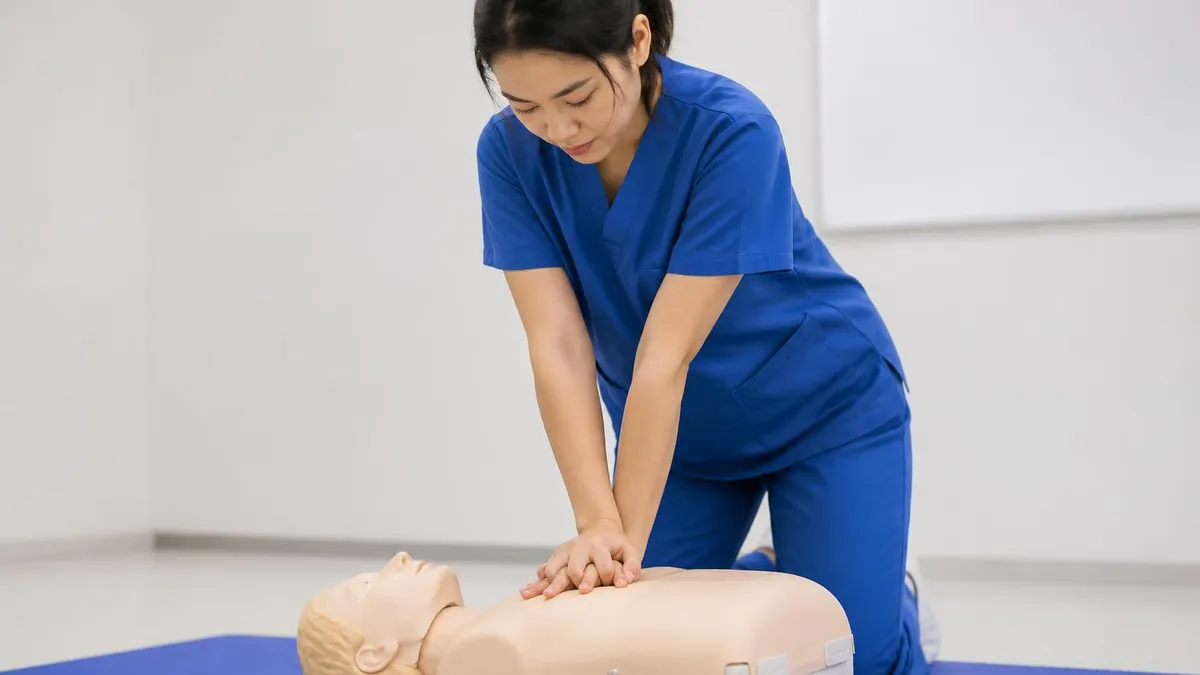
Adult CPR centers on forceful chest compressions delivered to the lower half of the sternum using the heel of both hands interlocked. Rescuers must compress at least two inches deep at a rate of 100 to 120 compressions per minute — roughly the tempo of the Bee Gees song "Stayin' Alive." After every 30 compressions, two rescue breaths are given, each lasting about one second and producing visible chest rise. If the victim remains unresponsive, the rescuer should continue this 30:2 cycle until an AED is ready or emergency services take over.
A critical but commonly overlooked element of adult CPR is allowing full chest recoil between compressions. Leaning on the chest prevents the heart from refilling with blood, reducing the effectiveness of each subsequent compression. Rescuers should also minimize interruptions — pauses longer than 10 seconds substantially reduce blood flow and lower survival odds. When an AED becomes available, attach it immediately but keep compressions going until the device is fully charged and ready to analyze the heart rhythm. The combination of high-quality compressions and prompt defibrillation represents the optimal response to adult sudden cardiac arrest.

Pros and Cons of Getting CPR Certified
- +Ability to save a family member or coworker's life during cardiac arrest
- +Increased confidence in handling any medical emergency situation
- +Meets workplace safety requirements in schools, gyms, and healthcare settings
- +Relatively inexpensive and quick — most courses completed in under four hours
- +Builds community resilience when multiple people in a group are certified
- +Renewed awareness of AED locations and life support resources around you
- −Skills can fade without regular practice between renewal periods
- −Certification requires renewal every one to two years to stay current
- −Some people experience anxiety performing CPR on a real victim for the first time
- −Online-only courses may not fully develop hands-on compression technique confidence
- −Cost of in-person courses can be a barrier for some individuals without employer support
- −Bystander hesitation remains common even among certified individuals in real emergencies
CPR Readiness Checklist: What You Should Know and Do
- ✓Complete a hands-on CPR course from a recognized provider such as the American Heart Association or national CPR foundation.
- ✓Learn the correct compression depth for adults (2 inches), children (2 inches), and infants (1.5 inches).
- ✓Practice maintaining a compression rate of 100 to 120 per minute using a metronome app or song tempo.
- ✓Identify the location of the nearest AED in your workplace, school, gym, and community center.
- ✓Understand what AED stands for and practice the step-by-step process of attaching and operating the device.
- ✓Review infant CPR two-finger compression technique and the mouth-and-nose seal for rescue breaths.
- ✓Learn the proper recovery position (position recovery) for unconscious but breathing victims.
- ✓Know when to call 911 first versus when to start CPR first based on victim age and situation.
- ✓Renew your certification before it expires — basic CPR cards typically last two years.
- ✓Practice hands-only CPR on a manikin at least once between certification renewals to maintain muscle memory.
Bystander CPR Before EMS Arrival Is the Single Biggest Survival Factor
Research published in the Journal of the American Medical Association found that bystander CPR more than doubled the odds of survival for out-of-hospital cardiac arrest victims compared to no bystander intervention. Emergency medical services, no matter how fast they respond, cannot match the value of CPR that begins within the first 60 seconds of cardiac arrest. Your training is not just a credential — it is a direct lifesaving capability that no ambulance can replicate.
Advanced CPR skills go well beyond the basics taught in lay-rescuer courses, and understanding the full landscape of life support options helps both professionals and informed bystanders appreciate how each layer builds on the last. The ACLS algorithm, for instance, is essentially a decision tree that starts with the same foundational chest compressions a bystander provides and adds rhythm analysis, medication administration, and airway management on top. Every minute of high-quality bystander CPR before the ACLS team arrives is a minute that directly improves the patient's odds of surviving neurologically intact.
One of the most significant advances in recent years is extracorporeal CPR, or ECPR, which uses a heart-lung bypass machine to take over circulation when conventional CPR is insufficient. ECPR is reserved for highly specialized centers and specific patient profiles, but its existence underscores a broader point: the resuscitation chain is only as strong as its weakest link.
That weakest link is almost always the gap between cardiac arrest and the first compression — a gap that only a trained bystander can close. No ECPR machine, ACLS team, or sophisticated hospital can compensate for minutes lost while bystanders stood by unsure of what to do.
The respiratory rate during resuscitation is a technical consideration that illustrates how nuanced advanced CPR becomes. During conventional CPR, rescue breaths are delivered at approximately 10 breaths per minute (one breath every 6 seconds) for adults who have an advanced airway in place. Without an advanced airway, the 30:2 compression-to-breath ratio applies. Over-ventilation — giving too many breaths too rapidly — actually increases intrathoracic pressure and reduces venous return to the heart, paradoxically worsening cardiac output. ACLS providers learn to avoid this pitfall through both simulation training and real-world clinical experience.
What does AED stand for in the context of advanced resuscitation? Automated External Defibrillators deliver a measured electrical shock that can restore a normal heart rhythm when the heart is in ventricular fibrillation or pulseless ventricular tachycardia — the two shockable rhythms.
In hospital settings, manual defibrillators allow ACLS providers to choose the energy level and timing of shocks with more precision. But in any setting, the principle is the same: defibrillation is most effective when delivered quickly, and the sooner compressions resume after a shock, the better the outcome. The AED was specifically designed to make that process accessible to untrained bystanders.
Life support exists on a continuum from basic to advanced, and PALS certification sits in the middle of that spectrum for pediatric patients. Healthcare providers who earn PALS credentials learn to distinguish between respiratory failure and respiratory arrest, recognize signs of circulatory shock, and apply weight-based medication dosing for children in crisis.
These distinctions matter because the most common cause of cardiac arrest in children is respiratory failure — unlike adults, where cardiac arrhythmia is the primary culprit. Addressing the airway early in pediatric emergencies can sometimes prevent cardiac arrest entirely, which is why PALS trains providers to recognize distress before it becomes arrest.
The national CPR foundation and similar organizations have worked to integrate CPR training into school curricula, workplace safety programs, and community health initiatives. Several states now mandate CPR instruction as a high school graduation requirement, recognizing that the wider the net of trained bystanders, the more lives can be saved.
Public access defibrillation programs place AEDs in high-traffic locations and train building staff in their use, creating layered redundancy in the community's emergency response capability. Each of these initiatives rests on the same foundation: the more people who know CPR, the stronger the community's collective ability to respond to cardiac emergencies.
Understanding the mechanics of cardiopulmonary resuscitation also helps dispel myths that discourage bystander action. Many people fear they will harm the victim by pressing too hard, break ribs, or perform the technique incorrectly. While rib fractures do occasionally occur during CPR — particularly in elderly patients — they are a survivable injury, whereas untreated cardiac arrest is uniformly fatal within minutes.
Ribs heal; the brain does not recover from extended oxygen deprivation. This reframing — that imperfect CPR is always better than no CPR — is central to the public health messaging promoted by every major resuscitation organization in the United States.

A common reason bystanders hesitate is fear of doing something wrong. However, every major resuscitation guideline agrees that any CPR — even if the depth or rate is slightly off — is dramatically better than no CPR. Good Samaritan laws in all 50 US states protect lay rescuers who act in good faith during emergencies. If someone collapses and is unresponsive, call 911 immediately and begin chest compressions without waiting for permission or perfect confidence.
Getting CPR certified in the United States is more accessible today than at any point in history, thanks to a combination of in-person classes, blended online-plus-skills-check courses, and employer-sponsored training programs. The American Heart Association, the American Red Cross, and the national CPR foundation all offer searchable course locators that let you find a class within driving distance or, in many cases, schedule an instructor to come directly to your workplace or community center. Costs typically range from free to about $75 depending on the level of certification and whether the course is employer-subsidized.
The standard lay-rescuer CPR and AED course runs approximately three to four hours and covers adult CPR, child CPR, infant CPR, choking relief, and basic AED operation. Participants practice on manikins with instructor feedback, which is critical for developing the correct compression depth and recoil technique.
Skill retention studies consistently show that hands-on manikin practice — even as little as 10 minutes — significantly improves a learner's ability to perform compressions correctly in a real emergency compared to video instruction alone. This is why blended courses that require an in-person skills check are preferred over fully online alternatives for most certification purposes.
Employers in healthcare, education, fitness, childcare, and hospitality increasingly require CPR certification as a condition of employment. Gym trainers, lifeguards, teachers, flight attendants, and dental hygienists are among the many professionals who must maintain current credentials as a job requirement. Beyond formal mandates, many employers voluntarily sponsor CPR training because workplace cardiac arrest is not uncommon — the Occupational Safety and Health Administration estimates that cardiac emergencies account for a meaningful share of workplace fatalities each year. An office with five CPR-certified employees is meaningfully safer than one where no one has ever received training.
Once you are certified, maintaining that certification requires periodic renewal. The standard renewal interval for basic CPR and AED certification is every two years, while ACLS and PALS certifications typically require renewal every two years as well, often with additional skill verification requirements. Some employers mandate annual refresher training to keep skills sharper than the minimum standard requires. If you are uncertain about your renewal schedule or wondering whether your current card is still valid, checking with your certifying organization directly is always the safest approach — cards from different providers may have different validity periods or format requirements.
Community CPR training events are another valuable pathway, particularly for individuals who cannot afford a private course or whose schedules make traditional classroom settings difficult. Many fire departments, hospitals, community colleges, and faith-based organizations offer free or low-cost hands-only CPR training sessions open to the public.
These events typically take 20 to 30 minutes, focus on compression technique and calling 911, and are designed to reach as many people as possible rather than provide a formal certification. While they do not replace a full CPR certification, they are far better than no training at all and often serve as a gateway to full enrollment.
Workplace first-aid kits should be paired with accessible AEDs and a team of trained responders. The recommended ratio is at least one CPR-trained employee for every 50 people in a building, though higher-risk environments like gyms, schools, and manufacturing facilities often aim for much higher ratios.
Conducting a quick audit of your own workplace — how many colleagues are certified, where the nearest AED is located, and who is designated as the first responder — is a practical exercise that takes minutes but could save a life. If gaps exist, raising the issue with your employer or HR department is a concrete action you can take immediately after completing your own training.
Finally, it is worth recognizing that CPR certification is not a one-and-done achievement but an ongoing commitment to preparedness. Guidelines evolve, techniques are refined, and new evidence changes recommended practices. Staying engaged with your certification — attending renewals promptly, practicing on manikins between renewals, and staying informed about updates from organizations like the American Heart Association — ensures your skills remain sharp and current. The small investment of time required to stay certified pays dividends that are literally incalculable, because the life you save may be someone irreplaceable to you.
Practical preparation for real CPR situations goes beyond memorizing steps — it requires mental rehearsal, physical practice, and situational awareness. One of the most effective strategies recommended by resuscitation educators is visualization: periodically imagining yourself arriving at a scene where someone has collapsed and mentally walking through each step, from calling 911 and checking responsiveness to beginning compressions and attaching an AED. This kind of mental rehearsal has been shown in sports psychology and emergency medicine research to improve performance under stress, when cognitive load is high and the risk of freezing is real.
Physical practice on a CPR manikin remains irreplaceable. Many people who complete a CPR course discover that compressions are more physically demanding than expected — maintaining 100 to 120 compressions per minute at two inches of depth for even two minutes is exhausting. This is why the two-rescuer technique, where trained bystanders alternate every two minutes, is taught in professional settings.
For solo bystanders in public, pushing through physical fatigue is part of the commitment to continued compressions until help arrives. Knowing this in advance — and having practiced it — prevents surprise from slowing you down when a real emergency unfolds.
Situational awareness includes knowing where AEDs are located before an emergency occurs. Next time you enter a large building, take 30 seconds to look for the green cross or heart symbol indicating an AED cabinet. Many AED cabinets are accompanied by signage, and in facilities registered with local EMS systems, dispatchers can often direct bystanders to the nearest unit during a 911 call. Mobile apps like PulsePoint also alert CPR-certified users when a cardiac arrest is reported near their location, essentially crowd-sourcing bystander response in communities where the app has been deployed by local emergency services.
Understanding the ACLS algorithm at a conceptual level — even if you are not pursuing advanced certification — helps lay rescuers understand why the actions they take matter so profoundly. The algorithm prioritizes high-quality CPR, early defibrillation, and minimal interruptions above all else. Every action in advanced resuscitation is designed to support the same goal as lay-rescuer CPR: maintain blood flow to the brain and heart until the underlying problem can be corrected. Knowing that your compressions are the foundation of everything that follows reinforces the urgency and importance of beginning them immediately and continuing them without pause.
For parents and caregivers of young children, infant CPR and pediatric choking relief deserve dedicated, separate practice beyond what a standard adult CPR course provides. A child under age one requires the two-finger or two-thumb technique, back blows for choking rather than abdominal thrusts, and different ratios of compressions to breaths depending on whether one or two rescuers are present.
The respiratory rate for rescue breathing in infants and children is slightly faster than for adults. These differences are not merely academic — applying adult technique to an infant can cause harm, while applying the correct infant technique dramatically improves outcomes. Pediatric first aid and CPR courses specifically designed for parents and childcare providers are widely available through the national CPR foundation and other organizations.
Compression-only CPR — hands-only CPR — is a viable and encouraged option for bystanders who are untrained or uncomfortable with rescue breaths. The American Heart Association's stance is clear: if you witness an adult suddenly collapse and you are unwilling or unable to give rescue breaths, push hard and fast on the center of the chest and keep pushing until emergency services take over.
Oxygenated blood remains in circulation for several minutes after cardiac arrest begins, meaning compressions alone can sustain some perfusion during that window. Hands-only CPR lowers the psychological barrier to action and has meaningfully increased bystander response rates in communities where it has been actively promoted.
When all of these elements come together — early recognition, immediate 911 activation, high-quality compressions, rapid AED deployment, and timely ACLS intervention — the chain of survival described by the American Heart Association functions as intended. Each link in that chain depends on the one before it, and the very first link is always a bystander who recognized the emergency and acted.
That bystander could be you. The only thing standing between you and that capability is a few hours of training that can be completed this weekend, and a commitment to keeping those skills refreshed year after year. No other investment of similar size offers comparable potential return.
CPR Questions and Answers
How Long Does CPR Certification Last? 2026 Renewal Guide

CPR Certification License Number: Complete Guide to ACLS Algorithm, Credentials, and Certification Logistics
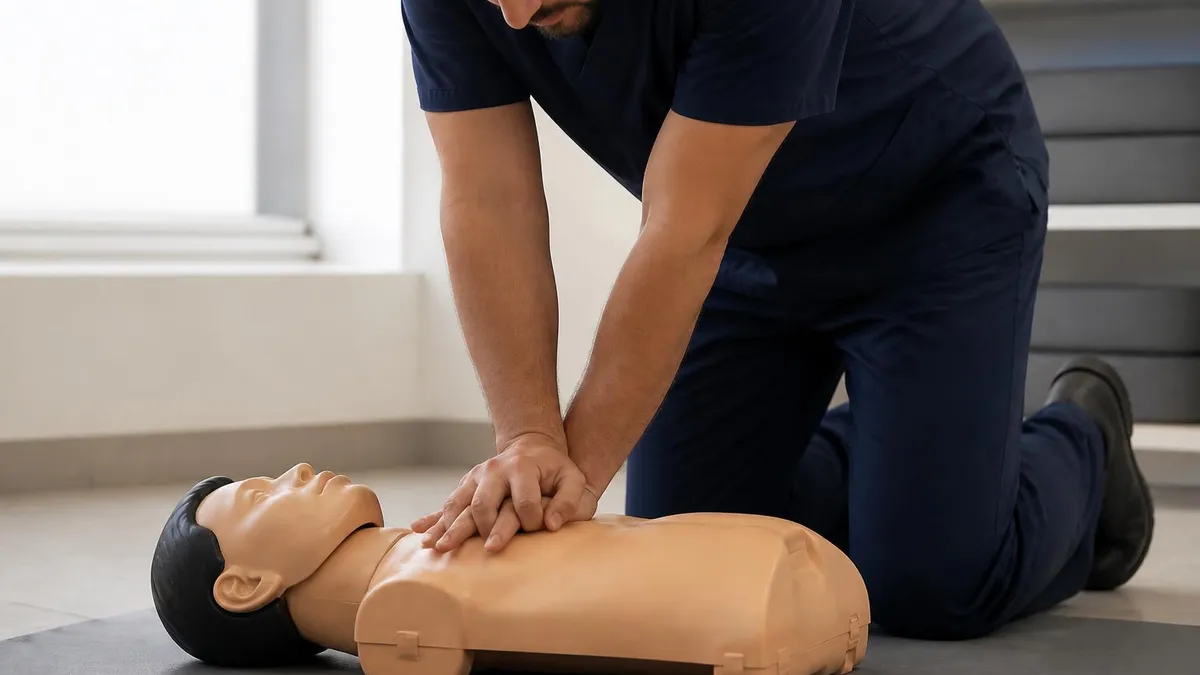
Extracorporeal CPR (ECPR): Complete Guide to Mechanical Circulatory Support During Cardiac Arrest in 2026
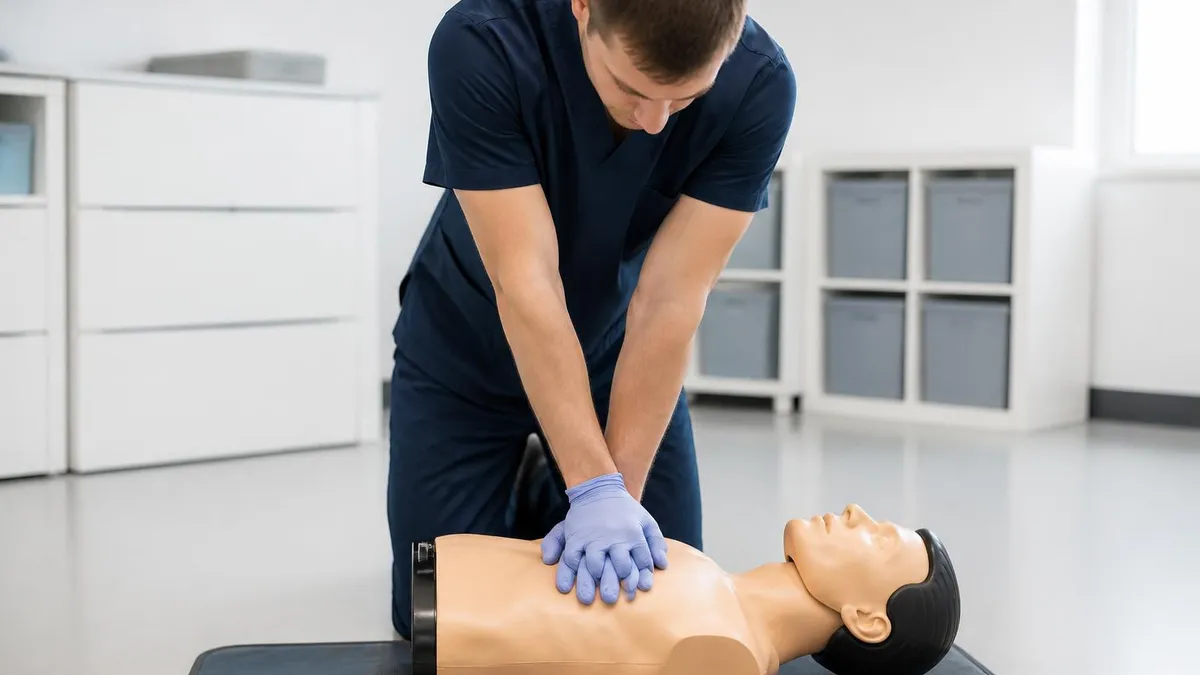
Free Online CPR Certification: Complete Guide to Legitimate Courses, Costs, and Workplace Acceptance in 2026
CPR Instructor Certification 2026: Complete Path to Teaching CPR
About the Author

Registered Nurse & Healthcare Educator
Johns Hopkins University School of NursingDr. Sarah Mitchell is a board-certified registered nurse with over 15 years of clinical and academic experience. She completed her PhD in Nursing Science at Johns Hopkins University and has taught NCLEX preparation and clinical skills courses for nursing students across the United States. Her research focuses on evidence-based exam preparation strategies for healthcare certification candidates.
Join the Discussion
Connect with other students preparing for this exam. Share tips, ask questions, and get advice from people who have been there.
View discussion (5 replies)