
CPR Supplies: The Complete 2026 September Guide to Building a Lifesaving Resuscitation Kit
CPR supplies explained: 💯 AED pads, pocket masks, gloves, and training tools. Build a complete resuscitation kit and understand the ACLS algorithm in 2026 September.
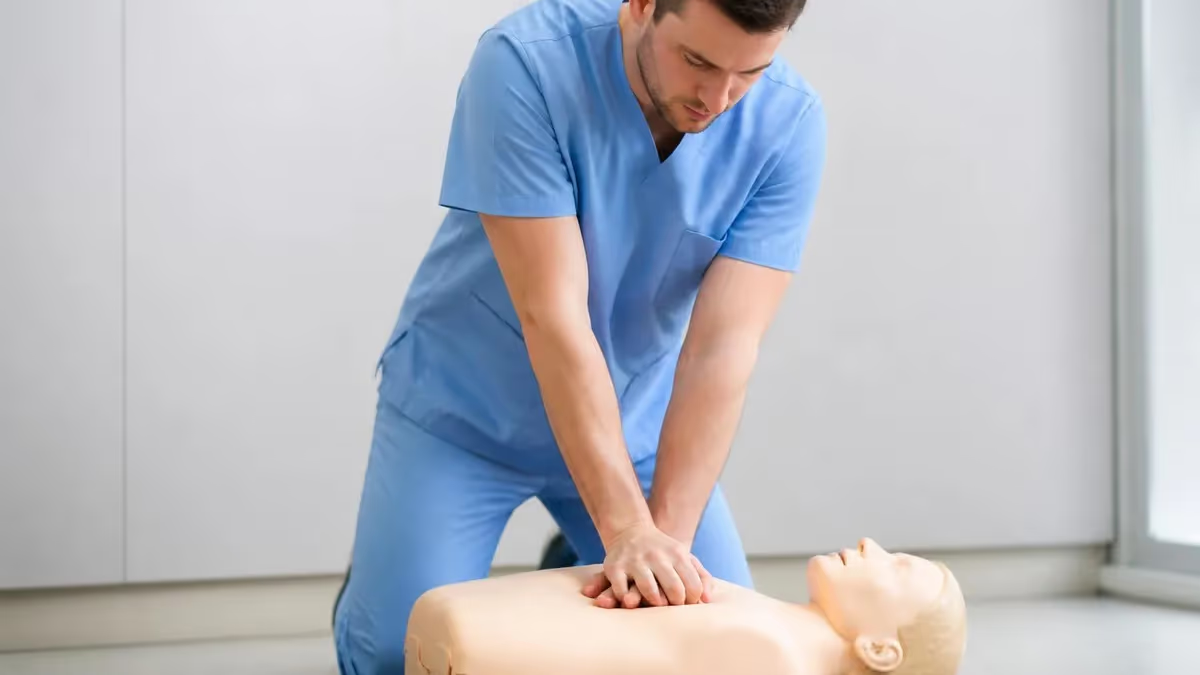
Choosing the right cpr supplies can mean the difference between a confident, effective rescue and a chaotic scramble during the most stressful moments of someone's life. Whether you manage a workplace first-aid program, coach a youth sports team, or simply want a reliable kit at home, understanding what belongs in a resuscitation bag is the first step toward genuine preparedness. This guide walks through every essential item, explains how each tool supports rescue breathing and chest compressions, and shows how supplies connect to the broader systems of emergency care.
Modern resuscitation is built on a foundation of evidence-based protocols, and physical supplies are the hands-on extension of those protocols. When a trained provider follows the acls algorithm during a cardiac arrest, every airway adjunct, oxygen connector, and medication port has been positioned in advance for a reason. Even basic responders benefit from the same logic: the right barrier device, a working defibrillator, and clean gloves transform a frightened bystander into a capable link in the chain of survival that emergency systems depend on.
The good news is that you do not need a hospital crash cart to be ready. A thoughtfully assembled kit costing under one hundred dollars covers the overwhelming majority of out-of-hospital emergencies. The challenge is knowing which items genuinely matter, which ones expire, and how to maintain everything so it works on the day you reach for it. Too many kits sit forgotten in closets with cracked masks, dead AED batteries, and gloves that have degraded into useless sticky film.
Supplies also vary by the population you serve. A daycare needs pediatric and infant cpr equipment, including appropriately sized masks and AED pads designed for small chests. An office full of adults needs adult barrier devices and an AED stocked with standard pads. A wilderness guide needs compact, rugged gear that survives moisture and temperature swings. Matching your inventory to your real-world risk profile prevents both dangerous gaps and wasteful over-purchasing of equipment you will never use.
Throughout this article we reference the same standards taught in pals certification and adult life support courses, because supplies are only as good as the training behind them. Owning a pocket mask does nothing if you have never practiced creating a seal. A defibrillator is powerful, yet its value collapses if nobody knows how to apply pads or interpret its voice prompts. We will balance the hardware discussion with reminders that human skill remains the irreplaceable component of any rescue.
By the end of this guide you will understand exactly what to buy, how much it costs, how to organize it, and how often to inspect it. You will also see how individual supplies map onto the steps responders actually perform, from checking a victim's respiratory rate to delivering a shock. Let's begin by putting the numbers in perspective so you can appreciate why well-chosen cpr supplies are one of the smartest safety investments any home, school, or business can make this year.
CPR Supplies by the Numbers
Essential CPR Kit Components
Pocket masks and face shields with one-way valves protect the rescuer while allowing rescue breaths. A quality mask with an oxygen inlet is the single most useful airway item in any kit.
An AED analyzes heart rhythm and delivers a shock when needed. It is the only tool that can restart a heart in ventricular fibrillation, making it the centerpiece of serious supply kits.
Nitrile gloves, antiseptic wipes, and a biohazard bag shield responders from bloodborne pathogens. These inexpensive items are essential and should be replaced after every single use.
Oropharyngeal and nasopharyngeal airways, plus a bag-valve mask, support advanced providers. These appear in professional kits aligned with the ACLS algorithm and require formal training.
Trauma shears, a CPR feedback timer, a razor for chest hair, and a towel round out a complete kit by solving the small practical problems that slow down a real rescue.
When you open a well-built resuscitation bag, the contents should tell a story about the sequence of care. The first layer holds the items you reach for in seconds: nitrile gloves to protect yourself, a barrier mask to deliver breaths safely, and a pair of trauma shears to expose the chest. Organizing supplies in the order you will use them is a small habit that pays enormous dividends when adrenaline narrows your focus and your hands begin to shake under genuine pressure.
The barrier device deserves special attention because it is the bridge between intention and action. A pocket mask with a one-way valve and a replaceable filter lets you give rescue breaths without direct mouth-to-mouth contact, removing a psychological barrier that stops many bystanders cold. Models with an oxygen inlet port allow supplemental oxygen if you have a tank, while compact keychain face shields offer a minimalist option for personal carry. Whatever you choose, practice forming a tight seal until the motion feels automatic.
Gloves and infection-control items are not optional afterthoughts. Bloodborne pathogens are a real occupational hazard, and a small zippered pouch of nitrile gloves, alcohol wipes, and a red biohazard bag keeps you compliant with workplace safety rules. Buy gloves in multiple sizes so any responder can get a proper fit, and store spares because gloves tear easily during the physical work of compressions and patient movement on rough surfaces.
Trauma shears and a disposable razor solve two common obstacles. Clothing must come off the chest quickly so AED pads can adhere to bare skin, and a razor clears excessive chest hair that would otherwise prevent good electrical contact. A small towel dries sweaty or wet skin, since moisture defeats pad adhesion. These three cheap items routinely make the difference between a defibrillator that works on the first attempt and one that flashes frustrating error messages.
For workplaces and schools, a wall-mounted cabinet keeps supplies visible, accessible, and tamper-evident. An alarmed cabinet deters theft while ensuring the kit is exactly where signage promises during a crisis. Pair the cabinet with clear directional signs, because seconds spent searching for equipment are seconds stolen from the victim's brain. Many fire codes and insurance policies now reward or require this kind of conspicuous, standardized placement of emergency gear.
Finally, think about the carrying case itself. A bright, durable bag with labeled compartments and a sturdy zipper survives years of storage and the occasional drop. Soft cases work indoors, while hard, weather-sealed cases suit vehicles, boats, and outdoor venues. The container is the unglamorous foundation that protects your investment, so do not cut corners. A great kit packed into a flimsy bag becomes a jumbled, unreliable mess within a year of ordinary handling.

CPR Practice Test Questions
Prepare for the CPR Cardiopulmonary Resuscitation Practice exam with our free practice test modules. Each quiz covers key topics to help you pass on your first try.
CPR Basic CPR
CPR Exam Questions covering Basic CPR. Master CPR Test concepts for certification prep.
CPR and First Aid
Free CPR Practice Test featuring and First Aid. Improve your CPR Exam score with mock test prep.
CPR (Cardiopulmonary Resuscitation) Adult ...
CPR Mock Exam on (Cardiopulmonary Resuscitation) Adult CPR and AED Usage. CPR Study Guide questions to pass on your first try.
CPR (Cardiopulmonary Resuscitation) Airway...
CPR Test Prep for (Cardiopulmonary Resuscitation) Airway Obstruction and Choking. Practice CPR Quiz questions and boost your score.
CPR (Cardiopulmonary Resuscitation) Cardio...
CPR Questions and Answers on (Cardiopulmonary Resuscitation) Cardiopulmonary Emergency Recognition. Free CPR practice for exam readiness.
CPR (Cardiopulmonary Resuscitation) Child ...
CPR Mock Test covering (Cardiopulmonary Resuscitation) Child and Infant CPR. Online CPR Test practice with instant feedback.
CPR (Cardiopulmonary Resuscitation) High-P...
Free CPR Quiz on (Cardiopulmonary Resuscitation) High-Performance Team Dynamics. CPR Exam prep questions with detailed explanations.
CPR (Cardiopulmonary Resuscitation) Legal ...
CPR Practice Questions for (Cardiopulmonary Resuscitation) Legal and Ethical Considerations. Build confidence for your CPR certification exam.
CPR for Specific Populations
CPR Test Online for for Specific Populations. Free practice with instant results and feedback.
CPR Airway & Breathing Management
CPR Exam Questions covering Airway & Breathing Management. Master CPR Test concepts for certification prep.
CPR Assessment & Recognition of Cardiac Ar...
Free CPR Practice Test featuring Assessment & Recognition of Cardiac Arrest. Improve your CPR Exam score with mock test prep.
CPR Chest Compressions & Defibrillation
CPR Mock Exam on Chest Compressions & Defibrillation. CPR Study Guide questions to pass on your first try.
CPR Post-Resuscitation Care & Recovery
CPR Test Prep for Post-Resuscitation Care & Recovery. Practice CPR Quiz questions and boost your score.
Understanding What AED Stands For
Many newcomers ask what does aed stand for, and the answer is Automated External Defibrillator. The word automated matters most: the device itself analyzes the victim's heart rhythm and decides whether a shock is appropriate, so a rescuer cannot accidentally shock a beating heart. This automation is what makes AEDs safe for untrained bystanders to operate in a genuine emergency.
An AED treats sudden cardiac arrest caused by chaotic electrical rhythms like ventricular fibrillation. By delivering a controlled electrical pulse, it can stop the chaos and give the heart a chance to resume a normal beat. Compressions keep blood moving, but only defibrillation can correct these specific lethal rhythms, which is why every serious supply kit should include or be located near an accessible AED.
Pre-Built Kits vs. Building Your Own CPR Supply Kit
- +Pre-built kits arrive complete with compatible, tested components
- +Manufacturers organize items in logical, ready-to-use order
- +Bundles often cost less than buying each piece separately
- +Compliance kits meet OSHA and ANSI workplace standards
- +Sealed packaging guarantees sterility on arrival
- +Replacement refill packs simplify ongoing maintenance
- −Pre-built kits may include items you will never use
- −Generic kits ignore your specific population and risk profile
- −Building your own lets you choose premium barrier devices
- −Custom kits can prioritize pediatric or wilderness needs
- −DIY assembly requires research to avoid dangerous gaps
- −Tracking multiple expiration dates is harder with mixed sources

Monthly CPR Supplies Maintenance Checklist
- ✓Confirm the AED status indicator shows a ready green light
- ✓Check the AED pad expiration date and replace if expired
- ✓Verify the battery installation date and remaining life
- ✓Inspect the pocket mask valve and filter for cracks or debris
- ✓Count gloves and restock multiple sizes after any use
- ✓Replace used or expired alcohol wipes and antiseptic packets
- ✓Test trauma shears and the disposable razor for function
- ✓Ensure the biohazard bag and clean towel are present
- ✓Confirm the cabinet alarm and signage are working clearly
- ✓Update the maintenance log with the date and inspector name
A silent AED is not always a ready AED
Most AEDs run automatic self-tests and signal problems with a chirp or flashing light, but these warnings are easy to ignore in a busy building. Assign one person to verify the green ready indicator every month and log it. A documented inspection routine catches dead batteries and expired pads long before an emergency exposes them at the worst possible moment.
Supplies for children and infants require their own dedicated planning because pediatric anatomy differs dramatically from adult anatomy. An infant's airway is smaller and more easily obstructed, the chest is more pliable, and the energy needed for defibrillation is far lower. Any facility caring for young people, from elementary schools to pediatric clinics, should treat pediatric gear as a separate, clearly labeled category rather than an afterthought tucked beside the adult equipment in the same crowded pouch.
The cornerstone of pediatric airway supplies is a set of correctly sized masks. A mask that is too large cannot form a seal on a small face, and a mask that is too small fails to cover the nose and mouth. Stock infant, child, and adult sizes, and label each one. During infant cpr, responders deliver gentle breaths just until the chest rises, so a properly fitted mask paired with a pediatric bag-valve device prevents the over-inflation that can damage tiny, delicate lungs.
Pediatric AED pads or a pediatric attenuator key reduce the delivered shock to a child-safe level. These pads are typically applied in an anterior-posterior position, one on the chest and one on the back, so they do not touch on a narrow torso. Keep these consumables current, because their gel dries out just like adult pads. If only adult pads are available during a real arrest, guidelines still favor using them over leaving a child undefended against a lethal rhythm.
Monitoring tools also shift in the pediatric world. Normal respiratory rate values are much higher in children than adults, and a responder must know these baselines to recognize distress. An infant may breathe thirty to sixty times per minute, while a school-age child breathes twenty to thirty. A simple reference card laminated and tucked into the kit helps responders interpret what they observe rather than relying on adult assumptions that could lead to dangerous misjudgment.
Training is inseparable from pediatric supplies. The skills taught in pals certification courses, including precise compression depth and rate for small bodies, only translate to real rescues when practiced on appropriate mannequins. An infant manikin teaches the two-thumb encircling technique, while a child manikin reinforces one or two-handed compressions. Investing in these training tools alongside your live-use supplies ensures staff confidence does not evaporate the instant a small patient is involved.
Finally, consider the emotional and logistical context of pediatric emergencies. Parents and caregivers nearby may panic, so kits for child-focused settings benefit from quick-reference instruction cards and brightly colored, intuitive packaging. Position recovery techniques, used when a child is breathing but unresponsive, require knowing how to safely roll a small body onto its side to protect the airway. Anticipating these scenarios and stocking the right tools turns a terrifying situation into a managed, survivable one.
AED pads, batteries, and barrier-device filters all carry expiration dates for safety reasons. Using expired pads risks a failed shock, and a depleted battery may shut down mid-rescue. Never gamble on outdated consumables. Build a calendar reminder for every expiration date in your kit and replace items before they lapse, not after an emergency reveals the gap.
Beyond individual rescues, cpr supplies operate within larger systems of care, and understanding that context helps you buy and organize gear intelligently. Emergency medical professionals follow structured protocols, and the acls algorithm is the most widely referenced framework for managing cardiac arrest in adults. It sequences chest compressions, rhythm analysis, defibrillation, airway management, and medication administration into a repeatable cycle that any trained team can execute under pressure without losing the thread.
For laypeople, the relevant framework is simpler but built on the same priorities. Recognize the emergency, call for help, start high-quality compressions, attach an AED, and continue until professionals arrive. Each of those steps maps to specific supplies: a phone for activation, your hands for compressions, an AED for defibrillation, and a barrier mask for breaths. Seeing the chain this way clarifies why even a minimalist kit must cover airway protection and defibrillation access, not just bandages.
Advanced providers extend the chain with airway adjuncts and oxygen delivery. A bag-valve mask paired with oropharyngeal airways supports ventilation when a victim cannot breathe adequately, a core component of basic life support and the foundation upon which the more complex algorithm is built. These tools demand hands-on certification, because improper insertion can worsen an obstruction. If your role or workplace warrants them, pair the purchase with documented, recurring competency training.
Monitoring supplies round out the professional kit. A pulse oximeter reports oxygen saturation, while a watch or feedback device helps a responder track the victim's respiratory rate and the rhythm of compressions. Quality matters more than quantity here: a single reliable CPR feedback puck that measures compression depth and rate improves performance more than a drawer full of gadgets nobody knows how to read or interpret during the chaos of an actual code.
It is worth dispelling a common search-engine confusion. People frequently encounter results for cpr cell phone repair or cpr phone repair when researching resuscitation, because a national electronics chain shares the acronym. Those services have nothing to do with cardiopulmonary resuscitation supplies. If you are sourcing lifesaving equipment, verify that vendors specialize in medical and safety products, not mobile devices, so you do not waste time or money on the wrong category entirely.
Reputable suppliers and standards bodies anchor your purchasing decisions. Organizations such as the national cpr foundation and other recognized training authorities publish guidance on equipment that meets current resuscitation science. Buying from established medical-supply vendors, checking for compliance markings, and confirming that AEDs are cleared by regulators protects you from counterfeit or substandard gear. When lives depend on a device working perfectly on the first try, provenance and certification are not bureaucratic details but genuine safeguards.
Owning supplies is only half the equation; using them confidently is the other half, so finish your preparation with deliberate, repeatable practice. Schedule a quarterly drill where every potential responder physically handles the kit, applies AED pads to a mannequin, and verbalizes the steps aloud. This rehearsal exposes confusion about where items live and which size mask fits which patient, surfacing problems in a calm setting rather than during a genuine, high-stakes cardiac emergency.
Build a maintenance routine and assign clear ownership. A kit without a designated keeper inevitably decays as pads expire, gloves vanish, and batteries die unnoticed. Put one name on the inspection log, set recurring calendar reminders for every expiration date, and treat the monthly check as non-negotiable. Documentation also protects organizations during audits and demonstrates a credible duty of care should an incident ever be reviewed by inspectors or insurers after the fact.
Pair physical supplies with current certification. Cards expire roughly every two years, and skills decay even faster without practice. Refresher courses covering adult life support, infant cpr, and AED operation keep your hands and judgment sharp. If you train others, invest in dedicated practice mannequins and pursue credentials like pals certification so your guidance reflects the latest science rather than outdated habits learned a decade ago in a single forgotten class.
Think carefully about accessibility and signage. The fastest AED in the world is useless if it is locked in an office nobody can enter after hours. Mount devices in central, clearly marked locations, post directional signs, and register your AED with local emergency dispatch so 911 operators can direct callers to it. Accessibility decisions made today shave irreplaceable seconds off response time during the narrow window when defibrillation actually saves lives.
Customize your inventory to your environment rather than copying a generic list. A swimming pool needs extra towels and a moisture-resistant case, a remote worksite needs rugged packaging and redundant batteries, and a school needs robust pediatric supplies and position recovery references. Walk through the most likely scenarios for your specific setting, then stock the tools those scenarios demand. Tailored kits prevent both dangerous shortfalls and wasteful spending on equipment that never matches real risk.
Finally, foster a culture where responding feels normal rather than terrifying. Encourage staff and family members to take hands-on classes, talk openly about what to do in an emergency, and celebrate preparedness as a shared responsibility. The most sophisticated supplies cannot replace a willing, trained human being. When good equipment meets confident people, your home, school, or workplace becomes a place where a sudden cardiac arrest is survivable instead of fatal, which is the entire point.
CPR Questions and Answers
CPR Card Lookup: How to Verify, Replace, and Access Your CPR Certification in 2026
Animal CPR: How to Perform Lifesaving Resuscitation on Dogs, Cats, and Other Pets in 2026
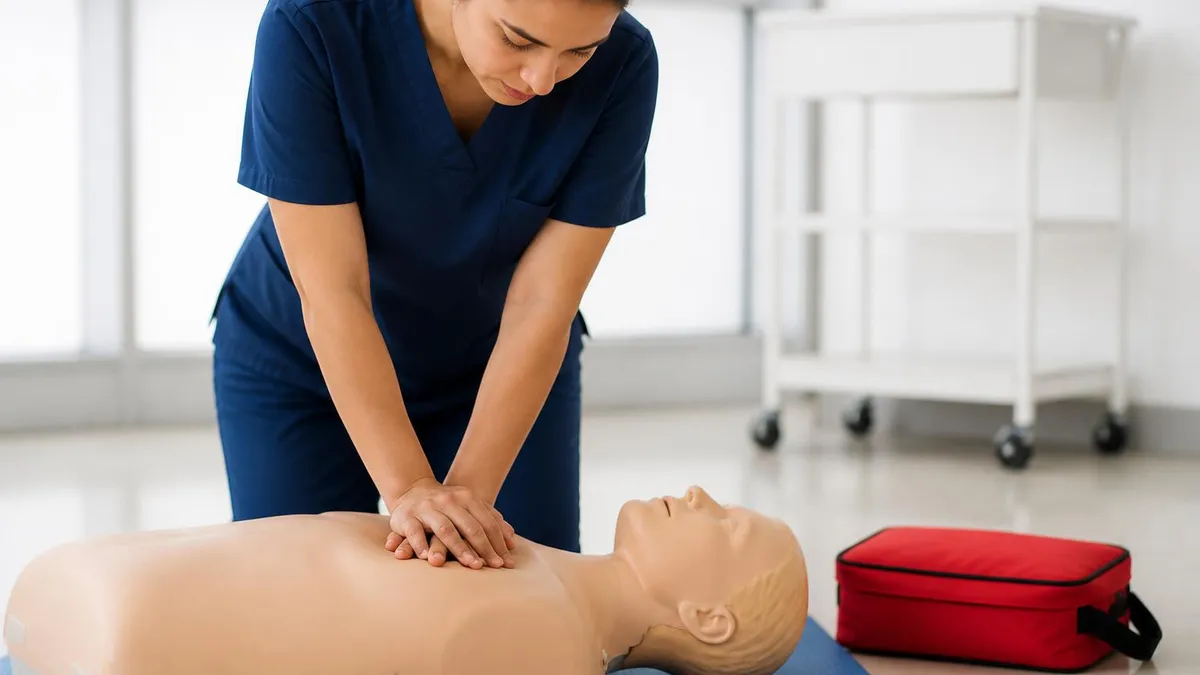
CPR Classes American Heart Association: Complete 2026 Guide to AHA Certification, Courses, and Costs
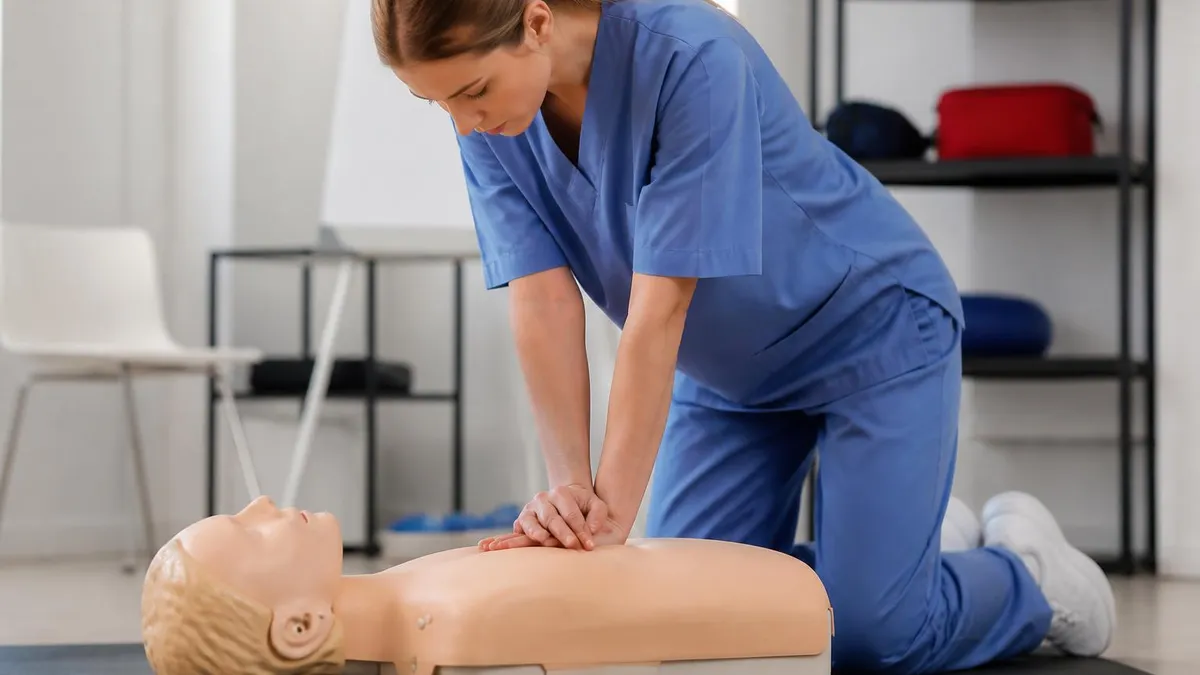
Types of CPR Training: From Basic Life Support to ACLS Algorithm Mastery in 2026
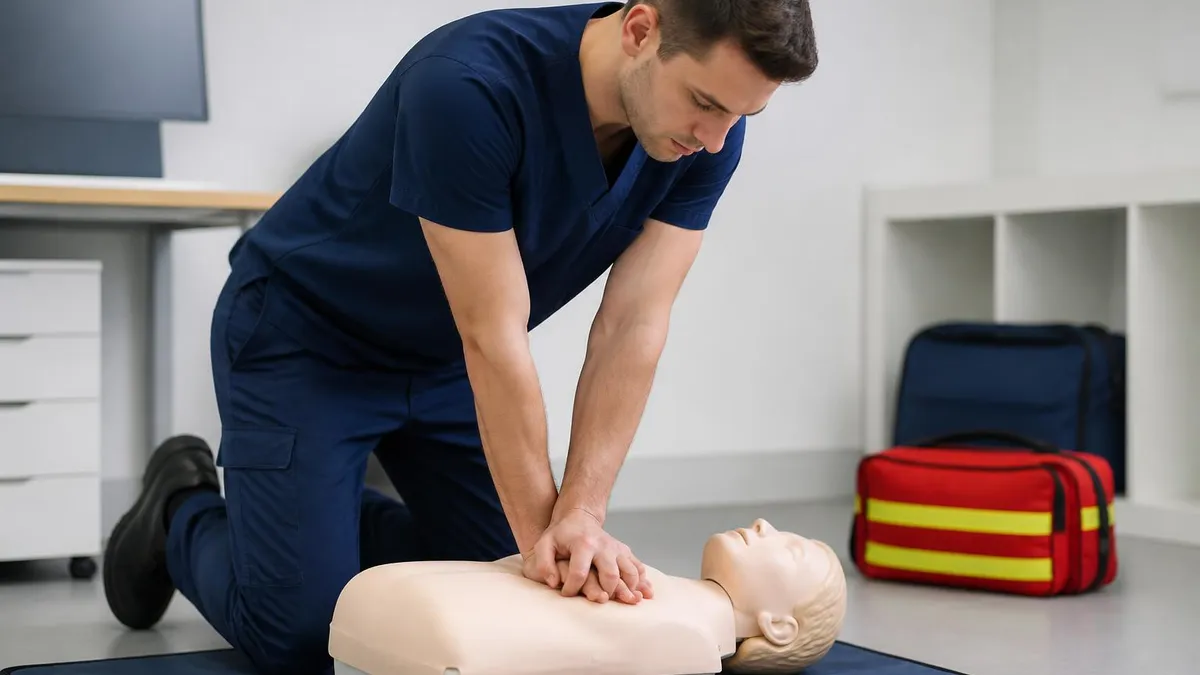
Adult CPR: Complete Step-by-Step Guide to Hands-Only and Standard CPR in 2026
About the Author

Registered Nurse & Healthcare Educator
Johns Hopkins University School of NursingDr. Sarah Mitchell is a board-certified registered nurse with over 15 years of clinical and academic experience. She completed her PhD in Nursing Science at Johns Hopkins University and has taught NCLEX preparation and clinical skills courses for nursing students across the United States. Her research focuses on evidence-based exam preparation strategies for healthcare certification candidates.
Join the Discussion
Connect with other students preparing for this exam. Share tips, ask questions, and get advice from people who have been there.
View discussion (5 replies)