
CPR Certification Verification: How to Confirm, Validate, and Prove Your CPR Status in 2026 October
Am I CPR certified? Learn how to verify, validate, and prove 🎯 your CPR certification status with employers, schools, and licensing boards in 2026 October.
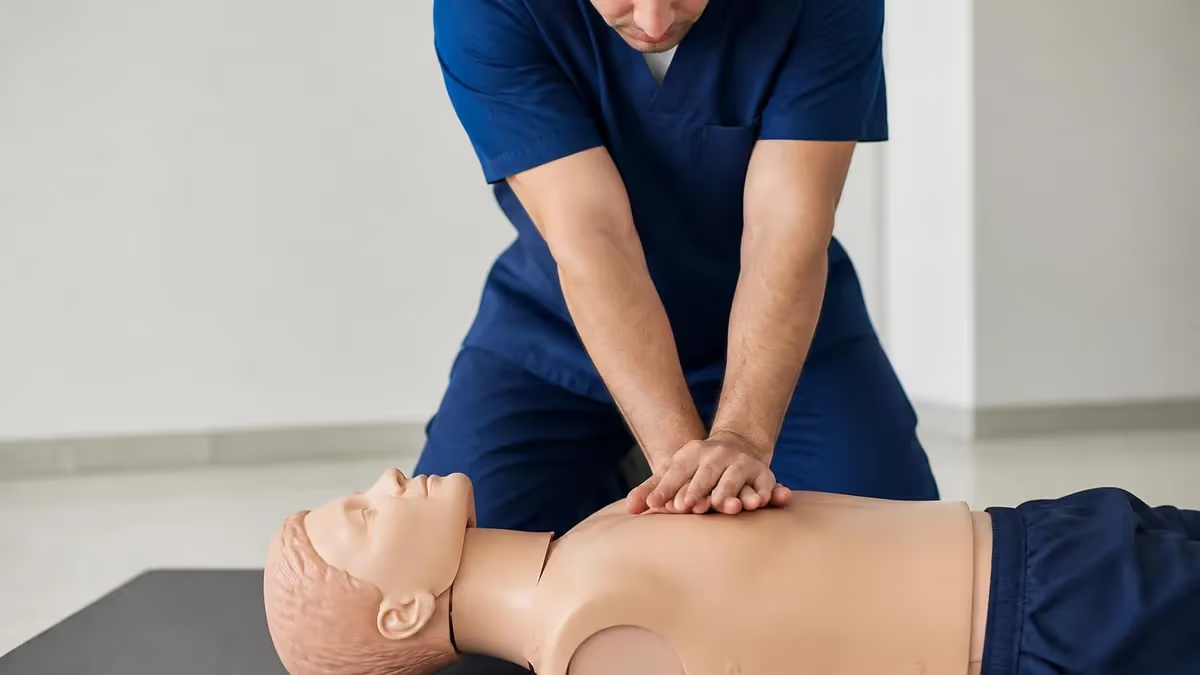
Am I CPR certified? That single question sits at the center of more job applications, clinical rotations, daycare licensing checks, and lifeguard recertification audits than most people realize. Whether you took a class six months ago at a hospital, completed an online blended course through the American Heart Association, or finished a community session run by the national cpr foundation, your card is only useful if you can prove it exists, prove it is current, and prove it came from a recognized provider. Verification is the bridge between sitting in a classroom and being legally allowed to work.
This guide walks through every angle of CPR certification verification — what counts as a valid card, how employers actually check the credential, what the digital verification URL on your card does, how renewal windows interact with state licensing, and what to do when a card has been lost, stolen, or printed by a vendor that an employer refuses to accept. We will also untangle confusing brand names so you do not accidentally pay for a card that your hiring manager will reject on day one of orientation.
Verification matters because CPR is not a single product. The phrase covers leather cpr-style wallet cards, plastic AHA eCards, digital QR-coded credentials, and printable PDFs. Each format has a different verification pathway. Some require a recipient to type a code into a provider portal; others embed a scannable QR; a few rely on the issuing instructor's email. Knowing which format you hold determines what an HR specialist sees when they try to confirm your training is real.
The stakes have grown. Hospitals, EMS agencies, dental offices, and school districts have all moved toward zero-tolerance verification policies after audit findings showed forged or expired cards slipping through onboarding. A 2024 Joint Commission survey flagged credentialing gaps as one of the top ten recurring deficiencies in accredited facilities. As a result, simply showing a printout is no longer enough — the issuer must be cross-checked against an approved list.
Add to this the rise of acls algorithm-based advanced training, pals certification for pediatric providers, and infant cpr courses for parents and childcare workers, and you have a credentialing ecosystem where the same person may hold three or four overlapping cards. Each one has its own expiration date, its own verification portal, and its own employer-acceptance rules. Keeping them straight requires a system, not just a folder of PDFs.
This article will give you that system. You will learn the difference between a verifiable card and a decorative one, how to use the cpr index of recognized programs, what to do when an employer demands AHA-only credentials, and how to read the small print on a card to spot red flags before you spend money on a class. By the end you should be able to answer the original question — am I CPR certified? — with documented confidence rather than a shrug.
We will also touch on related concepts you will see during verification disputes: what does aed stand for when listed on a card, why respiratory rate competencies appear on some BLS rosters, what life support coverage really includes, and why some employers separately require evidence of recovery position and choking response training. These details matter because verification is not just about a name on a card; it is about the skills the card represents.
CPR Certification Verification by the Numbers

Verification Pathways by Provider
AHA cards include a unique eCard code and QR. Verification happens through the AHA Atlas portal, where employers enter the code to confirm course type, instructor, and issue date in real time.
Red Cross issues digital certificates with a verification URL printed on the card. Employers click the link or scan the QR to see the holder's name, course completed, and expiration without creating an account.
The national cpr foundation uses an online verification database keyed to the certificate number. Acceptance varies by employer; hospitals usually require AHA or Red Cross instead for clinical roles.
American Safety & Health Institute cards are widely accepted in workplace and OSHA-driven settings. Verification uses a HSI Otis portal where the certificate ID is entered for instant confirmation.
Some EMS agencies and hospital systems issue their own internal CPR cards tied to badge access. These are only valid inside that organization and do not transfer when you change employers.
When an employer asks to verify your CPR card, they are running a three-part check whether they tell you or not: is the issuer recognized, is the card currently within its validity window, and does the named course match the role you are being hired for. Failing any of the three usually triggers a request for retraining at your expense before your start date. Understanding the check from the employer's side lets you prepare documentation that passes on the first attempt instead of forcing back-and-forth emails with HR.
The first check — issuer recognition — is where many candidates trip. A card from a vendor like cpr fix phones-adjacent online-only programs may look professional but lacks acceptance from hospital credentialing offices. Healthcare employers almost universally require AHA BLS for Healthcare Providers or Red Cross BLS. Childcare, fitness, and corporate roles have wider acceptance and may approve ASHI, HSI, or national cpr foundation credentials. Always ask in writing which issuers are accepted before you register for a course.
The second check — validity window — is more nuanced than a simple expiration date. AHA cards expire on the last day of the month printed, not the day of the month two years from issue. Some state licensing boards add a grace period; others do not. EMS recertification cycles may require the card to be active throughout the entire renewal period rather than just at the time of submission. Read the rules carefully so you do not assume a 30-day grace exists when it does not.
The third check — course match — separates BLS from Heartsaver from ACLS and pals certification. A Heartsaver card teaches lay rescuer skills and is excellent for teachers, parents, and corporate first responders. It is not, however, acceptable for nurses, paramedics, or respiratory therapists, who must hold BLS for Healthcare Providers. If your card says Heartsaver and your role requires BLS, you are not certified for that role no matter how recently you trained.
Modern verification also includes provenance checks. Employers increasingly scan the QR code printed on a card and follow it back to a live page on the issuer's domain. If the QR resolves to anything other than the official verification URL — for example, a generic PDF or a third-party site — that is a major red flag suggesting a counterfeit or unauthorized copy. Authentic AHA eCards always resolve to atlas.heart.org and authentic Red Cross cards always resolve to redcross.org/take-a-class/digital-certificate.
Documentation should be portable. Keep a PDF copy of every active card in a single cloud folder, named with the convention IssuerCourseExpiration so you can sort by expiration at a glance. Add a calendar reminder 90 days before each expiration date. When an employer requests verification, you send the PDF along with the verification URL or eCard code; do not force the employer to ask twice. Speed of response signals professionalism and reduces credentialing delays.
Finally, remember that verification is bidirectional. You should also verify your instructor was authorized to teach the course you took. Each issuer publishes an instructor lookup; entering the instructor's name and ID confirms they were active on the date of your class. If an instructor lost authorization between teaching you and your card being printed, the card may still be valid, but if they were unauthorized when teaching, the credential is void from the start.
CPR Practice Test Questions
Prepare for the CPR Cardiopulmonary Resuscitation Practice exam with our free practice test modules. Each quiz covers key topics to help you pass on your first try.
CPR Basic CPR
CPR Exam Questions covering Basic CPR. Master CPR Test concepts for certification prep.
CPR and First Aid
Free CPR Practice Test featuring and First Aid. Improve your CPR Exam score with mock test prep.
CPR (Cardiopulmonary Resuscitation) Adult ...
CPR Mock Exam on (Cardiopulmonary Resuscitation) Adult CPR and AED Usage. CPR Study Guide questions to pass on your first try.
CPR (Cardiopulmonary Resuscitation) Airway...
CPR Test Prep for (Cardiopulmonary Resuscitation) Airway Obstruction and Choking. Practice CPR Quiz questions and boost your score.
CPR (Cardiopulmonary Resuscitation) Cardio...
CPR Questions and Answers on (Cardiopulmonary Resuscitation) Cardiopulmonary Emergency Recognition. Free CPR practice for exam readiness.
CPR (Cardiopulmonary Resuscitation) Child ...
CPR Mock Test covering (Cardiopulmonary Resuscitation) Child and Infant CPR. Online CPR Test practice with instant feedback.
CPR (Cardiopulmonary Resuscitation) High-P...
Free CPR Quiz on (Cardiopulmonary Resuscitation) High-Performance Team Dynamics. CPR Exam prep questions with detailed explanations.
CPR (Cardiopulmonary Resuscitation) Legal ...
CPR Practice Questions for (Cardiopulmonary Resuscitation) Legal and Ethical Considerations. Build confidence for your CPR certification exam.
CPR for Specific Populations
CPR Test Online for for Specific Populations. Free practice with instant results and feedback.
CPR Airway & Breathing Management
CPR Exam Questions covering Airway & Breathing Management. Master CPR Test concepts for certification prep.
CPR Assessment & Recognition of Cardiac Ar...
Free CPR Practice Test featuring Assessment & Recognition of Cardiac Arrest. Improve your CPR Exam score with mock test prep.
CPR Chest Compressions & Defibrillation
CPR Mock Exam on Chest Compressions & Defibrillation. CPR Study Guide questions to pass on your first try.
CPR Post-Resuscitation Care & Recovery
CPR Test Prep for Post-Resuscitation Care & Recovery. Practice CPR Quiz questions and boost your score.
Card Formats Explained for ACLS Algorithm and CPR Holders
Plastic wallet cards were the dominant format for decades and are still issued by smaller training centers. They feel durable, but they are also the easiest to forge because they rely solely on visual inspection rather than a live database lookup. Any verifier asked to validate a plastic card must call or email the issuing training center and request written confirmation, which is slow and inconsistent.
For roles tied to acls algorithm competence, AHA discontinued plastic cards in 2017 in favor of eCards. If your hospital received plastic ACLS cards after that date from an instructor, they are almost certainly invalid. Always confirm the format AHA currently supports for the course you are taking before paying.

Should You Choose AHA Over National CPR Foundation?
- +AHA is accepted by virtually every US hospital, EMS service, and nursing program
- +eCard verification is instant via the Atlas portal
- +Course content aligns with current ILCOR resuscitation guidelines
- +Instructor authorization is auditable through AHA training centers
- +Acceptable for nursing, dental, and respiratory therapy licensure
- +Renewals can be done as blended online plus skills check
- +Hands-on skills validation is required, giving stronger competency proof
- −AHA classes cost more than online-only alternatives
- −Skills checks require in-person scheduling that may delay your card
- −Plastic wallet cards no longer issued, which surprises some employers
- −eCard claim emails sometimes land in spam and get missed
- −Renewal windows are strict with no grace period at most employers
- −Instructors must be affiliated with a Training Center, limiting rural options
Pros and Cons at a Glance
| Pros | Cons |
|---|---|
| AHA is accepted by virtually every US hospital, EMS service, and nursing program | AHA classes cost more than online-only alternatives |
| eCard verification is instant via the Atlas portal | Skills checks require in-person scheduling that may delay your card |
| Course content aligns with current ILCOR resuscitation guidelines | Plastic wallet cards no longer issued, which surprises some employers |
| Instructor authorization is auditable through AHA training centers | eCard claim emails sometimes land in spam and get missed |
| Acceptable for nursing, dental, and respiratory therapy licensure | Renewal windows are strict with no grace period at most employers |
| Renewals can be done as blended online plus skills check | Instructors must be affiliated with a Training Center, limiting rural options |
CPR Certification Verification Checklist
- ✓Locate your card or eCard and confirm the issuer matches employer requirements
- ✓Check the printed expiration date and the day-of-month rule for your issuer
- ✓Confirm the course name matches the role (BLS vs Heartsaver vs ACLS)
- ✓Scan the QR code and confirm it resolves to the official issuer domain
- ✓Look up the instructor in the issuer's instructor database for the class date
- ✓Download a PDF copy and store it in a cloud folder named by expiration
- ✓Email the verification URL or eCard code to HR alongside the PDF
- ✓Set a 90-day expiration reminder in your calendar
- ✓Verify any second card such as pals certification or ACLS independently
- ✓Keep a backup printed copy in your work locker or bag for audits
Send the verification URL before HR asks
Candidates who proactively include the verification URL or eCard code in their first onboarding email shave an average of three business days off their credentialing timeline. Treat the link as part of your signature during onboarding week and you will rarely face a delayed start date.
Disputes about CPR verification almost always boil down to one of four scenarios: a lost card, an expired card discovered at the wrong moment, a mismatch between the course you completed and the course your employer needs, or an issuer the employer does not recognize. Each scenario has a predictable resolution path, and recognizing which scenario you are in lets you act fast rather than panicking the day before orientation. The clock is your enemy here; resolutions take three to fourteen business days depending on the issuer.
Lost cards are the easiest to fix when the card was an eCard. Log in to AHA Atlas, Red Cross account, or your issuer's portal and redownload. If you never claimed the card, contact the original instructor and request they resend the claim email. Most instructors keep their training center rosters for at least two years, matching the validity window. If the instructor cannot be reached, the Training Center Coordinator listed on the AHA Atlas can pull the record directly.
Expired cards discovered at the wrong moment usually require enrollment in a renewal course rather than a full provider course. Renewal courses are shorter, often four hours instead of six, and focus on skills demonstration plus a refresh of new guidelines. If your card lapsed more than 30 days ago, some issuers require the full course again rather than the renewal. Always ask before registering so you do not pay for the wrong course.
Course mismatch — the most painful scenario — happens when you completed Heartsaver but the job requires BLS for Healthcare Providers, or you completed adult-only and the role requires the child and infant component. Heartsaver does not upgrade to BLS; you must take the full BLS course. Likewise, BLS does not satisfy ACLS or pals certification requirements. Each layer is additive, and the right combination depends on the population you will treat, including respiratory arrest scenarios on adult or pediatric patients.
Issuer non-recognition is a quieter problem but increasingly common. A national cpr foundation card might be accepted at one daycare chain and rejected at another in the same city. The deciding factor is usually whether the employer's accrediting body publishes an approved-issuer list. JCAHO-accredited facilities almost always restrict acceptance to AHA and Red Cross. Some states publish their own lists for school districts and EMS providers. Always check the list before you register.
Replacement timelines vary. AHA eCards reissue instantly once you log into Atlas. Red Cross digital certificates regenerate within minutes of a name correction request. Plastic cards from smaller training centers can take two weeks because they require a physical reprint and shipment. If you need verification urgently, prioritize providers that offer digital cards. Many employers now accept screenshots of the verification page as interim proof while a permanent card is processed.
Document every interaction. When an HR specialist accepts a verification email, save that email. When an instructor confirms your roster entry, save that email. If a future employer challenges your training, this chain of correspondence is the fastest path to resolution. CPR credentialing disputes are rarely about whether the person learned the skill; they are about paperwork, and paperwork must be retrievable on demand if you want to keep working.

Cards from vendors promising completion in 30 minutes with no skills check are almost universally rejected by hospitals, EMS agencies, and accredited childcare facilities. If a course does not require an in-person or live virtual skills demonstration, assume the resulting card will fail verification for any clinical or licensed role and choose an AHA, Red Cross, or ASHI option instead.
If you hold more than one CPR-family credential — say BLS plus ACLS plus pals certification — you need a tracking strategy. Each card has its own renewal cycle, its own provider, and its own verification URL, and the most common reason competent providers lapse is simply forgetting which card expires when. A simple spreadsheet with five columns (issuer, course, issue date, expiration date, verification URL) prevents this and takes ten minutes to set up the first time. After that, maintenance is a five-minute update after each renewal.
Calendar reminders should fire at 90, 60, and 30 days before each expiration. The 90-day reminder is to research and book a renewal class; the 60-day is the booking deadline; the 30-day is the panic deadline. Schedule renewals during slow weeks at work because credentialing offices often need a few days to process the new card after you upload it. Treat renewal as a quarterly chore rather than an annual emergency.
For traveling clinicians, locum tenens nurses, and per-diem responders, multi-state acceptance matters. AHA and Red Cross cards are accepted in all fifty states, but some state nursing boards require additional jurisdictional acknowledgments before recognizing the card. Check the state-specific rules of every state you plan to practice in, and consider keeping your hands-on skills checks current with AHA so you never have to argue acceptance during a fast onboarding.
Your tracking system should also note related training that often gets bundled with CPR, such as cpr songs-style training rhythms, AED operation drills, opioid response with naloxone, and bleeding control. These adjacent certifications often have shorter validity windows than CPR itself and slip out of compliance first. List them in the same spreadsheet so a single glance tells you which credential is closest to lapsing.
If you supervise staff who must maintain CPR, the same principles scale up. A team tracker should include who is certified, in what course, with what issuer, and through what date. Run a monthly export and flag anyone within 90 days of expiration. Many hospital credentialing systems already do this automatically, but in smaller settings — dental offices, gyms, summer camps — the responsibility falls to a manager who must build it manually.
Verification documents should also be retained after expiration. Some state boards request proof of continuous CPR certification across the prior license cycle when investigating complaints. Keeping expired cards for at least six years provides this paper trail and weighs almost nothing as PDFs in a folder. Label them clearly so you do not accidentally present an expired card to a new employer thinking it is current.
Finally, build a renewal habit by pairing CPR with another annual chore you already do. Renew at the same time you complete your annual compliance training, file taxes, or refresh a professional license. Habits ride on context, and pinning a renewal to an existing context guarantees the renewal happens. The whole point of verification is to prove you have the skill; the easiest proof is never letting the card lapse in the first place.
Practical preparation for verification day begins with a single principle: assume the employer will verify your card and prepare accordingly. The candidates who present cleanly are those who treat verification like a passport renewal rather than a surprise. Keep a single source of truth — a folder, a password manager note, or a credentialing app — and update it within 24 hours of any new training. That discipline turns verification from a recurring stressor into a routine administrative task.
When you take a CPR class, do four things in the first 48 hours after class. First, claim your eCard or download your digital certificate immediately. Second, screenshot the verification page showing your name and expiration. Third, save the issuer's verification URL in your credential file. Fourth, set the renewal reminder. Doing all four within 48 hours catches issues while your instructor's memory is fresh and corrections are easy. After two weeks, fixing a misspelled name or wrong course title becomes much harder.
If you are about to start a new job, ask the hiring manager three questions before your first day: which issuers do they accept, what is the acceptable course (BLS, Heartsaver, etc.), and to whom should the verification be sent. The answer to each of these takes thirty seconds on their end but saves hours of churn on yours. If they cannot answer in writing, ask them to forward the credentialing office's official policy. Written answers protect you if expectations shift later.
For instructors, the verification side has its own workflow. If you teach AHA classes, issue eCards within 20 days of class as required by AHA policy. Late issuance is a top reason for instructor authorization warnings. Keep your roster organized so when a student emails you six months later asking you to resend a claim, you can find them quickly. Good roster habits protect both your students and your own teaching credentials, and they reduce the volume of respiratory arrest-adjacent escalations that sometimes follow lost-card complaints.
Travel and remote work complicate verification timing. If you are scheduled to renew while abroad or on assignment, look for blended courses where the online module can be done anywhere and the skills check booked locally at your destination. Most major issuers have international reciprocity, but the in-person skills check still must occur with an authorized instructor. Plan this two months ahead, not two weeks, because instructor availability varies sharply by region and season.
Finally, remember that verification is not adversarial. Employers verify because they have a legal duty to staff their roles with competent rescuers; auditors check because patient safety depends on it. Treating verification as a partnership rather than a hurdle gets you onboarded faster, maintains your professional reputation, and ensures that when a cardiac arrest, a choking infant, or a sudden collapse happens on your watch, the card in your wallet matches the skills in your hands. That alignment is the entire point.
If you take only one habit from this guide, make it this: every time you receive a new CPR card or renew an existing one, send yourself an email with the verification URL, expiration date, and PDF attached. That email becomes your portable, searchable, time-stamped backup. When a future employer asks am I CPR certified, you forward the email in under sixty seconds and move on with your career.
CPR Questions and Answers
CPR vs BLS: Complete Comparison Guide for 2026 — Which Certification Do You Need?

CPR Card Lookup: How to Verify, Replace, and Access Your CPR Certification in 2026
AHA CPR: What It Is, Which Course You Need, and How to Get Certified
CPR Instructor Jobs 2026: How to Become a Certified Instructor, Salary Expectations, and Career Pathways
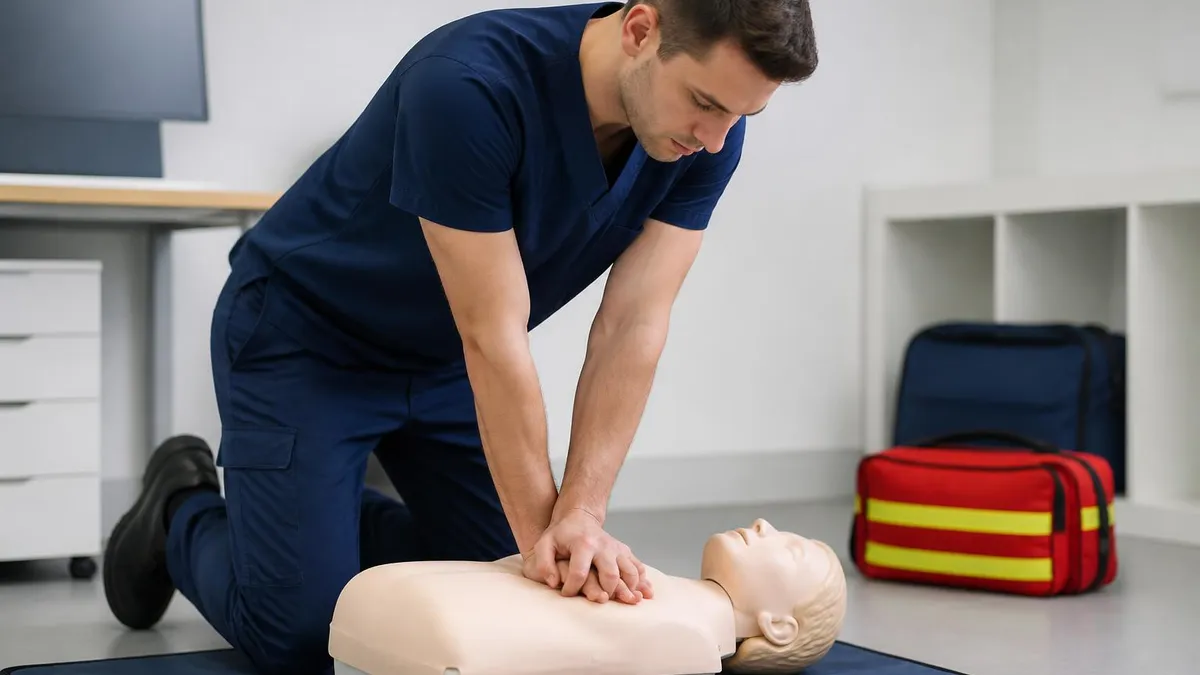
Adult CPR: Complete Step-by-Step Guide to Hands-Only and Standard CPR in 2026
About the Author

Registered Nurse & Healthcare Educator
Johns Hopkins University School of NursingDr. Sarah Mitchell is a board-certified registered nurse with over 15 years of clinical and academic experience. She completed her PhD in Nursing Science at Johns Hopkins University and has taught NCLEX preparation and clinical skills courses for nursing students across the United States. Her research focuses on evidence-based exam preparation strategies for healthcare certification candidates.
Join the Discussion
Connect with other students preparing for this exam. Share tips, ask questions, and get advice from people who have been there.
View discussion (5 replies)