
CPR Certification Los Angeles: Complete Training Guide for 2026 September
Get CPR certified in Los Angeles in 2026 September. Covers ACLS algorithm, infant CPR, AED training & top LA providers. ✅ Find the right course today.
If you are searching for CPR certification in Los Angeles, you are joining hundreds of thousands of Angelenos who recognize that knowing how to respond to cardiac emergencies can mean the difference between life and death. Los Angeles County alone records roughly 8,000 out-of-hospital cardiac arrests each year, and bystander CPR can double or even triple survival rates when delivered promptly. Whether you are a healthcare professional pursuing an ACLS algorithm course, a parent hoping to learn infant CPR, or an employee fulfilling a workplace mandate, the city offers an enormous range of accredited programs to meet your needs.
Los Angeles is home to some of the nation's leading hospitals, fire departments, and community organizations, all of which sponsor CPR training at affordable price points. The American Heart Association, American Red Cross, and the National CPR Foundation each operate multiple training sites across the city — from downtown LA to the San Fernando Valley, from South Los Angeles to the Westside. Most courses blend brief online pre-work with hands-on skills sessions, so you can earn your card without disrupting a demanding work schedule.
Understanding exactly which certification class is right for you requires knowing the difference between Basic Life Support (BLS), ACLS, and PALS certification. Healthcare workers such as nurses, paramedics, and respiratory therapists are generally required to hold BLS at minimum, and many roles demand ACLS or PALS as well. Lay rescuers, teachers, coaches, fitness professionals, and childcare providers typically pursue Heartsaver or community CPR courses, which cover adult CPR, infant CPR, and AED use without the clinical depth of the healthcare-provider tracks.
One frequently overlooked fact is that your certification has an expiration date. Most cards issued by recognized national bodies are valid for exactly two years, after which you must complete a renewal course to remain compliant with employer or licensing requirements. Before you book a class, it is worth reviewing cpr certification los angeles renewal timelines so you can plan your training calendar accordingly and avoid any lapse in coverage that could jeopardize your job or clinical privileges.
This guide will walk you through everything you need to know about getting CPR certified in Los Angeles: which course levels exist, how the ACLS algorithm and PALS certification differ, what AED training involves, how much classes cost, and how to choose a provider that fits your schedule and budget. We also cover specialized topics such as infant CPR technique, the recovery position, respiratory rate monitoring, and what does AED stand for — so you finish reading with a thorough foundation regardless of your starting point.
Beyond the technical curriculum, we examine the practical landscape of training in LA — parking, scheduling, blended learning options, and employer acceptance. Los Angeles has strict healthcare employer requirements, and not all online-only certificates are accepted at major systems such as Cedars-Sinai, UCLA Health, or Kaiser Permanente. We clarify exactly which credentials meet employer standards and which are best suited for community or personal preparedness purposes, saving you time and money.
By the time you finish this article you will have a clear roadmap for selecting, booking, and completing the right CPR certification in Los Angeles for your specific role, budget, and timeline. Let us start with the numbers that put the importance of this training into sharp perspective.
CPR Certification in Los Angeles by the Numbers
CPR Course Types Available in Los Angeles
Designed for lay rescuers, coaches, teachers, and workplace first responders. Covers adult, child, and infant CPR plus AED operation. Typically a 3–4 hour blended class. Accepted by most non-clinical employers across Los Angeles County.
The standard certification for nurses, EMTs, medical assistants, and allied health professionals. Covers high-quality CPR, two-rescuer scenarios, bag-mask ventilation, and AED use. Required at virtually every LA hospital and clinic.
Advanced Cardiovascular Life Support targets physicians, RNs, paramedics, and other advanced providers. Includes the ACLS algorithm, megacode scenarios, pharmacology, and rhythm interpretation. Most LA trauma centers and ICUs require active ACLS.
Pediatric Advanced Life Support is required for providers who treat infants and children. Covers infant CPR, pediatric respiratory emergencies, shock management, and team dynamics. Essential for pediatric nurses and emergency medicine staff across LA.
Targeted at parents, grandparents, babysitters, and daycare workers. Focuses on infant CPR technique, choking response, and basic first aid. Available as a short community course at hospitals, fire stations, and community centers throughout LA.
Advanced certifications like ACLS and PALS certification represent the gold standard for healthcare providers working in high-acuity environments across Los Angeles. The ACLS algorithm is a structured decision-making framework that guides providers through cardiac arrest rhythms — including ventricular fibrillation, pulseless ventricular tachycardia, asystole, and pulseless electrical activity — using a systematic approach to compressions, airway management, medications, and defibrillation. LA-based providers who must renew their ACLS cards will find dozens of authorized training sites offering both in-person and blended-learning formats, with skills testing conducted by trained AHA faculty.
PALS certification extends the same structured algorithmic thinking to pediatric emergencies. The course covers the recognition of respiratory distress, respiratory failure, and shock in infants and children, along with the sequence of interventions for each.
Infant CPR technique is a core component of PALS: providers learn how to deliver 30 compressions to 2 breaths in a single-rescuer scenario, or use the two-thumbs-encircling-hands technique with a compression-to-ventilation ratio of 15:2 in two-rescuer pediatric scenarios. Los Angeles Children's Hospital, Kaiser Permanente, and UCLA Health regularly host PALS renewal days for their clinical staff, but community training centers also offer open-enrollment PALS courses for freelance or traveling providers.
Monitoring respiratory rate is a foundational skill taught in both ACLS and PALS courses. An adult's normal respiratory rate ranges from 12 to 20 breaths per minute, while infants breathe faster — typically 30 to 60 breaths per minute. Providers learn to recognize when elevated or depressed respiratory rate signals impending respiratory failure, prompting early airway intervention rather than waiting for full arrest. These clinical nuances distinguish advanced certifications from basic CPR courses and justify the additional time and cost investment required to complete them.
One subtle but important point about ACLS courses in Los Angeles is the distinction between initial certification and renewal. First-time ACLS students generally need a longer course — often a full day with pre-course self-assessment testing — while experienced providers renewing within two years of expiration qualify for the ACLS renewal or HeartCode blended-learning pathway. HeartCode allows providers to complete the cognitive portion online at their own pace, then attend a skills station session at any authorized AHA training site in the LA metro area, dramatically cutting the time required for busy clinicians.
The National CPR Foundation is another major certifying body with a strong presence in the Los Angeles market. Unlike the American Heart Association's classroom-focused model, the National CPR Foundation leans heavily on online certification pathways, which appeal to individuals who need proof of training quickly for employment purposes.
However, healthcare employers in Los Angeles — particularly those within large hospital systems — almost universally require AHA or Red Cross cards, so professionals should verify their employer's accepted issuers before paying for a National CPR Foundation course. Community organizations, schools, and small businesses tend to be more flexible about which bodies they recognize.
A frequently asked question among LA providers is how ACLS and PALS certification interact with life support protocols in real emergencies. The answer is that these certifications train you to deliver systematic, algorithm-driven care that is consistent with current evidence.
In a real cardiac arrest, an ACLS-certified provider knows to immediately initiate high-quality CPR, attach the AED or defibrillator, establish vascular access, and administer epinephrine every 3 to 5 minutes — all while organizing a team to work in coordinated two-minute cycles. This structured approach is precisely why hospitals and EMS agencies require these certifications rather than relying on individual improvisation.
For providers who need to understand what does AED stand for before taking their first advanced course: AED stands for Automated External Defibrillator — a portable device that analyzes the heart's rhythm and delivers an electric shock to restore a normal rhythm in cases of ventricular fibrillation or pulseless ventricular tachycardia. AED use is integrated into every level of CPR training in Los Angeles, from basic Heartsaver courses to full ACLS megacode scenarios, ensuring that all certified providers can operate this life-saving technology regardless of their role or clinical background.
Life Support Training: What Does AED Stand For and How LA Courses Teach It
An Automated External Defibrillator (AED) is a portable electronic device designed to diagnose and treat life-threatening cardiac arrhythmias through defibrillation. Every CPR course in Los Angeles teaches participants how to power on the device, attach electrode pads to the patient's bare chest, stand clear during rhythm analysis, and press the shock button when prompted. Modern AEDs provide clear voice and visual instructions, making them accessible to untrained bystanders in public spaces such as airports, malls, and sports arenas throughout the greater LA area.
Los Angeles County has invested significantly in public-access AED programs, placing devices in schools, transit stations, parks, and government buildings. California law requires AEDs in health clubs, large fitness facilities, and certain public schools, and many LA employers go beyond the minimum requirement to equip their offices and warehouses. CPR courses teach participants not only how to use an AED but also how to locate the nearest device using smartphone apps like PulsePoint, which integrates with LA County's 911 dispatch system to alert trained bystanders when a cardiac arrest is reported nearby.

In-Person vs. Online CPR Certification in Los Angeles
- +Hands-on skills practice ensures proper compression depth and rate under instructor supervision
- +Immediate feedback corrects technique errors that are impossible to catch through video alone
- +Scenario-based drills build muscle memory and confidence for real emergencies
- +AHA and Red Cross in-person cards are universally accepted at all LA hospital systems
- +Team-based training simulates real resuscitation dynamics with coordinated roles
- +Instructors can answer questions specific to your clinical setting or employer's protocols
- −Requires commuting to a physical training site, which can be challenging in LA traffic
- −Scheduled class times may conflict with shift work, call schedules, or family obligations
- −Typically costs more than purely online alternatives, ranging from $65 to $165 per student
- −Class sizes can be large at busy LA training centers, reducing individualized instructor attention
- −Blended (HeartCode) pathways still require an in-person skills session, not fully remote
- −Some community sites have limited parking or are difficult to reach by public transit
CPR Certification Checklist for Los Angeles Residents
- ✓Confirm which certification level your employer or licensing board requires (Heartsaver, BLS, ACLS, or PALS).
- ✓Verify that your chosen training provider is authorized by AHA, Red Cross, or another body accepted by your employer.
- ✓Check whether a blended HeartCode option is available so you can complete the cognitive portion online before the skills session.
- ✓Register at least two weeks in advance — popular LA training sites fill up quickly, especially on weekends.
- ✓Bring a valid photo ID and, if renewing, your current or recently expired certification card to qualify for the renewal pathway.
- ✓Complete all required pre-course online modules before arriving at the skills station to avoid being turned away.
- ✓Wear comfortable, non-restrictive clothing — you will be on your knees practicing compressions on manikins for extended periods.
- ✓Plan for 3 to 8 hours depending on course level: Heartsaver runs about 3–4 hours, BLS 4–5 hours, ACLS 6–8 hours.
- ✓Download the PulsePoint app after certification so you can act as a community responder for nearby cardiac arrests.
- ✓Record your certification expiration date and set a calendar reminder 60 days before renewal is due to avoid a lapse.
AHA BLS Cards Are the Non-Negotiable Standard at Major LA Hospital Systems
Cedars-Sinai, UCLA Health, Keck Medicine of USC, Kaiser Permanente Southern California, and Children's Hospital Los Angeles all specify American Heart Association BLS certification as a condition of employment for clinical staff. Online-only certificates from the National CPR Foundation or other providers may satisfy community or non-clinical roles but will not pass credentialing review at these institutions. Confirm your employer's accepted issuers before enrolling to avoid paying twice.
The cost of CPR certification in Los Angeles varies considerably depending on the course level, the training organization, and whether you choose a blended or fully in-person format. Community CPR and Heartsaver courses — the kind appropriate for teachers, coaches, and parents learning infant CPR — typically run between $55 and $85 per person.
BLS for Healthcare Providers courses range from $65 to $95 at most AHA training sites in the LA metro area, while ACLS initial certification can cost $150 to $225 given the longer course duration and more complex skills assessment. PALS certification falls in a similar range, often $150 to $200 for initial certification and slightly less for renewal.
Several strategies can reduce your out-of-pocket cost significantly. Many Los Angeles hospitals offer free or subsidized CPR training to their employees through their own education departments, so healthcare workers should check with their employer's learning management system before paying for an external course. Community organizations such as the American Red Cross frequently offer discounted courses to low-income residents, students, and volunteers. LAFD community training programs occasionally offer free community CPR classes at fire stations — check the Los Angeles Fire Department's official website for upcoming public training days in your neighborhood.
Group discounts are another powerful cost-reduction tool. If you coordinate with colleagues to bring five or more students to the same session, many LA training centers will negotiate a per-person rate that is 15 to 25 percent below the standard price. This is particularly valuable for small businesses, fitness studios, childcare centers, and restaurant staff who are increasingly required by California law or commercial insurance policies to maintain CPR certification among their team members. The logistics of group booking are usually straightforward — most sites simply ask for a roster and a single payment method.
When evaluating providers, look beyond price to consider logistical factors that matter in a city as sprawling as Los Angeles. A training center in Burbank may be significantly more convenient for someone commuting from Glendale than one located in Culver City, even if the Culver City site charges slightly less.
Many providers have expanded their footprint specifically to serve the LA market — running rotating classes in Santa Monica, Pasadena, Long Beach, and downtown LA — so it is worth checking the provider's scheduling page to see whether a location closer to your home or workplace is available. Parking costs in dense neighborhoods like Hollywood or downtown can add $15 to $25 to the effective cost of attending a training site in those areas.
For individuals who are curious about CPR phone repair or cpr cell phone repair shops in their neighborhood, it is worth noting that these businesses share a name with the certification but are unrelated — CPR stands for "Cell Phone Repair" in that commercial context, not cardiopulmonary resuscitation. This is a common search confusion that often leads people to the wrong results. When searching for CPR training in Los Angeles, adding terms like "certification," "AHA," or "BLS" to your search query will help filter out unrelated CPR phone repair listings and surface only legitimate training providers.
The blended learning model deserves special attention for busy LA professionals. AHA's HeartCode BLS, HeartCode ACLS, and HeartCode PALS pathways allow you to complete the entire didactic portion — videos, case studies, rhythm strips, and knowledge checks — on your own device at any time.
The only in-person requirement is the skills station visit, which typically takes 60 to 90 minutes and can be booked as a standalone appointment at any authorized training site. This flexibility is particularly valuable in Los Angeles, where unpredictable traffic and demanding work schedules make full-day classroom attendance difficult for many healthcare providers working overnight shifts or irregular hours.
Specialty courses are also growing in popularity across Los Angeles. Hands-Only CPR sessions — which teach compression-only technique without rescue breathing — are offered free of charge at many community events and workplaces and are an excellent option for individuals who want to be prepared for an emergency without pursuing formal certification.
While Hands-Only CPR is not a substitute for a full certification card in most employment contexts, it is highly effective in the first few minutes after cardiac arrest and is endorsed by both the American Heart Association and the American Red Cross as a valid bystander intervention for adult victims of sudden cardiac arrest.
Los Angeles healthcare employers are required to verify active certifications during credentialing and can suspend clinical privileges within 30 days of a lapsed card. Many hospital systems use automated tracking software that sends alerts when a provider's BLS, ACLS, or PALS card is within 60 days of expiration. If your card lapses completely, some employers require you to complete initial certification — not the shorter renewal course — which takes longer and costs more. Renew early to avoid disruption to your schedule and income.
Renewal and ongoing compliance are topics that every CPR-certified professional in Los Angeles must understand, because the city's healthcare regulatory environment is among the most demanding in the United States. The California Department of Public Health, the Medical Board of California, and individual Joint Commission-accredited hospital systems all impose continuing education and certification maintenance requirements that intersect with CPR renewal schedules. For most healthcare providers, BLS, ACLS, and PALS certifications must be renewed every two years — a timeline that aligns with the AHA's evidence-based review cycle, during which guidelines are updated to reflect the latest resuscitation science.
The renewal process in Los Angeles is straightforward if you plan ahead. For BLS renewal, AHA's HeartCode BLS blended pathway is the most popular option: complete the online module, then attend a skills check at any LA training site. The skills check for BLS renewal typically takes 45 to 60 minutes, compared to the 3 to 4 hours required for initial certification.
ACLS renewal follows a similar pattern — the HeartCode ACLS online module covers updated algorithms and pharmacology, and the skills station tests you on key megacode scenarios including the cardiac arrest and post-cardiac-arrest care algorithms. Many providers complete their ACLS renewal during a single weekday lunch break by scheduling a skills station slot at a training site near their hospital.
Understanding when your current certification is still valid and when you need to renew is critical. The AHA allows providers to begin a renewal course up to 30 days before their current card expires without losing any time on the new card — meaning the new card will be dated two years from the original expiration date, not from the date you renewed.
This rolling window rewards providers who renew slightly early rather than waiting until the last day. For a deeper breakdown of certification validity windows and what happens when a card expires, review how long certification validity works in practice by consulting cpr certification los angeles expiration rules before scheduling your renewal session.
Los Angeles County also maintains specific CPR requirements for certain regulated industries beyond healthcare. Licensed childcare providers operating under California Community Care Licensing regulations must hold valid pediatric first aid and CPR certification that covers infant CPR, child CPR, and choking response — and the certification must be from an approved provider, not a self-paced online-only course. Similarly, personal trainers and group fitness instructors working at gyms regulated under California's Health Studio Act are expected to maintain current CPR/AED certification, though the specific body of certification is generally left to the employer's discretion.
School districts in the Los Angeles Unified School District (LAUSD) system have their own CPR requirements for teachers and staff. California Education Code requires that all newly hired teachers demonstrate CPR training, and many LAUSD schools provide in-service CPR training days to bring existing staff into compliance. Parents and community volunteers who wish to assist at school events are increasingly encouraged to attend community CPR sessions offered on school campuses, often free of charge through partnerships between LAUSD and local fire stations or hospital systems.
For those who eventually want to become instructors themselves, Los Angeles offers multiple pathways to CPR instructor certification through the AHA and Red Cross. Becoming a certified instructor allows you to teach CPR courses independently, which can be a valuable side income for healthcare professionals or a full business for entrepreneurs who establish their own training company.
The instructor pathway generally requires active provider-level certification, completion of an instructor course, and a monitored teaching experience supervised by an AHA Training Center Faculty member. Los Angeles has numerous active AHA Training Centers that sponsor new instructors and provide ongoing faculty development, making the city an excellent place to build a teaching career in emergency response education.
Staying current with guideline changes is the final piece of the compliance puzzle. The AHA updates its CPR and ECC guidelines approximately every five years, with interim science statements issued as needed between major update cycles.
The most recent comprehensive update established key benchmarks that remain in effect today: a compression rate of 100 to 120 per minute, a compression depth of at least 2 inches for adults, a compression fraction of at least 60 percent, and minimal interruptions to compressions during rhythm checks and defibrillation. LA-based providers who complete renewal courses through authorized AHA training sites can be confident they are learning the current evidence-based protocols rather than outdated guidelines.
Practical preparation for your CPR certification course in Los Angeles starts well before you walk into the training room. If you are taking a blended HeartCode course, log in to your online module at least three days before your scheduled skills session — do not leave it until the morning of your appointment. The cognitive content for ACLS, in particular, includes detailed rhythm strips, drug dosage calculations, and multi-step algorithm decision trees that require genuine study time rather than a rushed read-through. Arrive at your skills station appointment having genuinely learned the material, not just clicked through the slides.
Physical preparation matters more than most candidates expect. CPR compression practice is physically demanding: you will be kneeling on a mat and delivering high-quality compressions on a manikin for repeated cycles of two minutes, with brief pauses for rhythm check simulations. Healthcare providers who are not accustomed to this motion often find their wrists, shoulders, or lower back fatiguing faster than anticipated. A few minutes of gentle stretching before the session and wearing supportive athletic shoes rather than dress shoes or high heels will make the skills station experience significantly more comfortable.
During the skills test, instructors evaluate several specific parameters. For adult CPR, they check compression rate (100–120/minute), compression depth (at least 2 inches), full chest recoil between compressions, minimal interruptions (less than 10 seconds for any pause), correct hand placement (lower half of the sternum), and adequate ventilation volume without overventilation. For infant CPR, the technique differs — two fingers are used for compressions in single-rescuer scenarios, the two-thumbs technique in two-rescuer scenarios, compression depth is approximately 1.5 inches, and the ratio is 30:2 for single rescuer and 15:2 for two healthcare providers.
Practice testing before your certification exam is one of the highest-value preparation strategies available. Most candidates underestimate how much of the written knowledge check covers pharmacology, rhythm interpretation, and post-cardiac-arrest care algorithms — topics that feel manageable during the online module but become harder to recall under the time pressure of a formal assessment. Using practice questions that mirror the format and difficulty of the actual certification exam builds both knowledge retention and test-taking confidence, reducing the risk of a surprising result on exam day.
One area where LA-based candidates frequently struggle is the ACLS megacode scenario. Unlike the written test, the megacode requires you to take the role of team leader, directing other providers through a simulated cardiac arrest or peri-arrest scenario. You must verbalize your assessment, call for interventions in the correct sequence, respond to rhythm changes, and manage airway and medication decisions — all while maintaining situational awareness of the entire scenario.
Practicing leadership communication aloud, rather than just reviewing the algorithm silently, is the most effective way to prepare for this component. Study groups, simulation labs, and online video walkthroughs of megacode scenarios are all valuable supplementary resources.
After you complete your certification course and receive your card, take a few minutes to photograph both sides of the card and store the image in a cloud service accessible from your phone. Los Angeles healthcare employers often request a copy of your certification card for credentialing files, and having a digital backup means you can respond to these requests immediately rather than searching for a physical card. Some training providers also offer digital wallet cards or direct integration with hospital credentialing systems, which further streamlines the administrative burden of maintaining compliance across multiple employers or facilities.
Finally, consider how you will put your new skills to use in the community beyond your professional setting. Los Angeles is a city of 10 million people, and the odds that you will one day witness a cardiac arrest — at a restaurant, on a hiking trail, at a neighborhood event — are far from trivial.
Taking the time to become familiar with the location of AEDs in your regular haunts, downloading the PulsePoint app, and mentally rehearsing the chain of survival (call 911, begin CPR, attach AED, transfer to advanced care) positions you to act decisively when seconds matter. Your certification is not just a credential for your employer — it is a genuine capability that can save a life in your community.
CPR Questions and Answers
How Long Does CPR Certification Last? 2026 Renewal Guide
Extracorporeal CPR (ECPR): Complete Guide to Mechanical Circulatory Support During Cardiac Arrest in 2026
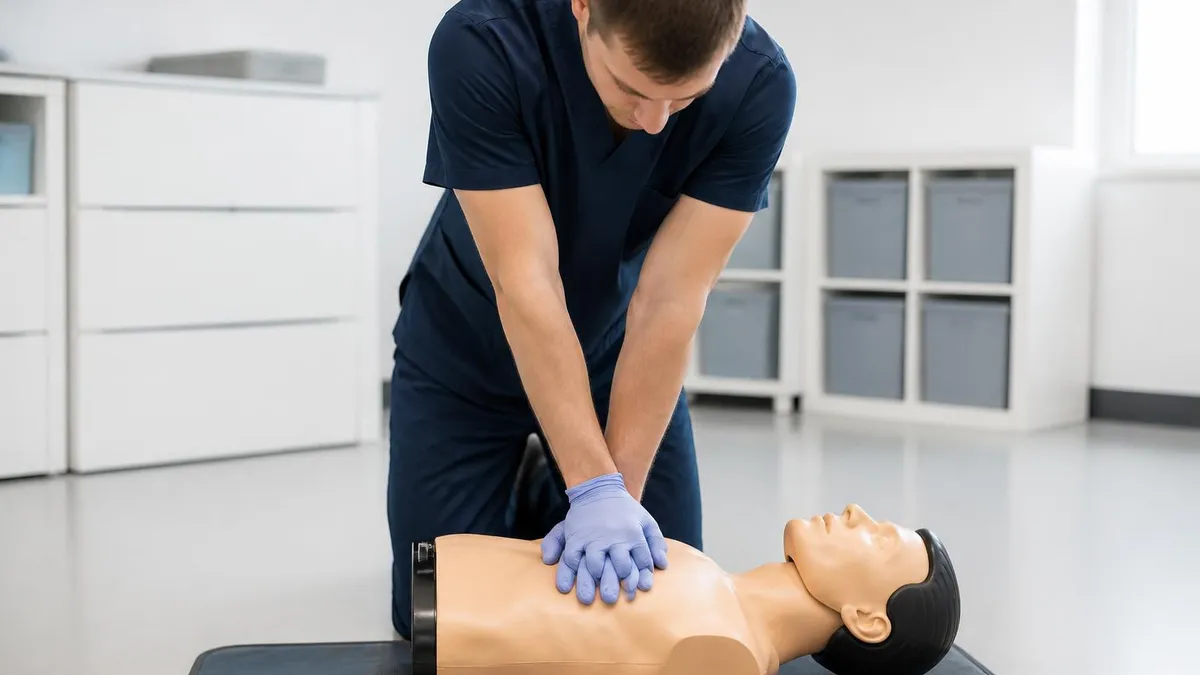
Free Online CPR Certification: Complete Guide to Legitimate Courses, Costs, and Workplace Acceptance in 2026
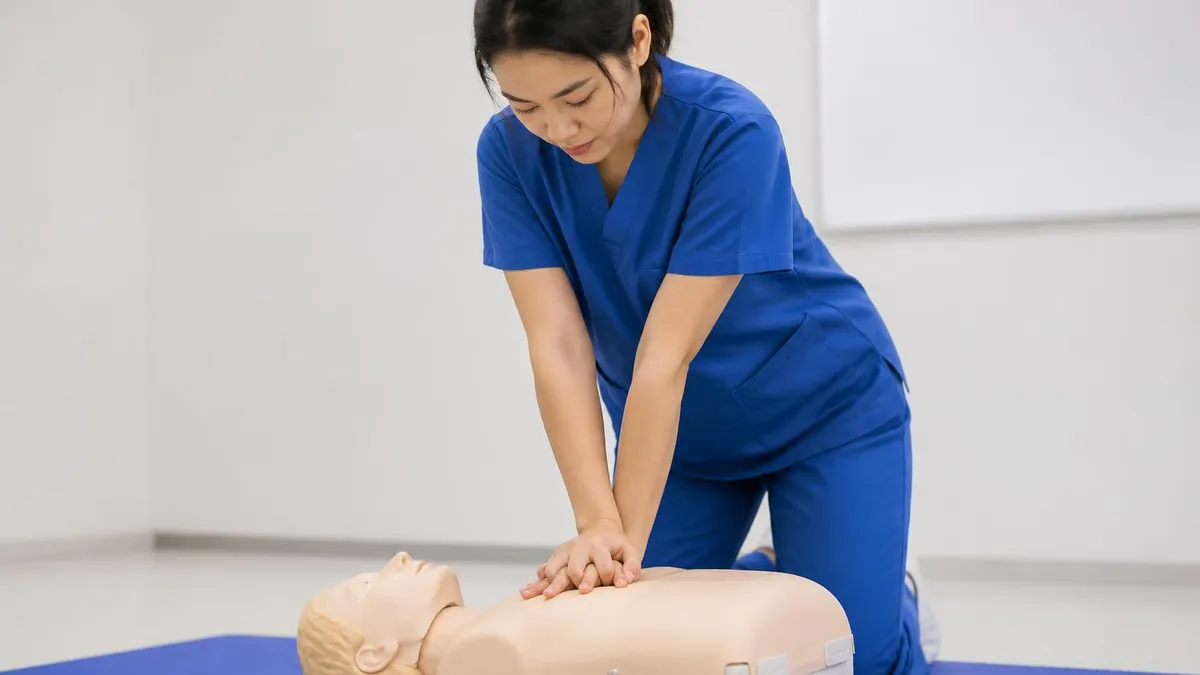
CPR Instructor Certification 2026: Complete Path to Teaching CPR
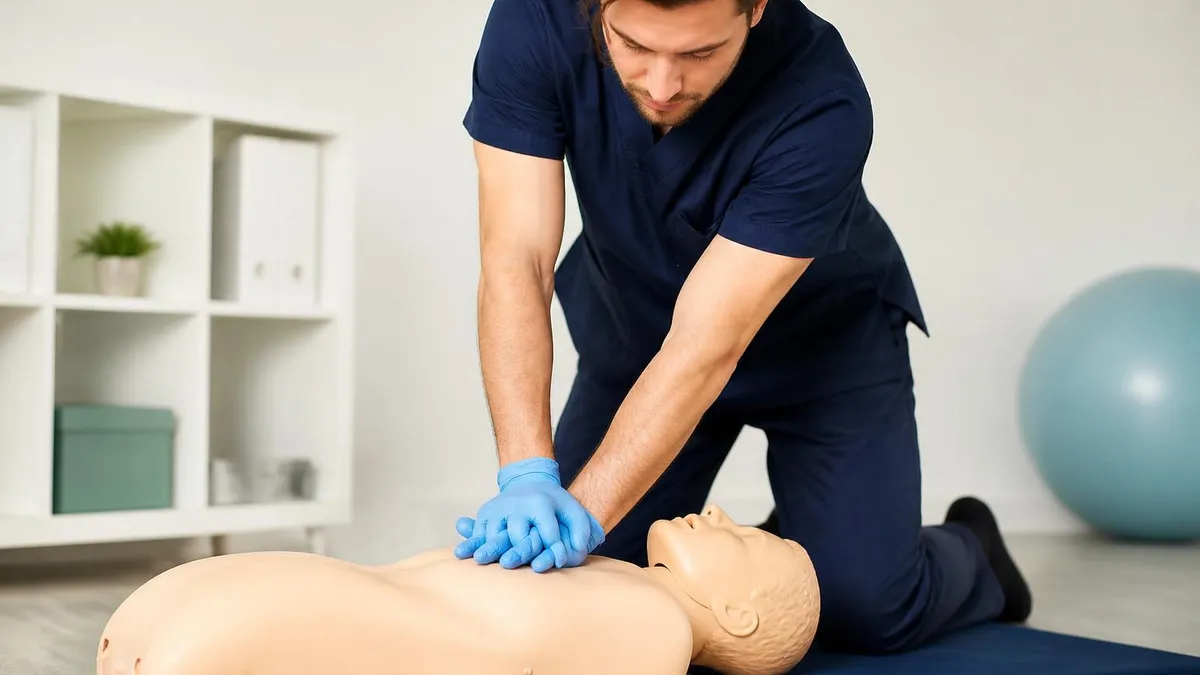
CPR Course: How to Choose the Right Training Program
About the Author

Registered Nurse & Healthcare Educator
Johns Hopkins University School of NursingDr. Sarah Mitchell is a board-certified registered nurse with over 15 years of clinical and academic experience. She completed her PhD in Nursing Science at Johns Hopkins University and has taught NCLEX preparation and clinical skills courses for nursing students across the United States. Her research focuses on evidence-based exam preparation strategies for healthcare certification candidates.
Join the Discussion
Connect with other students preparing for this exam. Share tips, ask questions, and get advice from people who have been there.
View discussion (5 replies)