
How to Become CPR Certified: Complete 2026 October Training Guide
Learn how to become CPR certified in 2026 October. Covers ACLS algorithm, infant CPR, AED use, costs & top courses. 🎯 Start your training today.

Learning to become cpr certified is one of the most valuable steps you can take to protect the people around you. Every year, more than 350,000 cardiac arrests occur outside hospital settings in the United States, and immediate bystander CPR can double or even triple a victim's chance of survival. Whether you are a parent, a teacher, a gym trainer, or a healthcare professional, knowing how to respond in those critical first minutes makes an enormous difference in patient outcomes and community safety.
CPR — cardiopulmonary resuscitation — combines chest compressions with rescue breaths to keep oxygenated blood circulating when the heart has stopped beating. Modern guidelines from the American Heart Association (AHA) and the Red Cross have refined technique standards so that even hands-only CPR performed by an untrained bystander is now recommended over doing nothing. However, a formal certification course teaches you the full skill set: proper compression depth and rate, airway positioning, rescue breathing ratios, and the correct use of an automated external defibrillator (AED).
The landscape of CPR training has expanded significantly over the past decade. You can now choose from in-person skills labs, blended learning programs, fully online courses, and employer-sponsored group sessions. Organizations like the National CPR Foundation, the American Heart Association, and the American Red Cross each offer pathways suited to different learners and professional requirements. Understanding which program matches your needs — and your employer's acceptance criteria — is the first step toward choosing the right course.
Beyond basic adult CPR, many students pursue specialized training in infant CPR, pediatric life support, and advanced cardiac life support (ACLS). Each level builds on the foundational compression-and-ventilation cycle but adds nuance: different compression depths for infants, medication protocols for ACLS, and the systematic ACLS algorithm used by emergency medical teams to manage shockable versus non-shockable cardiac rhythms. Knowing which certification tier applies to your situation saves time and money before you enroll.
One question that surprises many newcomers is the cost involved. Basic community certifications can run as little as $30 to $60 for an online-only course, while a comprehensive BLS for Healthcare Providers class with a hands-on skills check typically costs $60 to $100. ACLS certification — required for hospital nurses, physicians, and paramedics — generally ranges from $150 to $250 depending on the provider and region. Renewal courses are shorter and less expensive than initial certifications, which is an important budget consideration for professionals who recertify every two years.
This guide walks you through every stage of the certification journey: choosing a course provider, understanding what the training covers, mastering key topics like respiratory rate monitoring, recovery position techniques, and AED operation, and passing your final skills assessment. We also cover advanced pathways including PALS certification for pediatric emergencies and ACLS for critical care settings. By the end, you will have a clear, actionable roadmap to earn your CPR card and maintain it over time.
Whether you are starting from scratch or looking to upgrade from a basic community certificate to a healthcare-grade BLS credential, the information in this guide applies directly to your situation. Real statistics, step-by-step explanations, and practical tips based on current AHA 2025 guidelines are included throughout so that you can study smarter, not harder, and walk into your skills assessment with confidence.
CPR Certification by the Numbers

CPR Certification Pathways: Step by Step
Choose the Right Certification Level
Select an Accredited Course Provider
Complete Online or In-Person Training
Pass the Skills Assessment
Receive and Store Your Certification Card
Understanding what a CPR certification course actually teaches you is essential before you enroll. At the foundational level, every accredited program covers the chain of survival: recognizing cardiac arrest, activating emergency services, performing high-quality chest compressions, delivering rescue breaths, and operating an AED. These five links work together as a system, and studies consistently show that communities with strong bystander training and accessible AED programs achieve survival rates two to three times higher than those without.
Chest compression quality is the single most important skill you will practice. The American Heart Association's 2020 guidelines — still in effect through 2025 — specify a compression rate of 100 to 120 per minute, a depth of at least 2 inches (but no more than 2.4 inches) for adults, and allowing full chest recoil between each compression. Interruptions should be kept to under 10 seconds. Instructors use feedback mannequins that display a real-time compression rate and depth readout, letting students self-correct before developing bad habits.
Rescue breathing ratios vary by victim age and provider certification level. For adult CPR performed by a single lay rescuer, hands-only CPR (compressions without breaths) is now acceptable and widely recommended. For trained providers, the standard adult ratio is 30 compressions to 2 breaths, with each breath delivered over 1 second and producing a visible chest rise. For infant CPR, the compression-to-ventilation ratio shifts to 30:2 for a single rescuer or 15:2 for two healthcare providers, reflecting the fact that infants in cardiac arrest more commonly suffer from a respiratory rather than a cardiac cause.
Airway management is taught alongside compressions. Instructors cover the head-tilt chin-lift maneuver for most unresponsive adults, and the jaw-thrust technique for victims with suspected spinal injuries. Proper airway opening makes rescue breaths more effective and reduces the risk of air entering the stomach, which can cause regurgitation and aspiration during ongoing resuscitation. Practice with mannequins reinforces the correct hand placement and degree of head extension before students attempt it on a real victim.
Monitoring respiratory rate is a skill that becomes more important at the BLS and ACLS level. Normal adult respiratory rate is 12 to 20 breaths per minute. A rate below 8 or above 30 in a conscious patient signals a medical emergency requiring immediate escalation. During CPR, providers delivering rescue breaths aim for roughly 10 breaths per minute when an advanced airway is in place — a deliberate rate that avoids hyperventilation, which has been shown to worsen outcomes by increasing intrathoracic pressure and reducing venous return to the heart.
The recovery position is another critical skill covered in most full CPR courses. Once a victim who was unresponsive begins breathing on their own, placing them in the lateral recovery position keeps the airway open and prevents aspiration if vomiting occurs. The technique involves rolling the victim onto one side, supporting the head, and bending the top knee forward to stabilize the position. Students practice on mannequins and on each other (in a modified form) so the muscle memory is solid before a real emergency arises.
AED training is integrated into every modern CPR certification course. The device analyzes the heart's rhythm, determines whether a shock is advised, and guides the operator through voice prompts. What does AED stand for? AED stands for automated external defibrillator — a portable device designed for use by lay rescuers with minimal training. Courses teach pad placement (right collarbone and left side under the armpit for adults; front-and-back placement for small children), clearing the victim before each shock, and immediately resuming CPR after shock delivery without waiting to feel for a pulse.
ACLS Algorithm, PALS Certification & Advanced Life Support Explained
The ACLS algorithm is a systematic decision tree used by physicians, nurses, and paramedics to manage cardiac arrest and life-threatening arrhythmias. It branches based on whether the rhythm is shockable (ventricular fibrillation or pulseless ventricular tachycardia) or non-shockable (pulseless electrical activity or asystole). For shockable rhythms, the sequence is: defibrillate at 200 joules (biphasic), resume CPR for 2 minutes, administer epinephrine 1 mg IV every 3–5 minutes, consider amiodarone 300 mg IV, and reassess rhythm after each CPR cycle.
For non-shockable rhythms such as PEA and asystole, the ACLS algorithm focuses on identifying and reversing reversible causes — the classic 'H's and T's': hypovolemia, hypoxia, hydrogen ion (acidosis), hypo/hyperkalemia, hypothermia, tension pneumothorax, tamponade, toxins, pulmonary thrombosis, and coronary thrombosis. Epinephrine is administered every 3–5 minutes, and CPR continues with minimal interruptions. ACLS certification requires a written exam (typically 50 questions) and a megacode simulation demonstrating the complete algorithm under time pressure.

Online vs. In-Person CPR Certification: Pros and Cons
- +Online blended courses let you complete theory at your own pace before the skills session
- +In-person classes provide real-time instructor feedback on compression depth and technique
- +Online options cost 20–40% less than fully in-person programs on average
- +Skills labs use high-fidelity mannequins with feedback displays to accelerate learning
- +In-person classes allow immediate Q&A and scenario-based practice with peers
- +Blended learning reduces total classroom time to 1–2 hours, ideal for busy professionals
- −Fully online-only certifications are not accepted by most hospitals or clinical employers
- −In-person class schedules may not align with shift workers or rural residents
- −Skills-check appointments can book out weeks in advance in high-demand urban markets
- −Online learners may not practice compressions enough before the skills check
- −In-person courses require travel, which adds time and transportation costs
- −Some providers charge separate fees for the online module and the in-person skills verification
Pros and Cons at a Glance
| Pros | Cons |
|---|---|
| Online blended courses let you complete theory at your own pace before the skills session | Fully online-only certifications are not accepted by most hospitals or clinical employers |
| In-person classes provide real-time instructor feedback on compression depth and technique | In-person class schedules may not align with shift workers or rural residents |
| Skills labs use high-fidelity mannequins with feedback displays to accelerate learning | Skills-check appointments can book out weeks in advance in high-demand urban markets |
| In-person classes allow immediate Q&A and scenario-based practice with peers | Online learners may not practice compressions enough before the skills check |
CPR Certification Checklist: Everything You Need Before Your Course
- ✓Confirm whether your employer requires AHA, Red Cross, or National CPR Foundation certification
- ✓Choose the correct certification tier: community CPR, BLS for Healthcare Providers, ACLS, or PALS
- ✓Register for a course at least two weeks in advance to secure a spot at a skills lab
- ✓Complete any required online pre-course modules before the in-person skills check date
- ✓Wear comfortable, loose-fitting clothing that allows you to kneel and lean forward comfortably
- ✓Bring a government-issued photo ID and any pre-registration confirmation emails to your session
- ✓Review AHA 2025 compression rate (100–120/min) and depth (2–2.4 inches) guidelines beforehand
- ✓Practice counting aloud '30 compressions' at the correct tempo using a metronome app
- ✓Familiarize yourself with AED pad placement sites before arriving at the hands-on session
- ✓Save your certification card digitally immediately after receiving it and note the expiration date
Target ≥60% Chest Compression Fraction During Resuscitation
Research published in the journal Resuscitation shows that cardiac arrest survival rates improve significantly when chest compression fraction — the proportion of resuscitation time that compressions are actually being delivered — stays at or above 60%. During your skills check, instructors watch for excessive pauses during rhythm checks, AED analysis, and team transitions. Train yourself to resume compressions within 5 seconds of any interruption, and your compression fraction will naturally stay in the target range.
Infant CPR deserves special attention because the technique differs meaningfully from adult CPR and the stakes are extraordinarily high. Infants under one year of age are the most vulnerable population, and cardiac arrest in this group is almost always caused by respiratory failure — airway obstruction, severe asthma, drowning, or sudden infant death syndrome (SIDS) — rather than a primary heart attack. This means rescue breaths are even more critical for infants than for adults, and the two-finger chest compression technique used on infants is biomechanically optimized for their small, fragile ribcages.
Compression technique for infants requires placing two fingers — typically the middle and ring fingers — on the center of the chest just below the nipple line. Depth should be approximately 1.5 inches, roughly one-third of the chest's anterior-posterior diameter. For two-rescuer infant CPR in a healthcare setting, the two-thumb encircling technique is preferred because it generates higher systolic pressure and better coronary perfusion pressure than the two-finger method. The compression-to-ventilation ratio for a single lay rescuer performing infant CPR is 30:2, while two healthcare providers use a 15:2 ratio to increase the frequency of rescue breaths.
AED use in infants under 8 years old (or less than 55 pounds) requires pediatric pads or a pediatric dose attenuator. If neither is available, adult pads may be used with modified placement (one pad on the center of the chest and one on the back) as a last resort. The National CPR Foundation, AHA, and Red Cross all include infant CPR and pediatric AED protocols in their BLS for Healthcare Providers courses, and many community-level courses now cover infant CPR alongside adult technique in a single session.
Choking management for infants also differs from the Heimlich maneuver used on adults and children over one year. For a conscious choking infant, rescuers deliver five back blows between the shoulder blades using the heel of the hand, followed by five chest thrusts using two fingers on the lower half of the sternum. This cycle of five-and-five continues until the object is expelled or the infant becomes unconscious — at which point full infant CPR including a look inside the mouth before each rescue breath is initiated. Courses from every major provider include this sequence as a required skills station.
Parents, childcare workers, and pediatric healthcare staff are the most likely people to encounter an infant cardiac emergency, and all three groups benefit from regular refresher training. Studies from the AHA show that CPR skill retention declines measurably within 3 to 6 months of initial training without practice. Many pediatric units now run monthly or quarterly mannequin drills precisely to counteract this decay. If you are responsible for infants in any capacity, scheduling regular practice sessions — even informal ones using a low-cost infant mannequin at home — is strongly recommended.
Beyond infants, CPR technique also adapts for pregnant women, obese patients, and individuals with permanent pacemakers or implantable cardioverter-defibrillators (ICDs). For pregnant patients beyond 20 weeks gestation, manual lateral uterine displacement — pushing the uterus to the left — is performed during compressions to relieve aortocaval compression and improve venous return. For patients with ICDs, AED pads should be placed at least one inch away from the device to prevent interference. These edge cases are covered in ACLS and advanced BLS courses and are fair game on certification written exams.
It is worth noting this disambiguation because search confusion sometimes leads students toward irrelevant results when researching CPR certification. For medical CPR training resources, stick to the AHA, Red Cross, National CPR Foundation, and accredited academic programs rather than general retail search results.

Not all CPR certifications are accepted equally. Many U.S. hospitals and health systems require specifically an AHA BLS for Healthcare Providers card and will not accept online-only certificates or cards from unrecognized providers — even if the course content was identical. Before paying for any CPR course, confirm in writing with your HR department, licensing board, or clinical supervisor which organizations and course formats are approved. Discovering an incompatibility after completing a course means paying for a second course from scratch.
Maintaining your CPR certification over time requires understanding the renewal cycle and planning ahead. The standard certification period for AHA BLS, ACLS, and PALS credentials is two years. Red Cross certifications also typically carry a two-year validity for adult and pediatric CPR cards. The National CPR Foundation issues two-year cards as well, though acceptance varies by employer. For details on specific renewal timelines and what happens if your card lapses, our guide on how certification lasts covers every scenario in depth.
Renewal courses are shorter than initial certification because you are not learning the material from scratch — you are refreshing and reinforcing existing skills. A BLS renewal course typically runs 2 to 3 hours compared to 4 to 6 hours for the initial class. ACLS renewal courses take 6 to 8 hours. During renewal, instructors often spend extra time on areas where research shows skill decay is most pronounced: compression rate accuracy, ventilation delivery, and AED pad placement speed. Some providers offer a renewal-specific practice exam that mirrors the written test questions, which is particularly useful for ACLS candidates.
The question of life support certification scope often confuses new healthcare students. Basic life support (BLS) is the foundation — it covers high-quality CPR, AED use, and relief of foreign body airway obstruction. Advanced cardiac life support (ACLS) builds on BLS by adding pharmacology (epinephrine, amiodarone, adenosine), cardiac rhythm interpretation, advanced airway management (endotracheal intubation, supraglottic devices), and the full ACLS algorithm decision tree. PALS adds the pediatric layer. Most clinical job postings specify which level is required; emergency medicine, critical care, and anesthesia roles typically require both BLS and ACLS.
Employers in non-clinical settings are increasingly requiring or encouraging CPR certification for their staff. Schools, fitness centers, construction sites, and corporate offices are among the most common workplaces mandating training. OSHA's General Duty Clause, while not specifying CPR directly, requires employers to provide a workplace free from recognized hazards — and courts have interpreted this to include adequate emergency response capability. Many organizations schedule group certification sessions and subsidize or fully cover the course cost, making this an opportune time to confirm whether your employer offers this benefit.
The National CPR Foundation offers a particularly accessible pathway for individuals seeking affordable certification outside of employer programs. Their online blended learning courses are typically priced between $19 and $39 for the digital component, with skills verification available through a network of affiliated testing sites nationwide. While not accepted by all hospital systems, National CPR Foundation cards are widely recognized in schools, fitness facilities, and community organizations. Their website also provides free CPR reference guides and compression rate training tools that can be used for self-study before the official course.
For individuals considering a career as a CPR instructor, certification pathways exist through both the AHA and the Red Cross. AHA Heartsaver and BLS instructor courses require current provider certification plus a training center affiliation, a written exam, and an observed teaching practicum. Instructors must renew their own provider certification and their instructor credential separately. Teaching CPR can be a meaningful side income for nurses, EMTs, and fitness professionals — group classes of 6 to 10 students at $40 to $80 per student generate $240 to $800 per session for a half-day commitment.
Digital verification of CPR credentials has become standard practice in healthcare hiring. AHA maintains an online card verification portal where employers can confirm the authenticity of a candidate's BLS, ACLS, or PALS card using the card ID number. The Red Cross offers a similar online lookup tool. This verification infrastructure means that falsifying or photoediting a CPR card is immediately detectable — and in a clinical context, it constitutes credential fraud with serious professional and legal consequences. Always obtain your certification through an accredited provider and keep the original card or official digital copy secure.
Practical preparation before your CPR skills assessment significantly improves your performance and reduces test-day anxiety. The single most effective preparation strategy is physical practice — not just reading or watching videos, but actually performing compressions at the correct rate and depth on a mannequin or firm pillow. The 100-to-120-compressions-per-minute range corresponds to the beat of songs like 'Stayin' Alive' by the Bee Gees or 'Hard to Handle' by Otis Redding, and many instructors recommend using these as a mental metronome during initial practice sessions.
Reviewing the written exam content in advance is equally important, especially for BLS and ACLS certification candidates. Common exam topics include: the correct compression-to-ventilation ratios for adults, children, and infants; medication doses and indications in the ACLS algorithm; steps for operating an AED; the signs and symptoms of respiratory distress versus respiratory failure; the correct technique for the recovery position; and the chain of survival sequence. Free practice quizzes — like those available on PracticeTestGeeks.com — let you identify knowledge gaps before the official exam rather than discovering them during it.
Team communication is a skill often underestimated by candidates preparing for two-rescuer CPR assessments. The AHA emphasizes closed-loop communication, in which the team leader assigns a task, the team member repeats the task back, performs it, and confirms completion. For example: 'Maria, please attach the AED pads' — 'Attaching AED pads now' — 'AED pads are attached.' This loop prevents errors in high-stress resuscitation environments and is evaluated during ACLS megacode simulations. Practicing this communication pattern with a study partner dramatically improves megacode performance.
Physical endurance is a practical factor that many first-time students underestimate. High-quality chest compressions at the correct rate and depth are surprisingly exhausting — research shows that compression quality degrades significantly after just 90 to 120 seconds of continuous compressions, even in trained providers. The AHA recommends switching compressors every 2 minutes (each CPR cycle) to maintain quality. During your skills check, instructors observe whether you maintain consistent depth and rate throughout the entire 2-minute evaluation window, so practicing 2-minute compression sets beforehand is essential conditioning.
Understanding the post-resuscitation care phase separates good CPR providers from excellent ones. After return of spontaneous circulation (ROSC), priorities shift to maintaining oxygen saturation between 94% and 99%, avoiding hyperoxia, targeting a systolic blood pressure above 90 mmHg, and initiating targeted temperature management (TTM) for comatose survivors. While lay rescuers are not expected to manage post-ROSC care independently, ACLS certification tests knowledge of these goals, and BLS providers who understand the post-arrest priorities communicate more effectively with arriving ALS teams during handoff.
Study schedules matter for ACLS and PALS candidates more than for basic CPR students. A realistic ACLS preparation plan covers 10 to 15 hours of self-study over two to three weeks: rhythm recognition using flashcard apps or ECG strip practice tools, medication reference review (epinephrine, amiodarone, adenosine, atropine, lidocaine), algorithm walkthrough using the official AHA provider manual, and at least one full-length practice exam. Dividing this content across daily 45-minute sessions is more effective for retention than cramming everything into a single weekend before the course.
Finally, remember that CPR certification is a living skill, not a one-time credential. The AHA and major providers recommend informal skills refreshers every 6 to 12 months between formal recertification cycles. Many hospitals mandate quarterly compression quality audits for nursing staff using feedback mannequins.
Even for non-clinical providers, spending 20 minutes every six months practicing compressions on a CPR keychain device or full mannequin keeps the skill sharp and ensures that when a real emergency occurs, the technique is automatic rather than recalled from memory. The goal of certification is not just to pass a test — it is to save a life when it matters most.
CPR Questions and Answers
How Long Does CPR Certification Last? 2026 Renewal Guide
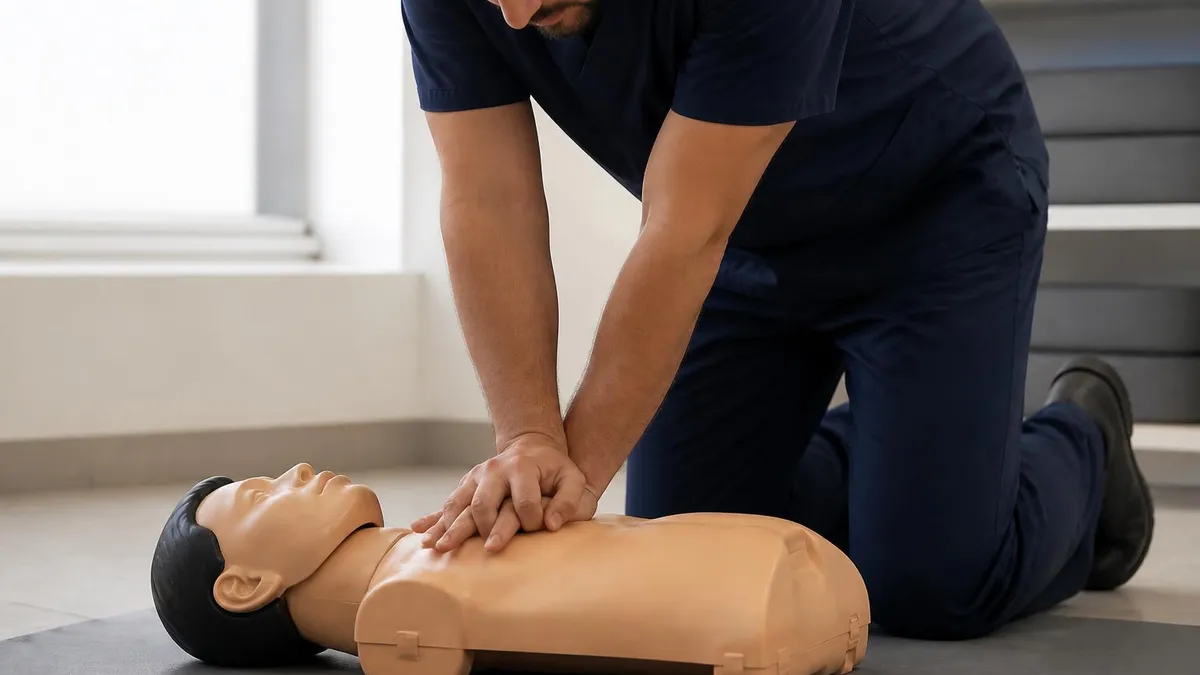
Extracorporeal CPR (ECPR): Complete Guide to Mechanical Circulatory Support During Cardiac Arrest in 2026
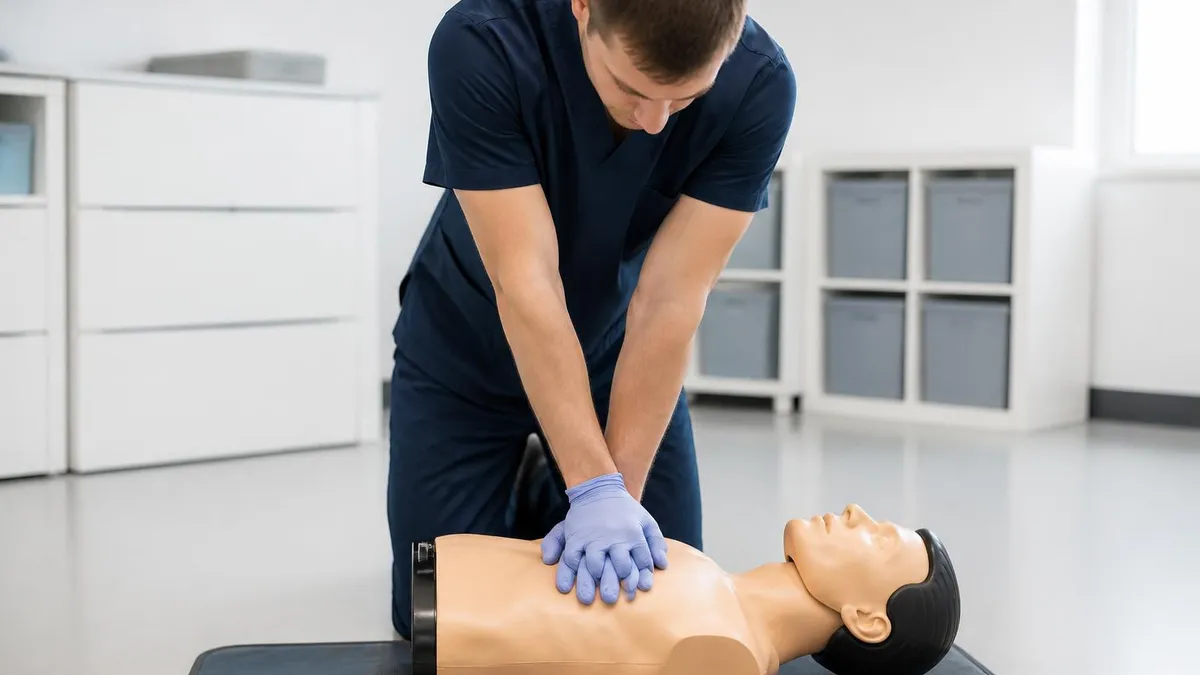
Free Online CPR Certification: Complete Guide to Legitimate Courses, Costs, and Workplace Acceptance in 2026
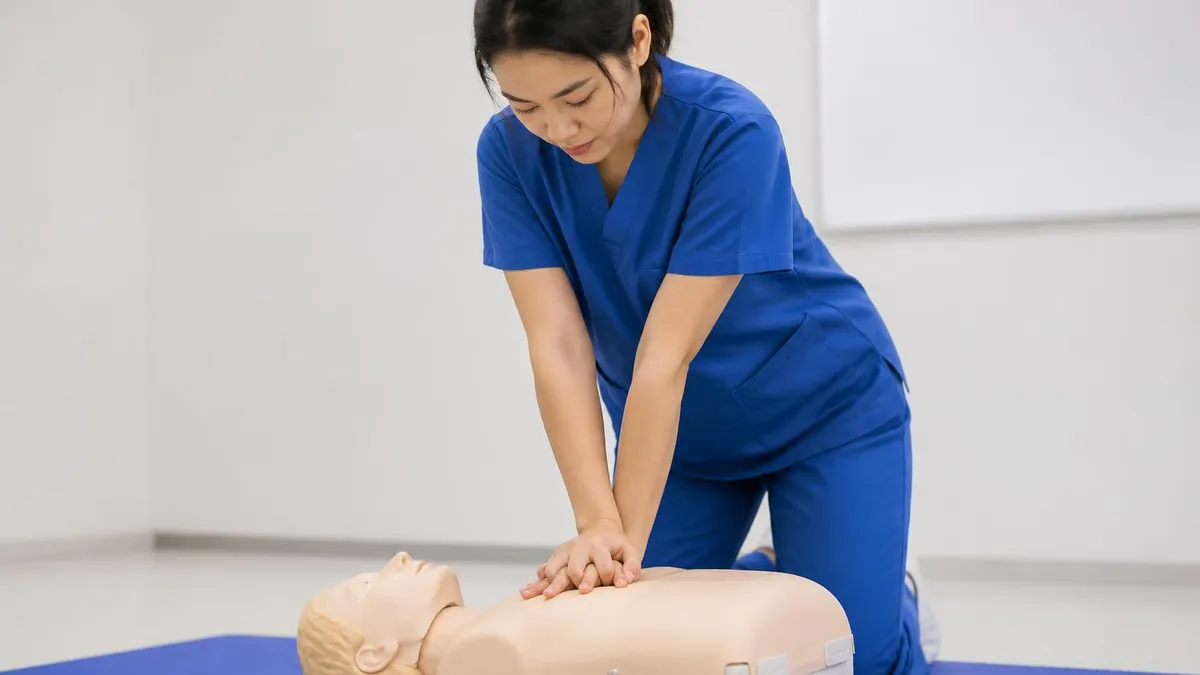
CPR Instructor Certification 2026: Complete Path to Teaching CPR
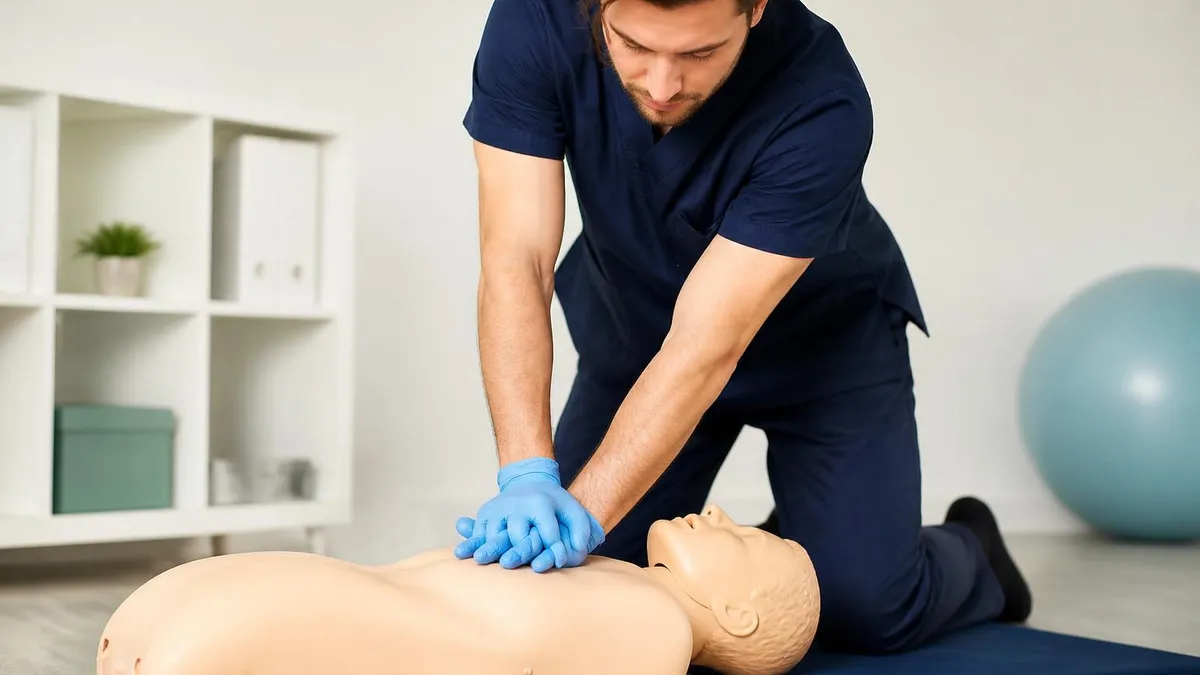
CPR Course: How to Choose the Right Training Program
About the Author

Registered Nurse & Healthcare Educator
Johns Hopkins University School of NursingDr. Sarah Mitchell is a board-certified registered nurse with over 15 years of clinical and academic experience. She completed her PhD in Nursing Science at Johns Hopkins University and has taught NCLEX preparation and clinical skills courses for nursing students across the United States. Her research focuses on evidence-based exam preparation strategies for healthcare certification candidates.
Join the Discussion
Connect with other students preparing for this exam. Share tips, ask questions, and get advice from people who have been there.
View discussion (5 replies)